OPSC Toppers' Diary & Strategy Interviews
Learn directly from the success stories of those who cracked the OPSC OAS examination and turned their dreams into reality.
Insights from the Top Ranks
Click on the box of any topper below to view their detailed interview that covers every aspect of their preparation journey.
🥇 Featured OAS Toppers
Sai Teja Katlagunta
Enforcement Officer / Accounts Officer
Rojalin Majhi
Odisha Civil Services
Sai Teja Katlagunta | EPFO EO/AO
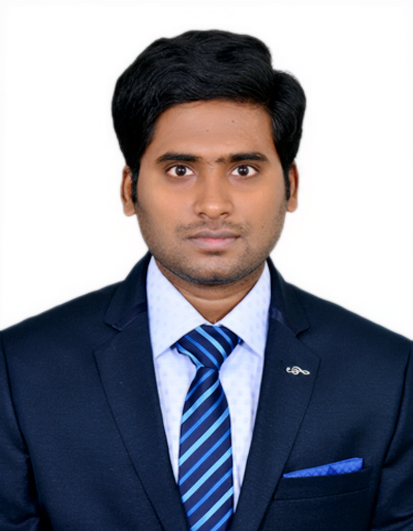
Sai Teja Katlagunta
Enforcement Officer / Accounts Officer
EPFO, Ministry of Labour & Employment
Selected through UPSC EPFO EO/AO Examination
1. What inspired you to pursue a career in the present job/service?
Frankly speaking, I had no idea about this job until I qualified for the interview. I applied mainly because it was a UPSC-recruited post. At that point, I was facing repeated failures in UPSC CSE mains and was looking for stability, dignity, and a respectable government position.
2. Can you share your educational background?
B.Tech in Electrical Engineering – IIT Bhubaneswar
M.A in Political Science – IGNOU
PGDIHRM – IGNOU (Currently Pursuing)
3. How did you stay motivated during the long preparation phase?
Motivation is a temporary psychological state and can come from anywhere—books, music, movies, family struggles, or personal setbacks. What truly sustains preparation is long-term strategy, discipline, emotional resilience, effective learning methods, and a good support system.
4. What was your study plan, and how did you structure your daily routine?
Initially, the absence of a proper study plan contributed to my failures. Later, I structured my preparation by mapping the total available time against subjects and resources, converting them into daily targets. My routine involved studying 2–3 subjects daily along with regular revision and PYQ practice.
5. What role did coaching institutes, test series, and self-study play?
Coaching can be useful if it offers good mentorship and guidance. PYQs are non-negotiable before attempting any test series. Tests should be written in exam-like conditions. Self-study played the most significant role in my success.
6. How did you manage time between Prelims, Mains, and Interview?
Time management is a crucial skill. I used the Forest app to track subject-wise study time for both Prelims and Mains. Tracking helped me balance subjects, plan revisions, and ensure adequate time allocation.
7. What key mistakes should aspirants avoid?
1. Spending time on non-exam-related activities
2. Poor time management
3. Ignoring PYQs and test series
4. Irregular revision
5. Not identifying weak areas
8. How did you choose your optional subject?
My choice was based on interest and overlap with the GS syllabus. Ideally, optional selection should consider interest, prior familiarity, and availability of good resources or guidance.
9. What books and resources do you recommend for General Studies?
Standard sources like Laxmikanth for Polity and Spectrum for History are essential. Aspirants generally become aware of core resources as preparation progresses.
10. How did you prepare for Current Affairs?
Regular newspaper reading is crucial, especially given current trends, supplemented by standard monthly current affairs magazines.
11. What is the importance of attempting test series?
Test series help assess topic understanding, identify knowledge gaps, improve time management, and ensure coverage of miscellaneous topics.
12. How important is note-making, and what was your technique?
Note-making is crucial due to the vast syllabus. Notes should align with the syllabus and PYQs. For interviews, notes should be DAF-centric. As an IITian and electrical engineer, I separately tracked related current affairs.
13. Can you share your interview experience?
The UPSC EPFO interview was similar to the CSE interview. Questions were asked from my engineering background, political science, and current affairs.
14. What qualities do interviewers look for?
Interviewers look for competence, confidence, communication skills, rational thinking, and ethical orientation.
15. Biggest challenges and how you overcame them?
The challenges ranged from financial instability to loss of confidence due to repeated mains failures. Perseverance and emotional resilience helped me continue.
16. Role of mental health and stress management?
Mental health is extremely important. Emotional stability and stress management directly affect productivity and performance. Life is bigger than UPSC.
17. Your views on Study OAS Platform?
Study OAS is a budding and innovative platform. I strongly recommend it as a study partner. The founder, Sandeep, has the experience, resilience, commitment, and insight required to guide aspirants effectively.
18. Any last words for aspirants?
“Ever tried. Ever failed. No matter. Try again. Fail again. Fail better.”
— Samuel Beckett
Fail in practice, not in the exam. Identify flaws through tests and
practice sessions, work on them, and success will follow.