
Current Affairs
Stay updated with the latest national and international events.
11 November 2026
Odisha Cabinet Approves Bovine Breeding (Regulation) Bill, 2026

What’s the News?
- The Odisha Cabinet, chaired by Chief Minister Mohan Charan Majhi, approved the draft Odisha Bovine Breeding (Regulation) Bill, 2026.
- The Bill aims to regulate cattle and buffalo breeding services, improve milk productivity, conserve indigenous breeds and protect livestock farmers.
- The proposed legislation will be introduced in the State Legislative Assembly and implemented in phases after enactment and notification.
Provisions of the Bill
Odisha Bovine Breeding Regulatory Authority
- A proposed authority responsible for registration, certification, quality monitoring and enforcement of breeding standards.
- Mandatory registration for semen stations, semen banks, Artificial Insemination (AI) centres, AI technicians and Assisted Reproductive Technology (ART) establishments.
- Only registered AI technicians or registered veterinary practitioners will be permitted to provide artificial insemination services.
- Powers to conduct inspections, quality testing, corrective actions and impose penalties for violations.
State Digital Livestock Breeding Registry
A proposed digital platform for:
- Animal identification and pedigree recording.
- Parentage verification.
- Monitoring breeding outcomes and genetic performance.
Odisha Bovine Genetic Improvement Fund
A proposed fund to support:
- Genetic improvement and conservation of indigenous breeds.
- Adoption of modern breeding technologies.
- Research and capacity-building programmes.
Advanced Breeding Technologies
- Regulation of sex-sorted semen, In Vitro Fertilisation (IVF) and embryo transfer technologies.
- Quality assurance and traceability of semen, embryos and other breeding materials.
Objectives of the Bill
- Improve cattle and buffalo productivity and increase milk production.
- Protect farmers against substandard breeding materials and unauthorised services.
- Enhance farmers' incomes and strengthen livestock-based livelihoods.
- Support milk production targets under the Viksit Odisha vision.
Additional Info
Rashtriya Gokul Mission (RGM)
- Launched in 2014 by the Ministry of Agriculture's then Department of Animal Husbandry, Dairying and Fisheries.
- Currently implemented by the Department of Animal Husbandry and Dairying, Ministry of Fisheries, Animal Husbandry and Dairying.
- Objectives:
- Development and conservation of indigenous bovine breeds.
- Genetic improvement of cattle and buffaloes.
- Enhancement of milk production through artificial insemination, sex-sorted semen and IVF.
- Revised outlay: ₹3,400 crore for the 2021–22 to 2025–26 period.
Sources
India Bans Export of Lithium-Ion Battery Black Mass
What’s the News?
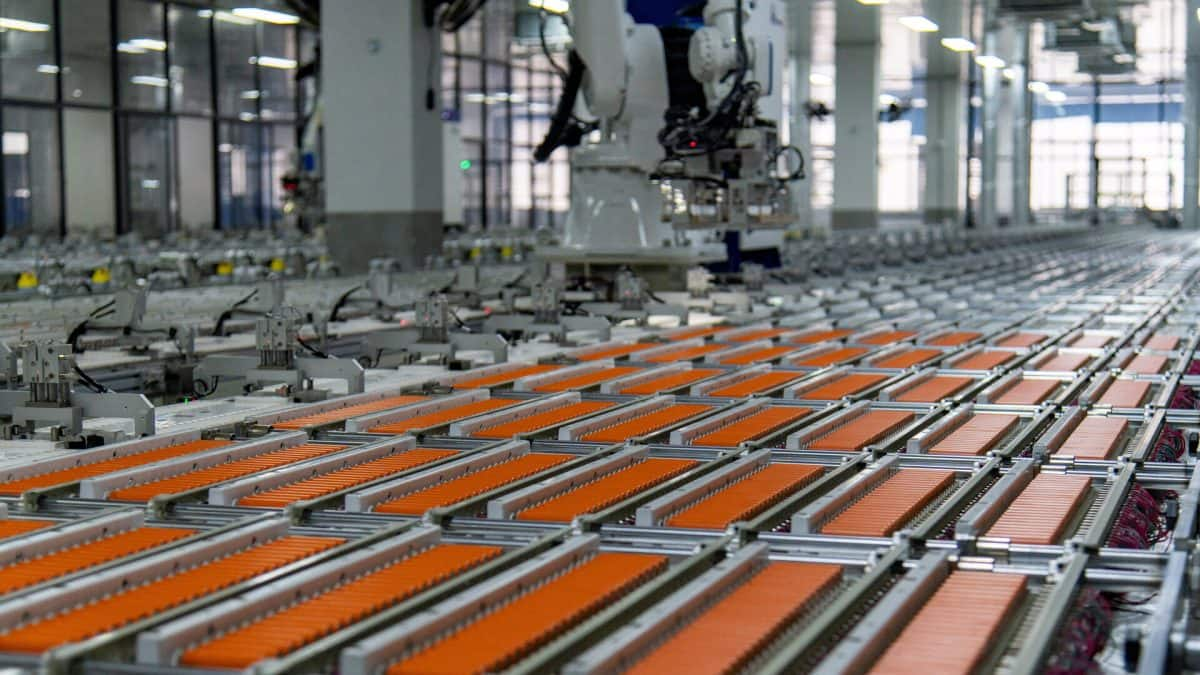
- The Directorate General of Foreign Trade (DGFT), under the Ministry of Commerce and Industry, has prohibited the export of Lithium-Ion Battery Black Mass with immediate effect.
- The export policy under ITC (HS) Code 85491400 has been changed from ‘Free’ to ‘Prohibited’ until further orders.
- The move aims to strengthen domestic battery recycling, recover critical minerals such as lithium, cobalt, nickel and manganese, and reduce India's import dependence.
What is Lithium-Ion Battery Black Mass?
- Black Mass is a powdery material obtained by shredding end-of-life lithium-ion batteries and battery manufacturing waste.
- It contains recoverable critical minerals, including:
- Lithium: Used in rechargeable batteries.
- Cobalt and Nickel: Used in certain battery cathodes.
- Manganese: Used in battery cathode materials.
- Graphite: Used primarily in battery anodes.
- These materials can be recovered through recycling processes such as hydrometallurgy and pyrometallurgy.
Features of the Export Ban
- Regulatory Authority: Directorate General of Foreign Trade (DGFT).
- Notification: No. 49/2026-27.
- ITC (HS) Code: 85491400.
- Export Status: Changed from Free to Prohibited until further orders.
- Coverage: Specified unsorted waste and scrap of primary cells, batteries and electric accumulators that do not contain lead, cadmium or mercury.
- Transitional provisions under Paragraph 1.05 of the Foreign Trade Policy, 2023 remain applicable.
Additional Info
National Critical Mineral Mission (NCMM)
- Approved in 2025 to strengthen India's critical mineral supply chains.
- Total expenditure: ₹34,300 crore over seven years, comprising ₹16,300 crore in government expenditure and ₹18,000 crore in expected investments by PSUs and other entities.
- Focuses on mineral exploration, mining, processing, recycling and overseas acquisition of critical mineral assets.
Critical Mineral Recycling Incentive Scheme
- Outlay: ₹1,500 crore.
- Duration: Six years (FY 2025–26 to FY 2030–31).
- Implemented by the Ministry of Mines under NCMM.
- Supports recovery of critical minerals from spent lithium-ion batteries, electronic waste and other scrap materials.
- Provides incentives for establishing new recycling units and expanding existing facilities.
Directorate General of Foreign Trade (DGFT)
- Parent Ministry: Ministry of Commerce and Industry.
- Responsible for implementing India's Foreign Trade Policy and regulating imports and exports.
- Functions under the Foreign Trade (Development and Regulation) Act, 1992.
Sources
Union Cabinet Extends Stand-Up India Scheme Until 2031

What’s the News?
- The Union Cabinet, chaired by Prime Minister Narendra Modi, has approved the extension of the Stand-Up India Scheme for five years, until March 2031.
- The government has approved a ₹4,111 crore credit guarantee corpus to support entrepreneurship among women, Scheduled Castes (SCs) and Scheduled Tribes (STs).
- The extension aims to provide financial assistance to at least 2.5 lakh additional entrepreneurs over five years.
- Since its launch in 2016, the scheme has facilitated loans to more than 2.75 lakh entrepreneurs.
Stand-Up India Scheme?
- Launched: 2016.
- Nodal Ministry: Ministry of Finance (Department of Financial Services).
- Objective: Promote entrepreneurship among women, SCs and STs by facilitating institutional credit for greenfield enterprises.
- Loan Amount: Above ₹10 lakh and up to ₹1 crore.
- Eligible Sectors: Manufacturing, services, trading and agriculture-allied activities.
- Bank Coverage: Aims to facilitate at least one loan to an SC/ST entrepreneur and one to a woman entrepreneur per bank branch.
Features of the Extended Scheme
- Loan Coverage: Up to 85% of the project cost through term loans or composite loans (term loan and working capital).
- Credit Guarantee: 85% of the loan amount, reducing lending institutions' risk.
- Guarantee Fee: Standardised at 0.50%, without an additional risk premium.
- Financial Support: ₹4,111 crore credit guarantee corpus.
- Beneficiary Target: At least 2.5 lakh additional entrepreneurs over five years.
Additional Info
Eligibility and Repayment
- Minimum Age: 18 years.
- Greenfield Enterprise: A first-time venture in the eligible sectors.
- Non-Individual Enterprises:
- At least 51% shareholding and controlling stake must be held by a woman or SC/ST entrepreneur.
- Repayment Period: Up to 7 years, including a moratorium of up to 18 months.
- Borrower's Contribution: At least 10% of the project cost.
Institutional Support
- SIDBI (Small Industries Development Bank of India):
- Provides support for enterprise development and facilitates the scheme's digital portal.
- National Credit Guarantee Trustee Company (NCGTC):
- Administers the Credit Guarantee Fund for Stand-Up India.
- Stand-Up Mitra Portal:
- Provides guidance on loan applications, training and entrepreneurial support.
Sources
Goa Tops Access Equality Index 2026
What’s the News?
- Goa has secured the top position in the Access Equality Index (AEI) 2026, with a score of 0.68, followed by Andhra Pradesh (0.66) and Sikkim (0.63).
- The index was developed by the Centre for New Economics Studies (CNES) at O.P. Jindal Global University.
- It evaluates 28 Indian states based on equitable access to essential services, infrastructure and socio-economic opportunities.
Access Equality Index 2026?
- Published by: Centre for New Economics Studies (CNES), O.P. Jindal Global University.
- Objective: Assess inequalities in access to essential services and opportunities across states.
- Coverage: 28 states, using 60 indicators across 23 categories.
- Methodology: Five equally weighted dimensions:
- Basic Infrastructure: Drinking water, sanitation, housing and clean energy.
- Healthcare: Availability and accessibility of healthcare services.
- Education: Access to educational facilities and opportunities.
- Socio-economic Security: Employment, banking, insurance and pensions.
- Legal Services: Access to legal assistance and justice.
- The index considers affordability, geographical accessibility, service availability and quality, while examining rural-urban, caste and gender disparities.
Findings
| Rank | State | Index Score |
|---|---|---|
| 1 | Goa | 0.68 |
| 2 | Andhra Pradesh | 0.66 |
| 3 | Sikkim | 0.63 |
| 4 | Kerala | 0.60 |
| 5 | Tamil Nadu | 0.57 |
| 5 | Telangana | 0.57 |
- Andhra Pradesh emerged as the highest-ranked major state and topped the socio-economic security dimension with a score of 0.69, followed by Goa (0.50).
- Despite ranking 13th in per capita income, Andhra Pradesh secured second position in overall access equality.
Additional Info
Access (In)Equality Index 2021
- The earlier edition was published by CNES at O.P. Jindal Global University.
- Top State: Goa, with a score of 0.67.
- States were classified into three categories:
- Aspirants: Below 0.33.
- Achievers: 0.33–0.42.
- Front-runners: Above 0.42.
- The 2021 and 2026 scores are not directly comparable because of differences in their assessment frameworks.
Constitutional Provisions
- Article 21A: Free and compulsory education for children aged 6–14 years.
- Article 39A: Equal justice and free legal aid.
- Article 47: Duty of the State to improve nutrition, living standards and public health.
- Article 37: Directive Principles of State Policy are non-justiciable but fundamental to governance.
National Education Day 2026 Observed on 11 November
What’s the News?
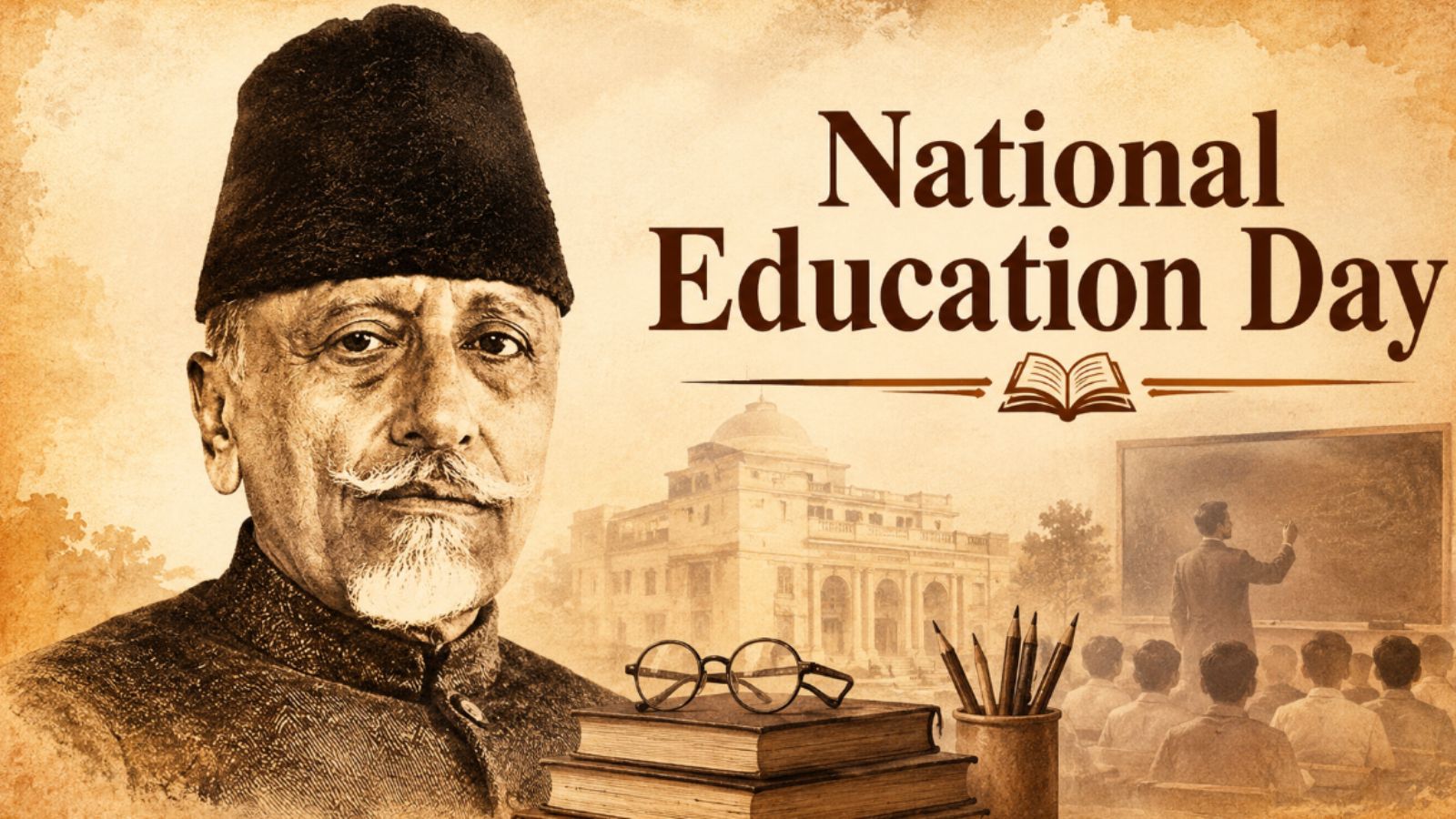
- India observed National Education Day 2026 on 11 November to commemorate the birth anniversary of Maulana Abul Kalam Azad, independent India's first Education Minister.
- The day highlights the importance of inclusive and quality education, literacy, scientific learning and equal educational opportunities.
- The observance was introduced by the Ministry of Human Resource Development (now Ministry of Education) in 2008 to recognise Azad's contributions to India's education system.
National Education Day?
- Observed: 11 November annually.
- First Observed: 11 November 2008.
- Commemorates: Birth anniversary of Maulana Abul Kalam Azad (1888–1958).
- Declared By: Ministry of Human Resource Development (now Ministry of Education).
- First Celebration: Vigyan Bhavan, New Delhi, inaugurated by then-President Pratibha Devisingh Patil.
- Significance: Promotes universal education, women's education, literacy, technical education and educational equality.
- Educational institutions observe the day through seminars, debates, workshops, quizzes and literacy awareness programmes.
Maulana Abul Kalam Azad?
- Born: 11 November 1888, in Mecca, Saudi Arabia (then part of the Ottoman Empire).
- Died: 22 February 1958.
- Position: First Education Minister of independent India (1947–1958).
- Freedom Movement:
- Launched the Urdu weekly Al-Hilal in 1912 to promote nationalism and oppose British colonial rule.
- Participated in the Non-Cooperation and Khilafat movements.
- Served as Indian National Congress President in 1923 and 1940–1946.
- Advocated Hindu-Muslim unity and opposed India's Partition.
- Award: Posthumously conferred the Bharat Ratna in 1992.
Major Contributions to Education
- Universal Education: Advocated free and compulsory education for children up to 14 years, women's education and vocational training.
- Higher Education:
- IIT Kharagpur (1951): India's first Indian Institute of Technology.
- University Grants Commission (UGC): Inaugurated in 1953; attained statutory status under the UGC Act, 1956.
- Cultural Institutions:
- Indian Council for Cultural Relations (ICCR) – 1950.
- Sangeet Natak Akademi – 1953.
- Sahitya Akademi – 1954.
- Lalit Kala Akademi – 1954.
Additional Info
Constitutional Provisions
- Article 21A: Free and compulsory education for children aged 6–14 years.
- Article 45: Early childhood care and education for children below six years.
- Article 51A(k): Fundamental duty of parents or guardians to provide educational opportunities to children aged 6–14 years.
- 42nd Constitutional Amendment Act, 1976: Transferred education from the State List to the Concurrent List.
National Education Policy (NEP) 2020
- Replaced the 10+2 structure with the 5+3+3+4 curricular structure.
- Targets 100% Gross Enrolment Ratio (GER) in school education by 2030.
- Aims to increase GER in higher education to 50% by 2035.
- Recommends public investment in education reaching 6% of GDP.
Sources
Iran Designates Argentine Navy and Air Force as Terrorist Organisations

What’s the News?
- Iran's Foreign Ministry has designated the Argentine Navy and Argentine Air Force as terrorist organisations in a reciprocal response to Argentina's designation of Iran's Islamic Revolutionary Guard Corps (IRGC) as a terrorist organisation.
- Argentina, under President Javier Milei, had designated the IRGC over its alleged support for Lebanon-based Hezbollah.
- Iran invoked its 2019 countermeasure law and warned Argentina of consequences arising from the dispute.
- Argentina's Foreign Ministry rejected Iran's designation, further escalating diplomatic tensions between the two countries.
Why Did Iran Take This Action?
- Reciprocal Designation: Iran responded to Argentina's decision to classify the IRGC as a terrorist organisation.
- Legal Basis: Iran invoked its 2019 law allowing countermeasures against countries supporting the designation of Iranian military forces as terrorist organisations.
- Scope: The designation covers Argentina's Navy and Air Force but excludes its Army.
- Immediate Impact: The move has intensified bilateral tensions, although its practical consequences remain unclear.
Islamic Revolutionary Guard Corps (IRGC)?
- Established: 1979, following the Iranian Revolution.
- Country: Iran.
- Objective: Safeguard Iran's Islamic political system and the achievements of the 1979 Revolution.
- Constitutional Status: Recognised under Article 150 of Iran's Constitution.
- Components:
- Quds Force: Responsible for external operations.
- Basij: A volunteer paramilitary organisation involved in internal security and mobilisation.
- The IRGC operates separately from Iran's regular military and holds significant influence over the country's security and economy.
Additional Info
Iran–Argentina Historical Tensions
- 1992 Israeli Embassy Bombing:
- Occurred in Buenos Aires, Argentina.
- Killed 29 people.
- 1994 AMIA Bombing:
- Targeted the Argentine Israelite Mutual Association (AMIA) Jewish community centre in Buenos Aires.
- Killed 85 people and injured hundreds.
- Argentina has attributed responsibility to Hezbollah and Iranian officials, allegations Iran has denied.
Similar Action Against the United Kingdom
- Iran also designated the British Royal Navy and Royal Air Force as terrorist organisations.
- It classified the British intelligence agency MI6 as a hostile organisation.
- The move followed the UK's designation of the IRGC as a terrorist organisation.
Sources
November 2026
Archive
November 2026
October 2026
- 31 October 2026
- 30 October 2026
- 29 October 2026
- 28 October 2026
- 27 October 2026
- 26 October 2026
- 24 October 2026
- 23 October 2026
- 22 October 2026
- 21 October 2026
- 20 October 2026
- 19 October 2026
- 17 October 2026
- 16 October 2026
- 15 October 2026
- 14 October 2026
- 13 October 2026
- 12 October 2026
- 10 October 2026
- 09 October 2026
- 08 October 2026
- 07 October 2026
- 06 October 2026
- 05 October 2026
- 03 October 2026
- 02 October 2026
- 01 October 2026
September 2026
- 30 September 2026
- 29 September 2026
- 28 September 2026
- 26 September 2026
- 25 September 2026
- 24 September 2026
- 23 September 2026
- 22 September 2026
- 21 September 2026
- 19 September 2026
- 18 September 2026
- 17 September 2026
- 16 September 2026
- 15 September 2026
- 12 September 2026
- 11 September 2026
- 10 September 2026
- 09 September 2026
- 08 September 2026
- 07 September 2026
- 05 September 2026
- 04 September 2026
- 03 September 2026
- 02 September 2026
- 01 September 2026
August 2026
- 31 August 2026
- 29 August 2026
- 27 August 2026
- 26 August 2026
- 25 August 2026
- 24 August 2026
- 22 August 2026
- 21 August 2026
- 20 August 2026
- 19 August 2026
- 18 August 2026
- 17 August 2026
- 14 August 2026
- 13 August 2026
- 12 August 2026
- 11 August 2026
- 10 August 2026
- 08 August 2026
- 07 August 2026
- 06 August 2026
- 05 August 2026
- 04 August 2026
- 03 August 2026
- 01 August 2026
July 2026
- 31 July 2026
- 30 July 2026
- 29 July 2026
- 28 July 2026
- 27 July 2026
- 25 July 2026
- 23 July 2026
- 22 July 2026
- 21 July 2026
- 20 July 2026
- 18 July 2026
- 17 July 2026
- 15 July 2026
- 14 July 2026
- 13 July 2026
- 11 July 2026
- 10 July 2026
- 09 July 2026
- 08 July 2026
- 07 July 2026
- 06 July 2026
- 04 July 2026
- 03 July 2026
- 02 July 2026
- 01 July 2026
June 2026
May 2026
April 2026
March 2026
- 31 March 2026
- 30 March 2026
- 28 March 2026
- 27 March 2026
- 26 March 2026
- 25 March 2026
- 24 March 2026
- 23 March 2026
- 21 March 2026
- 20 March 2026
- 19 March 2026
- 18 March 2026
- 17 March 2026
- 16 March 2026
- 14 March 2026
- 13 March 2026
- 12 March 2026
- 11 March 2026
- 10 March 2026
- 09 March 2026
- 07 March 2026
- 06 March 2026
- 05 March 2026
- 03 March 2026
- 02 March 2026
February 2026
- 28 February 2026
- 27 February 2026
- 26 February 2026
- 25 February 2026
- 24 February 2026
- 23 February 2026
- 21 February 2026
- 20 February 2026
- 19 February 2026
- 18 February 2026
- 17 February 2026
- 16 February 2026
- 13 February 2026
- 12 February 2026
- 11 February 2026
- 10 February 2026
- 09 February 2026
- 07 February 2026
- 06 February 2026
- 05 February 2026
- 04 February 2026
- 03 February 2026
- 02 February 2026
January 2026
- 31 January 2026
- 30 January 2026
- 29 January 2026
- 28 January 2026
- 27 January 2026
- 26 January 2026
- 24 January 2026
- 23 January 2026
- 22 January 2026
- 21 January 2026
- 20 January 2026
- 19 January 2026
- 16 January 2026
- 15 January 2026
- 14 January 2026
- 13 January 2026
- 12 January 2026
- 10 January 2026
- 09 January 2026
- 08 January 2026
- 07 January 2026
- 06 January 2026
- 05 January 2026
- 03 January 2026
- 02 January 2026
- 01 January 2026
December 2025
- 31 December 2025
- 30 December 2025
- 29 December 2025
- 27 December 2025
- 26 December 2025
- 24 December 2025
- 23 December 2025
- 22 December 2025
- 20 December 2025
- 19 December 2025
- 18 December 2025
- 17 December 2025
- 16 December 2025
- 15 December 2025
- 13 December 2025
- 12 December 2025
- 11 December 2025
- 10 December 2025
- 09 December 2025
- 08 December 2025
- 05 December 2025
- 04 December 2025
- 03 December 2025
- 02 December 2025
November 2025
- 29 November 2025
- 28 November 2025
- 27 November 2025
- 26 November 2025
- 25 November 2025
- 24 November 2025
- 22 November 2025
- 21 November 2025
- 20 November 2025
- 19 November 2025
- 18 November 2025
- 17 November 2025
- 15 November 2025
- 14 November 2025
- 13 November 2025
- 12 November 2025
- 11 November 2025
- 10 November 2025
- 08 November 2025
- 07 November 2025
- 06 November 2025
- 05 November 2025
- 04 November 2025
- 03 November 2025
- 01 November 2025
October 2025
- 31 October 2025
- 30 October 2025
- 29 October 2025
- 28 October 2025
- 27 October 2025
- 25 October 2025
- 24 October 2025
- 23 October 2025
- 22 October 2025
- 21 October 2025
- 20 October 2025
- 18 October 2025
- 17 October 2025
- 16 October 2025
- 15 October 2025
- 14 October 2025
- 13 October 2025
- 11 October 2025
- 10 October 2025
- 09 October 2025
- 08 October 2025
- 07 October 2025
- 06 October 2025
- 04 October 2025
- 03 October 2025
- 02 October 2025
- 01 October 2025
September 2025
- 30 September 2025
- 29 September 2025
- 27 September 2025
- 26 September 2025
- 25 September 2025
- 24 September 2025
- 23 September 2025
- 22 September 2025
- 20 September 2025
- 19 September 2025
- 18 September 2025
- 17 September 2025
- 16 September 2025
- 15 September 2025
- 13 September 2025
- 12 September 2025
- 11 September 2025
- 10 September 2025
- 09 September 2025
- 08 September 2025
- 06 September 2025
- 05 September 2025
- 04 September 2025
- 03 September 2025
- 02 September 2025
- 01 September 2025
August 2025
- 30 August 2025
- 29 August 2025
- 28 August 2025
- 27 August 2025
- 26 August 2025
- 25 August 2025
- 23 August 2025
- 22 August 2025
- 21 August 2025
- 20 August 2025
- 19 August 2025
- 18 August 2025
- 16 August 2025
- 14 August 2025
- 13 August 2025
- 12 August 2025
- 11 August 2025
- 08 August 2025
- 07 August 2025
- 06 August 2025
- 05 August 2025
- 04 August 2025
- 02 August 2025
- 01 August 2025
July 2025
- 31 July 2025
- 30 July 2025
- 29 July 2025
- 28 July 2025
- 26 July 2025
- 25 July 2025
- 24 July 2025
- 23 July 2025
- 22 July 2025
- 21 July 2025
- 19 July 2025
- 18 July 2025
- 17 July 2025
- 16 July 2025
- 15 July 2025
- 12 July 2025
- 11 July 2025
- 10 July 2025
- 09 July 2025
- 07 July 2025
- 05 July 2025
- 04 July 2025
- 03 July 2025
- 02 July 2025
- 01 July 2025
June 2025
- 30 June 2025
- 28 June 2025
- 27 June 2025
- 26 June 2025
- 25 June 2025
- 24 June 2025
- 23 June 2025
- 21 June 2025
- 20 June 2025
- 19 June 2025
- 18 June 2025
- 17 June 2025
- 16 June 2025
- 14 June 2025
- 13 June 2025
- 12 June 2025
- 11 June 2025
- 10 June 2025
- 09 June 2025
- 07 June 2025
- 06 June 2025
- 05 June 2025
- 04 June 2025
- 03 June 2025
- 02 June 2025
May 2025
April 2025
- 30 April 2025
- 29 April 2025
- 28 April 2025
- 26 April 2025
- 25 April 2025
- 24 April 2025
- 23 April 2025
- 22 April 2025
- 21 April 2025
- 19 April 2025
- 18 April 2025
- 17 April 2025
- 16 April 2025
- 15 April 2025
- 14 April 2025
- 12 April 2025
- 11 April 2025
- 10 April 2025
- 09 April 2025
- 08 April 2025
- 07 April 2025
- 05 April 2025
- 04 April 2025
- 03 April 2025
- 02 April 2025
- 01 April 2025
March 2025
- 31 March 2025
- 29 March 2025
- 28 March 2025
- 27 March 2025
- 26 March 2025
- 25 March 2025
- 24 March 2025
- 22 March 2025
- 21 March 2025
- 20 March 2025
- 19 March 2025
- 18 March 2025
- 17 March 2025
- 15 March 2025
- 13 March 2025
- 12 March 2025
- 11 March 2025
- 10 March 2025
- 08 March 2025
- 07 March 2025
- 06 March 2025
- 05 March 2025
- 04 March 2025
- 03 March 2025
- 01 March 2025
February 2025
- 28 February 2025
- 27 February 2025
- 26 February 2025
- 25 February 2025
- 24 February 2025
- 22 February 2025
- 21 February 2025
- 20 February 2025
- 19 February 2025
- 18 February 2025
- 17 February 2025
- 15 February 2025
- 14 February 2025
- 13 February 2025
- 12 February 2025
- 11 February 2025
- 10 February 2025
- 08 February 2025
- 07 February 2025
- 06 February 2025
- 05 February 2025
- 04 February 2025
- 03 February 2025
- 01 February 2025
January 2025
- 31 January 2025
- 30 January 2025
- 29 January 2025
- 28 January 2025
- 27 January 2025
- 25 January 2025
- 24 January 2025
- 23 January 2025
- 22 January 2025
- 21 January 2025
- 20 January 2025
- 18 January 2025
- 17 January 2025
- 16 January 2025
- 15 January 2025
- 14 January 2025
- 13 January 2025
- 11 January 2025
- 10 January 2025
- 09 January 2025
- 08 January 2025
- 07 January 2025
- 06 January 2025
- 04 January 2025
- 03 January 2025
- 02 January 2025
- 01 January 2025