
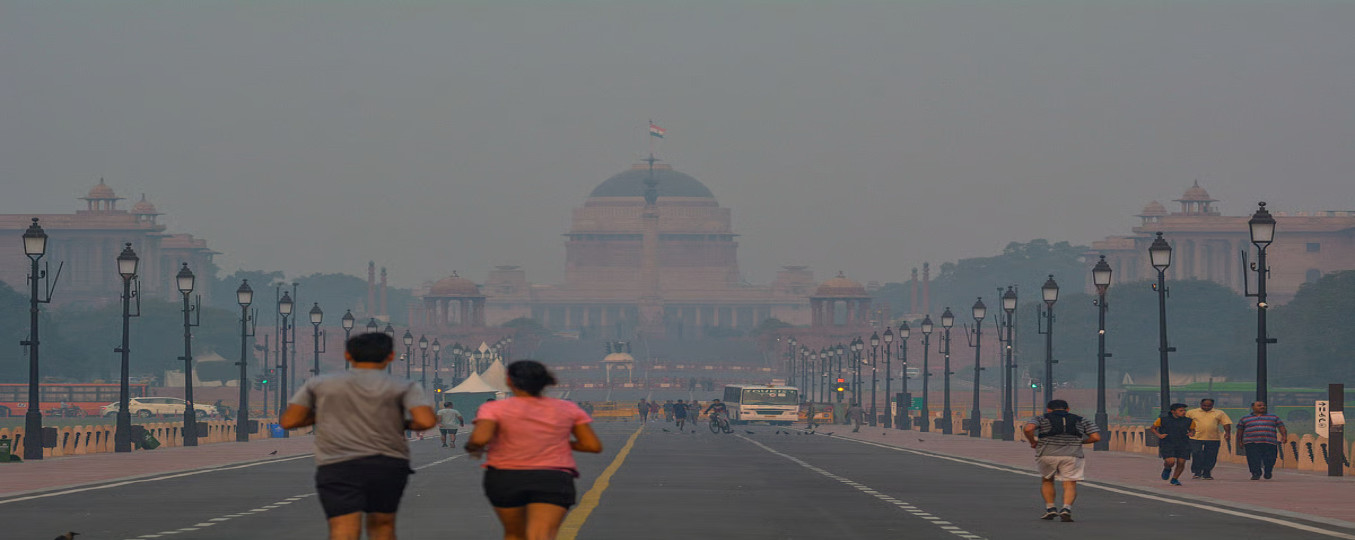
India's Second-from-Last Ranking
Study OAS Prism | August 5, 2026
What EPI 2026 Signals for India
India ranked 176th out of 177 countries in the Environmental Performance Index (EPI) 2026, published by Yale University's Center for Environmental Law & Policy (CELP) in collaboration with Columbia University's Center for International Earth Science Information Network (CIESIN). With a score of 22.46 out of 100, India stands above only Laos (21.78) in global environmental performance — and critically, ranks last among all eight South Asian countries assessed, trailing Bhutan, Sri Lanka, Nepal, Afghanistan, Pakistan, Maldives, and Bangladesh.
This is not merely an academic exercise. The EPI functions as a governance audit — measuring how effectively a country protects its citizens' health, manages its ecosystems, and meets its climate commitments. EPI 2026 opens multiple examination threads: constitutional law, environmental legislation, centre-state governance, international obligations, and the fundamental tension between rapid development and ecological sustainability.
The ranking was released in July 2026 and appeared prominently in national current affairs coverage on August 5, 2026. Experts have described it as a "wake-up call" — urging against dismissal on methodological grounds and insisting the underlying environmental crises are real and well-documented.
Understanding the Environmental Performance Index
The EPI is a biennial assessment first published in 2002. It provides data-driven, cross-national comparisons of environmental performance against policy targets. The 2026 edition evaluated 177 countries using 47 indicators across 12 issue categories, organised under three overarching policy objectives.
|
Policy Objective |
What It Covers |
|---|---|
|
Environmental Health (25% weight) |
Air quality, PM2.5 exposure, CO & SO? burden, drinking water safety, sanitation, lead exposure |
|
Ecosystem Vitality (45% weight) |
Biodiversity & habitat protection, tree cover, fisheries health (Marine Trophic Index), agriculture sustainability, water resources |
|
Climate Change (30% weight) |
CO? & methane emission trends, nitrous oxide, fluorinated gases, black carbon, share of clean energy |
The EPI does not measure a country's environmental policies or intentions. It measures actual, current environmental conditions on the ground — making it a particularly demanding yardstick for countries like India that have strong legislative frameworks but significant enforcement gaps.
India's Performance:
India's performance across the three policy objectives reveals a consistent pattern: poor environmental health, degraded ecosystems, and relatively better — but still inadequate — climate performance. The table below summarises India's standing.
|
Category |
India's Rank |
10-Year Trend |
Observation |
|---|---|---|---|
|
Environmental Health |
174th |
Declining |
Air quality is the primary drag; sanitation shows marginal improvement |
|
Ecosystem Vitality |
171st |
Declining |
Biodiversity loss, declining forest density, over-fished marine stocks |
|
Climate Change |
130th |
+13.98 pts (decade) |
India's relative strength; renewable energy growth contributing |
|
Air Quality (sub-index) |
174th |
Negative (decade) |
Despite Rs. 16,423 crore spent under NCAP; PM2.5, CO, SO? all show worsening trends |
|
Biodiversity (sub-index) |
174th |
Declining |
Marine Protected Area effectiveness score: −51.77; regional fish stocks depleted |
|
Overall (EPI Score) |
176th / 22.46 |
+7.47 pts (decade) |
Second from last; above only Laos (21.78). Estonia 1st at 74.79 |
One nuanced positive: India's ten-year change score is +7.47, meaning the trajectory is improving — but from an extremely low base. The rate of increase of SO? and NOx emissions has slowed, partly because of renewable energy expansion. This marginal improvement, however, is nowhere near sufficient to exit the bottom tier of global rankings.
The Air Quality Emergency:
India's ranking of 174th in air quality is its most damaging individual score in EPI 2026, and it reflects what may be the country's most acute public health crisis. Air pollution is estimated to cause over 1.67 million premature deaths in India annually (Global Burden of Disease data), making it the second-largest risk factor for mortality after malnutrition.
The NCAP Paradox
The National Clean Air Programme (NCAP), launched in January 2019, was India's most ambitious air quality intervention to date. The Centre allocated Rs. 16,423 crore to NCAP with a target of reducing PM2.5 and PM10 concentrations by 40% from 2017 baseline levels by 2026 in 131 non-attainment cities (cities that consistently fail to meet National Ambient Air Quality Standards).
By 2026, NCAP had achieved only approximately 15–18% reduction — a significant shortfall. Air quality indicators in EPI 2026 show negative trends over the decade in fine particulate matter (PM2.5) exposure burden, carbon monoxide, and sulphur dioxide. Despite massive public investment, measured outcomes on the ground have worsened.
Why Has NCAP Underperformed?
- Source attribution disputes: Crop residue burning, vehicular emissions, industrial pollution, and construction dust have different regulatory owners — with no single authority accountable for overall airshed quality.
- Airshed management absent: Air pollution crosses district and state boundaries. India lacks a regional airshed authority (except the Commission for Air Quality Management for the NCR, established in 2021) with binding enforcement powers.
- City-level plans without enforceable targets: State Action Plans under NCAP are advisory, not legally binding — giving industries and local bodies room to avoid compliance.
- Enforcement capacity: India has far too few trained SPCB inspectors relative to the scale of industrial and construction activity being monitored.
- 95%+ of monitored districts exceed WHO 2021 PM2.5 guidelines, according to the State of India's Environment 2026 report. This is a systemic failure, not an outlier.
India Below All South Asian Neighbours:
EPI 2026's most politically striking finding for India is its position within South Asia. India ranks last among the eight South Asian countries assessed, behind Bhutan, Sri Lanka, Nepal, Afghanistan, Pakistan, Maldives, and Bangladesh. This is paradoxical: India has stronger institutions, larger budgets, and more advanced industrial capacity than most of these neighbours — yet its measured environmental outcomes are worse.
|
Country |
Reason for Relative Performance |
|---|---|
|
Bhutan |
Constitutional mandate for 60% forest cover; small population; hydropower-based economy; Carbon Negative nation |
|
Sri Lanka |
Dense biodiversity legislation; smaller industrial footprint; extensive protected area network |
|
Nepal |
Himalayan ecosystem largely intact; reliance on hydropower; low industrialisation |
|
Maldives |
Oceanic geography; negligible heavy industry; strong international visibility on climate |
|
Pakistan |
Lower industrial density relative to population in certain metrics used by EPI; climate indicators differ |
|
Bangladesh |
Scores differently on certain environmental health sub-indicators despite major industrial pollution; EPI captures specific metric categories |
|
India (176th) |
Largest scale of coal mining and thermal power; rapid urbanisation without dust control; enforcement deficit in pollution-intensive states; large population exposed to PM2.5 |
An important caveat: The EPI captures current environmental conditions, not governance capacity. A country with low industrialisation will naturally have fewer pollution problems regardless of governance quality. India's poor ranking partly reflects the environmental cost of being the world's most populous country with the third-largest economy — a developmental reality the EPI's cross-country methodology does not fully adjust for.
Constitutional and Legislative Architecture: India's Environmental Law Edifice
Constitutional Provisions
India has one of the world's most explicit constitutional frameworks for environmental protection, built through progressive judicial interpretation and constitutional amendment.
- Article 48A (DPSP — Part IV): The State shall endeavour to protect and improve the environment and safeguard forests and wildlife. Inserted by the 42nd Constitutional Amendment, 1976. Though a Directive Principle (non-justiciable), it provides the constitutional mandate for environmental legislation.
- Article 51A(g) (Fundamental Duty — Part IVA): It is the duty of every citizen of India to protect and improve the natural environment including forests, lakes, rivers and wildlife, and to have compassion for living creatures. Also inserted by the 42nd Constitutional Amendment, 1976.
- Article 21 (Right to Life): The Supreme Court has expanded Article 21 to include the right to live in a clean and healthy environment. This judicial interpretation is the strongest constitutional tool available to citizens and environmental litigants.
- Article 253 (Legislation for International Obligations): Parliament can make laws for the whole country to implement India's international treaty obligations — the constitutional basis for legislation flowing from the Stockholm Conference (1972), Rio Declaration (1992), and Paris Agreement (2015).
Landmark Judicial Pronouncements
- Subhash Kumar v. State of Bihar (1991): The Supreme Court held that the right to live is a fundamental right under Article 21 of the Constitution and it includes the right of enjoyment of pollution-free water and air for full enjoyment of life.
- MC Mehta v. Union of India (Series, 1986 onwards): A series of PILs initiated by advocate M.C. Mehta before the Supreme Court tackled Ganga pollution, Mathura refinery fumes affecting the Taj Mahal, vehicular emissions in Delhi, and hazardous industries near residential areas. These cases established PIL as a vehicle for environmental accountability.
- Vellore Citizens' Welfare Forum v. Union of India (1996): The Supreme Court adopted the Precautionary Principle and the Polluter Pays Principle as integral parts of Indian environmental law, drawing from the Rio Declaration.
Environmental Legislation
|
Legislation |
Scope and Significance |
|---|---|
|
Environment (Protection) Act, 1986 |
Umbrella legislation; empowers Centre to take all measures necessary for environmental protection; spawned a range of rules and notifications |
|
Air (Prevention and Control of Pollution) Act, 1981 |
Established CPCB and SPCBs; regulates air quality standards and industrial emissions; basis for NCAP enforcement |
|
Water (Prevention and Control of Pollution) Act, 1974 |
India's first major environmental statute; established pollution control boards; regulates effluent discharge |
|
Forest (Conservation) Act, 1980 |
Prior approval of Central Government required for diversion of forest land for non-forest purposes; key safeguard against deforestation |
|
National Green Tribunal Act, 2010 |
Created NGT as India's first specialised environmental tribunal for speedy disposal of disputes; hears appeals against environmental clearances |
|
Biological Diversity Act, 2002 |
Established National Biodiversity Authority (NBA) and State Biodiversity Boards; regulates access to biological resources; implements CBD obligations |
International Commitments
- Paris Agreement (2015): India's updated Nationally Determined Contribution (NDC) commits to reducing the emissions intensity of GDP by 45% from 2005 levels by 2030 and achieving 50% of cumulative electric power from non-fossil fuel sources by 2030.
- Kunming-Montreal Global Biodiversity Framework (2022): India is a signatory to the 30×30 target — protecting 30% of land and ocean by 2030. The State of India's Environment 2026 report notes this target is "unlikely to be met without substantial new finance."
- Convention on Biological Diversity (CBD, 1992) and Ramsar Convention on Wetlands: India has 101 Ramsar sites (as of August 2026, with Glaw Lake in Arunachal Pradesh designated as the 101st on August 5, 2026). India is also a Party to CBD.
Debate: India's Defence and Its Limits
India's Ministry of Environment, Forest and Climate Change (MoEFCC) formally rejected the EPI 2022 rankings as being based on "surmises and unscientific methods." The government is likely to raise similar objections to the 2026 edition. Understanding this debate is important both for intellectual honesty and for examination answer-writing.
Legitimate Concerns about EPI Methodology
- Per-capita framing penalises scale: PM2.5 exposure burden is aggregated differently for a country with 1.4 billion people versus Estonia with 1.3 million. Absolute pollution levels in India are high partly because the country is vast and populous, not necessarily because its per-capita industrial output is uniquely dirty.
- Historical emissions inequity: The EPI measures current trends, not cumulative historical emissions. High-income countries that industrialised earlier have already externalised their environmental damage; India is doing so now and is penalised for it.
- Developmental stage not adequately adjusted: Bhutan's pristine environment reflects geography and a population of under 800,000, not a governance model that India's 1.4 billion people can directly replicate. Cross-national comparisons without robust GDP- and development-stage adjustments risk becoming misleading.
Why the Ranking Cannot Be Dismissed Entirely
Methodological imperfections do not invalidate the EPI's core findings for India. Anjal Prakash (FLAME University) articulated the balance best: "The ranking does capture real problems like air pollution, biodiversity loss, and fossil fuel dependence." Nilanjan Ghosh (Observer Research Foundation) noted that while the EPI "does not fully capture developmental realities," the challenges it identifies are genuine.
Yale researchers have been clear: the EPI measures "current environmental conditions, not policy intentions." India's constitutions, laws, and schemes are among the world's most ambitious on paper. The EPI reveals the gap between declaration and delivery — and that gap is India's true environmental challenge.
Structural Gaps in India's Environmental Governance
India has a robust environmental law architecture — but poor outcomes. This gap is not a coincidence. It reflects systematic governance failures at multiple levels.
- Regulatory fragmentation: Environmental governance is split across MoEFCC (Centre), State Pollution Control Boards, forest departments, urban local bodies, and district administrations. Overlapping mandates, unclear accountability, and weak coordination produce collective inaction.
- Enforcement deficit: SPCBs are chronically understaffed relative to the number of industrial units they oversee. Environmental compliance becomes a paperwork exercise rather than a ground-level reality.
- Regulatory capture: In mineral-rich states — Odisha, Jharkhand, Chhattisgarh, Rajasthan — pollution control boards face implicit and explicit pressure from industrial and political interests. The result is selective enforcement and tolerance of persistent violations.
- EIA process weakening: Environmental Impact Assessments are central to pre-project screening. Proposed amendments to the EIA notification (EIA Draft 2020) and various exemption categories for project categories have attracted criticism from environmental experts for potentially diluting this safeguard.
- NGT under resource pressure: The National Green Tribunal is India's primary environmental adjudicatory body, but it operates with limited judicial and expert strength relative to its enormous caseload. Vacancies and geographic concentration of benches limit access to environmental justice.
- Absent airshed governance: The Commission for Air Quality Management (CAQM, 2021) exists only for the NCR and adjoining areas. The rest of India — including heavily polluted cities like Talcher, Angul, Kanpur, and Patna — lacks equivalent inter-state air pollution governance.
Way Forward:
The path forward is neither denying the EPI's findings nor resigning to the developmental trade-off argument. It requires structural reforms that make India's existing legal framework actually work on the ground.
- National Airshed Management Authority: Extend the CAQM model nationally. Create statutory airshed management authorities for each major polluted region with binding enforcement powers over states, industries, and local bodies within the airshed.
- NCAP 2.0 — Binding Targets with Legal Consequences: Convert NCAP from an advisory framework to a legally enforceable mandate. Cities that miss air quality targets should face mandatory reduction in industrial approvals until compliance is achieved.
- Ecological Fiscal Transfers (EFTs): The 15th Finance Commission included ecological indicators in fiscal transfers — but the share is small. Future Finance Commissions should substantially increase the weight of forest cover, biodiversity conservation, and clean air outcomes in inter-governmental fiscal transfers to reward states that protect ecosystems.
- Strengthen NGT capacity: Fill all vacant positions in the NGT; establish permanent full benches in every High Court city; provide dedicated public prosecutors for environmental violation cases; grant NGT suo motu cognizance powers.
- Green industrial policy for SMEs: Mandate Best Available Technologies (BAT) for all Category A industries within a five-year timeline. Create a technology upgrade fund to help small and medium enterprises in the sponge iron, ceramic, and textile sectors transition to cleaner production processes.
- Implement 30×30 under Kunming-Montreal: Designate 30% of India's land and marine territory as legally protected areas by 2030. This requires identifying new conservation reserves beyond existing national parks and wildlife sanctuaries, including OECMs (Other Effective Area-Based Conservation Measures).
- Community environmental monitoring: Empower gram sabhas and urban ward committees with real-time AQI data access and legal standing to file pollution complaints with SPCBs. Environmental accountability is strongest when communities can see and report violations directly.
Mains Practice Question
Environment & Ecology | 250 words
"India's ranking of 176th in the Environmental Performance Index 2026 is not merely a reflection of its scale or developmental stage — it reveals deep structural failures in environmental governance." Critically analyse this statement, with reference to India's constitutional framework, legislative architecture, enforcement realities, and the specific challenges faced by states like Odisha. Suggest concrete reforms to bridge the gap between India's environmental law on paper and environmental outcomes on the ground.
StudyOAS | Odisha's Most Trusted OPSC Preparation Platform | studyoas.in