
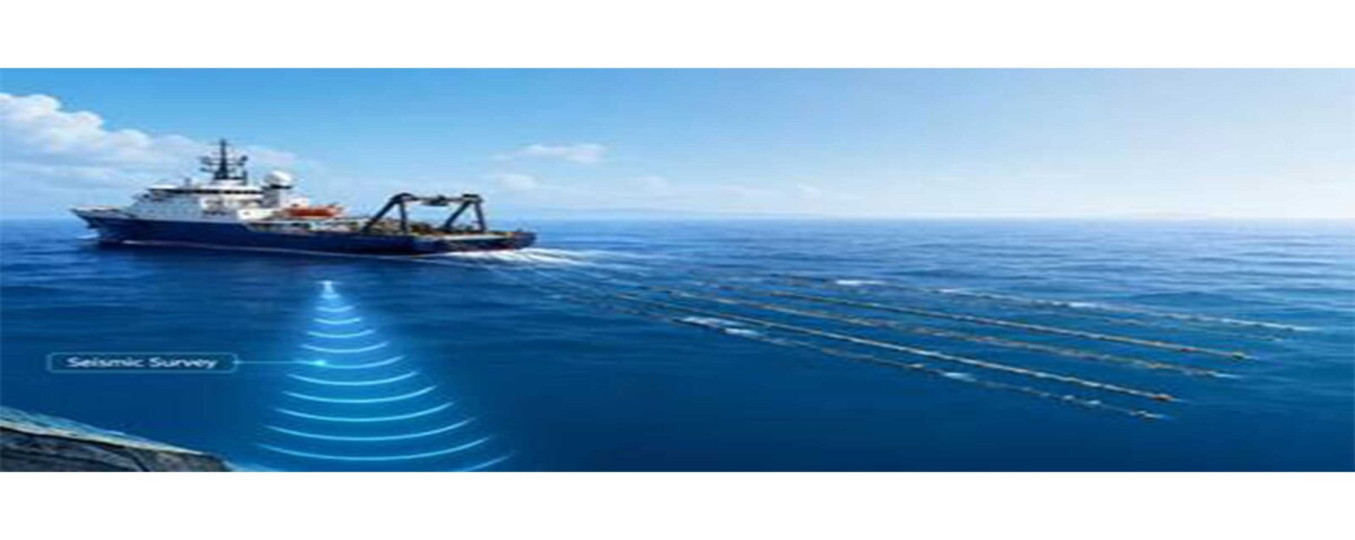
Unlocking India's Offshore Energy Frontier
National Offshore Exploration Scheme | Energy Security | Blue Economy | Odisha's Historic Moment
Study OAS Prism| 2nd August 2026
The Weight of Import Dependence:
India is the world's third-largest oil consumer, burning approximately 5.99 million barrels of petroleum every day. Of this, more than 85 percent is imported — a structural dependency that has persisted for three decades despite successive policy interventions. Every time crude prices climb on international markets, India's current account deficit widens, the rupee comes under pressure, and retail fuel prices strain the household budget. The import bill for crude and petroleum products is, year after year, the single largest component of India's merchandise import spending.
The consequences are not merely fiscal. India's Strategic Petroleum Reserve currently provides only 9.5 days of net import coverage — the International Energy Agency recommends 90 days. This gap means that any prolonged disruption in West Asian supply lanes, Strait of Hormuz shipping chokepoints, or a geopolitical spike in crude prices can structurally damage the Indian economy before domestic buffers provide any meaningful cushion.
It is in this context that the Union Cabinet's approval of Samudra Manthan — the National Offshore Exploration Scheme — on July 31, 2026, for a total outlay of ?84,084 crore (~USD 10 billion) acquires its full significance. This is not just another government scheme. It is India's most serious bet yet on unlocking the hydrocarbons that may lie beneath its 2.37 million square kilometre Exclusive Economic Zone (EEZ) — much of which remains geologically uncharted.
Samudra Manthan:
The scheme's name is deliberate. Samudra Manthan — the churning of the cosmic ocean from Hindu mythology — evokes the idea of drawing hidden treasures from the deep. The government's intent is precisely that: a systematic, mission-mode exploration of offshore sedimentary basins that have seen limited drilling compared to their geological promise.
|
Parameter |
Details |
|---|---|
|
Scheme Name |
Samudra Manthan (National Offshore Exploration Scheme) |
|
Cabinet Approval |
July 31, 2026 |
|
Total Financial Outlay |
?84,084 crore (~USD 10 billion) |
|
Duration |
FY 2026–27 to FY 2030–31 (5 years) |
|
Implementing Agency |
Ministry of Petroleum & Natural Gas; ONGC as primary operator |
|
Reserve Accretion Target |
>600 Million Metric Tonnes of Oil Equivalent (MMTOE) |
|
Total Offshore Potential |
~5,600 MMTOE across targeted basins |
|
Seismic Survey Coverage |
150,000 Line Kilometres (LKMs) across five basins |
|
Exploratory Wells Planned |
150 wells over programme window |
|
First Operational Well |
MN-DWN18-1-HD, Mahanadi Basin, off Odisha coast |
|
Spud Date of First Well |
July 25, 2026 (~23 nautical miles from Konark, Odisha) |
|
Water Depth |
>1,000 metres; basin extends to ~3,000 metres |
A. What the Scheme Actually Does
Samudra Manthan is not merely a financial allocation. It combines several distinct operational components that together form a vertically integrated offshore exploration programme:
- Seismic Data Acquisition at Scale: 150,000 line kilometres of 2D Broadband Marine Seismic and Gravity-Magnetic surveys across five offshore basins, providing the geological subsurface maps on which all subsequent drilling decisions rest.
- Accelerated Deepwater and Ultra-Deepwater Drilling: 150 exploratory wells planned over the programme window, using full-azimuth 3D seismic, Ocean Bottom Node (OBN) technology, and managed pressure drilling rigs.
- Common Offshore Infrastructure: Shared production and evacuation infrastructure — pipelines, subsea tiebacks, processing platforms — to reduce per-project costs and allow multiple discoveries to be monetised together.
- Integrated Manufacturing Zone: An Oil & Gas Manufacturing and Services Zone to build domestic supply chain capability and reduce dependence on imported rig components and deepwater services.
- DeepX — ONGC's Mission Unit: A dedicated deepwater exploration task force with more than 30 domain specialists, operating under a mission-mode mandate to accelerate discovery-to-development timelines.
- Digital Programme Management: A 'One Company, One Data' framework centralising geological intelligence across basins to prevent data silos that have historically slowed Indian exploration.
From NELP to HELP to Samudra Manthan:
To understand what Samudra Manthan represents, an aspirant must place it in the arc of India's exploration policy history. Each regime shift has tried to correct the failures of its predecessor.
|
Framework |
Period |
Feature |
Limitation |
|---|---|---|---|
|
Industrial Licensing / OIL-ONGC Nomination |
Pre-1999 |
State control; blocks assigned by nomination to PSUs |
No competition; low incentive for risk-taking |
|
NELP (New Exploration Licensing Policy) |
1999–2016 (9 Rounds) |
PSCs with cost-recovery model; private & foreign entry |
Cost-recovery inflated operator costs; disputes (KG-D6) |
|
HELP (Hydrocarbon Exploration and Licensing Policy) |
2016 onwards |
Revenue-sharing model; unified hydrocarbon licence |
Private participation still limited; PSU dominance |
|
OALP (Open Acreage Licensing Policy) |
2017 onwards |
Companies choose acreage; continuous e-bidding; 172 blocks awarded |
Bidders mainly ONGC/OIL; foreign majors largely absent |
|
Samudra Manthan |
2026–2031 |
?84,084 cr mission-mode offshore push; DeepX unit; 150 wells |
Execution & technological risk; 5–8 yr lag to production |
NELP (1999–2016) opened the sector to private and foreign players for the first time through Production Sharing Contracts. Nine bidding rounds awarded 400 PSCs and expanded explored acreage significantly. The regime produced India's most significant recent discovery — Reliance's KG-D6 gas field. However, the cost-recovery model created perverse incentives: operators could inflate costs, reducing the government's profit share. KG-D6's production decline became entangled in prolonged legal disputes.
HELP (2016) and OALP (2017) addressed the cost-recovery problem by shifting to a revenue-sharing model where the government takes a share from day one of production. The OALP introduced continuous bidding, allowing companies to carve out the acreage they wished to explore rather than waiting for scheduled bid rounds. Under OALP alone, 172 blocks covering 380,000 square kilometres have been awarded with committed investments exceeding $4.3 billion.
Samudra Manthan builds on this foundation but goes further. Where OALP relied on competitive bidding to drive exploration, Samudra Manthan uses public investment — ?84,084 crore — to de-risk the frontier basins through direct government-funded seismic surveys and drilling. The logic is that private capital will not enter basins where basic geological data does not yet exist; the state must create that data and demonstrate commercially viable structures before private investment can follow.
The Five Basins — And Why They Were Chosen
India's sedimentary area spans 3.14 million square kilometres across 26 basins — onshore and offshore. Of this, only about 11 percent was under active exploration before NELP; today that has risen considerably but the offshore deepwater zones remain the last great unexplored frontier. Samudra Manthan targets five basins, each on India's eastern or southern offshore.
|
Basin |
Survey Coverage |
Status |
Strategic Note |
|---|---|---|---|
|
Mahanadi Offshore (Odisha) |
~45,000 LKMs |
Leading priority — first well spudded July 2026 |
Utkal (2023) & Konark (2024) prior discoveries |
|
Bengal-Purnea |
~45,000 LKMs |
Active survey phase |
Sedimentary sequences in eastern offshore |
|
Krishna-Godavari (KG) |
~43,000 LKMs |
Ongoing exploration |
Proven producing basin; deepwater extension targeted |
|
Andaman |
~43,000 LKMs |
Frontier zone |
Gas indicators; high risk, high reward; sensitive ecology |
|
Cauvery Offshore |
~30,000 LKMs |
Under-explored |
Southeastern coast; Cretaceous sequences identified |
The concentration on the eastern offshore is not accidental. The Bay of Bengal is geologically contiguous with the gas-rich sedimentary basins of Myanmar, Bangladesh, and Indonesia. India's KG Basin already produces gas. The Mahanadi and Andaman basins represent the logical westward extension of the same geology — under Indian sovereign waters. The government's bet is that what lies beneath the Bay of Bengal is comparable to what sustained Myanmar's gas exports or Bangladesh's Bibiyana field.
Odisha at the Vanguard: The Mahanadi Basin Breakthrough
Of all the programme's basins, the Mahanadi Offshore Basin is designated the leading priority — and it is located off the coast of Odisha. This is one of the most significant economic developments for the state in recent memory, carrying implications that extend far beyond the oil sector.
A. The First Well: MN-DWN18-1-HD
On July 25, 2026 — just one week before the formal Cabinet approval of Samudra Manthan — ONGC spudded the first appraisal well in the Mahanadi deepwater block: MN-DWN18-1-HD. This well, located approximately 23 nautical miles from Konark in Odisha's Puri district, is the inaugural entry of a four-well deepwater appraisal programme. It is drilled in water exceeding 1,000 metres depth, with the basin floor extending to approximately 3,000 metres.
The well targets passive margin architecture comprising Cretaceous and Tertiary sedimentary sequences, turbidite fans, and submarine channel systems — the same geological formations that host major deepwater discoveries globally, from Brazil's pre-salt fields to West Africa's deepwater plays. The lateral continuity of hydrocarbon-bearing formations had been demonstrated at two prior ONGC discoveries: Utkal (2023) and Konark (2024), both in the Mahanadi block.
B. What Success Would Mean for Odisha
The Mahanadi basin's combined offshore potential is estimated to form a significant portion of the overall 5,600 MMTOE across all targeted basins. If even a fraction of this potential is confirmed as commercially recoverable, the implications for Odisha are transformative:
- Revenue Sharing: Under OALP's revenue-sharing model, the Union Government receives a share from production day one. While offshore royalties flow to the Centre under India's constitutional arrangement (the continental shelf and EEZ are Union List subjects), Odisha can negotiate — and has precedent to demand — a share through the Oil Industry (Development) Act framework and development fees structures. The state's engagement with the Ministry of Petroleum in this regard will be a critical governance challenge.
- Paradip as Offshore Support Hub: Paradip Port, already one of India's major natural harbours and home to IOCL's refinery (15 MMTPA capacity), is the nearest major port to the Mahanadi deepwater block. Offshore drilling programmes require substantial onshore logistics: supply vessels, pipe fabrication yards, crew transfer infrastructure, and specialised rig support services. Paradip is structurally positioned to become the primary support base for Samudra Manthan operations in the Mahanadi block.
- Employment and Skilling: The offshore oil industry is one of the highest-wage formal employment sectors. Petroleum engineering, marine logistics, subsea technology, and offshore fabrication create a skill pyramid ranging from engineering graduates to skilled ITI-trained workers. Odisha's coastal districts — Kendrapara, Jagatsinghpur, Puri, and Ganjam — have a significant pool of marine-experienced population that could be trained for this industry.
- State Energy Security: If gas is discovered in commercial quantities offshore Odisha, it can feed directly into Odisha's industrial corridor — the Paradip Petrochemical Hub, the PCPIR (Petroleum, Chemicals and Petrochemicals Investment Region) notified in Jagatsinghpur, and the planned expansion of the fertiliser and polymer industries that depend on natural gas as feedstock.
C. Odisha Government's Role and Obligations
Offshore exploration falls under Union jurisdiction, but the state government is not a passive observer. Odisha must proactively engage on several fronts: ensuring environmental safeguards for the Odisha coast's marine ecology (Olive Ridley turtle nesting grounds in Gahirmatha, Devi, and Rushikulya are in proximity to the offshore blocks); negotiating infrastructure agreements around Paradip Port; supporting workforce development through industrial training institutes and the Odisha Skill Development Authority (OSDA); and positioning the state's OGDCL (Odisha Gas Distribution Company Limited) for potential downstream gas distribution if offshore gas is eventually piped ashore.
What This Scheme Reveals About India's Energy Governance
Samudra Manthan is analytically interesting not just for what it attempts, but for what it reveals about the structural tensions in India's energy governance.
A. The State vs Market Dilemma
India's repeated failure to attract substantial private investment in upstream exploration — despite NELP and OALP — reveals a market failure in frontier basin exploration. When geological data is absent, no private investor will take the first-mover risk. Samudra Manthan essentially acknowledges this market failure and deploys public capital to create the pre-competitive data that private capital can then exploit. This is a well-established global model — Brazil's ANP did the same for its pre-salt basins. The question is whether ONGC, as a state enterprise operating in a politically sensitive sector, can execute with the agility that the Brazilian model required.
B. The Transition Paradox
India has simultaneously committed to achieving 500 GW of renewable energy capacity by 2030 and to reducing its oil import dependence through domestic production. These two goals are not in immediate conflict — India needs both hydrocarbons for the transition decade and renewable capacity for the long term — but they compete for capital, policy bandwidth, and skilled human resources. A government that is investing ?84,084 crore in offshore fossil fuel exploration must simultaneously ensure that this does not crowd out or delay the renewable transition. The answer lies in sequencing: use domestic oil and gas to reduce the import bill and conserve foreign exchange while renewable infrastructure is scaled up. But the window is tight — if offshore production only materialises in the early-to-mid 2030s, the renewable transition must proceed in parallel, not wait.
C. India's EEZ and the Geopolitical Dimension
India's 2.37 million sq km EEZ in the Indian Ocean is a resource frontier that overlaps with China's growing naval presence and its 'String of Pearls' maritime strategy. Surveying and drilling India's offshore zones is not merely an energy policy act — it is a form of maritime domain assertion. Every ONGC rig in the Mahanadi deepwater block or the Andaman basin is a physical marker of India's sovereign resource rights. Samudra Manthan thus has a strategic maritime dimension that conventional energy analysis often misses.
Where Samudra Manthan May Stumble
Every major scheme has structural weaknesses, and Samudra Manthan is no exception. The following are real constraints, not hypothetical ones.
- Geological Uncertainty Is Non-Negotiable: Resource potential estimates of 5,600 MMTOE are probabilistic assessments of geological potential — not proved reserves. Frontier basin exploration has a global commercial success rate of roughly 10–20 percent for exploratory wells. India could spend ?84,084 crore and find substantially less than projected. This is the inherent risk of exploration.
- Talent Deficit in Ultra-Deepwater: India currently lacks a domestic talent pool in ultra-deepwater drilling operations. The DeepX unit's 30+ specialists are a beginning, not an adequate workforce for 150 wells across deepwater basins. India will remain dependent on international specialists for critical well engineering, subsea completion, and deepwater production testing — creating both cost exposure and technology dependency.
- Time Lag to Production: Even an optimistic discovery scenario requires five to eight years from exploration confirmation to initial production. Production from Samudra Manthan's first wells, if successful, would realistically contribute to India's supply only from the early-to-mid 2030s. India's import dependence problem is today — it will not be solved by Samudra Manthan within the current decade.
- ONGC's Execution Track Record: ONGC has historically struggled to convert discoveries to production efficiently. The KG-D6 story involved Reliance, not ONGC, but ONGC's own deepwater blocks have seen extended delays. Public sector culture, bureaucratic procurement, and coalition management within the ministry create execution friction that private operators do not face to the same degree.
- Environmental Blind Spot: The scheme's design, as publicly announced, does not detail an environmental management framework for offshore drilling in ecologically sensitive zones. The Andaman Islands are a biodiversity hotspot and a UNESCO-eligible ecosystem. Odisha's offshore is within range of major Olive Ridley turtle nesting beaches. An offshore drilling accident — a blowout, a pipeline leak — would be catastrophically damaging to Odisha's fisheries economy, which sustains approximately 9 lakh fisher families along the coast.
- No State Revenue Guarantee: Offshore resources under India's EEZ belong to the Union. Odisha receives no guaranteed royalty from offshore production (unlike onshore, where states receive 12.5 percent royalty on oil and gas). The state can negotiate infrastructure benefits and employment, but will not receive a direct resource revenue stream without a constitutional or legislative amendment — a structural inequity that the state government must flag proactively.
Way Forward: From Seismic Surveys to Sovereign Self-Reliance
The success of Samudra Manthan will depend on decisions that go beyond the scheme itself. The following priorities emerge from an analysis of India's exploration history and the scheme's structural design:
- Data Quality Over Well Quantity: The quality of seismic interpretation determines the value of every drilling dollar. India must invest in advanced seismic processing centres, AI-driven geological interpretation, and partnerships with global data service companies to maximise the scientific return from the ?84,084 crore investment.
- SPR Expansion in Parallel: While Samudra Manthan works to increase domestic production over the next decade, India's strategic petroleum reserve must be expanded concurrently. The government has allocated ?5,597 crore for Phase II SPR underground storage. Achieving at least 30 days' coverage within five years should be a minimum target — consistent with India's IEA membership obligations.
- Private Capital as the Second Wave: Samudra Manthan's seismic data should be made available to private and international companies on transparent terms once surveys are complete. The goal is to convert public geological knowledge into private exploration investment, as Brazil's ANP successfully did post-2007. A well-designed data sharing protocol under the DGH would catalyse this transition.
- Odisha's Legislative and Administrative Engagement: The Odisha government should constitute a dedicated Offshore Resources Facilitation Cell under the Industries Department to track exploration progress, negotiate with MoPNG on infrastructure agreements, coordinate with the Odisha Maritime Board on Paradip support infrastructure, and ensure that Odisha's ITIs and engineering colleges begin offering petroleum and offshore technology programmes.
- Environmental Governance with Teeth: An independent Offshore Environmental Monitoring Authority, with representation from the Ministry of Environment, the Geological Survey of India, the Zoological Survey of India, and state governments, should be constituted before drilling programmes expand. Liability frameworks for offshore accidents must be strengthened under the Oilfields (Regulation and Development) Act framework.
- Renewable Energy Must Run Concurrently: Samudra Manthan buys India time but not a permanent solution. The government must ensure that the scheme does not delay or crowd out the renewable energy transition. Domestic oil and gas, if found, should be treated as a bridge fuel, not a destination.
Possible Mains Practice Question
OPSC OAS Mains – General Studies Paper II / UPSC GS Paper III | 250-word Answer Type
"India's Samudra Manthan (National Offshore Exploration Scheme) is simultaneously a declaration of energy ambition and an acknowledgement of strategic vulnerability." In the light of this statement, critically examine the rationale, design, and likely challenges of the scheme. What specific measures should the Government of Odisha adopt to maximise the state's gains from offshore exploration in the Mahanadi basin?