
Introduction
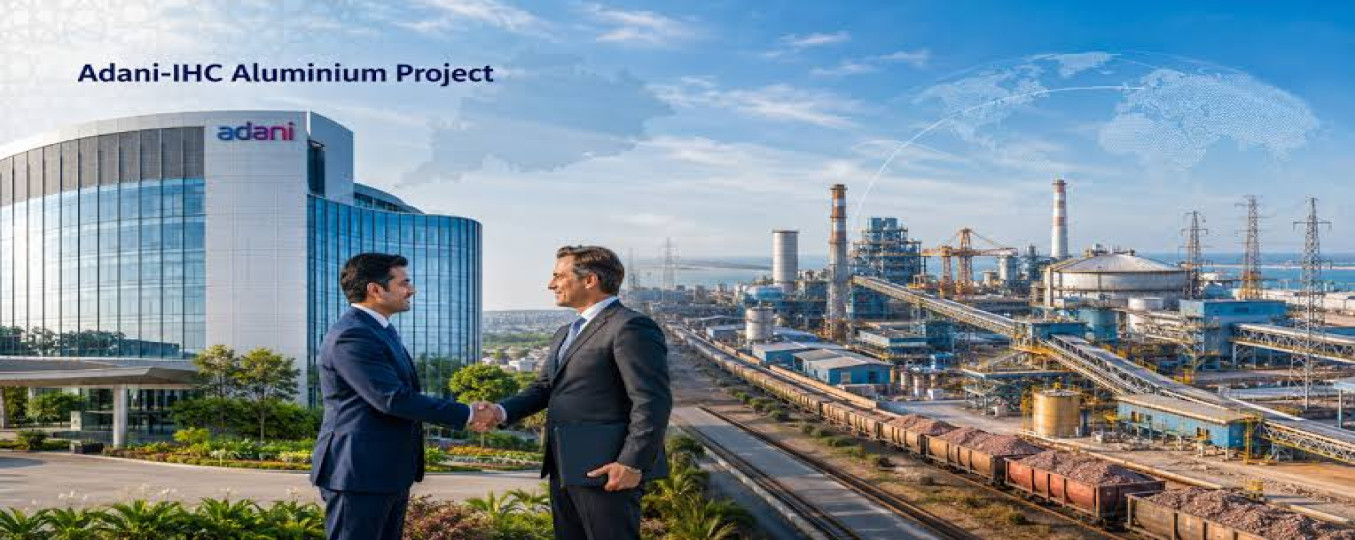
On July 2, 2026, a single memorandum of understanding changed the economic trajectory of Odisha. The Adani Group and Abu Dhabi's International Holding Company (IHC) signed an MoU to jointly invest $11.5 billion — approximately ?1.08 lakh crore — in a greenfield integrated aluminium complex across two Odisha districts. Described as India's largest-ever foreign direct investment in the metals sector, this project is not merely an industrial milestone. It is a case study in how India's resource geography, bilateral diplomacy, industrial policy, tribal rights law, and environmental governance converge in one state.
For OPSC aspirants, this development demands attention on at least five fronts simultaneously: the constitutional protections governing tribal land, the economic logic of aluminium as a strategic commodity, the evolving India-UAE strategic partnership, Odisha's ambition to become India's industrial engine, and the unresolved tension between large-scale industrialisation and tribal welfare that has defined Odisha's development story for decades.
---
About the Topic
The Parties and the Deal
The MoU was signed on July 2, 2026, in the presence of Odisha Chief Minister Mohan Charan Majhi. The two joint venture partners hold equal 50-50 stakes:
Adani Enterprises Limited (AEL): The flagship company of the Adani Group, which already holds bauxite mining leases at Kutrumali and Bahalda mines in Odisha. AEL brings its existing mineral resource base and infrastructure development capability to the project.
International Holding Company (IHC): One of the Middle East's most valuable diversified holding companies, headquartered in Abu Dhabi. IHC operates through more than 1,300 subsidiaries spanning technology, infrastructure, financial services, and industrial sectors. It is chaired by Sheikh Tahnoun bin Zayed Al Nahyan, who also serves as the UAE's National Security Adviser — a combination that signals this is as much a strategic bilateral commitment as a commercial investment. IHC participates in this project through its subsidiary International Resources Holding (IRH), also referred to as 2PointZero.
CEO of IHC, Syed Basar Shueb, framed the investment as "building long-term platforms in industries that will define the future." This phrasing matters: aluminium is not just a metal; it is central to electric vehicles, aviation, defence equipment, green energy infrastructure, and semiconductors — the physical backbone of the 21st-century economy.
The Integrated Facility: What Is Being Built
This is not a standalone smelter. It is an integrated aluminium value chain — one of the most comprehensive industrial complexes proposed in India. The facility comprises:
- Alumina Refinery: 4 million metric tonnes per annum (MMTPA), located in Rayagada district across 3,200 acres
- Aluminium Smelter: 2 MMTPA, located in Sundargarh district across 4,100 acres
- Captive Power Plant: 4,000 megawatts, which includes a 400-MW green energy component
- Downstream Manufacturing Park: 1 MMTPA, producing finished aluminium products for industrial and consumer applications
The total land requirement exceeds 7,300 acres across two districts. This scale sets the stage for both the project's transformative potential and its implementation challenges.
Raw Material: Odisha's Bauxite Advantage
Aluminium begins with bauxite ore, which is refined into alumina, which is then smelted into aluminium metal. Odisha holds approximately 54% of India's total bauxite reserves — the highest concentration of any state in the country. Currently, the state accounts for roughly half of India's domestic aluminium output.
Bauxite for the project will be sourced from three mines:
- Sasubahumali: Operated by Odisha Mining Corporation (OMC), a state government entity
- Kutrumali: Held by Adani Group
- Bahalda: Held by Adani Group
The integration of a state PSU mine alongside private mining leases in a joint project reflects Odisha's approach of combining public mineral assets with private capital for industrial development.
Phasing and Timeline
The investment is structured in two phases:
- Phase 1: $6.9 billion (approximately ?66,000 crore)
- Phase 2: $4.6 billion (approximately ?44,000 crore)
The regulatory and construction timeline is realistic but lengthy: 12 to 18 months are required for statutory approvals, followed by approximately 41 months of construction. This means the first metal is unlikely before 2029. Analysts note that environmental and land clearances in India have historically moved slower than initial projections — a caution every aspirant preparing for governance questions must hold.
Why Now? India's Aluminium Deficit
India faces a structural demand-supply gap in aluminium that is widening rapidly. Domestic consumption is projected to reach 8.5 million metric tonnes by FY2030. Current production falls approximately 4.5 million tonnes short of that target. India imports significant quantities of aluminium products despite having world-class bauxite reserves — a paradox that reflects the infrastructure bottleneck more than any shortage of raw material.
This project, at full capacity, would increase India's total aluminium production capacity by approximately 50%. The economic case is self-evident: reduce imports, build a domestic supply chain for EVs and defence manufacturing, generate employment, and assert India's position in the global aluminium market.
Employment: The Human Scale
The project is expected to create 53,500 direct jobs:
- 35,000 during the construction phase
- 18,500 during the operations phase
Beyond this, indirect employment in logistics, engineering services, equipment manufacturing, and ancillary industries would significantly expand the total employment footprint in two districts that have historically lagged in formal employment.
---
The OAS Prism: Multiple Perspectives
Constitutional & Legal Dimension
- The constitutional implications of this project operate at multiple layers, and this is where the examination value is highest.
- Fifth Schedule of the Constitution: Both Rayagada and Sundargarh districts contain Scheduled Areas under the Fifth Schedule of the Constitution. The Fifth Schedule empowers the Governor of a Scheduled State to apply or modify central or state laws in scheduled areas, with the objective of protecting tribal communities from alienation of land and exploitation. Any industrial project in these areas must navigate this constitutional framework.
- PESA Act, 1996 (Panchayats Extension to Scheduled Areas Act): The PESA Act extends the spirit of Panchayati Raj to tribal areas while mandating that the Gram Sabha must be consulted — and its consent obtained — before land acquisition, minor forest produce governance, or mining activity in scheduled areas. The Gram Sabha is the guardian of community rights in scheduled areas, and any bypassing of this institution would be constitutionally suspect.
- The Forest Rights Act, 2006: The FRA recognises community forest rights (CFRs) of tribal communities over forests they have traditionally used. Bauxite in Odisha's tribal belt is overwhelmingly located under or adjacent to forest land. Forest clearance under the Forest Conservation Act, 1980 (amended 2023) is mandatory, and the gram sabhas of affected villages must give consent for diversion of forest land in scheduled areas.
- LARR Act, 2013 (Land Acquisition, Rehabilitation and Resettlement Act): The Right to Fair Compensation Act requires 80% consent of landowners for private projects and 70% for PPP projects in non-scheduled areas. For projects in scheduled areas, the threshold and process are even more community-centred.
- Samatha vs State of Andhra Pradesh (1997): This landmark Supreme Court judgment held that land in scheduled areas cannot be leased to non-tribal private companies for mining under the Andhra Pradesh Land Transfer Regulation Act and related provisions. While subsequent judicial and legislative developments have refined its scope, Samatha remains the foundational precedent for tribal land rights in the mining context. Its application to Odisha's Kutrumali and Bahalda leases is a question that courts may yet examine.
- Article 21 and Environmental Jurisprudence: The Supreme Court has consistently held since M.C. Mehta vs Union of India (1987) that the right to life under Article 21 includes the right to a clean and healthy environment. Any environmental degradation caused by mining or the smelter's emissions can invite constitutional challenge.
- Article 48A and Article 51A(g): Article 48A (Directive Principle) imposes an obligation on the State to protect the environment, while Article 51A(g) makes it a fundamental duty of every citizen to do the same. These provisions anchor environmental protection within the constitutional scheme.
- Article 39(b): The Constitution mandates that material resources of the community must be distributed to serve the common good. Whether a private-foreign joint venture controlling Odisha's bauxite serves this mandate is a live debate in political philosophy and constitutional law.
Economic Dimension
- At 1.08 lakh crore, this is the single largest foreign direct investment ever proposed in India's metals sector. The economic implications unfold at three levels.
- For India: The project directly addresses India's structural dependency on aluminium imports by expanding domestic capacity. Aluminium is integral to the EV transition, aerospace manufacturing, defence production, and green energy infrastructure (wind turbines, solar panel frames). As India scales up its Defence Production Policy and PLI schemes for EVs and electronics, domestic aluminium availability becomes a strategic necessity, not just a commercial preference.
- For Odisha: Odisha stands to gain significantly. The state already earns substantial royalty revenues from its mineral endowment, but the value addition in mining is modest compared to refining and smelting. By anchoring the full aluminium value chain — from mine to downstream products — within the state, Odisha can dramatically increase its industrial GDP, GSDP contribution from manufacturing, and tax revenues. Sundargarh and Rayagada, both in the bottom quartile of Odisha's per-capita income rankings despite their mineral richness, could see genuine economic transformation. This is a classic case of converting resource wealth into development outcomes — if managed well.
- For the Common Citizen: The project creates 53,500 direct jobs in tribal districts where formal employment opportunities are scarce. The downstream manufacturing park, producing finished aluminium products, creates a supplier ecosystem for local MSMEs. The multiplier effect in construction, hospitality, transport, and trade could be substantial over the project's lifetime.
- The caution: large-scale industrial projects in India have often created jobs without proportionately benefiting the displaced. The POSCO steel plant proposed in Jagatsinghpur, Odisha — once a $12-billion FDI — was eventually abandoned in 2017 after 12 years of delays caused by land acquisition resistance and local opposition. The lesson is that economic promise requires community trust to translate into economic reality.
Social Dimension
- Rayagada and Sundargarh are tribal-majority districts. Rayagada is home to communities including the Dongria Kondh — a Particularly Vulnerable Tribal Group (PVTG) — who achieved national attention through the Niyamgiri Hills judgment (Vedanta case, 2013), when gram sabhas unanimously voted against bauxite mining in their sacred hills. Sundargarh has a predominantly tribal population across its scheduled areas.
- The social stakes of this project are therefore high. Large-scale land acquisition in these districts risks displacing families from ancestral land, disrupting traditional livelihoods dependent on forest resources, and severing the connection between tribal identity and geography that the Constitution itself recognises as worth protecting.
- Conversely, a project that fails to create local employment and instead imports skilled labour from outside — a common pattern in large industrial projects — would deepen the cynicism that has made communities resistant to development initiatives for decades.
- The social dividend of this project will be determined not by the MoU, but by the rehabilitation and resettlement plan, the language of the Environmental Impact Assessment, and whether gram sabhas are genuinely empowered or procedurally managed.
- Women and gender equity also deserve attention. Tribal women in these districts are primary collectors of minor forest produce and depend on common lands for subsistence. Displacement without gender-sensitive rehabilitation risks pushing already vulnerable women further into poverty.
Environmental Dimension
- Aluminium production is among the most energy-intensive industrial processes in the world. The smelting of 2 million tonnes annually requires an enormous power supply — hence the proposed 4,000 MW captive power plant. While the project includes a 400 MW green energy component, the remainder would likely rely on thermal generation, at least in the initial phases. This means significant carbon emissions from day one.
- Bauxite mining itself carries environmental costs: deforestation, topsoil loss, disruption of local hydrology, and the generation of red mud (also called bauxite residue) — a highly alkaline waste product produced in large volumes per tonne of alumina refined. Red mud disposal is a serious environmental engineering challenge, and spills have caused major ecological damage globally. India's existing alumina refineries are still evolving their red mud management practices.
- Both Rayagada and Sundargarh have significant forest cover that forms part of the Eastern Ghats ecosystem — a biodiversity hotspot. The 7,300-plus acres of land required will include forest land that needs to be diverted, affecting the forest carbon stock and wildlife corridors.
- NITI Aayog's 2026 Roadmap for Aluminium Sector Decarbonisation identifies green aluminium — produced using renewable energy — as a strategic priority. The 400 MW green component in the proposed plant is a beginning, but far short of a credible decarbonisation commitment given the 4,000 MW total requirement. This gap should be narrowed through enforceable milestones in the environment clearance conditions.
Odisha Perspective
- This project is Odisha's most consequential industrial investment in a generation. It must be read against Odisha's own development vision: Samruddha Odisha 2036 — the state's blueprint for equitable, sustainable, and rapid economic development — and the national Viksit Bharat 2047 agenda.
- Odisha already has a well-established aluminium industry anchor in NALCO (National Aluminium Company Limited), a Navratna Central PSU with its alumina refinery at Damanjodi (Koraput district) and its aluminium smelter at Angul. NALCO's model — integrating captive bauxite mines, refinery, smelter, and captive power in Odisha — is the template the Adani-IHC project expands upon at a far larger scale. Unlike NALCO, which is government-owned and thus governed differently under the Fifth Schedule jurisprudence, the Adani-IHC project is a private-foreign joint venture, which raises distinct constitutional and policy considerations.
- Odisha's Fiscal Significance: The project would generate significant royalty revenues from bauxite mining, GST revenues from industrial activity, and stamp duty revenues from land transactions — all accruing to Odisha. Odisha was recently recognised as a top performer in fiscal management among Indian states; this project could further strengthen its fiscal position if properly structured.
- Lessons from Odisha's FDI History: The POSCO experience (2005–2017) remains the most cautionary precedent. A $12-billion South Korean steel FDI collapsed after 12 years due to unresolved land acquisition, environmental clearances, and community opposition. The lesson for the Adani-IHC project is explicit: fast-tracking of approvals without community consent creates delays, not speed.
- At the same time, Vedanta's Lanjigarh alumina refinery — operating near Niyamgiri Hills in Kalahandi district — has been mired in controversy over bauxite mining access. The Dongria Kondh's successful gram sabha resistance in 2013 established that no mine proceeds in a scheduled area without community consent, regardless of commercial stakes. Rayagada shares the same geographic and cultural landscape.
International Dimension
- The Adani-IHC project is embedded in the broader India-UAE strategic partnership. The India-UAE Comprehensive Economic Partnership Agreement (CEPA), signed on February 18, 2022 and entered into force on May 1, 2022, was India's first CEPA signed with any Gulf Cooperation Council country. It provides for enhanced market access, reduced tariffs, and frameworks for investment facilitation between the two nations.
- UAE is India's third-largest trading partner and second-largest export destination. The fact that IHC — chaired by the UAE's National Security Adviser, Sheikh Tahnoun bin Zayed Al Nahyan — is making this investment signals a deepening of not just trade but strategic economic interdependence. Abu Dhabi's sovereign wealth ecosystem deploying capital into India's resource sector is a structural shift in how Gulf capital relates to the Indian economy.
- The project also positions India-produced aluminium within UAE's supply chains and global industrial networks, potentially opening export pathways for Indian aluminium to Gulf construction, aviation, and manufacturing markets.
---
Benefits:
- Bridging India's Aluminium Deficit: India currently consumes more aluminium than it produces, despite sitting on 54% of the country's bauxite reserves being in one state. This project would add 2 MMTPA of smelting capacity — increasing India's total capacity by roughly 50% — dramatically reducing import dependence.
- India's Largest Metals FDI: At $11.5 billion, this is an unprecedented vote of confidence by foreign capital in India's industrial sector. It positions India as a credible destination for long-horizon resource investments.
- Job Creation in Lagging Districts: Rayagada and Sundargarh are economically backward despite mineral richness. The 53,500 direct jobs — and far more indirect — could transform the local labour market if accompanied by skilling programs for tribal youth.
- Full Value Chain Integration: Most industrial investments in Odisha have focused on primary processing. This project covers the entire aluminium value chain — from bauxite to downstream products — maximising value addition within the state rather than exporting raw material and importing finished goods.
- India-UAE Strategic Partnership: The involvement of an IHC — a quasi-sovereign entity chaired by UAE's NSA — deepens the economic foundation of the India-UAE strategic partnership, adding a resource-sector dimension to what has been primarily a trade and remittance relationship.
- Green Energy Commitment: The 400 MW renewable energy component, while modest relative to the total 4,000 MW requirement, establishes a precedent for green aluminium production that can be scaled over time in line with NITI Aayog's decarbonisation roadmap.
- Alignment with Viksit Bharat 2047: Self-sufficiency in strategic materials — including aluminium for defence, EVs, and infrastructure — is central to India's Viksit Bharat goals. This project directly advances that objective.
---
Challenges in this Project:
- Tribal Displacement Risk: Over 7,300 acres of land in scheduled areas with significant tribal populations will need to be acquired. The history of industrial land acquisition in Odisha — POSCO, Vedanta, and others — shows that displacement without adequate rehabilitation breeds resistance that ultimately derails projects.
- Gram Sabha Non-Compliance Risk: The PESA Act mandates Gram Sabha consent in scheduled areas. Any perception that gram sabhas are being managed procedurally rather than genuinely empowered will invite legal challenge and social conflict. The Niyamgiri precedent cannot be dismissed.
- Environmental Clearance Complexity: Diverting forest land in two environmentally sensitive districts, managing red mud from a 4 MMTPA alumina refinery, and addressing the carbon footprint of a 4,000 MW captive plant — primarily thermal — will face intense regulatory and judicial scrutiny.
- POSCO Syndrome: The project is currently an MoU — a statement of intent, not a binding investment commitment. The gap between MoU signing and ground-breaking in Odisha has historically been enormous. Overconfidence in "committed FDI" figures has repeatedly misled state planning.
- Energy Intensity and Climate Commitments: India has committed to net zero by 2070 and has NDC targets under the Paris Agreement. A 3,600 MW net thermal captive plant — the likely outcome after subtracting the 400 MW green component — contradicts these commitments unless a clear timeline for transition to renewable energy is mandated.
- Monopoly Concerns: Adani Group already controls ports, airports, energy, and now expanded mining in Odisha. Concentration of a critical industrial chain in one private conglomerate raises questions under competition law and resource governance frameworks.
- Land Conflicts: The 3,200 acres in Rayagada and 4,100 acres in Sundargarh — totalling over 7,300 acres — are not vacant government land. They are likely to include private agricultural land, common land, and forest land on which tribal families depend. The LARR Act's consent and compensation requirements will determine whether land acquisition is smooth or contentious.
- Water Stress: Aluminium refining and smelting are water-intensive processes. Both Rayagada and parts of Sundargarh experience seasonal water stress. Environmental clearances will need to comprehensively address water sourcing, treatment, and return flow.
---
Way Forward
- The Adani-IHC project can become Odisha's — and India's — most significant industrial success story, but only if implementation is governed by constitutional principle rather than administrative convenience.
- Robust Gram Sabha Process: The state government and companies must ensure that gram sabhas in every affected village are convened under proper PESA and FRA protocols, given full information in local languages, and allowed to make genuinely free decisions. This is not procedural compliance; it is constitutional obligation.
- Tribal Benefit-Sharing Model: Beyond rehabilitation and resettlement, the project should institutionalise a tribal benefit-sharing mechanism — such as a dedicated fund from royalties and industrial revenues — that ensures mining-affected communities share in the long-term economic gains. Odisha's own District Mineral Foundation (DMF) framework, established under the MMDR Act, 2015, provides the mechanism; its effective implementation is the test.
- Accelerated Green Energy Transition: The 400 MW renewable component should be a baseline, not a ceiling. The clearance conditions should mandate a phased schedule for expanding the green energy share — ideally to 50% of captive generation within 10 years — in line with NITI Aayog's aluminium sector decarbonisation roadmap.
- Red Mud Management as a Mandatory Condition: Environment clearance must include enforceable standards for red mud storage, leachate treatment, and long-term remediation. No clearance should be granted without a scientifically validated red mud management plan that meets international best practices.
- Timeline-Bound Single Window Clearance: Odisha's SITI (State Investment and Trade Initiative) framework should be leveraged to provide time-bound, single-window clearances — but without compromising the quality or legality of environmental and social assessments.
- Learning from NALCO's Model: NALCO's integrated model — built over four decades with strong community relationships and progressive environmental practices — offers institutional lessons for the private sector. Adani-IHC would benefit from formal knowledge exchange with NALCO before committing to operational parameters.
- Judicial Review Readiness: Given the constitutional complexity of this project, legal challenges are almost certain. The government and companies must ensure procedural compliance at every stage so that judicial review, when it comes, upholds rather than nullifies the project's approvals.
---
Conclusion
The ?1.08 lakh crore Adani-IHC aluminium project in Odisha represents the kind of convergence that transforms states and nations: abundant natural resources, global capital, strategic bilateral relationships, industrial policy ambition, and decades of evolving legal frameworks around tribal rights and environmental governance — all meeting in two districts of one of India's most mineral-rich but development-lagged states. For Odisha, this is the opportunity to finally monetise its geological fortune in a manner that builds lasting economic infrastructure. For India, it is a step toward resource sovereignty in a material that will define the next century of technology and infrastructure. For the tribal communities of Rayagada and Sundargarh, it is a moment of both possibility and existential risk.
The project will succeed — genuinely and sustainably — only if the Odisha government demonstrates that constitutional principle and administrative efficiency are not opposites, but partners. That is also the deepest lesson this project offers to every future civil servant studying it today.
---
Mains Question
"The ?1.08 lakh crore Adani-IHC integrated aluminium project in Odisha has been described as a transformative industrial investment and a potential governance stress test in equal measure. Critically examine how the constitutional protections available to tribal communities in Odisha's Scheduled Areas — particularly under the Fifth Schedule, PESA Act, and Forest Rights Act — should guide the clearance, implementation, and benefit-sharing framework of such large-scale private-foreign industrial projects in mineral-rich tribal regions."
© StudyOAS — Odisha's Most Trusted OPSC Preparation Platform