Introduction
For decades, the districts of western and southern Odisha — Kalahandi, Balangir, Nuapada, Kandhamal, Boudh, Gajapati — have carried a troubling paradox. These are lands rich in minerals, forests, and human labour, yet they have consistently ranked among the most underdeveloped in the country. The KBK (Kalahandi-Bolangir-Koraput) belt became a national symbol of starvation, distress migration, and child labour — problems debated in Parliament, examined by committees, and addressed through special development packages — and yet, the structural gaps never fully closed. The reason is not difficult to find: the dominant model of development in these districts has been extraction — of minerals, of timber, and ultimately of labour — without building the kind of diversified industrial base that creates lasting employment and local value.
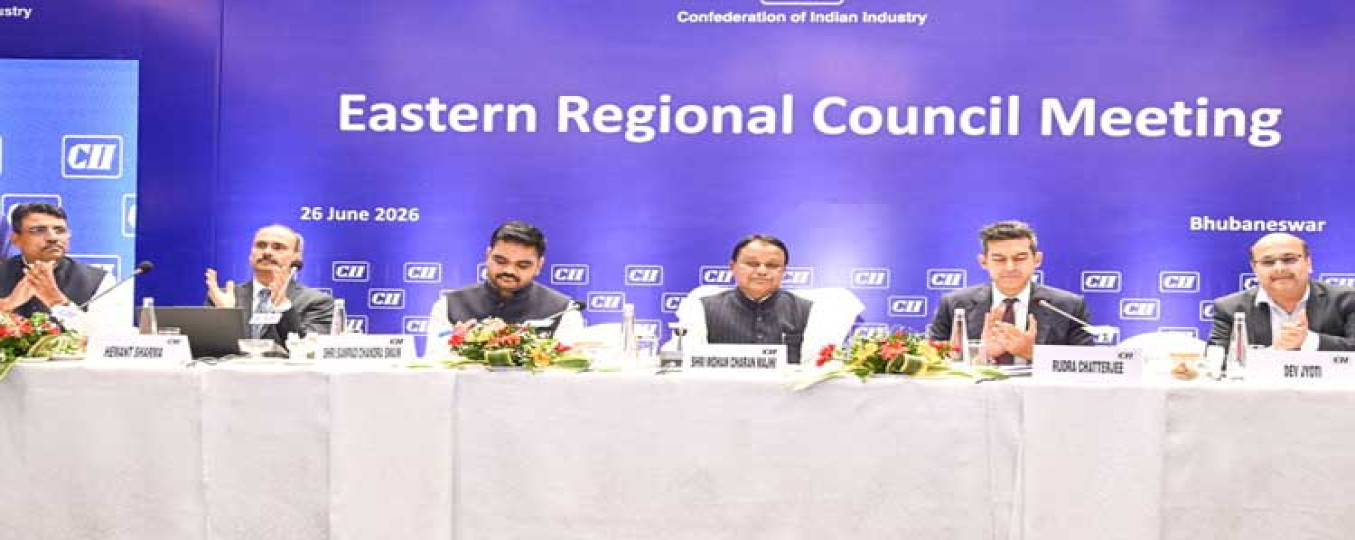
This is precisely the context in which Odisha Chief Minister Mohan Charan Majhi launched the GO-EAST initiative on 26 June 2026 at the CII Eastern Regional Council Meeting. Standing before some of India's most influential industrialists, the CM unveiled not just a new policy platform but a deliberate course correction — a formal commitment to industrialise the margins of Odisha by drawing investment away from its traditional mineral-belt concentration and redirecting it towards the 15 most economically backward districts of the state. The accompanying amendment to Odisha's Industrial Policy Resolution (IPR) 2022 gave this commitment institutional teeth.
About the Topic
Full Form: GO-EAST stands for Government of Odisha – Eastern Investment Accelerator and Special Task Force.
It is a dedicated investment facilitation platform designed to attract industries from eastern and northeastern India while also accelerating project approvals and streamlining implementation for all investors choosing to set up operations in Odisha's underdeveloped districts. The name carries a deliberate strategic signal: as India's economic centre of gravity increasingly shifts eastward — driven by ports, resources, and a young workforce — Odisha wants to anchor that eastward momentum.
Launch and Institutional Framework:
CM Majhi launched GO-EAST on 26 June 2026 at the CII (Confederation of Indian Industry) Eastern Regional Council Meeting 2026. The platform operates through two institutional pillars:
1. GO-EAST Cell — A dedicated unit established within IPICOL (Industrial Promotion and Investment Corporation of Odisha), which is the nodal agency for investment facilitation in the state. This cell provides single-window handholding for investors from inquiry through implementation.
2. GO-SWIFT Module — A digital platform for real-time monitoring of project approvals, incentive disbursement, and implementation progress. It is designed to eliminate the opacity that historically plagued approval processes and allowed bureaucratic delay to become a structural deterrent to investment.
The IPR-2022 Amendment:
The Industrial Policy Resolution 2022 was Odisha's existing industrial framework providing incentives such as 20-30% capital investment subsidy, ?2/unit power support for Priority and Thrust sector industries, 100% electricity duty exemption, and SGST reimbursement. The June 2026 amendment expanded the scope of "Thrust Sector" status to cover 15 economically backward districts specifically for non-mineral-based industries. This is significant because it deliberately steers incentives away from mining and towards sectors like food processing, textiles, electronics, engineering, chemicals, semiconductors, and advanced manufacturing.
The six districts that received "Thrust Sector" status under this amendment are: Balangir, Kalahandi, Nuapada, Kandhamal, Boudh, and Gajapati. These are among the most historically marginalised in the state. The policy covers nine additional backward districts not publicly named in the initial announcement.
Investment and Employment Numbers:
Since June 2024, Odisha has approved 477 industrial projects worth approximately ?9.5 lakh crore. Of these, 152 projects valued at over ?3.11 lakh crore are already in the implementation stage. The full project pipeline is projected to generate employment for approximately 6 lakh people.
At the CII meeting itself, seven companies signed MoUs worth ?24,823 crore in proposed investments, spanning chemicals (Shyam Metallicks: ?20,000 crore), power (K Urja: ?2,472 crore), green energy equipment (CESC Green Energy: ?684 crore), steel downstream (Hebe Steel, Mascot Steel), and textiles (Nandaraj Textile: ?169 crore). These 7 MoUs alone are projected to create approximately 29,500 jobs.
Governance Transformation:
One of the most striking operational metrics is the reduction in project establishment timelines. Average time from project approval to establishment has been brought down from approximately 400 days to under 160 days. The government has set a target of reducing this further to under 100 days — a benchmark that, if achieved, would make Odisha one of the most operationally efficient investment destinations in the country.
---
The OAS Prism: Multiple Perspectives
Constitutional & Legal Dimension
Industrial policy in India operates within a federal framework defined by the Seventh Schedule of the Constitution. Entry 52 of the Union List grants Parliament control over industries "the control of which by the Union is declared by Parliament by law to be expedient in the public interest." Entry 24 of the State List allows states to regulate industries other than those in the Union List, which gives Odisha the constitutional authority to design its own industrial policy, including the IPR-2022 and its amendment. The concurrent jurisdiction under Entry 33 of the Concurrent List covers products of industries where control serves public interest.
The deeper constitutional tension lies in tribal governance. Several of the 15 backward districts identified under GO-EAST — including Kandhamal, Gajapati, Kalahandi, Balangir, and Nuapada — contain Scheduled Areas under the Fifth Schedule of the Constitution (Article 244). These areas are governed by special regulations, and the tribal population in them retains specific protections under the PESA Act, 1996 (Panchayats (Extension to Scheduled Areas) Act). PESA mandates that Gram Sabhas in Scheduled Areas must be consulted before land acquisition, displacement of tribals, or exploitation of natural resources. Any industrial project in these districts must navigate this framework carefully.
Additionally, the Forest Rights Act (FRA), 2006 governs the use of forest land in areas where tribals have traditional rights. Land acquisition for industrial purposes in such areas requires prior recognition of forest rights — a step that has been skipped in several past projects with damaging consequences. Article 46 (DPSP) places a constitutional obligation on the state to promote the educational and economic interests of Scheduled Castes and Scheduled Tribes. The GO-EAST policy, if implemented with these protections embedded, would be a model of constitutional compliance; if not, it risks repeating the displacement-driven development model that has historically fuelled unrest in these districts.
Article 19(1)(g) guarantees the freedom to practice any profession or carry on any trade, and the state's facilitation role through GO-EAST supports this right. The Directive Principles under Articles 38 and 39 — particularly Article 39(b) and (c) on preventing concentration of wealth and ensuring equitable distribution of resources — provide the philosophical mandate for directing investment towards backward regions rather than allowing it to cluster only in already-developed districts.
Economic Dimension
The economic logic of GO-EAST rests on a diagnosis that Odisha has long understood but been slow to act upon: mineral dependence is a structural vulnerability. When a state economy is dominated by mining, it becomes hostage to global commodity cycles. The collapse of iron ore prices in 2014-16, and the repeated closure of mines due to environmental or legal orders, have demonstrated how quickly mining-dependent districts can slip into economic distress. Non-mineral manufacturing — textiles, food processing, electronics, chemicals — provides more stable employment and builds local supply chains.
The investment pipeline approved since June 2024 (?9.5 lakh crore, 477 projects) signals genuine momentum in Odisha's investment environment. The reduction in project timelines from 400 to under 160 days directly reduces the cost of doing business by eliminating interest burden during prolonged approval phases. For small and medium industries, this difference can determine whether a project is financially viable at all.
Odisha's eastern location gives it a natural advantage for an eastward-looking industrial strategy. The state has two major ports — Paradip (one of India's largest) and Dhamra — that offer connectivity to ASEAN markets. Attracting manufacturing from eastern and northeastern states capitalises on this locational advantage while also deepening regional economic integration within India.
The KBK region, which accounts for a significant portion of the 15 backward districts, has one of the highest rates of distress migration in Odisha. Industries that absorb local labour — particularly textiles and food processing — can reduce this outflow, keep income within the district economy, and build the tax base for further local development.
Social Dimension
The social stakes of GO-EAST are high precisely because the districts it targets are not blank canvases. They are home to some of Odisha's most vulnerable communities. Odisha has 62 Scheduled Tribes accounting for approximately 22.85% of the state's population (2011 Census), and the tribal concentration in the 15 backward districts is significantly higher than the state average.
Historically, industrialisation in these districts has meant mining — and mining has meant displacement, loss of forest livelihoods, and cultural disruption. The IPR amendment's explicit emphasis on non-mineral industries is therefore a socially significant signal. Food processing industries can be built around existing agricultural produce (maize, millets, pulses, vegetables) that tribals and marginal farmers already grow, creating a demand-side incentive that strengthens their livelihoods rather than displacing them.
Women's employment is another critical social dimension. Textiles and garments — listed as a focus sector — are industries where women constitute a large share of the workforce. In districts where women's labour force participation is low and where social barriers to employment are significant, a well-designed textile park can change the economic calculus for an entire household.
The distress migration that plagues western Odisha — where workers travel to Surat, Andhra Pradesh, and other states under exploitative arrangements — is not merely an economic problem; it fractures families, exposes migrants to trafficking and bonded labour, and deprives sending districts of their most productive workforce. Industrial employment near home can be a more effective social protection than cash transfers alone.
Environmental Dimension
The environmental profile of GO-EAST's target districts demands careful attention. Western and southern Odisha contain significant portions of the Eastern Ghats biodiversity hotspot, dense forest tracts, and the catchment areas of major rivers including the Mahanadi, Indravati, and Tel. The 15 backward districts include areas with high forest cover and critical wildlife habitats.
The deliberate shift from mineral to non-mineral industries is environmentally welcome — textiles, food processing, and electronics have a lighter land and water footprint than iron ore mining or bauxite extraction. However, the risk of displacement-led deforestation and water overuse does not disappear with this shift. Chemical and petrochemical industries — also on the focus list — carry their own environmental risks, particularly related to effluent discharge and groundwater contamination.
Among the seven MoUs signed at the CII meeting, the presence of CESC Green Energy (?684 crore in green energy equipment manufacturing) and K Urja (?2,472 crore in power) suggests an awareness of the green transition. Industries that manufacture renewable energy equipment contribute to India's energy security without the environmental damage of fossil fuel industries.
The state must ensure mandatory Environment Impact Assessments (EIA) are not diluted for backward area projects under the justification of development urgency. There is historical precedent — both nationally and within Odisha — of EIA processes being weakened in the name of investment facilitation, with severe long-term consequences.
Odisha Perspective
GO-EAST is, at its core, a story about Odisha confronting a problem it has lived with for generations: the geography of poverty within a resource-rich state. The KBK belt — covering districts that GO-EAST explicitly names — entered national consciousness in the 1980s with reports of starvation deaths, child sales, and migration under bonded labour conditions. Despite special packages (the Revised Long-Term Action Plan for KBK, BRGF, PMGSY, and multiple state schemes), the structural gap between coastal Odisha and the interior districts has persisted.
Odisha has built considerable credibility as an investment destination. The state has ranked consistently high in DPIIT's Business Reform Action Plan assessments and has successfully attracted major industrial investments — POSCO (later restructured), Vedanta, NALCO, SAIL, Tata Steel — primarily in the coastal belt and resource-rich central districts. The challenge that GO-EAST attempts to address is that investment has not been geographically balanced. Bhubaneswar-Cuttack, the Kalinganagar corridor, and Angul-Talcher have attracted disproportionate industrial attention, while western and southern Odisha have remained on the margins of this growth story.
IPICOL's institutional role is central here. The Industrial Promotion and Investment Corporation of Odisha Limited has been the primary interface between the state government and investors for decades. The establishment of a dedicated GO-EAST Cell within IPICOL signals that the initiative is not a one-time event but an embedded institutional priority. Whether this cell is adequately staffed, empowered, and funded will determine the initiative's longevity beyond the current political cycle.
The place renaming exercise approved by Odisha's cabinet in 2026 — covering 64 places to restore Odia cultural identity — reflects the same political attention to these interior districts that GO-EAST embodies. Together, these signal a state administration working to reassert its presence and relevance in areas long neglected.
International Dimension
The "eastern" in GO-EAST has an international subtext that deserves examination. India's eastern seaboard and the Bay of Bengal rim are at the centre of several significant geopolitical and economic frameworks. BIMSTEC (Bay of Bengal Initiative for Multi-Sectoral Technical and Economic Cooperation), of which India is a member, emphasises regional connectivity and trade across the Bay of Bengal. Odisha, with its ports at Paradip and Dhamra, is physically positioned to benefit from any deepening of India's economic ties with Bangladesh, Myanmar, and Thailand.
The global China+1 strategy — where multinational companies seek to diversify manufacturing away from China — has benefited India's coastal states significantly. The textiles and electronics sectors, both of which GO-EAST targets, are at the heart of this supply chain realignment. Eastern Odisha's industrial corridors can integrate into this emerging manufacturing geography if they offer the right combination of land, power, labour, and logistics.
Bangladesh is Odisha's most immediate competition in the textiles sector. Bangladesh's garment industry, which employs millions of women and generates a major share of its export earnings, was built on precisely the combination of factors — low-cost labour, efficient port access, government incentives — that eastern Odisha can now offer. The competitive advantage is real, but only if the policy execution matches the ambition.
Pros / Opportunities
Balanced regional development: By explicitly targeting the 15 most economically backward districts, GO-EAST attempts to correct the geographical skew in Odisha's industrial map. Investment flowing into Balangir, Nuapada, or Kandhamal creates multiplier effects that no amount of centrally-funded welfare spending can replicate.
Structural diversification of the state economy: The amendment to IPR-2022 is a formal break from mining dependency. Non-mineral industries in these districts create more stable employment, build supply chains linked to local agriculture, and generate SGST revenue without depleting non-renewable resources.
Institutional improvement through digitisation: The GO-SWIFT module and the reduction in approval timelines from 400 to under 160 days address a genuine structural barrier. Ease of doing business reforms that are quantifiable and digitally auditable are more credible than rhetorical commitments.
Employment near home: Industries in backward districts reduce the compulsion for distress migration. Every textile worker or food processing employee retained in Kandhamal represents a family held together and a remittance that stays within the local economy.
Green energy manufacturing: The inclusion of green energy equipment manufacturing among the MoU sectors aligns with India's climate commitments and positions Odisha to benefit from the global clean energy transition.
Leveraging Odisha's investor credibility: Odisha's track record of honouring industrial commitments, combined with the institutional framework of IPICOL, provides a foundation of trust that newer investment destinations in the region cannot match.
Cons / Challenges
Tribal land rights and PESA compliance: Several of the six named districts — Kandhamal, Gajapati, Kalahandi, Balangir — contain Scheduled Areas. Industrial land acquisition in these areas without proper Gram Sabha consultation and FRA compliance will invite both legal challenges and social conflict. The state has a history of displacement-induced unrest in precisely these districts.
Infrastructure gaps: The backward districts targeted by GO-EAST lack the roads, power reliability, and railway connectivity that investors assume as baseline. Chemical and electronics industries, in particular, require stable 24x7 power supply that the transmission networks in these districts currently cannot guarantee. Building this infrastructure is a precondition, not a byproduct, of investment.
Skilled labour deficit: Food processing and textiles can absorb semi-skilled workers, but chemicals, petrochemicals, and electronics manufacturing require a technically trained workforce. Existing ITIs and polytechnics in these districts are under-resourced, and without a parallel investment in skill development, the employment promise will be hollow.
Environmental risk in fragile ecosystems: Industrialisation in the Eastern Ghats belt and river catchment areas carries real ecological risk. The pressure to fast-track approvals (from 400 to 100 days) must not come at the cost of skipping or diluting Environment Impact Assessments. Regulatory shortcuts in ecologically sensitive areas create liabilities that outweigh short-term investment gains.
Political economy of mining interests: Odisha's mineral economy is entrenched and politically powerful. The shift towards non-mineral industries threatens mining contractors, logistics networks, and ancillary service providers who have built their businesses around extraction. Resistance to this shift — including policy reversals after political cycles — is a genuine risk.
Monitoring and accountability: The GO-SWIFT module promises real-time tracking, but digital platforms are only as effective as the political will behind them. Several state governments have built impressive investment monitoring dashboards that quietly fell into disuse. Without independent social auditing and parliamentary oversight, promises made in a CII auditorium can remain promises.
Way Forward
The ambition of GO-EAST is commendable. The execution challenges are predictable. Here is how the state can close the gap between vision and reality:
Embed PESA and FRA compliance as non-negotiable preconditions: Before any industrial project is granted land in a Fifth Schedule area, the state must complete a formal FRA settlement process and convene Gram Sabhas as required by PESA. This is not just legally mandatory — it is the only path to projects that don't face decade-long litigation and community resistance.
Front-load infrastructure investment: The Central Government's PM Gati Shakti initiative and the National Infrastructure Pipeline offer platforms through which Odisha can demand dedicated infrastructure funding for the 15 backward districts. Roads, power transmission lines, and railway sidings must precede, not follow, industrial units.
Establish industrial skill development clusters: Each of the focus sectors should be linked to a dedicated ITI or skill development centre in the target district. The PM Vishwakarma Yojana and PM Kaushal Vikas Yojana 4.0 provide financial frameworks for this. Local training, in local languages, with local faculty, is far more effective than relocating workers to distant training centres.
Independent social and environmental auditing: The Comptroller and Auditor General (CAG) should be empowered to audit not just the financial aspects of GO-EAST projects but their employment claims and environmental compliance. Civil society organisations with a presence in these districts should be formally included in monitoring committees.
Integrate GO-EAST with the KBK Special Development Plan: The KBK region has its own long-term development plan, and the two frameworks must be harmonised to avoid duplication, jurisdictional conflict, or the creation of separate bureaucratic silos that weaken both.
Leverage BIMSTEC for export-oriented units: The government should negotiate with the Central government to designate at least one export-oriented zone in the backward district cluster that enjoys BIMSTEC-linked preferential trade agreements, allowing industries to access the Bangladesh and Myanmar markets more competitively.
Conclusion
GO-EAST is among the most geographically and constitutionally significant policy moves by the Odisha government in recent years. It acknowledges a structural failure — the concentration of industrial growth in already-developed corridors — and attempts to engineer a correction through institutional means. Whether it succeeds will depend on two things that no policy document can guarantee: consistent political will across election cycles, and genuine respect for the rights of the communities in whose backyard these industries will operate.
For Odisha's backward districts, the stakes could not be higher. A generation of young men and women from Nuapada, Boudh, and Kandhamal who today pack their belongings and head to Surat or Bengaluru could, within a decade, have reason to stay home if GO-EAST delivers. That possibility — modest, incremental, but real — is what makes this initiative worth watching carefully, writing about thoughtfully, and asking hard questions about relentlessly.
Important Facts for Prelims
- GO-EAST stands for Government of Odisha – Eastern Investment Accelerator and Special Task Force
- Launched by Chief Minister Mohan Charan Majhi on 26 June 2026 at the CII Eastern Regional Council Meeting
- Operates through a dedicated GO-EAST Cell within IPICOL (Industrial Promotion and Investment Corporation of Odisha)
- GO-SWIFT is the digital monitoring module for real-time project approval and incentive tracking
- 15 economically backward districts granted "Thrust Sector" status under amended IPR-2022; six named: Balangir, Kalahandi, Nuapada, Kandhamal, Boudh, Gajapati
- Project establishment timelines reduced from 400 days to under 160 days; target is under 100 days
- 477 industrial projects worth ?9.5 lakh crore approved in Odisha since June 2024; 152 projects worth ?3.11 lakh crore in implementation
- 7 MoUs signed at CII meeting worth ?24,823 crore; projected employment: 29,500
- IPR-2022 incentives include: 20-30% capital investment subsidy, ?2/unit power support, 100% electricity duty exemption, full SGST reimbursement
- PESA Act, 1996 and Fifth Schedule (Article 244) of the Constitution govern industrial activity in Scheduled Areas within these districts
- KBK region (Kalahandi-Bolangir-Koraput) — historically associated with distress migration, starvation, and underdevelopment
- IPICOL — Industrial Promotion and Investment Corporation of Odisha Limited — is the nodal agency for investment facilitation in the state
Mains Question
"Odisha's GO-EAST initiative represents a structural shift from resource extraction to diversified manufacturing in India's most backward tribal districts. However, the history of industrialisation in Scheduled Area districts warns against repeating the displacement-for-development model."
Critically examine the constitutional safeguards available for tribal communities in Odisha's backward districts and assess whether the GO-EAST initiative, as currently structured, adequately incorporates these protections. Suggest a governance framework that can balance industrial growth with tribal rights. (250 words)