
GS Paper 2 – Polity & Governance | Fundamental Rights | IT Act, 2000 | Judiciary
GS Paper 3 – Cyber Security
Why in News?
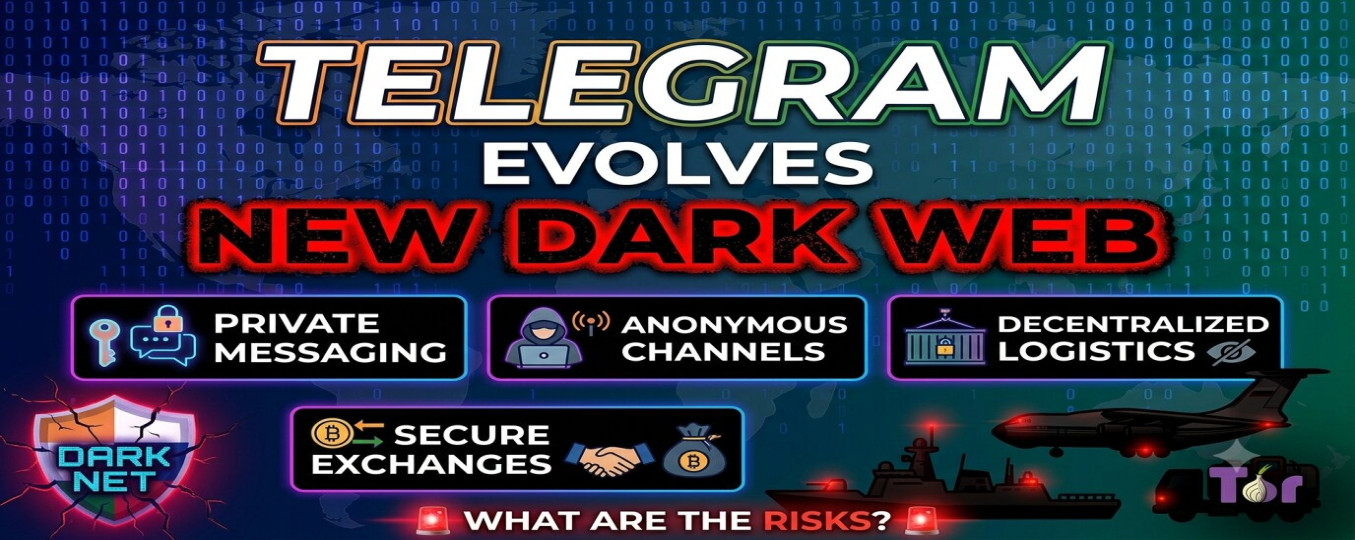
The Union Government recently informed the Delhi High Court that the messaging platform Telegram has evolved into the "new dark web", alleging that its privacy-focused architecture and encryption features have made it a preferred platform for cybercriminals, fraud syndicates, extremist organisations, terrorist groups, and networks involved in examination paper leaks.
Appearing on behalf of the Centre, Solicitor General Tushar Mehta relied on an assessment prepared by the Indian Cyber Crime Coordination Centre (I4C), which described Telegram as a growing hub for illegal online activities.
Based on these concerns, the Government imposed restrictions on Telegram under Section 69A of the Information Technology Act, 2000, effective until 22 June 2026, particularly ahead of the NEET-UG re-examination. Telegram has challenged this restriction before the Delhi High Court, and the court has reserved its judgment.
The case has reignited debate over the balance between national security, cybercrime prevention, and constitutional freedoms in the digital age.
Government's Case Against Telegram
The Government has advanced several arguments to justify the temporary restriction.
1. Misuse by Criminal Networks
According to the Government:
• Telegram's privacy and encryption features help users conceal their identities.
• Such features have allegedly enabled cybercriminals, online fraud networks, extremist organisations, and terrorist groups to coordinate activities with limited traceability.
2. Findings of the I4C
The assessment prepared by the Indian Cyber Crime Coordination Centre (I4C) forms the foundation of the Government's argument.
The report reportedly identifies Telegram as a growing centre for:
• Cyber fraud
• Illegal financial activities
• Criminal communication networks
• Extremist propaganda
• Other forms of illicit online activity
3. Examination Paper Leak Concerns
The Government also referred to the earlier misuse of Telegram during the alleged medical entrance examination paper leak controversy.
According to official submissions:
• Telegram channels were used to circulate leaked examination material.
• The platform also became a source of misinformation campaigns related to examinations.
The current restriction has therefore been timed specifically to prevent any recurrence during the NEET-UG re-test.
Section 69A of the Information Technology Act, 2000
The legal foundation of the restriction lies in Section 69A of the IT Act, 2000.
This provision empowers the Central Government to block public access to information available through any computer resource when it is necessary in the interests of:
• Sovereignty and integrity of India
• Defence of India
• Security of the State
• Friendly relations with foreign States
• Public order
• Preventing incitement to the commission of any cognizable offence
Thus, Section 69A serves as the primary statutory mechanism through which the Government can order the blocking of online content or digital platforms.
Procedural Safeguards Under Section 69A
The power to block information is not absolute.
Blocking orders must follow the Information Technology (Procedure and Safeguards for Blocking Access to Information by the Public) Rules, 2009.
These Rules require:
Designated Officer Mechanism
A designated officer processes requests for blocking.
Review Committee
A review committee examines whether the blocking order complies with legal requirements.
Recorded Reasons
Authorities must record reasons for the restriction before issuing blocking orders.
Judicial Review
Blocking decisions remain subject to scrutiny by constitutional courts.
The Principle of Proportionality
Over the years, the Supreme Court has emphasized that restrictions on digital platforms must satisfy the proportionality test.
The test generally examines:
• Whether the measure is necessary
• Whether a less restrictive alternative exists
• Whether the restriction is proportionate to the threat
• Whether judicial review remains available
This principle has become central to digital governance cases.
Section 79 and the Safe Harbour Protection
Another important provision is Section 79 of the IT Act, 2000.
This section grants "safe harbour" protection to intermediaries such as social media platforms.
Under this provision:
• Platforms are generally not liable for third-party content.
• Protection is available only if intermediaries exercise due diligence.
• They must comply with the Information Technology Rules, 2021.
• Illegal content must be removed promptly once lawful notice is received.
The case therefore raises the question of whether platform-wide restrictions should replace the existing notice-and-takedown framework.
Constitutional Concerns Raised by the Ban
1. Impact on Freedom of Speech and Expression
Telegram reportedly has around 150 million users in India.
A platform-wide restriction affects:
•Content creators
• Teachers and educators
• Journalists
• Small businesses
• Entrepreneurs
• Civil society groups
Many users rely on Telegram channels and broadcast groups to communicate and share information.
This raises concerns under Article 19(1)(a), which guarantees freedom of speech and expression.
2. Impact on Livelihoods
Several businesses and educators depend on Telegram for:
• Marketing
• Course delivery
• Subscriber communication
• Customer engagement
A complete restriction can therefore affect Article 19(1)(g), which guarantees the freedom to practise a profession, trade, or business.
Anuradha Bhasin Case and Internet Freedom
A major constitutional reference point is the Supreme Court judgment in:
Anuradha Bhasin v. Union of India (2020)
The case arose from internet restrictions imposed in Jammu and Kashmir.
The Supreme Court held that:
• Freedom of speech and expression extends to the internet.
• Freedom to conduct business through the internet enjoys constitutional protection.
• Restrictions must satisfy the proportionality test.
• Such restrictions must remain open to judicial review.
This judgment continues to guide courts when evaluating digital restrictions.
Is a Platform-Wide Ban Proportionate?
One of the most important questions before the Delhi High Court is whether a complete restriction on Telegram satisfies the requirement of proportionality.
Critics argue that:
• Specific channels involved in illegal activities could be blocked.
• Individual accounts could be suspended.
• Targeted enforcement may achieve the same objective.
Therefore, a platform-wide restriction may not represent the least restrictive means available. This issue lies at the heart of the ongoing legal challenge.
Transparency Concerns
Another challenge relates to transparency.
Under the 2009 Blocking Rules:
• Blocking orders remain confidential.
• The public often does not know the exact grounds invoked.
• Independent scrutiny becomes difficult.
Critics argue that excessive secrecy can undermine accountability and public trust.
The Way Forward
A balanced approach is necessary to address both national security concerns and constitutional freedoms.
1. Prefer Targeted Enforcement
Wherever possible, authorities should focus on:Channel-level blocking, Account-level action and Specific content removal rather than imposing platform-wide restrictions.
2. Strengthen Cooperation with Platforms
Closer coordination between:I4C, Ministry of Home Affairs (MHA) and Social media intermediaries can improve notice-and-takedown mechanisms under Section 79.
3. Institutional Review of Section 69A Orders
Periodic review by:Parliament, Independent oversight bodies, Courts can ensure compliance with constitutional standards.
4. Greater Transparency
Minimum disclosure norms regarding blocking orders should be considered without compromising national security or ongoing investigations. Such reforms would strengthen due process and public confidence.
Conclusion
The Telegram case has once again brought Section 69A of the Information Technology Act, 2000 to the centre of India's digital governance debate.
On one hand, the Government argues that Telegram's privacy architecture has facilitated cybercrime, examination paper leaks, and extremist activities. On the other hand, critics contend that a platform used by millions should not be subjected to broad restrictions unless such measures satisfy constitutional standards of necessity and proportionality.
As the Delhi High Court weighs security concerns against free speech and livelihood rights, the outcome is likely to shape the future contours of digital regulation in India. The case highlights the continuing challenge of ensuring security while preserving constitutional freedoms in an increasingly digital society.
Quick Revision
• Section 69A of the IT Act, 2000 empowers the Central Government to block public access to online information on specified grounds.
• IT (Procedure and Safeguards for Blocking Access to Information by the Public) Rules, 2009 prescribe the procedure for issuing blocking orders.
• Section 79 of the IT Act provides intermediary safe harbour protection.
• IT Rules, 2021 prescribe due diligence obligations for intermediaries.
• I4C (Indian Cyber Crime Coordination Centre) functions under the Ministry of Home Affairs.
• Article 19(1)(a) guarantees freedom of speech and expression.
• Article 19(1)(g) guarantees freedom to practise a profession, trade, or business.
• Anuradha Bhasin v. Union of India (2020) established the proportionality standard for internet restrictions.
• Shreya Singhal v. Union of India (2015) struck down Section 66A of the IT Act as unconstitutional.
• NEET-UG is conducted by the National Testing Agency (NTA).
OPSC Mains Practice Question
"Examine the constitutional safeguards required when the Union Government blocks digital platforms under Section 69A of the Information Technology Act, 2000. Discuss how courts have balanced national security concerns against free speech and livelihood rights in such cases."