
(Important for OPSC OAS Examination – Polity, Fundamental Rights, Ethics, Medical Law, Article 21)
Introduction
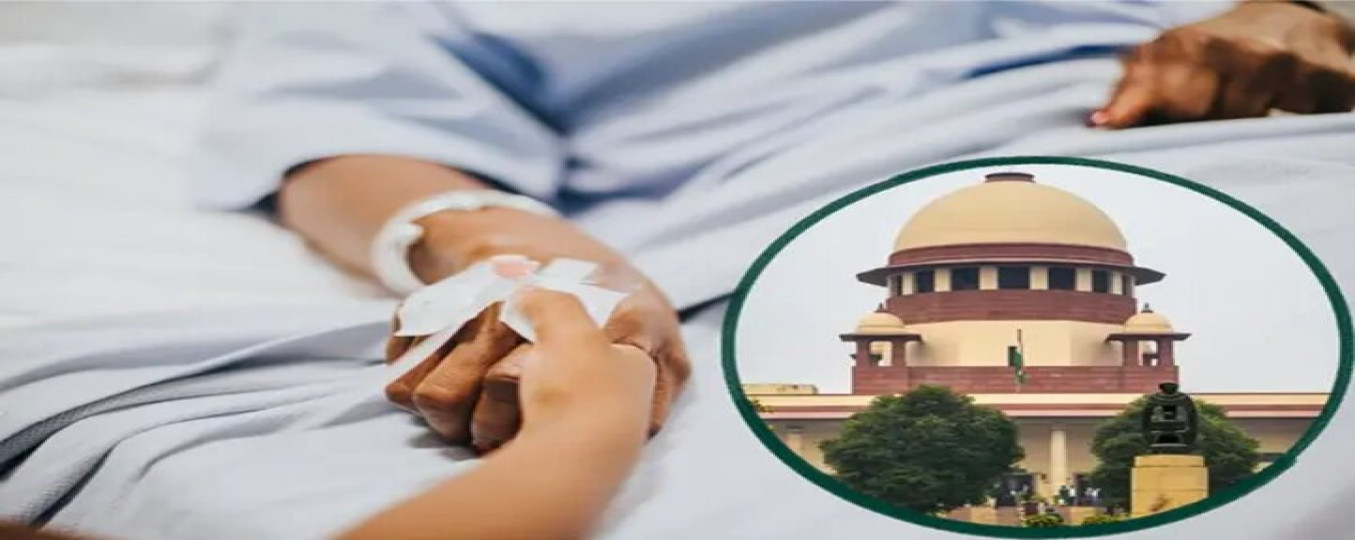
The Supreme Court of India recently reaffirmed the constitutional principle of the right to die with dignity by permitting the withdrawal of life-support for a patient who had remained in a persistent vegetative state (PVS) for nearly thirteen years. The ruling is significant because it clarifies the legal and ethical boundaries between active and passive euthanasia while reinforcing that human dignity remains central to the interpretation of the Article 21 of the Constitution of India. The decision strengthens the evolving jurisprudence on end-of-life care and provides practical guidance for families, doctors, and hospitals dealing with irreversible medical conditions.
Supreme Court’s Ruling
In this case, the Court allowed the withdrawal of clinically assisted nutrition and hydration (CANH), a form of artificial life support provided to patients unable to feed themselves.
The Court observed that:
-
When recovery becomes medically impossible,
-
and treatment merely prolongs biological existence without consciousness or improvement,
continuing artificial life support may violate human dignity rather than protect life.
Thus, the Court permitted the withdrawal of life-sustaining treatment under carefully regulated medical and legal procedures.
Active vs Passive Euthanasia
A key contribution of the judgment is the clear distinction between active and passive euthanasia.
Active Euthanasia
-
Involves a deliberate act to cause death.
-
Example: administering a lethal injection to end life.
-
It introduces an external cause that directly leads to death.
Active euthanasia remains illegal in India.
Passive Euthanasia
-
Involves withholding or withdrawing life-sustaining treatment.
-
Examples include Removal of ventilators, Withdrawal of feeding tubes, Discontinuation of artificial life support systems
In such cases, death occurs due to the underlying medical condition, not because of a new intervention by doctors.
Passive euthanasia is permitted in India under strict safeguards.
Right to Die with Dignity
The Supreme Court emphasised that the right to life under Article 21 does not merely mean biological survival.
Instead, it includes dignity,autonomy,and humane treatment.
When medical interventions become futile, invasive, and incapable of restoring meaningful life, forcing a patient to continue on artificial support may undermine the very dignity that the Constitution seeks to protect.
Thus, the Court recognised that preserving dignity can sometimes require allowing a natural death rather than prolonging suffering artificially.
Constitutional and Legal Basis
The ruling builds upon the landmark judgment in the Common Cause v. Union of India.
In that case, the Supreme Court:
-
Legalised passive euthanasia under specific safeguards.
-
Recognised the validity of living wills or advance directives.
A living will allows individuals to state in advance that they do not wish to receive life-prolonging medical treatment if they enter an irreversible condition.
The recent judgment demonstrates how those earlier guidelines can be applied in real medical situations.
Ethical Reasoning of the Court
The Court’s reasoning emphasised compassion and medical ethics.
Key ethical considerations include:
-
Artificially prolonging life in irreversible conditions can cause prolonged suffering.
-
Patients may lose all consciousness and autonomy while remaining dependent on medical devices.
-
Doctors have an ethical obligation to avoid unnecessary medical interventions that serve no therapeutic purpose.
Allowing withdrawal of treatment in such circumstances is therefore viewed as humane and compassionate, not as abandonment of care.
Significance of the Judgment
The ruling has several important implications.
-
Practical Implementation of the 2018 Guidelines
-
One of the first clear examples of the euthanasia framework being applied in practice.
-
-
Greater Clarity for Medical Professionals
-
Doctors and hospitals now have clearer legal backing when making end-of-life decisions.
-
-
Strengthening Patient Autonomy
-
Reinforces the role of patient wishes and dignity in medical decision-making.
-
-
Support for Families
-
Provides a legal pathway for families facing emotionally difficult end-of-life situations.
-
Conclusion
The Supreme Court’s ruling represents a significant development in India’s constitutional and medical jurisprudence. By permitting passive euthanasia in carefully regulated circumstances, the Court has reaffirmed that the right to life under Article 21 includes the right to live—and die—with dignity. When medical science can no longer restore meaningful life, allowing a natural and dignified death may be more humane than prolonging suffering through artificial medical intervention. The judgment therefore strengthens the balance between compassion, medical ethics, and constitutional values.