
(Important for OPSC OAS Examination – Agriculture, Social Justice, Gender Issues, Food Security, Rural Development)
Introduction
International Women’s Day draws attention to the broader struggle for gender equality, but it also highlights a critical yet often overlooked reality in India’s rural economy—the contribution of women farmers. Women play a central role in agricultural production, livestock care, seed preservation, and household food security. Despite this, their work remains largely invisible in official records and policy frameworks. The absence of recognition not only undermines women’s economic rights but also weakens the effectiveness of agricultural development policies. Ensuring justice and recognition for women farmers is therefore essential for achieving inclusive agricultural growth, gender equality, and sustainable food systems.
Structural Challenges Faced by Women Farmers
Women farmers face multiple systemic barriers that limit their access to resources, decision-making power, and institutional support.
1. Lack of Land Ownership
One of the most fundamental challenges is the lack of land ownership among women.
-
Agricultural land and property are typically registered in the names of male family members.
-
Patriarchal inheritance practices often deny women equal property rights.
-
Without land titles, women farmers face serious obstacles in accessing:
-
Institutional credit, Crop insurance, Irrigation schemes, Agricultural subsidies
-
Extension services and government support programmes
-
Since many agricultural policies are linked to land ownership, women’s exclusion from land records effectively excludes them from formal support systems.
2. Invisible Agricultural Labour
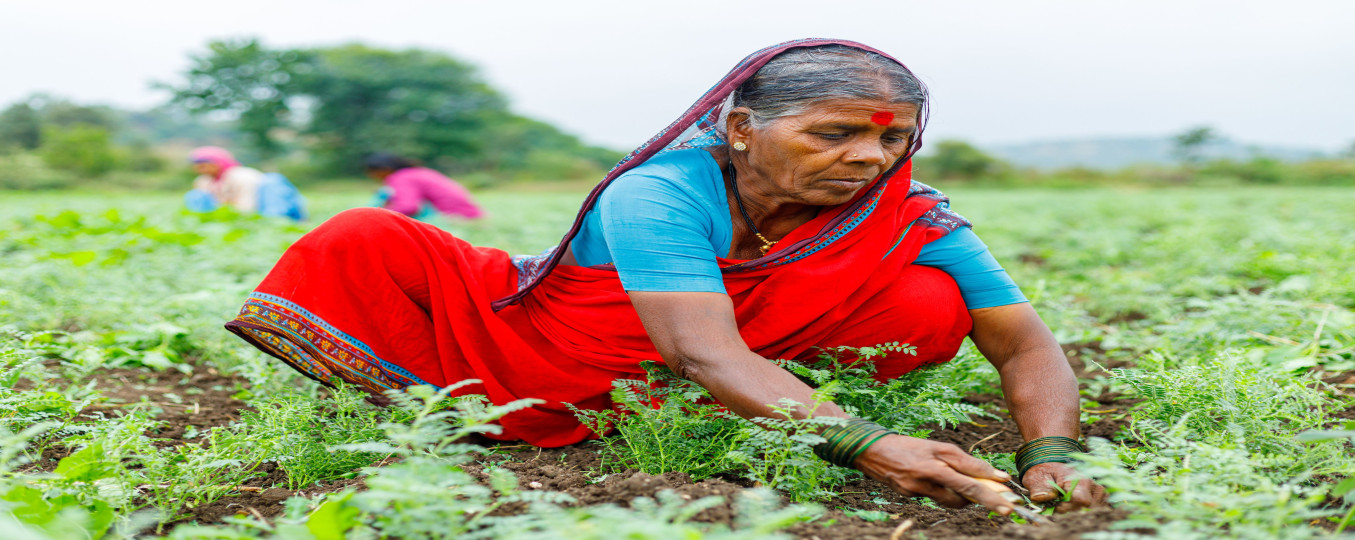
Women perform a large share of agricultural labour but remain unrecognised as farmers.
-
Women frequently manage:
-
Sowing and transplanting
-
Weeding and harvesting
-
Livestock care and dairy activities
-
Storage and processing of produce
-
-
They also play a major role in ensuring household food provisioning.
However, official agricultural statistics often categorise them as “helpers” or unpaid family labour rather than farmers. This invisibility reduces their bargaining power and limits their access to institutional benefits.
3. Feminisation of Agriculture
Rural migration patterns have intensified the role of women in agriculture.
-
Large numbers of men migrate to urban areas for non-farm employment.
-
Women increasingly manage agricultural operations in rural households.
This phenomenon is often described as the “feminisation of agriculture.”
However, this increased responsibility has not been matched by increased support. Women farmers still face:
-
Heavy workloads
-
Limited access to modern farm technologies
-
Lack of mechanisation suited to women’s needs
-
Insufficient institutional and policy recognition
Thus, the feminisation of agriculture has expanded women’s responsibilities without strengthening their rights.
Nutrition and Health Challenges
A striking paradox exists: many women who produce food suffer from poor nutrition themselves.
-
Rural diets often remain cereal-heavy with insufficient intake of Pulses, Fruits, Vegetables, Protein-rich foods
-
Women farmers frequently experience:
-
High levels of anaemia
-
Nutritional deficiencies
-
Poor maternal health outcomes
-
These deficiencies have broader social consequences, including adverse effects on child health, development, and long-term human capital formation.
The issue therefore connects agricultural production with nutrition security.
Gaps in Existing Policy Frameworks
India has implemented several food security and nutrition initiatives, including the National Food Security Act, 2013.
However, several challenges remain:
-
Benefits do not always reach women farmers directly.
-
Agricultural policies often fail to recognise women as primary cultivators.
-
Nutrition and agricultural policies operate in fragmented silos.
-
Implementation gaps weaken the impact of welfare schemes.
As a result, the structural challenges faced by women farmers remain inadequately addressed.
Reforms Required for Empowering Women Farmers
Addressing these issues requires structural reforms across agriculture, land governance, and nutrition systems.
1. Recognising Women as Farmers
Formal recognition is the first step toward empowerment.
-
Collect gender-disaggregated agricultural data.
-
Include women farmers explicitly in policy frameworks.
-
Ensure that agricultural schemes identify women as beneficiaries in their own right.
Recognition would strengthen women’s access to institutional support.
2. Strengthening Land and Resource Rights
Improving land rights is essential for economic empowerment.
-
Ensure equal inheritance rights under property laws.
-
Promote joint land titles for spouses.
-
Expand women’s access to land, water resources, and agricultural credit.
Secure property rights can enhance women’s financial independence and decision-making power.
3. Building Nutrition-Sensitive Agriculture
Agriculture must be aligned with nutrition goals.
-
Encourage production of:
-
Nutri-cereals (millets)
-
Pulses
-
Fruits and vegetables
-
-
Strengthen linkages between agricultural production and welfare programmes such as:
-
Public Distribution System (PDS)
-
Anganwadi services
-
School meal programmes
-
This approach can improve both food security and nutritional outcomes.
4. Expanding Access to Technology and Extension Services
Women farmers require better access to agricultural innovation.
-
Provide labour-saving tools and women-friendly farm equipment.
-
Promote climate-resilient agricultural technologies.
-
Ensure women farmers receive training, market information, and extension support.
Technology access can reduce labour burdens and improve productivity.
Conclusion
Women farmers are indispensable to India’s agricultural economy and food systems, yet their contributions remain largely invisible in policy and institutional structures. Addressing this gap requires more than symbolic recognition—it demands concrete reforms in land rights, institutional support, access to technology, and nutrition-sensitive agriculture. Empowering women farmers is not only a matter of gender justice but also a critical step toward ensuring food security, rural prosperity, and sustainable agricultural development in India.