
(Important for OPSC OAS Examination – International Relations, West Asia, Energy Security, Geopolitics, Security Studies)
Introduction
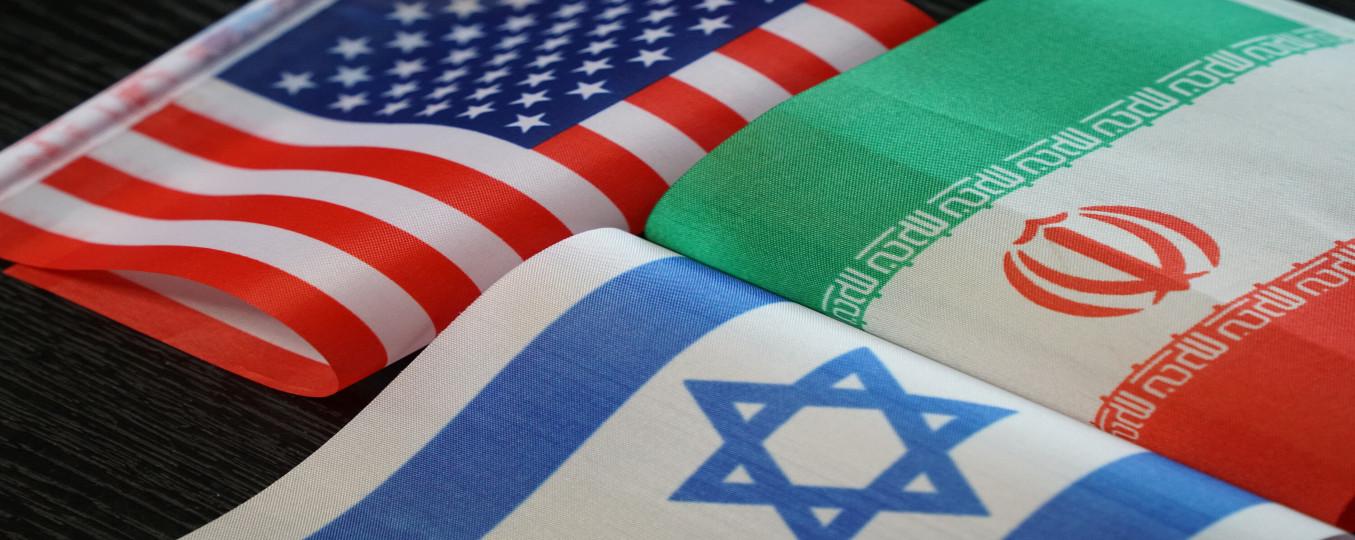
Recent coordinated strikes by Israel and the United States on Iran have been framed as “pre-emptive” actions to neutralise existential threats. While publicly justified on grounds of security and nuclear risk, the deeper geopolitical objective appears far more structural: reshaping the balance of power in West Asia. The unfolding conflict has implications that go beyond military retaliation—it could redefine regional alignments, energy security, and global strategic calculations for decades.
Why Iran is Central to the Conflict
From Israel’s perspective, Iran represents the only regional power capable of challenging its strategic supremacy.
Concerns extend beyond nuclear enrichment:
-
Iran’s advanced missile programme.
-
Its support to regional non-state actors across Lebanon, Syria, Iraq, and Yemen.
-
Its demographic size and geographic depth, giving it strategic resilience.
Israeli leadership, particularly Prime Minister Benjamin Netanyahu, has long opposed the 2015 nuclear agreement (JCPOA), arguing that it failed to address Iran’s conventional military capabilities and regional influence.
Thus, the present escalation reflects broader power politics rather than a narrow non-proliferation dispute.
The Regime Change Calculus
Analysts suggest that the strikes may have an underlying regime-change objective.
If Iran’s current leadership were to collapse:
-
Israel, backed by the U.S., could emerge as the dominant strategic power in a largely unipolar West Asia.
-
Regional resistance networks supported by Iran could weaken.
-
Power equations in the Gulf, Levant, and Red Sea would shift decisively.
However, Iran differs significantly from Iraq or Libya:
-
It is geographically vast.
-
It possesses institutional depth.
-
There is no cohesive internal armed opposition capable of rapidly replacing the regime.
This makes regime change a far more complex and uncertain proposition.
Strategy and Its Limits
Israel reportedly attempted targeted “decapitation strikes” aimed at senior leadership figures.
However assassinations did not produce systemic collapse.Iran reorganised rapidly and launched missile retaliation. And strikes extended to U.S. bases in the Gulf region, widening the theatre of conflict.
The threat to close the Strait of Hormuz—through which a major share of global oil trade flows—introduces significant global energy risks.
The conflict risks evolving from a bilateral confrontation into a wider regional war.
Regionalisation of the Conflict
The escalation has already expanded beyond Israel and Iran:
-
Iranian strikes on U.S. military installations.
-
Growing vulnerability of Gulf monarchies.
-
Heightened tensions in maritime routes.
If Gulf states are drawn deeper into hostilities, the consequences could include disruption of oil and gas supply chains, surge in global energy prices, Financial market volatility.,long-term destabilisation of West Asian political order.
This transformation from a contained strike to a regionalised war scenario raises profound strategic concerns.
Beyond the Nuclear Question
The conflict cannot be reduced merely to Iran’s nuclear ambitions.
At its core, it reflects:
-
A contest for regional supremacy.
-
Efforts to reshape West Asia’s power architecture.
-
Broader U.S.–Iran strategic rivalry.
-
Security anxieties of Israel in a shifting regional order.
Nuclear discourse may provide diplomatic justification, but the deeper struggle is geopolitical.
Risks and Uncertain Outcomes
The war carries high risks:
-
Regional escalation involving multiple state and non-state actors.
-
Energy market instability affecting global economic recovery.
-
Entrenchment of proxy conflicts across West Asia.
-
Long-term militarisation of the region.
A swift and decisive victory for any side appears uncertain. Iran’s strategic depth and retaliatory capacity suggest prolonged instability rather than quick resolution.
Conclusion
The Israel–U.S. strikes on Iran represent more than tactical military action; they signal an attempt to reshape West Asia’s geopolitical structure. However, regime change in a large and resilient state like Iran is neither straightforward nor predictable. The risks of regional escalation, energy disruption, and prolonged instability are significant. As the conflict unfolds, the strategic balance of West Asia—and by extension global energy security—hangs in delicate equilibrium.