(Important for OPSC OAS Examination – International Relations, Energy Security, Indo-Pacific Strategy, West Asia, Connectivity Corridors)
Introduction
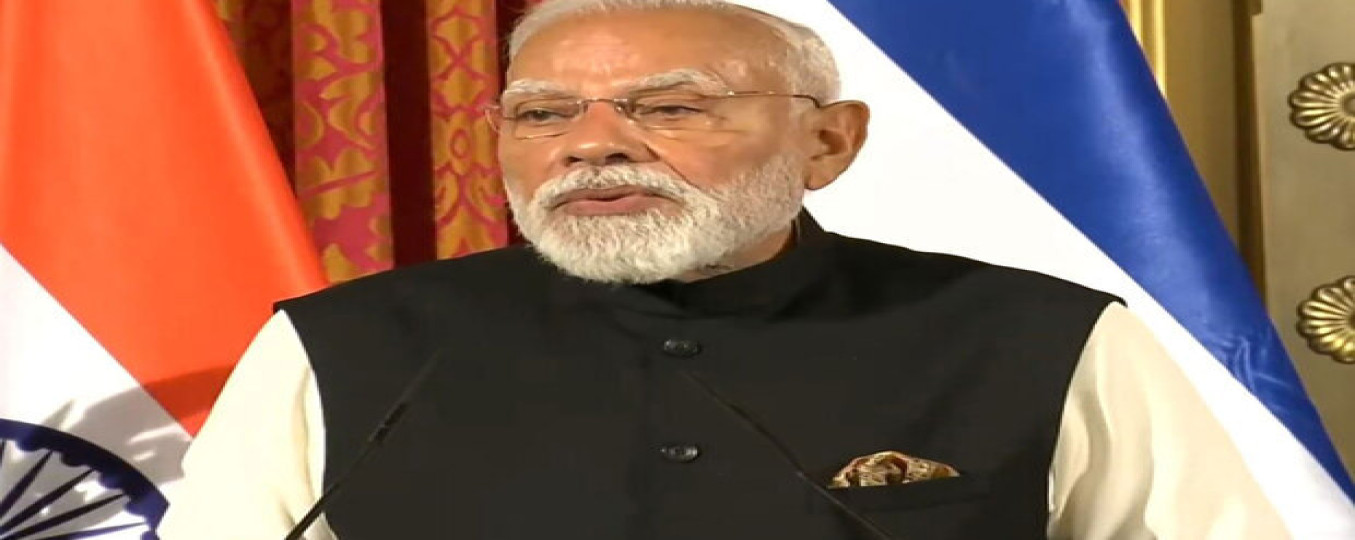
Prime Minister Narendra Modi has reiterated that India’s security interests are directly linked to peace and stability in West Asia. The statement reflects a long-standing strategic reality: the Gulf and broader West Asian region are central to India’s energy security, diaspora welfare, trade routes, and geopolitical balancing. During his recent visit to Israel, India elevated bilateral ties to a “Special Strategic Partnership,” while simultaneously emphasizing dialogue, de-escalation, and peaceful resolution of regional conflicts. This balanced messaging captures India’s calibrated West Asia policy — deepening partnerships without becoming entangled in regional rivalries.
Why West Asia Matters to India’s Security
India’s linkage with West Asia operates across multiple dimensions:
-
Energy Security: A significant share of India’s crude oil and LNG imports originate from Gulf countries.
-
Diaspora Factor: Nearly 8–9 million Indians live and work in GCC countries, contributing substantially through remittances.
-
Trade and Connectivity: West Asia sits at the crossroads of Europe, Africa, and Asia, making it central to India’s trade corridors.
-
Counter-terrorism and Maritime Security: Stability in the Gulf and Red Sea region affects sea lines of communication (SLOCs).
Thus, instability — whether in the form of Iran–U.S. tensions, Israel–Palestine conflict, or intra-Gulf rivalries — has direct spillover effects on India’s economy and internal security.
Elevation to “Special Strategic Partnership”
During the visit to Israel:
-
Bilateral ties were elevated to a Special Strategic Partnership.
-
India reiterated zero tolerance for terrorism in all forms.
-
Both sides agreed to deepen cooperation in technology, defence, energy, and innovation.
This reflects continuity in India–Israel ties, which have grown significantly over the past decade in defence technology, agriculture, cyber security, and water management.
Connectivity and Strategic Frameworks
Two major multilateral initiatives were discussed:
1. IMEC – India–Middle East–Europe Corridor
IMEC aims to create a multi-modal connectivity corridor linking India to Europe through West Asia. It seeks to integrate ports, railways, energy pipelines, and digital infrastructure.
-
Regional instability could delay components of IMEC.
-
However, India expressed confidence that participating countries are advancing projects independently.
-
IMEC is seen as a strategic alternative to China’s Belt and Road Initiative (BRI).
2. I2U2 Initiative
The I2U2 grouping (India, Israel, UAE, USA) focuses on:
-
Food security.
-
Renewable energy.
-
Technological collaboration.
-
Infrastructure investment.
This framework strengthens India’s engagement with like-minded partners in the Indo-Pacific and West Asia.
Focus Areas of Cooperation
Several Memoranda of Understanding (MoUs) were signed covering:
-
Geophysical and mineral exploration, including use of AI technologies.
-
Sustainable resource development.
-
Digital infrastructure and advanced connectivity.
The emphasis on AI-driven exploration and mineral cooperation aligns with India’s broader push toward technological sovereignty and critical mineral security.
India’s Balanced Diplomatic Messaging
India carefully maintained strategic neutrality while expanding cooperation:
-
Reiterated support for peaceful resolution of Iran–U.S. and Israel-related tensions.
-
Emphasized dialogue and diplomacy over confrontation.
-
Avoided taking sides in ongoing regional rivalries.
This reflects India’s doctrine of strategic autonomy, balancing ties with Israel, Iran, the Gulf states, and the United States simultaneously.
Symbolic and Cultural Diplomacy
The visit also included:
-
Engagement with the Indian-origin Jewish community.
-
Visit to the Yad Vashem Holocaust Memorial in Jerusalem.
Such gestures reinforce people-to-people ties and signal India’s sensitivity to historical memory and cultural diplomacy.
Broader Strategic Implications
-
Reinforces India’s expanding footprint in West Asia beyond energy dependence.
-
Positions India as a responsible stakeholder advocating stability.
-
Strengthens India’s role in emerging connectivity and supply-chain frameworks.
-
Demonstrates that India views West Asia not merely as an energy source, but as a strategic theatre linked to its long-term economic and security calculus.
Conclusion
India’s security and prosperity are inseparable from stability in West Asia. By upgrading ties with Israel while calling for peaceful conflict resolution, India has signalled a nuanced and multi-vector approach. Connectivity initiatives like IMEC and strategic platforms such as I2U2 highlight that West Asia is central to India’s future economic and geopolitical architecture. The challenge ahead lies in sustaining partnerships while carefully navigating the region’s volatile fault lines — ensuring that India remains a stabilising force rather than a participant in rival blocs.