
Introduction
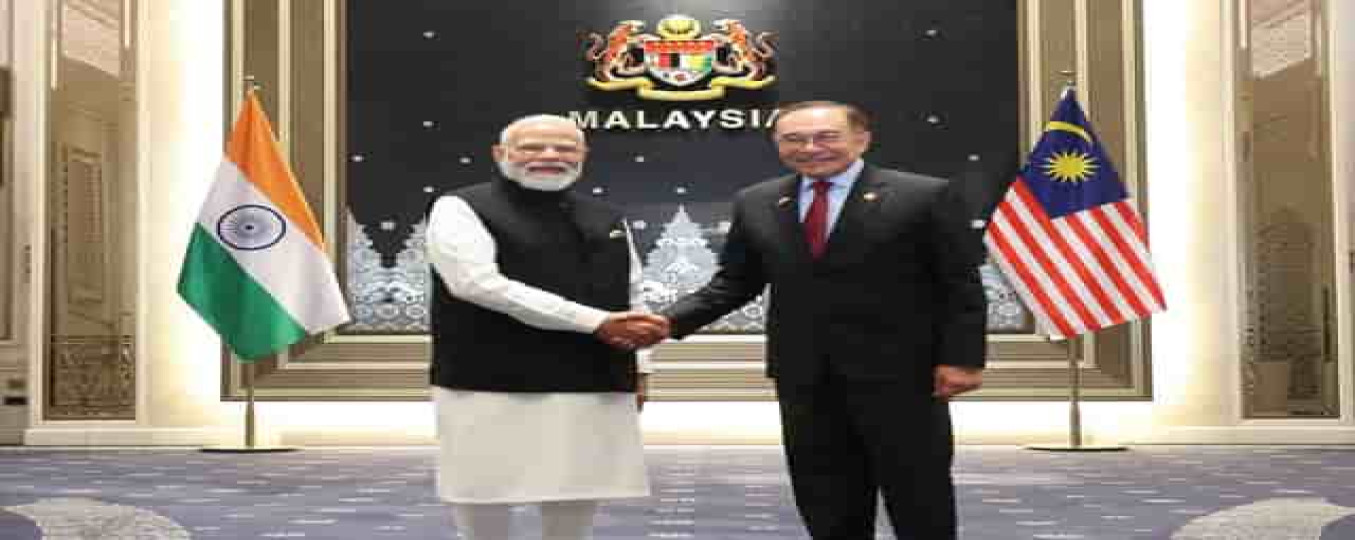
India and Malaysia share a relationship rooted in history, culture, and migration. Trade links dating back centuries and a vibrant Indian diaspora in Malaysia have long given the partnership a strong social foundation. In recent years, however, the relationship has begun to evolve beyond these traditional pillars. Changing dynamics in the Indo-Pacific, concerns over maritime security, supply-chain resilience, and technological competition have encouraged both countries to explore a deeper strategic engagement. Narendra Modi’s visit to Kuala Lumpur marked an important moment in this transition, providing political momentum to formalise and broaden India–Malaysia cooperation.
Recent Momentum in Bilateral Relations
During the visit, India and Malaysia signed 11 agreements and Memoranda of Understanding, signalling a clear intent to widen cooperation across multiple sectors. Both leaders characterised the relationship as a “special partnership” grounded in long-term strategic trust rather than short-term transactional interests.
A key political message from the Indian side was the reiteration of a zero-tolerance approach to terrorism, with emphasis on the need for consistency and the rejection of double standards. This stance resonated in a regional environment where security challenges are increasingly transnational.
Broadening the Scope of Cooperation
Security and Defence
Security cooperation has emerged as a central pillar of the expanding relationship.
-
Both sides agreed to enhance collaboration in Counter-terrorism, Intelligence sharing and Maritime security
-
Defence ties are being expanded in recognition of:
-
Shared concerns about stability in the Indo-Pacific
-
The importance of secure sea lanes and freedom of navigation
-
This reflects a gradual but clear shift from a purely economic partnership towards one that also addresses strategic and security interests.
Economic and Trade Engagement
Economic cooperation remains a strong foundation of India–Malaysia ties, but with a renewed focus on diversification and resilience.
-
Both countries agreed to expand trade and investment in high-priority sectors and encourage private-sector participation
-
A significant step is the decision to promote trade settlement in local currencies (rupee–ringgit):
-
Reduces dependence on the U.S. dollar
-
Lowers transaction costs
-
Enhances financial autonomy and stability
-
This move aligns with India’s broader efforts to internationalise the rupee and diversify trade mechanisms.
Semiconductors and Advanced Manufacturing
One of the most forward-looking outcomes of the visit was a framework agreement on semiconductor cooperation.
-
Malaysia brings:
-
A strong electronics and chip-assembly ecosystem
-
Deep integration into global semiconductor supply chains
-
-
India offers:
-
Large-scale manufacturing ambitions
-
Policy incentives under its industrial and electronics strategies
-
Collaboration in this sector supports India’s goals of technological upgrading and supply-chain diversification, while allowing Malaysia to deepen its role in higher-value segments of the electronics industry.
Energy, AI, and Digital Technologies
The partnership is also expanding into future-oriented sectors.
-
Cooperation in Energy, Artificial Intelligence, Digital technologies which aims to support long-term economic transformation in both countries.
-
These areas reflect a shared recognition that competitiveness in the coming decades will be shaped by Technology adoption, Innovation ecosystems, Digital infrastructure
People-to-People and Institutional Links
Social and institutional ties remain a unique strength of India–Malaysia relations.
-
India announced the establishment of an Indian Consulate General in Malaysia, strengthening diplomatic presence, community outreach and economic engagement
-
Interactions was held with Malaysian leaders of Indian origin, Business and industry representatives and it helped reinforce cultural bonds and economic linkages that underpin the strategic partnership.
Strategic Significance of the Partnership
The deepening of India–Malaysia ties carries broader regional and global implications.
-
It positions both countries as reliable maritime partners in the Indo-Pacific, contributing to regional stability.
-
It supports India’s strategic priorities in supply-chain diversification, export growth and Technological self-reliance
-
Malaysia’s support for India’s call for a reformed UN Security Council adds diplomatic weight to India’s global governance agenda.
-
The partnership fits squarely within India’s Act East Policy and its vision for an open, inclusive, and rules-based Indo-Pacific.
The Road Ahead
While the agreements mark a strong political commitment, their real value will depend on implementation.
-
Effective follow-through is especially crucial in field of Semiconductors and Defence cooperation
-
Sustained political dialogue must be complemented by:
-
Active private-sector engagement
-
Institutional coordination
-
Clear timelines and accountability
-
-
If translated into tangible outcomes, India–Malaysia ties can evolve into an important pillar of India’s broader regional strategy.
Conclusion
The expansion of India–Malaysia strategic ties reflects a conscious effort by both countries to adapt their relationship to contemporary geopolitical and economic realities. What began as a partnership anchored in history and diaspora links is now taking shape as a multifaceted strategic engagement encompassing security, technology, manufacturing, and regional diplomacy. As Indo-Pacific dynamics continue to evolve, a stronger India–Malaysia partnership has the potential to contribute meaningfully to regional stability, economic resilience, and shared prosperity.