
Introduction
The year 2025 has once again exposed the terrifying vulnerability of the Indian Himalayas. With more than 4,000 climate-related deaths, Himachal Pradesh and Uttarakhand have borne the brunt of extreme weather events ranging from cloudbursts and flash floods to landslides and avalanches. What is even more disturbing is that such disasters are no longer rare or exceptional — they are fast becoming the new climate normal. Yet, instead of recalibrating development strategies to this fragile reality, India continues to push large, intrusive infrastructure projects deep into ecologically unstable Himalayan zones. This dangerous mismatch between ecological limits and development ambition is steadily pushing the region towards what can only be described as a slow-motion ecocide.
Char Dham Road Widening
The current controversy centres on the approval for the Char Dham road-widening project in Uttarakhand.
-
The project involves:
-
Felling nearly 7,000 Devdar (Deodar) trees
-
Diversion of significant forest land in disaster-prone areas such as Dharali–Harsil
-
-
This region lies north of the Main Central Thrust (MCT):
-
A highly unstable geological zone
-
An area where major infrastructure is explicitly discouraged by scientific and planning norms
-
-
Yet, despite these warnings, large-scale road expansion is being pushed through in one of the most fragile parts of the Himalayan system.
Why Devdar Forests Matter Ecologically
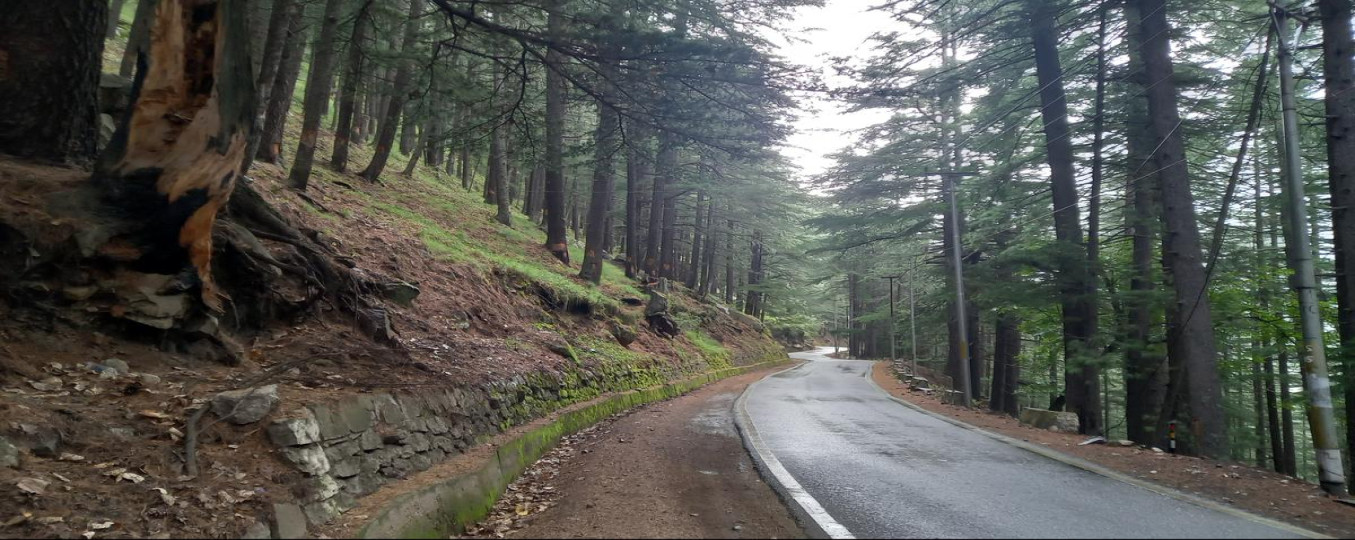
Devdar forests are not just scenic or symbolic. They are critical ecological infrastructure in the Himalayan landscape.
-
Their deep and extensive root systems:
-
Stabilise fragile slopes
-
Reduce the risk of landslides and avalanches
-
Limit the movement of glacial debris
-
-
They play a crucial role in:
-
Water regulation and water quality in the Ganga basin
-
Maintaining oxygen levels and aquatic life in mountain streams
-
Regulating microclimates and stream temperatures
-
-
Devdar trees also possess unique antimicrobial properties that help sustain river ecology.
-
Importantly, these forests lie within the Bhagirathi Eco-Sensitive Zone, which was created precisely to protect the last relatively pristine stretch of the Ganga.
Destroying such forests is not a local intervention — it is a basin-wide ecological gamble.
The Myth of “Transplantation” and Scientific Concerns
-
One of the justifications offered is the transplantation of Devdar trees.
-
Ecologically, this is deeply unsound:
-
These are ancient, slow-growing trees
-
Their ecological functions are site-specific and irreplaceable
-
-
A forest is not just a collection of trees; it is:
-
A living, interlinked system of soil, microbes, water flows, and microclimates
-
-
Large-scale deforestation in such regions leads to warmer air and water, reduced oxygen levels, altered river ecology, irreversible ecological damage
-
The Supreme Court itself has, in earlier cases, discouraged the felling of such trees, recognising their extraordinary ecological value.
Faulty and Dangerous Infrastructure Planning
The Char Dham project exemplifies a deeper structural problem in Himalayan infrastructure planning.
-
The project has been pushed through using:
-
Fragmented clearances
-
Bypassing of a comprehensive Environmental Impact Assessment (EIA)
-
Adoption of an inappropriate DL-PS road design with a 12-metre paved width, more suited to plains than to young, unstable mountains
-
-
On the ground, this has meant:
-
Vertical hill-cutting on extremely fragile slopes
-
Indiscriminate dumping of muck into rivers and streams
-
-
The consequences are already visible:
-
Nearly 700 km of widened roads
-
Over 800 active landslide zones along the corridor
-
Prolonged road closures, disrupted lives, and economic hardship for local communities
-
-
Locals bitterly describe the highway as an “all-paidal (all-pedestrian) road”, since vehicles often cannot move due to constant landslides and blockages.
Climate Change as a Risk Multiplier
-
The Himalayas are warming about 50% faster than the global average.
-
This accelerated warming is driving:
-
More intense and frequent extreme rainfall events
-
Faster glacier retreat
-
Flash floods, followed paradoxically by long-term water scarcity
-
-
Instead of building resilience, current development practices should focus on amplify these risks, removing natural buffers like forests and stable slopes, turning climate hazards into full-scale disasters.
Governance and Policy Failures
The crisis is not just ecological; it is institutional.
-
Infrastructure expansion is being prioritised over:
-
Disaster resilience
-
Ecological stability
-
Community safety
-
-
In the process, authorities have repeatedly ignored:
-
Warnings from the National Green Tribunal
-
Scientific advisories
-
The objectives of the National Mission for Sustaining the Himalayan Ecosystem (NMSHE)
-
-
Short-term economic and political gains are being placed above:
-
Long-term sustainability
-
Lives and livelihoods
-
The ecological security of one of India’s most critical regions
-
Resilience Before Connectivity
-
The fundamental issue here is not ideological or political — it is scientific and ecological.
-
In a young, fragile, and rapidly warming mountain system:
-
Disaster resilience must come before large-scale connectivity and tourism infrastructure
-
-
Current practices such as: Unsafe land use, Aggressive tunnelling, Uncontrolled tourism pressure, Weak waste management are systematically increasing vulnerability rather than reducing it.
Way Forward
A serious course correction is still possible, but it requires political and administrative courage.
-
Halt ecologically destructive projects in the most fragile zones.
-
Restore strict compliance with Scientific assessments, Environmental safeguards, National climate and Himalayan policies
-
Shift the development model towards:
-
Slope stabilisation rather than aggressive cutting
-
Limited and context-sensitive road widening
-
Nature-based solutions such as forest restoration and watershed management
-
Community-centric disaster resilience, not just tourist-oriented infrastructure
-
Conclusion
The Himalayas are not just another development frontier. They are a living, fragile life-support system for hundreds of millions of people downstream. Treating them as expendable terrain for short-term infrastructure ambitions is not development — it is ecological recklessness. The disasters of 2025 are not freak accidents; they are warnings. If India continues on this path, it is not merely roads and trees that will be lost, but the long-term safety, water security, and ecological stability of the subcontinent itself.