
Introduction
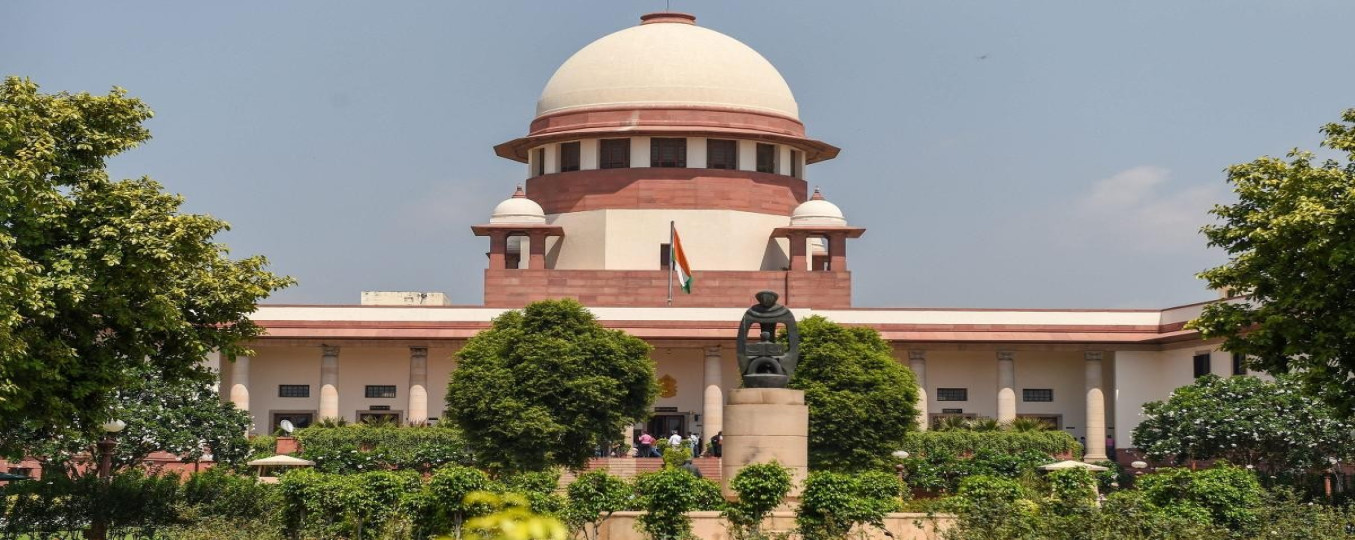
Over the past decade, the Supreme Court of India has emerged as one of the most influential actors in the country’s environmental governance framework. Faced with chronic regulatory failure, weak enforcement, and executive inaction, the Court has repeatedly stepped in to protect forests, control pollution, regulate mining, and manage urban environmental crises. While this judicial activism has often been driven by genuine concern for ecological protection, it has also gradually transformed the Court’s role—from that of a constitutional adjudicator reviewing the legality of executive action to that of a quasi-regulator issuing detailed, forward-looking governance directions. This shift, though well-intentioned, is increasingly creating uncertainty, blurring institutional boundaries, and complicating both environmental protection and democratic accountability.
The Shift in the Judicial Role
-
Traditionally, the Supreme Court’s role in environmental matters was to:
-
Examine whether executive actions complied with the law and the Constitution
-
Enforce statutory duties and fundamental rights
-
-
Over time, however, the Court has moved towards:
-
Issuing continuous, managerial, and policy-like directions
-
Monitoring implementation over years through “continuing mandamus”
-
-
In many cases, the Court now:
-
Frames detailed regulatory frameworks
-
Sets timelines, standards, and exceptions
-
Oversees day-to-day administrative decisions
-
-
This makes the Court appear less like a constitutional umpire and more like a super-regulator, directly involved in governance.
Why the Court Was Pushed into This Role
-
The judiciary did not step into this space in a vacuum.
-
Repeated failures of the executive and regulatory institutions have been central reasons, including:
-
Weak enforcement of environmental laws
-
Delayed or diluted notifications and rules
-
Poor monitoring of compliance
-
Ad hoc exemptions granted under political or economic pressure
-
-
In many instances:
-
Pollution control boards have been ineffective
-
Environmental impact assessment processes have been compromised
-
Ministries have failed to act decisively or transparently
-
-
Faced with this institutional vacuum, the Court has often felt compelled to intervene to prevent irreversible environmental damage.
Problematic Consequences of Judicial Substitution
-
Instead of:
-
Forcing regulators to do their job
-
Fixing accountability mechanisms
-
Then stepping back
the Court has often substituted itself for the regulator.
-
-
This creates several problems:
-
Governments and regulated entities are unsure whether to follow statutory rules or wait for judicial directions
-
Citizens and civil society do not know whether to challenge executive action before regulators or directly before the Court
-
-
Over time, the Court’s reasoning has also shifted:
-
From strictly legal and rights-based reasoning
-
To consequence-based and outcome-oriented reasoning
-
-
While this may appear pragmatic, it:
-
Blurs the line between law and policy
-
Weakens the principle that courts should decide legality, not manage administration
-
Inconsistency and Reversals in Environmental Directions
-
One of the most damaging consequences of this style of governance has been unpredictability.
-
Several major environmental directions have been:
-
Modified
-
Diluted
-
Or reversed within short spans of time
-
-
Examples include:
-
Eco-Sensitive Zones (ESZ) rules, which saw major shifts in approach within a short period
-
Vehicle restrictions in the NCR, which moved from broad bans to narrower and more technical standards
-
Firecracker regulations, which oscillated between near-total bans and festival-specific relaxations
-
-
Such reversals:
-
Undermine regulatory certainty
-
Confuse enforcement agencies
-
Encourage lobbying and litigation rather than compliance
-
-
When rules appear fluid and negotiable, long-term planning and behavioural change become difficult.
The Expertise Dilemma
-
Environmental governance is deeply technical, involving:
-
Ecology
-
Atmospheric science
-
Hydrology
-
Public health
-
Urban planning
-
-
The Court increasingly relies on:
-
Expert committees
-
Technical bodies
-
Scientific reports
-
-
However, a troubling pattern has emerged:
-
When expert findings align with judicial expectations, they are accepted
-
When they do not, committees are sometimes:
-
Reconstituted
-
Asked to revise definitions
-
Or their recommendations are diluted
-
-
-
This creates a push–pull dynamic between law and expertise.
-
Technical concepts such as:
-
Ecological boundaries
-
Buffer zones
-
Carrying capacity
have been repeatedly redefined, sometimes in response to political or stakeholder resistance rather than purely scientific reasoning.
-
Impact on Public Governance and Regulatory Processes
-
An unintended consequence of judicial dominance in environmental decision-making is that:
-
Project proponents and governments increasingly approach the Court even before statutory approvals are complete
-
-
This creates a perception that:
-
Judicial clearance is the final and most important clearance
-
Ordinary regulatory processes are secondary or procedural formalities
-
-
As a result:
-
The authority and credibility of statutory regulators are weakened
-
Space for later democratic, administrative, or legal challenge shrinks
-
Governance becomes more court-centric and less institution-centric
-
Why This Creates Long-Term Uncertainty
-
Environmental protection requires:
-
Stable rules
-
Predictable enforcement
-
Long-term planning horizons
-
-
A system driven by:
-
Case-by-case judicial management
-
Frequently changing directions
-
Negotiated exceptions
creates: -
Legal uncertainty
-
Administrative hesitation
-
Strategic litigation rather than compliance
-
-
Ironically, this can:
-
Slow down both environmental protection and legitimate development
-
Encourage short-term fixes instead of systemic reform
-
The Need for Recalibration
-
The Court’s role needs to be rebalanced, not abandoned.
-
A more sustainable approach would focus on:
-
Disciplining the executive back into proper regulation rather than replacing it
-
Setting clear thresholds for when judicial intervention is justified
-
Insisting on:
-
Timely regulatory action
-
Reasoned decisions
-
Reliance on publicly available data and transparent processes
-
-
-
The Court should:
-
Avoid sweeping, one-size-fits-all rules
-
Clarify in advance:
-
What evidence is required
-
What constraints justify exceptions
-
-
-
Most importantly, it should:
-
Strengthen institutions, not become one
-
Conclusion
Judicial activism in environmental matters in India arose from real and serious governance failures, and it has undoubtedly prevented many instances of irreversible ecological harm. However, in its current managerial and interventionist form, it is also generating uncertainty, inconsistency, and institutional confusion. Courts are most effective when they enforce the law, protect rights, and hold authorities accountable—not when they permanently take over the job of governance. A steadier, legality-focused, and institution-building judicial approach would better serve both environmental protection and democratic accountability, while restoring predictability and credibility to India’s environmental regulatory system.