
Introduction
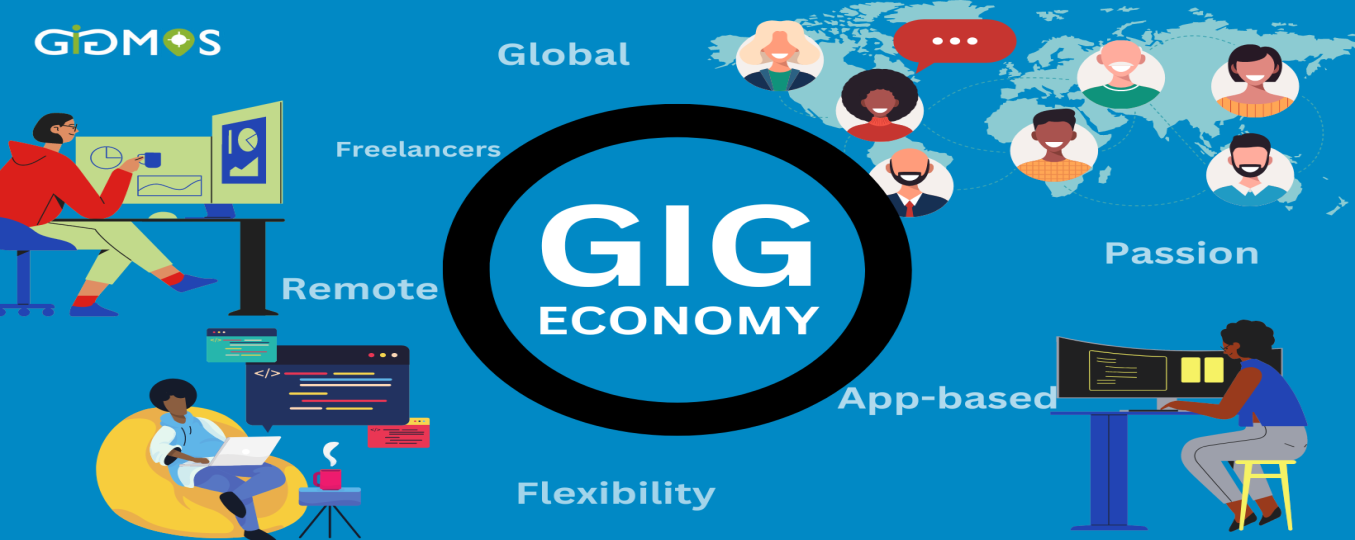
The gig economy represents a fundamental shift in the nature of work in the digital age. It refers to a labour market characterised by short-term, task-based work arrangements, flexible contracts, and the engagement of workers as independent contractors rather than permanent employees. Enabled largely by digital platforms that connect service providers with consumers in real time, the gig economy has expanded rapidly across sectors such as ride-hailing, food delivery, e-commerce logistics, home services, and freelance digital work. In India, the gig economy has emerged as both an engine of employment generation and a site of growing labour precarity. While it offers flexibility and income opportunities, it also raises serious concerns related to social security, equity, and dignity of labour.
Understanding the Gig Economy
-
The gig economy is defined by:
-
Short-term, task-based employment or “gigs”
-
Flexible, non-standard contracts instead of permanent jobs
-
Workers classified as independent contractors rather than employees
-
-
Digital platforms play a central role by:
-
Matching demand and supply in real time
-
Using algorithms to allocate work, set incentives, and monitor performance
-
-
Common examples include:
-
Ride-hailing services
-
Food and grocery delivery platforms
-
E-commerce logistics
-
Home-based services
-
Freelance and remote digital work
-
Significance of the Gig Economy
Employment Generation
-
The gig economy absorbs a large number of:
-
Urban poor
-
Migrant workers
-
Youth with limited formal skills
-
-
It has acted as a shock absorber during:
-
Economic slowdowns
-
Post-pandemic recovery phases
-
-
For many workers, gig work provides an entry point into income generation when formal jobs are scarce.
Flexibility and Autonomy
-
Gig work allows workers to choose:
-
Working hours
-
Location of work
-
Intensity and duration of engagement
-
-
This flexibility is particularly attractive for:
-
Students
-
Women balancing paid and unpaid work
-
Part-time earners and those seeking supplementary income
-
Cost Efficiency and Innovation
-
Platforms benefit from reduced fixed labour costs by avoiding long-term employment commitments.
-
The model promotes:
-
Innovation in logistics and service delivery
-
Greater consumer convenience
-
Rapid scaling of digital business models
-
Formalisation of Services
-
Many services that were earlier informal, such as transport and delivery, are now digitally mediated.
-
Platform-based work creates data trails, enabling:
-
Better visibility of work patterns
-
Potential for evidence-based policymaking in the future
-
Issues Highlighted by the Gig Economy
Systemic Inequality
-
The gig economy makes invisible labour visible, exposing:
-
Income disparities
-
Power imbalances between platforms and workers
-
-
While consumers benefit from affordable and convenient services, workers bear most of the economic risks.
Lack of Social Security
-
Gig workers typically lack access to:
-
Minimum wage guarantees
-
Health insurance
-
Pension or provident fund
-
Paid leave or accident compensation
-
-
Income insecurity makes workers vulnerable to health shocks and economic distress.
Employment Misclassification
-
Workers are often labelled as “partners” or “independent contractors”.
-
This classification allows platforms to:
-
Avoid employer obligations
-
Deny labour protections
-
-
At the same time, platforms exercise significant control through algorithms, blurring the line between independence and employment.
Income Uncertainty
-
Earnings fluctuate due to:
-
Changes in demand
-
Algorithmic adjustments
-
Incentive restructuring
-
-
There is no assurance of stable or predictable monthly income.
Major Challenges Facing Gig Workers
Algorithmic Control and Surveillance
-
Platforms control:
-
Work allocation
-
Ratings and rankings
-
Incentive structures
-
-
Decision-making processes are opaque, with limited transparency.
-
Workers often lack effective grievance redressal mechanisms.
Absence of Collective Bargaining
-
Gig workers generally lack:
-
Legally recognised unions
-
Collective negotiating power
-
-
Fear of deactivation discourages workers from voicing concerns or organising collectively.
Occupational Hazards
-
Gig work often involves:
-
Long and irregular working hours
-
High exposure to road accidents in delivery and ride-hailing services
-
Mental stress due to constant performance monitoring and ratings
-
Regulatory Vacuum
-
Existing labour laws were designed around traditional employer–employee relationships.
-
Gig work falls into a grey zone between formal and informal labour, leading to regulatory gaps.
Ethical and Social Dimensions
-
The gig economy raises fundamental questions about:
-
Fairness and justice
-
Dignity of labour
-
Exploitation versus opportunity
-
-
It reflects a moral tension:
-
Convenience and low costs for consumers
-
Precarity and insecurity for workers
-
-
The model exposes deeper structural inequalities within a consumption-driven digital economy.
Government Initiatives and Policy Response
Code on Social Security, 2020
-
The Code on Social Security, 2020 formally recognises gig and platform workers as a distinct category.
-
It provides for:
-
Social security schemes such as insurance, maternity benefits, and pensions
-
-
However, challenges remain in:
-
Funding mechanisms
-
Effective implementation at scale
-
e-Shram Portal
-
The e-Shram Portal aims to create a national database of unorganised and gig workers.
-
It seeks to facilitate:
-
Targeted welfare delivery
-
Better policy planning for worker protection
-
Way Forward
Balanced Regulation
-
Recognise gig workers as “dependent contractors” with partial labour protections.
-
Ensure minimum earnings standards and greater transparency in algorithmic decision-making.
Universal Social Security
-
Develop portable social security benefits that are not tied to a single platform.
-
Mandate platform contributions to welfare funds for gig workers.
Worker Representation
-
Provide legal recognition to gig worker unions and associations.
-
Establish accessible grievance redressal and dispute resolution mechanisms.
Ethical Platform Governance
-
Ensure transparency in ratings, incentives, and deactivation policies.
-
Introduce human oversight over critical algorithmic decisions affecting livelihoods.
Conclusion
The gig economy is neither inherently exploitative nor entirely empowering. It is a reflection of the structural inequalities of modern capitalism, now made more visible through digital platforms. While it has expanded employment opportunities and introduced flexibility into the labour market, it has also intensified insecurity and weakened traditional labour protections. The challenge before the State lies in striking a careful balance—encouraging innovation while ensuring justice, preserving flexibility while guaranteeing social security, and promoting growth without compromising the dignity of labour. How India responds to this challenge will shape the future of work for millions in the digital era.