
Introduction
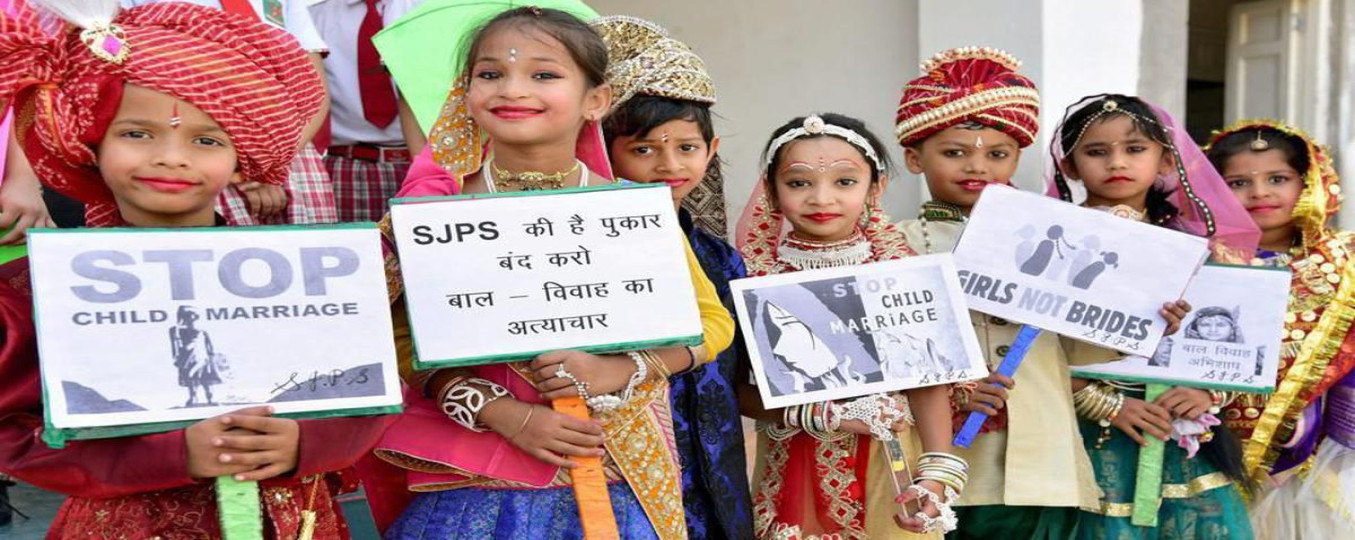
India has committed to ending child marriage by 2030 as part of its obligations under the Sustainable Development Goals adopted under the United Nations framework. Over the last two decades, the country has witnessed a gradual decline in the prevalence of child marriage, reflecting improvements in education, health awareness and legal safeguards. Yet, child marriage continues to persist as a serious social problem, marked by sharp regional, social and economic disparities. Its continued presence reveals that legal prohibition alone is insufficient, and that deeper structural drivers related to poverty, gender norms, education and governance remain inadequately addressed.
Trends and Regional Variations
-
National-level data indicate a long-term decline in child marriage, but the pace of reduction varies significantly across States and communities.
-
States such as West Bengal, Bihar and Tripura continue to report a relatively higher prevalence, while several other States are not far behind.
-
Within States, child marriage is more common in:
-
Rural and tribal areas
-
Economically backward districts
-
Marginalised social groups
-
-
These variations highlight that child marriage is not merely a national problem, but one deeply shaped by local socio-economic and cultural contexts.
Linkages with Poverty and Education
-
There is a strong and well-established correlation between child marriage, poverty and low levels of education.
-
Girls from poorer households are more vulnerable as families often view early marriage as:
-
A way to reduce economic burden
-
A means of ensuring social security for daughters
-
-
Low educational attainment significantly increases the risk of early marriage.
-
Education, particularly secondary education, emerges as the single most powerful protective factor:
-
It delays marriage age
-
Enhances awareness of rights and health
-
Expands life choices and aspirations for girls
-
-
Where girls remain in school longer, child marriage rates decline sharply.
Health and Social Consequences
-
Child marriage has serious and long-lasting health implications.
-
Early marriage often leads to:
-
Early and repeated pregnancies
-
Higher maternal and infant mortality
-
Increased risk of anaemia, malnutrition and pregnancy-related complications
-
-
Children born to young mothers face greater risks of:
-
Low birth weight
-
Poor nutritional outcomes
-
Intergenerational cycles of poverty
-
-
Beyond health, child marriage undermines:
-
Girls’ agency and decision-making power
-
Access to education and employment
-
Overall social and economic mobility
-
Legal Framework and Its Limitations
-
The Prohibition of Child Marriage Act, 2006 serves as the primary legal instrument to prevent child marriage.
-
Despite its provisions, enforcement remains weak:
-
Detection and reporting are limited
-
Conviction rates remain low
-
-
The interaction of child marriage laws with stringent legislation such as the POCSO Act has created unintended consequences.
-
Fear of criminalisation often:
-
Discourages families and girls from seeking institutional support
-
Pushes underage girls towards unsafe, informal healthcare and counselling systems
-
-
This highlights the gap between legal intent and social realities on the ground.
Policy Paradoxes and Implementation Gaps
-
Several States have introduced:
-
Cash-transfer schemes for girls’ education
-
Incentives for delayed marriage
-
-
However, high child marriage rates persist even in States with such schemes.
-
This indicates that:
-
Economic incentives alone cannot dismantle entrenched social norms
-
Patriarchal attitudes, gender discrimination and community pressure continue to dominate decision-making
-
-
Policies that focus only on financial support without addressing social attitudes tend to yield limited results.
Government Initiatives and Their Reach
-
National campaigns such as Beti Bachao Beti Padhao and Bal Vivah Mukt Bharat Abhiyan aim to tackle child marriage through awareness, education and community mobilisation.
-
These initiatives have helped place the issue in public discourse.
-
However, challenges remain:
-
Limited penetration into the most vulnerable and remote communities
-
Inadequate convergence between health, education and social welfare departments
-
Weak local-level monitoring and follow-up
-
-
Without sustained community-level engagement, campaign-based approaches struggle to bring lasting change.
Child Marriage: The Odisha Context
-
Odisha, despite improvements in female literacy and social welfare outreach, continues to face pockets of child marriage, particularly in:
-
Tribal-dominated districts
-
Remote and economically backward regions
-
-
Factors contributing include:
-
Seasonal migration and livelihood insecurity
-
Low secondary school retention of girls
-
Traditional practices and social pressure
-
-
Community-based interventions, self-help groups, and school-linked awareness programmes have shown promise but require scale and sustained support.
Way Forward
-
Addressing child marriage requires a multi-dimensional and integrated approach.
-
Key focus areas include:
-
Poverty alleviation and social protection for vulnerable families
-
Universal access to quality secondary education, especially for girls
-
Strengthening adolescent-friendly health services
-
Safe sanitation, transport and school environments to prevent dropouts
-
Community engagement to challenge social norms and promote behavioural change
-
-
Stronger coordination between legal enforcement and social support systems is essential to avoid unintended harm.
Conclusion
Child marriage is not merely a violation of law but a profound developmental and gender justice challenge. Its persistence reflects deeper inequalities related to poverty, education, health access and social norms. While India has demonstrated policy intent and legal commitment, bridging the gap between legislation and lived reality requires sustained investment in human development, community engagement and institutional capacity. Without addressing the structural drivers of child marriage, the goal of ending it by 2030 will remain elusive, undermining progress on health, education, gender equality and poverty reduction.