
Picture a man in Tamil Nadu. His grandfather laboured as a weaver in a Hindu backward caste, qualifying for the government's Other Backward Class list. He himself converted to Islam forty years ago. His son was born Muslim. Today, his grandson applies for a state government post and wants a Backward Class certificate. Is he entitled to one?
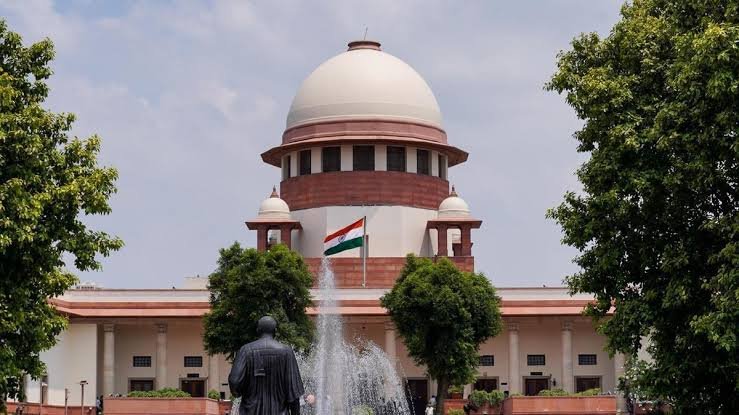
The question is not hypothetical. It is exactly what the Tamil Nadu government tried to answer in March 2024, when it issued a government order allowing converts to Islam from Hindu BC, MBC, and SC communities to claim certificates under the state's Backward Class (Muslim) category. The Madras High Court struck the order down on 25 June 2026. On 15 October 2026, the Supreme Court of India upheld that decision in The Secretary to Government v. Sameer Ahamed N. and Others.
What looks like a procedural dispute over certificates is, in reality, a window into one of India's deepest constitutional tensions: between the structural discrimination encoded in the caste system and the formal equality promised by the Constitution across religious identities. This note unpacks the judgment, traces its lineage, and asks what it means for the future of social justice in India — and in Odisha specifically.
India's Reservation Architecture:
India's affirmative action system was not designed in a vacuum. Dr. B.R. Ambedkar and the founding generation understood that caste, more than any other social structure, determined life outcomes in India. Caste assigned occupation, determined access to education, temples, and wells, and fixed social worth across generations. Reservation was designed to undo this.
But the founders also made a critical choice: they tied Scheduled Caste status to religion. The Constitution (Scheduled Castes) Order, 1950, limited SC membership to Hindus originally, later extended to Sikhs (1956) and Buddhists (1990), but never to Christians or Muslims. The logic was that caste, in its classical oppressive form, existed within the Hindu social order; those who left that order were presumed to have escaped its worst disabilities.
Scheduled Tribes were treated differently. ST status under the constitutional framework is religion-neutral. A tribal person who converts to Christianity does not automatically lose ST status if they retain tribal customs, identity, and community acceptance. This asymmetry — SC status tied to religion, ST status not — has generated controversy ever since and lies at the heart of several pending questions.
Other Backward Classes occupy a third space. OBC/BC classification has always been open to non-Hindu communities in principle. Muslim weavers in Karnataka, Christian fishermen in Kerala, Muslim artisans in Tamil Nadu — all have been recognized as backward classes based on empirical surveys of their social and educational conditions. The system is state-administered, pluralistic, and not religion-specific in legal design. The problem arises when a state attempts to transfer individual entitlements — rather than classifying communities — based on a person's pre-conversion caste.
The Constitutional Blueprint:
Before we can understand the judgment, we need to understand the legal architecture it operates within. The following table maps the key provisions:
|
Constitutional Provision |
Core Content |
Relevance to This Case |
|
Article 15(4) |
Enables the State to make special provisions for socially and educationally backward classes or for SCs and STs. No religion restriction. |
Confirms OBC reservation is constitutionally valid and not limited by religion, but must address real social backwardness. |
|
Article 16(4) |
Allows reservation of posts in State services for any backward class inadequately represented in State services. Religion-neutral. |
The primary basis for state OBC reservations in public employment. The key question: was Tamil Nadu's GO a valid exercise of this power? |
|
Article 341 |
President specifies Scheduled Castes for each state by order. Parliament alone may add or remove communities from this list. |
SC lists are religion-specific by the 1950 Order. Converts to Islam or Christianity lose SC status — a separate and parallel legal framework. |
|
Article 342A |
Added by the 105th Constitutional Amendment (2021). Restores states' constitutional authority to maintain their own OBC lists after the 102nd Amendment had inadvertently centralised this power. |
Ensures states can identify and add communities to their own OBC lists — but subject to constitutional requirements of evidence-based backwardness. |
|
SC Order, 1950 — Para 3 |
Restricts Scheduled Caste status to those professing Hinduism, Sikhism, or Buddhism. Excludes converts to Islam, Christianity, Judaism, and Zoroastrianism. |
Not directly applicable to OBC classification, but forms the backdrop: converts lose SC status immediately and automatically. OBC status operates under a different, more flexible legal framework. |
The critical insight is this: SC status and OBC/BC status are legally distinct frameworks. Losing SC status on conversion is automatic and absolute — it is built into Para 3 of the 1950 Order. OBC status, by contrast, requires an empirical determination that a community is backward, and that determination is not automatically negated by religious identity. A state can recognise Muslim or Christian communities as OBCs if it can show their backwardness with evidence. What it cannot do — as this case confirms — is extend individual OBC benefits to converts simply because they were OBCs before conversion.
Thirty Years of Jurisprudence:
|
Year |
Landmark |
What It Established |
|
1953 |
Kaka Kalelkar Commission |
India's first backward classes commission. Identified backward communities including some Muslim groups. Its report was rejected by the Centre in 1961, but established the principle of multi-community identification. |
|
1979–80 |
Mandal Commission |
B.P. Mandal's Second Backward Classes Commission used 11 socio-economic-educational indicators to assess backwardness. Identified ~52% of India's population as OBC/backward. Recommended 27% reservation in Central Government jobs. |
|
1990 |
Mandal Implementation |
VP Singh government implements 27% OBC reservation in Central services via Office Memorandum. Triggered nationwide protests and the Indra Sawhney case. |
|
1992 |
Indra Sawhney v. Union of India |
9-judge bench of the Supreme Court. Upheld 27% OBC quota. Established: (i) 50% ceiling on total reservations; (ii) creamy layer exclusion for OBCs; (iii) caste as important but not sole indicator of backwardness; (iv) no reservation in promotions (later modified by constitutional amendment). |
|
2006 |
Sachar Committee Report |
Justice Rajender Sachar found Muslims significantly underrepresented in government jobs, educational institutions, and public life. Justified classification of Muslim communities as backward on empirical grounds — but as communities, not as a function of individual religious identity. |
|
2007 |
Misra Commission |
Recommended delinking SC status from religion, extending it to Dalit converts to Christianity and Islam. Not implemented by any government to date. |
|
2021 |
105th Constitutional Amendment |
Restored states' power to maintain their own OBC lists alongside the Central List, clarifying that state lists are constitutionally valid. Key backdrop for understanding the Tamil Nadu GO. |
|
2022 |
K.G. Balakrishnan Commission |
Union Government constituted a three-member commission headed by former CJI K.G. Balakrishnan to examine whether SC status should be extended to Dalit converts. Report ready as of June 2026 but not yet formally submitted. |
|
May 2024 |
Calcutta HC on West Bengal OBC List |
Struck down West Bengal's OBC list that included 77 communities (75 of them Muslim), finding that religion alone had been used as the basis for classification without objective criteria — a violation of Indra Sawhney. |
|
Oct 2026 |
SC in Sameer Ahamed (Tamil Nadu) |
Upheld Madras HC, held that conversion to Islam does not automatically confer BC Muslim status. Reaffirmed that reservation attaches to a constitutionally identified class, not an individual right transferable across religions. |
The Tamil Nadu Case:
In February 2024, the Tamil Nadu State Backward Classes Commission wrote to the state government recommending that persons converting from Hindu BC, MBC, Denotified Communities, and SC categories to Islam should be allowed to obtain Backward Class (Muslim) community certificates. The Commission's logic: these converts continue to face social and economic hardship similar to their original communities. Their caste identity does not vanish with religious conversion.
On 9 March 2024, the Tamil Nadu government issued a Government Order operationalising this recommendation. It created a pathway for such converts to obtain BC (Muslim) certificates and claim the state's 3.5% reservation for backward class Muslims. This was not a new reservation — it was an expansion of who could access an existing one.
Sameer Ahamed, the respondent in the Supreme Court case, had converted from Hinduism to Islam. He sought a BC (Muslim) certificate under the GO. When denied, the matter went to the Madras High Court, which struck down the GO on 25 June 2026. The Tamil Nadu government appealed to the Supreme Court. On 15 October 2026, Justices Prashant Kumar Mishra and Shree Chandrashekhar dismissed the appeal.
Five Things the Supreme Court Actually Decided
1. Conversion Alone Does Not Establish Membership of a Notified Community
The Court's core holding is deceptively simple: belonging to a notified backward class is a statutory status, not a social condition. The Tamil Nadu BC (Muslim) category lists specific Muslim communities. A person who converts from Hinduism to Islam is not automatically a member of those communities — their family history, customs, and community acceptance are in a different tradition entirely. Conversion changes religion; it does not transplant a person into a different community's social history.
2. Social Backwardness from the Caste System Cannot Travel Across Religions
The judgment explicitly holds that "social backwardness from the caste system does not automatically carry over into another religion." This is philosophically important: it acknowledges that caste discrimination may persist after conversion — sociologists have documented exactly this — but it says this continuation of discrimination cannot automatically trigger a different community's legal entitlement. If converts still face caste-based discrimination, that discrimination must be documented and addressed through a fresh classification exercise, not through the transfer of a pre-existing certificate.
3. Reservation Is a Class Right, Not an Individual Transferable Right
Affirmative action in India's constitutional scheme attaches to an identified class — a community determined by the State to be backward and underrepresented. It is not a personal entitlement that travels with an individual across life changes. The Court reaffirmed this principle, ruling against any interpretation that would make reservation a portable benefit following an individual regardless of which statutory class they currently belong to.
4. Private Bodies Cannot Certify Statutory Entitlements
The GO had contemplated that a Jamath — a Muslim community organisation — could issue a letter confirming a person's acceptance into a Muslim community. The Court firmly rejected this. The eligibility for a statutory reservation benefit must be determined by a competent public authority, not a private body. This has implications well beyond this case: it reaffirms the administrative integrity of the certificate-issuance process.
5. The Door Is Not Closed — But the Path Has Rules
Critically, the judgment does not hold that converts from Hindu communities can never benefit from OBC reservation. It holds that they cannot do so automatically by claiming their prior caste identity. If a state wants to extend OBC benefits to converts, it must conduct a fresh empirical survey of those converts as a social group, document their actual social, educational, and economic conditions, and make a defensible classification decision that meets the Indra Sawhney standard.
West Bengal case:
Tamil Nadu is not the only state where this issue has erupted. West Bengal's Trinamool Congress government had included 77 communities in the state's OBC list over decades — 75 of them Muslim. In May 2024, the Calcutta High Court struck down this entire list on the ground that the state had used religion as the primary, if not sole, criterion for classification, without meeting the objective backwardness criteria established by the Indra Sawhney judgment. The Supreme Court had orally observed during West Bengal's appeal: "Reservation cannot be on the basis of religion."
In August 2026, the West Bengal government withdrew its appeal in the Supreme Court, effectively accepting the Calcutta High Court's verdict. This means 77 communities lost OBC status in the state — a politically and socially significant fallout. West Bengal's state assembly was considering fresh legislation to reclassify these communities based on empirical surveys, the constitutionally mandated path. The contrast between the approach (using religion as a shortcut vs. conducting evidence-based surveys) and the outcome (judicial invalidation) is a lesson every state government must absorb.
The Balakrishnan Commission:
Underlying both the Tamil Nadu case and the West Bengal dispute is a harder sociological reality: caste discrimination does not neatly end at the door of the mosque or the church. Studies have consistently documented that Dalit converts to Christianity and Islam continue to face social disabilities rooted in their original caste identity — discrimination from upper-caste members of their new faith as well as from the broader Hindu society.
This is precisely why the Union Government set up the Commission under former Chief Justice of India K.G. Balakrishnan in October 2022. Its mandate is to examine whether SC status — not just OBC status — should be extended to Dalits who converted to Islam and Christianity. The Constitution (Scheduled Castes) Order, 1950 currently restricts SC status to Hindus, Sikhs, and Buddhists. Extending it to converts would require a constitutional amendment, not merely an executive order.
By June 2026, the Commission had completed its study and prepared its report. As of that date, the report had not been formally submitted to the government — the Commission was in the process of finalising it for official presentation. Its contents are not yet public. But the political stakes are enormous: an SC status extension would affect reservation in education, employment, and legislative representation for a significant population. It would also be legally contested, with arguments running from the theological equality promised by Islam and Christianity (both explicitly reject caste) to the sociological reality of continuing discrimination on the ground.
Importantly, the Scheduled Tribes framework offers a precedent: ST status is religion-neutral. A tribal person who converts retains ST status if community identity and customs persist. The Balakrishnan Commission is essentially asking: why should the SC framework not follow the same logic, given that caste identity similarly persists after conversion?
The Fault Lines
The Theological-Sociological Divide
Both Islam and Christianity formally reject caste hierarchy. Conversion, in the theological understanding of both faiths, is supposed to be an equalising act. But social reality in India does not operate on theological principles. Dalits who convert often find themselves at the bottom of their new religious community's hierarchy as well — a phenomenon sometimes called "casteism within Christianity" or "Muslim untouchability." The Supreme Court's judgment, while legally coherent, does not resolve this sociological paradox. Courts can only work with constitutional categories; sociological repair requires a different kind of institutional imagination.
The Evidence Burden and Its Practical Limits
The judgment sets a clear standard: want to classify converts as OBCs? Conduct empirical surveys, document backwardness, meet the constitutional test. This is the right standard legally. But in practice, no state government in India has the political appetite to conduct such a survey, document the results, and withstand the litigation that will follow. The result may be that a socially meritorious claim — that certain converts remain backward — goes unaddressed not because it lacks evidence, but because no government wants to generate and publish that evidence in the current political climate.
The Creamy Layer and Internal Differentiation
One largely unexplored dimension of this debate is internal differentiation. Even among Hindu OBCs, the creamy layer exclusion (income above a threshold) ensures that only the genuinely disadvantaged benefit from reservation. Among converts who were formerly OBCs, there is likely to be a similar range of social conditions: some have prospered, others have not. Any fresh classification exercise would need to grapple with this internal heterogeneity rather than treating all converts as a homogeneous group.
The Political Dimension That Cannot Be Ignored
It would be naive to discuss OBC classification and religion without acknowledging its political weight. Muslim OBC reservation has become a flashpoint in India's political discourse, with some parties alleging that it amounts to "vote-bank appeasement" and others arguing that it is constitutionally mandated social justice. The Supreme Court's consistent message — supported by both the Calcutta HC verdict and this judgment — is that the Constitution does not permit politicised shortcuts. Religion cannot substitute for the evidentiary rigour the backward-class framework requires.
Way Forward:
Publish the evidence, then make the policy. Odisha's SEBC survey report, submitted in October 2023, must be made public before any reservation policy decisions are taken. Governance decisions that rest on concealed data are legally fragile and politically dishonest. The Sachar Committee model — publish the data, let it inform policy openly — is the right template.
Reconstitute and resource the OSCBC. An Odisha State Commission for Backward Classes that is not operational is not a technicality — it is a gap in the state's constitutional machinery. The Commission must have the power, budget, and independence to conduct fresh surveys, review existing classifications, and advise the government with evidence, not political calculations.
Distinguish community classification from individual transfer. This judgment reaffirms a clear line: the State can classify a community as OBC after empirical survey; it cannot extend individual benefits based on a person's prior religious identity. Policy makers in Odisha must internalise this distinction before proposing any changes to the SEBC list.
Await and act on the Balakrishnan Commission's findings. The Commission's report on SC status for converts, when published, will create a new policy landscape. If it recommends extension of SC status to converts — even partially — Parliament will need to decide whether to amend the Constitution (Scheduled Castes) Order, 1950. Odisha, with its large Dalit Christian population in districts like Mayurbhanj and Keonjhar, has a direct stake in this outcome.
Build a caste-data infrastructure. India has not had a comprehensive caste census since 1931. Bihar's 2023 caste survey and Odisha's 2023 SEBC survey are steps in the right direction. The Central Government's decision to include caste enumeration in the upcoming census is essential. Evidence-based classification cannot survive without evidence — and right now, India is making constitutional decisions about a quarter of its population based on ninety-year-old data.
Mains Practice Question
"The Supreme Court's judgment in The Secretary to Government v. Sameer Ahamed N. (2026) reaffirms a critical constitutional principle while leaving unresolved a profound sociological question." Critically examine this statement in the context of OBC classification, religious conversion, and social justice in India. What policy reforms should follow from this judicial clarity? (250 words)