
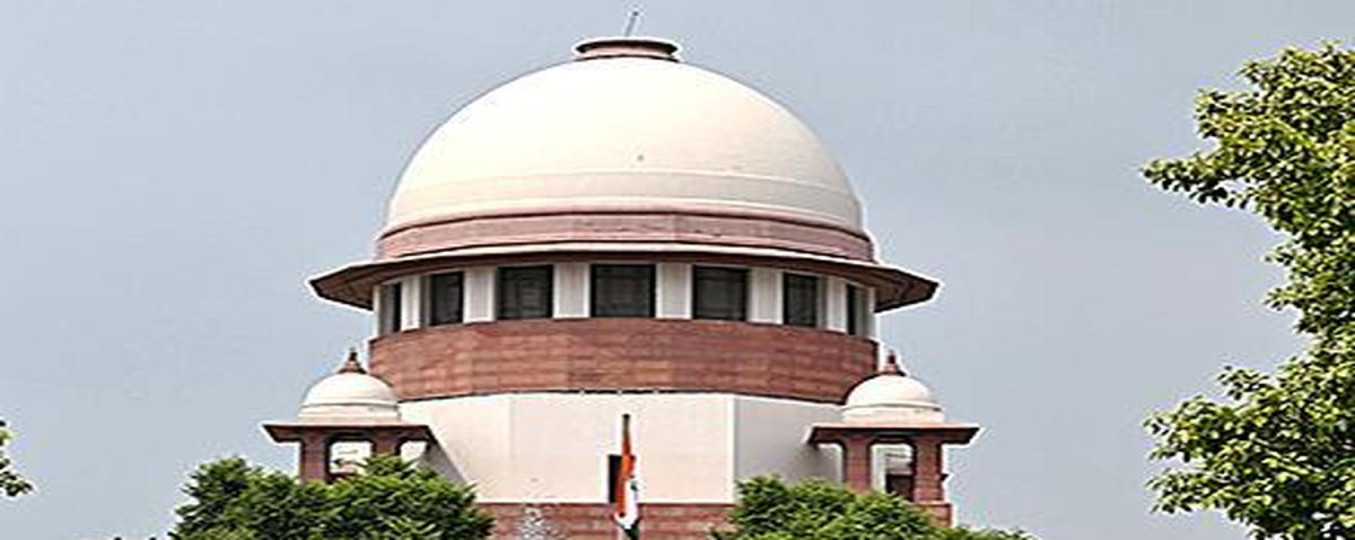
Union of India v. Rohith Nathan
Study OAS Prism
Why the Creamy Layer Exists:
Reservation in India is a corrective instrument — designed to compensate for centuries of systematic exclusion. But if a few families within a backward class accumulate wealth, status, and political power across generations, they will monopolise the very benefits intended for the genuinely deprived members of that class. The creamy layer doctrine resolves this. It excludes from OBC reservation those individuals whose parents have already achieved sufficient social mobility — through position, income, or power — that they no longer need constitutional protection.
The concept was formally recognised in Indra Sawhney v. Union of India (1992), the landmark nine-judge bench verdict of 16 November 1992. The Court upheld 27% OBC reservation as recommended by the Mandal Commission, but mandated exclusion of the "more advanced sections" — the creamy layer — from its benefits. It imposed a 50% ceiling on total reservations and held that Article 16(4) is an enabling provision, not an exception to equality.
From Mandal to the 1993 Office Memorandum: How the Framework Was Built
- The Mandal Commission (1979–1980)
- The Second Backward Classes Commission, chaired by B.P. Mandal, was constituted in January 1979. Its 1980 Report identified 3,743 OBC communities constituting approximately 52% of India's population and recommended 27% reservation in central government services. On 7 August 1990,
- PM V.P. Singh announced implementation, triggering widespread protests and political upheaval. The Indra Sawhney verdict of 1992 settled the legal architecture.
- The 1993 Office Memorandum: Status, Not Salary
- To operationalise Indra Sawhney, DoPT issued Office Memorandum in September 1993 — the governing instrument of creamy layer policy to this day. It established a six-category framework based on the parental post and social position of the OBC candidate, not primarily their income. Crucially, salary income was explicitly excluded from the residual income test under Category VI. A government clerk's rising pay does not push their child into the creamy layer.
The Six-Category Creamy Layer Framework
|
Cat. |
Parental Status |
Creamy Layer Effect |
|---|---|---|
|
I |
Constitutional post holders |
Automatic creamy layer — no income test |
|
II |
Group A / Class I direct recruit or promoted officer |
Creamy layer; both parents at Group A = automatic |
|
III |
Colonel rank and above in armed forces |
Creamy layer by position |
|
IV |
Professionals (doctors, engineers, lawyers, CAs) |
Both parents professional = creamy layer; one parent alone does not |
|
V |
Large property / trade / industry owners |
Based on agricultural land or business size thresholds |
|
VI |
All others (residual category) |
Creamy layer ONLY if non-salary, non-agricultural income > Rs 8 lakh p.a. (current ceiling, unchanged since 2017) |
The Verdict of 11 March 2026: What the Court Actually Decided
A division bench of Justice P.S. Narasimha and Justice R. Mahadevan delivered Union of India v. Rohith Nathan (2026 INSC 230) on 11 March 2026 (SLP No. 30325/2017; judgment reserved 30 October 2025). The core holding is unambiguous: creamy layer cannot be determined by income brackets alone. The parental post and rank in government or equivalent service is the primary criterion.
The Court held that PSU employees and government employees holding equivalent posts must be treated identically for creamy layer purposes. Differential treatment — as the impugned 2004 DoPT letter imposed — constitutes "hostile discrimination" within the same backward class, violating Articles 14, 15, and 16 of the Constitution.
The Court directed the creation of supernumerary posts to absorb candidates wrongly excluded from OBC (NCL) benefits, with a compliance deadline of 11 September 2026.
The Administrative Flaw:
The government had failed, for years after 1993, to issue equivalence orders — formal notifications matching PSU positions to their Central Government equivalents. On 14 October 2004, DoPT issued a letter containing Paragraph 9: PSU employees lacking equivalence orders would have their salary income counted in the Category VI income test — the very income category the 1993 OM had explicitly excluded. A PSU engineer earning Rs 9 lakh per year was pushed into the creamy layer; an identically placed government engineer earning the same salary was not.
The Court found this indefensible. An administrative letter cannot override a substantive policy framework endorsed by the Supreme Court in Indra Sawhney. Paragraph 9 of the 2004 letter was held unconstitutional to the extent it reintroduced salary income as a creamy layer trigger for PSU employees.
The deeper lesson is systemic: when departments fail to issue mandated implementation instruments, they resort to workarounds that distort the legal framework. Courts do not grant the executive benefit of the doubt when that distortion disadvantages rights-bearing citizens. Administrative inertia is not a neutral act — it has constitutional consequences.
Odisha Perspective: SEBC Architecture, OSCBC
- Odisha's Distinct SEBC Framework
- Odisha does not use the term "OBC" for state purposes. It operates a Socially and Educationally Backward Classes (SEBC) framework governed by state law and administered through the Odisha State Commission for Backward Classes (OSCBC), operational since January 2021. The state SEBC list covers approximately 490 communities — distinct from the Central OBC list, which has 197 Odisha entries. Following the 105th Constitutional Amendment (August 2021), which restored state authority over SEBC lists after the Maratha reservation judgment, Odisha independently maintains and updates its list.
- Quantum of Reservation and April 2026 Cabinet Decision
- SEBC reservation in Odisha state services stands at 11.25%. In April 2026, the Odisha Cabinet restructured quotas across categories in professional education: SC reservation was revised to 16.25% and ST reservation to 22.5%. SEBC expansion to professional and technical education admissions was extended in 2025–26 under the current BJP state government.
2023 SEBC Survey: The Numbers That Matter
The OSCBC's 2023 SEBC Survey — the first comprehensive empirical exercise of its kind in Odisha — produced three critical data points:
- SEBCs constitute 39.31% of Odisha's total population
- Only 2.8% of SEBCs hold government posts — an acute representation deficit
- 49.6% have only primary-level education, indicating deep structural disadvantage
These figures provide the statistical foundation for any future legal challenge to the 11.25% SEBC quota as inadequate relative to demographic representation.
Why the Government Is Missing Its Own Deadline
The supernumerary posts direction carried a deadline of 11 September 2026. As of 1 September, the Centre has not complied. The government filed a special bench plea seeking to limit retroactive application, arguing that supernumerary posts would cascade distortions in batch seniority and promotion channels. At least 22 subsequent tribunal and court orders have applied Rohith Nathan. Approximately 950+ UPSC CSE 2025 candidates are directly affected.
This pattern — court issues structural remedy; executive seeks dilution or delay — mirrors familiar episodes in India's legal history: post-Vishaka guidelines compliance failures, the twenty-year delay in police reforms following Prakash Singh v. Union of India (2006), and the original resistance to implementing the Mandal Commission recommendations. Courts can declare rights; administrations determine the pace of enforcement. That gap is not procedural friction — it is a governance deficit with real human consequences.
Real Gaps
- The Rs 8 lakh income ceiling for Category VI has not changed since 2017. The NCBC recommended Rs 15 lakh in 2015 — a recommendation the government has ignored. Rohith Nathan does not address this stale threshold, leaving the income-based test significantly eroded by inflation.
- The ruling applies clearly to Central Government and PSU employees. Its reach to state government employees, contract workers in aided institutions, and informal-sector families with high incomes remains untested.
- The supernumerary posts remedy is administratively complex. Creating posts outside sanctioned strength disrupts departmental hierarchies, promotion pipelines, and fiscal accounting. The government's pushback on retroactivity carries some administrative weight, even if the legal position is settled against it.
- Rohith Nathan does not address sub-categorisation within OBC quotas — a separate but related question where the Supreme Court in 2024 upheld states' power to create sub-quotas for the most backward sub-groups. These two rulings together reshape the entire OBC reservation architecture, but their interaction is not yet judicially mapped.
- State SEBC lists and their creamy layer norms need not automatically mirror the Central framework. A candidate may be NCL under state norms but CL under Central norms, or vice versa — a legal patchwork the 105th Amendment created without fully resolving.
Way Forward:
- The NCBC must revise the Rs 8 lakh income ceiling without further delay. The 2015 recommendation of Rs 15 lakh should be the minimum; a contemporary inflation-adjusted figure would be higher. An automatic indexation mechanism would prevent future stagnation.
- DoPT must issue comprehensive equivalence orders for all PSU and public authority positions — the administrative failure that made the 2004 Para 9 distortion possible must be corrected systemically, not piecemeal.
- The Odisha government and OSCBC should proactively issue state-level circulars clarifying that Rohith Nathan applies to SEBC creamy layer determinations under Odisha law, sparing candidates from costly individual litigation.
- Parliament should consider codifying the creamy layer framework in statute — moving it from evolving executive OMs, which are vulnerable to administrative distortion, to a National OBC/SEBC Policy Act with parliamentary accountability and judicial reviewability.
- The concurrent sub-categorisation exercise (now constitutionally permissible per 2024 SC ruling) should proceed in tandem. Rohith Nathan ensures the right people access reservation; sub-categorisation ensures the right sub-groups receive proportional shares within it. Both reforms are incomplete without each other.