
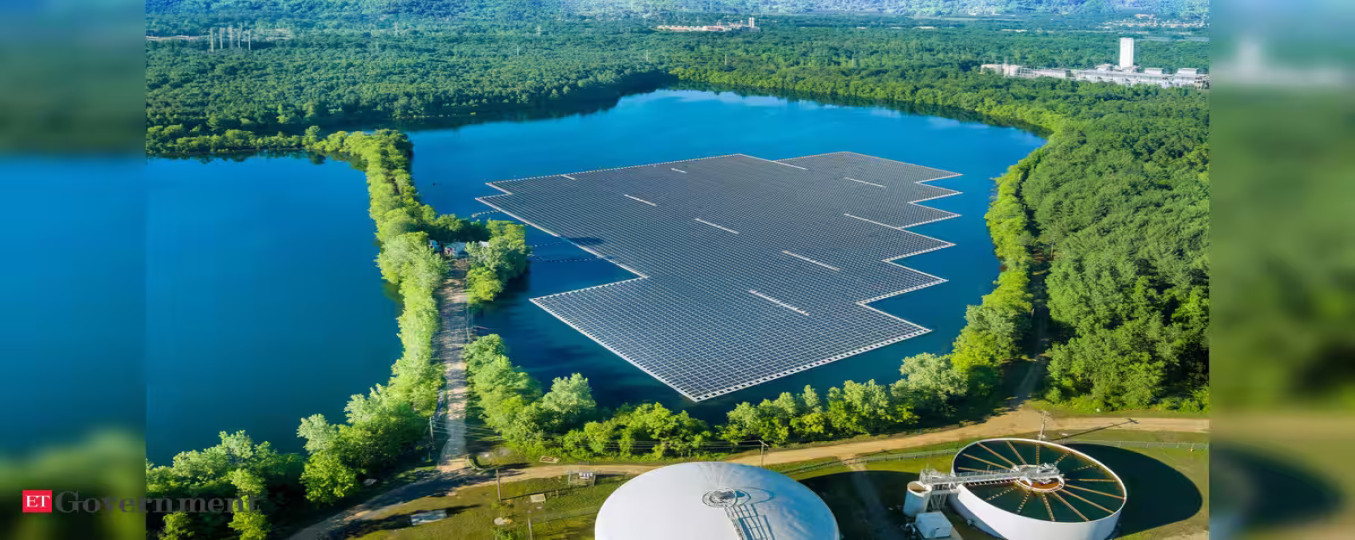
India's Floating Solar Revolution
Study OAS Prism
Energy transition sits at the intersection of three major examination themes — environment, economy, and federal governance. The Cabinet's approval of PM Surya Sarovar Yojana on July 31, 2026, is not merely a renewable energy announcement. It is a policy response to India's most acute constraint in solar expansion: land. For OPSC aspirants, the additional richness lies in Odisha's position as the fourth-highest state in floating solar potential (12.81 GWp), with active planning at Hirakud, Rengali, and three other major reservoirs.
PM Surya Sarovar Yojana
|
|
Details |
|
Scheme Name |
Pradhan Mantri Surya Sarovar Yojana (PM-SSY) |
|
Cabinet Approval |
July 31, 2026 |
|
Total Outlay |
?5,070 crore (FY 2026-27 to FY 2030-31) |
|
Capacity Target |
5,000 MW floating solar + 10,000 MWh Battery Energy Storage |
|
CFA per Project |
?1 crore/MW on commissioning + ?50 lakh for feasibility study |
|
Nodal Ministry |
Ministry of New and Renewable Energy (MNRE) |
|
Scope |
All States and Union Territories; reservoirs, lakes, industrial ponds |
|
CO? Reduction |
~10 million tonnes annually |
|
Employment |
16,000–17,000 full-time equivalent jobs |
|
India Floating Potential |
102.18 GWp (NISE, 2026) | Current Deployment: ~700 MW |
The Problem That Created the Solution: Land vs. Energy
India's solar energy journey between 2014 and 2026 is one of the most dramatic energy transformations in modern history. Installed solar capacity grew from 3 GW in 2014 to 162.15 GW by June 2026 — a 54-fold increase in twelve years. Yet this growth is now running into a wall that no amount of policy intent can easily overcome: land.
Ground-mounted solar requires roughly 4–5 acres per MW. To reach India's NDC target of 500 GW of non-fossil fuel capacity by 2030, the renewable sector will need land equivalent to a small state. In a country where 60 percent of the population depends on agriculture and where forest rights, tribal land protections, and food security concerns create intense competition for every hectare, this is not an engineering problem — it is a political economy problem.
Floating solar photovoltaic (FSPV) technology offers a structural bypass. By deploying solar panels on pontoons or modular floating structures over existing water bodies — reservoirs, irrigation canals, industrial effluent ponds — the technology decouples electricity generation from agricultural land competition. The National Institute of Solar Energy (NISE) mapped India's floating solar potential in June 2026 at 102.18 GWp, covering 4,546 sq km of suitable water surfaces out of 10,725 sq km assessed. That single figure reframes India's energy geography entirely.
How Floating Solar Works
System Architecture
- A floating solar installation has three primary components: the photovoltaic panels (same silicon-based modules used in ground-mounted systems), the floating platform (high-density polyethylene pontoons or HDPE-based modular structures anchored to the reservoir floor), and the balance of system — including underwater cables, an inverter station at the bank, and a grid interconnection point.
- The panels are oriented at an optimal tilt angle using mounting rails fixed to the floating platform. Anchoring systems — either tension-based with mooring lines or gravity-based with concrete anchors — keep the array stable during wind and wave events. The system must be designed to accommodate reservoir water level fluctuations, which in Odisha's monsoon-fed reservoirs can be significant.
The Performance Advantage: Why Water Helps
- Standard silicon photovoltaic cells lose efficiency as temperature rises — roughly 0.3 to 0.5 percent per degree Celsius above 25°C. Ground-mounted panels in Odisha's summer can reach surface temperatures of 60–70°C. Floating panels benefit from evaporative cooling from the water surface below, keeping panel temperatures 5–10°C lower. The result: FSPV systems produce 5–10 percent more electricity per installed MW than equivalent ground-mounted systems in comparable locations. This is a meaningful economic differentiator, especially as power purchase agreements are negotiated in paise per unit.
The Storage Integration: Why 10,000 MWh BESS Matters
- Solar energy is inherently intermittent — it generates power only during daylight hours and is sensitive to cloud cover. PM-SSY mandates co-location of Battery Energy Storage Systems (BESS) with a minimum two-hour storage duration for every project. The 10,000 MWh target is significant because it directly addresses the grid stability concern that has historically limited solar penetration in peak states. BESS enables power generated at noon to be dispatched at 6 PM — peak residential demand hours — making floating solar a truly dispatchable, not merely available, source.
However, India's BESS supply chain remains concentrated in China for key components including lithium iron phosphate cells. The PRS India analysis of the Union Budget noted that only 58 percent of targeted transmission network additions were completed in 2024-25. PM-SSY's energy storage ambition will depend on simultaneous progress on domestic battery manufacturing under the PLI scheme.
PM Surya Sarovar Yojana: Dissecting the Policy
Financial Architecture
- The scheme deploys Central Financial Assistance (CFA) of ?1 crore per MW upon commissioning — a back-ended payment structure that ensures the government pays only for actual installed capacity, not sanctioned capacity. This is a deliberate design choice that reduces the moral hazard of developers securing grants and delaying projects. Additionally, up to ?50 lakh per project is available for pre-development feasibility studies including bathymetric surveys, water quality assessments, anchoring design, and Environmental Impact Assessments.
- The disbursement timeline extends to FY 2032-33 even as project sanctions close by FY 2030-31 — recognising that commissioning and commissioning verification typically follow sanctioning by 18 to 24 months in large renewable infrastructure.
Why This Scheme Is Different from Predecessor Programmes
India has had floating solar pilots before — Rajasthan Canal Solar, SECI's 100 MW tender, and the Omkareshwar 600 MW project in Madhya Pradesh (the world's largest floating solar installation) — but these were either isolated pilots or single-location projects. PM-SSY is the first centrally sponsored, all-India, scale-up framework for FSPV with mandatory BESS integration. The inclusion of all states and UTs, and the feasibility funding, signal an intent to build a national pipeline, not merely a portfolio of showcase projects.
Constitutional Positioning
Electricity is a Concurrent List subject (Schedule VII, List III, Entry 38 of the Constitution). Both Parliament and State Legislatures can legislate on electricity, but in case of conflict, Parliament's law prevails. This federal architecture means that PM-SSY's implementation depends critically on State Governments for land-use approvals (reservoir surface rights sit with State Irrigation or Water Resources Departments), grid connectivity clearances, and Power Purchase Agreement facilitation. GRIDCO in Odisha, for instance, acts as the nodal state agency connecting project developers to the transmission network. The Centre sets the incentive architecture; implementation speed is a state-level governance test.
Environmental Dimensions: Benefits, Risks
The Conservation Dividend
- A 30–60 percent reduction in water evaporation from covered reservoir surfaces is the most counterintuitive benefit of floating solar. In semi-arid regions and during summer stress periods, this water saving can be substantial. A 100 MW FSPV project covering roughly 200 hectares of a reservoir could conserve millions of litres of water annually — a significant co-benefit in water-stressed districts. Additionally, the shading effect suppresses algal bloom formation, which is a water quality concern in eutrophic irrigation reservoirs.
- The algae suppression effect has ecological limits, however. Complete shading of reservoir surfaces can reduce dissolved oxygen from photosynthesis, affecting aquatic ecosystems. This is why the NISE assessment methodology requires minimum gaps between floating platforms for sunlight penetration and recommends Environmental Impact Assessments for every project above a threshold capacity.
Honest Assessment of Environmental Risks
- The corrosion-resistant materials used in FSPV platforms — primarily HDPE and stainless steel — are not without environmental questions. Over a 25-year project lifetime, microplastic degradation from HDPE pontoons is an area where research is still limited. The Ministry of New and Renewable Energy must commission long-duration ecological monitoring studies before PM-SSY reaches scale — particularly in reservoirs that are simultaneously irrigation, fishery, and biodiversity habitats.
- Fishery communities who depend on reservoir surfaces for net placement, boat movement, and fish cage aquaculture will face displacement of traditional livelihoods unless co-design of floating solar layouts specifically accommodates these uses. Failure to address this dimension would replicate the social conflicts seen in ground-mounted solar parks in Rajasthan and Andhra Pradesh.
State-Wise Floating Solar Potential: India's New Energy Geography
The NISE 2026 assessment fundamentally reorders India's solar geography. States traditionally dominant in ground-mounted solar — Gujarat, Rajasthan, Tamil Nadu — rank lower in floating solar potential because their major water bodies are smaller or less suited to FSPV criteria. The beneficiaries are states with large reservoir infrastructure, many of which are in India's central, eastern, and peninsular regions.
|
Rank |
State |
Potential (GWp) |
Key Reservoirs / Note |
|
1 |
Maharashtra |
16.28 GW |
Highest potential; Koyna, Ujani reservoirs |
|
2 |
Madhya Pradesh |
14.89 GW |
Narmada valley chain; Omkareshwar (2.5 MW pilot) |
|
3 |
Karnataka |
13.69 GW |
Synergy with hydropower infrastructure |
|
4 |
Odisha |
12.81 GW |
4th highest; Hirakud, Rengali, Upper Indravati |
|
5 |
Telangana |
10.72 GW |
Srisailam, Nagarjunasagar reservoirs |
The table above reveals an important governance implication: India's eastern states — historically underserved by industrial energy infrastructure — have a structural advantage in the floating solar era. Odisha's 12.81 GWp potential, if harnessed, would make it a net power exporter. This energy surplus potential could anchor industrial investment — steel, aluminium, chemicals — in a state that already has the raw material base but has historically suffered from power reliability concerns.
Odisha Perspective:
Odisha's engagement with floating solar is not aspirational — it is actively planned and, in some cases, already progressing. The state presents one of the most compelling floating solar narratives in India, combining high potential, existing hydropower infrastructure, political will, and a specific institutional mechanism for implementation.
The Five Reservoirs at the Centre of Planning
|
Reservoir |
District |
Water Area |
Status / Note |
|
Hirakud |
Sambalpur |
743 sq km (reservoir) |
500 MW DPR prepared by consultants |
|
Rengali |
Angul / Dhenkanal |
163 sq km |
Under feasibility study |
|
Upper Indravati |
Kalahandi / Nuapada |
76 sq km |
Near tribal areas; green jobs potential |
|
Upper Kolab |
Koraput |
58 sq km |
Backward district priority |
|
Balimela |
Malkangiri |
102 sq km |
Tribal district; social equity angle |
GRIDCO (Grid Corporation of Odisha) serves as the nodal agency for implementation. An inter-departmental reservoir committee, comprising officials from the Energy Department, Water Resources Department, and the Forest and Environment Department, has convened three times to fast-track the planning process. Consultants have been appointed to assess the feasibility of 51 medium-sized reservoirs across the state — a methodical approach that recognises the diversity of reservoir conditions.
Hirakud: The Flagship Site
The Hirakud reservoir, created by the Hirakud Dam across the Mahanadi River in Sambalpur district, is Asia's longest earthen dam and holds one of India's largest artificial lake surfaces at 743 square kilometres at full reservoir level. A Detailed Project Report (DPR) for 500 MW of floating solar on Hirakud has already been prepared. At 5–10 percent higher output than ground-mounted systems, a 500 MW Hirakud FSPV installation could generate approximately 900–950 million units annually — enough to power nearly 700,000 average Odisha households. The co-location with Hirakud's own 307.5 MW hydropower station creates a natural hybrid configuration: solar generates during the day, while hydro handles evening peak and nighttime load.
Challenges Specific to Odisha's Context
Odisha's reservoirs serve multiple and often competing purposes: irrigation, fisheries, hydropower, municipal water supply, and biodiversity habitat. The Mahanadi water dispute with Chhattisgarh, while primarily about river flow, creates a political context in which any major intervention on Mahanadi basin reservoirs — including Hirakud — will be watched carefully by downstream communities. Floating solar projects must navigate Water Resources Department approvals, Forest and Environment clearances, and gram sabha consultation requirements under the Forest Rights Act in areas adjacent to Schedule V regions. The inter-departmental committee's three meetings suggest progress, but the speed of clearance will determine whether Odisha captures the PM-SSY window or watches neighbouring states move faster.
Barriers That Could Stall the Floating Solar Vision
PM Surya Sarovar Yojana is well-designed in its financial incentive structure, but three structural barriers — each requiring deliberate policy action — could limit its impact.
- Regulatory Fragmentation Across Multiple Authorities
- A floating solar developer in Odisha must obtain approvals from at least five distinct authorities: the Water Resources Department (reservoir surface rights), the Environment Ministry (EIA clearance), the Forest Department (if reservoir catchment is forested), the Central Electricity Authority (grid connectivity), and the State Electricity Regulatory Commission (tariff determination). No single-window clearance system exists for floating solar projects. The result is sequential rather than parallel approvals — adding 12 to 24 months to project timelines and making smaller projects economically unviable. The Renewable Watch analysis (July 2026) identifies regulatory coordination as the most critical near-term barrier, recommending integrated approval mechanisms that consolidate multi-agency requirements.
- Transmission Network: The 58 Percent Problem
- Only 58 percent of targeted transmission line additions were completed in 2024-25, according to PRS India's analysis of the Union Budget. Floating solar installations on remote reservoirs — Balimela in Malkangiri, Upper Kolab in Koraput — face the same last-mile evacuation challenge that has stranded multiple solar parks. PM-SSY's feasibility funding (?50 lakh per project) can commission the survey; it cannot build the substation. A parallel acceleration of the Green Energy Corridor Phase II, which specifically targets eastern and Deccan transmission networks, is essential.
- Higher Capital Costs and Financing Gaps
- FSPV projects cost approximately 25 percent more per MW than ground-mounted equivalents — driven by specialised floating structures, corrosion-resistant materials, underwater cabling, and anchoring systems. The ?1 crore/MW CFA partially bridges this gap but does not eliminate it. Smaller developers without strong balance sheets struggle to attract project financing at viable interest rates, particularly for first-of-kind water body locations without historical performance data. Viability Gap Funding (VGF) beyond the CFA level, or risk guarantees from IREDA and SECI, will be needed to activate the full pipeline.
Way Forward:
- Establish a Single-Window Clearance System for FSPV: The Ministry of New and Renewable Energy should work with the Ministry of Jal Shakti, MoEFCC, and CEA to create a Joint Project Approval Committee for floating solar projects above 10 MW, with a statutory 90-day clearance window. State Governments should designate a nodal officer within GRIDCO/SECI for project facilitation.
- Front-load Ecological Monitoring Mandates: MNRE must commission a 10-year baseline and monitoring study of representative reservoir ecosystems before large-scale deployment. This pre-empts conflict and builds the evidence base for sustainable FSPV standards — analogous to what the Forest Advisory Committee does for forest clearances.
- Integrate Fishery Co-design: Reserve 20 to 30 percent of reservoir surface in each project layout for fishery activities, and mandate prior consultation with state fisheries cooperatives. Odisha's fisheries sector — employing over 15 lakh people — must not pay the cost of the energy transition.
- Accelerate Green Energy Corridor Phase II for Eastern States: The poor transmission infrastructure of Odisha's southern and western districts — where the best floating solar reservoirs are located — must be addressed through a dedicated eastern transmission sub-programme, funded through a blended Infrastructure Investment Trust (InvIT) structure.
- Build Domestic BESS Manufacturing Under PLI: The 10,000 MWh BESS target creates an anchor demand that can justify domestic lithium iron phosphate cell manufacturing. The PLI scheme for Advanced Chemistry Cell batteries must be expanded in scope and timelines to align with PM-SSY's commissioning calendar.
Mains Practice Question
"India's floating solar potential of over 100 GW remains largely untapped despite a decade of solar expansion. The PM Surya Sarovar Yojana represents a significant policy response, but structural barriers threaten its ambitions." Critically examine the opportunities and challenges in scaling floating solar photovoltaic (FSPV) technology in India. In your answer, assess Odisha's specific position in this transition and suggest a governance framework that can make PM-SSY effective at scale.
Study OAS | Odisha's Most Trusted OPSC Preparation Platform | studyoas.in