
Current Affairs
Stay updated with the latest national and international events.
31 January 2026
Supreme Court Declares Menstrual Health a Fundamental Right, Mandates Free Sanitary Pads in Schools
What’s the News?
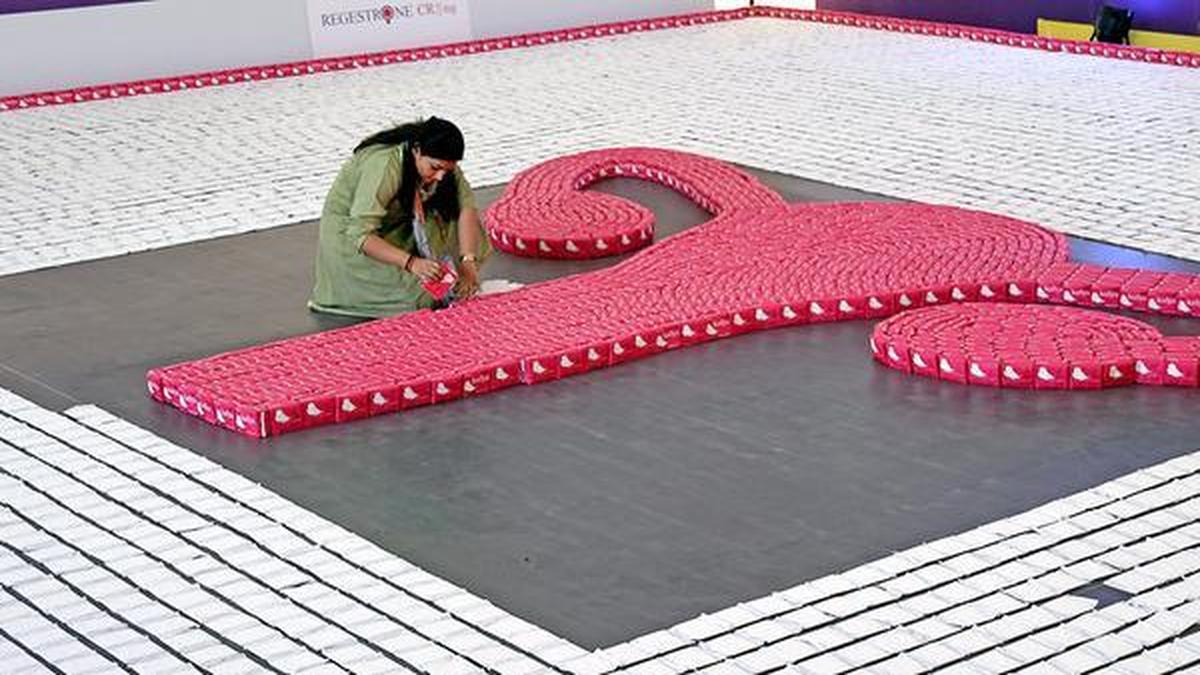
- The Supreme Court of India, in the case of Dr. Jaya Thakur v. Union of India, ruled that the right to menstrual health is an integral part of the fundamental right to life and dignity under Article 21 of the Constitution.
- A division bench comprising Justices JB Pardiwala and R Mahadevan issued binding directives to all States and Union Territories to ensure free access to menstrual hygiene management (MHM) measures in every school, regardless of whether they are government-run, aided, or privately managed.
- The judgment mandates the provision of free oxo-biodegradable sanitary napkins to girl students from Classes 6 to 12, alongside functional gender-segregated toilets and Menstrual Hygiene Management (MHM) corners in all schools.
- Non-compliance will attract stringent consequences, including de-recognition of private schools under the Right of Children to Free and Compulsory Education (RTE) Act, 2009, and direct accountability of State governments for public institutions.
Key Directives and Implementation
- Free Menstrual Absorbents: All schools must provide oxo-biodegradable sanitary napkins (compliant with ASTM D-6954 standards) free of cost, accessible via vending machines within toilet premises or designated areas.
- Sanitation Infrastructure:
- Functional, gender-segregated toilets with usable water connectivity in all urban and rural schools.
- Privacy and accessibility features for children with disabilities.
- Functional hand-washing facilities with soap and water at all times.
- MHM Corners: Every school must establish dedicated corners equipped with spare uniforms, innerwear, disposable bags, and other materials to address menstrual emergencies.
- Safe Disposal: Installation of covered bins in toilet units and environmentally compliant disposal mechanisms adhering to Solid Waste Management Rules.
- Monitoring Mechanism:
- District Education Officers (DEOs) must conduct annual inspections of school infrastructure and obtain anonymous student feedback.
- NCPCR and SCPCR are tasked with overseeing implementation and ensuring accountability.
Constitutional and Legal Framework
- Article 21 (Right to Life): The Court held that dignity cannot be abstract; it requires conditions enabling individuals to live without humiliation or exclusion. Lack of MHM measures subjects girl children to stigma and violates their bodily autonomy and privacy.
- Article 14 (Right to Equality): Substantive equality requires the State to remove structural barriers that prevent girls from participating in education on equal terms with boys. Inaccessibility to menstrual hygiene constitutes a gender-specific barrier that impairs educational opportunities.
- Article 21A and RTE Act, 2009: The right to education includes quality infrastructure. The Court ruled that MHM measures are inseparable from the right to education, and absenteeism due to menstrual poverty violates this fundamental right.
Additional Info
- Relevant Government Schemes:
- PM Bhartiya Janaushadhi Pariyojna: Provides 'Suvidha' oxo-biodegradable sanitary napkins at ₹1 per pad through over 16,000 Kendras.
- Menstrual Hygiene Scheme (MHS): Implemented under the National Health Mission (NHM), where ASHAs distribute subsidized sanitary napkins (Freedays brand) at ₹6 per pack.
- Samagra Shiksha: Funds installation of sanitary pad vending machines and incinerators in schools; States must now prioritize biodegradable options per the Court’s directive.
- Swachh Bharat Mission (Grameen) Phase 2: Focuses on Menstrual Waste Management (MWM) through small-scale incinerators and deep burial pits to prevent environmental clogging.
- Technical Standards:
- Oxo-biodegradable plastic: Contains additives that facilitate breakdown into micro-fragments when exposed to oxygen and heat, unlike conventional plastic that persists for centuries.
- ASTM D-6954: International standard for oxo-biodegradable plastics ensuring safety and environmental compliance.
Sources
Supreme Court Stays UGC Equity Regulations 2026 Over 'Divisive' Definition

What’s the News?
- The Supreme Court of India stayed the implementation of the University Grants Commission (Promotion of Equity in Higher Education Institutions) Regulations, 2026, directing that the earlier 2012 regulations shall remain in force until further orders.
- A bench comprising Chief Justice of India Surya Kant and Justice Joymalya Bagchi held that the 2026 framework was "capable of misuse", contained "complete vagueness", and risked creating "sweeping consequences which will divide society".
- The Court issued notices to the Union Government and UGC on petitions challenging the constitutional validity of the regulations, specifically contesting Regulation 3(1)(c) which defines caste-based discrimination exclusively in relation to Scheduled Castes (SCs), Scheduled Tribes (STs), and Other Backward Classes (OBCs).
Why the Stay?
- Exclusionary Definition: Regulation 3(1)(c) limits the definition of "caste-based discrimination" to discrimination only against SC/ST/OBC members, effectively excluding students from the general category from the protective ambit of the grievance mechanism.
- Hierarchy of Victimhood: Petitioners argued this creates a constitutionally impermissible "hierarchy of victimhood" where the Equity Committees, helplines, and fast-track mechanisms would be accessible only to certain identity groups, regardless of the gravity of discrimination faced by others.
- Procedural Inequality: While the Constitution permits affirmative action under Article 15(4), the Court observed that grievance redressal; unlike reservation must remain universally accessible to prevent violations of Article 14 (Right to Equality) and Article 21 (Access to Justice).
- Practical Misuse: The bench cautioned that vague provisions could be weaponized for personal vendettas, potentially criminalizing campus interactions without safeguards against false complaints.
2012 vs 2026 Regulations: Key Differences
| Aspect | 2012 Regulations | 2026 Regulations (Stayed) |
|---|---|---|
| Scope | Applied to all students; special focus on SC/ST protection | Explicitly excludes general category from caste-based discrimination definition |
| Protected Categories | SCs, STs (primary focus), but safeguards for all | Includes OBCs explicitly; excludes general category from caste discrimination purview |
| Specific Prohibitions | Detailed list: segregation in hostels/mess, labeling as "reserved category", discrimination in evaluation | General prohibition on discrimination; omits specific illustrative list |
| Infrastructure | Mandatory Equal Opportunity Cells and Anti-Discrimination Officers | Equal Opportunity Centres, Equity Committees (with SC/ST/OBC/Women/PwD representation), Equity Squads, and 24-hour helplines |
| Timeline | 60 days to resolve complaint; 90 days for appeal | Specific 24-hour response requirement; 15 working days for report submission; 30 days for appeal |
| Punitive Action | Punishment commensurate with nature of act; no institutional penalties specified | De-recognition, debarment from UGC schemes, loss of degree-granting powers for non-compliant institutions |
| Hostel Segregation | Prohibited segregation in hostels, mess, canteens | Mandates "transparent, fair, and non-discriminatory" allocation but sparked concerns about separate hostels |
Constitutional and Policy Concerns
- Article 14 Challenge: The petitioners contended that differential access to grievance mechanisms based solely on caste identity violates the equal protection of laws.
- Article 15(4) vs. Article 15(1): While Article 15(4) permits special provisions for SC/ST/OBCs, the Court questioned whether this extends to procedural exclusions in protective legislation.
- Unity vs. Division: The bench emphasized that educational institutions must reflect the "unity of India" rather than become sites of identity-based segregation. CJI Kant questioned: "After 75 years of working towards a casteless society, are we becoming a regressive society?"
- Reverse Discrimination: Protesters and petitioners alleged the regulations could facilitate "reverse discrimination" where general category students facing ragging or harassment from reserved category seniors would lack institutional recourse.
Additional Info
- Origin of the 2026 Regulations: The framework was developed following Supreme Court directions in a case filed by Radhika Vemula and Abeda Salim Tadvi (mothers of Rohith Vemula and Payal Tadvi), who highlighted systemic failures in addressing caste-based harassment in universities.
- Timeline of Controversy:
- January 13: UGC notifies the 2026 regulations.
- January 27–28: Widespread protests erupt at Delhi University, JNU, University of Hyderabad, and UGC headquarters; BJP functionary resigns in Raebareli protesting the rules.
- January 29: Supreme Court grants interim stay and revives 2012 regulations.
- Government Response: Union Education Minister Dharmendra Pradhan defended the regulations as intended to ensure safe, equal environments, stating no discrimination would be permitted against any student, while promising clarifications.
- Opposition to Stay: Intervenors including Senior Advocate Indira Jaising argued that staying the regulations was akin to "calling a fully abled person as disabled", emphasizing that caste discrimination against marginalized groups remains a pervasive reality in higher education.
Sources
India Revises CPI Base Year to 2024: Food Weight Cut, Services Gain Prominence
What’s the News?
- The Ministry of Statistics and Programme Implementation (MoSPI) has finalized a comprehensive revision of the Consumer Price Index (CPI) series, shifting the base year from 2012 to 2024 to reflect contemporary consumption patterns.
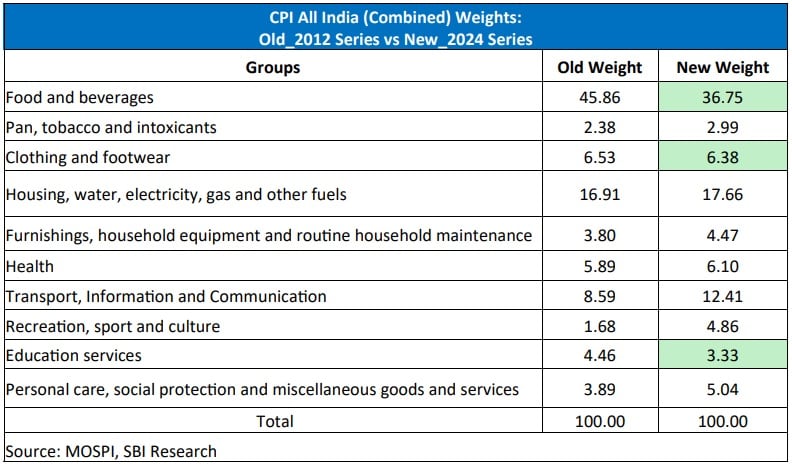
- The new series significantly reduces the weight of food and beverages from 45.86% to 36.75%, while increasing the share of housing, transport, and digital services in the inflation basket.
- The revised index will comprise 358 items (up from 299), incorporating modern expenditure categories such as e-commerce prices, airfares, telecom services, and OTT subscriptions for the first time.
- The first inflation data under the new series is scheduled for release shortly, alongside a back-series linking old and new data from 2013 onwards.
Key Structural Changes
- Food Weight Reduction: The combined weight of food and beverages drops by over 9 percentage points to 36.75%, aligning with Engel’s Law which states that as household incomes rise, the proportion spent on food decreases. This addresses longstanding concerns about excessive volatility in headline inflation driven by food price swings.
- Housing Sector Elevation: Weight increases sharply from 10.07% to 17.66%, driven by:
- Expanded coverage to include water, electricity, gas, and other fuels
- First-time inclusion of rural house rent (previously only urban rent was captured)
- Revised methodology excluding employer-provided accommodation to capture actual market rents
- Services and Digital Economy:
- Transport and communication weight rises to 12.41% (from 8.59%)
- Recreation, sport and culture more than doubles to 4.86%
- New inclusion of e-commerce platform prices (12 major online markets in large cities)
- Tracking of digital services including streaming subscriptions and telecom plans
- Rural-Urban Rebalance: Rural share increases to 55.4% (from 53.52%), while urban share decreases to 44.6%, reflecting updated population and consumption patterns from the Household Consumption Expenditure Survey (HCES) 2023-24.
Impact on Inflation Measurement
- Reduced Volatility: Lower food weight will dampen the impact of seasonal food price shocks on overall inflation, providing a more stable measure of underlying price pressures.
- Monetary Policy Implications:
- When food inflation is low, headline CPI could read 20-30 basis points higher than under the old series
- During high food inflation periods, CPI could be 20-30 basis points lower
- This provides operational relief to the Reserve Bank of India (RBI), which has faced challenges targeting inflation when volatile food prices distort the signal
- Core Inflation Focus: The weight of items constituting 'core' inflation (excluding food and fuel) increases to approximately 55-57% (from 47%), better reflecting structural price trends.
Methodological Enhancements
- International Classification: Adoption of COICOP 2018 (Classification of Individual Consumption According to Purpose) framework up to the sub-class level, improving global comparability.
- Expanded Market Coverage: Price collection from 1,465 rural markets and 1,395 urban markets across 434 towns, plus weekly e-commerce price monitoring.
- Formula Improvement: Shift to Jevons short-chain formula at the elementary level for better quality adjustment and reduced base-price dependency, aligning with IMF and G20 best practices.
- Standardized Pricing: For precious metals, the index will track standardized jewellery items (bangles, rings) rather than customized pieces to ensure consistency.
- Exclusions: Employer-provided accommodation and free social transfers will no longer be included in the index, focusing instead on market-based transactions.
Additional Info
- Engel’s Law: The observed decline in food expenditure share from 52.9% to 47.04% in rural areas and 42.6% to 39.7% in urban areas between 2011-12 and 2023-24; validates this economic principle and justifies the weight reduction.
- Monetary Policy Framework: The RBI currently targets CPI inflation at 4% with a tolerance band of 2-6% under the Flexible Inflation Targeting (FIT) framework. The new CPI series will provide more accurate data for this targeting without requiring framework changes.
- Other Base Year Revisions: Concurrently, GDP base year is being revised to 2022-23 (release scheduled for late February 2026) and Index of Industrial Production (IIP) to 2022-23 (release scheduled for May 2026) to ensure consistency across macroeconomic indicators.
Sources
Martyrs' Day (Shaheed Diwas): Multiple Dates, One Nation's Gratitude

What’s the News?
- Martyrs' Day, also known as Shaheed Diwas, is observed across India on multiple dates to honour freedom fighters and national heroes who sacrificed their lives for the country's independence and integrity.
- The two principal observances are January 30 (assassination of Mahatma Gandhi) and March 23 (execution of Bhagat Singh, Shivaram Rajguru, and Sukhdev Thapar), though several states observe additional dates recognizing regional martyrs.
- On January 30, the nation observes two minutes of silence at 11:00 AM, and the President, Vice President, Prime Minister, and Defence Minister lay wreaths at Raj Ghat (Gandhi's samadhi) in a solemn ceremony marking the loss of the "Father of the Nation."
National Observances
January 30: Gandhi's Martyrdom
- Also known as: Sarvodaya Day, reflecting Gandhi's vision of upliftment for all sections of society.
- Historical Context: Gandhi was assassinated by Nathuram Vinayak Godse at Birla House (now Gandhi Smriti) in New Delhi while walking to a prayer meeting.
- Observance:
- National leaders gather at Raj Ghat for interfaith prayers and floral tributes.
- Bugles play the Last Post; armed forces personnel reverse arms as a mark of respect.
- Schools, government offices, and citizens across India observe two-minute silence at 11 AM.
- Significance: Beyond honouring Gandhi, the day acknowledges the collective sacrifice of countless freedom fighters who laid down their lives during the independence movement.
March 23: The Revolutionary Trio
- Also known as: Shaheed Diwas (primarily associated with this date in popular consciousness).
- Historical Context: On this day in 1931, Bhagat Singh (23), Shivaram Rajguru (22), and Sukhdev Thapar (23) were executed in Lahore Central Jail for their role in the Lahore Conspiracy Case and the assassination of British police officer J.P. Saunders (a retaliation for the death of Lala Lajpat Rai during the 1928 Simon Commission protests).
- The Execution: The trio refused blindfolds, kissed the noose, and chanted "Inquilab Zindabad" before being hanged. Their bodies were secretly cremated near the Sutlej River to prevent public unrest.
- Significance: Represents the revolutionary stream of the freedom struggle, inspiring youth through their courage and sacrifice. The Hussainiwala National Martyrs Memorial in Punjab stands as a tribute to them.
State-Level and Specialized Observances
- February 15 (Bihar): Commemorates the 1932 Tarapur incident where 34 freedom fighters were killed by British police while hosting the Indian national flag in Munger district.
- May 19 (Assam/Barak Valley): Bhasha Shaheed Divas honours 11 martyrs killed during the 1961 Bengali Language Movement at Silchar railway station protesting the imposition of Assamese as the sole official language.
- October 21 (National Police Commemoration Day): Observed nationwide to remember police personnel killed in action, tracing back to the 1959 ambush of a CRPF patrol by Chinese forces at Kongka Pass in Ladakh.
- November 17 (Odisha): Martyrdom day of Lala Lajpat Rai ("Lion of Punjab"), who died in 1928 from injuries sustained during anti-Simon Commission protests.
- November 19: Birth anniversary of Rani Lakshmibai of Jhansi, marking her martyrdom during the 1857 Rebellion.
- November 24: Death anniversary of Guru Tegh Bahadur, the ninth Sikh Guru executed by Mughal emperor Aurangzeb in 1674 for defending religious freedom.
Sources
January 2026
31 January 202630 January 202629 January 202628 January 202627 January 202626 January 202624 January 202623 January 202622 January 202621 January 202620 January 202619 January 202616 January 202615 January 202614 January 202613 January 202612 January 202610 January 202609 January 202608 January 202607 January 202606 January 202605 January 202603 January 202602 January 202601 January 2026
Archive
October 2026
- 27 October 2026
- 26 October 2026
- 24 October 2026
- 23 October 2026
- 22 October 2026
- 21 October 2026
- 20 October 2026
- 19 October 2026
- 17 October 2026
- 16 October 2026
- 15 October 2026
- 14 October 2026
- 13 October 2026
- 12 October 2026
- 10 October 2026
- 09 October 2026
- 08 October 2026
- 07 October 2026
- 06 October 2026
- 05 October 2026
- 03 October 2026
- 02 October 2026
- 01 October 2026
September 2026
- 30 September 2026
- 29 September 2026
- 28 September 2026
- 26 September 2026
- 25 September 2026
- 24 September 2026
- 23 September 2026
- 22 September 2026
- 21 September 2026
- 19 September 2026
- 18 September 2026
- 17 September 2026
- 16 September 2026
- 15 September 2026
- 12 September 2026
- 11 September 2026
- 10 September 2026
- 09 September 2026
- 08 September 2026
- 07 September 2026
- 05 September 2026
- 04 September 2026
- 03 September 2026
- 02 September 2026
- 01 September 2026
August 2026
- 31 August 2026
- 29 August 2026
- 27 August 2026
- 26 August 2026
- 25 August 2026
- 24 August 2026
- 22 August 2026
- 21 August 2026
- 20 August 2026
- 19 August 2026
- 18 August 2026
- 17 August 2026
- 14 August 2026
- 13 August 2026
- 12 August 2026
- 11 August 2026
- 10 August 2026
- 08 August 2026
- 07 August 2026
- 06 August 2026
- 05 August 2026
- 04 August 2026
- 03 August 2026
- 01 August 2026
July 2026
- 31 July 2026
- 30 July 2026
- 29 July 2026
- 28 July 2026
- 27 July 2026
- 25 July 2026
- 23 July 2026
- 22 July 2026
- 21 July 2026
- 20 July 2026
- 18 July 2026
- 17 July 2026
- 15 July 2026
- 14 July 2026
- 13 July 2026
- 11 July 2026
- 10 July 2026
- 09 July 2026
- 08 July 2026
- 07 July 2026
- 06 July 2026
- 04 July 2026
- 03 July 2026
- 02 July 2026
- 01 July 2026
June 2026
May 2026
April 2026
March 2026
- 31 March 2026
- 30 March 2026
- 28 March 2026
- 27 March 2026
- 26 March 2026
- 25 March 2026
- 24 March 2026
- 23 March 2026
- 21 March 2026
- 20 March 2026
- 19 March 2026
- 18 March 2026
- 17 March 2026
- 16 March 2026
- 14 March 2026
- 13 March 2026
- 12 March 2026
- 11 March 2026
- 10 March 2026
- 09 March 2026
- 07 March 2026
- 06 March 2026
- 05 March 2026
- 03 March 2026
- 02 March 2026
February 2026
- 28 February 2026
- 27 February 2026
- 26 February 2026
- 25 February 2026
- 24 February 2026
- 23 February 2026
- 21 February 2026
- 20 February 2026
- 19 February 2026
- 18 February 2026
- 17 February 2026
- 16 February 2026
- 13 February 2026
- 12 February 2026
- 11 February 2026
- 10 February 2026
- 09 February 2026
- 07 February 2026
- 06 February 2026
- 05 February 2026
- 04 February 2026
- 03 February 2026
- 02 February 2026
January 2026
- 31 January 2026
- 30 January 2026
- 29 January 2026
- 28 January 2026
- 27 January 2026
- 26 January 2026
- 24 January 2026
- 23 January 2026
- 22 January 2026
- 21 January 2026
- 20 January 2026
- 19 January 2026
- 16 January 2026
- 15 January 2026
- 14 January 2026
- 13 January 2026
- 12 January 2026
- 10 January 2026
- 09 January 2026
- 08 January 2026
- 07 January 2026
- 06 January 2026
- 05 January 2026
- 03 January 2026
- 02 January 2026
- 01 January 2026
December 2025
- 31 December 2025
- 30 December 2025
- 29 December 2025
- 27 December 2025
- 26 December 2025
- 24 December 2025
- 23 December 2025
- 22 December 2025
- 20 December 2025
- 19 December 2025
- 18 December 2025
- 17 December 2025
- 16 December 2025
- 15 December 2025
- 13 December 2025
- 12 December 2025
- 11 December 2025
- 10 December 2025
- 09 December 2025
- 08 December 2025
- 05 December 2025
- 04 December 2025
- 03 December 2025
- 02 December 2025
November 2025
- 29 November 2025
- 28 November 2025
- 27 November 2025
- 26 November 2025
- 25 November 2025
- 24 November 2025
- 22 November 2025
- 21 November 2025
- 20 November 2025
- 19 November 2025
- 18 November 2025
- 17 November 2025
- 15 November 2025
- 14 November 2025
- 13 November 2025
- 12 November 2025
- 11 November 2025
- 10 November 2025
- 08 November 2025
- 07 November 2025
- 06 November 2025
- 05 November 2025
- 04 November 2025
- 03 November 2025
- 01 November 2025
October 2025
- 31 October 2025
- 30 October 2025
- 29 October 2025
- 28 October 2025
- 27 October 2025
- 25 October 2025
- 24 October 2025
- 23 October 2025
- 22 October 2025
- 21 October 2025
- 20 October 2025
- 18 October 2025
- 17 October 2025
- 16 October 2025
- 15 October 2025
- 14 October 2025
- 13 October 2025
- 11 October 2025
- 10 October 2025
- 09 October 2025
- 08 October 2025
- 07 October 2025
- 06 October 2025
- 04 October 2025
- 03 October 2025
- 02 October 2025
- 01 October 2025
September 2025
- 30 September 2025
- 29 September 2025
- 27 September 2025
- 26 September 2025
- 25 September 2025
- 24 September 2025
- 23 September 2025
- 22 September 2025
- 20 September 2025
- 19 September 2025
- 18 September 2025
- 17 September 2025
- 16 September 2025
- 15 September 2025
- 13 September 2025
- 12 September 2025
- 11 September 2025
- 10 September 2025
- 09 September 2025
- 08 September 2025
- 06 September 2025
- 05 September 2025
- 04 September 2025
- 03 September 2025
- 02 September 2025
- 01 September 2025
August 2025
- 30 August 2025
- 29 August 2025
- 28 August 2025
- 27 August 2025
- 26 August 2025
- 25 August 2025
- 23 August 2025
- 22 August 2025
- 21 August 2025
- 20 August 2025
- 19 August 2025
- 18 August 2025
- 16 August 2025
- 14 August 2025
- 13 August 2025
- 12 August 2025
- 11 August 2025
- 08 August 2025
- 07 August 2025
- 06 August 2025
- 05 August 2025
- 04 August 2025
- 02 August 2025
- 01 August 2025
July 2025
- 31 July 2025
- 30 July 2025
- 29 July 2025
- 28 July 2025
- 26 July 2025
- 25 July 2025
- 24 July 2025
- 23 July 2025
- 22 July 2025
- 21 July 2025
- 19 July 2025
- 18 July 2025
- 17 July 2025
- 16 July 2025
- 15 July 2025
- 12 July 2025
- 11 July 2025
- 10 July 2025
- 09 July 2025
- 07 July 2025
- 05 July 2025
- 04 July 2025
- 03 July 2025
- 02 July 2025
- 01 July 2025
June 2025
- 30 June 2025
- 28 June 2025
- 27 June 2025
- 26 June 2025
- 25 June 2025
- 24 June 2025
- 23 June 2025
- 21 June 2025
- 20 June 2025
- 19 June 2025
- 18 June 2025
- 17 June 2025
- 16 June 2025
- 14 June 2025
- 13 June 2025
- 12 June 2025
- 11 June 2025
- 10 June 2025
- 09 June 2025
- 07 June 2025
- 06 June 2025
- 05 June 2025
- 04 June 2025
- 03 June 2025
- 02 June 2025
May 2025
April 2025
- 30 April 2025
- 29 April 2025
- 28 April 2025
- 26 April 2025
- 25 April 2025
- 24 April 2025
- 23 April 2025
- 22 April 2025
- 21 April 2025
- 19 April 2025
- 18 April 2025
- 17 April 2025
- 16 April 2025
- 15 April 2025
- 14 April 2025
- 12 April 2025
- 11 April 2025
- 10 April 2025
- 09 April 2025
- 08 April 2025
- 07 April 2025
- 05 April 2025
- 04 April 2025
- 03 April 2025
- 02 April 2025
- 01 April 2025
March 2025
- 31 March 2025
- 29 March 2025
- 28 March 2025
- 27 March 2025
- 26 March 2025
- 25 March 2025
- 24 March 2025
- 22 March 2025
- 21 March 2025
- 20 March 2025
- 19 March 2025
- 18 March 2025
- 17 March 2025
- 15 March 2025
- 13 March 2025
- 12 March 2025
- 11 March 2025
- 10 March 2025
- 08 March 2025
- 07 March 2025
- 06 March 2025
- 05 March 2025
- 04 March 2025
- 03 March 2025
- 01 March 2025
February 2025
- 28 February 2025
- 27 February 2025
- 26 February 2025
- 25 February 2025
- 24 February 2025
- 22 February 2025
- 21 February 2025
- 20 February 2025
- 19 February 2025
- 18 February 2025
- 17 February 2025
- 15 February 2025
- 14 February 2025
- 13 February 2025
- 12 February 2025
- 11 February 2025
- 10 February 2025
- 08 February 2025
- 07 February 2025
- 06 February 2025
- 05 February 2025
- 04 February 2025
- 03 February 2025
- 01 February 2025
January 2025
- 31 January 2025
- 30 January 2025
- 29 January 2025
- 28 January 2025
- 27 January 2025
- 25 January 2025
- 24 January 2025
- 23 January 2025
- 22 January 2025
- 21 January 2025
- 20 January 2025
- 18 January 2025
- 17 January 2025
- 16 January 2025
- 15 January 2025
- 14 January 2025
- 13 January 2025
- 11 January 2025
- 10 January 2025
- 09 January 2025
- 08 January 2025
- 07 January 2025
- 06 January 2025
- 04 January 2025
- 03 January 2025
- 02 January 2025
- 01 January 2025