
Current Affairs
Stay updated with the latest national and international events.
30 October 2025
NITI Aayog Unveils Roadmap for Global Leadership in Advanced Manufacturing
What’s the News?
- NITI Aayog's Frontier Tech Hub has released a strategic roadmap titled "Reimagining Manufacturing: India's Roadmap to Global Leadership in Advanced Manufacturing".
- The roadmap was developed in collaboration with the Confederation of Indian Industry (CII) and Deloitte.
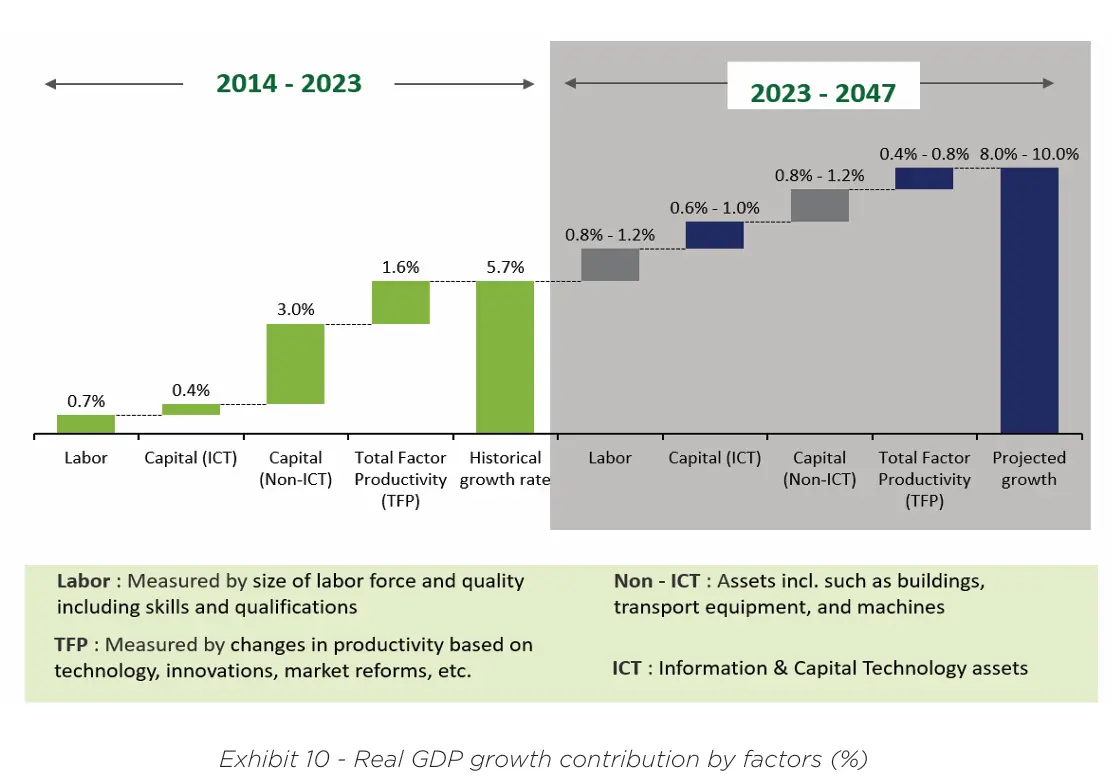
- It outlines a 10-year action plan to transform India into one of the top three global advanced manufacturing hubs by 2035.
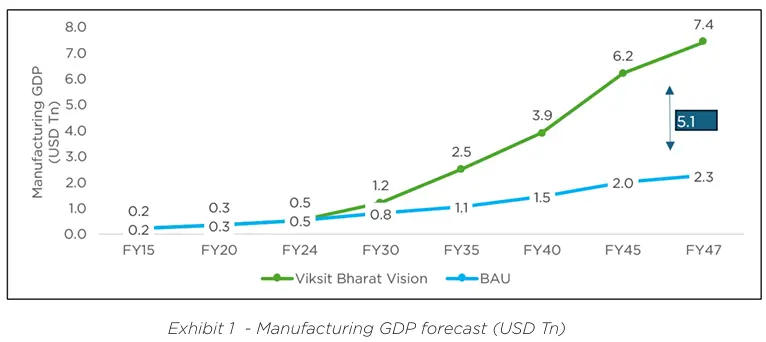
- The strategy aims to increase the manufacturing sector's contribution to GDP from the current 15-17% to over 25% by 2035 and create more than 100 million new jobs.
- This initiative is positioned as a key milestone towards the Viksit Bharat @ 2047 vision.
Key Technologies and Sectoral Focus
- The roadmap identifies four high-impact frontier technologies as key enablers for this transformation:
- Artificial Intelligence (AI) & Machine Learning (ML)
- Advanced Materials
- Digital Twins
- Robotics
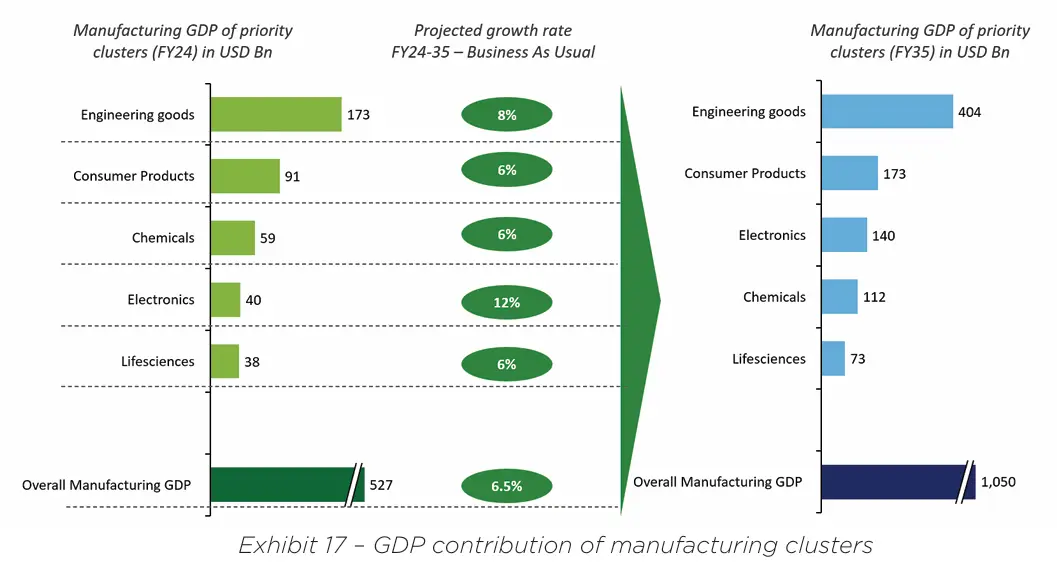
- These technologies will be strategically deployed across 13 priority manufacturing sectors.
- The sectors are grouped into five key clusters: engineering, consumer products, life sciences, electronics, and chemicals.
A Phased 10-Year Strategic Roadmap
The 10-year plan (FY2026–FY2035) is structured in three phases:
- Phase 1 (FY2026 - FY2028): Ecosystem Build and Adoption
- Positioning advanced manufacturing as a strategic priority under the National Manufacturing Mission (NMM).
- Establishing a Global Frontier Technology Institute (GFTI) in India to serve as a Center of Excellence (CoE).
- Developing a future-ready skilling ecosystem and creating technology access platforms, especially for MSMEs.
- Phase 2 (FY2029 - FY2031): Acceleration
- Focusing on driving the 'Servicification of Manufacturing'.
- This involves transforming the sector from being a product manufacturer to a provider of integrated, high-value solutions.
- Phase 3 (FY2032 - FY2035): Monitoring
- Involves continuous monitoring of the maturity and adoption levels of frontier technologies across the industry.
Challenges and Opportunity Cost
- The report identifies several structural challenges currently constraining India's manufacturing sector:
- Inadequate infrastructure in industrial corridors.
- A significant shortage of highly skilled talent prepared for advanced technology.
- Low investment in Research and Development (R&D).
- Fragmented supply chains that limit scale and integration.
- The roadmap cautions that failing to adopt these key frontier technologies poses a significant risk.
- This "cost of inaction" could lead to a potential loss of $270 billion in additional manufacturing GDP by 2035, and $1 trillion by 2047.
Sources
Centre Launches ‘KOYLA SHAKTI’ Dashboard for Coal Sector
What’s the News?
- The Union Minister of Coal and Mines has launched the ‘KOYLA SHAKTI’ – Smart Coal Analytics Dashboard (SCAD).
- This is a unified digital platform designed for the real-time monitoring and analysis of India's entire coal sector operations, from production to consumption.
- The platform was developed by the National Industrial Corridor Development Corporation (NICDC), under the direction of the Ministry of Coal.
- Simultaneously, the Coal Land Acquisition, Management, and Payment (CLAMP) Portal was also launched to digitise land acquisition processes.
KOYLA SHAKTI Dashboard: Digital Backbone of Coal Ecosystem
- Purpose: Acts as the Smart Coal Analytics Dashboard (SCAD) for real-time monitoring and analytics across the coal supply chain.
- Integrated Stakeholders:
- Coal-producing companies (including private miners)
- Central ministries (Coal, Railways, Power, Ports, Finance, etc.)
- State departments (via e-Khanij platforms)
- Power utilities, steel/cement industries, and port authorities
- Key Features:
- Unified visibility of production, dispatch, logistics, and consumption
- Real-time tracking of coal movement via rail, road, and multimodal transport
- Predictive analytics for demand forecasting and bottleneck resolution
- Incident response alerts for operational disruptions
- Standardized metrics and performance indicators across agencies
- Scalable architecture for future digital integrations
CLAMP Portal: Transparent Land Management
- Purpose: Digitizes end-to-end land acquisition, compensation, and Rehabilitation & Resettlement (R&R) processes for coal-bearing areas.
- Key Features:
- Centralized land records repository
- End-to-end digital workflow from land identification to compensation payment
- Inter-agency coordination among coal PSUs, district administrations, and revenue departments
- Citizen-centric design ensuring timely and equitable compensation
- Enhanced accountability through audit trails and real-time status tracking
Additional Info
- Constitutional & Administrative Context:
- Coal is a Union subject (Entry 53, Union List), giving the Central Government exclusive legislative and executive authority.
- The Ministry of Coal operates through Coal India Ltd (CIL) and other PSUs, which account for ~80% of domestic production.
- Related Digital Initiatives:
- e-Khanij Portal: State-level mineral concession management system integrated with KOYLA SHAKTI.
- PM Gati Shakti: National master plan for multi-modal connectivity; KOYLA SHAKTI complements its logistics optimization goals.
Sources
UNEP’s 2025 Adaptation Gap Report Highlights Widening Climate Finance Shortfall for Developing Nations
What’s the News?
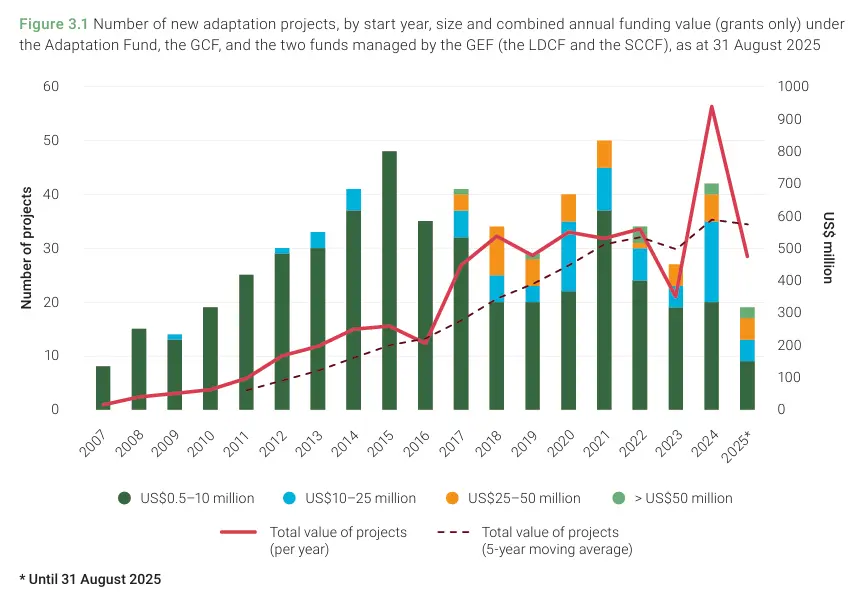
The United Nations Environment Programme (UNEP) released its Adaptation Gap Report 2025, titled “Running on Empty”, warning that climate adaptation finance for developing countries is drastically insufficient and declining even as needs surge. The report estimates that $310–365 billion annually will be required by 2035 for adaptation in developing nations—yet current public finance flows stand at just $26 billion (2023), covering less than 10% of actual needs.
Key Findings of the Report
- Shrinking Finance: International public adaptation finance fell from $28 billion (2022) to $26 billion (2023), reversing earlier progress.
- Widening Gap: The annual adaptation finance gap now ranges between $284–339 billion, with inflation-adjusted needs potentially reaching $440–520 billion/year by 2035.
- Glasgow Pledge Off Track: The COP26 commitment to double adaptation finance by 2025 (to ~$40 billion from 2019 levels) is unlikely to be met.
- Private Sector Underperformance: Despite potential, private adaptation finance remains minimal—estimated at under $5 billion/year—due to high perceived risks and lack of de-risking mechanisms.
Policy and Implementation Gaps
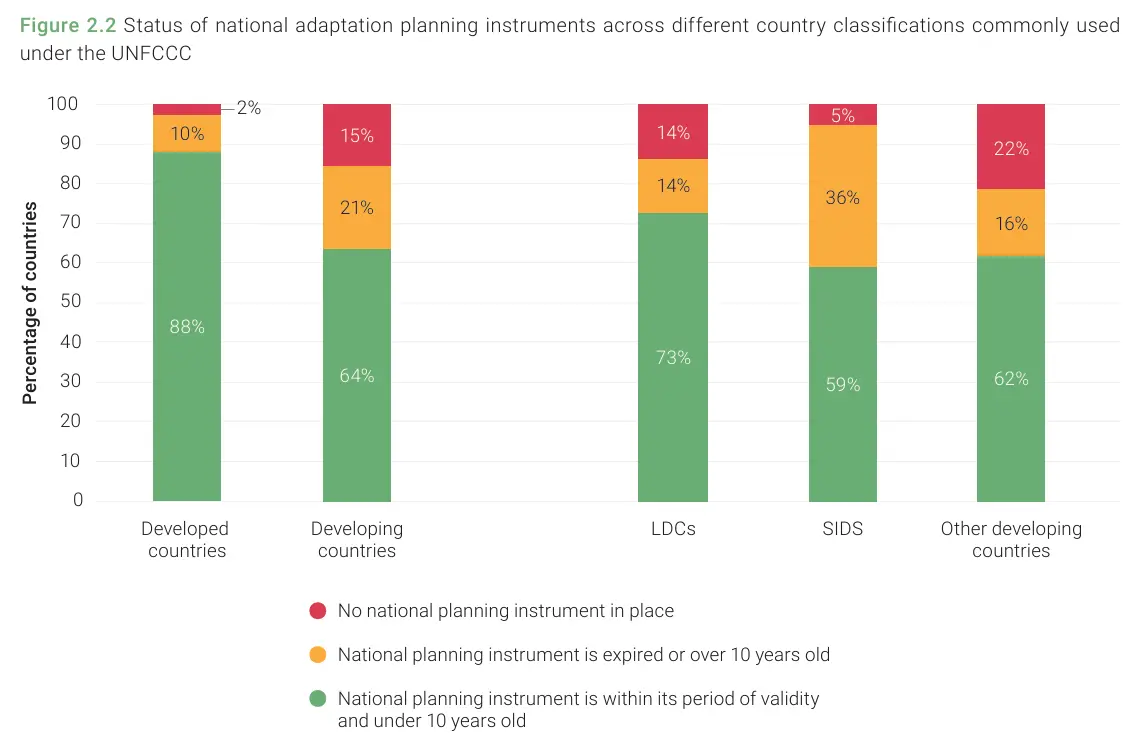
- Uneven Planning: While most countries have National Adaptation Plans (NAPs) or policies, many are outdated or lack integration with sectoral strategies (e.g., agriculture, health, infrastructure).
- Weak Monitoring: Only 30% of countries have robust Monitoring, Evaluation & Learning (MEL) systems to track adaptation outcomes.
- Risk of Maladaptation: Poorly designed interventions—such as sea walls that disrupt ecosystems—may increase long-term vulnerability.
- Debt Concerns: Overreliance on loans instead of grants risks pushing vulnerable nations into “adaptation debt traps.”
Global and Multilateral Responses
- COP29 Agreement: A New Collective Quantified Goal (NCQG) of $300 billion/year by 2035 for total climate finance (mitigation + adaptation) was adopted—but this falls short of adaptation needs alone.
- Baku–Belém Roadmap (2024): Emphasizes grant-based, concessional finance and calls for blended finance models to mobilize private capital.
- Multilateral Fund Surge: In 2024, the Green Climate Fund (GCF), Global Environment Facility (GEF), and Adaptation Fund collectively disbursed $920 million—an 86% increase over the prior five-year average.
India’s Relevance
- High Vulnerability: India faces escalating risks from heatwaves, erratic monsoons, coastal erosion, and glacial melt, affecting over 600 million people directly dependent on climate-sensitive sectors.
- Policy Leadership: India has integrated adaptation into National Action Plan on Climate Change (NAPCC) and state-level plans, but local implementation and finance remain weak.
- Finance Dependence: As a lower-middle-income country, India relies heavily on international public finance for large-scale resilience projects, especially in agriculture, water, and urban infrastructure.
Sources
Climate Inequality Report 2025 Highlights Disproportionate Emissions from Wealth Ownership
What’s the News?
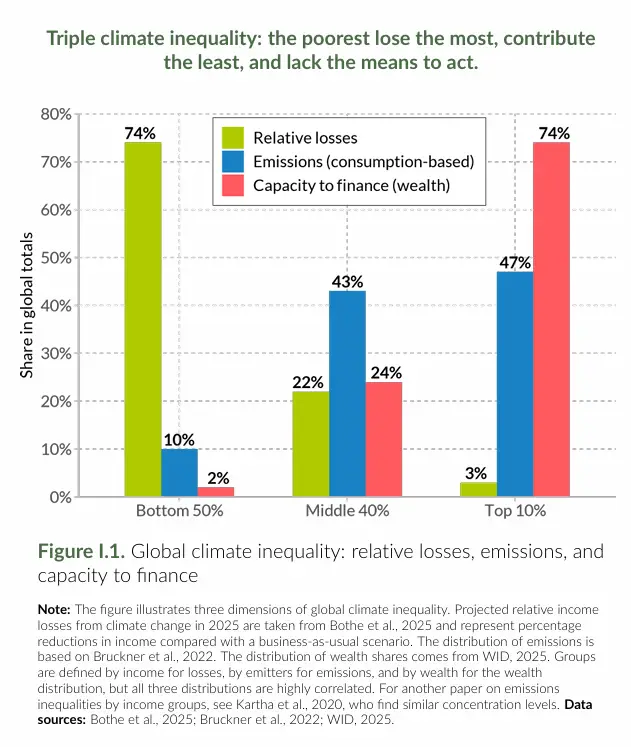
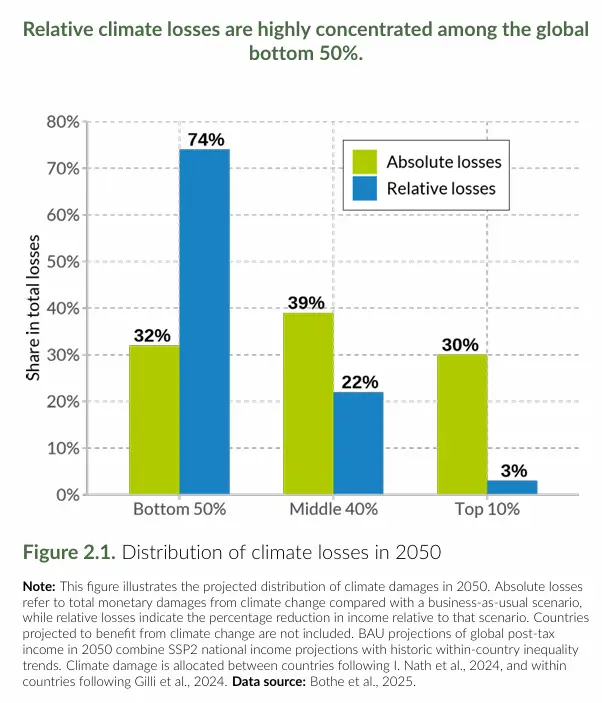
The Climate Inequality Report 2025, released by the World Inequality Lab, reveals that wealthy individuals contribute far more to global emissions through their ownership of capital assets—such as shares in fossil fuel companies—than through personal consumption. The report finds that the top 1% of global wealth holders are responsible for 41% of emissions linked to private capital ownership, compared to just 15% of consumption-based emissions. This underscores a critical shift in climate policy discourse: addressing asset ownership, not just lifestyle choices, is essential for climate justice.
Key Findings of the Report
- Emissions Disparity:
- Under the ownership-based approach, per-capita emissions of the global top 1% are 680 times higher than those of the bottom 50%.
- In the consumption-based model, the same ratio is 75 times.
- Country-Level Insights:
- In the US, the top 10% account for 72% of ownership-based emissions (vs. 24% under consumption).
- In France and Germany, the top 1% contribute 44–45% of ownership-linked emissions, versus 2–3% in consumption models.
- Wealth Concentration Risk:
- If the wealthy control climate investments, their global wealth share could rise from 38.5% (2025) to 46% by 2050, deepening inequality.
Policy Recommendations
- Carbon-Adjusted Wealth Tax:
- Impose a tax on the carbon intensity of financial assets (e.g., stocks in oil & gas firms).
- Estimated revenue: €36 billion (France), €74 billion (Germany), $534 billion (US) at €150/tonne CO₂ rate.
- Ban on New Fossil Investments:
- Prohibit new domestic investments in fossil fuel exploration and infrastructure.
- Public Green Investment:
- Scale up publicly owned low-carbon infrastructure through sovereign green funds to ensure inclusive transition.
- Progressive Climate Finance:
- Redirect capital flows via regulatory mandates and incentives for clean portfolios, especially for institutional investors.
Relevance for India & Global South
- Vulnerability vs. Responsibility:
- India and other developing nations bear disproportionate climate impacts despite minimal historical emissions.
- The bottom 50% globally contribute <10% of total emissions but face highest adaptation costs.
- Equity in Climate Action:
- Calls for Common But Differentiated Responsibilities (CBDR) gain renewed urgency.
- Supports India’s stance at COP29/COP30 for grant-based climate finance and technology transfer.
- Domestic Implications:
- Highlights need to regulate ESG disclosures and greenwash-free investment standards in Indian financial markets.
Sources
Global Firepower Index 2025: India Ranks 4th Strongest Military
What’s the News?
- The Global Firepower Index (GFP) 2025 has been released, ranking the military strength of 145 countries.
- India has secured the 4th position globally, maintaining its status as one of the world's foremost military powers.
- The United States (1st), Russia (2nd), and China (3rd) retained the top three spots.
- India achieved a PowerIndex (PwrIndx) score of 0.1184, where a score of 0.0000 is considered 'perfect'.
Key Rankings 2025
- Top 10 Militaries: The ranking is based on a PwrIndx score, where a lower score indicates greater military strength.
- United States (PwrIndx: 0.0744)
- Russia (PwrIndx: 0.0788)
- China (PwrIndx: 0.0788)
- India (PwrIndx: 0.1184)
- South Korea (PwrIndx: 0.1656)
- United Kingdom (PwrIndx: 0.1785)
- Japan (PwrIndx: 0.1839)
- France (PwrIndx: 0.1878)
- Turkey (PwrIndx: 0.1902)
- Italy (PwrIndx: 0.2164)
- India's Neighbours:
- Pakistan was ranked 12th in the index.
About the Global Firepower Index
- Purpose: It is an annual assessment of the conventional war-making capabilities of 145 nations across land, sea, and air.
- Methodology:
- The ranking uses a formula based on over 60 individual factors.
- Key categories include military manpower, equipment (air, land, and naval strength), financial resources, logistical capabilities, and geography.
- The formula allows smaller, more technologically-advanced nations to compete with larger, less-developed ones.
- Stance on Nuclear Weapons:
- The index focuses primarily on conventional military strength.
- Nuclear arsenals are not directly included in the final score calculation, though they are considered a "factor" in the overall assessment.
India's Military Context
- Key Strengths: India's high rank is supported by its large military force, including:
- Approximately 1.45 million active personnel.
- Over 1.15 million reserve personnel.
- A diverse and large arsenal, including over 2,200 aircraft, 4,200 tanks, and 2 aircraft carriers.
- Nuclear-capable triad: Land (Agni), Air (Rafale/Mirage), Sea (Arihant-class SSBNs).
- Indigenous platforms: Tejas Mk1A fighter, Arjun MkII tank, BrahMos supersonic cruise missile, Akash air defence system.
- Defence exports: Crossed ₹25,000 crore ($3 billion) in FY2024–25, with drones, missiles, and naval systems in demand.
- Modernisation & Self-Reliance:
- The ranking reflects India's significant investments in military modernization and its growing emphasis on Atmanirbhar Bharat (self-reliance) in defence.
- Key indigenous projects bolstering this strength include the Tejas Mk1A fighter jets, Arihant-class nuclear submarines, and BrahMos missile systems.
- Challenges & Gaps
- Logistics & Readiness: Limited strategic airlift and sealift capacity affects rapid deployment.
- Dependence on Imports: Despite progress, ~40% of high-end systems (e.g., jet engines, radars) still imported.
- Force Structure Imbalance: Army-heavy composition vs. growing need for maritime and air power.
Sources
72 Nations Sign Landmark Hanoi Convention on Cybercrime
What’s the News?
- Seventy-two nations have signed the United Nations Convention against Cybercrime, also known as the Hanoi Convention, in a high-level ceremony hosted in Hanoi, Vietnam.
- This treaty is the first-ever universal legal instrument adopted under the auspices of the United Nations to specifically address and combat cybercrime.
- The convention aims to create a unified international legal framework to strengthen global cooperation in preventing and fighting cybercrime.
Key Objectives & Framework
- Global Legal Standards: The convention establishes a global framework for:
- Criminalisation: Defining a wide range of cyber-dependent and cyber-enabled offences. This includes online fraud, hacking, data interference, and online child sexual abuse.
- International Cooperation: Facilitating mutual legal assistance, extradition, and cross-border investigations.
- Electronic Evidence: Providing the first global standards for the collection, sharing, and use of electronic evidence in serious criminal offences.
- Capacity Building: It emphasizes providing technical assistance and training to strengthen the capabilities of developing countries to tackle cyber threats.
- 24/7 Network: The treaty creates a global 24/7 cooperation network to allow for rapid, real-time coordination among law enforcement agencies.
Balancing Security and Rights
- Human Rights Safeguards: The convention includes provisions aimed at balancing the need for effective law enforcement with the protection of human rights and fundamental freedoms.
- State Sovereignty: It also upholds the principles of state sovereignty and non-interference in the internal affairs of other nations.
- Novel Protections: Notably, it is the first international treaty to recognise the non-consensual dissemination of intimate images as a criminal offence.
Additional Info
- UN Adoption: The convention's text was formally adopted by the UN General Assembly after years of negotiations involving an Ad Hoc Committee (AHC).
- Depository: The UN Office on Drugs and Crime (UNODC) will serve as the secretariat and depository for the convention.
- Entry into Force: The treaty will legally enter into force 90 days after the 40th signatory country deposits its instrument of ratification.
- Vietnam's Role: Vietnam hosted the historic signing ceremony and was an active participant in the drafting and negotiation process.
Sources
October 2025
Archive
October 2026
- 28 October 2026
- 27 October 2026
- 26 October 2026
- 24 October 2026
- 23 October 2026
- 22 October 2026
- 21 October 2026
- 20 October 2026
- 19 October 2026
- 17 October 2026
- 16 October 2026
- 15 October 2026
- 14 October 2026
- 13 October 2026
- 12 October 2026
- 10 October 2026
- 09 October 2026
- 08 October 2026
- 07 October 2026
- 06 October 2026
- 05 October 2026
- 03 October 2026
- 02 October 2026
- 01 October 2026
September 2026
- 30 September 2026
- 29 September 2026
- 28 September 2026
- 26 September 2026
- 25 September 2026
- 24 September 2026
- 23 September 2026
- 22 September 2026
- 21 September 2026
- 19 September 2026
- 18 September 2026
- 17 September 2026
- 16 September 2026
- 15 September 2026
- 12 September 2026
- 11 September 2026
- 10 September 2026
- 09 September 2026
- 08 September 2026
- 07 September 2026
- 05 September 2026
- 04 September 2026
- 03 September 2026
- 02 September 2026
- 01 September 2026
August 2026
- 31 August 2026
- 29 August 2026
- 27 August 2026
- 26 August 2026
- 25 August 2026
- 24 August 2026
- 22 August 2026
- 21 August 2026
- 20 August 2026
- 19 August 2026
- 18 August 2026
- 17 August 2026
- 14 August 2026
- 13 August 2026
- 12 August 2026
- 11 August 2026
- 10 August 2026
- 08 August 2026
- 07 August 2026
- 06 August 2026
- 05 August 2026
- 04 August 2026
- 03 August 2026
- 01 August 2026
July 2026
- 31 July 2026
- 30 July 2026
- 29 July 2026
- 28 July 2026
- 27 July 2026
- 25 July 2026
- 23 July 2026
- 22 July 2026
- 21 July 2026
- 20 July 2026
- 18 July 2026
- 17 July 2026
- 15 July 2026
- 14 July 2026
- 13 July 2026
- 11 July 2026
- 10 July 2026
- 09 July 2026
- 08 July 2026
- 07 July 2026
- 06 July 2026
- 04 July 2026
- 03 July 2026
- 02 July 2026
- 01 July 2026
June 2026
May 2026
April 2026
March 2026
- 31 March 2026
- 30 March 2026
- 28 March 2026
- 27 March 2026
- 26 March 2026
- 25 March 2026
- 24 March 2026
- 23 March 2026
- 21 March 2026
- 20 March 2026
- 19 March 2026
- 18 March 2026
- 17 March 2026
- 16 March 2026
- 14 March 2026
- 13 March 2026
- 12 March 2026
- 11 March 2026
- 10 March 2026
- 09 March 2026
- 07 March 2026
- 06 March 2026
- 05 March 2026
- 03 March 2026
- 02 March 2026
February 2026
- 28 February 2026
- 27 February 2026
- 26 February 2026
- 25 February 2026
- 24 February 2026
- 23 February 2026
- 21 February 2026
- 20 February 2026
- 19 February 2026
- 18 February 2026
- 17 February 2026
- 16 February 2026
- 13 February 2026
- 12 February 2026
- 11 February 2026
- 10 February 2026
- 09 February 2026
- 07 February 2026
- 06 February 2026
- 05 February 2026
- 04 February 2026
- 03 February 2026
- 02 February 2026
January 2026
- 31 January 2026
- 30 January 2026
- 29 January 2026
- 28 January 2026
- 27 January 2026
- 26 January 2026
- 24 January 2026
- 23 January 2026
- 22 January 2026
- 21 January 2026
- 20 January 2026
- 19 January 2026
- 16 January 2026
- 15 January 2026
- 14 January 2026
- 13 January 2026
- 12 January 2026
- 10 January 2026
- 09 January 2026
- 08 January 2026
- 07 January 2026
- 06 January 2026
- 05 January 2026
- 03 January 2026
- 02 January 2026
- 01 January 2026
December 2025
- 31 December 2025
- 30 December 2025
- 29 December 2025
- 27 December 2025
- 26 December 2025
- 24 December 2025
- 23 December 2025
- 22 December 2025
- 20 December 2025
- 19 December 2025
- 18 December 2025
- 17 December 2025
- 16 December 2025
- 15 December 2025
- 13 December 2025
- 12 December 2025
- 11 December 2025
- 10 December 2025
- 09 December 2025
- 08 December 2025
- 05 December 2025
- 04 December 2025
- 03 December 2025
- 02 December 2025
November 2025
- 29 November 2025
- 28 November 2025
- 27 November 2025
- 26 November 2025
- 25 November 2025
- 24 November 2025
- 22 November 2025
- 21 November 2025
- 20 November 2025
- 19 November 2025
- 18 November 2025
- 17 November 2025
- 15 November 2025
- 14 November 2025
- 13 November 2025
- 12 November 2025
- 11 November 2025
- 10 November 2025
- 08 November 2025
- 07 November 2025
- 06 November 2025
- 05 November 2025
- 04 November 2025
- 03 November 2025
- 01 November 2025
October 2025
- 31 October 2025
- 30 October 2025
- 29 October 2025
- 28 October 2025
- 27 October 2025
- 25 October 2025
- 24 October 2025
- 23 October 2025
- 22 October 2025
- 21 October 2025
- 20 October 2025
- 18 October 2025
- 17 October 2025
- 16 October 2025
- 15 October 2025
- 14 October 2025
- 13 October 2025
- 11 October 2025
- 10 October 2025
- 09 October 2025
- 08 October 2025
- 07 October 2025
- 06 October 2025
- 04 October 2025
- 03 October 2025
- 02 October 2025
- 01 October 2025
September 2025
- 30 September 2025
- 29 September 2025
- 27 September 2025
- 26 September 2025
- 25 September 2025
- 24 September 2025
- 23 September 2025
- 22 September 2025
- 20 September 2025
- 19 September 2025
- 18 September 2025
- 17 September 2025
- 16 September 2025
- 15 September 2025
- 13 September 2025
- 12 September 2025
- 11 September 2025
- 10 September 2025
- 09 September 2025
- 08 September 2025
- 06 September 2025
- 05 September 2025
- 04 September 2025
- 03 September 2025
- 02 September 2025
- 01 September 2025
August 2025
- 30 August 2025
- 29 August 2025
- 28 August 2025
- 27 August 2025
- 26 August 2025
- 25 August 2025
- 23 August 2025
- 22 August 2025
- 21 August 2025
- 20 August 2025
- 19 August 2025
- 18 August 2025
- 16 August 2025
- 14 August 2025
- 13 August 2025
- 12 August 2025
- 11 August 2025
- 08 August 2025
- 07 August 2025
- 06 August 2025
- 05 August 2025
- 04 August 2025
- 02 August 2025
- 01 August 2025
July 2025
- 31 July 2025
- 30 July 2025
- 29 July 2025
- 28 July 2025
- 26 July 2025
- 25 July 2025
- 24 July 2025
- 23 July 2025
- 22 July 2025
- 21 July 2025
- 19 July 2025
- 18 July 2025
- 17 July 2025
- 16 July 2025
- 15 July 2025
- 12 July 2025
- 11 July 2025
- 10 July 2025
- 09 July 2025
- 07 July 2025
- 05 July 2025
- 04 July 2025
- 03 July 2025
- 02 July 2025
- 01 July 2025
June 2025
- 30 June 2025
- 28 June 2025
- 27 June 2025
- 26 June 2025
- 25 June 2025
- 24 June 2025
- 23 June 2025
- 21 June 2025
- 20 June 2025
- 19 June 2025
- 18 June 2025
- 17 June 2025
- 16 June 2025
- 14 June 2025
- 13 June 2025
- 12 June 2025
- 11 June 2025
- 10 June 2025
- 09 June 2025
- 07 June 2025
- 06 June 2025
- 05 June 2025
- 04 June 2025
- 03 June 2025
- 02 June 2025
May 2025
April 2025
- 30 April 2025
- 29 April 2025
- 28 April 2025
- 26 April 2025
- 25 April 2025
- 24 April 2025
- 23 April 2025
- 22 April 2025
- 21 April 2025
- 19 April 2025
- 18 April 2025
- 17 April 2025
- 16 April 2025
- 15 April 2025
- 14 April 2025
- 12 April 2025
- 11 April 2025
- 10 April 2025
- 09 April 2025
- 08 April 2025
- 07 April 2025
- 05 April 2025
- 04 April 2025
- 03 April 2025
- 02 April 2025
- 01 April 2025
March 2025
- 31 March 2025
- 29 March 2025
- 28 March 2025
- 27 March 2025
- 26 March 2025
- 25 March 2025
- 24 March 2025
- 22 March 2025
- 21 March 2025
- 20 March 2025
- 19 March 2025
- 18 March 2025
- 17 March 2025
- 15 March 2025
- 13 March 2025
- 12 March 2025
- 11 March 2025
- 10 March 2025
- 08 March 2025
- 07 March 2025
- 06 March 2025
- 05 March 2025
- 04 March 2025
- 03 March 2025
- 01 March 2025
February 2025
- 28 February 2025
- 27 February 2025
- 26 February 2025
- 25 February 2025
- 24 February 2025
- 22 February 2025
- 21 February 2025
- 20 February 2025
- 19 February 2025
- 18 February 2025
- 17 February 2025
- 15 February 2025
- 14 February 2025
- 13 February 2025
- 12 February 2025
- 11 February 2025
- 10 February 2025
- 08 February 2025
- 07 February 2025
- 06 February 2025
- 05 February 2025
- 04 February 2025
- 03 February 2025
- 01 February 2025
January 2025
- 31 January 2025
- 30 January 2025
- 29 January 2025
- 28 January 2025
- 27 January 2025
- 25 January 2025
- 24 January 2025
- 23 January 2025
- 22 January 2025
- 21 January 2025
- 20 January 2025
- 18 January 2025
- 17 January 2025
- 16 January 2025
- 15 January 2025
- 14 January 2025
- 13 January 2025
- 11 January 2025
- 10 January 2025
- 09 January 2025
- 08 January 2025
- 07 January 2025
- 06 January 2025
- 04 January 2025
- 03 January 2025
- 02 January 2025
- 01 January 2025