
Current Affairs
Stay updated with the latest national and international events.
30 June 2025
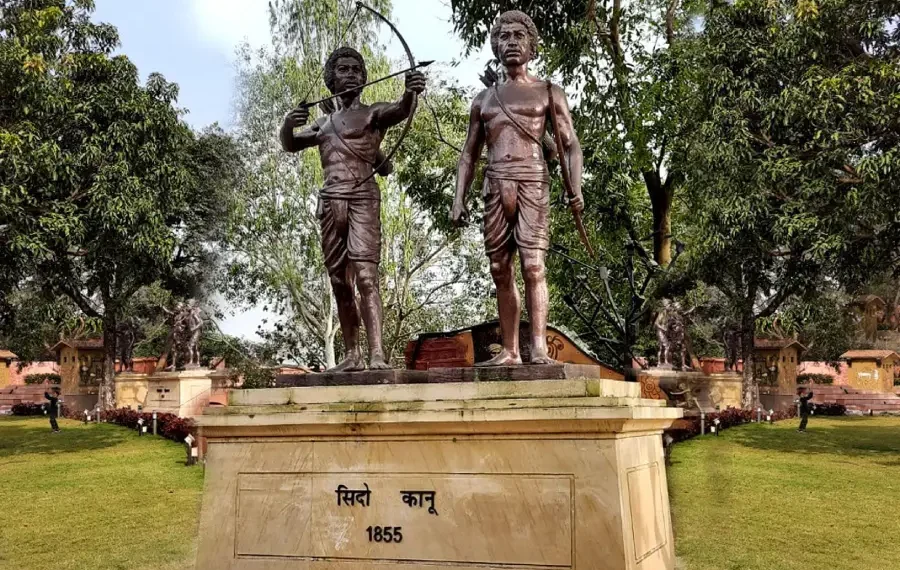
"Hul Diwas" – Honouring the Santhal Revolution Against Colonial & Feudal Exploitation
What's New?
- Hul Diwas, observed annually on 30 June, commemorates the 1855 Santhal Rebellion (Hul), a well-organized tribal uprising led by Sidhu & Kanhu Murmu against British colonial authorities and zamindars/moneylenders in Damin-i-Koh (modern Jharkhand).
- It symbolises defiance against economic injustice, dispossession, and bonded labour, reasserting tribal agency in India's freedom struggle.
Why Did the Rebellion Erupt?
- The British had encouraged Santhal migration for tax revenue, but this invited exploitative zamindars, moneylenders (dikus), and corrupt officials, imposing interest rates as high as 500%, seizing land and livestock.
Leadership & Organisation
- The rebellion was marked by tribal council resolutions and strategic coordination—6,000+ Santals assembled at Bhognadih on 30 June 1855.
- Besides brothers Sidhu, Kanhu, Chand & Bhairav Murmu, Phulo & Jhano Murmu notably led women's contingents—over 32 communities participated.
The Course & Aftermath
- Santals initially pushed colonial forces out of many villages, but by 10 Nov 1855, British imposed Martial Law, suppressing the revolt by January 1856, at the cost of 10,000–15,000 deaths.
- Colonial response included the Sonthal Parganas Act, 1855 (creation of Santhal Pargana district) and Santhal Parganas Tenancy Act, 1876, protecting tribal land rights.
Additional Info
- Santhal Rebellion preceded the 1857 revolt and is considered one of India's earliest organized mass revolts.
- Bhognadih, birth village of Sidhu-Kanhu, hosts a yearly shahid mela in their honour.
- The Santhals, India's third-largest tribal community, now spread across Jharkhand, Bihar, West Bengal, and Odisha; Hul Diwas underscores their historical and cultural identity.
Simplified Summary
- Hul Diwas marks the start of the Santhal Rebellion on 30 June 1855, and serves to honour tribal resistance to exploitation by zamindars and colonists.
- It highlights the movement's strong grassroots and organizational character, its transformative impact on tribal land rights, and its place in India's early anti-colonial history.
Exam Focus Points
| Theme | Key Insights |
|---|---|
| Definition | Santhal Rebellion (Hul), tribal revolt against British and zamindars in 1855 |
| Dates & Place | 30 June 1855 – Jan 1856; Damin-i-Koh, Bhognadih (now Jharkhand) |
| Leadership | Sidhu, Kanhu, Chand, Bhairav; sisters Phulo & Jhano; ~32 communities |
| Causes | Exploitative loans, land dispossession, bonded labour, corrupt zamindars/officials |
| Outcome | Martial Law, 10–15k deaths; Santhal Pargana district and tenancy legislation |
| Legacy | First mass tribal uprising; influenced tribal land rights; commemorated as Hul Diwas |
"Cosmic Vigilance" – UN's World Asteroid Day Strengthens Planetary Defense

What's New?
- World Asteroid Day, observed on 30 June since 2016, is a United Nations-backed global awareness event highlighting the risks posed by near-Earth objects (NEOs), such as asteroids and meteoroids.
- 2025 marks the 10th anniversary of this initiative, commemorating the 1908 Tunguska event in Siberia, when an asteroid caused wide-scale forest devastation.
Why It Matters
- Earth's vulnerability revealed: Tunguska flattened ~2,150 sq km of forest—proof that even medium-sized asteroids can pose catastrophic hazards.
- Real-time risk monitoring: Events like livestreams from the Virtual Telescope Project, displaying live NEO flybys, help the public grasp asteroid threats.
- Science-policy synergy: The day promotes international cooperation in asteroid detection, trajectory mapping, and planetary defense technology.
Origins & Institutional Support
- Co-founded (2014) by space experts like Brian May and Rusty Schweickart, and backed by Stephen Hawking, the initiative gained UN sanction in 2016 via Resolution A/71/90.
- The Asteroid Foundation in Luxembourg leads annual events, including panels, workshops, art-science exhibits (June 26–28, 2025).
Science & Technology
- NEO monitoring networks: NASA's Near-Earth Object Program, ESA's Hera mission, and B612 Foundation's Sentinel mission are spotlighted.
- Deflection preparedness: Research into kinetic impactors, gravity tractors, and collaborative missions to deflect asteroids is discussed during the event.
Public Education & NGO Involvement
- Over 700 events globally engage students, communities, and disaster preparedness NGOs.
- NGOs and schools use the day to teach space science, risk readiness, and planetary stewardship.
Additional Info
- The UN has themed 2029 as the International Year of Asteroid Awareness, coinciding with asteroid Apophis passing just 32,000 km from Earth.
- Typical NEO events: asteroids with "bullet-like" debris or potentially hazardous asteroids make close flybys annually, though none pose imminent threats.
Simplified Summary
- World Asteroid Day (30 June) commemorates Tunguska and seeks to raise global alertness on asteroid risks.
- In 2025, its 10th anniversary features global events, livestreams, and enhanced focus on detection, deflection, and planetary readiness.
- It emphasizes global unity in science-policy efforts to protect Earth from cosmic threats.
Exam Focus Points
| Theme | Details |
|---|---|
| Origins & Recognition | Launched 2014, UN-recognized in 2016 (Res A/71/90); marks Tunguska (1908) |
| Date & Significance | 30 June annually; 10th anniversary in 2025 |
| Institutional Role | Asteroid Foundation, UN COPUOS, space agencies (NASA, ESA, B612) |
| Core Objectives | NEO tracking, planetary defense R&D, public awareness |
| Key Events 2025 | Luxembourg art-science festival (Jun 26–28); Virtual Telescope livestream (Jun 30) |
| Tech & Missions | Kinetic impactors; Apophis close pass in 2029; NEO radar & orbital surveys |
| Global Collaboration | 700+ outreach events; NGOs in STEM and disaster preparedness |
"Data at Fingertips" – MoSPI Launches GoIStats App for Real-Time Official Data
What's New?
- On Statistics Day, June 29, 2025, the Ministry of Statistics & Programme Implementation (MoSPI), via NSO, launched the GoIStats mobile application, designed to provide a unified platform for accessing India's official data on-the-go.
- Currently, the Android app is live on the Google Play Store (over 500 installations already), with an iOS version coming soon.
Why It Matters
- Empowering data-driven governance: With features like "Key Trends" dashboards showcasing GDP, inflation, employment, and more, the app equips citizens, researchers, and policymakers to make informed decisions.
- Enhanced accessibility: Users can benefit from advanced filtering, comprehensive metadata, and mobile-optimized tables, making complex statistical information more understandable and usable.
- Visual insights: Interactive dashboards and data storytelling tools democratize statistical understanding, supporting greater public participation and transparency.
Statistics Day & Policy Alignment
- The launch coincided with the 19th Statistics Day, which celebrates the birthday of Prof. P.C. Mahalanobis, and marked the 75th anniversary of NSS.
- Alongside the app, MoSPI released key SDG indicator reports, reinforcing the linkage between data access and sustainable development goals.
Digital Governance Ecosystem
- The app complements existing MoSPI digital platforms like the revamped Microdata Portal and upcoming AI/ML classification tools, developed in collaboration with the World Bank and NIC.
- A related "Innovate with GoIStats" hackathon, held earlier in March 2025, encouraged youth participation in data visualization and policy insights generation.
Additional Info
- NSO, functioning under MoSPI, is India's national statistical bureau responsible for major surveys like NSS, ASI, and CPI.
- The GoIStats app, built by NIC and MoSPI, currently offers Android support (23.8 MB, ~500+ downloads) and plans to extend to iOS soon.
Simplified Summary
- The GoIStats app provides real-time, mobile-friendly access to official socio-economic data, enriching transparency and facilitating evidence-based decision-making.
- It is part of MoSPI's wider push toward digital governance, including interactive portals, AI tools, and youth engagement through hackathons.
Exam Focus Points
| Theme | Insights |
|---|---|
| What & When | GoIStats mobile app launched on June 29, 2025 (Statistics Day) |
| Who & Which Bodies | Developed by NSO under MoSPI, in partnership with NIC |
| Key Features | Dashboard, trends (GDP/inflation/employment), filtering, metadata |
| Tech Ecosystem | Aligned with digital portals, AI tools, hackathons for youth |
| Policy Relevance | Supports SDG reporting, Viksit Bharat agenda, open data governance |
"Carbon Curb Blueprint" – Draft Emission Targets for 460+ Industries to Fuel India's Carbon Market
What's New?
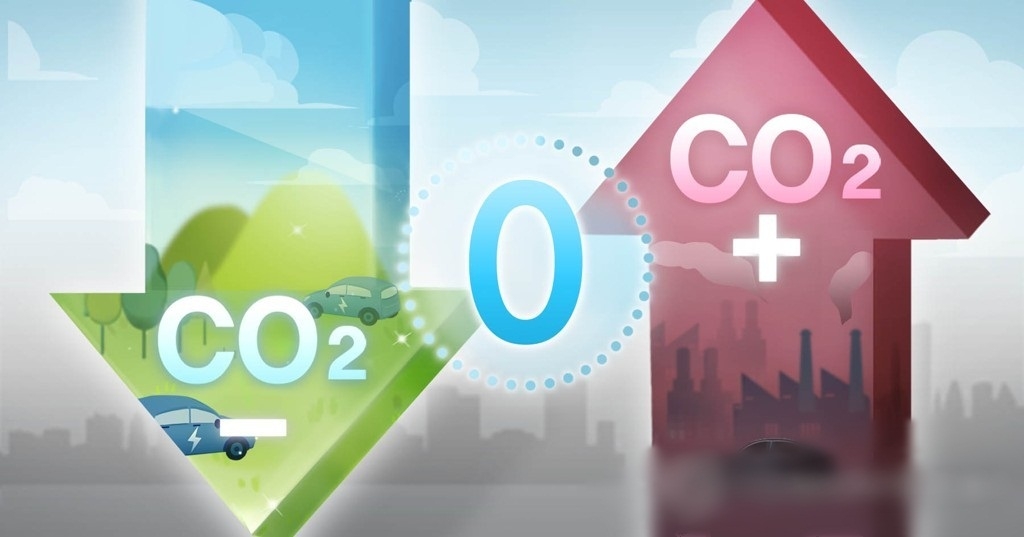
- The Ministry of Environment, Forest and Climate Change (MoEFCC) has unveiled draft Greenhouse Gas Emission Intensity (GEI) Target Rules, 2025, setting mandatory GEI targets for over 460 industrial units spanning aluminium, cement, pulp & paper, and chlor-alkali sectors.
- This is a key regulatory expansion under the Carbon Credit Trading Scheme (CCTS), 2023, aimed at scaling up India's domestic carbon market by 2026.
- The draft mandates dual-year compliance—2025–26 and 2026–27—with baseline emissions pegged to 2023–24 levels and introduces penalties and carbon credit offsets based on performance.
Why It Matters
- Market-led decarbonisation: Obligated units reducing GEI below targets earn carbon credits, which can be traded or banked for future compliance.
- Compliance model: Entities exceeding targets can purchase credits or face penalties set at twice the average credit price, enforced by CPCB.
- Green trade preparedness: Aligns with India's NDCs under Paris Agreement—45% GDP emission intensity cut by 2030 and achieving net-zero by 2070—while supporting resilience against EU's Carbon Border Adjustment Mechanism (CBAM).
Sectoral Coverage & Expansion Roadmap
- Initially covers 282 units: 13 aluminium plants, 186 cement, 53 pulp & paper, and 30 chlor-alkali facilities.
- Future drafts aim to include fertiliser, steel, petrochemicals, and possibly the power sector, which currently accounts for ~39% of emissions but remains excluded for regulatory simplicity.
Compliance Mechanism & Governance
- Methodologies by BEE: Define GEI targets per unit of production.
- Registration and trading managed via the Indian Carbon Market (ICM) Portal, monitored under CCTS, with oversight from CPCB and BEE.
- Penalties: Environmental compensation equal to twice the average carbon credit price, payable within 90 days.
Institutional Context
- India's carbon market emerged post the Energy Conservation (Amendment) Act, 2022, and CCTS-2023; the BEE leads, with NIC running the ICM portal.
- Modeled on global frameworks like the EU ETS, China ETS—it combines cap-and-trade principles with intensity-based standards suited for a growing economy.
Additional Info
- Baseline Year Definition: Uses production-based tCO₂e metrics, covering direct process and indirect emissions.
- Trading Scope: Aims to integrate existing energy savings and REC mechanisms from 2025–26.
- As India's carbon market scales up, it's projected to become one of the world's largest, with potential export of credits.
Simplified Summary
- MoEFCC has published draft GEI rules covering ~460 carbon-intensive plants, enforced via CCTS.
- Compliance involves setting emission intensity baselines, annual targets, carbon credit trading, and penalties.
- Integrates industrial sustainability with global climate commitments and market incentives.
Exam Focus Points
| Theme | Details |
|---|---|
| What & When | Draft GEI Target Rules, 2025 launched under CCTS-2023 |
| Who | MoEFCC, CPCB, BEE; 282 units in key sectors |
| How it Works | Baseline 2023–24; targets for 2025–26 & 2026–27; credits & penalties |
| Legal Framework | Under Environment (Protection) Act & Energy Conservation Act |
| Global & Climate Alignment | Paris NDCs, CBAM readiness, net-zero by 2070 |
| Market Mechanism | Carbon credit issuance/trading; offsetting; penalty via environmental compensation |
| Forward Expansion | Future inclusion of power, steel, fertilizer sectors |
“Agri Prosperity Unveiled” – MoSPI Releases Output Report for 2011–24
What’s New?
- On 29 June 2025, amidst Statistics Day celebrations, the Ministry of Statistics & Programme Implementation (MoSPI) released the “Statistical Report on Value of Output from Agriculture & Allied Sectors (2011–12 to 2023–24)” via the National Statistical Office (NSO).
- The report provides detailed tables on output values for crops, livestock, forestry & logging, and fishing & aquaculture, in both current and constant FY12 prices.
Why It Matters
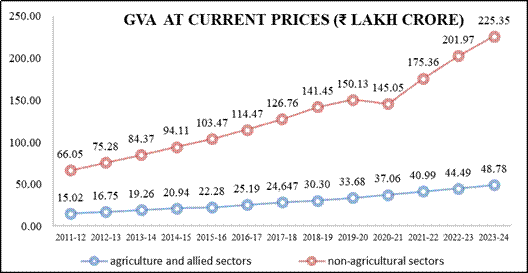
- 225% growth in Gross Value Added (GVA): Increased from ₹1,502 tn to ₹4,878 tn (current prices, 2011–12 to 2023–24).
- 54.6% rise in Gross Value of Output (GVO) at constant prices: From ₹1,908 tn to ₹2,949 tn, reflecting real productivity gains.
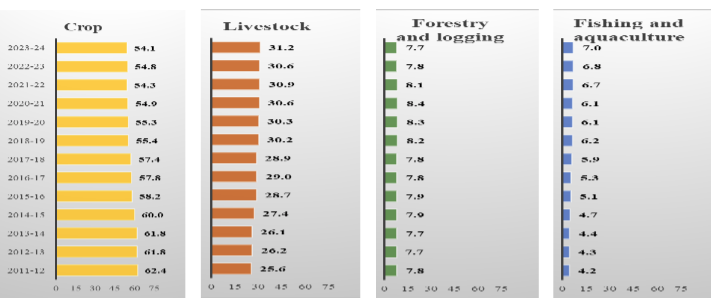
- Crop sector dominance: Contributed ₹1,595 tn, or 54.1% of total GVO in FY 24 (constant prices).
Crop Patterns
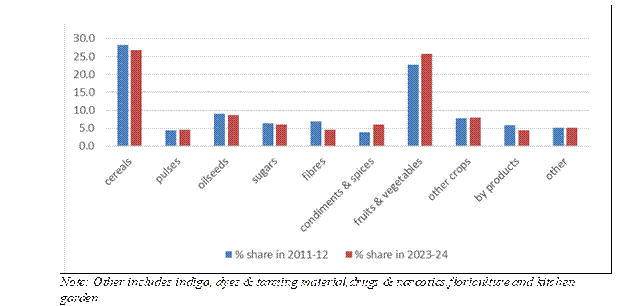
- Cereals vs Fruits & Vegetables: Together they made up 52.5% of crop GVO; paddy & wheat accounted for 85% of cereal output.
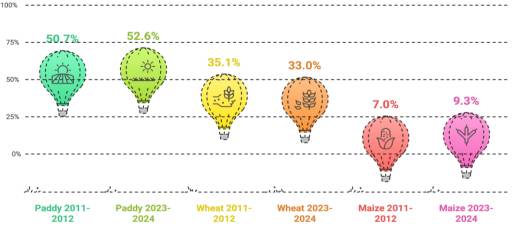
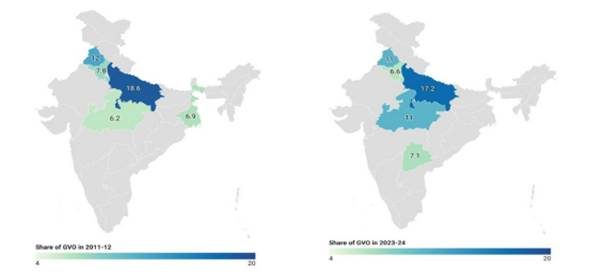
- State contributors: Uttar Pradesh, Madhya Pradesh, Punjab, Telangana, and Haryana generated nearly 53% of national cereal output; UP remained top despite a slight share dip.
Livestock & Allied Growth
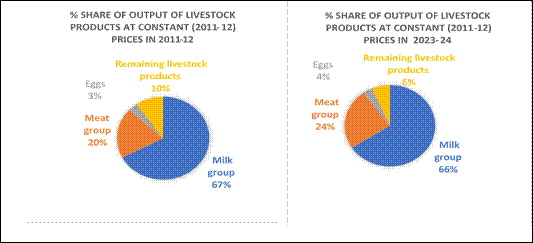
- Livestock output rose from ₹488 tn to ₹919 tn, with dairy retaining its majority share (~66%) and meat increasing from 19.7% to 24.1%.
- Forestry & Logging saw output growth from ₹149 tn to ₹227 tn, with industrial wood dominating (70%).
- Fisheries & Aquaculture contribution expanded from 4.2% to 7.0% of agri output; marine fisheries share rose from 42% to 50%.
Horticulture & Specialty Crops
- Floriculture doubled its output (₹17.4 tn → ₹28.1 tn), indicating increased diversification and commercialisation.
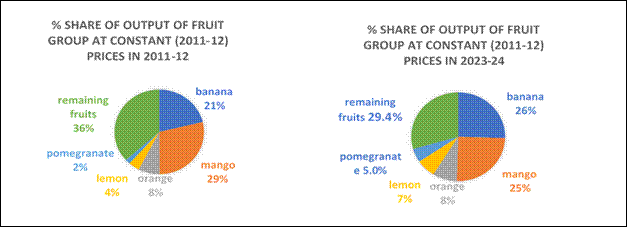
- In fruits, banana (₹47.0 tn) overtook mango (₹46.1 tn); in vegetables, potato remained top.
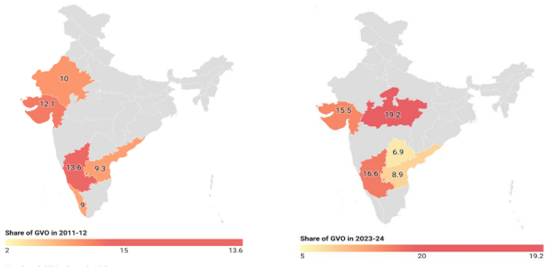
- Spices shift: Madhya Pradesh became the leading producer, replacing earlier leaders.
Additional Info
- The report is a key input for National Accounts and SDG monitoring, and it's accessible via MoSPI’s website.
- It encompasses detailed technical data, including production volumes, pricing trends, and state/commodity-level breakdowns.
- It supports evidence-based policy in crop diversification, agritech, livestock, fisheries, and forest resource planning.
Simplified Summary
- The report highlights solid and balanced growth in India’s agriculture & allied sectors over 13 years: ₹2,949 tn GVO at constant prices, with crops >50%, livestock doubling, and notable growth in forestry, fisheries, and horticulture.
- It reflects diversification, resilience, rising rural incomes, and capitalisation of allied activities under national economic frameworks.
Exam Focus Points
| Theme | Key Insights |
|---|---|
| Overall Growth | GVA +225% (current); GVO +54.6% (constant) |
| Sector Share | Crops 54.1%; Livestock 30%; Forestry 7.7%; Fisheries 7% |
| Crop Dynamics | Cereals+F&V = 52.5%; paddy & wheat dominant; bananas overtake mango |
| Allied Trends | Livestock doubling; meat gains; forestry steady; fisheries rising to 7% |
| Diversification | Floriculture growth; spices shift to MP; potatoes lead veg |
| Regional Leaders | UP–cereals; MP–spices; AP & WB – fisheries |
| Policy Relevance | Ties to agri-credit, PLI, horticulture, PM Matsya Sampada |
| Institutional Role | NSO under MoSPI; supports SDG reporting, Agri Census, NAAS |
"Adi Karmyogi" – Empowering Tribal Scheme Implementation Through Field-Level Training
What's New?
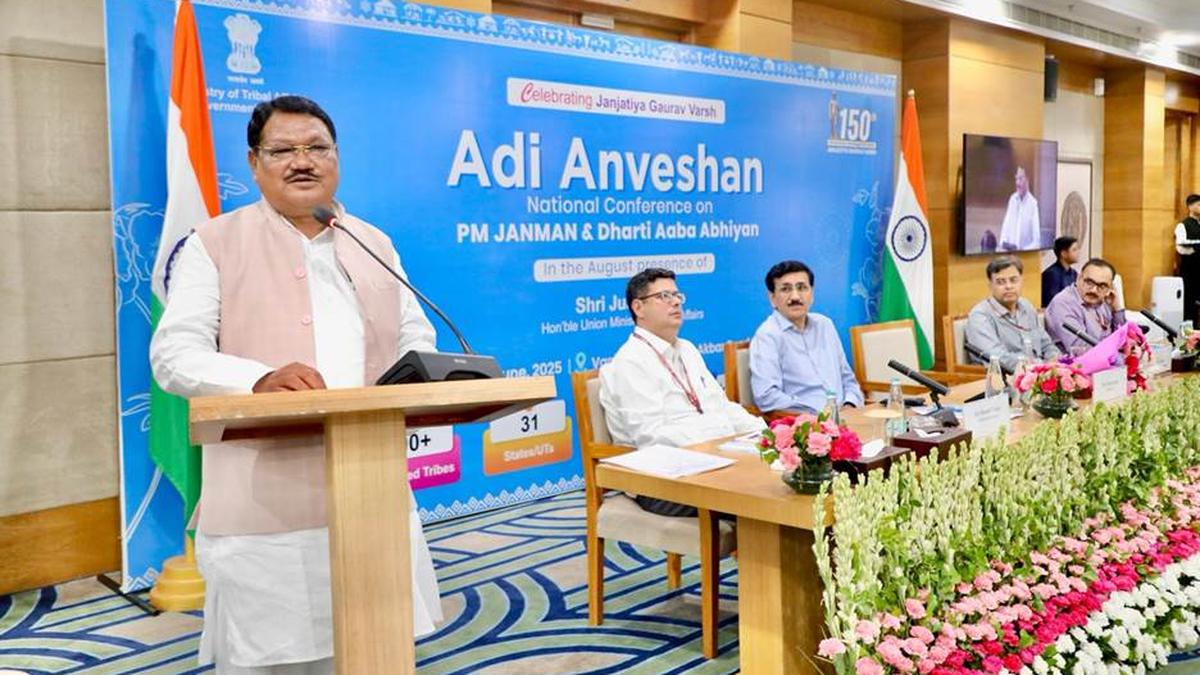
- On 27 June 2025, the Ministry of Tribal Affairs launched Adi Karmyogi—a nationwide capacity-building programme aimed at enhancing the motivation, empathy, and efficiency of officials implementing tribal welfare schemes.
- Launched at the Adi Anveshan National Conference in New Delhi by Minister Jual Oram, the initiative targets creation of a cadre of purpose-driven implementers across tribal India.
Why It Matters
- Bridges implementation gap: Many tribal schemes stall not due to funding shortages but due to lack of motivated, result-oriented officials.
- Enhances last-mile impact: By improving field capacities, the programme seeks to ensure better service delivery, inclusion, and outcomes in tribal communities.
Training Strategy & Scale
- A three-tier training structure:
- 180+ State Master Trainers
- 3,000+ District Trainers
- 15,000+ Block Trainers
- Aims to reach 2 million+ grassroots stakeholders, including frontline officers, tribal researchers, and local administrators.
Core Objectives
- Shift mindsets from viewing schemes as bureaucratic tasks to citizen-centric service delivery.
- Promote cultural sensitivity, ground-level engagement, data use, and community participation.
- Encourage innovative models—like tribal incubators and integrated service delivery campaigns (e.g., DAJGUA)—and empower Tribal Research Institutes (TRIs).
Additional Info
- Inspired by Mission Karmayogi, the central civil servant capacity-building initiative aimed at promoting lifelong learning and role-based competencies.
- Builds upon tribal development schemes like PMAAGY, Van Dhan, and DAJGUA, focusing on revitalized execution standards at the grassroots level.
Simplified Summary
- Adi Karmyogi is a targeted effort to empower officials and workers in tribal regions via large-scale, structured training—enhancing outcomes for schemes that often face execution challenges due to motivation and skill gaps.
Exam Focus Points
| Theme | Key Highlights |
|---|---|
| What & Who | Adi Karmyogi: MoTA flagship launched on 27 June 2025; Minister Jual Oram |
| Scale | 180 state trainers; 3,000 district; 15,000 block; reaches 2 million+ stakeholders |
| Goal | Shift from bureaucracy to empathetic, citizen-centric tribal governance |
| Training Focus | Cultural awareness, data-driven delivery, integrated tribal development |
| Linkages | Mission Karmayogi ethos; complements PMAAGY, DAJGUA, Van Dhan, TRIs |
| Strategic Shift | Governance moves from scheme creation to outcome-based execution at grassroots |
"Green Gold" – Kerala Tops National Protected Area Management Effectiveness
What's New?
- Kerala, alongside Chandigarh, has been awarded the only "Very Good" rating in India's Management Effectiveness Evaluation (MEE) of 438 National Parks and Wildlife Sanctuaries for the 2020-25 cycle by the MoEFCC—the state's mean score is 76.22%.
- Eravikulam National Park (Kerala) and Dachigam National Park (J&K) emerged as the top individual parks, each scoring 92.97%, followed closely by Kerala's Mathikettan Shola NP (90.63%) and Chinnar Wildlife Sanctuary (89.84%).
Why It Matters
- Global-standard governance: The MEE follows IUCN-WCPA guidelines, assessing parameters like biodiversity conservation, community involvement, and infrastructure.
- Clear progress signal: National mean MEE score improved to 64.4% (from 60.5%), with 84 PAs rated "very good", reflecting strengthened protected area management.
Top Kerala Performers
- Eravikulam NP (97 km²): Key Nilgiri Tahr habitat, Neelakurinji bloom region; exemplary community inclusion and eco-tourism.
- Mathikettan Shola NP: Critical elephant corridor and Galaxy Frog refuge; scored 90.63%.
- Chinnar Wildlife Sanctuary: Noted for scrub-forest biodiversity; rated 89.84%.
Challenges & Recommendations
- Urban sanctuaries like Mangalavanam (Kochi) face pollution and lack waste treatment plans.
- Sanctuaries in Idukki, Wayanad, Anamudi Shola experience biotic pressures, human-wildlife conflict, invasive species, traffic, and require corridor restoration.
Additional Info
- Kerala Forest Department, formed in 1888, manages nearly 30% forest cover, participates actively in biodiversity conservation through state institutions and partnerships.
- MEE informs national targets under the Convention on Biological Diversity and reflects commitment to SDG 15 and ecological stewardship.
Simplified Summary
- Kerala leads India in protected area management, securing the only "Very Good" rating with strong performance across 21 PAs.
- Success stems from community-led eco-tourism, scientific governance, and strict conservation protocols, even as some sanctuaries need urgent action on urban and ecological pressures.
Exam Focus Points
| Theme | Highlights |
|---|---|
| What & Who | MEE 2020-25 by MoEFCC & WII under IUCN standards |
| Kerala's Achievement | Score 76.22%; only "Very Good" state |
| Top PAs | Eravikulam & Dachigam (92.97%); Mathikettan (90.63%); Chinnar (89.84%) |
| Benefits | Improved conservation, eco-tourism, community involvement, data-driven management |
| Challenges | Urban pollution, wildlife conflict, invasive species, corridor fragmentation |
| Policy Linkages | SDG 15, CBD commitments, national protected area targets |
June 2025
30 June 202528 June 202527 June 202526 June 202525 June 202524 June 202523 June 202521 June 202520 June 202519 June 202518 June 202517 June 202516 June 202514 June 202513 June 202512 June 202511 June 202510 June 202509 June 202507 June 202506 June 202505 June 202504 June 202503 June 202502 June 2025
Archive
October 2026
- 27 October 2026
- 26 October 2026
- 24 October 2026
- 23 October 2026
- 22 October 2026
- 21 October 2026
- 20 October 2026
- 19 October 2026
- 17 October 2026
- 16 October 2026
- 15 October 2026
- 14 October 2026
- 13 October 2026
- 12 October 2026
- 10 October 2026
- 09 October 2026
- 08 October 2026
- 07 October 2026
- 06 October 2026
- 05 October 2026
- 03 October 2026
- 02 October 2026
- 01 October 2026
September 2026
- 30 September 2026
- 29 September 2026
- 28 September 2026
- 26 September 2026
- 25 September 2026
- 24 September 2026
- 23 September 2026
- 22 September 2026
- 21 September 2026
- 19 September 2026
- 18 September 2026
- 17 September 2026
- 16 September 2026
- 15 September 2026
- 12 September 2026
- 11 September 2026
- 10 September 2026
- 09 September 2026
- 08 September 2026
- 07 September 2026
- 05 September 2026
- 04 September 2026
- 03 September 2026
- 02 September 2026
- 01 September 2026
August 2026
- 31 August 2026
- 29 August 2026
- 27 August 2026
- 26 August 2026
- 25 August 2026
- 24 August 2026
- 22 August 2026
- 21 August 2026
- 20 August 2026
- 19 August 2026
- 18 August 2026
- 17 August 2026
- 14 August 2026
- 13 August 2026
- 12 August 2026
- 11 August 2026
- 10 August 2026
- 08 August 2026
- 07 August 2026
- 06 August 2026
- 05 August 2026
- 04 August 2026
- 03 August 2026
- 01 August 2026
July 2026
- 31 July 2026
- 30 July 2026
- 29 July 2026
- 28 July 2026
- 27 July 2026
- 25 July 2026
- 23 July 2026
- 22 July 2026
- 21 July 2026
- 20 July 2026
- 18 July 2026
- 17 July 2026
- 15 July 2026
- 14 July 2026
- 13 July 2026
- 11 July 2026
- 10 July 2026
- 09 July 2026
- 08 July 2026
- 07 July 2026
- 06 July 2026
- 04 July 2026
- 03 July 2026
- 02 July 2026
- 01 July 2026
June 2026
May 2026
April 2026
March 2026
- 31 March 2026
- 30 March 2026
- 28 March 2026
- 27 March 2026
- 26 March 2026
- 25 March 2026
- 24 March 2026
- 23 March 2026
- 21 March 2026
- 20 March 2026
- 19 March 2026
- 18 March 2026
- 17 March 2026
- 16 March 2026
- 14 March 2026
- 13 March 2026
- 12 March 2026
- 11 March 2026
- 10 March 2026
- 09 March 2026
- 07 March 2026
- 06 March 2026
- 05 March 2026
- 03 March 2026
- 02 March 2026
February 2026
- 28 February 2026
- 27 February 2026
- 26 February 2026
- 25 February 2026
- 24 February 2026
- 23 February 2026
- 21 February 2026
- 20 February 2026
- 19 February 2026
- 18 February 2026
- 17 February 2026
- 16 February 2026
- 13 February 2026
- 12 February 2026
- 11 February 2026
- 10 February 2026
- 09 February 2026
- 07 February 2026
- 06 February 2026
- 05 February 2026
- 04 February 2026
- 03 February 2026
- 02 February 2026
January 2026
- 31 January 2026
- 30 January 2026
- 29 January 2026
- 28 January 2026
- 27 January 2026
- 26 January 2026
- 24 January 2026
- 23 January 2026
- 22 January 2026
- 21 January 2026
- 20 January 2026
- 19 January 2026
- 16 January 2026
- 15 January 2026
- 14 January 2026
- 13 January 2026
- 12 January 2026
- 10 January 2026
- 09 January 2026
- 08 January 2026
- 07 January 2026
- 06 January 2026
- 05 January 2026
- 03 January 2026
- 02 January 2026
- 01 January 2026
December 2025
- 31 December 2025
- 30 December 2025
- 29 December 2025
- 27 December 2025
- 26 December 2025
- 24 December 2025
- 23 December 2025
- 22 December 2025
- 20 December 2025
- 19 December 2025
- 18 December 2025
- 17 December 2025
- 16 December 2025
- 15 December 2025
- 13 December 2025
- 12 December 2025
- 11 December 2025
- 10 December 2025
- 09 December 2025
- 08 December 2025
- 05 December 2025
- 04 December 2025
- 03 December 2025
- 02 December 2025
November 2025
- 29 November 2025
- 28 November 2025
- 27 November 2025
- 26 November 2025
- 25 November 2025
- 24 November 2025
- 22 November 2025
- 21 November 2025
- 20 November 2025
- 19 November 2025
- 18 November 2025
- 17 November 2025
- 15 November 2025
- 14 November 2025
- 13 November 2025
- 12 November 2025
- 11 November 2025
- 10 November 2025
- 08 November 2025
- 07 November 2025
- 06 November 2025
- 05 November 2025
- 04 November 2025
- 03 November 2025
- 01 November 2025
October 2025
- 31 October 2025
- 30 October 2025
- 29 October 2025
- 28 October 2025
- 27 October 2025
- 25 October 2025
- 24 October 2025
- 23 October 2025
- 22 October 2025
- 21 October 2025
- 20 October 2025
- 18 October 2025
- 17 October 2025
- 16 October 2025
- 15 October 2025
- 14 October 2025
- 13 October 2025
- 11 October 2025
- 10 October 2025
- 09 October 2025
- 08 October 2025
- 07 October 2025
- 06 October 2025
- 04 October 2025
- 03 October 2025
- 02 October 2025
- 01 October 2025
September 2025
- 30 September 2025
- 29 September 2025
- 27 September 2025
- 26 September 2025
- 25 September 2025
- 24 September 2025
- 23 September 2025
- 22 September 2025
- 20 September 2025
- 19 September 2025
- 18 September 2025
- 17 September 2025
- 16 September 2025
- 15 September 2025
- 13 September 2025
- 12 September 2025
- 11 September 2025
- 10 September 2025
- 09 September 2025
- 08 September 2025
- 06 September 2025
- 05 September 2025
- 04 September 2025
- 03 September 2025
- 02 September 2025
- 01 September 2025
August 2025
- 30 August 2025
- 29 August 2025
- 28 August 2025
- 27 August 2025
- 26 August 2025
- 25 August 2025
- 23 August 2025
- 22 August 2025
- 21 August 2025
- 20 August 2025
- 19 August 2025
- 18 August 2025
- 16 August 2025
- 14 August 2025
- 13 August 2025
- 12 August 2025
- 11 August 2025
- 08 August 2025
- 07 August 2025
- 06 August 2025
- 05 August 2025
- 04 August 2025
- 02 August 2025
- 01 August 2025
July 2025
- 31 July 2025
- 30 July 2025
- 29 July 2025
- 28 July 2025
- 26 July 2025
- 25 July 2025
- 24 July 2025
- 23 July 2025
- 22 July 2025
- 21 July 2025
- 19 July 2025
- 18 July 2025
- 17 July 2025
- 16 July 2025
- 15 July 2025
- 12 July 2025
- 11 July 2025
- 10 July 2025
- 09 July 2025
- 07 July 2025
- 05 July 2025
- 04 July 2025
- 03 July 2025
- 02 July 2025
- 01 July 2025
June 2025
- 30 June 2025
- 28 June 2025
- 27 June 2025
- 26 June 2025
- 25 June 2025
- 24 June 2025
- 23 June 2025
- 21 June 2025
- 20 June 2025
- 19 June 2025
- 18 June 2025
- 17 June 2025
- 16 June 2025
- 14 June 2025
- 13 June 2025
- 12 June 2025
- 11 June 2025
- 10 June 2025
- 09 June 2025
- 07 June 2025
- 06 June 2025
- 05 June 2025
- 04 June 2025
- 03 June 2025
- 02 June 2025
May 2025
April 2025
- 30 April 2025
- 29 April 2025
- 28 April 2025
- 26 April 2025
- 25 April 2025
- 24 April 2025
- 23 April 2025
- 22 April 2025
- 21 April 2025
- 19 April 2025
- 18 April 2025
- 17 April 2025
- 16 April 2025
- 15 April 2025
- 14 April 2025
- 12 April 2025
- 11 April 2025
- 10 April 2025
- 09 April 2025
- 08 April 2025
- 07 April 2025
- 05 April 2025
- 04 April 2025
- 03 April 2025
- 02 April 2025
- 01 April 2025
March 2025
- 31 March 2025
- 29 March 2025
- 28 March 2025
- 27 March 2025
- 26 March 2025
- 25 March 2025
- 24 March 2025
- 22 March 2025
- 21 March 2025
- 20 March 2025
- 19 March 2025
- 18 March 2025
- 17 March 2025
- 15 March 2025
- 13 March 2025
- 12 March 2025
- 11 March 2025
- 10 March 2025
- 08 March 2025
- 07 March 2025
- 06 March 2025
- 05 March 2025
- 04 March 2025
- 03 March 2025
- 01 March 2025
February 2025
- 28 February 2025
- 27 February 2025
- 26 February 2025
- 25 February 2025
- 24 February 2025
- 22 February 2025
- 21 February 2025
- 20 February 2025
- 19 February 2025
- 18 February 2025
- 17 February 2025
- 15 February 2025
- 14 February 2025
- 13 February 2025
- 12 February 2025
- 11 February 2025
- 10 February 2025
- 08 February 2025
- 07 February 2025
- 06 February 2025
- 05 February 2025
- 04 February 2025
- 03 February 2025
- 01 February 2025
January 2025
- 31 January 2025
- 30 January 2025
- 29 January 2025
- 28 January 2025
- 27 January 2025
- 25 January 2025
- 24 January 2025
- 23 January 2025
- 22 January 2025
- 21 January 2025
- 20 January 2025
- 18 January 2025
- 17 January 2025
- 16 January 2025
- 15 January 2025
- 14 January 2025
- 13 January 2025
- 11 January 2025
- 10 January 2025
- 09 January 2025
- 08 January 2025
- 07 January 2025
- 06 January 2025
- 04 January 2025
- 03 January 2025
- 02 January 2025
- 01 January 2025