
Current Affairs
Stay updated with the latest national and international events.
30 December 2025
RBI Report on Trend and Progress of Banking in India 2024-25
What’s the News?
- The Reserve Bank of India (RBI) released its annual statutory report titled "Report on Trend and Progress of Banking in India 2024-25" in compliance with Section 36(2) of the Banking Regulation Act, 1949.
- The report highlights that the Indian banking sector remained resilient, characterized by multi-decadal low NPAs, sustained profitability, and robust capital buffers.
- It provides a comprehensive review of the performance of Scheduled Commercial Banks (SCBs), Co-operative Banks, and Non-Banking Financial Companies (NBFCs) for the period 2024-25 and the first half of 2025-26.
Key Highlights of the Report
- Balance Sheet Expansion:
- Consolidated balance sheet of Scheduled Commercial Banks (SCBs) grew by 11.2% (vs. 15.5% in FY24).
- Bank credit ↑ 11.5%; Deposits ↑ 11.1%.
- PSBs’ share in SCB assets: 54.9% (↓ from 55.2%); PVBs’ share: 37.1% (↓ from 37.5%).
- Asset Quality at Multi-Decade Low:
- Gross NPA (GNPA) ratio fell to 2.2% (March 2025) and further to 2.1% (Sept 2025 - a multi-decadal low.
- Return on Assets (RoA): 1.4% in FY25 (1.3% in H1 FY26); Return on Equity (RoE): 13.5% (12.5% in H1 FY26).
- Rise in Fraud Value Despite Fewer Cases:
- Fraud cases ↓ to 23,879 in FY25 (from 27,027 in FY24), but value ↑ to ₹34,771 Cr (vs. ₹26,702 Cr).
- In H1 FY26 (Apr–Sep), fraud value rose 30% YoY to ₹21,515 Cr despite only 5,092 cases.
- PSBs accounted for 70.7% of fraud value (mainly advances-related); PVBs for 59.3% of cases (mostly card/internet frauds).
- Sectoral Performance:
- Urban Co-operative Banks (UCBs):
- ↓ to 1,457 (from 1,472); 92.1% maintain CAR >12%.
- Credit growth ↑ to 6.7%, highest in 6 years; net profit ↑ 14.2%.
- Small Finance Banks (SFBs):
- Balance sheet ↑ 20.9% to ₹4.05 lakh Cr; GNPA ↑ to 3.6%; net profit ↓ to ₹3,496 Cr.
- Payments Banks (PBs):
- Deposits ↑ 56.8% to ₹25,605 Cr; balance sheet ↑ 43.7% to ₹37,592 Cr; net profit: ₹92 Cr.
- NBFCs:
- Asset expansion ↑ 19.4%; credit share in GDP ↑ to 14.6% (from 13.5%).
- Urban Co-operative Banks (UCBs):
- Digital Shift & Infrastructure:
- ATM count ↓ to 2,51,057 (driven by fall in off-site units), reflecting digital payment adoption.
- Financial Inclusion Index rose sharply to 67.0 (from 43.4).
Initiatives & Regulatory Focus
- PRAVAAH Portal: For streamlined regulatory approvals.
- Unified Lending Interface (ULI): To enable instant, consent-based credit access using account-aggregator architecture.
- FREE-AI Framework: For Fair, Responsible, and Ethical AI in credit underwriting and risk management.
- Risk-Based Deposit Insurance: Proposed reforms to tailor coverage based on bank risk profiles.
Emerging Challenges
- Rising customer grievances and digital frauds, especially UPI-related.
- Retail credit stress in unsecured personal and vehicle loans.
- Inclusion-quality gap: Low financial literacy and digital discomfort hinder meaningful usage despite account access.
- AI/ML model risks in automated lending and surveillance.
Additional Info
- Statutory Context:
- Banking Regulation Act, 1949: Mandates the annual publication of this report to provide a systemic soundness assessment.
- NPA Definition: An asset becomes non-performing when it ceases to generate income, typically when payments are overdue for 90 days or more.
- Policy Frameworks:
- 4R's Strategy: A government initiative consisting of Recognition, Resolution, Recapitalisation, and Reforms to strengthen public sector banks.
- Basel III Norms: International standards for capital adequacy; Indian banks maintain a CRAR higher than the mandated 11.5%.
- Key Financial Terms:
- RoA (Return on Assets): Measures efficiency in using assets to generate earnings.
- CRAR (Capital Adequacy Ratio): The ratio of a bank's capital to its risk-weighted assets, serving as a cushion against losses.
Sources
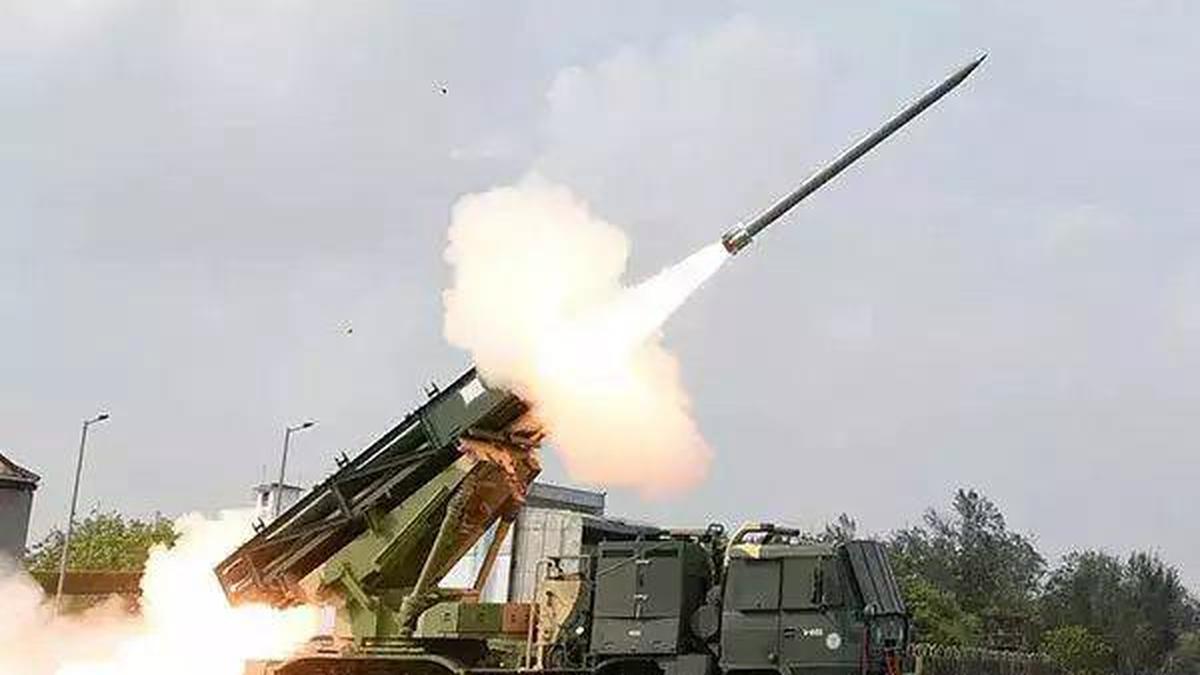
Successful Maiden Flight Test of Pinaka Long Range Guided Rocket (LRGR 120)
What’s the News?
- The Defence Research and Development Organisation (DRDO) successfully conducted the maiden flight test of the Pinaka Long Range Guided Rocket (LRGR 120) at the Integrated Test Range (ITR) in Chandipur, Odisha.
- The rocket reached its maximum strike range of 120 km, demonstrating all planned in-flight manoeuvres and hitting its target with "textbook precision".
- The successful test coincided with the Defence Acquisition Council (DAC) granting Acceptance of Necessity (AoN) for defence procurement worth ₹79,000 crore, which includes these long-range guided rockets for the Indian Army.
What is Pinaka LRGR-120?
- An indigenously developed, precision-guided rocket variant of the Pinaka Multi-Barrel Rocket Launch System (MBRL).
- Designed to enhance long-range artillery capabilities with minimal collateral damage.
- Developed by:
- Armament Research & Development Establishment (ARDE) (lead)
- In association with High Energy Materials Research Laboratory (HEMRL)
- Supported by Defence Research & Development Laboratory (DRDL) and Research Centre Imarat (RCI).
Key Features
- Range: 120 km - a major increase over earlier Pinaka variants (40–75 km).
- Precision Guidance: Achieved direct hit on target with high accuracy, leveraging onboard guidance and control systems.
- Launcher Compatibility: Fired from the in-service Pinaka launcher, enabling seamless integration and multi-variant firing capability (e.g., standard, guided, extended-range) from a single platform.
- In-flight Manoeuvrability: Validated via full-trajectory tracking by ITR instruments.
Additional Info
- Development Team:
- Designed by the Pune-based Armament Research and Development Establishment (ARDE).
- Developed in association with High Energy Materials Research Laboratory (HEMRL).
- Technical support provided by Defence Research and Development Laboratory (DRDL) and Research Centre Imarat (RCI).
- Pinaka Evolution:
- Pinaka Mk-I: Unguided version with a range of ~40 km.
- Pinaka Mk-II / Guided: Range of 60–90 km.
- LRGR 120: Precision-guided version with a 120 km range.
- Operational Details:
- The Pinaka Multi-Barrel Rocket Launcher (MBRL) can fire a full salvo of 12 rockets in approximately 44 seconds.
- One battery consists of six launch vehicles, capable of neutralizing an area of 1 km x 1 km.
- Historical Context:
- The Pinaka system was first used effectively during the 1999 Kargil War while still in the development phase.
- It was developed as an indigenous alternative to the Russian 'Grad' multi-barrel rocket systems.
Sources
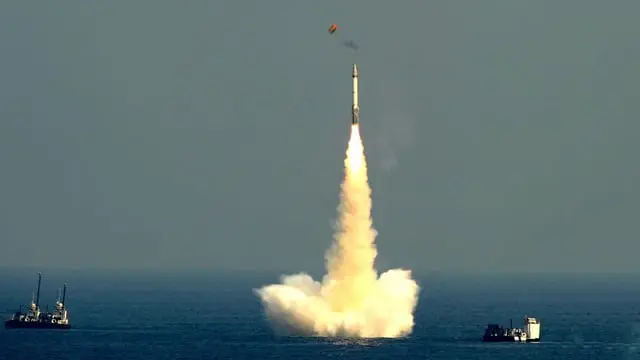
India Successfully Tests K-4 Nuclear Missile from INS Arighaat
What’s the News?
- India successfully test-fired the K-4 Submarine-Launched Ballistic Missile (SLBM) from the nuclear-powered submarine INS Arighaat off the coast of Odisha.
- The missile, which has a strike range of 3,500 km, was tested in a "user configuration," demonstrating its operational readiness and high accuracy.
- This test marks a significant milestone as it is the first time the K-4 has been launched from INS Arighaat, India's second Arihant-class nuclear-powered ballistic missile submarine (SSBN).
What is the K-4 Missile?
- A nuclear-capable, intermediate-range, two-stage solid-fuel SLBM developed by the Defence Research and Development Organisation (DRDO) under the legacy of the Integrated Guided Missile Development Programme (IGMDP).
- Named in honour of Dr. APJ Abdul Kalam (‘K’ series).
- Key specifications 348:
- Range: ~3,500 km
- Length: ~12 metres
- Weight: ~17 tonnes
- Payload capacity: 1–2 tonnes (nuclear warhead)
- Launch method: Cold launch via ejection from submerged silo, ignition after surfacing.
Additional Info
- INS Arighaat:
- Commissioned in August 2024, it is the second submarine of the Arihant-class.
- It is slightly more advanced and can carry more missiles than its predecessor, INS Arihant.
- The 'K' Missile Family:
- Named after former President Dr. APJ Abdul Kalam.
- K-15 (Sagarika): Short-range SLBM (750 km), already operational.
- K-5 and K-6: Future variants under development with ranges expected to exceed 5,000 km and 6,000 km respectively.
- SSBN vs SSN:
- SSBN: Nuclear-powered ballistic missile submarine (e.g., INS Arighaat) designed for strategic deterrence.
- SSN: Nuclear-powered attack submarine designed for hunter-killer missions against other ships and submarines.
Sources
Government Notifies Colliery Control (Amendment) Rules, 2025

What’s the News?
- The Ministry of Coal officially notified the Colliery Control (Amendment) Rules, 2025, fundamentally simplifying the approval process for opening coal and lignite mines in India.
- The amendment seeks to eliminate procedural redundancies by removing the requirement for prior written permission from the Coal Controller’s Organisation (CCO) for opening a mine, seam, or section.
- This reform is a key part of the government's "Ease of Doing Business" initiative, designed to accelerate coal production and reduce the time required to operationalize a mine by up to two months.
Major Regulatory Shifts
- Empowerment of Company Boards: The authority to grant "opening permission" is now vested in the Board of Directors of the respective coal company.
- Simplified Rule 9: The amendment specifically replaces Rule 9 of the Colliery Control Rules, 2004, which previously mandated central-level approval for every new seam or section.
- Applicability to Closed Mines: These rules also apply to mines restarting operations after a discontinuation period of 180 days (six months) or more.
- Differentiated Mechanism:
- Registered Companies: Can proceed with Board approval.
- Non-Company Entities: Small owners or individual proprietors must still obtain prior approval directly from the CCO.
Safeguards and Regulatory Oversight
- Pre-requisite Clearances: Company boards can only grant approval after ensuring all mandatory statutory clearances—including environmental, forest, and safety certifications—have been secured from Central and State governments.
- Mandatory Intimation: Once a board approves an opening, the company must formally intimate the CCO within 15 days.
- Role of the CCO: While losing its role as a primary "gatekeeper" for company-owned mines, the CCO remains a regulator and maintains an indicative list of all required permissions to ensure transparency.
Additional Info
- Legal and Constitutional Framework:
- MMDR Act, 1957: The rules are framed under the Mines and Minerals (Development and Regulation) Act, 1957, which governs the mineral sector in India.
- Constitutional Basis: Under Entry 54 of the Union List (List I), the Central Government has the power to regulate mines and mineral development in the public interest.
- Coal Controller Organisation (CCO):
- Subordinate office of the Ministry of Coal.
- Core functions include:
- Collecting & maintaining nationwide coal production data.
- Regulatory oversight, inspections, and quality control (e.g., coal grade dispute resolution).
- Statutory functions under Colliery Control Rules, Mines and Minerals (Development and Regulation) Act, and Coal Mines (Conservation and Development) Rules.
- Historical Context:
- The Colliery Control Rules, 2004 were established to regulate the production, sale, and quality of coal.
- Since 2020, India has shifted toward Commercial Coal Mining, allowing private players to mine and sell coal, necessitating more efficient regulatory frameworks.
- Key Definitions:
- Colliery: Any mine or open-pit excavation where coal or lignite is extracted.
- Seam: A distinct layer of coal found within geological formations.
Sources
POCSO Case Can't be Quashed if Child Victim Turns Hostile: Delhi High Court

What’s the News?
- The Delhi High Court ruled that criminal proceedings under the Protection of Children from Sexual Offences (POCSO) Act, 2012 cannot be quashed or dismissed solely because the child victim has turned "hostile" during the trial.
- The Court emphasized that even if a victim changes their statement or denies the incident in court, the case must proceed based on other available evidence, such as medical reports, forensic data, or witness testimonies.
- The judgment was delivered while dismissing a petition by an accused seeking to quash a case on the grounds that the victim and the complainant (the victim's mother) had settled the matter and were no longer supporting the prosecution's case.
Key Legal Principles Established
- Non-Compoundable Nature: The Court reiterated that serious offences under the POCSO Act and Section 376 of the IPC (Rape) are non-compoundable, meaning they cannot be legally settled or compromised between the parties.
- Welfare of the Child: Justice highlighted that the primary objective of the POCSO Act is the protection and welfare of the child, and allowing cases to be quashed due to "hostility" could encourage coercion or illegal settlements.
- Evidence Beyond Testimony: The Court noted that "hostility" of a witness does not automatically mean the accused is innocent; the prosecution can still prove the case through circumstantial evidence and expert opinions.
- Public Interest: Criminal acts of this nature are considered "crimes against society," and therefore, the victim's personal desire to withdraw the case does not override the state's duty to prosecute.
What is a "Hostile Witness"?
- Simple Meaning: A witness is termed "hostile" when they give a statement in court that contradicts their earlier statement given to the police or the magistrate, usually in an attempt to help the accused.
- Legal Implication: In regular cases, a witness turning hostile often weakens the prosecution. However, in POCSO cases, the court must now ensure the trial reaches its logical conclusion regardless of the witness's stance, provided other evidence exists.
Legal & Institutional Framework
- POCSO Act Provisions Reinforced:
- Section 29: Presumption of guilt if the victim’s testimony is supported by medical or other evidence.
- Section 30: Presumption of lack of consent in all sexual acts with a child below.
- Section 23(2): Prohibits disclosure of the victim’s identity in any media.
- Procedural Safeguards:
- Section 164 CrPC: Mandatory recording of child’s statement before a Magistrate at the earliest to preserve original testimony.
- Police & CWC Duty: Authorities must ensure immediate shelter, counselling, and protection under Section 23(3) of POCSO and Rule 4(4) of POCSO Rules, 2020.
Additional Info
- POCSO Act, 2012:
- Enacted to provide a robust legal framework for the protection of children (any person below 18 years) from sexual assault, harassment, and pornography.
- Special Courts: Mandates the setting up of Special Courts for speedy trials.
- Presumption of Guilt: Under Sections 29 and 30, the law presumes the accused is guilty of certain offences until proven otherwise, shifting the burden of proof in specific circumstances.
- Constitutional Context:
- Article 15(3): Empowers the State to make special provisions for women and children.
- Article 21: Right to life with dignity, which includes a child’s right to be protected from abuse.
- Judicial Precedents:
- Gian Singh v. State of Punjab (2012): The Supreme Court held that High Courts should not quash proceedings in serious and heinous offences even if there is a settlement.
- State of Madhya Pradesh v. Laxmi Narayan (2019): Reaffirmed that offences like rape and those under the POCSO Act fall under "serious" categories where compromise is not permissible.
Sources
December 2025
31 December 202530 December 202529 December 202527 December 202526 December 202524 December 202523 December 202522 December 202520 December 202519 December 202518 December 202517 December 202516 December 202515 December 202513 December 202512 December 202511 December 202510 December 202509 December 202508 December 202505 December 202504 December 202503 December 202502 December 2025
Archive
October 2026
- 28 October 2026
- 27 October 2026
- 26 October 2026
- 24 October 2026
- 23 October 2026
- 22 October 2026
- 21 October 2026
- 20 October 2026
- 19 October 2026
- 17 October 2026
- 16 October 2026
- 15 October 2026
- 14 October 2026
- 13 October 2026
- 12 October 2026
- 10 October 2026
- 09 October 2026
- 08 October 2026
- 07 October 2026
- 06 October 2026
- 05 October 2026
- 03 October 2026
- 02 October 2026
- 01 October 2026
September 2026
- 30 September 2026
- 29 September 2026
- 28 September 2026
- 26 September 2026
- 25 September 2026
- 24 September 2026
- 23 September 2026
- 22 September 2026
- 21 September 2026
- 19 September 2026
- 18 September 2026
- 17 September 2026
- 16 September 2026
- 15 September 2026
- 12 September 2026
- 11 September 2026
- 10 September 2026
- 09 September 2026
- 08 September 2026
- 07 September 2026
- 05 September 2026
- 04 September 2026
- 03 September 2026
- 02 September 2026
- 01 September 2026
August 2026
- 31 August 2026
- 29 August 2026
- 27 August 2026
- 26 August 2026
- 25 August 2026
- 24 August 2026
- 22 August 2026
- 21 August 2026
- 20 August 2026
- 19 August 2026
- 18 August 2026
- 17 August 2026
- 14 August 2026
- 13 August 2026
- 12 August 2026
- 11 August 2026
- 10 August 2026
- 08 August 2026
- 07 August 2026
- 06 August 2026
- 05 August 2026
- 04 August 2026
- 03 August 2026
- 01 August 2026
July 2026
- 31 July 2026
- 30 July 2026
- 29 July 2026
- 28 July 2026
- 27 July 2026
- 25 July 2026
- 23 July 2026
- 22 July 2026
- 21 July 2026
- 20 July 2026
- 18 July 2026
- 17 July 2026
- 15 July 2026
- 14 July 2026
- 13 July 2026
- 11 July 2026
- 10 July 2026
- 09 July 2026
- 08 July 2026
- 07 July 2026
- 06 July 2026
- 04 July 2026
- 03 July 2026
- 02 July 2026
- 01 July 2026
June 2026
May 2026
April 2026
March 2026
- 31 March 2026
- 30 March 2026
- 28 March 2026
- 27 March 2026
- 26 March 2026
- 25 March 2026
- 24 March 2026
- 23 March 2026
- 21 March 2026
- 20 March 2026
- 19 March 2026
- 18 March 2026
- 17 March 2026
- 16 March 2026
- 14 March 2026
- 13 March 2026
- 12 March 2026
- 11 March 2026
- 10 March 2026
- 09 March 2026
- 07 March 2026
- 06 March 2026
- 05 March 2026
- 03 March 2026
- 02 March 2026
February 2026
- 28 February 2026
- 27 February 2026
- 26 February 2026
- 25 February 2026
- 24 February 2026
- 23 February 2026
- 21 February 2026
- 20 February 2026
- 19 February 2026
- 18 February 2026
- 17 February 2026
- 16 February 2026
- 13 February 2026
- 12 February 2026
- 11 February 2026
- 10 February 2026
- 09 February 2026
- 07 February 2026
- 06 February 2026
- 05 February 2026
- 04 February 2026
- 03 February 2026
- 02 February 2026
January 2026
- 31 January 2026
- 30 January 2026
- 29 January 2026
- 28 January 2026
- 27 January 2026
- 26 January 2026
- 24 January 2026
- 23 January 2026
- 22 January 2026
- 21 January 2026
- 20 January 2026
- 19 January 2026
- 16 January 2026
- 15 January 2026
- 14 January 2026
- 13 January 2026
- 12 January 2026
- 10 January 2026
- 09 January 2026
- 08 January 2026
- 07 January 2026
- 06 January 2026
- 05 January 2026
- 03 January 2026
- 02 January 2026
- 01 January 2026
December 2025
- 31 December 2025
- 30 December 2025
- 29 December 2025
- 27 December 2025
- 26 December 2025
- 24 December 2025
- 23 December 2025
- 22 December 2025
- 20 December 2025
- 19 December 2025
- 18 December 2025
- 17 December 2025
- 16 December 2025
- 15 December 2025
- 13 December 2025
- 12 December 2025
- 11 December 2025
- 10 December 2025
- 09 December 2025
- 08 December 2025
- 05 December 2025
- 04 December 2025
- 03 December 2025
- 02 December 2025
November 2025
- 29 November 2025
- 28 November 2025
- 27 November 2025
- 26 November 2025
- 25 November 2025
- 24 November 2025
- 22 November 2025
- 21 November 2025
- 20 November 2025
- 19 November 2025
- 18 November 2025
- 17 November 2025
- 15 November 2025
- 14 November 2025
- 13 November 2025
- 12 November 2025
- 11 November 2025
- 10 November 2025
- 08 November 2025
- 07 November 2025
- 06 November 2025
- 05 November 2025
- 04 November 2025
- 03 November 2025
- 01 November 2025
October 2025
- 31 October 2025
- 30 October 2025
- 29 October 2025
- 28 October 2025
- 27 October 2025
- 25 October 2025
- 24 October 2025
- 23 October 2025
- 22 October 2025
- 21 October 2025
- 20 October 2025
- 18 October 2025
- 17 October 2025
- 16 October 2025
- 15 October 2025
- 14 October 2025
- 13 October 2025
- 11 October 2025
- 10 October 2025
- 09 October 2025
- 08 October 2025
- 07 October 2025
- 06 October 2025
- 04 October 2025
- 03 October 2025
- 02 October 2025
- 01 October 2025
September 2025
- 30 September 2025
- 29 September 2025
- 27 September 2025
- 26 September 2025
- 25 September 2025
- 24 September 2025
- 23 September 2025
- 22 September 2025
- 20 September 2025
- 19 September 2025
- 18 September 2025
- 17 September 2025
- 16 September 2025
- 15 September 2025
- 13 September 2025
- 12 September 2025
- 11 September 2025
- 10 September 2025
- 09 September 2025
- 08 September 2025
- 06 September 2025
- 05 September 2025
- 04 September 2025
- 03 September 2025
- 02 September 2025
- 01 September 2025
August 2025
- 30 August 2025
- 29 August 2025
- 28 August 2025
- 27 August 2025
- 26 August 2025
- 25 August 2025
- 23 August 2025
- 22 August 2025
- 21 August 2025
- 20 August 2025
- 19 August 2025
- 18 August 2025
- 16 August 2025
- 14 August 2025
- 13 August 2025
- 12 August 2025
- 11 August 2025
- 08 August 2025
- 07 August 2025
- 06 August 2025
- 05 August 2025
- 04 August 2025
- 02 August 2025
- 01 August 2025
July 2025
- 31 July 2025
- 30 July 2025
- 29 July 2025
- 28 July 2025
- 26 July 2025
- 25 July 2025
- 24 July 2025
- 23 July 2025
- 22 July 2025
- 21 July 2025
- 19 July 2025
- 18 July 2025
- 17 July 2025
- 16 July 2025
- 15 July 2025
- 12 July 2025
- 11 July 2025
- 10 July 2025
- 09 July 2025
- 07 July 2025
- 05 July 2025
- 04 July 2025
- 03 July 2025
- 02 July 2025
- 01 July 2025
June 2025
- 30 June 2025
- 28 June 2025
- 27 June 2025
- 26 June 2025
- 25 June 2025
- 24 June 2025
- 23 June 2025
- 21 June 2025
- 20 June 2025
- 19 June 2025
- 18 June 2025
- 17 June 2025
- 16 June 2025
- 14 June 2025
- 13 June 2025
- 12 June 2025
- 11 June 2025
- 10 June 2025
- 09 June 2025
- 07 June 2025
- 06 June 2025
- 05 June 2025
- 04 June 2025
- 03 June 2025
- 02 June 2025
May 2025
April 2025
- 30 April 2025
- 29 April 2025
- 28 April 2025
- 26 April 2025
- 25 April 2025
- 24 April 2025
- 23 April 2025
- 22 April 2025
- 21 April 2025
- 19 April 2025
- 18 April 2025
- 17 April 2025
- 16 April 2025
- 15 April 2025
- 14 April 2025
- 12 April 2025
- 11 April 2025
- 10 April 2025
- 09 April 2025
- 08 April 2025
- 07 April 2025
- 05 April 2025
- 04 April 2025
- 03 April 2025
- 02 April 2025
- 01 April 2025
March 2025
- 31 March 2025
- 29 March 2025
- 28 March 2025
- 27 March 2025
- 26 March 2025
- 25 March 2025
- 24 March 2025
- 22 March 2025
- 21 March 2025
- 20 March 2025
- 19 March 2025
- 18 March 2025
- 17 March 2025
- 15 March 2025
- 13 March 2025
- 12 March 2025
- 11 March 2025
- 10 March 2025
- 08 March 2025
- 07 March 2025
- 06 March 2025
- 05 March 2025
- 04 March 2025
- 03 March 2025
- 01 March 2025
February 2025
- 28 February 2025
- 27 February 2025
- 26 February 2025
- 25 February 2025
- 24 February 2025
- 22 February 2025
- 21 February 2025
- 20 February 2025
- 19 February 2025
- 18 February 2025
- 17 February 2025
- 15 February 2025
- 14 February 2025
- 13 February 2025
- 12 February 2025
- 11 February 2025
- 10 February 2025
- 08 February 2025
- 07 February 2025
- 06 February 2025
- 05 February 2025
- 04 February 2025
- 03 February 2025
- 01 February 2025
January 2025
- 31 January 2025
- 30 January 2025
- 29 January 2025
- 28 January 2025
- 27 January 2025
- 25 January 2025
- 24 January 2025
- 23 January 2025
- 22 January 2025
- 21 January 2025
- 20 January 2025
- 18 January 2025
- 17 January 2025
- 16 January 2025
- 15 January 2025
- 14 January 2025
- 13 January 2025
- 11 January 2025
- 10 January 2025
- 09 January 2025
- 08 January 2025
- 07 January 2025
- 06 January 2025
- 04 January 2025
- 03 January 2025
- 02 January 2025
- 01 January 2025