
Current Affairs
Stay updated with the latest national and international events.
29 June 2026
DIKSHA Becomes India's "One Nation, One Digital Platform" for School Education

What's the News?
The Central Government has declared DIKSHA (Digital Infrastructure for Knowledge Sharing) as India's "One Nation, One Digital Platform" for school education. Launched in 2017 under the Ministry of Education's PM e-Vidya initiative, DIKSHA is managed by NCERT with support from the Central Institute of Educational Technology (CIET). Nearly all State and UT education boards now use the platform, which follows a federated, open-source model allowing states to customise content for local needs.
DIKSHA Platform
- National digital platform for school education.
- DIKSHA Full Form: Digital Infrastructure for Knowledge Sharing.
- Launched: 2017.
- Developed by: National Council of Educational Research and Training (NCERT).
- Technical partner: Central Institute of Educational Technology (CIET).
- Administrative Ministry: Ministry of Education.
- Built on the Sunbird open-source digital learning platform.
- Supports Foundational Literacy and Numeracy (FLN) to Class XII education.
Features
- Curriculum-aligned digital resources.
- QR-coded Energised Textbooks linked to digital content.
- Interactive learning through:
- Videos
- 2D & 3D animations
- Augmented Reality (AR)
- Simulations
- Virtual laboratories
- Indian Sign Language (ISL) videos for inclusive education.
- Teacher professional development courses.
- Online and offline learning support.
- State-specific customization while maintaining a common national platform.
Teacher Training Component
DIKSHA also functions as a Learning Management System for teacher professional development.
- NISHTHA (National Initiative for School Heads' and Teachers' Holistic Advancement) is delivered through DIKSHA, offering self-paced online training and certification.
- State-specific teacher training modules are also integrated into the platform.
Offline Access
To address connectivity gaps, DIKSHA supports downloadable content and allows schools to preload material onto smart classroom boards, ensuring learning continuity in low-connectivity areas.
PM eVIDYA
- National digital education initiative launched under the Atmanirbhar Bharat Abhiyan.
- Aims to ensure uninterrupted learning through multiple digital modes.
Components
- DIKSHA – One Nation, One Digital Platform.
- One Class One Channel (Swayam Prabha DTH).
- e-Pathshala.
- Radio, podcasts and community radio.
- Special digital content for Children with Special Needs (CWSN).
Additional Info
- NCERT: National Council of Educational Research and Training — the apex body for school curriculum and pedagogy in India, headquartered in New Delhi.
- CIET: Central Institute of Educational Technology, a constituent unit of NCERT that supports DIKSHA's technical development.
- Related digital education schemes: SWAYAM (higher education MOOCs), SWAYAM PRABHA (educational DTH channels), and the National Digital Library of India complement DIKSHA in India's e-learning ecosystem.
Sources
Aarogya Setu 2.0 Launched as Personal Health Record App under ABDM

What's the News?
Union Health Minister Jagat Prakash Nadda launched Aarogya Setu 2.0 along with linked digital health initiatives at Vigyan Bhawan, New Delhi. The application, originally introduced in 2020 as a COVID-19 contact-tracing tool, has been redesigned into a Personal Health Record (PHR) application under the Ayushman Bharat Digital Mission (ABDM). The launch also included the National Health Claims Exchange (NHCX), the Drug Registry, Common LOINC Codes for India (CLCI), and the Bharat Health Terminology Service (BHTS).
Aarogya Setu 2.0
- Redesigned from a COVID-19 contact-tracing app into a national digital health platform.
- Developed under the Ayushman Bharat Digital Mission (ABDM).
- Enables citizens to securely create, manage and share Personal Health Records (PHR) through consent-based data exchange.
- Integrated with ABHA (Ayushman Bharat Health Account) for seamless digital healthcare access.
Features
- Create and manage ABHA accounts.
- Store and access Personal Health Records.
- Consent-based sharing of medical records.
- AI-assisted digitisation of medical documents.
- Discover nearby:
- Hospitals
- Doctors
- Blood banks
- Ambulance services
- Jan Aushadhi Kendras
- Scan-and-share registration at hospitals.
- Access PM-JAY services.
- Teleconsultation support through the Unified Health Interface (UHI).
- Personalized health insights and medication reminders.
- Family health record management.
Ayushman Bharat Digital Mission (ABDM)
- Launched: 2021.
- Implementing Agency: National Health Authority (NHA).
- Objective:
- Create a national digital health ecosystem.
- Enable secure and interoperable exchange of health information.
- Improve accessibility, efficiency and continuity of healthcare services.
Core Building Blocks
- ABHA (Ayushman Bharat Health Account).
- Healthcare Professional Registry (HPR).
- Health Facility Registry (HFR).
- Personal Health Records (PHR).
- Unified Health Interface (UHI).
- Health Information Exchange & Consent Manager (HIE-CM).
National Health Claims Exchange and Allied Systems
NHCX was launched to standardise health insurance claims processing between hospitals and insurers, aiming for faster settlement and fewer errors. Alongside it, the Drug Registry will maintain standardised drug data, CLCI will harmonise lab/diagnostic coding, and BHTS will provide a unified medical terminology backbone for India's health IT systems.
Important Terms
- ABHA (Ayushman Bharat Health Account): Unique digital health ID for every citizen.
- PHR (Personal Health Record): Citizen-controlled digital repository of medical records.
- NHCX (National Health Claims Exchange): Facilitates interoperable and paperless processing of health insurance claims.
- UHI (Unified Health Interface): Open digital network connecting patients with healthcare providers.
Recent ABDM Progress
- Over 90 crore ABHA accounts have been created.
- More than 4.8 lakh health facilities registered.
- More than 9.5 lakh doctors registered under the digital ecosystem.
Sources
AI-Enabled Rural Internal Audit Portal Launched to Strengthen Transparency
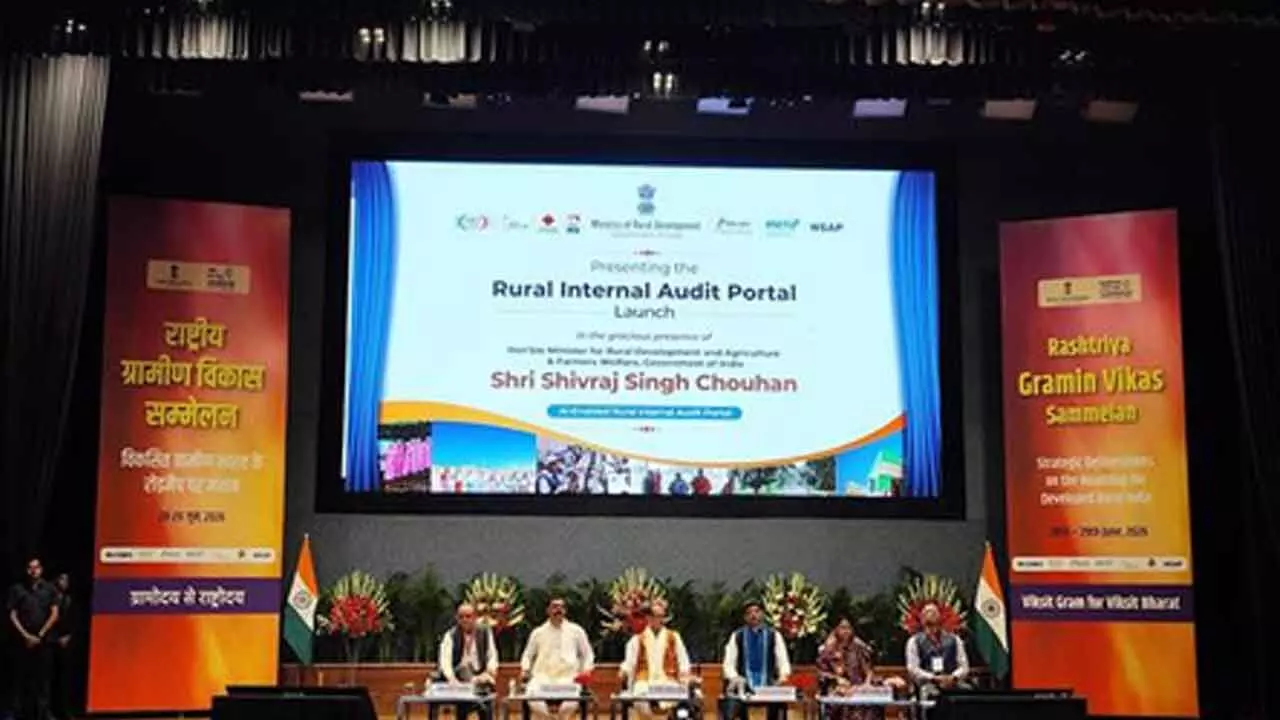
What's the News?
The Union Government has launched the AI-enabled Rural Internal Audit Portal, a first-of-its-kind digital platform to modernise internal audits of rural development programmes. Developed by the Ministry of Rural Development (MoRD) in collaboration with the National Informatics Centre (NIC), the portal digitises the complete audit lifecycle using Artificial Intelligence (AI), analytics, and automation to improve transparency, accountability, and governance.
Rural Internal Audit Portal
- AI-powered unified digital platform for managing internal audits of rural development programmes.
- Nodal Ministry: Ministry of Rural Development (MoRD).
- Developed by: MoRD in collaboration with the National Informatics Centre (NIC).
- Conceived by: Office of the Chief Controller of Accounts (CCA), MoRD.
- Supports both:
- Risk-based audits.
- Compliance audits.
Features
- End-to-end digital audit management covering:
- Audit planning.
- Audit execution.
- Audit reporting.
- Compliance monitoring.
- Action Taken Reports (ATRs).
- Analytics and dashboards.
- AI and Machine Learning for:
- Risk assessment.
- Audit prioritisation.
- Decision support.
- Detection of recurring audit observations.
- Centralised digital repository of audit records.
- Real-time monitoring of audit progress.
- Automated report generation and compliance tracking.
Digital Audit Lifecycle
The portal replaces fragmented, paper-based audit practices with a unified cloud-based system.
Audit Modules
- Identification of audit units.
- Audit engagement approval.
- Audit memos.
- Recording observations.
- Audit report preparation.
- Action Taken Reports (ATRs).
- Record archival and monitoring.
- Analytics dashboard for decision-making.
Implementation
- Pilot Project: Chandauli district, Uttar Pradesh.
- Pilot Launch: April 2025.
- Following successful validation, the portal was expanded nationwide.
- All major modules became operational from October 2025 before the national launch.
Additional Info
Ministry of Rural Development (MoRD)
- Responsible for implementation and monitoring of major rural development programmes including:
- Mahatma Gandhi National Rural Employment Guarantee Scheme (MGNREGS).
- Pradhan Mantri Awaas Yojana–Gramin (PMAY-G).
- Deendayal Antyodaya Yojana–National Rural Livelihoods Mission (DAY-NRLM).
- Pradhan Mantri Gram Sadak Yojana (PMGSY).
National Informatics Centre (NIC)
- Established: 1976.
- Ministry: Ministry of Electronics and Information Technology (MeitY).
- Provides ICT infrastructure and e-Governance solutions for the Government of India.
Office of the Chief Controller of Accounts (CCA)
- Functions as the principal accounting authority within the Ministry.
- Oversees financial management, internal audit, and expenditure control.
Sources
Revised Anaemia Mukt Bharat Abhiyaan Guidelines Released
What's the News?
The Union Government has released the revised Operational Guidelines for the Anaemia Mukt Bharat (AMB) Abhiyaan, transforming the existing programme into a more comprehensive, technology-enabled initiative. The revised strategy shifts the focus from primarily iron supplementation to testing, treatment, digital tracking, healthy diets, and community participation, introducing a new 7×7×7 framework in place of the earlier 6×6×6 strategy.
7×7×7 Strategy
The revised guidelines expand the earlier framework by adding:
- 7 Beneficiary Groups (earlier 6).
- 7 Key Interventions (earlier 6).
- 7 Institutional Mechanisms (earlier 6).
The objective is to strengthen prevention, early diagnosis, therapeutic management, and long-term monitoring of anaemia.
Seven Beneficiary Groups
The revised strategy covers:
- Children (6–59 months).
- Children (5–9 years).
- Adolescents (10–19 years).
- Women of reproductive age (20–24 years and beyond, as applicable).
- Pregnant women.
- Lactating mothers.
- Low Birth Weight (LBW) babies (0–6 months) (newly added).
Seven Key Interventions
- Iron and Folic Acid (IFA) supplementation.
- Deworming.
- Testing and treatment of anaemia.
- Behaviour Change Communication (BCC).
- Fortification and nutrition-sensitive interventions.
- Addressing non-nutritional causes of anaemia.
- "Eating Right" campaign promoting iron-rich and diversified diets (new intervention).
Service Delivery Model
Shift from T3 to T4
The previous T3 approach:
- Test.
- Treat.
- Talk.
has been upgraded to the T4 model:
- Test.
- Treat.
- Talk.
- Track (digital monitoring and follow-up).
The revised guidelines emphasise:
- Early haemoglobin testing.
- Case-based management.
- Digital tracking of beneficiaries.
- Timely follow-up and treatment completion.
Additional Info
Anaemia Mukt Bharat (AMB)
- Launched: 2018.
- Nodal Ministry: Ministry of Health & Family Welfare.
- Implemented under: National Health Mission (NHM).
- Overall Goal: Reduce anaemia prevalence by 3 percentage points annually among target groups.
Earlier 6×6×6 Strategy
- 6 beneficiary groups.
- 6 interventions.
- 6 institutional mechanisms.
New Additions
- New beneficiary: Low Birth Weight (LBW) babies (0–6 months).
- New intervention: "Eating Right" campaign.
- New institutional mechanism: Strengthened monitoring and evaluation through digital tracking.
Sources
All India Tiger Estimation (AITE) 2026 Underway

What's the News?
The 6th cycle of the All India Tiger Estimation (AITE) 2026, the world's largest scientific wildlife monitoring exercise, is underway across India. Conducted every four years by the National Tiger Conservation Authority (NTCA) in collaboration with the Wildlife Institute of India (WII) and State Forest Departments, the exercise assesses tiger populations, co-predators, prey species, and habitat health using advanced scientific methods. The final report is expected in 2027.
All India Tiger Estimation (AITE)
- National tiger population assessment conducted every four years.
- 6th Cycle: AITE 2026.
- Implementing Agencies:
- National Tiger Conservation Authority (NTCA).
- Wildlife Institute of India (WII).
- State Forest Departments.
- Considered the world's largest camera trap-based wildlife survey.
Objectives
- Estimate the national tiger population.
- Assess:
- Co-predators (leopards, dholes, etc.).
- Prey abundance.
- Habitat quality.
- Human disturbances.
- Support evidence-based wildlife conservation and management.
- Monitor long-term population trends and habitat connectivity.
Methodology
The estimation follows a multi-phase scientific protocol:
Phase I
- Carnivore sign survey.
- Habitat assessment.
- Human disturbance mapping.
Phase II
- Line transect surveys.
- Estimation of prey density.
Phase III
- Camera trapping across identified grids.
- Individual tiger identification using stripe patterns.
Phase IV
- Statistical analysis integrating:
- Camera trap data.
- Field observations.
- GIS and occupancy models.
- DNA evidence (where available).
Technologies Used
- Camera traps.
- M-STrIPES (Monitoring System for Tigers–Intensive Protection and Ecological Status).
- GPS-enabled field surveys.
- GIS and remote sensing.
- DNA analysis of scat and hair samples.
- Occupancy modelling and advanced statistical analysis.
Previous Tiger Estimation (2022)
- Estimated tiger population: 3,682.
- India supports approximately 75% of the global wild tiger population.
- Madhya Pradesh recorded the highest number of tigers (785), followed by Karnataka (563) and Uttarakhand (560).
Additional Info
National Tiger Conservation Authority (NTCA)
- Established: 2005.
- Statutory basis: Wildlife (Protection) Act, 1972 (amended in 2006).
- Ministry: Ministry of Environment, Forest and Climate Change (MoEFCC).
- Functions:
- Oversight of Project Tiger.
- Approval and monitoring of Tiger Conservation Plans.
- Technical and financial support to Tiger Reserves.
- Coordination of the All India Tiger Estimation.
Wildlife Institute of India (WII)
- Established: 1982.
- Headquarters: Dehradun, Uttarakhand.
- Autonomous institution under MoEFCC.
- Provides scientific and technical support for wildlife research and monitoring, including AITE.
Project Tiger
- Launched: 1973.
- Objective:
- Ensure a viable population of tigers in their natural habitats.
- Protect associated ecosystems and biodiversity.
M-STrIPES
- Full Form: Monitoring System for Tigers – Intensive Protection and Ecological Status.
- A GIS-enabled software and mobile-based monitoring system used for:
- Patrolling.
- Wildlife monitoring.
- Habitat management.
- Anti-poaching operations.
Sources
June 2026
Archive
October 2026
- 28 October 2026
- 27 October 2026
- 26 October 2026
- 24 October 2026
- 23 October 2026
- 22 October 2026
- 21 October 2026
- 20 October 2026
- 19 October 2026
- 17 October 2026
- 16 October 2026
- 15 October 2026
- 14 October 2026
- 13 October 2026
- 12 October 2026
- 10 October 2026
- 09 October 2026
- 08 October 2026
- 07 October 2026
- 06 October 2026
- 05 October 2026
- 03 October 2026
- 02 October 2026
- 01 October 2026
September 2026
- 30 September 2026
- 29 September 2026
- 28 September 2026
- 26 September 2026
- 25 September 2026
- 24 September 2026
- 23 September 2026
- 22 September 2026
- 21 September 2026
- 19 September 2026
- 18 September 2026
- 17 September 2026
- 16 September 2026
- 15 September 2026
- 12 September 2026
- 11 September 2026
- 10 September 2026
- 09 September 2026
- 08 September 2026
- 07 September 2026
- 05 September 2026
- 04 September 2026
- 03 September 2026
- 02 September 2026
- 01 September 2026
August 2026
- 31 August 2026
- 29 August 2026
- 27 August 2026
- 26 August 2026
- 25 August 2026
- 24 August 2026
- 22 August 2026
- 21 August 2026
- 20 August 2026
- 19 August 2026
- 18 August 2026
- 17 August 2026
- 14 August 2026
- 13 August 2026
- 12 August 2026
- 11 August 2026
- 10 August 2026
- 08 August 2026
- 07 August 2026
- 06 August 2026
- 05 August 2026
- 04 August 2026
- 03 August 2026
- 01 August 2026
July 2026
- 31 July 2026
- 30 July 2026
- 29 July 2026
- 28 July 2026
- 27 July 2026
- 25 July 2026
- 23 July 2026
- 22 July 2026
- 21 July 2026
- 20 July 2026
- 18 July 2026
- 17 July 2026
- 15 July 2026
- 14 July 2026
- 13 July 2026
- 11 July 2026
- 10 July 2026
- 09 July 2026
- 08 July 2026
- 07 July 2026
- 06 July 2026
- 04 July 2026
- 03 July 2026
- 02 July 2026
- 01 July 2026
June 2026
May 2026
April 2026
March 2026
- 31 March 2026
- 30 March 2026
- 28 March 2026
- 27 March 2026
- 26 March 2026
- 25 March 2026
- 24 March 2026
- 23 March 2026
- 21 March 2026
- 20 March 2026
- 19 March 2026
- 18 March 2026
- 17 March 2026
- 16 March 2026
- 14 March 2026
- 13 March 2026
- 12 March 2026
- 11 March 2026
- 10 March 2026
- 09 March 2026
- 07 March 2026
- 06 March 2026
- 05 March 2026
- 03 March 2026
- 02 March 2026
February 2026
- 28 February 2026
- 27 February 2026
- 26 February 2026
- 25 February 2026
- 24 February 2026
- 23 February 2026
- 21 February 2026
- 20 February 2026
- 19 February 2026
- 18 February 2026
- 17 February 2026
- 16 February 2026
- 13 February 2026
- 12 February 2026
- 11 February 2026
- 10 February 2026
- 09 February 2026
- 07 February 2026
- 06 February 2026
- 05 February 2026
- 04 February 2026
- 03 February 2026
- 02 February 2026
January 2026
- 31 January 2026
- 30 January 2026
- 29 January 2026
- 28 January 2026
- 27 January 2026
- 26 January 2026
- 24 January 2026
- 23 January 2026
- 22 January 2026
- 21 January 2026
- 20 January 2026
- 19 January 2026
- 16 January 2026
- 15 January 2026
- 14 January 2026
- 13 January 2026
- 12 January 2026
- 10 January 2026
- 09 January 2026
- 08 January 2026
- 07 January 2026
- 06 January 2026
- 05 January 2026
- 03 January 2026
- 02 January 2026
- 01 January 2026
December 2025
- 31 December 2025
- 30 December 2025
- 29 December 2025
- 27 December 2025
- 26 December 2025
- 24 December 2025
- 23 December 2025
- 22 December 2025
- 20 December 2025
- 19 December 2025
- 18 December 2025
- 17 December 2025
- 16 December 2025
- 15 December 2025
- 13 December 2025
- 12 December 2025
- 11 December 2025
- 10 December 2025
- 09 December 2025
- 08 December 2025
- 05 December 2025
- 04 December 2025
- 03 December 2025
- 02 December 2025
November 2025
- 29 November 2025
- 28 November 2025
- 27 November 2025
- 26 November 2025
- 25 November 2025
- 24 November 2025
- 22 November 2025
- 21 November 2025
- 20 November 2025
- 19 November 2025
- 18 November 2025
- 17 November 2025
- 15 November 2025
- 14 November 2025
- 13 November 2025
- 12 November 2025
- 11 November 2025
- 10 November 2025
- 08 November 2025
- 07 November 2025
- 06 November 2025
- 05 November 2025
- 04 November 2025
- 03 November 2025
- 01 November 2025
October 2025
- 31 October 2025
- 30 October 2025
- 29 October 2025
- 28 October 2025
- 27 October 2025
- 25 October 2025
- 24 October 2025
- 23 October 2025
- 22 October 2025
- 21 October 2025
- 20 October 2025
- 18 October 2025
- 17 October 2025
- 16 October 2025
- 15 October 2025
- 14 October 2025
- 13 October 2025
- 11 October 2025
- 10 October 2025
- 09 October 2025
- 08 October 2025
- 07 October 2025
- 06 October 2025
- 04 October 2025
- 03 October 2025
- 02 October 2025
- 01 October 2025
September 2025
- 30 September 2025
- 29 September 2025
- 27 September 2025
- 26 September 2025
- 25 September 2025
- 24 September 2025
- 23 September 2025
- 22 September 2025
- 20 September 2025
- 19 September 2025
- 18 September 2025
- 17 September 2025
- 16 September 2025
- 15 September 2025
- 13 September 2025
- 12 September 2025
- 11 September 2025
- 10 September 2025
- 09 September 2025
- 08 September 2025
- 06 September 2025
- 05 September 2025
- 04 September 2025
- 03 September 2025
- 02 September 2025
- 01 September 2025
August 2025
- 30 August 2025
- 29 August 2025
- 28 August 2025
- 27 August 2025
- 26 August 2025
- 25 August 2025
- 23 August 2025
- 22 August 2025
- 21 August 2025
- 20 August 2025
- 19 August 2025
- 18 August 2025
- 16 August 2025
- 14 August 2025
- 13 August 2025
- 12 August 2025
- 11 August 2025
- 08 August 2025
- 07 August 2025
- 06 August 2025
- 05 August 2025
- 04 August 2025
- 02 August 2025
- 01 August 2025
July 2025
- 31 July 2025
- 30 July 2025
- 29 July 2025
- 28 July 2025
- 26 July 2025
- 25 July 2025
- 24 July 2025
- 23 July 2025
- 22 July 2025
- 21 July 2025
- 19 July 2025
- 18 July 2025
- 17 July 2025
- 16 July 2025
- 15 July 2025
- 12 July 2025
- 11 July 2025
- 10 July 2025
- 09 July 2025
- 07 July 2025
- 05 July 2025
- 04 July 2025
- 03 July 2025
- 02 July 2025
- 01 July 2025
June 2025
- 30 June 2025
- 28 June 2025
- 27 June 2025
- 26 June 2025
- 25 June 2025
- 24 June 2025
- 23 June 2025
- 21 June 2025
- 20 June 2025
- 19 June 2025
- 18 June 2025
- 17 June 2025
- 16 June 2025
- 14 June 2025
- 13 June 2025
- 12 June 2025
- 11 June 2025
- 10 June 2025
- 09 June 2025
- 07 June 2025
- 06 June 2025
- 05 June 2025
- 04 June 2025
- 03 June 2025
- 02 June 2025
May 2025
April 2025
- 30 April 2025
- 29 April 2025
- 28 April 2025
- 26 April 2025
- 25 April 2025
- 24 April 2025
- 23 April 2025
- 22 April 2025
- 21 April 2025
- 19 April 2025
- 18 April 2025
- 17 April 2025
- 16 April 2025
- 15 April 2025
- 14 April 2025
- 12 April 2025
- 11 April 2025
- 10 April 2025
- 09 April 2025
- 08 April 2025
- 07 April 2025
- 05 April 2025
- 04 April 2025
- 03 April 2025
- 02 April 2025
- 01 April 2025
March 2025
- 31 March 2025
- 29 March 2025
- 28 March 2025
- 27 March 2025
- 26 March 2025
- 25 March 2025
- 24 March 2025
- 22 March 2025
- 21 March 2025
- 20 March 2025
- 19 March 2025
- 18 March 2025
- 17 March 2025
- 15 March 2025
- 13 March 2025
- 12 March 2025
- 11 March 2025
- 10 March 2025
- 08 March 2025
- 07 March 2025
- 06 March 2025
- 05 March 2025
- 04 March 2025
- 03 March 2025
- 01 March 2025
February 2025
- 28 February 2025
- 27 February 2025
- 26 February 2025
- 25 February 2025
- 24 February 2025
- 22 February 2025
- 21 February 2025
- 20 February 2025
- 19 February 2025
- 18 February 2025
- 17 February 2025
- 15 February 2025
- 14 February 2025
- 13 February 2025
- 12 February 2025
- 11 February 2025
- 10 February 2025
- 08 February 2025
- 07 February 2025
- 06 February 2025
- 05 February 2025
- 04 February 2025
- 03 February 2025
- 01 February 2025
January 2025
- 31 January 2025
- 30 January 2025
- 29 January 2025
- 28 January 2025
- 27 January 2025
- 25 January 2025
- 24 January 2025
- 23 January 2025
- 22 January 2025
- 21 January 2025
- 20 January 2025
- 18 January 2025
- 17 January 2025
- 16 January 2025
- 15 January 2025
- 14 January 2025
- 13 January 2025
- 11 January 2025
- 10 January 2025
- 09 January 2025
- 08 January 2025
- 07 January 2025
- 06 January 2025
- 04 January 2025
- 03 January 2025
- 02 January 2025
- 01 January 2025