
Current Affairs
Stay updated with the latest national and international events.
29 December 2025
Ministry of Civil Aviation Launches 24x7 Passenger Assistance Control Room (PACR)

What’s the News?
- The Ministry of Civil Aviation (MoCA) has established a permanent, round-the-clock Passenger Assistance Control Room (PACR) to institutionalise a unified response mechanism for air traveller grievances.
- This initiative follows significant operational disruptions and flight cancellations, aiming to provide a more structured and coordinated intervention rather than ad-hoc responses.
- Located at Udaan Bhawan in New Delhi, the facility serves as a centralised hub to monitor aviation operations and resolve issues related to flight delays, refunds, and baggage handling.
What is PACR?
A centralized control room designed for proactive, real-time resolution of passenger issues:
- 24×7 Operations: Continuous monitoring of flight operations and instant grievance triage.
- Integrated Stakeholder Hub: Brings airlines, airport operators, DGCA, BCAS, CISF, AAI, and AirSewa under one roof for on-the-spot coordination.
- Omni-channel Intake: Accepts complaints via calls, emails, social media, airport helpdesks, and the AirSewa portal/app.
- Data-Driven Dashboards: Enable real-time tracking of grievances, resolution timelines, and escalation patterns.
- Passenger Charter Compliance: Ensures adherence to service benchmarks under the National Civil Aviation Policy (NCAP) 2016 and AirSewa Passenger Charter.
AirSewa Integration
- PACR is fully integrated with AirSewa, MoCA’s flagship grievance redressal platform launched in 2016.
- Converts complaints from multiple channels into actionable, trackable cases using automated workflows and AI-assisted categorization.
- Enables unified case management with status alerts and escalation protocols for unresolved issues.
Additional Info
- Constitutional & Legal Context:
- Union List (List I): Under Entry 29, the Central Government has exclusive power over Airways, aircraft, and air navigation.
- Passenger Charter (2019): A regulatory framework by the DGCA that mandates specific compensation and facilities for passengers during flight delays or cancellations.
- Key Organisations:
- DGCA: The statutory body responsible for regulating civil aviation, safety standards, and licensing.
- AAI: A statutory body that creates, upgrades, maintains, and manages civil aviation infrastructure in India.
Sources
Indian Astronomers Discover "Alaknanda": An Implausibly Old Spiral Galaxy
What’s the News?
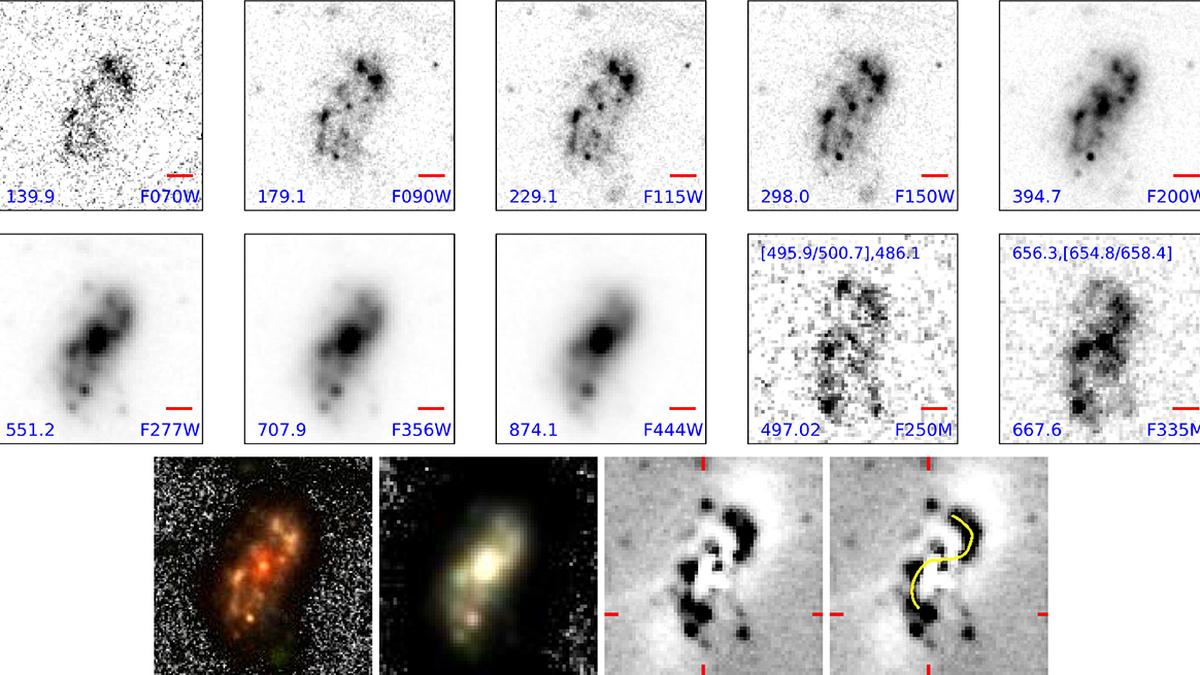
- Indian astronomers from the National Centre for Radio Astrophysics (NCRA-TIFR) in Pune have identified a remarkably mature spiral galaxy named Alaknanda.
- The discovery was made using data from NASA’s James Webb Space Telescope (JWST), revealing a galaxy that existed when the universe was only 1.5 billion years old.
- The findings, published in the journal Astronomy and Astrophysics, challenge the long-standing hierarchical merger models of galaxy formation, which predicted that the early universe consisted mainly of chaotic and irregular structures.
The "Alaknanda" Discovery
- The Research Team: The discovery was led by Rashi Jain, a PhD scholar, and Yogesh Wadadekar, a senior scientist at NCRA-TIFR.
- Distance and Age: The galaxy is located approximately 12 billion light-years away from Earth, with a redshift of about 4.05.
- Cosmic Lens: Astronomers utilised a phenomenon called gravitational lensing to observe the galaxy. The gravity of a massive foreground galaxy cluster, Abell 2744 (also known as Pandora’s Cluster), acted as a magnifying glass, doubling the galaxy's brightness and allowing its intricate structure to be resolved.
- Methodology: The team analysed images across 21 different filters to estimate the galaxy’s distance, mass, and star-formation history.
Key Characteristics of Alaknanda
- Morphology: It is a "grand-design" spiral galaxy, featuring two perfectly symmetrical and well-defined spiral arms wrapped around a bright central bulge.
- Stellar Mass: The galaxy contains roughly 10 billion solar masses worth of stars.
- Size: Its disk spans approximately 30,000 light-years, which is comparable in scale to the Milky Way.
- Star Formation Rate: It is a powerhouse of stellar birth, creating stars at a rate of roughly 63 solar masses per year—about 20 to 30 times faster than the current Milky Way.
- Early Maturity: Half of its stars appear to have formed in a mere 200 million years, showing a level of structural maturity typically associated with galaxies billions of years older.
Why it Challenges Cosmic Evolution Theories
- Rapid Assembly: Traditional models suggest that stable spiral disks require several billion years to settle. Alaknanda completed this process in less than half that time.
- Early Stability: The early universe was thought to be too hot and turbulent for such ordered rotation. The presence of Alaknanda suggests that processes like gas accretion and disk settling can operate much more efficiently than previously modeled.
- Formation Pathways: The low light contribution from its central bulge suggests the galaxy likely grew through smooth cold gas accretion rather than violent major collisions, which usually result in chaotic, bulge-dominated systems.
Additional Info
- Etymology:
- The researchers named the galaxy after the Alaknanda River, a major headstream of the Ganga in the Himalayas.
- This choice is symbolic, as Mandakini (the sister headstream of Alaknanda) is the Hindi name for the Milky Way.
- Redshift (z):
- A measure of how much the light from a distant object has been stretched by the expansion of the universe.
- Alaknanda’s redshift of z≈4 places it among the highest-redshift (and therefore most distant) grand-design spiral galaxies ever identified.
- James Webb Space Telescope (JWST):
- An international collaboration between NASA, ESA, and CSA, it is the most powerful space telescope ever built, designed to peer into the "Cosmic Dawn".
Sources
The Great Indian Research Deficit: Challenges to Viksit Bharat
What’s the News?
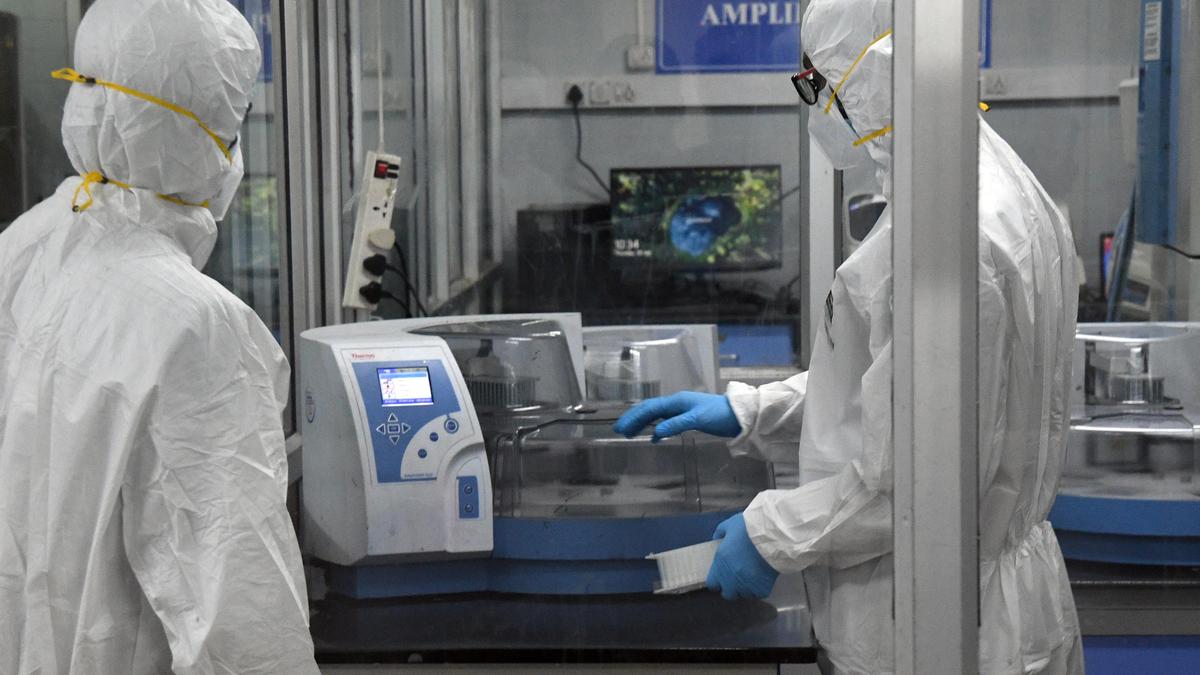
- Recent analytical reports and editorials have highlighted a significant research and development (R&D) deficit in India, which poses a challenge to the national goal of becoming a Viksit Bharat (Developed India) by 2047.
- Despite India's growing economic stature, its investment in Science and Technology (S&T) remains low compared to global peers, particularly in terms of Gross Expenditure on Research and Development (GERD).
- Experts are calling for a "grand vision" to bridge this gap, emphasizing the need for increased private sector participation and institutional reforms.
Key Facets of India’s Research Deficit
- Stagnant Funding: India’s GERD has remained stagnant at around 0.64% to 0.7% of GDP for over a decade, significantly lower than the global average of ~1.8% and well below leaders like South Korea (4.8%) and the USA (3.4%).
- Low Private Sector Contribution: In developed nations, the private sector typically contributes over 70% of R&D spending; in India, the government still bears over 60% of the financial burden, with the private sector contributing only about 36%.
- Human Resource Shortage: India has only about 250 to 260 researchers per million people, compared to over 8,000 in countries like Israel and South Korea.
- Institutional Bottlenecks: High levels of bureaucratic red tape, delays in fund disbursement, and a rigid regulatory environment hinder the ease of doing research in Indian universities and laboratories.
- Patent Quality vs. Quantity: While India has seen a surge in patent filings, a large proportion are filed by foreign entities (multinationals), and the "quality" or commercial viability of domestic patents remains a concern.
Proposed Solutions and Reforms
- Anusandhan National Research Foundation (ANRF): Aimed at providing high-level strategic direction for scientific research, the ANRF seeks to bridge the gap between academia, industry, and government departments.
- Fiscal Incentives: Implementing tax breaks and R&D credits specifically designed to encourage Small and Medium Enterprises (SMEs) to invest in innovation.
- Global Collaboration: Increasing participation in international mega-science projects to enhance domestic technical capacity and exposure.
- University-Industry Linkages: Creating "Innovation Hubs" within universities where industry can set up labs to work on market-ready technologies.
Additional Info
- Gross Expenditure on R&D (GERD):
- It is the total expenditure (current and capital) on R&D performed by all resident companies, research institutes, university and government laboratories, etc., in a country.
- Constitutional Provisions:
- Article 51A(h): It is a Fundamental Duty of every citizen to develop "scientific temper, humanism and the spirit of inquiry and reform".
- Recent Initiatives:
- Deep Ocean Mission: Targeted at exploring deep-sea resources and biodiversity.
- National Quantum Mission: Aimed at making India a global leader in quantum technologies.
- Semiconductor Mission (₹76,000 Cr): Focus on design, fabrication, and packaging.
- SPARK (Scheme for Promotion of Academic and Research Collaboration): Supports industry–academia joint projects.
- Global Innovation Index (GII):
- India's rank has improved significantly from 81st in 2015 to 39th in 2024, showcasing a positive trend in innovation output despite input constraints.
- Global Benchmarks:
| Country | GERD (% of GDP) | Private R&D Share |
|---|---|---|
| India | 0.65 | ~36% |
| China | 2.4 | ~78% |
| USA | 3.5 | ~75% |
| Israel | 5.4 | ~60% |
Sources
Supreme Court Puts "100-Metre Definition" of Aravalli Ranges in Abeyance
What’s the News?
The Supreme Court of India has stayed its November 20, 2025 judgment that accepted a restrictive, elevation-based definition of the Aravalli Hills, limiting the protected area to landforms ≥100 metres above local relief. On December 29, 2025, a bench led by CJI Surya Kant ordered the earlier ruling and the underlying expert committee’s recommendations to remain in abeyance, pending a comprehensive re-examination by a new high-powered expert panel.
- The November 20 verdict, delivered by former CJI B.R. Gavai, had triggered widespread concern among environmentalists, as it could have excluded >90% of the Aravalli range from protection and opened vast tracts to regulated mining.
- The Court acknowledged the need for clarifications on five key ecological and legal questions including structural paradoxes in range definition and threats to ecological continuity.
The "100-Metre Rule" Controversy
- The Definition: The initial report by a ministry-led committee defined an Aravalli Hill as any landform with an elevation of 100 metres or more above local relief, and an Aravalli Range as a cluster of two or more such hills within 500 metres of each other.
- Regulatory Lacuna: Internal data from the Forest Survey of India (FSI) revealed that only 1,048 out of 12,081 hills (barely 8.7%) in Rajasthan meet this 100-metre threshold.
- Ecological Risk: Experts argued that excluding low-elevation ridges and hillocks would break the range's continuity, potentially opening vast areas to unregulated mining and real estate development.
- Structural Paradox: The court noted that the "500-metre distance" rule might leave large gaps in the protected territory, allowing disruptive activities in areas contiguous to the main range.
Court's Directives and Impact
- High-Powered Panel: A new committee of domain experts will be formed to perform a scientific and geological evaluation of the entire range.
- Mining Freeze: The court reaffirmed that no fresh or renewed mining leases shall be granted in the Aravalli region across Delhi, Haryana, Rajasthan, and Gujarat until the finality of these proceedings.
- Sustainable Management: The Ministry of Environment, Forest and Climate Change (MoEF&CC) is tasked with preparing a Management Plan for Sustainable Mining (MPSM) that identifies inviolate and permissible zones.
- Next Hearing: The matter is listed for further deliberation on January 21, 2026.
Additional Info
- Ecological Significance of Aravallis:
- Among the world’s oldest fold mountains (~3.2 billion years).
- Extend ~650 km from Delhi to Gujarat; act as a critical barrier against desertification from the Thar.
- Support biodiversity hotspots with Saharan, Ethiopian, and Malayan flora/fauna mix (per 2004 SC observation).
- Over 30 hills already vanished in Rajasthan due to illegal mining (FSI, 2018).
- Legal Timeline:
- 1985/1995: PILs by M.C. Mehta and T.N. Godavarman initiated judicial oversight.
- 2002: SC banned mining in Haryana’s Aravallis.
- 2010: SC rejected Rajasthan’s 100 m definition, directed FSI mapping.
- May 2024: SC directed MoEFCC to form committee for “uniform definition”.
- Nov 2025: Gavai bench accepted height-based definition + allowed regulated mining.
- Dec 29, 2025: SC stays order, proposes new expert panel.
- Statutory Anchors:
- Environment (Protection) Act, 1986: 1992 notification declared Gurgaon–Alwar belt ecologically sensitive.
- Forest (Conservation) Act, 1980: Applicable if forest land is involved.
- Wildlife (Protection) Act, 1972: Relevant for notified sanctuaries (e.g., Mangar Bani, Asola–Bhatti).
Sources
2,000-Year-Old Buddhist Site Rediscovered in Kashmir’s Baramulla
What’s the News?
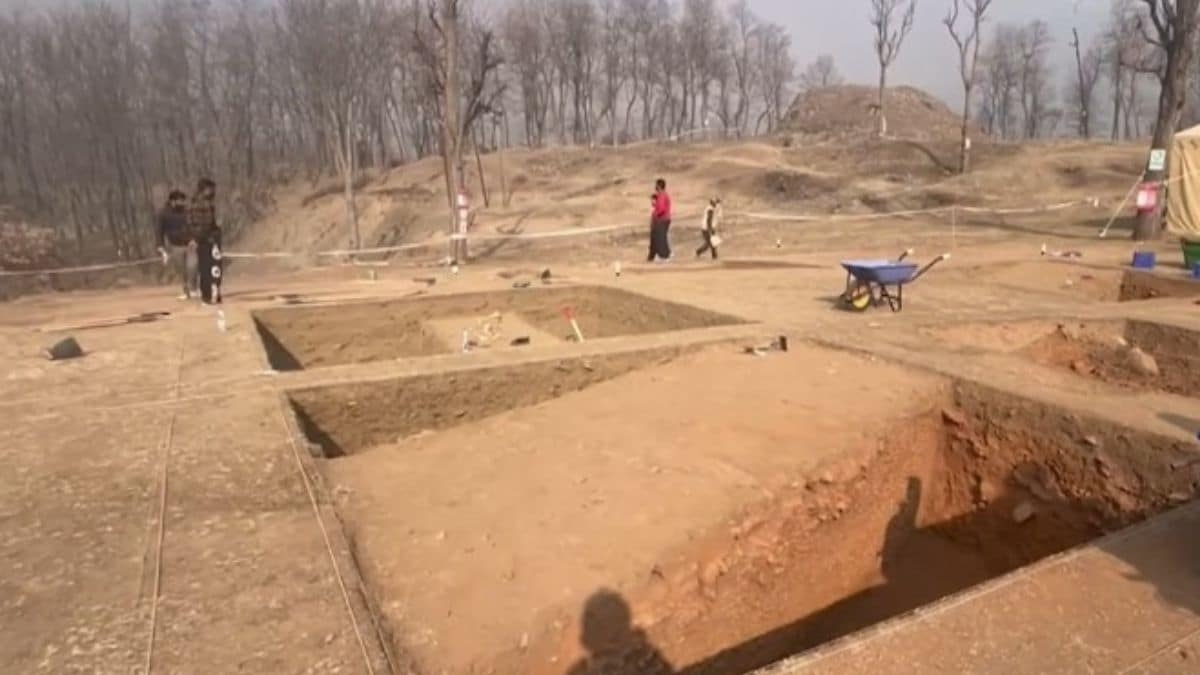
- Prime Minister Narendra Modi, in his 129th 'Mann Ki Baat' address, highlighted the rediscovery of an ancient Buddhist complex in Zehanpora (also known as Jehanpora) village, Baramulla, Jammu & Kashmir.
- The Prime Minister termed the discovery a "proud moment" for the nation, emphasizing that it reveals a glorious past dating back nearly 2,000 years and underscores Kashmir’s deep civilisational roots.
- The identification of the site was remarkably aided by an old, blurred photograph of three stupas found in the archives of a French museum, which helped researchers confirm the historical significance of the tall mounds in the area.
Details of the Discovery
- Initial Observations: For decades, locals considered the tall, uneven mounds in Zehanpora to be ordinary land formations until an archaeologist noticed their unusual alignment.
- Technological Intervention: Excavations were preceded by scientific mapping using drones and high-resolution aerial photography, which confirmed the mounds were large, man-made religious structures.
- Archaeological Findings: The ongoing excavation has unearthed several key structures:
- Three Stupa bases with circular and rectangular foundations.
- Monastic cells and residential spaces for monks.
- Structural walls, pottery, and copper artifacts dating to the Kushan period.
- Scale of Project: This is the first large-scale archaeological excavation carried out independently by the Department of Archives, Archaeology and Museums (DAAM), Jammu and Kashmir, in collaboration with the University of Kashmir.
Historical and Strategic Significance
- Kushan Era Influence: The site is believed to have thrived during the Kushan Dynasty (1st–3rd centuries CE), a golden age when Buddhism spread extensively through Kashmir under rulers like Kanishka.
- Silk Route Connection: Zehanpora’s location on the right bank of the Jhelum River placed it directly on an ancient Silk Route corridor linking Srinagar to Gandhara (modern-day Pakistan/Afghanistan) and onward to Central Asia.
- Gandhara Linkages: The architectural style—including circular stupa bases and brick patterns—mirrors known Gandharan sites like Taxila and Takht-i-Bahi, suggesting it was a vital hub for traveling monks and traders.
- Cultural Identity: The discovery provides physical evidence supporting ancient texts like the Rajtarangini and travelogues of pilgrims like Xuanzang, who documented Kashmir as a premier center of Buddhist learning.
Additional Info
- The Kushan Empire:
- A syncretic empire formed by the Yuezhi in the Bactrian territories in the early 1st century.
- The Fourth Buddhist Council was famously held in Kashmir under Emperor Kanishka, which led to the compilation of the Mahavibhasha.
- Archaeological Methodology:
- The team used Ground-Penetrating Radar (GPR) to detect buried structures before digging.
- Excavations at nearby Harwan and Ushkur also feature similar terracotta tile pavements with floral and geometric motifs.
- Constitutional Context:
- Article 49: A Directive Principle of State Policy that mandates the state to protect monuments and places of national importance.
- Seventh Schedule: "Ancient and historical monuments and records" are listed under the Concurrent List (Entry 40), allowing both Center and State to act on preservation.
Sources
December 2025
31 December 202530 December 202529 December 202527 December 202526 December 202524 December 202523 December 202522 December 202520 December 202519 December 202518 December 202517 December 202516 December 202515 December 202513 December 202512 December 202511 December 202510 December 202509 December 202508 December 202505 December 202504 December 202503 December 202502 December 2025
Archive
October 2026
- 28 October 2026
- 27 October 2026
- 26 October 2026
- 24 October 2026
- 23 October 2026
- 22 October 2026
- 21 October 2026
- 20 October 2026
- 19 October 2026
- 17 October 2026
- 16 October 2026
- 15 October 2026
- 14 October 2026
- 13 October 2026
- 12 October 2026
- 10 October 2026
- 09 October 2026
- 08 October 2026
- 07 October 2026
- 06 October 2026
- 05 October 2026
- 03 October 2026
- 02 October 2026
- 01 October 2026
September 2026
- 30 September 2026
- 29 September 2026
- 28 September 2026
- 26 September 2026
- 25 September 2026
- 24 September 2026
- 23 September 2026
- 22 September 2026
- 21 September 2026
- 19 September 2026
- 18 September 2026
- 17 September 2026
- 16 September 2026
- 15 September 2026
- 12 September 2026
- 11 September 2026
- 10 September 2026
- 09 September 2026
- 08 September 2026
- 07 September 2026
- 05 September 2026
- 04 September 2026
- 03 September 2026
- 02 September 2026
- 01 September 2026
August 2026
- 31 August 2026
- 29 August 2026
- 27 August 2026
- 26 August 2026
- 25 August 2026
- 24 August 2026
- 22 August 2026
- 21 August 2026
- 20 August 2026
- 19 August 2026
- 18 August 2026
- 17 August 2026
- 14 August 2026
- 13 August 2026
- 12 August 2026
- 11 August 2026
- 10 August 2026
- 08 August 2026
- 07 August 2026
- 06 August 2026
- 05 August 2026
- 04 August 2026
- 03 August 2026
- 01 August 2026
July 2026
- 31 July 2026
- 30 July 2026
- 29 July 2026
- 28 July 2026
- 27 July 2026
- 25 July 2026
- 23 July 2026
- 22 July 2026
- 21 July 2026
- 20 July 2026
- 18 July 2026
- 17 July 2026
- 15 July 2026
- 14 July 2026
- 13 July 2026
- 11 July 2026
- 10 July 2026
- 09 July 2026
- 08 July 2026
- 07 July 2026
- 06 July 2026
- 04 July 2026
- 03 July 2026
- 02 July 2026
- 01 July 2026
June 2026
May 2026
April 2026
March 2026
- 31 March 2026
- 30 March 2026
- 28 March 2026
- 27 March 2026
- 26 March 2026
- 25 March 2026
- 24 March 2026
- 23 March 2026
- 21 March 2026
- 20 March 2026
- 19 March 2026
- 18 March 2026
- 17 March 2026
- 16 March 2026
- 14 March 2026
- 13 March 2026
- 12 March 2026
- 11 March 2026
- 10 March 2026
- 09 March 2026
- 07 March 2026
- 06 March 2026
- 05 March 2026
- 03 March 2026
- 02 March 2026
February 2026
- 28 February 2026
- 27 February 2026
- 26 February 2026
- 25 February 2026
- 24 February 2026
- 23 February 2026
- 21 February 2026
- 20 February 2026
- 19 February 2026
- 18 February 2026
- 17 February 2026
- 16 February 2026
- 13 February 2026
- 12 February 2026
- 11 February 2026
- 10 February 2026
- 09 February 2026
- 07 February 2026
- 06 February 2026
- 05 February 2026
- 04 February 2026
- 03 February 2026
- 02 February 2026
January 2026
- 31 January 2026
- 30 January 2026
- 29 January 2026
- 28 January 2026
- 27 January 2026
- 26 January 2026
- 24 January 2026
- 23 January 2026
- 22 January 2026
- 21 January 2026
- 20 January 2026
- 19 January 2026
- 16 January 2026
- 15 January 2026
- 14 January 2026
- 13 January 2026
- 12 January 2026
- 10 January 2026
- 09 January 2026
- 08 January 2026
- 07 January 2026
- 06 January 2026
- 05 January 2026
- 03 January 2026
- 02 January 2026
- 01 January 2026
December 2025
- 31 December 2025
- 30 December 2025
- 29 December 2025
- 27 December 2025
- 26 December 2025
- 24 December 2025
- 23 December 2025
- 22 December 2025
- 20 December 2025
- 19 December 2025
- 18 December 2025
- 17 December 2025
- 16 December 2025
- 15 December 2025
- 13 December 2025
- 12 December 2025
- 11 December 2025
- 10 December 2025
- 09 December 2025
- 08 December 2025
- 05 December 2025
- 04 December 2025
- 03 December 2025
- 02 December 2025
November 2025
- 29 November 2025
- 28 November 2025
- 27 November 2025
- 26 November 2025
- 25 November 2025
- 24 November 2025
- 22 November 2025
- 21 November 2025
- 20 November 2025
- 19 November 2025
- 18 November 2025
- 17 November 2025
- 15 November 2025
- 14 November 2025
- 13 November 2025
- 12 November 2025
- 11 November 2025
- 10 November 2025
- 08 November 2025
- 07 November 2025
- 06 November 2025
- 05 November 2025
- 04 November 2025
- 03 November 2025
- 01 November 2025
October 2025
- 31 October 2025
- 30 October 2025
- 29 October 2025
- 28 October 2025
- 27 October 2025
- 25 October 2025
- 24 October 2025
- 23 October 2025
- 22 October 2025
- 21 October 2025
- 20 October 2025
- 18 October 2025
- 17 October 2025
- 16 October 2025
- 15 October 2025
- 14 October 2025
- 13 October 2025
- 11 October 2025
- 10 October 2025
- 09 October 2025
- 08 October 2025
- 07 October 2025
- 06 October 2025
- 04 October 2025
- 03 October 2025
- 02 October 2025
- 01 October 2025
September 2025
- 30 September 2025
- 29 September 2025
- 27 September 2025
- 26 September 2025
- 25 September 2025
- 24 September 2025
- 23 September 2025
- 22 September 2025
- 20 September 2025
- 19 September 2025
- 18 September 2025
- 17 September 2025
- 16 September 2025
- 15 September 2025
- 13 September 2025
- 12 September 2025
- 11 September 2025
- 10 September 2025
- 09 September 2025
- 08 September 2025
- 06 September 2025
- 05 September 2025
- 04 September 2025
- 03 September 2025
- 02 September 2025
- 01 September 2025
August 2025
- 30 August 2025
- 29 August 2025
- 28 August 2025
- 27 August 2025
- 26 August 2025
- 25 August 2025
- 23 August 2025
- 22 August 2025
- 21 August 2025
- 20 August 2025
- 19 August 2025
- 18 August 2025
- 16 August 2025
- 14 August 2025
- 13 August 2025
- 12 August 2025
- 11 August 2025
- 08 August 2025
- 07 August 2025
- 06 August 2025
- 05 August 2025
- 04 August 2025
- 02 August 2025
- 01 August 2025
July 2025
- 31 July 2025
- 30 July 2025
- 29 July 2025
- 28 July 2025
- 26 July 2025
- 25 July 2025
- 24 July 2025
- 23 July 2025
- 22 July 2025
- 21 July 2025
- 19 July 2025
- 18 July 2025
- 17 July 2025
- 16 July 2025
- 15 July 2025
- 12 July 2025
- 11 July 2025
- 10 July 2025
- 09 July 2025
- 07 July 2025
- 05 July 2025
- 04 July 2025
- 03 July 2025
- 02 July 2025
- 01 July 2025
June 2025
- 30 June 2025
- 28 June 2025
- 27 June 2025
- 26 June 2025
- 25 June 2025
- 24 June 2025
- 23 June 2025
- 21 June 2025
- 20 June 2025
- 19 June 2025
- 18 June 2025
- 17 June 2025
- 16 June 2025
- 14 June 2025
- 13 June 2025
- 12 June 2025
- 11 June 2025
- 10 June 2025
- 09 June 2025
- 07 June 2025
- 06 June 2025
- 05 June 2025
- 04 June 2025
- 03 June 2025
- 02 June 2025
May 2025
April 2025
- 30 April 2025
- 29 April 2025
- 28 April 2025
- 26 April 2025
- 25 April 2025
- 24 April 2025
- 23 April 2025
- 22 April 2025
- 21 April 2025
- 19 April 2025
- 18 April 2025
- 17 April 2025
- 16 April 2025
- 15 April 2025
- 14 April 2025
- 12 April 2025
- 11 April 2025
- 10 April 2025
- 09 April 2025
- 08 April 2025
- 07 April 2025
- 05 April 2025
- 04 April 2025
- 03 April 2025
- 02 April 2025
- 01 April 2025
March 2025
- 31 March 2025
- 29 March 2025
- 28 March 2025
- 27 March 2025
- 26 March 2025
- 25 March 2025
- 24 March 2025
- 22 March 2025
- 21 March 2025
- 20 March 2025
- 19 March 2025
- 18 March 2025
- 17 March 2025
- 15 March 2025
- 13 March 2025
- 12 March 2025
- 11 March 2025
- 10 March 2025
- 08 March 2025
- 07 March 2025
- 06 March 2025
- 05 March 2025
- 04 March 2025
- 03 March 2025
- 01 March 2025
February 2025
- 28 February 2025
- 27 February 2025
- 26 February 2025
- 25 February 2025
- 24 February 2025
- 22 February 2025
- 21 February 2025
- 20 February 2025
- 19 February 2025
- 18 February 2025
- 17 February 2025
- 15 February 2025
- 14 February 2025
- 13 February 2025
- 12 February 2025
- 11 February 2025
- 10 February 2025
- 08 February 2025
- 07 February 2025
- 06 February 2025
- 05 February 2025
- 04 February 2025
- 03 February 2025
- 01 February 2025
January 2025
- 31 January 2025
- 30 January 2025
- 29 January 2025
- 28 January 2025
- 27 January 2025
- 25 January 2025
- 24 January 2025
- 23 January 2025
- 22 January 2025
- 21 January 2025
- 20 January 2025
- 18 January 2025
- 17 January 2025
- 16 January 2025
- 15 January 2025
- 14 January 2025
- 13 January 2025
- 11 January 2025
- 10 January 2025
- 09 January 2025
- 08 January 2025
- 07 January 2025
- 06 January 2025
- 04 January 2025
- 03 January 2025
- 02 January 2025
- 01 January 2025