
Current Affairs
Stay updated with the latest national and international events.
29 August 2026
FSSAI Proposes Front-of-Pack Warning Labels for Packaged Foods
What’s the News?
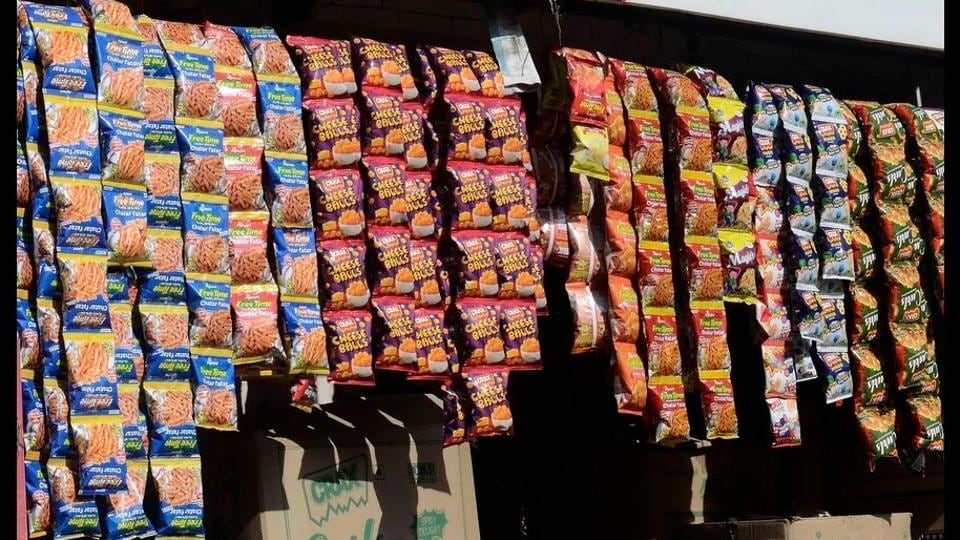
- The Food Safety and Standards Authority of India (FSSAI) has proposed mandatory Front-of-Pack Nutrition Labelling (FoPNL) for packaged foods containing excessive sugar, salt or saturated fat.
- The proposal, submitted before the Supreme Court, envisages prominent red hexagonal warning symbols carrying declarations such as “HIGH FAT”, “HIGH SUGAR”, “HIGH SALT” and “HIGHLY SWEETENED BEVERAGE”.
- The objective is to enable consumers, particularly children and vulnerable groups, to quickly identify foods high in nutrients associated with non-communicable diseases.
- Important: The system is still at the proposal stage; a final notification and implementation timeline have not yet been announced.
Proposed Warning Labels
- The warning will appear on the principal/front display panel rather than requiring consumers to interpret the detailed nutrition table on the back.
- The warning text is proposed to be at least one font point larger than the text used in the back-of-pack nutrition information table.
- Nutrients of concern include added sugar, added saturated fat and salt.
- The nutrient limits are proposed to be linked to the Dietary Guidelines for Indians, 2024, prepared by ICMR–National Institute of Nutrition (ICMR-NIN).
Two-Phase Rollout
- Phase I: Warning labels would apply to foods exceeding limits for at least two of the three nutrients of concern. Specified highly sweetened beverages would also carry a separate warning.
- Phase II: The warning requirement would expand to foods exceeding the threshold for even one nutrient.
- The phased approach is intended to allow the food industry time for product reformulation and packaging changes. No timeline for moving from Phase I to Phase II has yet been specified.
Exemptions
The proposed warning-label requirement would not apply to:
- Single-ingredient foods, such as milk.
- Foods inherently rich in fat, sugar or salt, including:
- Ghee
- Edible oils
- Sugar
- Jaggery
- Salt
- Honey
These products would, however, remain subject to other applicable food-safety and labelling requirements.
ICMR-NIN Nutrition Benchmarks
The Dietary Guidelines for Indians, 2024 specify the following threshold criteria for nutrients of concern in cooked/packaged foods and beverages:
| Nutrient | Liquids — per 100 ml | Solids — per 100 g |
|---|---|---|
| Energy | 70 kcal | 250 kcal |
| Salt | 175 mg | 625 mg |
| Added sugar | 2 g | 3 g |
| Added fat | 1.5 g | 4.2 g |
These are ICMR-NIN dietary benchmarks, not yet independently notified as final statutory FoPNL limits under the new proposal. The guidelines also regard salt intake above 5 g/day, sugar above 25 g/day or 5% of total energy, and excessive saturated-fat intake as health concerns.
Why Front-of-Pack Labelling?
- FoPNL is an interpretive nutrition-labelling mechanism designed to communicate nutritional risks at a glance.
- Excessive consumption of sugar, salt and unhealthy fats is associated with obesity, diabetes, hypertension and cardiovascular diseases.
- Around 450 million Indians could be overweight or obese by 2050, highlighting India's growing NCD burden.
- Similar front-of-pack systems are used internationally. Reported evidence from Chile showed about a 24% decline in sugary-drink consumption following implementation of warning labels.
Shift from the Earlier Star-Rating Model
- FSSAI had earlier proposed the Indian Nutrition Rating (INR), under which packaged foods would receive between ½ star and 5 stars based on their nutritional profile.
- Public-health experts argued that even an unhealthy product receiving a partial star could create a misleading positive perception.
- The present proposal therefore moves toward a more direct warning-label approach instead of a summary health-star score.
Additional Info
- FSSAI
- Statutory food regulator established under Section 4 of the Food Safety and Standards Act, 2006.
- Administrative Ministry: Ministry of Health and Family Welfare.
- Mandate: Set science-based food standards and regulate manufacture, storage, distribution, sale and import of food.
- Relevant regulations: Food labelling is governed principally through the Food Safety and Standards (Labelling and Display) Regulations, 2020.
- Constitutional linkage: The Supreme Court has recognised the right to health as an integral part of the Right to Life under Article 21 of the Constitution.
Sources
India Records Nearly 80% Decline in Malaria Cases and Deaths
What’s the News?
- India recorded a nearly 80% decline in both malaria cases and deaths between 2015 and 2025, reflecting sustained progress towards malaria elimination.
- The number of high-burden districts declined from 155 to 33.
- 160 districts reported zero indigenous malaria cases continuously during 2022–2025.
- The Union Health Ministry reviewed progress towards the national target of malaria elimination by 2030, with emphasis on surveillance, early diagnosis and geographically targeted interventions.
Malaria Indicators
| Indicator | Progress |
|---|---|
| Decline in malaria cases, 2015–2025 | Nearly 80% |
| Decline in malaria deaths, 2015–2025 | Nearly 80% |
| High-burden districts | 155 → 33 |
| Districts with zero indigenous cases, 2022–2025 | 160 |
| High-burden States/UTs under focused review | 9 |
- The remaining 33 high-burden districts accounted for 64% of India's malaria cases and 54% of malaria deaths in 2025.
- They are spread across Mizoram, Odisha, Tripura, Assam, Andhra Pradesh, Andaman & Nicobar Islands, Chhattisgarh, Jharkhand and Maharashtra.
India’s Malaria Elimination Targets
- National Framework for Malaria Elimination (NFME), 2016–2030
- Provides the overarching roadmap for malaria elimination.
- National Strategic Plan for Malaria Elimination, 2023–2027
- Vision: Malaria-Free India.
- Target: interrupt indigenous/local malaria transmission and achieve zero indigenous cases across India by 2027.
- National objective: malaria elimination by 2030.
- This timeline is significant because WHO malaria-free certification requires interruption of indigenous transmission for at least three consecutive years, along with a functioning surveillance system capable of preventing re-establishment.
Elimination Strategy
India follows a “Test, Treat and Track” approach:
- Test
- Early detection through microscopy and Rapid Diagnostic Tests (RDTs).
- Active surveillance, especially in remote and high-risk areas.
- Treat
- Prompt and complete treatment of confirmed cases.
- Continuous availability of diagnostic kits and anti-malarial medicines.
- Track
- Surveillance and monitoring of every case.
- Real-time reporting through the Integrated Health Information Platform (IHIP).
District-Level Focus
- District Action Plans are to be implemented in all 33 high-burden districts.
- Village Action Plans are being prioritised in high-burden villages.
- Strategies are to be tailored according to local epidemiological and geographical conditions.
- Greater involvement of:
- Panchayati Raj Institutions
- Self-Help Groups
- Community volunteers
- Rural and Urban Development Departments
- Intersectoral action focuses particularly on waterlogging, mosquito-breeding-site reduction and environmental management.
Surveillance Indicators
- API – Annual Parasite Incidence
- Number of confirmed malaria cases per 1,000 population under surveillance in a year.
- Important indicator for assessing malaria transmission.
- ABER – Annual Blood Examination Rate
- Proportion of the population whose blood is examined for malaria parasites during a year.
- Indicates the intensity of malaria surveillance.
- The Health Ministry has stressed accurate API and ABER calculations and advised that asymptomatic cases detected through mass screening should be reported separately to avoid distortion of surveillance indicators.
India and WHO’s HBHI Initiative
- India was earlier part of WHO's High Burden to High Impact (HBHI) group of countries.
- India exited the HBHI group in 2024 after achieving substantial reductions in malaria incidence and mortality.
- WHO's World Malaria Report 2024 estimated that between 2017 and 2023:
- Malaria cases in India declined by about 69%.
- Malaria deaths declined by about 68%.
Additional Info
- Malaria
- A vector-borne parasitic disease caused by Plasmodium parasites.
- Transmitted primarily through bites of infected female Anopheles mosquitoes.
- Important human malaria parasites include:
- Plasmodium falciparum
- Plasmodium vivax
- P. malariae
- P. ovale
- P. knowlesi
- P. falciparum is associated with the greatest risk of severe and fatal malaria.
- NCVBDC
- National Centre for Vector Borne Diseases Control functions under the Ministry of Health and Family Welfare.
- Coordinates national programmes for diseases including malaria, dengue, chikungunya, lymphatic filariasis, kala-azar and Japanese encephalitis.
- India's malaria burden remains disproportionately concentrated in tribal, hilly, remote and difficult-to-access regions.
- WHO Malaria-Free Certification
- Requires:
- Zero indigenous malaria transmission for at least 3 consecutive years nationwide.
- A fully functional surveillance and response system capable of preventing re-establishment.
- World Malaria Day
- Observed: 25 April
- 2026 Theme/Campaign: “Driven to End Malaria: Now We Can. Now We Must.”
Sources
National Sports Day 2026: India Honours Major Dhyan Chand
What’s the News?
- India observes National Sports Day on 29 August every year to commemorate the birth anniversary of hockey legend Major Dhyan Chand.
- In 2026, it marked his 121st birth anniversary and was expanded into a three-day nationwide campaign from 28–30 August to encourage sports, fitness and youth participation.
- The observance also reinforces the government's broader objective of making sports a mass movement and strengthening India's grassroots-to-elite sporting ecosystem.
National Sports Day 2026
- Date: 29 August
- 2026 Campaign Theme: “Tribute, Play, and Move”
- National slogan: “Khelega Bharat, Jeetega Bharat”
- A major focus of the celebrations was encouraging citizens to dedicate at least one hour to sports and physical activity through the “Ek Ghanta Khel Ke Maidan Mein” initiative.
- Activities included:
- Sports competitions and fitness events
- Tributes to sporting legends
- Fit India activities
- Community participation
- Cycling and other mass physical-activity programmes
Why 29 August?
- Major Dhyan Chand was born on 29 August 1905.
- Popularly called the “Hockey Wizard”, he was one of the central figures in India's dominance of international hockey.
- He was part of India's Olympic gold-medal-winning hockey teams at:
- Amsterdam 1928
- Los Angeles 1932
- Berlin 1936
- He captained India at the 1936 Berlin Olympics, where India defeated Germany 8–1 in the final.
- He received the Padma Bhushan in 1956.
History of National Sports Day
- National Sports Day was first observed in 1995 and has been celebrated nationally since 2012.
- It aims to:
- Honour Indian sportspersons.
- Promote physical fitness and healthy lifestyles.
- Encourage youth participation in sports.
- Promote discipline, teamwork and sporting excellence.
Fit India Movement
- The Fit India Movement was launched on National Sports Day, 29 August 2019.
- Objective: Make fitness an integral part of daily life and transform it into a people's movement.
- It promotes participation through:
- Schools and colleges
- Villages and panchayats
- Workplaces
- Community organisations
- Sports and traditional games
Government Sports Initiatives
- Khelo India
- National programme for development of sports.
- Focuses on grassroots participation, talent development, infrastructure and competitive excellence.
- KIRTI
- Full form: Khelo India Rising Talent Identification.
- Targets children in the 9–18 years age group.
- Uses systematic assessment to identify promising sporting talent.
- Target Olympic Podium Scheme (TOPS)
- Provides selected elite athletes with customised training, financial and scientific support.
- Focuses particularly on preparation for the Olympic and Paralympic Games.
Additional Info
- Major Dhyan Chand Khel Ratna Award
- India's highest sporting honour.
- The former Rajiv Gandhi Khel Ratna Award was renamed after Major Dhyan Chand in 2021.
- Hockey is NOT India's National Game
- The Government of India has not officially designated any sport as India's national game.
- Therefore, the frequently repeated claim that hockey is India's official “National Game” is incorrect.
- Sports Authority of India (SAI)
- Functions under the Ministry of Youth Affairs and Sports.
- Key roles include talent identification, training, sports-science support and development of sports infrastructure.
- National Sports University
- Location: Imphal, Manipur.
- Focus: Sports education, coaching, sports sciences, technology and sports management.
Sources
World Sanskrit Day 2026: Celebrating India’s Classical Linguistic Heritage
What’s the News?
- World Sanskrit Day 2026 was observed on 28 August 2026, corresponding to Shravana Purnima in the Hindu lunar calendar.
- Also known as Sanskrit Diwas or Vishva Sanskrit Diwas, the observance promotes the preservation, study and contemporary use of Sanskrit.
- Sanskrit Day has been officially observed in India since 1969, following an initiative of the Union Ministry of Education.
- Exam Note on Theme: No single official 2026 theme was specified in the available Government of India observance material. Avoid relying on unofficial themes circulated by educational websites.
Why Shravana Purnima?
- World Sanskrit Day does not have a fixed Gregorian-calendar date; it is observed annually on Shravana Purnima, the full-moon day of the Shravana month.
- Shravana Purnima is traditionally associated with:
- Upakarma — renewal/commencement of Vedic studies.
- India's traditional Gurukula and Vedic learning traditions.
- Raksha Bandhan, which also fell on the same day in 2026.
Sanskrit: Key Facts
- Sanskrit belongs to the Indo-Aryan branch of the Indo-European language family.
- Two broad historical forms are:
- Vedic Sanskrit — language of the Vedas and early Vedic literature.
- Classical Sanskrit — standardised grammatical tradition closely associated with Panini.
- Panini
- Author of the Ashtadhyayi.
- His grammatical system provided a highly systematic description of Sanskrit.
- Major Sanskrit literary works include:
- Ramayana
- Mahabharata
- Vedas and Upanishads
- Kalidasa's Abhijnanashakuntalam, Raghuvamsha and Meghaduta.
Constitutional Status
- Sanskrit is one of the 22 languages in the Eighth Schedule of the Constitution.
- The Eighth Schedule is specifically referred to in:
- Article 344(1): Commission and Parliamentary Committee relating to Official Language.
- Article 351: Directive for development of Hindi; it provides for enrichment primarily by drawing vocabulary from Sanskrit and secondarily from other languages.
- Important: Sanskrit is a Scheduled Language, but the Constitution does not designate it as India's “national language”.
Classical Language Status
- Sanskrit was granted Classical Language status on 25 November 2005.
- It was the second Indian language, after Tamil, to receive Classical Language status.
- Classical-language recognition aims to facilitate preservation, research and study of India's ancient linguistic and literary traditions.
Government Initiatives for Sanskrit
- Central Sanskrit Universities Act, 2020
- Converted three existing institutions into Central Universities:
- Central Sanskrit University, New Delhi
- Shri Lal Bahadur Shastri National Sanskrit University, New Delhi
- National Sanskrit University, Tirupati
- The Act came into force in 2020.
- National Education Policy (NEP) 2020
- Emphasises promotion of Indian languages, including Sanskrit.
- Provides opportunities for Sanskrit to be studied at school and higher-education levels.
- Encourages Sanskrit universities to become multidisciplinary institutions.
- Other measures include:
- Merit scholarships for Sanskrit students.
- Financial assistance to Sanskrit institutions and research.
- Shastra Chudamani Scheme for traditional Sanskrit learning.
- Publication and reprinting of rare Sanskrit works.
- Non-formal Sanskrit education and language-learning centres.
Additional Info
- Central Sanskrit University
- Headquarters: New Delhi
- Functions under the Ministry of Education.
- Promotes Sanskrit language, literature, traditional Shastras, teaching and research.
- Functions as an important nodal institution for Sanskrit education.
- Notes
- World Sanskrit Day → Shravana Purnima
- 2026 Date → 28 August
- Official observance began → 1969
- Sanskrit → Eighth Schedule
- Relevant Articles → 344(1) & 351
- Classical Language status → 2005
- Panini → Ashtadhyayi
- Central Sanskrit Universities Act → 2020
India–China Reach Eight-Point Consensus on Boundary Question
What’s the News?
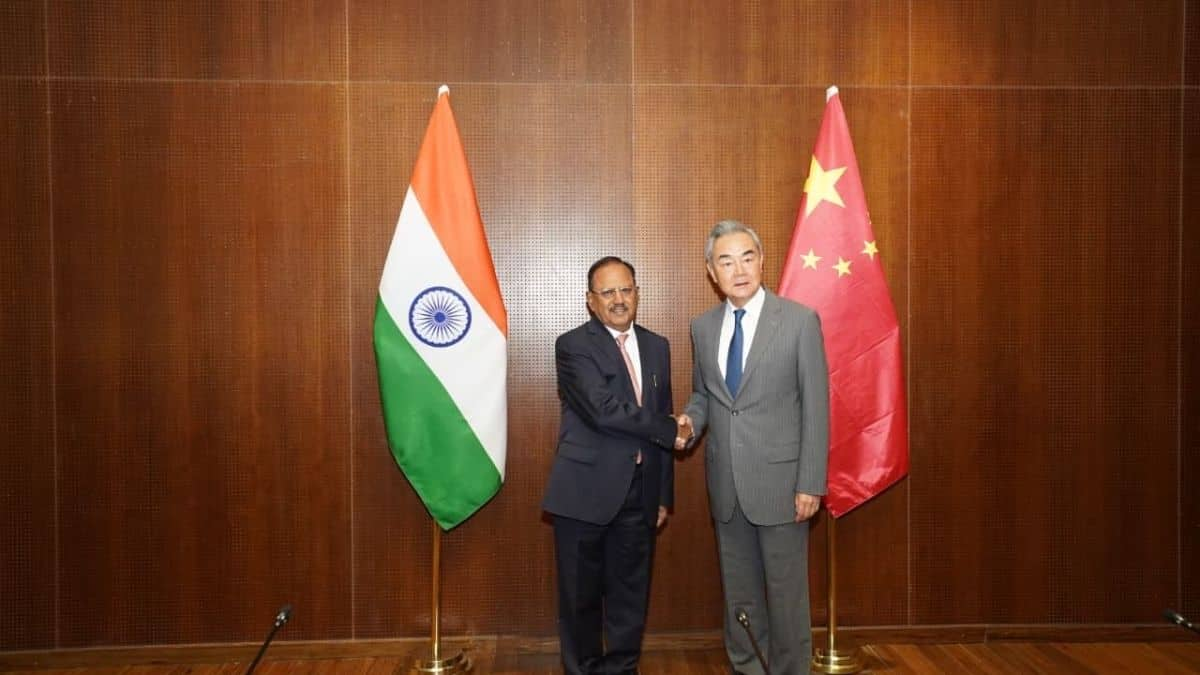
- India and China reached an eight-point consensus during the 25th round of Special Representatives (SR) Talks on the Boundary Question in Beijing.
- The talks were led by National Security Adviser Ajit Doval for India and Foreign Minister Wang Yi for China.
- Both sides agreed to accelerate discussions on an “Early and Substantial Harvest” of boundary delimitation, strengthen border-management mechanisms and prevent misunderstandings or miscalculations along the Line of Actual Control (LAC).
- They reiterated their objective of achieving a fair, reasonable and mutually acceptable boundary settlement while maintaining peace and tranquillity in border areas.
Eight-Point Consensus
- Peace & Stability
- Maintain peace and tranquillity along the border to support stable bilateral relations.
- Boundary Settlement
- Advance negotiations under the 2005 Agreement on Political Parameters and Guiding Principles.
- Early Boundary Delimitation
- Expert Group on Boundary Delimitation to pursue an “Early and Substantial Harvest”.
- Working Group on Border Management to strengthen management of the LAC.
- Both operate under the WMCC framework.
- Faster Crisis Management
- Ground situations to be addressed through:
- WMCC
- Local commander-level meetings
- Other diplomatic and military channels
- Objective: prevent misunderstanding and miscalculation along the LAC.
- Ground situations to be addressed through:
- New Military Communication Channels
- 2 additional meeting points for General-Level/Senior Highest Military Commander meetings.
- 2 additional military hotlines in the Eastern and Middle Sectors.
- Cross-Border Cooperation
- Strengthen cooperation in:
- Border trade
- Kailash Manasarovar Yatra
- Other cross-border exchanges
- Both sides welcomed reopening of three designated border trading points.
- Strengthen cooperation in:
- Trans-Border Rivers
- Continue discussions on:
- Hydrological data sharing
- Renewal of relevant MoUs
- The next Expert-Level Mechanism on Trans-border Rivers meeting is planned for September 2026.
- Continue discussions on:
- Next SR Talks
- The 26th round of Special Representatives' Talks will be hosted by India in 2027.
“Early and Substantial Harvest”?
- It refers to seeking early progress on boundary delimitation in areas/sectors where differences may be relatively manageable, instead of waiting for a settlement of the entire boundary dispute at once.
- The Expert Group will first determine its Terms of Reference (ToR).
- It does not mean that the India–China boundary has already been settled or formally demarcated.
Border Mechanisms
- Special Representatives Mechanism
- Established in 2003.
- Principal high-level mechanism for negotiating a political framework for the boundary settlement.
- India is represented by the National Security Adviser.
- WMCC
- Full form: Working Mechanism for Consultation and Coordination on India-China Border Affairs.
- Established in 2012.
- Diplomatic mechanism for consultation and coordination on border affairs.
- It is distinct from the SR mechanism, which focuses on the broader boundary settlement.
- Military-Level Mechanisms
- Corps/commander and local commander-level meetings help handle operational situations on the ground.
- New hotlines and meeting points are intended to reduce escalation risks.
LAC vs International Boundary
- Line of Actual Control (LAC):
- De facto line separating areas under Indian and Chinese control.
- It is not a mutually agreed, formally demarcated international boundary.
- It is generally discussed in three sectors:
- Western Sector: Ladakh
- Middle Sector: Himachal Pradesh and Uttarakhand
- Eastern Sector: primarily Arunachal Pradesh
- Differing perceptions of the LAC have historically contributed to patrol confrontations and military stand-offs.
Additional Info
- 2005 Agreement
- Full name: Agreement on the Political Parameters and Guiding Principles for the Settlement of the India-China Boundary Question.
- Provides guiding principles for negotiating an eventual boundary settlement.
- The latest consensus explicitly reaffirms this framework.
- Recent Background
- India–China relations deteriorated sharply following the 2020 eastern Ladakh border crisis and Galwan Valley clash.
- A 2024 disengagement understanding addressed the remaining friction points in eastern Ladakh and enabled gradual normalisation of bilateral engagement.
- The latest consensus moves the dialogue beyond immediate disengagement towards border management and possible boundary delimitation.
Sources
US–Venezuela Oil Deal Gives US Majority Control Over 65 Billion Barrels

What’s the News?
- US President Donald Trump announced an energy agreement under which the United States would obtain majority control over more than 65 billion barrels of Venezuela’s proven oil reserves through a public-private partnership.
- The agreement seeks to revive Venezuela’s underinvested oil industry by bringing in US capital, technology and energy companies.
- The Trump administration expects the arrangement to increase oil supplies and potentially ease domestic fuel prices, while Venezuela expects large-scale investment, higher production and government revenues.
- However, “majority control” does not mean transfer of Venezuelan sovereignty over the reserves. Venezuela maintains that ownership of its natural resources remains with the Venezuelan state.
US–Venezuela Oil Agreement
- The agreement covers more than 65 billion barrels of proven reserves.
- It is expected to mobilise nearly $100 billion in private investment for Venezuela’s oil sector.
- Venezuela subsequently stated that the energy arrangement would run for 25 years.
- Development plans include:
- 17 strategic existing oilfields.
- 8 new greenfield oil blocks.
- Initial production target of around 1.5 million barrels per day (bpd), compared with roughly 1.25 million bpd currently.
- Venezuela estimates that the projects could generate around $209 billion in revenue for the state over the agreement period.
Why Venezuela’s Oil Matters
- Venezuela possesses the world’s largest proven crude-oil reserves.
- Its proven reserves are approximately 303 billion barrels, representing about 17% of global proven crude reserves.
- Most reserves consist of extra-heavy crude oil, particularly in the Orinoco Oil Belt.
- Despite its enormous reserves, Venezuela has historically produced far below its potential because of:
- Chronic underinvestment.
- Deteriorating infrastructure.
- Shortage of technical expertise.
- Economic and political instability.
- International sanctions.
- Operational problems at state-owned Petróleos de Venezuela, S.A. (PDVSA).
Significance of the Deal
- For the US
- Provides access to a large long-term crude-oil resource base.
- Could improve crude supplies to US refineries designed to process Venezuelan heavy crude.
- Expands US strategic influence over the Western Hemisphere’s largest petroleum resource base.
- Encourages American energy companies to return to Venezuela.
- For Venezuela
- Provides foreign capital and technical expertise required to rehabilitate ageing oil infrastructure.
- Could substantially increase crude production and exports.
- Generates additional fiscal revenue and employment.
- Helps reconnect Venezuela’s energy sector with international investment.
- For Global Oil Markets
- Higher Venezuelan output could expand non-Middle Eastern crude availability.
- It could contribute to diversification of global supplies during geopolitical disruptions affecting major Middle Eastern producers.
- Venezuela’s actual ability to rapidly raise production will depend on infrastructure rehabilitation and investment because much of its crude is technically difficult extra-heavy oil.
Additional Info
- Venezuela & OPEC
- Venezuela is a founding member of the Organization of the Petroleum Exporting Countries (OPEC).
- OPEC was established in 1960 at the Baghdad Conference.
- Other founding members were Iran, Iraq, Kuwait and Saudi Arabia.
- Venezuela holds approximately 303.2 billion barrels of proven crude reserves.
- Orinoco Oil Belt
- Located in eastern Venezuela along the Orinoco River basin.
- Contains one of the world's largest concentrations of hydrocarbons.
- Crude is predominantly extra-heavy, requiring specialised extraction, upgrading and refining technology.
- PDVSA
- Full form: Petróleos de Venezuela, S.A.
- Venezuela’s state-owned oil and natural-gas company.
- Created following nationalisation of Venezuela’s petroleum industry in the 1970s.
- Historically one of the Venezuelan government's principal sources of revenue.
Sources
August 2026
31 August 202629 August 202627 August 202626 August 202625 August 202624 August 202622 August 202621 August 202620 August 202619 August 202618 August 202617 August 202614 August 202613 August 202612 August 202611 August 202610 August 202608 August 202607 August 202606 August 202605 August 202604 August 202603 August 202601 August 2026
Archive
October 2026
- 28 October 2026
- 27 October 2026
- 26 October 2026
- 24 October 2026
- 23 October 2026
- 22 October 2026
- 21 October 2026
- 20 October 2026
- 19 October 2026
- 17 October 2026
- 16 October 2026
- 15 October 2026
- 14 October 2026
- 13 October 2026
- 12 October 2026
- 10 October 2026
- 09 October 2026
- 08 October 2026
- 07 October 2026
- 06 October 2026
- 05 October 2026
- 03 October 2026
- 02 October 2026
- 01 October 2026
September 2026
- 30 September 2026
- 29 September 2026
- 28 September 2026
- 26 September 2026
- 25 September 2026
- 24 September 2026
- 23 September 2026
- 22 September 2026
- 21 September 2026
- 19 September 2026
- 18 September 2026
- 17 September 2026
- 16 September 2026
- 15 September 2026
- 12 September 2026
- 11 September 2026
- 10 September 2026
- 09 September 2026
- 08 September 2026
- 07 September 2026
- 05 September 2026
- 04 September 2026
- 03 September 2026
- 02 September 2026
- 01 September 2026
August 2026
- 31 August 2026
- 29 August 2026
- 27 August 2026
- 26 August 2026
- 25 August 2026
- 24 August 2026
- 22 August 2026
- 21 August 2026
- 20 August 2026
- 19 August 2026
- 18 August 2026
- 17 August 2026
- 14 August 2026
- 13 August 2026
- 12 August 2026
- 11 August 2026
- 10 August 2026
- 08 August 2026
- 07 August 2026
- 06 August 2026
- 05 August 2026
- 04 August 2026
- 03 August 2026
- 01 August 2026
July 2026
- 31 July 2026
- 30 July 2026
- 29 July 2026
- 28 July 2026
- 27 July 2026
- 25 July 2026
- 23 July 2026
- 22 July 2026
- 21 July 2026
- 20 July 2026
- 18 July 2026
- 17 July 2026
- 15 July 2026
- 14 July 2026
- 13 July 2026
- 11 July 2026
- 10 July 2026
- 09 July 2026
- 08 July 2026
- 07 July 2026
- 06 July 2026
- 04 July 2026
- 03 July 2026
- 02 July 2026
- 01 July 2026
June 2026
May 2026
April 2026
March 2026
- 31 March 2026
- 30 March 2026
- 28 March 2026
- 27 March 2026
- 26 March 2026
- 25 March 2026
- 24 March 2026
- 23 March 2026
- 21 March 2026
- 20 March 2026
- 19 March 2026
- 18 March 2026
- 17 March 2026
- 16 March 2026
- 14 March 2026
- 13 March 2026
- 12 March 2026
- 11 March 2026
- 10 March 2026
- 09 March 2026
- 07 March 2026
- 06 March 2026
- 05 March 2026
- 03 March 2026
- 02 March 2026
February 2026
- 28 February 2026
- 27 February 2026
- 26 February 2026
- 25 February 2026
- 24 February 2026
- 23 February 2026
- 21 February 2026
- 20 February 2026
- 19 February 2026
- 18 February 2026
- 17 February 2026
- 16 February 2026
- 13 February 2026
- 12 February 2026
- 11 February 2026
- 10 February 2026
- 09 February 2026
- 07 February 2026
- 06 February 2026
- 05 February 2026
- 04 February 2026
- 03 February 2026
- 02 February 2026
January 2026
- 31 January 2026
- 30 January 2026
- 29 January 2026
- 28 January 2026
- 27 January 2026
- 26 January 2026
- 24 January 2026
- 23 January 2026
- 22 January 2026
- 21 January 2026
- 20 January 2026
- 19 January 2026
- 16 January 2026
- 15 January 2026
- 14 January 2026
- 13 January 2026
- 12 January 2026
- 10 January 2026
- 09 January 2026
- 08 January 2026
- 07 January 2026
- 06 January 2026
- 05 January 2026
- 03 January 2026
- 02 January 2026
- 01 January 2026
December 2025
- 31 December 2025
- 30 December 2025
- 29 December 2025
- 27 December 2025
- 26 December 2025
- 24 December 2025
- 23 December 2025
- 22 December 2025
- 20 December 2025
- 19 December 2025
- 18 December 2025
- 17 December 2025
- 16 December 2025
- 15 December 2025
- 13 December 2025
- 12 December 2025
- 11 December 2025
- 10 December 2025
- 09 December 2025
- 08 December 2025
- 05 December 2025
- 04 December 2025
- 03 December 2025
- 02 December 2025
November 2025
- 29 November 2025
- 28 November 2025
- 27 November 2025
- 26 November 2025
- 25 November 2025
- 24 November 2025
- 22 November 2025
- 21 November 2025
- 20 November 2025
- 19 November 2025
- 18 November 2025
- 17 November 2025
- 15 November 2025
- 14 November 2025
- 13 November 2025
- 12 November 2025
- 11 November 2025
- 10 November 2025
- 08 November 2025
- 07 November 2025
- 06 November 2025
- 05 November 2025
- 04 November 2025
- 03 November 2025
- 01 November 2025
October 2025
- 31 October 2025
- 30 October 2025
- 29 October 2025
- 28 October 2025
- 27 October 2025
- 25 October 2025
- 24 October 2025
- 23 October 2025
- 22 October 2025
- 21 October 2025
- 20 October 2025
- 18 October 2025
- 17 October 2025
- 16 October 2025
- 15 October 2025
- 14 October 2025
- 13 October 2025
- 11 October 2025
- 10 October 2025
- 09 October 2025
- 08 October 2025
- 07 October 2025
- 06 October 2025
- 04 October 2025
- 03 October 2025
- 02 October 2025
- 01 October 2025
September 2025
- 30 September 2025
- 29 September 2025
- 27 September 2025
- 26 September 2025
- 25 September 2025
- 24 September 2025
- 23 September 2025
- 22 September 2025
- 20 September 2025
- 19 September 2025
- 18 September 2025
- 17 September 2025
- 16 September 2025
- 15 September 2025
- 13 September 2025
- 12 September 2025
- 11 September 2025
- 10 September 2025
- 09 September 2025
- 08 September 2025
- 06 September 2025
- 05 September 2025
- 04 September 2025
- 03 September 2025
- 02 September 2025
- 01 September 2025
August 2025
- 30 August 2025
- 29 August 2025
- 28 August 2025
- 27 August 2025
- 26 August 2025
- 25 August 2025
- 23 August 2025
- 22 August 2025
- 21 August 2025
- 20 August 2025
- 19 August 2025
- 18 August 2025
- 16 August 2025
- 14 August 2025
- 13 August 2025
- 12 August 2025
- 11 August 2025
- 08 August 2025
- 07 August 2025
- 06 August 2025
- 05 August 2025
- 04 August 2025
- 02 August 2025
- 01 August 2025
July 2025
- 31 July 2025
- 30 July 2025
- 29 July 2025
- 28 July 2025
- 26 July 2025
- 25 July 2025
- 24 July 2025
- 23 July 2025
- 22 July 2025
- 21 July 2025
- 19 July 2025
- 18 July 2025
- 17 July 2025
- 16 July 2025
- 15 July 2025
- 12 July 2025
- 11 July 2025
- 10 July 2025
- 09 July 2025
- 07 July 2025
- 05 July 2025
- 04 July 2025
- 03 July 2025
- 02 July 2025
- 01 July 2025
June 2025
- 30 June 2025
- 28 June 2025
- 27 June 2025
- 26 June 2025
- 25 June 2025
- 24 June 2025
- 23 June 2025
- 21 June 2025
- 20 June 2025
- 19 June 2025
- 18 June 2025
- 17 June 2025
- 16 June 2025
- 14 June 2025
- 13 June 2025
- 12 June 2025
- 11 June 2025
- 10 June 2025
- 09 June 2025
- 07 June 2025
- 06 June 2025
- 05 June 2025
- 04 June 2025
- 03 June 2025
- 02 June 2025
May 2025
April 2025
- 30 April 2025
- 29 April 2025
- 28 April 2025
- 26 April 2025
- 25 April 2025
- 24 April 2025
- 23 April 2025
- 22 April 2025
- 21 April 2025
- 19 April 2025
- 18 April 2025
- 17 April 2025
- 16 April 2025
- 15 April 2025
- 14 April 2025
- 12 April 2025
- 11 April 2025
- 10 April 2025
- 09 April 2025
- 08 April 2025
- 07 April 2025
- 05 April 2025
- 04 April 2025
- 03 April 2025
- 02 April 2025
- 01 April 2025
March 2025
- 31 March 2025
- 29 March 2025
- 28 March 2025
- 27 March 2025
- 26 March 2025
- 25 March 2025
- 24 March 2025
- 22 March 2025
- 21 March 2025
- 20 March 2025
- 19 March 2025
- 18 March 2025
- 17 March 2025
- 15 March 2025
- 13 March 2025
- 12 March 2025
- 11 March 2025
- 10 March 2025
- 08 March 2025
- 07 March 2025
- 06 March 2025
- 05 March 2025
- 04 March 2025
- 03 March 2025
- 01 March 2025
February 2025
- 28 February 2025
- 27 February 2025
- 26 February 2025
- 25 February 2025
- 24 February 2025
- 22 February 2025
- 21 February 2025
- 20 February 2025
- 19 February 2025
- 18 February 2025
- 17 February 2025
- 15 February 2025
- 14 February 2025
- 13 February 2025
- 12 February 2025
- 11 February 2025
- 10 February 2025
- 08 February 2025
- 07 February 2025
- 06 February 2025
- 05 February 2025
- 04 February 2025
- 03 February 2025
- 01 February 2025
January 2025
- 31 January 2025
- 30 January 2025
- 29 January 2025
- 28 January 2025
- 27 January 2025
- 25 January 2025
- 24 January 2025
- 23 January 2025
- 22 January 2025
- 21 January 2025
- 20 January 2025
- 18 January 2025
- 17 January 2025
- 16 January 2025
- 15 January 2025
- 14 January 2025
- 13 January 2025
- 11 January 2025
- 10 January 2025
- 09 January 2025
- 08 January 2025
- 07 January 2025
- 06 January 2025
- 04 January 2025
- 03 January 2025
- 02 January 2025
- 01 January 2025