
Current Affairs
Stay updated with the latest national and international events.
28 January 2026
Centre Amends Uniform Consent Guidelines Under Air and Water Acts

What’s the News?
- The Union Ministry of Environment, Forest and Climate Change has amended the Uniform Consent Guidelines notified under the Air (Prevention and Control of Pollution) Act, 1981 and the Water (Prevention and Control of Pollution) Act, 1974.
- The amendments aim to streamline environmental approvals for industries across all States and Union Territories, reduce procedural delays, and strengthen compliance mechanisms while maintaining environmental safeguards.
- Key reforms include lifetime validity for Consent to Operate (until cancelled), single-window consolidated consents, deemed approvals for micro and small enterprises in notified industrial estates, and involvement of private environmental auditors in compliance verification.
Key Amendments Explained
Consent to Operate: Valid Until Cancelled
- Change: Consent to Operate (CTO), once granted, will remain valid until cancelled rather than requiring periodic renewals (previously every 5–15 years depending on pollution potential).
- Impact: Eliminates repeated renewals, reduces paperwork, cuts compliance burden, and prevents operational disruptions caused by renewal delays.
- Safeguard: Environmental compliance continues through periodic inspections, and consent can be cancelled for violations.
- Red Category Industries: Processing time reduced from 120 days to 90 days for high-pollution industries.
Consolidated Consent and Authorisation
- Single-Window System: State Pollution Control Boards (SPCBs) and Pollution Control Committees (PCCs) can now process one common application and issue integrated permissions covering:
- Consents under Air and Water Acts
- Authorisations under various Waste Management Rules (Hazardous, Plastic, E-waste, etc.)
- Benefit: Reduces multiple applications, shortens approval timelines, and maintains monitoring/compliance provisions.
Third-Party Verification
- Registered Environmental Auditors: Certified under the Environment Audit Rules, 2025, can now conduct site visits and verify compliance alongside SPCB officers.
- Objective: Strengthens verification while enabling Boards to focus on high-risk industries and enforcement.
- Concern: Environmentalists question consistency and independence of private audits.
Special Provisions for MSMEs
- Deemed Consent to Establish: Micro and Small Enterprises (MSEs) operating in notified industrial estates receive automatic CTE upon submitting self-certified applications, as land in these estates has undergone prior environmental assessment.
- Siting Norms: Rigid minimum-distance criteria replaced with site-specific environmental assessments based on proximity to water bodies, settlements, monuments, and ecologically sensitive zones.
- Fee Structure: States can levy one-time CTO fees for periods ranging from 5 to 25 years, reducing repetitive collection.
Balancing Business and Environment
Ease of Doing Business
- Aligns with "One Nation, One Consent" principle, ensuring consistency, transparency, and accountability across States.
- Uniform definition of capital investment introduced in Schedule II to remove ambiguity in fee assessment.
- Addresses uncertainty caused by delays in CTO renewals that previously disrupted industrial operations.
Environmental Safeguards Retained
- Provisions for refusal or cancellation of consent remain intact in cases of:
- Non-compliance with environmental standards
- Violation of consent conditions
- Environmental damage
- Operation in prohibited areas
- CETP Exemption: Common Effluent Treatment Plants exempted from separate environmental clearance requirements, streamlining infrastructure development.
Additional Info
Legal and Constitutional Framework
- Article 14 (Right to Equality): Ensures uniform application of consent rules across States, preventing arbitrary discrimination.
- Article 19(1)(g) (Freedom to practice trade/profession): Facilitates industrial growth while subject to reasonable restrictions under Article 19(6) for environmental protection.
- Article 21 (Right to Life): Interpreted by Supreme Court to include right to clean environment and right to health, forming basis for stringent environmental regulation.
- Article 48A (Directive Principles): Mandates State to protect and improve environment, safeguarding forests and wildlife.
Key Statutes and Bodies
- Air (Prevention and Control of Pollution) Act, 1981: Regulates air emissions from industrial plants and vehicles; establishes Central and State Pollution Control Boards.
- Water (Prevention and Control of Pollution) Act, 1974: Controls water pollution and maintains water quality standards.
- Environment (Protection) Act, 1986: Umbrella legislation providing framework for coordination of central and state environmental regulation.
- Industry Categorisation:
- Red Category: High pollution potential (e.g., chemicals, cement, heavy industries) – requires stringent monitoring. (Pollution Index score of 60 and above)
- Orange Category: Moderate pollution. (Pollution Index score of 41 to 59.)
- Green Category: Low pollution potential. (Pollution Index score of 21 to 40.)
- White Category: Practically non-polluting – exempt from consent requirements. (Pollution Index score up to 20)
Sources
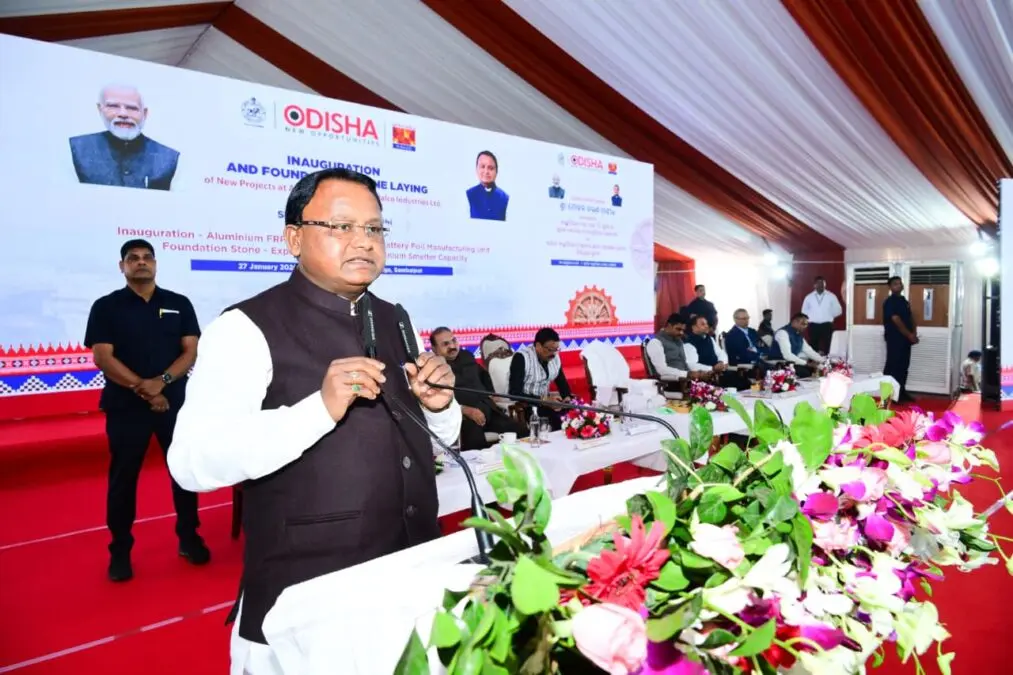
Odisha Inaugurates India’s First Flat Rolled Products Aluminium Unit
What’s the News?
- Odisha Chief Minister Mohan Charan Majhi inaugurated India’s first Flat Rolled Products (FRP) aluminium unit and a specialised battery-grade aluminium foil facility at Hindalco Industries’ Aditya Aluminium plant in Lapanga, Sambalpur district, western Odisha.
- The projects represent a combined investment of ₹26,996 crore, including a ₹5,000-crore FRP unit, ₹834-crore battery foil unit, and the foundation stone for a ₹21,162-crore smelter expansion.
- These facilities aim to reduce India’s import dependence on flat-rolled aluminium (currently ~40%), indigenise critical raw materials for lithium-ion batteries, and generate over 5,000 direct and indirect jobs in the region.
FRP and Battery Foil Facilities?
Manufacturing Capabilities
- Flat Rolled Products (FRP) Unit:
- Capacity of 1.7 lakh tonnes per annum of high-quality aluminium sheets and coils.
- Uses advanced rolling technology to produce precision-thickness products meeting international standards for aerospace, automotive, packaging, and construction.
- Investment of approximately ₹5,000 crore.
- Battery-Grade Aluminium Foil Facility:
- India’s first specialised unit for manufacturing aluminium foil used in lithium-ion batteries.
- Investment of ₹834 crore.
- Designed to support up to 100 GWh of lithium-ion cell manufacturing capacity, critical for electric vehicles (EVs) and energy storage systems.
- Draws input directly from the FRP complex, creating an integrated production ecosystem.
Strategic Significance
- Import Substitution: Hindalco currently accounts for over 50% of India’s domestic FRP market. The new capacity is expected to reduce India’s 40% import dependence on flat-rolled aluminium by nearly half.
- EV Ecosystem Support: The battery foil unit addresses a critical gap in India’s EV supply chain, supporting domestic manufacturing of energy storage solutions.
- Downstream Value Addition: Marks a shift from primary aluminium production to high-value downstream manufacturing, establishing western Odisha as a global hub for advanced aluminium products.
Smelter Expansion and Investment Pipeline
Immediate Projects
- Aditya Aluminium Smelter Expansion: Foundation laid for adding 3.6 lakh tonnes per annum of smelting capacity at an investment of ₹21,162 crore.
- Power Sustainability: The expansion includes plans to meet a portion of power requirements through round-the-clock renewable energy (RE-RTC), integrating energy transition goals with industrial growth.
- Employment Generation: The three projects (FRP, battery foil, smelter expansion) together are expected to create 5,012 jobs.
Long-Term Vision
- ₹37,000-Crore Odisha Plan: These projects form part of Hindalco’s broader growth capital expenditure programme in Odisha, representing a significant chunk of its ₹55,000-crore all-India growth capex.
- Total Investment Potential: Hindalco’s Managing Director indicated a long-term investment potential of nearly ₹50,000 crore in Odisha, which could generate approximately 15,000 jobs, including 4,500 women across facilities in Sambalpur, Keonjhar, and Rayagada.
- Integrated Ecosystem: The investment covers upstream resources (bauxite mining, alumina refining) through downstream high-value products (FRP, battery foil, white fused alumina), creating a complete aluminium value chain.
Additional Info
Aluminium Industry Context
- Upstream vs. Downstream:
- Upstream: Bauxite mining and alumina refining (Odisha has India’s largest bauxite reserves).
- Downstream: FRP and foil manufacturing (higher employment generation and value addition compared to primary smelting).
- Hindalco’s Presence: Operating in Odisha for over 15 years with existing investments exceeding ₹25,000 crore, creating employment for more than 28,000 people.
Policy Implications
- Critical Minerals Strategy: Aligns with the Centre’s push towards self-reliance (Aatmanirbhar Bharat) in critical raw materials for emerging sectors like EVs and renewable energy storage.
- National Aluminium Policy: Supports the goal of increasing domestic value addition in the aluminium sector and reducing dependence on imports of high-grade aluminium products.
- Skill Development: The Chief Minister announced plans for a World Skill Centre in Sambalpur (the state’s second after Bhubaneswar) to ensure industry-ready local youth can access employment opportunities.
Sources
International Data Privacy Day 2026: Safeguarding Digital Trust
What’s the News?
- International Data Privacy Day was observed globally on January 28, 2026, commemorating the anniversary of Convention 108; the world’s first legally binding international treaty on data protection adopted by the Council of Europe in 1981.
- The day aims to raise awareness about protecting personal data, promoting privacy rights, and establishing responsible data-handling practices across governments, organisations, and individuals.
- With India emerging as the world’s third-largest digitalised economy, the observance highlighted the critical importance of safeguarding personal information across digital platforms from Aadhaar and UPI to e-governance services and healthcare systems.
- The recent notification of the Digital Personal Data Protection (DPDP) Rules, 2025 has operationalised India’s comprehensive data protection framework, making this year’s observance particularly significant for the country’s evolving digital ecosystem.
Convention 108 and Global Standards?
Historical Foundation
- Origin: Convention 108 was adopted by the Council of Europe in 1981, establishing the first legally binding international treaty focused on data protection.
- Purpose: To safeguard individuals’ personal data from misuse by regulating automated processing and cross-border data flows.
- Global Impact: The principles of Convention 108 have influenced numerous national privacy laws worldwide, including the European Union’s General Data Protection Regulation (GDPR) and India’s own data protection framework.
Key Principles
- Purpose Limitation: Data should only be collected for specified, explicit, and legitimate purposes.
- Data Minimisation: Only data necessary for intended purposes should be processed.
- Individual Rights: Guarantees rights of access, correction, and deletion of personal data.
- Cross-Border Protection: Requires signatory states to ensure equivalent protection when data is transferred internationally.
India’s Digital Footprint and Privacy Imperatives
Scale of Digitalisation
- Aadhaar: Approximately 143 crore enrolled users providing foundational identity infrastructure.
- UPI Transactions: Value exceeding ₹28 lakh crore, demonstrating massive financial data flows.
- DigiLocker: Over 14 crore signups for digital document storage.
- Broadband Subscribers: Nearly 101 crore users connected to digital services.
- Cybersecurity Budget: ₹782 crore allocated for 2025–26, reflecting increased focus on digital security.
Emerging Risks
- Volume of Data Generation: India generates over 2.5 quintillion bytes of data daily across e-commerce, social media, and financial platforms.
- Cyber Threats: Rising incidents of data breaches, identity theft, and financial fraud targeting personal information.
- AI and Emerging Technologies: Growing deployment of artificial intelligence and big data analytics raising new privacy concerns regarding automated decision-making and algorithmic profiling.
India’s Data Protection Framework?
Legislative Evolution
- Information Technology Act, 2000: Provided initial legal recognition for electronic records and governance, with amendments addressing cybersecurity through CERT-In.
- IT (Intermediary Guidelines and Digital Media Ethics Code) Rules, 2021: Established due diligence requirements for digital platforms and grievance redressal mechanisms.
- Digital Personal Data Protection Act, 2023: India’s comprehensive legislation following a SARAL approach (Simple, Accessible, Rational, and Actionable).
DPDP Act, 2023: Key Provisions
- Scope: Governs processing of personal data collected through digital means, including data digitised from offline sources.
- Consent-Based Processing: Mandates free, specific, informed, unconditional, and unambiguous consent from individuals (Data Principals) for data processing.
- Data Fiduciaries: Entities processing personal data must implement safeguards and are accountable for compliance.
- Exemptions: Reasonable exemptions for national security, law enforcement, and research purposes, balanced against privacy rights.
- Data Protection Board: Establishes an appellate body to adjudicate disputes and enforce penalties for violations.
DPDP Rules, 2025: Operational Framework
The recently notified rules operationalise the Act through specific provisions:
| Key Feature | Description |
|---|---|
| Data Principal Rights | Enables access, correction, and erasure of personal data within defined timelines |
| Breach Notifications | Mandates timely reporting of personal data breaches to protect users from harm |
| Special Safeguards | Provides enhanced protection for children and persons with disabilities |
| Grievance Redressal | Requires establishment of accessible mechanisms for addressing data-related complaints |
| Response Timeline | Mandates timely response to data principal requests within 90 days |
Additional Info
Constitutional and Legal Context
- Article 21 (Right to Life and Personal Liberty): Supreme Court has interpreted this to include the right to privacy (landmark judgment in Justice K.S. Puttaswamy v. Union of India, 2017), mandating that any infringement must satisfy the tests of legality, legitimate aim, and proportionality.
- Article 19(1)(a) (Freedom of Speech and Expression): Protects individuals’ rights to seek and receive information, which includes controlling personal information.
- Article 51A (Fundamental Duties): While not directly enforceable, citizens have a duty to safeguard their own data privacy while respecting others’ rights.
Key Institutions and Bodies
- Data Protection Board of India (DPBI): Proposed statutory body under the DPDP Act to adjudicate grievances and impose penalties.
- Indian Computer Emergency Response Team (CERT-In): National agency for cybersecurity incident response and threat management.
- Unique Identification Authority of India (UIDAI): Manages Aadhaar ecosystem with specific security protocols for biometric and demographic data.
International Commitments
- G20 Digital Economy Principles: India’s commitment to cross-border data flow protections while safeguarding national security interests.
- Bilateral Agreements: Negotiating data-sharing frameworks with major economies ensuring adequate protection standards.
- Global Cooperation: Participation in international forums on AI governance, cybercrime (via Budapest Convention considerations), and digital trade.
Sources
SCO National Coordinators Convene in Beijing to Finalise 2026 Agenda

What’s the News?
- The first meeting of the Shanghai Cooperation Organization (SCO) Council of National Coordinators (CNC) for the current year convened at the SCO Secretariat in Beijing, under the chairmanship of the Kyrgyz Republic.
- The meeting brought together representatives from all 10 member states, the SCO Secretariat, and the Regional Anti-Terrorist Structure (RATS) to coordinate preparations for upcoming high-level summits and review implementation of previous agreements.
- SCO Secretary-General Nurlan Yermekbayev delivered the inaugural address, emphasizing the meeting’s role in synchronising multilateral cooperation across political, economic, and cultural domains.
- The gathering aims to finalise the agenda for the Council of Heads of State (CHS) and Council of Heads of Government (CHG) summits scheduled during Kyrgyzstan’s 2026 presidency, while reviewing progress on trade, security, and humanitarian initiatives.
Council of National Coordinators?
Mandate and Functions
The CNC serves as the primary coordination mechanism within the SCO, acting as the vital link between the organisation’s permanent bodies and member states. Its core functions include:
- Policy Coordination: Synchronising multilateral cooperation among member states in accordance with the SCO Charter and ensuring alignment with the organisation’s strategic priorities.
- Summit Preparation: Conducting groundwork and drafting agendas for ministerial and heads of state/government meetings, ensuring procedural and substantive readiness.
- Implementation Oversight: Monitoring execution of decisions, treaties, and agreements reached during previous summits, including commitments on counter-terrorism, economic cooperation, and cultural exchanges.
- Operational Management: Addressing day-to-day organisational matters, budgetary approvals, and administrative coordination between the Secretariat in Beijing and RATS in Tashkent.
SCO Structure and Significance?
Membership and Geography
The Shanghai Cooperation Organization is the world’s largest regional body by geographic scope and population coverage:
- 10 Member States: Belarus (joined 2024), India (joined 2017), Iran (joined 2023), Kazakhstan, China, Kyrgyz Republic, Pakistan (joined 2017), Russia, Tajikistan, and Uzbekistan.
- Demographic and Economic Weight: Represents approximately 42% of the world’s population and accounts for over 23% of global nominal GDP.
- Expansion: The organisation has grown from the original Shanghai Five (China, Russia, Kazakhstan, Kyrgyzstan, Tajikistan established in 1996) to its current 10-member configuration, with India and Pakistan joining as full members in 2017, followed by Iran (2023) and Belarus (2024).
Core Institutions
- SCO Secretariat (Beijing): The main executive body responsible for implementing organisational decisions, coordinating technical assistance, and managing administrative functions.
- RATS (Tashkent): The Regional Anti-Terrorist Structure focuses on combating the "Three Evils"; terrorism, separatism, and extremism through intelligence sharing, joint training, and coordinated operations.
Guiding Philosophy
The "Shanghai Spirit" defines the organisation’s foundational principles:
- Mutual trust and mutual benefit
- Equality and consultation
- Respect for diversity of civilizations
- Pursuit of common development
India’s Engagement?
Strategic Rationale
- Counter-Terrorism Cooperation: India utilises the SCO platform, particularly through RATS, to enhance intelligence sharing and coordinate responses to cross-border terrorism affecting South and Central Asia.
- Regional Connectivity: New Delhi engages with SCO initiatives on transport corridors, energy security, and digital infrastructure, while balancing these with strategic autonomy and regional partnerships.
- Alternative Platform: The SCO provides India access to Central Asian resource markets and strategic partnerships, complementing bilateral relationships with member states.
Key Engagements
- Council of Heads of Government: India actively participates in CHG meetings focusing on trade, economy, and cultural cooperation.
- Counter-Terrorism Frameworks: Collaboration through RATS on combating financing of terrorism, cyber threats, and transnational extremist networks.
Additional Info
Historical Context
- Origins: Evolved from the Shanghai Five mechanism established in 1996 to resolve border disputes and enhance mutual security confidence.
- Formalisation: Established as a permanent intergovernmental organisation on June 15, 2001, in Shanghai.
- Official Languages: Russian and Chinese, reflecting the organisation’s Eurasian geographic and cultural orientation.
Constitutional and Policy Framework (India)
- Article 51 (Directive Principles of State Policy): Mandates promotion of international peace and security, guiding India’s participation in multilateral forums like the SCO.
- Article 253 (Parliament’s Power): Enables Parliament to legislate for implementing international treaties and agreements, including those negotiated within SCO frameworks on counter-terrorism, narcotics control, and economic cooperation.
- Foreign Policy Alignment: India’s SCO membership aligns with its "Act East" and "Connect Central Asia" policies, while maintaining strategic autonomy in regional security architectures.
RATS Operational Mandate
- Information Sharing: Maintains databases on terrorist organisations, suspected individuals, and extremist networks.
- Joint Training: Conducts regular counter-terrorism exercises (e.g., SCO Peace Mission) involving special forces from member states.
- Legal Coordination: Assists member states in harmonising domestic legislation on terrorism-related offences and extradition protocols.
Key Summits and Outcomes (Recent)
- 2024 Astana Summit: Approved SCO Development Strategy towards 2035, focusing on economic cooperation, digital transformation, and sustainable development.
- India’s Hosting: New Delhi hosted the SCO Council of Heads of Government meeting in 2023, showcasing commitment to regional economic integration.
Sources
France Moves to Ban Social Media for Children Under 15

What’s the News?
- The French National Assembly passed a landmark bill banning children under 15 years of age from accessing social media platforms, making France the second country after Australia (which banned under-16s) to impose such comprehensive restrictions.
- The legislation, adopted by a vote of 130 to 21, requires social media platforms to implement mandatory age verification systems and deactivate existing accounts held by under-15s within specified timelines.
- The bill also extends France’s existing ban on smartphones in schools; currently applicable to primary and middle schools to high schools (lycées), creating one of the strictest digital environments for minors in Europe.
- Supported by 73% of the French public according to opinion polls, the measure aims to combat cyberbullying, screen addiction, and mental health deterioration among adolescents, with implementation targeted for the 2026 academic year.
Key Provisions of the French Legislation?
Scope and Coverage
- Age Threshold: Prohibits access to "addictive" social networking services for users below 15 years, targeting platforms like TikTok, Instagram, and Snapchat.
- Exemptions: Online encyclopedias (Wikipedia), educational or scientific directories, and platforms for developing and sharing open-source software remain accessible.
- Embedded Functionalities: The ban extends to "social networking functionalities" embedded within broader platforms, not just standalone apps.
- Smartphones in Schools: Extends the 2018 prohibition on mobile phones in primary and middle schools (collèges) to high schools (lycées).
Implementation Timeline
- New Accounts: Restrictions apply from September 2026 (start of academic year).
- Existing Accounts: Platforms must deactivate non-compliant accounts by December 31, 2026 (or January 1, 2027, per different formulations).
- Age Verification Mechanisms: Platforms must deploy effective verification systems compliant with EU Digital Services Act (DSA) requirements; the European Commission has indicated France may establish a "digital age of majority" at 15.
Enforcement and Penalties
- Financial Penalties: Up to 6% of platforms' annual revenue for non-compliance, significantly exceeding standard administrative sanctions.
- Platform Liability: Places obligation on social media companies to verify age and restrict access, not on children or parents to self-regulate.
Global Context and Comparisons?
Australia's Precedent
- Benchmark: Australia became the first country globally to ban social media for under-16s in December 2024/2025, with enforcement commencing December 2025.
- Impact: Platforms removed approximately 4.7 million accounts belonging to minors within weeks of implementation.
- Criticism: Teens reportedly circumvented bans using VPNs and borrowed credentials; Reddit challenged the law in Australia’s High Court citing free speech violations.
Other National Approaches
- United Kingdom: Government announced plans to consider Australia-style bans; Ofcom (communications regulator) strengthening online safety requirements.
- Denmark: Proposed ban for under-15s with parental consent exemptions from age 13.
- United States:
- Florida: Banned children under 14 from certain platforms (challenged but allowed to proceed during litigation).
- State-Level Variations: Utah, Texas, Arkansas require parental consent for minors; California and New York target "addictive feeds" and strengthen privacy settings.
- Federal Legislation: Proposed Kids Off Social Media Act (KOSMA) would prohibit under-13s from creating accounts and ban algorithmic recommendations for under-17s.
European Union Framework
- The European Parliament has called for an EU-wide minimum age of 16 for social media access, though enforcement remains with member states.
- Digital Services Act (DSA): Requires major platforms to assess and mitigate risks to minors, with provisions for algorithmic transparency and content moderation standards.
Implementation Challenges and Criticisms?
Technical and Privacy Concerns
- Circumvention: Evidence from Australia indicates teenagers use VPNs, fake birthdates, and borrowed parental credentials to bypass restrictions.
- Surveillance Risks: Mandatory age verification requires collection of sensitive personal data (government IDs, biometrics), raising data breach and misuse concerns.
- Digital Divide: Users lacking formal identification or stable connectivity face exclusion, potentially discriminating based on socioeconomic status.
Developmental and Rights-Based Objections
- Digital Literacy: Critics argue bans delay development of online navigation skills; teenagers will eventually access platforms without guided experience.
- Freedom of Expression: Civil liberties groups (e.g., France Unbowed/LFI) term the measures "digital paternalism" and argue they infringe on minors' rights to information and expression.
- Platform Migration: Rather than reducing screen time, bans may push minors toward less-regulated platforms with weaker safety standards.
- Effectiveness: Studies indicate restricting specific platforms often redirects usage to television, gaming, or unmoderated online spaces rather than encouraging offline activities.
- LGBTQ+ Youth Concerns: Social media often provides vital peer support and health information for marginalized communities; blanket bans may isolate vulnerable populations.
Alternative Approaches
- Platform Design Regulation: Some experts advocate addressing root causes through algorithmic accountability, limiting addictive design features (endless scrolling, push notifications), and mandating chronological feeds rather than engagement-based recommendations.
- Parental Tools: Empowering parents with granular controls rather than state-imposed prohibitions.
- Digital Literacy Education: Integrating online safety and critical thinking skills into school curricula from early ages.
Implications for India?
Current Indian Framework
- Information Technology (Intermediary Guidelines and Digital Media Ethics Code) Rules, 2021: Requires platforms to verify users and provide parental consent mechanisms for minors, but does not mandate age-gating for access.
- Digital Personal Data Protection (DPDP) Act, 2023: Defines "child" as any user below 18 years; mandates verifiable parental consent before processing personal data of children, with enhanced obligations for "Data Fiduciaries" handling children's information.
- Recent Developments: Ministry of Electronics and Information Technology (MeitY) and Ministry of Women and Child Development have issued advisories on cyberbullying and online child safety, but no legislative ban on social media access has been proposed.
Considerations for Indian Policymakers
- Scale of Youth Digital Access: With over 600 million internet users and significant youth demographic, any restriction would require robust technical infrastructure for age verification.
- Alternative Models: India might consider platform accountability measures under the DPDP Act combined with digital literacy programmes (e.g., Digital India initiatives), rather than outright prohibitions.
- Cyberbullying Statistics: India's National Crime Records Bureau reports increasing cybercrimes against children, indicating need for intervention, but methodologically sound approaches are essential.
Additional Info
Constitutional and Legal Context (Comparative)
- Right to Privacy vs. State Protection: The French and Australian measures involve balancing child welfare (state’s parens patriae duty) against digital privacy rights and freedom of expression.
- UN Convention on the Rights of the Child (CRC): Emphasises protection from harm but also upholds children's rights to freedom of expression and information; blanket bans must demonstrate proportionality and necessity.
- European Convention on Human Rights: Article 8 (privacy) and Article 10 (expression) require that interventions meet "pressing social need" criteria.
Key Concepts and Definitions
- Age Verification vs. Age Assurance:
- Verification: Requires documentary proof of age (IDs, biometrics).
- Assurance: Estimates age through behaviour analysis or AI (less intrusive but less accurate).
- Algorithmic Recommendation Systems: Machine learning mechanisms that personalise content feeds to maximise engagement, identified as primary drivers of addictive platform use.
- Digital Services Act (DSA): EU regulation mandating transparency, content moderation accountability, and risk assessments for large online platforms.
Organisations and Bodies
- ANSES (France): National Agency for Food, Environmental and Occupational Health Safety, which published reports linking social media to adolescent mental health deterioration.
- eSafety Commissioner (Australia): Regulatory body overseeing the under-16 ban and internet safety standards.
- UNICEF: Advocates for "safer-by-design" platform architectures rather than age-based exclusion, emphasising children's participation in digital policy debates.
- 5Rights Foundation: Child-rights focused organisation campaigning for ethical design standards in digital products.
Sources
January 2026
31 January 202630 January 202629 January 202628 January 202627 January 202626 January 202624 January 202623 January 202622 January 202621 January 202620 January 202619 January 202616 January 202615 January 202614 January 202613 January 202612 January 202610 January 202609 January 202608 January 202607 January 202606 January 202605 January 202603 January 202602 January 202601 January 2026
Archive
October 2026
- 27 October 2026
- 26 October 2026
- 24 October 2026
- 23 October 2026
- 22 October 2026
- 21 October 2026
- 20 October 2026
- 19 October 2026
- 17 October 2026
- 16 October 2026
- 15 October 2026
- 14 October 2026
- 13 October 2026
- 12 October 2026
- 10 October 2026
- 09 October 2026
- 08 October 2026
- 07 October 2026
- 06 October 2026
- 05 October 2026
- 03 October 2026
- 02 October 2026
- 01 October 2026
September 2026
- 30 September 2026
- 29 September 2026
- 28 September 2026
- 26 September 2026
- 25 September 2026
- 24 September 2026
- 23 September 2026
- 22 September 2026
- 21 September 2026
- 19 September 2026
- 18 September 2026
- 17 September 2026
- 16 September 2026
- 15 September 2026
- 12 September 2026
- 11 September 2026
- 10 September 2026
- 09 September 2026
- 08 September 2026
- 07 September 2026
- 05 September 2026
- 04 September 2026
- 03 September 2026
- 02 September 2026
- 01 September 2026
August 2026
- 31 August 2026
- 29 August 2026
- 27 August 2026
- 26 August 2026
- 25 August 2026
- 24 August 2026
- 22 August 2026
- 21 August 2026
- 20 August 2026
- 19 August 2026
- 18 August 2026
- 17 August 2026
- 14 August 2026
- 13 August 2026
- 12 August 2026
- 11 August 2026
- 10 August 2026
- 08 August 2026
- 07 August 2026
- 06 August 2026
- 05 August 2026
- 04 August 2026
- 03 August 2026
- 01 August 2026
July 2026
- 31 July 2026
- 30 July 2026
- 29 July 2026
- 28 July 2026
- 27 July 2026
- 25 July 2026
- 23 July 2026
- 22 July 2026
- 21 July 2026
- 20 July 2026
- 18 July 2026
- 17 July 2026
- 15 July 2026
- 14 July 2026
- 13 July 2026
- 11 July 2026
- 10 July 2026
- 09 July 2026
- 08 July 2026
- 07 July 2026
- 06 July 2026
- 04 July 2026
- 03 July 2026
- 02 July 2026
- 01 July 2026
June 2026
May 2026
April 2026
March 2026
- 31 March 2026
- 30 March 2026
- 28 March 2026
- 27 March 2026
- 26 March 2026
- 25 March 2026
- 24 March 2026
- 23 March 2026
- 21 March 2026
- 20 March 2026
- 19 March 2026
- 18 March 2026
- 17 March 2026
- 16 March 2026
- 14 March 2026
- 13 March 2026
- 12 March 2026
- 11 March 2026
- 10 March 2026
- 09 March 2026
- 07 March 2026
- 06 March 2026
- 05 March 2026
- 03 March 2026
- 02 March 2026
February 2026
- 28 February 2026
- 27 February 2026
- 26 February 2026
- 25 February 2026
- 24 February 2026
- 23 February 2026
- 21 February 2026
- 20 February 2026
- 19 February 2026
- 18 February 2026
- 17 February 2026
- 16 February 2026
- 13 February 2026
- 12 February 2026
- 11 February 2026
- 10 February 2026
- 09 February 2026
- 07 February 2026
- 06 February 2026
- 05 February 2026
- 04 February 2026
- 03 February 2026
- 02 February 2026
January 2026
- 31 January 2026
- 30 January 2026
- 29 January 2026
- 28 January 2026
- 27 January 2026
- 26 January 2026
- 24 January 2026
- 23 January 2026
- 22 January 2026
- 21 January 2026
- 20 January 2026
- 19 January 2026
- 16 January 2026
- 15 January 2026
- 14 January 2026
- 13 January 2026
- 12 January 2026
- 10 January 2026
- 09 January 2026
- 08 January 2026
- 07 January 2026
- 06 January 2026
- 05 January 2026
- 03 January 2026
- 02 January 2026
- 01 January 2026
December 2025
- 31 December 2025
- 30 December 2025
- 29 December 2025
- 27 December 2025
- 26 December 2025
- 24 December 2025
- 23 December 2025
- 22 December 2025
- 20 December 2025
- 19 December 2025
- 18 December 2025
- 17 December 2025
- 16 December 2025
- 15 December 2025
- 13 December 2025
- 12 December 2025
- 11 December 2025
- 10 December 2025
- 09 December 2025
- 08 December 2025
- 05 December 2025
- 04 December 2025
- 03 December 2025
- 02 December 2025
November 2025
- 29 November 2025
- 28 November 2025
- 27 November 2025
- 26 November 2025
- 25 November 2025
- 24 November 2025
- 22 November 2025
- 21 November 2025
- 20 November 2025
- 19 November 2025
- 18 November 2025
- 17 November 2025
- 15 November 2025
- 14 November 2025
- 13 November 2025
- 12 November 2025
- 11 November 2025
- 10 November 2025
- 08 November 2025
- 07 November 2025
- 06 November 2025
- 05 November 2025
- 04 November 2025
- 03 November 2025
- 01 November 2025
October 2025
- 31 October 2025
- 30 October 2025
- 29 October 2025
- 28 October 2025
- 27 October 2025
- 25 October 2025
- 24 October 2025
- 23 October 2025
- 22 October 2025
- 21 October 2025
- 20 October 2025
- 18 October 2025
- 17 October 2025
- 16 October 2025
- 15 October 2025
- 14 October 2025
- 13 October 2025
- 11 October 2025
- 10 October 2025
- 09 October 2025
- 08 October 2025
- 07 October 2025
- 06 October 2025
- 04 October 2025
- 03 October 2025
- 02 October 2025
- 01 October 2025
September 2025
- 30 September 2025
- 29 September 2025
- 27 September 2025
- 26 September 2025
- 25 September 2025
- 24 September 2025
- 23 September 2025
- 22 September 2025
- 20 September 2025
- 19 September 2025
- 18 September 2025
- 17 September 2025
- 16 September 2025
- 15 September 2025
- 13 September 2025
- 12 September 2025
- 11 September 2025
- 10 September 2025
- 09 September 2025
- 08 September 2025
- 06 September 2025
- 05 September 2025
- 04 September 2025
- 03 September 2025
- 02 September 2025
- 01 September 2025
August 2025
- 30 August 2025
- 29 August 2025
- 28 August 2025
- 27 August 2025
- 26 August 2025
- 25 August 2025
- 23 August 2025
- 22 August 2025
- 21 August 2025
- 20 August 2025
- 19 August 2025
- 18 August 2025
- 16 August 2025
- 14 August 2025
- 13 August 2025
- 12 August 2025
- 11 August 2025
- 08 August 2025
- 07 August 2025
- 06 August 2025
- 05 August 2025
- 04 August 2025
- 02 August 2025
- 01 August 2025
July 2025
- 31 July 2025
- 30 July 2025
- 29 July 2025
- 28 July 2025
- 26 July 2025
- 25 July 2025
- 24 July 2025
- 23 July 2025
- 22 July 2025
- 21 July 2025
- 19 July 2025
- 18 July 2025
- 17 July 2025
- 16 July 2025
- 15 July 2025
- 12 July 2025
- 11 July 2025
- 10 July 2025
- 09 July 2025
- 07 July 2025
- 05 July 2025
- 04 July 2025
- 03 July 2025
- 02 July 2025
- 01 July 2025
June 2025
- 30 June 2025
- 28 June 2025
- 27 June 2025
- 26 June 2025
- 25 June 2025
- 24 June 2025
- 23 June 2025
- 21 June 2025
- 20 June 2025
- 19 June 2025
- 18 June 2025
- 17 June 2025
- 16 June 2025
- 14 June 2025
- 13 June 2025
- 12 June 2025
- 11 June 2025
- 10 June 2025
- 09 June 2025
- 07 June 2025
- 06 June 2025
- 05 June 2025
- 04 June 2025
- 03 June 2025
- 02 June 2025
May 2025
April 2025
- 30 April 2025
- 29 April 2025
- 28 April 2025
- 26 April 2025
- 25 April 2025
- 24 April 2025
- 23 April 2025
- 22 April 2025
- 21 April 2025
- 19 April 2025
- 18 April 2025
- 17 April 2025
- 16 April 2025
- 15 April 2025
- 14 April 2025
- 12 April 2025
- 11 April 2025
- 10 April 2025
- 09 April 2025
- 08 April 2025
- 07 April 2025
- 05 April 2025
- 04 April 2025
- 03 April 2025
- 02 April 2025
- 01 April 2025
March 2025
- 31 March 2025
- 29 March 2025
- 28 March 2025
- 27 March 2025
- 26 March 2025
- 25 March 2025
- 24 March 2025
- 22 March 2025
- 21 March 2025
- 20 March 2025
- 19 March 2025
- 18 March 2025
- 17 March 2025
- 15 March 2025
- 13 March 2025
- 12 March 2025
- 11 March 2025
- 10 March 2025
- 08 March 2025
- 07 March 2025
- 06 March 2025
- 05 March 2025
- 04 March 2025
- 03 March 2025
- 01 March 2025
February 2025
- 28 February 2025
- 27 February 2025
- 26 February 2025
- 25 February 2025
- 24 February 2025
- 22 February 2025
- 21 February 2025
- 20 February 2025
- 19 February 2025
- 18 February 2025
- 17 February 2025
- 15 February 2025
- 14 February 2025
- 13 February 2025
- 12 February 2025
- 11 February 2025
- 10 February 2025
- 08 February 2025
- 07 February 2025
- 06 February 2025
- 05 February 2025
- 04 February 2025
- 03 February 2025
- 01 February 2025
January 2025
- 31 January 2025
- 30 January 2025
- 29 January 2025
- 28 January 2025
- 27 January 2025
- 25 January 2025
- 24 January 2025
- 23 January 2025
- 22 January 2025
- 21 January 2025
- 20 January 2025
- 18 January 2025
- 17 January 2025
- 16 January 2025
- 15 January 2025
- 14 January 2025
- 13 January 2025
- 11 January 2025
- 10 January 2025
- 09 January 2025
- 08 January 2025
- 07 January 2025
- 06 January 2025
- 04 January 2025
- 03 January 2025
- 02 January 2025
- 01 January 2025