
Current Affairs
Stay updated with the latest national and international events.
27 May 2025
India's Coastline "Grows" by Thousands of Kilometres
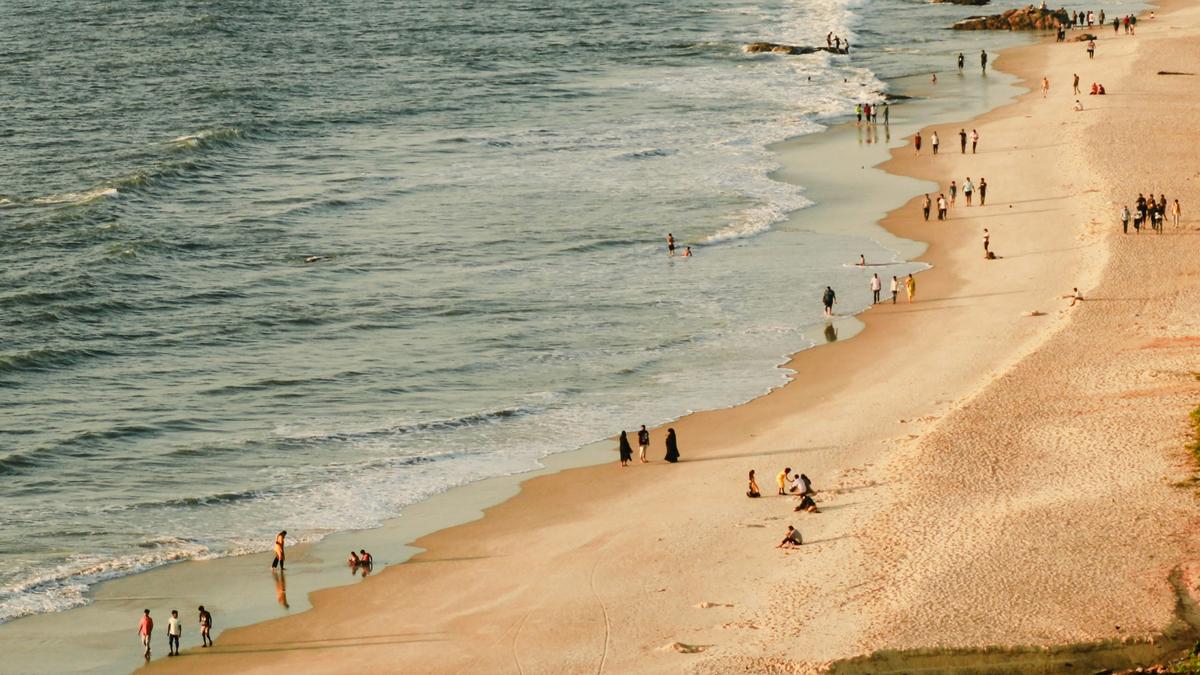
India's coastline has "lengthened" significantly, from the long-accepted figure of 7,516.6 kilometres to a new, re-verified length of approximately 11,099 kilometres (specifically 11,098.81 km). This seemingly dramatic increase, however, is not due to any physical gain of new land or territorial expansion. Instead, it is a result of advanced mapping technologies, a more precise measurement methodology, and a finer scale of assessment, which now captures the intricate details of India's coastal features more accurately than ever before.
The New Numbers: A More Detailed Measurement
- Previous Official Length: For decades, India's coastline, including the mainland and the island territories of Andaman & Nicobar and Lakshadweep, was stated as 7,516.6 km. This figure was based on measurements done in the 1970s, likely using maps at a much smaller scale (e.g., 1:4,500,000).
- Re-verified Length: The new, updated length is 11,098.81 km. This figure was accepted by the Coastal Protection and Development Advisory Committee (CPDAC) in 2019, based on computations by the NHO, and has since been re-verified in coordination with the Survey of India. The Ministry of Home Affairs (MHA) has updated this in its recent records (e.g., 2023-24 report).
Why the Change? Understanding the Measurement Shift – The "Coastline Paradox"
The "lengthening" of the coastline is a classic example of the "Coastline Paradox," a geographical concept that explains how the measured length of a boundary can change significantly depending on the scale of measurement.
- Finer Scale of Measurement: The primary reason for the increased length is the use of a much finer measurement scale (1:250,000 or even more detailed in some cases) using modern Electronic Navigation Charts (ENCs). Imagine measuring a jagged line with a long ruler versus a very short ruler; the shorter ruler will trace the curves more closely, resulting in a longer total length. The older measurements, using smaller scale maps, would have smoothed over many of the smaller indentations.
- Advanced Technology:
- Geographic Information Systems (GIS), satellite altimetry, LiDAR-GPS mapping, and drone-based imaging have enabled highly accurate and detailed mapping of the High-Water Line (the reference for measurement, based on 2011 data).
- These technologies can capture features like narrow tidal creeks, estuaries, small bays, sandbars, and coastal ridges that were previously omitted or generalized.
- Comprehensive Inclusion of Islands: The re-verified length now meticulously includes the peripheral coastline (High-Water Line) of all 1,298 identified offshore islands and islets (1059 islands and 239 islets). Earlier measurements might have left out many smaller islands or used less precise methods for their coastlines due to scale constraints and manual techniques.
- Standardized Methodology: The new measurement adheres to clear Terms of Reference (ToR), including using the WGS-84 datum, respective Universal Transverse Mercator (UTM) Zones, and specific rules for closing off river mouths and creeks at standard inland points.
In essence, we are not seeing more land; we are seeing the existing land and its interface with the sea in much greater detail.
Additional Information
- India's Coastline:
- Touches 9 States (Gujarat, Maharashtra, Goa, Karnataka, Kerala, Tamil Nadu, Andhra Pradesh, Odisha, West Bengal) and 4 Union Territories (Daman & Diu and Dadra & Nagar Haveli, Lakshadweep, Puducherry, Andaman & Nicobar Islands).
- Gujarat has the longest coastline among states (as per new state-wise figures, approx. 2,340.62 km), followed by states like Tamil Nadu and Andhra Pradesh. The Andaman & Nicobar Islands have a very extensive coastline (approx. 3,083.50 km).
- Importance of Coastlines: They are zones of rich biodiversity, support large populations, are hubs for economic activities (ports, fishing, tourism, industries), and are strategically vital for national security.
- Key Organizations Involved in Coastal Affairs:
- National Hydrographic Office (NHO): The national authority for publishing nautical charts and publications for navigation at sea, under the Indian Navy.
- Survey of India (SoI): The national mapping agency, responsible for surveying and mapping the country.
- Ministry of Home Affairs (MHA): Deals with border management, including coastal security aspects.
- Ministry of Earth Sciences (MoES): Nodal ministry for oceanographic research and services.
- National Centre for Coastal Research (NCCR), Chennai: An attached office of MoES, monitors shoreline changes, coastal processes, pollution, and hazards.
- Indian National Centre for Ocean Information Services (INCOIS), Hyderabad: Provides ocean information and advisory services, including Tsunami Early Warnings.
- Ministry of Environment, Forest and Climate Change (MoEFCC): Responsible for environmental regulations, including CRZ notifications.
- Coastal Regulation Zone (CRZ) Notifications:
- Issued under the Environment (Protection) Act, 1986, to regulate activities in coastal areas to protect the fragile coastal environment. The latest comprehensive notification is CRZ Notification, 2019.
- They classify coastal areas into different zones (CRZ-I, II, III, IV) with varying degrees of regulation.
- The Coastline Paradox (Fractal Nature):
- A concept popularized by mathematician Benoit Mandelbrot, it describes how a coastline's length is not absolute but depends on the scale of measurement used. Coastlines have fractal-like properties, meaning they exhibit self-similar patterns at different scales (e.g., a small bay has smaller coves, which have even smaller indentations). The finer the "ruler" used, the more of these details are captured, leading to a longer measured length. Theoretically, if measured down to the molecular level, the length could approach infinity.
- Blue Economy: Sustainable use of ocean resources for economic growth, improved livelihoods, and jobs while preserving the health of ocean ecosystems. India's long and now "longer" coastline offers immense potential for developing its Blue Economy.
India Powers Up ‘AMCA’ Project: Indigenous 5th-Gen Stealth Fighter Jet Takes Flight
India has formally approved the "execution model" for its ambitious Advanced Medium Combat Aircraft (AMCA) program. Defence Minister Shri Rajnath Singh announced this pivotal decision around May 27, 2025, paving the way for the development and production of India's first indigenous fifth-generation stealth fighter jet. This project is critical for the Indian Air Force (IAF) to maintain a technological edge in an increasingly complex geopolitical landscape, especially with adversaries like China and Pakistan bolstering their air power.

What is the AMCA Project?
The AMCA is envisioned as a twin-engine, medium-weight, multi-role fighter aircraft packed with cutting-edge fifth-generation technologies. It is designed to be a potent platform capable of undertaking a variety of missions, including:
- Air superiority and air defence.
- Deep penetration strikes into enemy territory.
- Suppression of enemy air defences (SEAD).
- Precision ground attacks.
- Electronic warfare and reconnaissance.
The project aims to place India in an elite club of nations capable of designing, developing, and manufacturing such advanced combat aircraft.
Key Features of AMCA (A True 5th-Generation Marvel):
The AMCA is being designed to incorporate a host of advanced features characteristic of fifth-generation fighter jets:
- Stealth Technology: This is a cornerstone of the AMCA design. It will feature a stealthy airframe shape (serpentine air intakes, internal weapons bay) and will use radar-absorbent materials to significantly reduce its radar cross-section (RCS), making it very difficult for enemy radars to detect and track.
- Supercruise Capability: The ability to sustain supersonic flight (fly faster than the speed of sound) without using fuel-guzzling afterburners, allowing for greater range, faster engagement, and energy conservation.
- Advanced Avionics and Sensor Fusion: Equipped with a state-of-the-art Active Electronically Scanned Array (AESA) radar, advanced electronic warfare (EW) suites, an electro-optical targeting system (EOTS), and sensor fusion technology. Sensor fusion will integrate data from various onboard and offboard sensors to provide the pilot with a comprehensive and unified situational awareness.
- Network-Centric Warfare Capabilities: Designed to operate in a networked environment, sharing data seamlessly with other friendly aircraft, ground stations, and unmanned systems.
- Internal Weapons Bay: To maintain its stealth profile, the AMCA will carry its primary weapons (missiles and bombs) inside an internal weapons bay. It will also have external hardpoints for carrying additional ordnance when stealth is not a primary concern.
- AI-Assisted Operations: Artificial Intelligence will be integrated for advanced decision-making support for the pilot and for managing complex mission systems.
- Manned-Unmanned Teaming (MUM-T): The AMCA is expected to have the capability to operate in conjunction with and control unmanned aerial vehicles (UAVs) or "loyal wingmen."
Development and Timeline:
-
Lead Agencies:
- The Aeronautical Development Agency (ADA), under the Defence Research and Development Organisation (DRDO), is the nodal agency for designing and developing the AMCA.
- Hindustan Aeronautics Limited (HAL) is expected to be the lead integrator and manufacturer, with significant participation from India's private sector.
-
Execution Model: The recently approved "execution model" emphasizes a competitive framework, allowing both public and private Indian companies to bid for various aspects of the project, either independently or as joint ventures/consortia. This is intended to foster a robust domestic aerospace ecosystem.
-
Funding: The Cabinet Committee on Security (CCS) had approved the project in March 2024, with an initial allocation of around ₹15,000 crore for the design and development of prototypes.
-
Phased Development:
- AMCA Mk1: The initial version will be powered by the US-made General Electric F-414 engine (which will also power the Tejas Mk2 and be license-produced in India by HAL).
- AMCA Mk2: This more advanced version is planned to be equipped with a more powerful indigenous engine, expected to be co-developed with an international partner (France's Safran and UK's Rolls-Royce are potential collaborators). The Mk2 will also feature enhanced stealth and potentially 5.5 or 6th-generation technologies.
-
Projected Timelines (Indicative):
- Rollout of the first prototype: Around 2027-2028.
- First flight: Approximately 2028-2029.
- Induction into the IAF: Expected to begin around 2035. (Timelines for such complex projects are challenging and subject to revisions).
- The IAF is expected to induct at least seven squadrons (around 120-140 aircraft) of the AMCA. The AMCA project is not just about building a fighter jet; it's about creating an entire ecosystem for advanced aerospace research, development, and manufacturing in India.
Fighter Jet Generations:
- 1st Gen (Late 1940s-Early 1950s): Subsonic, basic avionics (e.g., MiG-15, F-86 Sabre).
- 2nd Gen (Mid 1950s-Early 1960s): Supersonic capability, early air-to-air missiles, basic radar (e.g., MiG-21, F-104 Starfighter).
- 3rd Gen (Mid 1960s-1970s): Improved avionics, multi-role capabilities, more advanced missiles (e.g., MiG-23, Mirage III).
- 4th Gen (1970s-1990s): Fly-by-wire, pulse-Doppler radars, look-down/shoot-down capability, high maneuverability (e.g., Su-30MKI, Mirage 2000, F-16).
- 4.5 Gen (1990s-2000s): Advanced avionics, AESA radar, some stealth features, data links (e.g., Rafale, Eurofighter Typhoon, Tejas Mk1A).
- 5th Gen (2005-Present): All-aspect stealth, supercruise, high-integrated avionics (sensor fusion), network-centric capabilities (e.g., F-22 Raptor, F-35 Lightning II, Su-57, J-20).
- 6th Gen (Under Development): Expected to feature optionally manned capabilities, advanced AI, hypersonic weapons, directed energy weapons, enhanced stealth, and cyber warfare capabilities.
Government Restores Key Export Benefit (RoDTEP) for SEZs, EOUs, and Advance Authorisation Holders
Central Government has announced the restoration of benefits under the Remission of Duties and Taxes on Exported Products (RoDTEP) scheme for exports made by units in Special Economic Zones (SEZs), Export Oriented Units (EOUs), and holders of Advance Authorisation (AA). This crucial support, which had lapsed earlier, will be effective from June 1, 2025. The decision aims to enhance India's export competitiveness and provide a level playing field for all categories of exporters.

What Does This Mean for Exporters?
- Reinstatement of Benefits: Exporters operating as SEZs, EOUs, or under the Advance Authorisation scheme will once again be eligible to claim refunds on various embedded Central, State, and local duties and taxes that are incurred during the manufacturing of export products but are not otherwise rebated.
- Effective Date: The restoration of these benefits will apply to all eligible exports made from June 1, 2025, onwards.
- Addressing a Key Demand: This move addresses a long-standing demand from these significant exporting sectors, which were seeking parity with other exporters after the RoDTEP benefits for them had expired earlier (some reports indicate February 2025).
- Notification: The Directorate General of Foreign Trade (DGFT), under the Ministry of Commerce and Industry, has issued a notification to this effect (e.g., Notification No. 11/2025-26 dated May 26, 2025).
Why This Move is Significant:
The restoration of RoDTEP benefits for these categories is expected to have several positive impacts:
- Boosting Export Competitiveness: By refunding unremitted taxes and duties, the scheme helps reduce the cost of export products, making Indian goods more competitive in international markets. This is crucial at a time when exporters are facing intense global competition and uncertain demand.
- Providing a Level Playing Field: The decision ensures that exporters operating under schemes like AA, SEZ, and EOU are not at a disadvantage compared to other exporters in the Domestic Tariff Area (DTA) who were already availing RoDTEP.
- WTO Compliance: The RoDTEP scheme is designed to be compliant with World Trade Organization (WTO) norms, as it only remits taxes and duties that are actually incurred and not otherwise refunded. This is important because India's previous export incentive scheme, the Merchandise Exports from India Scheme (MEIS), had faced challenges at the WTO.
- Supporting Key Export Segments: SEZs, EOUs, and AA holders are significant contributors to India's export basket, particularly in value-added sectors. Supporting them is vital for achieving national export targets.
- Encouraging Value Addition: Schemes like Advance Authorisation encourage domestic value addition by allowing duty-free import of inputs for export production. RoDTEP benefits further incentivize this.
- Financial Allocation: For the fiscal year 2025-26, the government has allocated ₹18,233 crore for the RoDTEP scheme, covering a wide range of export products (HS lines) for both DTA and AA/EOU/SEZ exports.
A Quick Look at the RoDTEP Scheme:
- Objective: The Remission of Duties and Taxes on Exported Products (RoDTEP) scheme was introduced on January 1, 2021. Its primary aim is to refund various embedded (hidden) Central, State, and local duties and taxes that are levied on inputs used in the production and distribution of exported products. These are taxes that are not currently being reimbursed under any other mechanism like GST refund or duty drawback.
- Examples of Taxes Remitted: These can include VAT on fuel used in transportation, mandi tax, duty on electricity used in manufacturing, stamp duty on export documents, etc.
- Mechanism: The refund is issued to exporters in the form of transferable electronic scrips (e-scrips). These e-scrips can be used to pay Basic Customs Duty on the import of goods or can be sold to other importers.
- Digital Platform: The scheme is implemented through a fully digital platform, ensuring transparency and ease of access for exporters via the ICEGATE portal.
SC Rejects Plea to Add V.D. Savarkar's Name to 1950 Emblems Act
The Supreme Court of India on Tuesday, May 27, 2025, dismissed a plea seeking a direction to the Central Government to include the name of Vinayak Damodar Savarkar in the Schedule of the Emblems and Names (Prevention of Improper Use) Act, 1950. The petitioner had argued that such an inclusion was necessary to prevent the alleged misuse and misrepresentation of Savarkar's name and legacy.
A bench comprising Chief Justice of India (CJI) B.R. Gavai and Justice Augustine George Masih stated that it found no grounds to intervene as there was no violation of the petitioner's fundamental rights, a prerequisite for the court to entertain a petition under Article 32 of the Constitution.

The Plea Before the Court:
The petition was filed by Dr. Pankaj Kumudchandra Phadnis, who identified himself as a research scholar on V.D. Savarkar. The plea sought several directions, including:
- Instructing the Union of India and the Ministry of Home Affairs to include Vinayak Damodar Savarkar's name in the Schedule to the Emblems and Names (Prevention of Improper Use) Act, 1950.
- The petitioner contended that this was necessary to protect Savarkar's name from improper use and misrepresentation, particularly in light of alleged derogatory remarks made by political figures like Leader of Opposition Rahul Gandhi.
- The petitioner argued that such remarks impeded his (the petitioner's) fundamental duties under Article 51A of the Constitution, specifically the duty to cherish and follow the noble ideals that inspired India's national struggle for freedom.
- The plea also sought that Rahul Gandhi be directed to perform community service as a form of "punishment" for his remarks.
Supreme Court's Stand and Reasoning:
The Supreme Court bench declined to entertain the plea, dismissing it with clear observations:
- No Violation of Fundamental Rights: The CJI, B.R. Gavai, repeatedly questioned the petitioner on how his fundamental rights were being violated. The bench emphasized that a petition under Article 32 of the Constitution can only be entertained if there is an infringement of fundamental rights guaranteed under Part III of the Constitution.
- Fundamental Duties vs. Fundamental Rights: While the petitioner invoked his fundamental duties under Article 51A, the Court clarified that its writ jurisdiction under Article 32 is primarily for the enforcement of fundamental rights, not fundamental duties.
- Scope of Judicial Intervention: The Court stated that it cannot entertain "writs like this" and that the specific relief sought—directing the government to amend the schedule of an Act—falls within the domain of the executive or legislature.
- Alternative Remedy: The bench suggested that if the petitioner wishes to have Savarkar's contributions included in the educational curriculum or his name added to the Act's schedule, the appropriate course of action would be to make a representation to the Union Government. The petitioner informed the court that such a representation had already been made.
The Court ultimately found no merit in the plea to grant the reliefs sought through an Article 32 petition and dismissed it.
Understanding the Act in Question:
- The Emblems and Names (Prevention of Improper Use) Act, 1950:
- This Act was enacted to prevent the improper use of certain emblems and names for professional and commercial purposes.
- It prohibits the use of specified emblems, names, or pictorial representations listed in its Schedule without the previous permission of the Central Government or an authorized officer.
- The objective is to maintain the dignity associated with these national symbols and names of esteemed personalities and to prevent their unauthorized commercial exploitation or use in a manner that could mislead the public.
- The Schedule to the Act includes names and emblems like the Indian National Flag, the State Emblem of India, names and pictorial representations of Mahatma Gandhi, Pandit Jawaharlal Nehru, Chhatrapati Shivaji Maharaj, the Prime Minister of India, President of India, Governors of States, as well as names and emblems of UN organizations, WHO, etc.
- The Central Government has the power to amend the Schedule.
Additional Information
- Article 32 of the Constitution of India:
- Titled "Remedies for enforcement of rights conferred by this Part."
- Guarantees the right to move the Supreme Court for the enforcement of Fundamental Rights.
- The Supreme Court has the power to issue directions or orders or writs, including writs in the nature of habeas corpus, mandamus, prohibition, quo warranto, and certiorari, whichever may be appropriate, for the enforcement of any of the rights conferred by Part III.
- Dr. B.R. Ambedkar called Article 32 the "heart and soul" of the Constitution.
- Article 51A of the Constitution of India (Fundamental Duties):
- Added by the 42nd Amendment Act, 1976, on the recommendations of the Swaran Singh Committee.
- It lists fundamental duties for citizens, such as respecting the Constitution and its ideals, cherishing the noble ideals of the freedom struggle, upholding sovereignty, promoting harmony, protecting the environment, etc.
- Fundamental Duties are non-justiciable, meaning they are not directly enforceable by courts in the same way as Fundamental Rights. However, courts may consider them while interpreting laws.
- Public Interest Litigation (PIL):
- A legal action initiated in a court of law for the enforcement of public interest or general welfare in which the public or a class of the community have some interest or rights affected.
- The Supreme Court has expanded the scope of Article 32 to entertain PILs, even from individuals not directly aggrieved, if a matter of grave public concern involving violation of fundamental rights is raised.
- Separation of Powers:
- A doctrine of constitutional law under which the three branches of government (executive, legislative, and judicial) are kept separate.
- Each branch has its own powers and responsibilities and is not supposed to encroach upon the powers of the others. Amending laws is primarily a legislative function.
Kerala Coast on Alert: Sunken Cargo Ship Sparks Major Oil Spill and Hazardous Material Fears
A state of high alert has been declared across the coastal regions of Kerala following the sinking of a Liberian-flagged container cargo ship, MSC ELSA 3, off its coast around May 25, 2025. The incident has triggered serious concerns about a major oil spill and the leakage of hazardous materials, including calcium carbide, posing a significant threat to the state's sensitive marine ecosystem, fisheries, and coastal communities. A multi-agency operation, led by the Indian Coast Guard (ICG), is currently underway to contain the spillage and mitigate the environmental damage.

The Incident: How It Unfolded
- The Vessel: The MSC ELSA 3, a 184-meter-long container ship, was en route from Vizhinjam port to Kochi.
- Distress and Sinking: On May 24, 2025, the ship, located approximately 38 nautical miles southwest of Kochi (some reports indicate about 14.6 nautical miles off Thottappally in Alappuzha district), developed a critical tilt (starboard list) due to flooding in one of its compartments. Despite efforts, the vessel capsized and sank on May 25.
- Rescue: All 24 crew members on board were safely rescued in a coordinated operation by the Indian Coast Guard and the Indian Navy.
- Hazardous Cargo Onboard: The ship was carrying 640-643 containers. Crucially, among these were:
- 13 containers with unspecified hazardous materials.
- 12 containers filled with calcium carbide, a chemical that reacts dangerously with seawater to produce highly flammable acetylene gas and can significantly alter water alkalinity.
- Fuel Load (Oil Spill Source): The vessel was carrying a substantial amount of fuel in its tanks, including approximately:
- 84.44 metric tonnes of diesel.
- 367.1 metric tonnes of furnace oil.
- Reports also mention Marine Gas Oil (MGO) and Very Low Sulphur Fuel Oil (VLSFO).
The Looming Threat: Oil Spill and Chemical Contamination
- Oil Spill Confirmed: The Indian Coast Guard has confirmed a "significant oil leak" from the sunken vessel. The oil slick was observed spreading over an area (initially around 2x1 nautical miles) and drifting towards the Kerala coast, particularly threatening districts like Alappuzha, Kollam, Thrissur, and Ernakulam.
- Containers Washing Ashore: Dozens of containers (around 29 reported by May 27) have started washing ashore along the Kollam and Alappuzha coastlines, some of them breaking open and spilling their contents. Authorities have warned the public to maintain a distance of at least 200 meters from these containers and report sightings to emergency number 112.
- Chemical Hazard: The presence of calcium carbide poses an additional risk, as its reaction with seawater can be explosive and harmful to marine life.
- Ecological Danger: Kerala's coastline is known for its rich biodiversity, including mangroves, potential coral zones, and vital fish breeding grounds. An oil spill and chemical contamination could have devastating and long-lasting impacts on these ecosystems.
- Economic Impact: The incident threatens the livelihoods of coastal fishing communities (fishing has been banned in a 20-nautical-mile radius) and could adversely affect tourism, a key sector for Kerala.
Massive Response and Mitigation Efforts Underway
A multi-pronged response, classified as a Tier-II maritime incident (requiring national-level coordination), has been launched:
- Indian Coast Guard (ICG) at the Forefront: As the Central Coordinating Authority under the National Oil Spill Disaster Contingency Plan (NOSDCP), the ICG is leading the pollution response.
- Deployment: ICG ships like ICGS Saksham, Vikram, and Samarth, along with Dornier aircraft, have been deployed.
- Containment: Efforts are focused on containing the oil slick using booms (if feasible given weather) and neutralizing it by spraying Oil Spill Dispersants (OSD). Infrared cameras are being used to detect the extent of the spill.
- Specialized Vessel: The ICG's specialized pollution response vessel, ICGS Samudra Prahari, has been mobilized from Mumbai to augment the efforts.
- State-Level Emergency Response:
- The Kerala government has declared a statewide alert, with the Chief Minister Pinarayi Vijayan chairing high-level meetings.
- The Kerala State Disaster Management Authority (KSDMA) is actively involved in issuing advisories and coordinating ground efforts.
- Teams from the Pollution Control Board (for shoreline cleanup), Factories and Boilers Department (for safe removal of containers), and Customs (for assessing container contents) are on the ground.
- Inter-Agency Coordination: The Directorate General of Shipping is monitoring the situation closely. The Indian Navy, National Disaster Response Force (NDRF), and other central and state agencies are working in coordination.
- Investigation and Liability: The Mercantile Marine Department (MMD) has initiated an investigation into the cause of the sinking and has issued a warning to the ship's owners (MSC, Mediterranean Shipping Company, representatives of which are in Kochi) regarding pollution liability.
Meghalaya Reveals New Cavefish: A "Two-World" Dweller Thriving in Darkness and Daylight
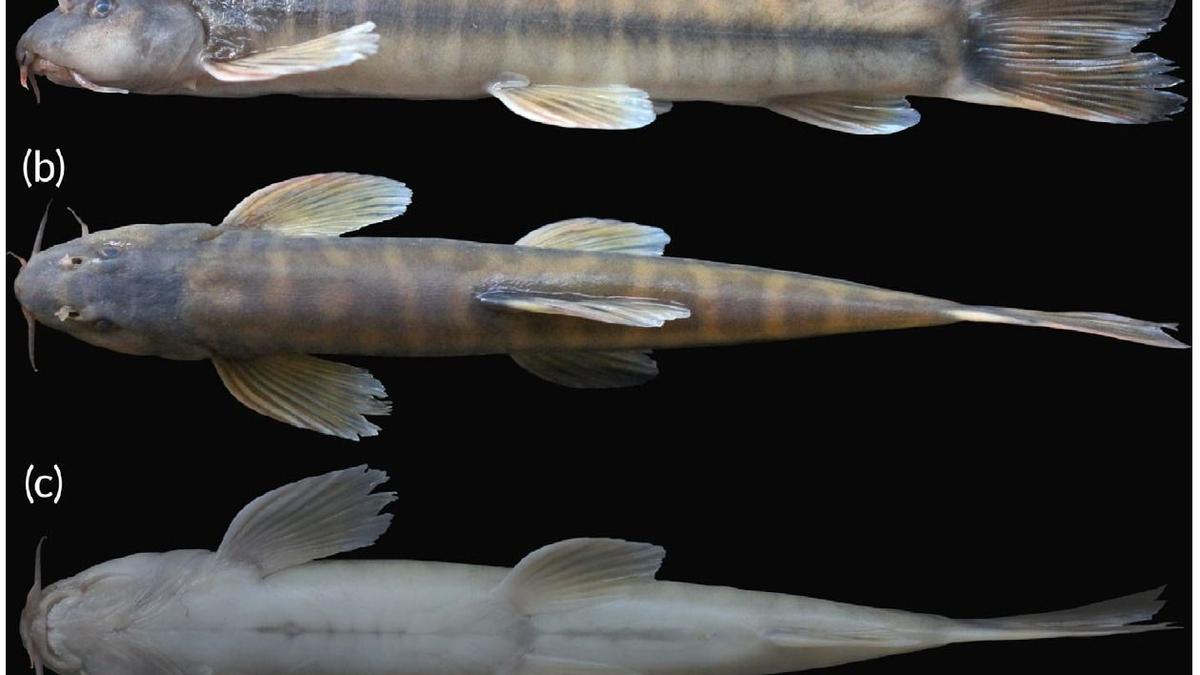
Scientists have discovered a new species of cave-dwelling fish, named Schistura densiclava, in the subterranean streams of Meghalaya. What makes this discovery particularly exciting is the fish's remarkable ability to not only survive in the pitch-dark cave environment but also thrive in surface waters, retaining its eyesight and body colour – a rare trait among cave-adapted species. This finding sheds new light on evolutionary processes and underscores the rich, yet fragile, biodiversity hidden within Meghalaya's extensive cave systems.
The Discovery: Unveiling Schistura densiclava
- New Species: The newly identified fish is a type of stone loach belonging to the genus Schistura and has been named Schistura densiclava. The name "densiclava" is Latin for "dense stripe," referring to a distinctive thick stripe near its dorsal fin.
- Location: It was discovered in Krem Mawjingbuiñ, a limestone cave located near Mawsynram in the East Khasi Hills district of Meghalaya, a region famous for being one of the wettest places on Earth and for its complex cave networks.
- The Research Team: The discovery was made by a collaborative team of zoologists from Gauhati University (Assam), Lady Keane College in Shillong (Meghalaya), and the ICAR-National Bureau of Fish Genetic Resources (NBFGR) in Lucknow (Uttar Pradesh). Their findings have been published in the prestigious "Journal of Fish Biology."
A Fish of Two Worlds: Remarkable Adaptations
Schistura densiclava is classified as a troglophile, meaning it is adapted to cave life but is not entirely dependent on it and can also live in surface environments. This is in contrast to troglobites, which are obligate cave dwellers that typically lose their eyesight and pigmentation over generations.
Key adaptive features of Schistura densiclava:
- Retained Eyesight and Pigmentation: Unlike many true cavefish (like Schistura papulifera or Neolissochilus pnar also found in Meghalaya's caves, which are blind and lack body colour), Schistura densiclava has functional eyes and a coloured body. It exhibits a pale yellow-green hue with 14 to 20 bold black vertical bars.
- Habitat Versatility: The fish was found thriving in a cool (around 18°C), fast-flowing stream about 60 meters inside the cave, an environment with low oxygen levels. However, its physical characteristics suggest it can comfortably inhabit surface streams as well.
- Diet: Its diet is adaptable, consisting of copepods, tiny shrimp, insect fragments, and even bat guano (droppings), which is often a key nutrient source in cave ecosystems.
- Sexual Dimorphism: The species exhibits clear differences between sexes, with males being slimmer with irregular patterns and puffier cheeks, while females are more robust and display more uniform markings.
- Genetic Distinction: DNA sequencing has confirmed that Schistura densiclava is a genetically distinct new species, different from any other Schistura found in the region.
Conservation Imperative: Protecting Fragile Ecosystems
- Pristine Habitat: The Krem Mawjingbuiñ cave, where Schistura densiclava was found, is currently in a relatively pristine condition, largely untouched by tourism or significant human disturbance due to its seasonal accessibility and surrounding dense forest.
- Vulnerability: This ecological isolation, while protective, also makes such specialized species extremely vulnerable to even minor environmental changes or human intrusions like unregulated tourism, quarrying, or pollution.
- Need for Protection: The discovery underscores the urgent need for comprehensive conservation strategies for Meghalaya's unique limestone cave ecosystems to protect their endemic and often critically sensitive fauna.
Additional Information
- Cave Ecosystems (Subterranean Ecosystems):
- Characterized by complete darkness (aphotic zone), stable temperatures, high humidity, and often limited food resources.
- Organisms living here rely on nutrients brought in from the surface (e.g., by water, bat guano, plant roots).
- Types of Cave-Dwelling Organisms:
- Troglobites (or Troglodytes): Obligate cave dwellers, strictly adapted to subterranean life and unable to survive on the surface. They often exhibit features like blindness, lack of pigmentation, elongated appendages, and enhanced non-visual senses.
- Troglophiles: Species that can live and reproduce both inside caves and in suitable surface habitats. They are "cave lovers" but not entirely dependent on caves. Schistura densiclava is an example.
- Trogloxenes: Species that use caves for shelter or specific life stages (e.g., bats) but must return to the surface to feed. They are "cave guests."
- Adaptive Evolution in Caves:
- Constructive Adaptations: Development of enhanced senses like chemoreception (smell/taste), mechanoreception (touch/vibration through lateral lines in fish), and longer antennae/legs.
- Regressive Evolution: Loss of structures that are not useful or are metabolically expensive in a dark environment, such as eyes (anophthalmia or microphthalmia) and pigmentation (albinism).
- Biodiversity in Northeast India:
- Part of the Indo-Burma biodiversity hotspot, one of the most species-rich regions in the world.
- Characterized by diverse topography, high rainfall, and varied forest types, supporting a unique assemblage of flora and fauna, including many endemic species.
- Meghalaya's Caves:
- Known for having some of the longest and most complex cave systems in South Asia, primarily formed in limestone (karst landscape) and sandstone.
- These caves harbor a specialized and often endemic fauna adapted to subterranean conditions.
- Zoological Survey of India (ZSI):
- The premier organization in India for faunistic survey and research, under the Ministry of Environment, Forest and Climate Change.
- Its objectives include exploring, surveying, inventorying, and monitoring faunal diversity.
- ICAR-National Bureau of Fish Genetic Resources (NBFGR), Lucknow:
- An institution under the Indian Council of Agricultural Research (ICAR) focused on the assessment and conservation of fish genetic resources of the country for intellectual property protection and sustainable utilization.
Google's "AI Matryoshka": Layered Intelligence Transforms Services Amidst Rising Privacy Concerns
Google is undergoing a profound transformation, re-architecting its entire suite of products and services around Artificial Intelligence (AI). This ambitious strategy, often described as an "AI Matryoshka" (like Russian nesting dolls), aims to embed sophisticated AI capabilities, powered by its advanced Gemini models, at every level of its ecosystem. While this promises a future of highly personalized, intuitive, and "agentic" experiences for users, it has also amplified concerns regarding data privacy, user consent, and the ethical implications of such deep AI integration.

Google's AI Transformation: The "Matryoshka" Approach
The "AI Matryoshka" model refers to Google's strategy of creating a multi-layered AI ecosystem:
- Core AI (Innermost Layer): At the heart are Google's powerful foundational AI models, particularly the Gemini family (like Gemini 2.5 Pro and Flash), which excel in reasoning, coding, and multimodal (text, image, audio, video) understanding. This core is supported by advanced hardware like Google's 7th-gen Tensor Processing Units (TPUs) called "Ironwood."
- Developer Platforms (Middle Layer): This layer includes tools like the Gemini API and Vertex AI, enabling developers to build their own AI-powered applications and services leveraging Google's core models.
- User Applications (Outermost Layer): This is where users directly experience AI. Google is infusing AI deeply into its popular products:
- Search: Introducing an "AI Mode" with AI Overviews (AI-generated summaries for queries), "Deep Search" for comprehensive, cited answers, and "Agentic Search" capabilities like virtual try-ons and even automated checkout for online shopping.
- Gemini App (Personal AI Assistant): Enhanced with "Live mode" for real-time conversational interactions (using camera and screen sharing), and "Deep Research" features that can access and analyze user's documents and images (with permission) to provide contextual help.
- Android & Wearables: Integrating Gemini into Android operating systems, including a new Android XR platform for immersive headsets and smart glasses.
- Workspace Apps (Gmail, Docs, etc.): Embedding generative AI features to help with writing, summarizing, and creating content.
- Generative Media: Tools like Imagen 4 for advanced image generation and Veo 3 for video generation with accompanying audio.
The goal is to create a cohesive, intelligent ecosystem where AI can perform tasks more autonomously and offer highly personalized and context-aware assistance, moving beyond simple information retrieval to "intelligence."
The Privacy Puzzle: Growing Concerns in the Age of AI Matryoshka
While these AI advancements offer exciting possibilities, they have also triggered significant discussions around data privacy:
- Vast Data Access: The "AI Matryoshka" model thrives on data. Features like personalized AI assistants and deeply integrated search require access to an extensive range of user data from across Google's services (Search history, Gmail, YouTube, Maps, Drive, photos). This raises concerns about the sheer volume of personal information being processed.
- Data for Training Models: Questions persist about how user data, including publicly available web content, is used to train these powerful AI models. Issues of consent, user control over their digital footprints, and the ethics of data scraping are paramount.
- Intrusive Profiling: The creation of highly detailed user profiles to deliver hyper-personalized AI experiences can be perceived as intrusive. Such profiles could also be vulnerable if accounts are hacked or data leaks occur.
- Transparency and Opt-Outs: Critics often point to the need for greater transparency from tech companies about how AI systems use data and the provision of clear, simple, and effective opt-out mechanisms for users who do not wish their data to be used in certain ways. For example, AI Overviews in Search reportedly save queries, AI responses, location, and device info for up to 18 months by default.
- "Privacy Premium" Concerns: The introduction of tiered access models, like a "Google AI Ultra Tier" for the most advanced AI tools, has led to speculation about a potential "privacy premium," where stronger privacy safeguards might be linked to paid subscriptions, raising equity concerns.
- Copyright and Fair Use: The use of vast datasets, which may include copyrighted material, for training generative AI models also brings up complex issues of fair use and compensation for creators. Google is using tools like SynthID to watermark and detect AI-generated content, partly to address these concerns.
Balancing Innovation with User Trust
Google has stated its commitment to user consent and data security, emphasizing that users can often opt-in to personalization features and that enterprise-grade security applies to its Workspace AI tools. For some processes, like human review of Gemini App conversations to improve quality, Google says it takes steps to protect privacy, such as disconnecting conversations from user accounts before review.
However, the rapid pace of AI integration and the increasing reliance on personal data mean that the debate around balancing technological innovation with robust privacy protections and ethical AI deployment will continue to be a critical challenge for Google and the tech industry at large.
May 2025
Archive
October 2026
- 28 October 2026
- 27 October 2026
- 26 October 2026
- 24 October 2026
- 23 October 2026
- 22 October 2026
- 21 October 2026
- 20 October 2026
- 19 October 2026
- 17 October 2026
- 16 October 2026
- 15 October 2026
- 14 October 2026
- 13 October 2026
- 12 October 2026
- 10 October 2026
- 09 October 2026
- 08 October 2026
- 07 October 2026
- 06 October 2026
- 05 October 2026
- 03 October 2026
- 02 October 2026
- 01 October 2026
September 2026
- 30 September 2026
- 29 September 2026
- 28 September 2026
- 26 September 2026
- 25 September 2026
- 24 September 2026
- 23 September 2026
- 22 September 2026
- 21 September 2026
- 19 September 2026
- 18 September 2026
- 17 September 2026
- 16 September 2026
- 15 September 2026
- 12 September 2026
- 11 September 2026
- 10 September 2026
- 09 September 2026
- 08 September 2026
- 07 September 2026
- 05 September 2026
- 04 September 2026
- 03 September 2026
- 02 September 2026
- 01 September 2026
August 2026
- 31 August 2026
- 29 August 2026
- 27 August 2026
- 26 August 2026
- 25 August 2026
- 24 August 2026
- 22 August 2026
- 21 August 2026
- 20 August 2026
- 19 August 2026
- 18 August 2026
- 17 August 2026
- 14 August 2026
- 13 August 2026
- 12 August 2026
- 11 August 2026
- 10 August 2026
- 08 August 2026
- 07 August 2026
- 06 August 2026
- 05 August 2026
- 04 August 2026
- 03 August 2026
- 01 August 2026
July 2026
- 31 July 2026
- 30 July 2026
- 29 July 2026
- 28 July 2026
- 27 July 2026
- 25 July 2026
- 23 July 2026
- 22 July 2026
- 21 July 2026
- 20 July 2026
- 18 July 2026
- 17 July 2026
- 15 July 2026
- 14 July 2026
- 13 July 2026
- 11 July 2026
- 10 July 2026
- 09 July 2026
- 08 July 2026
- 07 July 2026
- 06 July 2026
- 04 July 2026
- 03 July 2026
- 02 July 2026
- 01 July 2026
June 2026
May 2026
April 2026
March 2026
- 31 March 2026
- 30 March 2026
- 28 March 2026
- 27 March 2026
- 26 March 2026
- 25 March 2026
- 24 March 2026
- 23 March 2026
- 21 March 2026
- 20 March 2026
- 19 March 2026
- 18 March 2026
- 17 March 2026
- 16 March 2026
- 14 March 2026
- 13 March 2026
- 12 March 2026
- 11 March 2026
- 10 March 2026
- 09 March 2026
- 07 March 2026
- 06 March 2026
- 05 March 2026
- 03 March 2026
- 02 March 2026
February 2026
- 28 February 2026
- 27 February 2026
- 26 February 2026
- 25 February 2026
- 24 February 2026
- 23 February 2026
- 21 February 2026
- 20 February 2026
- 19 February 2026
- 18 February 2026
- 17 February 2026
- 16 February 2026
- 13 February 2026
- 12 February 2026
- 11 February 2026
- 10 February 2026
- 09 February 2026
- 07 February 2026
- 06 February 2026
- 05 February 2026
- 04 February 2026
- 03 February 2026
- 02 February 2026
January 2026
- 31 January 2026
- 30 January 2026
- 29 January 2026
- 28 January 2026
- 27 January 2026
- 26 January 2026
- 24 January 2026
- 23 January 2026
- 22 January 2026
- 21 January 2026
- 20 January 2026
- 19 January 2026
- 16 January 2026
- 15 January 2026
- 14 January 2026
- 13 January 2026
- 12 January 2026
- 10 January 2026
- 09 January 2026
- 08 January 2026
- 07 January 2026
- 06 January 2026
- 05 January 2026
- 03 January 2026
- 02 January 2026
- 01 January 2026
December 2025
- 31 December 2025
- 30 December 2025
- 29 December 2025
- 27 December 2025
- 26 December 2025
- 24 December 2025
- 23 December 2025
- 22 December 2025
- 20 December 2025
- 19 December 2025
- 18 December 2025
- 17 December 2025
- 16 December 2025
- 15 December 2025
- 13 December 2025
- 12 December 2025
- 11 December 2025
- 10 December 2025
- 09 December 2025
- 08 December 2025
- 05 December 2025
- 04 December 2025
- 03 December 2025
- 02 December 2025
November 2025
- 29 November 2025
- 28 November 2025
- 27 November 2025
- 26 November 2025
- 25 November 2025
- 24 November 2025
- 22 November 2025
- 21 November 2025
- 20 November 2025
- 19 November 2025
- 18 November 2025
- 17 November 2025
- 15 November 2025
- 14 November 2025
- 13 November 2025
- 12 November 2025
- 11 November 2025
- 10 November 2025
- 08 November 2025
- 07 November 2025
- 06 November 2025
- 05 November 2025
- 04 November 2025
- 03 November 2025
- 01 November 2025
October 2025
- 31 October 2025
- 30 October 2025
- 29 October 2025
- 28 October 2025
- 27 October 2025
- 25 October 2025
- 24 October 2025
- 23 October 2025
- 22 October 2025
- 21 October 2025
- 20 October 2025
- 18 October 2025
- 17 October 2025
- 16 October 2025
- 15 October 2025
- 14 October 2025
- 13 October 2025
- 11 October 2025
- 10 October 2025
- 09 October 2025
- 08 October 2025
- 07 October 2025
- 06 October 2025
- 04 October 2025
- 03 October 2025
- 02 October 2025
- 01 October 2025
September 2025
- 30 September 2025
- 29 September 2025
- 27 September 2025
- 26 September 2025
- 25 September 2025
- 24 September 2025
- 23 September 2025
- 22 September 2025
- 20 September 2025
- 19 September 2025
- 18 September 2025
- 17 September 2025
- 16 September 2025
- 15 September 2025
- 13 September 2025
- 12 September 2025
- 11 September 2025
- 10 September 2025
- 09 September 2025
- 08 September 2025
- 06 September 2025
- 05 September 2025
- 04 September 2025
- 03 September 2025
- 02 September 2025
- 01 September 2025
August 2025
- 30 August 2025
- 29 August 2025
- 28 August 2025
- 27 August 2025
- 26 August 2025
- 25 August 2025
- 23 August 2025
- 22 August 2025
- 21 August 2025
- 20 August 2025
- 19 August 2025
- 18 August 2025
- 16 August 2025
- 14 August 2025
- 13 August 2025
- 12 August 2025
- 11 August 2025
- 08 August 2025
- 07 August 2025
- 06 August 2025
- 05 August 2025
- 04 August 2025
- 02 August 2025
- 01 August 2025
July 2025
- 31 July 2025
- 30 July 2025
- 29 July 2025
- 28 July 2025
- 26 July 2025
- 25 July 2025
- 24 July 2025
- 23 July 2025
- 22 July 2025
- 21 July 2025
- 19 July 2025
- 18 July 2025
- 17 July 2025
- 16 July 2025
- 15 July 2025
- 12 July 2025
- 11 July 2025
- 10 July 2025
- 09 July 2025
- 07 July 2025
- 05 July 2025
- 04 July 2025
- 03 July 2025
- 02 July 2025
- 01 July 2025
June 2025
- 30 June 2025
- 28 June 2025
- 27 June 2025
- 26 June 2025
- 25 June 2025
- 24 June 2025
- 23 June 2025
- 21 June 2025
- 20 June 2025
- 19 June 2025
- 18 June 2025
- 17 June 2025
- 16 June 2025
- 14 June 2025
- 13 June 2025
- 12 June 2025
- 11 June 2025
- 10 June 2025
- 09 June 2025
- 07 June 2025
- 06 June 2025
- 05 June 2025
- 04 June 2025
- 03 June 2025
- 02 June 2025
May 2025
April 2025
- 30 April 2025
- 29 April 2025
- 28 April 2025
- 26 April 2025
- 25 April 2025
- 24 April 2025
- 23 April 2025
- 22 April 2025
- 21 April 2025
- 19 April 2025
- 18 April 2025
- 17 April 2025
- 16 April 2025
- 15 April 2025
- 14 April 2025
- 12 April 2025
- 11 April 2025
- 10 April 2025
- 09 April 2025
- 08 April 2025
- 07 April 2025
- 05 April 2025
- 04 April 2025
- 03 April 2025
- 02 April 2025
- 01 April 2025
March 2025
- 31 March 2025
- 29 March 2025
- 28 March 2025
- 27 March 2025
- 26 March 2025
- 25 March 2025
- 24 March 2025
- 22 March 2025
- 21 March 2025
- 20 March 2025
- 19 March 2025
- 18 March 2025
- 17 March 2025
- 15 March 2025
- 13 March 2025
- 12 March 2025
- 11 March 2025
- 10 March 2025
- 08 March 2025
- 07 March 2025
- 06 March 2025
- 05 March 2025
- 04 March 2025
- 03 March 2025
- 01 March 2025
February 2025
- 28 February 2025
- 27 February 2025
- 26 February 2025
- 25 February 2025
- 24 February 2025
- 22 February 2025
- 21 February 2025
- 20 February 2025
- 19 February 2025
- 18 February 2025
- 17 February 2025
- 15 February 2025
- 14 February 2025
- 13 February 2025
- 12 February 2025
- 11 February 2025
- 10 February 2025
- 08 February 2025
- 07 February 2025
- 06 February 2025
- 05 February 2025
- 04 February 2025
- 03 February 2025
- 01 February 2025
January 2025
- 31 January 2025
- 30 January 2025
- 29 January 2025
- 28 January 2025
- 27 January 2025
- 25 January 2025
- 24 January 2025
- 23 January 2025
- 22 January 2025
- 21 January 2025
- 20 January 2025
- 18 January 2025
- 17 January 2025
- 16 January 2025
- 15 January 2025
- 14 January 2025
- 13 January 2025
- 11 January 2025
- 10 January 2025
- 09 January 2025
- 08 January 2025
- 07 January 2025
- 06 January 2025
- 04 January 2025
- 03 January 2025
- 02 January 2025
- 01 January 2025