Current Affairs
Stay updated with the latest national and international events.
27 April 2026
Centre Reconstitutes NITI Aayog – New Vice Chairperson & Full-Time Members Appointed

What’s the News?
- The Union Government has reconstituted NITI Aayog, appointing former Chief Economic Advisor Ashok Kumar Lahiri as the new Vice Chairperson.
- Five new Full-Time Members have been appointed: former Cabinet Secretary Rajiv Gauba, Prof. K. V. Raju, Prof. Gobardhan Das, Prof. Abhay Karandikar, and Dr. M. Srinivas.
- Prime Minister Narendra Modi (who is the Chairperson of NITI Aayog) stated that the institution has become a vital pillar in India’s policy‑making architecture, fostering cooperative federalism and enhancing ‘Ease of Living’.
New Vice Chairperson & Full-Time Members
- Vice Chairperson: Ashok Kumar Lahiri (former Chief Economic Advisor, member of the 15th Finance Commission, and BJP MLA from West Bengal).
- Full-Time Members:
- Rajiv Gauba – former Cabinet Secretary.
- Prof. K. V. Raju – member of the Economic Advisory Council to the PM (EAC‑PM) and economic advisor to the Chief Minister of Uttar Pradesh.
- Prof. Gobardhan Das – Director, Indian Institute of Science Education and Research (IISER), Bhopal.
- Prof. Abhay Karandikar – Secretary, Department of Science & Technology (DST); former Director, IIT Kanpur.
- Dr. M. Srinivas – Director, All India Institute of Medical Sciences (AIIMS), Delhi.
- The new team replaces the previous full-time members; ex‑officio members and special invitees remain unchanged.
NITI Aayog – An Overview
- Full Name: National Institution for Transforming India.
- Established: 1 January 2015, via a Union Cabinet resolution.
- Predecessor: The Planning Commission (instituted in 1950).
- Mandate: To serve as the premier policy think tank of the Government of India, providing directional and strategic policy inputs.
- Core Philosophy: Moving from a “one‑size‑fits‑all” top‑down model to a bottom‑up, collaborative approach that actively involves State Governments.
Functions
- Policy Design: Formulating strategic, long‑term policy and programme frameworks.
- Knowledge & Innovation Hub: Acting as a resource centre, promoting innovation (e.g., Atal Innovation Mission) and sharing best practices.
- Monitoring & Evaluation: Through the Development Monitoring and Evaluation Office (DMEO), which tracks real‑time performance data of ministries.
- Reform Driver: Pushing cross‑sector reforms and improving ‘Ease of Living’.
- Cooperative Federalism: Providing a platform for States/UTs to participate in national development agenda.
Governing Structure
- Chairperson: Prime Minister of India.
- Vice Chairperson: Appointed by the PM; holds the rank of a Cabinet Minister.
- Full‑Time Members: Experts appointed by the government; enjoy the rank of Minister of State.
- Part‑Time Members: Maximum 2, from leading universities/research institutions.
- Ex‑Officio Members: Up to 4 Union Ministers nominated by the PM.
- Chief Executive Officer (CEO): Appointed by the PM for a fixed tenure; rank of Secretary to the Government of India.
- Governing Council: Chaired by the PM; comprises Chief Ministers of all States & UTs with legislatures, Lt. Governors of other UTs, Vice Chairperson, Full‑Time Members, and Special Invitees.
Sources
Centre Notifies Promotion and Regulation of Online Gaming Rules, 2026

What’s the News?
- The Ministry of Electronics and Information Technology (MeitY) has notified the Promotion and Regulation of Online Gaming (PROG) Rules, 2026.
- These Rules operationalise the Promotion and Regulation of Online Gaming Act, 2025, enacted by Parliament in August 2025.
- The framework establishes the Online Gaming Authority of India (OGAI) as a unified, digital-first regulator, replacing the fragmented landscape of state-level gaming laws with a cohesive national framework.
Features of the PROG Rules, 2026
- Structure: The Rules are organised into 6 Parts containing 26 Rules, covering six regulatory pillars.
- Aim: To safeguard citizens from predatory online money games, protect the financial system, enable coordinated enforcement, and uphold user rights, while fostering e-sports and social gaming.
Online Gaming Authority of India (OGAI)
- Establishment: An attached office of MeitY, headquartered in Delhi, designed as a digital-first regulator.
- Composition: Six-member body chaired by the Additional Secretary, MeitY (ex-officio). Five other members are Joint Secretary-level officers from the Ministries of Home Affairs, Information & Broadcasting, Youth Affairs & Sports, Department of Financial Services, and Department of Legal Affairs.
- Functions:
- Mandated to maintain and publish a public list of prohibited Online Money Games.
- Empowered to inquire into complaints, issue compliance orders, and coordinate with financial institutions and law enforcement agencies for enforcement.
- Operates as a digital-first office, minimising physical processes.
Determination & Classification of Games
- A determination test classifies games as:
- Online Money Games (prohibited under the parent Act).
- Permissible Online Social Games or e-sports (regulated).
- Trigger Mechanisms: Classification may be initiated by:
- The OGAI suo motu.
- An application by a service provider seeking e-sport classification.
- A Central Government notification for specific social game categories.
- Objective Factors (Rule 9):
- Whether the game involves payment of fees or stakes.
- Whether users have an expectation of monetary winnings.
- Structure of the revenue model.
- Whether in-game rewards or assets can be redeemed or monetised externally.
- Timeline: Determination must be completed within 90 days of a complete application or notice.
Registration of Online Games
- Registration is not universally mandatory. It is required only for:
- Games intended to be offered as e-sports.
- Specific categories of social games notified by the government, based on risk to users (especially children), scale of participation, transaction volumes, and country of origin.
- A digital Certificate of Registration, valid for up to 10 years, is issued upon successful determination and registration.
- Online Money Games are ineligible for recognition or registration as e-sports under the National Sports Governance Act, 2025.
User Safety Mandates
- Platforms must implement User Safety Features calibrated to each game’s risk profile, including:
- Age verification and age-gating.
- Time restrictions to limit excessive play.
- Parental controls.
- User reporting tools.
- Counselling support for addiction-related concerns.
- Fair-play and integrity monitoring.
- Service providers must disclose these features at the time of applying for determination or registration.
Grievance Redressal Mechanism
- The Rules establish a two-tier statutory mechanism:
- Tier 1: Every service provider must maintain an internal grievance redressal system.
- Tier 2: Dissatisfied users may escalate to the OGAI within 30 days; the Authority is to resolve matters within 30 days. A further second appeal lies before the Appellate Authority (Secretary, MeitY), who shall dispose of the matter within 30 days.
Penalties & Enforcement
- Digital-first proceedings: Conducted in digital mode unless physical presence is deemed necessary. Cases must be concluded within 90 days of a complaint.
- Proportionate penalties: Penalties are calibrated considering the gain from non-compliance, loss to users, recurrence, gravity, and mitigation efforts.
Financial Oversight & Data Localisation
- Banks and payment gateways are brought into the regulatory net; they must verify a game’s status before facilitating transactions, effectively blocking banned real-money gaming platforms.
- Gaming platforms are required to store all traffic and user data within India (data localisation mandate).
Additional Info
- PROG Act, 2025: Enacted by Parliament in August 2025, laying the legal foundation for the 2026 Rules. It aims to curb harmful online money gaming and promote a regulated ecosystem for e-sports and social games.
- National Sports Governance Act, 2025: Referenced in the Rules; explicitly bars online money games from recognition as e-sports under this Act.
- State Law Precedents: Several states (e.g., Tamil Nadu, Karnataka, Telangana) had enacted their own bans on real-money gaming; the PROG framework provides a unified national regime to supersede this fragmentation.
- Industry Context: India’s online gaming sector has witnessed exponential growth, becoming one of the largest gaming markets globally. The framework aligns with PM Modi’s vision of positioning India as a global hub for gaming, innovation, and creativity while protecting society from financial and psychological harm.
Sources
Mahanadi Water Disputes Tribunal Issues Final Warning to Odisha and Chhattisgarh
What’s the News?
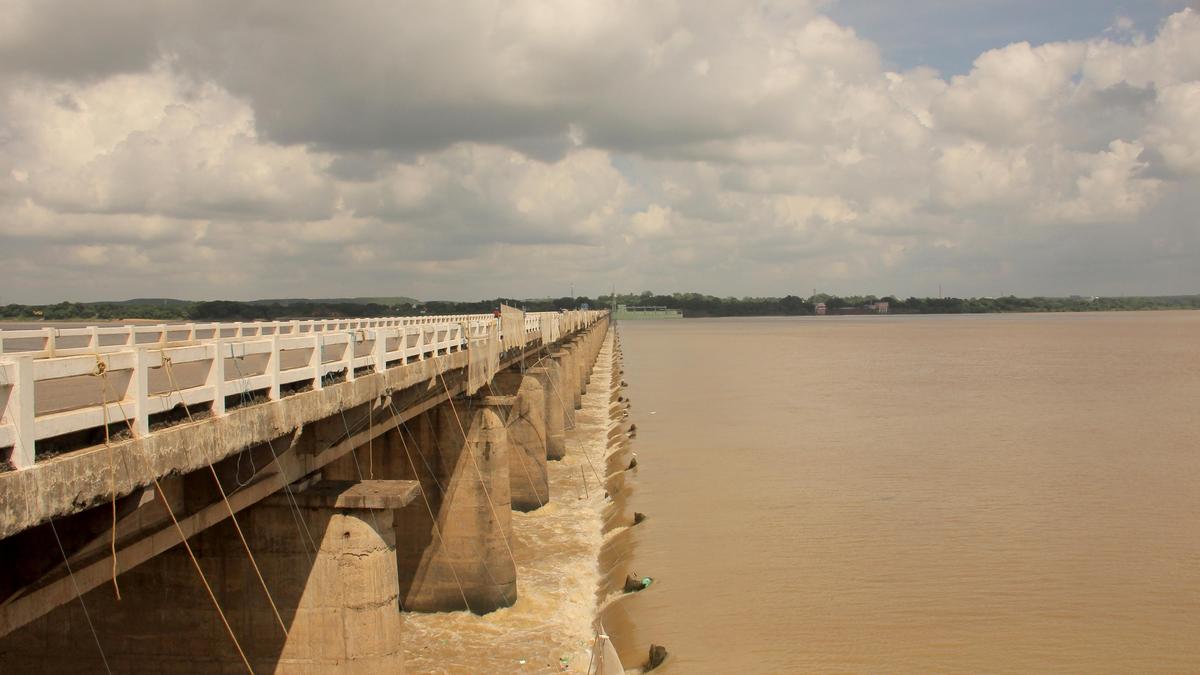
- The Mahanadi Water Disputes Tribunal (MWDT) has issued a final warning to Odisha and Chhattisgarh to reach a mutual water-sharing agreement, expressing strong dissatisfaction over repeated adjournments and the failure to present a concrete settlement proposal.
- The tribunal has set May 2, 2026, as the last opportunity for both states to finalise minutes of the technical committee meeting on annual water availability; failing a consensus, the MWDT will proceed to deliver a merit-based judgment with its own water-sharing formula.
- The Centre has extended the tribunal’s tenure by 9 months, with a new deadline of January 13, 2027, for submission of its report and decision.
Mahanadi Water Disputes Tribunal (MWDT)
- Constitution: Established on March 12, 2018, by the Central Government under the Inter-State River Water Disputes (ISRWD) Act, 1956, following a complaint filed by Odisha seeking adjudication of the inter-state water-sharing conflict.
- Composition: Headed by Chairperson Justice Bela M. Trivedi, with members Ravi Ranjan and Indermeet Kaur Kochhar.
- Recent Developments:
- The tribunal completed a five-day site inspection visit to Odisha, examining key locations linked to the Mahanadi river basin, including the Chilika Lake.
- Despite assertions of efforts towards an amicable resolution, no substantive proposal has been placed on record before the tribunal.
- The convener of Mahanadi Bachao Andolan, Sudarshan Das, expressed disappointment that even after eight years of the tribunal’s existence, reliable data on water availability has not been submitted.
The Mahanadi River
- Origin: Near Pharsiya village in Nagri Sihawa, Dhamtari district, Chhattisgarh, at an elevation of approximately 442 metres above sea level.
- Length: Ranges between 851 km and 900 km.
- Course: Flows through Chhattisgarh and Odisha before draining into the Bay of Bengal.
- Drainage Basin: Covers an area of approximately 1,32,100 sq. km to 1,41,600 sq. km, representing about 4.28% of India’s total geographical area.
- Key Tributaries:
- Left Bank: Shivnath, Hasdeo, Mand, and Ib.
- Right Bank: Jonk, Ong, and Tel.
- Major Geological Features:
- Hirakud Dam: Located near Sambalpur, it is the longest earthen dam in the world (26 km including dykes) and was India’s first major multipurpose river valley project after independence.
- Hirakud Reservoir: The largest artificial lake in Asia, covering 784 sq. km at full capacity.
- Satkosia Gorge: A 64-km long gorge where the river cuts through the Eastern Ghats.
- Mahanadi Delta: A combined delta formed with the Brahmani River, entering the sea through channels like the Kathjori, Birupa, and Devi.
- Water & Hydropower Potential:
- Annual surface water potential: 66.9 cubic km, of which 50 cubic km is usable.
- Hydropower potential assessed at 627 MW at 60% load factor.
- The valley supports 80,000 sq. km of culturable area, making it a vital agricultural zone.
- Discharge: During peak monsoon, discharge rate reaches 2 million cubic feet per second, comparable to the Ganges.
Genesis of the Dispute
- The dispute in its current form dates back to 2016, when Odisha alleged that Chhattisgarh had unilaterally constructed multiple barrages in the upper catchment areas of the Mahanadi, resulting in reduced water flow into Odisha during non-monsoon seasons.
- Odisha contended that Chhattisgarh’s actions violated a 1983 agreement between Odisha and undivided Madhya Pradesh, which mandated supervision of projects on the river by a Joint Control Board (JCB). When Chhattisgarh was carved out of Madhya Pradesh in 2000, it inherited both the river and the conflict.
- The Mahanadi sustains irrigation, hydropower, and fisheries across at least 20 of Odisha’s 30 districts; Odisha, as the lower riparian state, argues that reduced flows threaten its agricultural economy and drinking water security.
Additional Info
- Inter-State River Water Disputes (ISRWD) Act, 1956:
- Provides for the adjudication of disputes relating to waters of inter-state rivers through ad hoc Water Disputes Tribunals constituted by the Central Government.
- Once constituted, the tribunal investigates the matters referred to it and submits a report with its decision to the Central Government; the decision is binding on the states involved.
- Under the Act as amended in 2002, tribunals are required to give their decision within three years, which may be extended by the Centre.
- Mahanadi Bachao Andolan (MBA):
- A civil society organisation fighting for the protection of the Mahanadi River and securing Odisha’s proper share of its waters.
- Led by convenor Sudarshan Das, the MBA has organised satyagrahas and dharnas (including at Jantar Mantar, New Delhi) to press for the constitution of a tribunal and timely resolution of the dispute.
- River Boards Act, 1956: Provides for the establishment of River Boards for regulation and development of inter-state rivers and river valleys; however, no River Board has been constituted for the Mahanadi.
- Other Major Tribunals: As of 2023, 9 water disputes tribunals have been constituted under the ISRWD Act, of which 5 have been dissolved after adjudication. Active tribunals include those for Krishna, Cauvery, Mahanadi, and Mahadayi water disputes.
Sources
7th Edition of India–Uzbekistan Joint Military Exercise DUSTLIK Concludes Successfully
What’s the News?
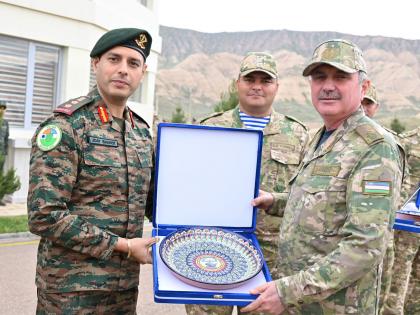
- The seventh edition of the annual bilateral military exercise ‘DUSTLIK’ between India and Uzbekistan concluded at the Gurumsaray Field Training Area in Namangan, Uzbekistan.
- The exercise took place from April 12 to April 25, 2026.
- The Indian contingent comprised 60 personnel, with 45 from the Indian Army (primarily a battalion of the Mahar Regiment) and 15 from the Indian Air Force. An approximately equal number of personnel represented the Uzbekistan Army and Air Force.
Exercise DUSTLIK: An Overview
- Nature: DUSTLIK is an annual bilateral training event conducted alternately in India and Uzbekistan.
- Previous Edition: The 2025 edition was held at the Foreign Training Node in Aundh, Pune, India.
- Primary Objective: To foster military cooperation and enhance combined capabilities for executing joint operations in semi-mountainous terrain.
- A core aim is to establish a unified operational algorithm between the command-and-control structures of both nations.
Additional Information
- India-Uzbekistan Defence Cooperation:
- The exercise series is a cornerstone of growing defence ties.
- India extended a Line of Credit (LOC) of USD 40 million to Uzbekistan to support defence industrial cooperation.
- Bilateral defence cooperation has been strengthened through structured dialogue, including two major defence industrial workshops held in September 2019 and November 2020.
- India’s Major Joint Military Exercises:
- With the US: Exercise Yudh Abhyas (Army) and Malabar (Navy).
- With France: Exercise Shakti (Army), Varuna (Navy), and Garuda (Air Force).
- With Russia: Exercise INDRA (Tri-service).
- With Sri Lanka: Exercise Mitra Shakti (Army).
- Central Asian Focus: Exercises like Khanjar (India-Kyrgyzstan) and KazInd (India-Kazakhstan) highlight India's growing strategic cooperation with Central Asian Republics.
Sources
WHO Prequalifies First-Ever Malaria Treatment for Newborns and Infants

What’s the News?
- The World Health Organization (WHO) has granted prequalification to an artemether-lumefantrine formulation—Coartem Baby—the first malaria treatment specifically designed for newborns and infants weighing between 2 and 5 kg.
- The WHO also prequalified three new Rapid Diagnostic Tests (RDTs) that target the pLDH protein, enabling detection of P. falciparum strains that are "invisible" to standard HRP2-based tests.
- The announcement was made ahead of World Malaria Day (observed annually on 25 April), which in 2026 adopted the theme "Driven to End Malaria: Now We Can. Now We Must."
First Malaria Treatment for Newborns and Infants
- Product: Coartem Baby (artemether-lumefantrine), developed by Novartis in partnership with the Medicines for Malaria Venture (MMV).
- Formulation: A child-friendly, dissolvable tablet with a sweet cherry flavor that can be mixed with breast milk.
- Mechanism: A dual-action combination therapy:
- Artemether – acts rapidly to reduce parasite load in the bloodstream.
- Lumefantrine – stays longer in the body to clear remaining parasites and prevent recrudescence.
- Target Population: Neonates and young infants weighing as little as 2 kg – a group previously excluded from quality-assured malaria treatment.
- Pricing: Novartis is providing the treatment on a largely not-for-profit basis in malaria-endemic regions.
Clinical Basis & Significance
- CALINA Study: The approval was supported by a Phase II/III clinical trial (CALINA) that investigated the optimal dose and ratio for infants under 5 kg, whose liver functions and metabolic needs differ from older children.
- Treatment Gap Addressed: Approximately 30 million babies born each year in malaria-endemic African regions lacked a dedicated infant formulation.
- Safety: Unlike previous practices of crushing adult or older-child tablets—which carried high risks of dosing errors, toxicity, and side effects—this formulation ensures accurate, weight-appropriate dosing and eliminates risky manual dose adjustments.
New Rapid Diagnostic Tests (RDTs)
- Problem: Some P. falciparum parasites have undergone gene deletions (pfhrp2/3) and no longer produce the HRP2 protein targeted by standard RDTs, leading to false-negative results. In parts of the Horn of Africa, up to 80% of cases were missed.
- Solution: WHO prequalified three new tests (BIOCREDIT line by Rapigen Inc.) that detect pLDH (Parasite Lactate Dehydrogenase), an essential enzyme that the parasite cannot easily shed.
- BIOCREDIT Malaria Ag Pf (pLDH) – detects P. falciparum even in the absence of HRP2.
- BIOCREDIT Malaria Ag Pf (pLDH/HRP2) – dual-target combo for maximum reliability in mixed zones.
- BIOCREDIT Malaria Ag Pf/Pv (pLDH/pLDH) – distinguishes between P. falciparum and P. vivax without relying on HRP2.
- WHO Recommendation: Countries should switch to alternative RDTs when more than 5% of cases are missed due to pfhrp2 deletions.
Global Malaria Burden & Context
- Statistics (World Malaria Report 2025): In 2024, there were an estimated 282 million malaria cases and 610,000 deaths across 80 countries, an increase from 2023.
- Stalling Progress: Gains are at risk due to drug resistance, insecticide resistance, diagnostic failure, and severe reductions in international development assistance.
- Progress: 47 countries have been certified malaria-free, and 37 countries reported fewer than 1,000 cases in 2024.
- India's Malaria Burden: India accounted for approximately 2% of global malaria cases and 2% of global malaria deaths (per WHO 2024 estimates). India’s National Framework for Malaria Elimination (NFME) targets elimination by 2030.
Additional Info
- WHO Prequalification: A regulatory status confirming that a medicine meets international standards of quality, safety, and efficacy, thereby enabling procurement by UN agencies, the Global Fund, and national governments for distribution in low-resource settings.
- Artemether-Lumefantrine: A first-line Artemisinin-based Combination Therapy (ACT) recommended by WHO for uncomplicated P. falciparum malaria. It is listed in the WHO Model List of Essential Medicines.
- Malaria Parasites: Five species infect humans – Plasmodium falciparum (deadliest), P. vivax (most widespread in India), P. ovale, P. malariae, and P. knowlesi.
- Related Indian Initiatives:
- National Vector Borne Disease Control Programme (NVBDCP): The umbrella programme for malaria prevention and control in India.
- National Framework for Malaria Elimination (NFME): Launched in 2016 with the goal of malaria elimination by 2030.
- 'Malaria No More' Campaign: A civil-society led initiative supporting malaria elimination efforts.
- Other Malaria Tools:
- RTS,S/AS01 (Mosquirix) and R21/Matrix-M are the two WHO-recommended malaria vaccines for children.
- Long-lasting Insecticidal Nets (LLINs) and Indoor Residual Spraying (IRS) remain core vector-control interventions.
- World Malaria Day Themes:
- 2026: "Driven to End Malaria: Now We Can. Now We Must."
- 2025: "Accelerating the Fight Against Malaria for a More Equitable World."
- 2024: "Health Equity, Gender and Human Rights."
- 2023: "Time to Deliver Zero Malaria: Invest, Innovate, Implement."
Sources
National Panchayati Raj Day 2026
What’s the News?
- National Panchayati Raj Day (NPRD) 2026 was observed across India on April 24, 2026, to commemorate the constitutionalisation of local self-government.
- The day marks the enactment of the 73rd Constitutional Amendment Act, 1992, which came into force on April 24, 1993, granting constitutional status to Panchayati Raj Institutions (PRIs).
- The Ministry of Panchayati Raj organised a national event at Vigyan Bhawan, New Delhi, centred around the theme of “Action-Oriented Governance” for a developed India.
Theme: “Sashakt Panchayat, Sarvangeen Vikas”
- The official theme for National Panchayati Raj Day 2026 was "Sashakt Panchayat, Sarvangeen Vikas" (Empowered Panchayats, Holistic Development).
- Core Focus Areas:
- Localisation of Sustainable Development Goals (SDGs).
- Enhancing digital governance through platforms like e-GramSwaraj.
- Contributing towards the vision of "Viksit Bharat" (Developed India) by 2047.
Significance of the Day
- Constitutional Recognition: Commemorates the 73rd Constitutional Amendment Act, 1992, which established a structured three-tier system of local self-government.
- Grassroots Democracy: Reinforces the importance of democratic power at the grassroots level, empowering over 3.1 million elected representatives in more than 2.5 lakh Panchayats across India.
- Promotion of Decentralisation: Highlights the role of Panchayats in implementing schemes related to agriculture, education, health, and infrastructure.
- Empowerment: Underscores the role of constitutional provisions in empowering women and marginalised groups through reservation.
Additional Info
- 73rd Constitutional Amendment Act, 1992:
- Enactment: Passed by Parliament in December 1992; came into force on 24 April 1993.
- Constitutional Provisions: Added Part IX (Articles 243 to 243O) and the 11th Schedule to the Constitution.
- Three-Tier Structure: Mandated the formation of PRIs at Village (Gram Panchayat), Intermediate/Block (Panchayat Samiti), and District (Zila Parishad) levels.
- Reservations: Seats reserved for Scheduled Castes (SCs), Scheduled Tribes (STs), and not less than one-third of seats for women.
- Elections & Finance: Mandated elections every five years, State Election Commissions to oversee polls, and State Finance Commissions (every 5 years) to recommend principles for sharing finances between the State and Panchayats.
- 11th Schedule: Lists 29 subjects (e.g., agriculture, land improvement, minor irrigation, animal husbandry, fisheries, social forestry, drinking water, roads, rural electrification, poverty alleviation programmes) for devolution to Panchayats.
- Gram Sabha: Recognised as the foundation of the Panchayati Raj system, comprising all adult members registered as voters in the village.
- Evolution of Local Governance:
- Ancient Roots: Village councils, traditionally called ‘Panchayats’ (from ‘Panch’, meaning five), were responsible for local administration.
- Colonial Era: The system was disrupted under early British rule.
- 1870: Lord Mayo’s Resolution introduced elected representatives in urban municipalities.
- 1882: Lord Ripon’s Resolution, known as the "Magna Carta of Local Self-Government", aimed to transfer administrative and financial responsibilities to local bodies.
- 1957: The Balwantrai Mehta Committee recommended a three-tier Panchayati Raj system.
- October 2, 1959: The first Gram Panchayat was established at Nagaur, Rajasthan by PM Jawaharlal Nehru.
- 2010: PM Manmohan Singh declared April 24 as the first National Panchayati Raj Day.
- Digital Initiatives:
- e-GramSwaraj: A digital platform under the e-Panchayat Mission Mode Project (MMP) to enhance transparency and efficiency in Panchayat administration, covering planning, budgeting, and asset management.
- SVAMITVA Scheme: A scheme using drone survey technology to map rural inhabited land, providing villagers with ‘Record of Rights’ to their properties.
- PANCHAM Chatbot: An AI-powered chatbot launched by the Ministry to assist Panchayat functionaries and citizens with queries related to PRI functioning and schemes.
- Constitutional Status:
- Part IX of the Constitution (Articles 243–243O) deals exclusively with Panchayats.
- Article 40 (Part IV, Directive Principles of State Policy) directs the State to organise village panchayats and endow them with powers to function as units of self-government—this was operationalised through the 73rd Amendment.
Sources
April 2026
Archive
October 2026
- 28 October 2026
- 27 October 2026
- 26 October 2026
- 24 October 2026
- 23 October 2026
- 22 October 2026
- 21 October 2026
- 20 October 2026
- 19 October 2026
- 17 October 2026
- 16 October 2026
- 15 October 2026
- 14 October 2026
- 13 October 2026
- 12 October 2026
- 10 October 2026
- 09 October 2026
- 08 October 2026
- 07 October 2026
- 06 October 2026
- 05 October 2026
- 03 October 2026
- 02 October 2026
- 01 October 2026
September 2026
- 30 September 2026
- 29 September 2026
- 28 September 2026
- 26 September 2026
- 25 September 2026
- 24 September 2026
- 23 September 2026
- 22 September 2026
- 21 September 2026
- 19 September 2026
- 18 September 2026
- 17 September 2026
- 16 September 2026
- 15 September 2026
- 12 September 2026
- 11 September 2026
- 10 September 2026
- 09 September 2026
- 08 September 2026
- 07 September 2026
- 05 September 2026
- 04 September 2026
- 03 September 2026
- 02 September 2026
- 01 September 2026
August 2026
- 31 August 2026
- 29 August 2026
- 27 August 2026
- 26 August 2026
- 25 August 2026
- 24 August 2026
- 22 August 2026
- 21 August 2026
- 20 August 2026
- 19 August 2026
- 18 August 2026
- 17 August 2026
- 14 August 2026
- 13 August 2026
- 12 August 2026
- 11 August 2026
- 10 August 2026
- 08 August 2026
- 07 August 2026
- 06 August 2026
- 05 August 2026
- 04 August 2026
- 03 August 2026
- 01 August 2026
July 2026
- 31 July 2026
- 30 July 2026
- 29 July 2026
- 28 July 2026
- 27 July 2026
- 25 July 2026
- 23 July 2026
- 22 July 2026
- 21 July 2026
- 20 July 2026
- 18 July 2026
- 17 July 2026
- 15 July 2026
- 14 July 2026
- 13 July 2026
- 11 July 2026
- 10 July 2026
- 09 July 2026
- 08 July 2026
- 07 July 2026
- 06 July 2026
- 04 July 2026
- 03 July 2026
- 02 July 2026
- 01 July 2026
June 2026
May 2026
April 2026
March 2026
- 31 March 2026
- 30 March 2026
- 28 March 2026
- 27 March 2026
- 26 March 2026
- 25 March 2026
- 24 March 2026
- 23 March 2026
- 21 March 2026
- 20 March 2026
- 19 March 2026
- 18 March 2026
- 17 March 2026
- 16 March 2026
- 14 March 2026
- 13 March 2026
- 12 March 2026
- 11 March 2026
- 10 March 2026
- 09 March 2026
- 07 March 2026
- 06 March 2026
- 05 March 2026
- 03 March 2026
- 02 March 2026
February 2026
- 28 February 2026
- 27 February 2026
- 26 February 2026
- 25 February 2026
- 24 February 2026
- 23 February 2026
- 21 February 2026
- 20 February 2026
- 19 February 2026
- 18 February 2026
- 17 February 2026
- 16 February 2026
- 13 February 2026
- 12 February 2026
- 11 February 2026
- 10 February 2026
- 09 February 2026
- 07 February 2026
- 06 February 2026
- 05 February 2026
- 04 February 2026
- 03 February 2026
- 02 February 2026
January 2026
- 31 January 2026
- 30 January 2026
- 29 January 2026
- 28 January 2026
- 27 January 2026
- 26 January 2026
- 24 January 2026
- 23 January 2026
- 22 January 2026
- 21 January 2026
- 20 January 2026
- 19 January 2026
- 16 January 2026
- 15 January 2026
- 14 January 2026
- 13 January 2026
- 12 January 2026
- 10 January 2026
- 09 January 2026
- 08 January 2026
- 07 January 2026
- 06 January 2026
- 05 January 2026
- 03 January 2026
- 02 January 2026
- 01 January 2026
December 2025
- 31 December 2025
- 30 December 2025
- 29 December 2025
- 27 December 2025
- 26 December 2025
- 24 December 2025
- 23 December 2025
- 22 December 2025
- 20 December 2025
- 19 December 2025
- 18 December 2025
- 17 December 2025
- 16 December 2025
- 15 December 2025
- 13 December 2025
- 12 December 2025
- 11 December 2025
- 10 December 2025
- 09 December 2025
- 08 December 2025
- 05 December 2025
- 04 December 2025
- 03 December 2025
- 02 December 2025
November 2025
- 29 November 2025
- 28 November 2025
- 27 November 2025
- 26 November 2025
- 25 November 2025
- 24 November 2025
- 22 November 2025
- 21 November 2025
- 20 November 2025
- 19 November 2025
- 18 November 2025
- 17 November 2025
- 15 November 2025
- 14 November 2025
- 13 November 2025
- 12 November 2025
- 11 November 2025
- 10 November 2025
- 08 November 2025
- 07 November 2025
- 06 November 2025
- 05 November 2025
- 04 November 2025
- 03 November 2025
- 01 November 2025
October 2025
- 31 October 2025
- 30 October 2025
- 29 October 2025
- 28 October 2025
- 27 October 2025
- 25 October 2025
- 24 October 2025
- 23 October 2025
- 22 October 2025
- 21 October 2025
- 20 October 2025
- 18 October 2025
- 17 October 2025
- 16 October 2025
- 15 October 2025
- 14 October 2025
- 13 October 2025
- 11 October 2025
- 10 October 2025
- 09 October 2025
- 08 October 2025
- 07 October 2025
- 06 October 2025
- 04 October 2025
- 03 October 2025
- 02 October 2025
- 01 October 2025
September 2025
- 30 September 2025
- 29 September 2025
- 27 September 2025
- 26 September 2025
- 25 September 2025
- 24 September 2025
- 23 September 2025
- 22 September 2025
- 20 September 2025
- 19 September 2025
- 18 September 2025
- 17 September 2025
- 16 September 2025
- 15 September 2025
- 13 September 2025
- 12 September 2025
- 11 September 2025
- 10 September 2025
- 09 September 2025
- 08 September 2025
- 06 September 2025
- 05 September 2025
- 04 September 2025
- 03 September 2025
- 02 September 2025
- 01 September 2025
August 2025
- 30 August 2025
- 29 August 2025
- 28 August 2025
- 27 August 2025
- 26 August 2025
- 25 August 2025
- 23 August 2025
- 22 August 2025
- 21 August 2025
- 20 August 2025
- 19 August 2025
- 18 August 2025
- 16 August 2025
- 14 August 2025
- 13 August 2025
- 12 August 2025
- 11 August 2025
- 08 August 2025
- 07 August 2025
- 06 August 2025
- 05 August 2025
- 04 August 2025
- 02 August 2025
- 01 August 2025
July 2025
- 31 July 2025
- 30 July 2025
- 29 July 2025
- 28 July 2025
- 26 July 2025
- 25 July 2025
- 24 July 2025
- 23 July 2025
- 22 July 2025
- 21 July 2025
- 19 July 2025
- 18 July 2025
- 17 July 2025
- 16 July 2025
- 15 July 2025
- 12 July 2025
- 11 July 2025
- 10 July 2025
- 09 July 2025
- 07 July 2025
- 05 July 2025
- 04 July 2025
- 03 July 2025
- 02 July 2025
- 01 July 2025
June 2025
- 30 June 2025
- 28 June 2025
- 27 June 2025
- 26 June 2025
- 25 June 2025
- 24 June 2025
- 23 June 2025
- 21 June 2025
- 20 June 2025
- 19 June 2025
- 18 June 2025
- 17 June 2025
- 16 June 2025
- 14 June 2025
- 13 June 2025
- 12 June 2025
- 11 June 2025
- 10 June 2025
- 09 June 2025
- 07 June 2025
- 06 June 2025
- 05 June 2025
- 04 June 2025
- 03 June 2025
- 02 June 2025
May 2025
April 2025
- 30 April 2025
- 29 April 2025
- 28 April 2025
- 26 April 2025
- 25 April 2025
- 24 April 2025
- 23 April 2025
- 22 April 2025
- 21 April 2025
- 19 April 2025
- 18 April 2025
- 17 April 2025
- 16 April 2025
- 15 April 2025
- 14 April 2025
- 12 April 2025
- 11 April 2025
- 10 April 2025
- 09 April 2025
- 08 April 2025
- 07 April 2025
- 05 April 2025
- 04 April 2025
- 03 April 2025
- 02 April 2025
- 01 April 2025
March 2025
- 31 March 2025
- 29 March 2025
- 28 March 2025
- 27 March 2025
- 26 March 2025
- 25 March 2025
- 24 March 2025
- 22 March 2025
- 21 March 2025
- 20 March 2025
- 19 March 2025
- 18 March 2025
- 17 March 2025
- 15 March 2025
- 13 March 2025
- 12 March 2025
- 11 March 2025
- 10 March 2025
- 08 March 2025
- 07 March 2025
- 06 March 2025
- 05 March 2025
- 04 March 2025
- 03 March 2025
- 01 March 2025
February 2025
- 28 February 2025
- 27 February 2025
- 26 February 2025
- 25 February 2025
- 24 February 2025
- 22 February 2025
- 21 February 2025
- 20 February 2025
- 19 February 2025
- 18 February 2025
- 17 February 2025
- 15 February 2025
- 14 February 2025
- 13 February 2025
- 12 February 2025
- 11 February 2025
- 10 February 2025
- 08 February 2025
- 07 February 2025
- 06 February 2025
- 05 February 2025
- 04 February 2025
- 03 February 2025
- 01 February 2025
January 2025
- 31 January 2025
- 30 January 2025
- 29 January 2025
- 28 January 2025
- 27 January 2025
- 25 January 2025
- 24 January 2025
- 23 January 2025
- 22 January 2025
- 21 January 2025
- 20 January 2025
- 18 January 2025
- 17 January 2025
- 16 January 2025
- 15 January 2025
- 14 January 2025
- 13 January 2025
- 11 January 2025
- 10 January 2025
- 09 January 2025
- 08 January 2025
- 07 January 2025
- 06 January 2025
- 04 January 2025
- 03 January 2025
- 02 January 2025
- 01 January 2025