
Current Affairs
Stay updated with the latest national and international events.
26 January 2026
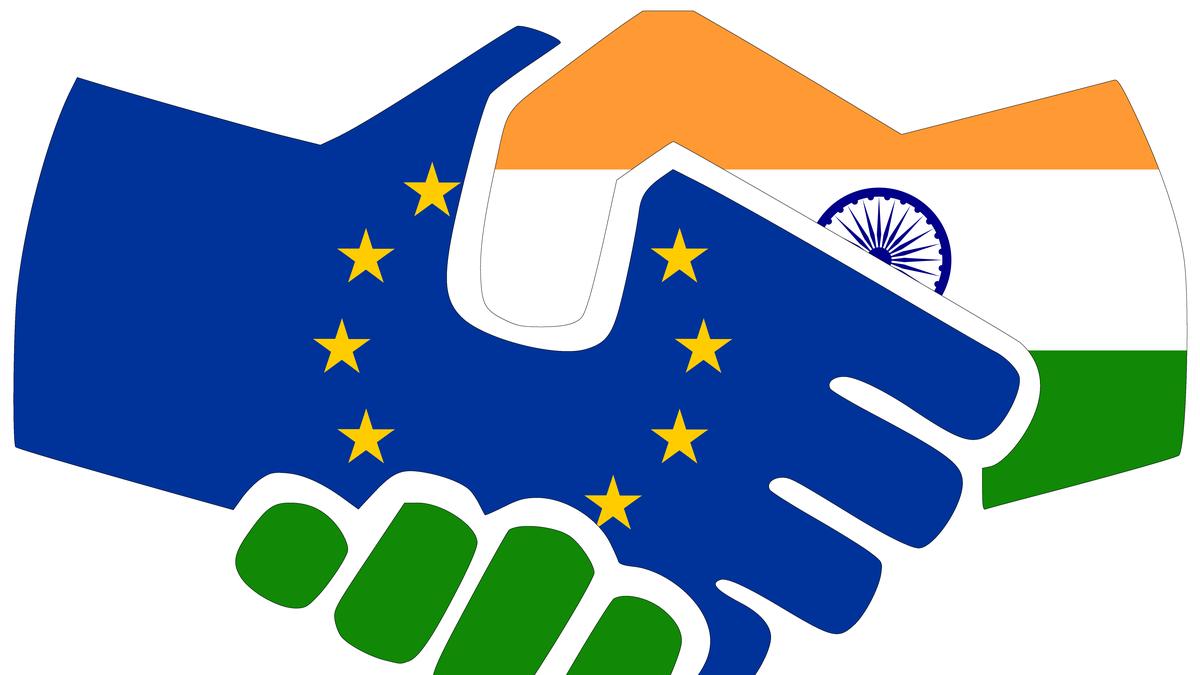
India and the European Union Conclude Historic Free Trade Agreement Negotiations
What’s the News?
- India and the European Union (EU) have successfully concluded negotiations for a long-awaited Free Trade Agreement (FTA), marking a landmark shift in their strategic partnership.
- The announcement was made during the 16th India-EU Summit in New Delhi, where European Commission President Ursula von der Leyen and European Council President António Costa attended as chief guests for India’s 77th Republic Day.
- Described as the "mother of all deals," the pact aims to double bilateral trade and integrate India more deeply into global supply chains while reducing economic reliance on single-country markets.
The India-EU Free Trade Agreement (FTA)
- Market Access and Tariffs:
- India has agreed to slash import duties on European cars from existing rates of 70%–110% down to 40% immediately, with a path toward 10% over time.
- The EU will provide duty-free access for nearly 99% of Indian exports, benefiting sectors like textiles, leather, and gems and jewelry.
- Sensitive sectors, including certain dairy and agricultural products, have been excluded to protect Indian farmers.
- Investment Protection:
- A separate Investment Protection Agreement (IPA) was finalized to provide a stable legal framework for investors and institutionalize dispute settlement mechanisms.
- Geographical Indications (GI):
- The deal includes a dedicated agreement to protect local products like Darjeeling Tea and Feta Cheese, ensuring their names are not misused in either market.
Strategic Pillars: TTC and IMEC
- Trade and Technology Council (TTC):
- Launched to coordinate on critical and emerging technologies, India is only the second partner (after the USA) with whom the EU has established this high-level forum.
- Key focus areas include semiconductor supply chain resilience, Artificial Intelligence (AI) ethics, and the development of 6G standards.
- Connectivity and Energy:
- The India-Middle East-Europe Economic Corridor (IMEC) serves as a strategic alternative to the Belt and Road Initiative, focusing on a multimodal network of ships, rail, and pipelines.
- The corridor is projected to increase Indian export valuation by 5% to 8%, contributing an estimated $21.85 billion annually.
- Cooperation on Green Hydrogen aims to link India's renewable energy capacity with Europe's decarbonization goals through subsea pipelines and grids.
Challenges: CBAM and EUDR
- Carbon Border Adjustment Mechanism (CBAM):
- The EU began the full implementation phase of its "carbon tax" in 2026, targeting imports of steel, aluminum, cement, and fertilizers.
- Indian exporters may need to absorb costs or cut prices by 15%–22% to remain competitive under the new levy.
- EU Deforestation Regulation (EUDR):
- This non-tariff barrier requires strict "deforestation-free" certification for products like coffee, rubber, and timber, posing compliance hurdles for Indian MSMEs.
Additional Info
- The European Union (EU):
- A unique political and economic union of 27 member states.
- It is India’s second-largest trading partner (after the USA), with bilateral trade in goods and services reaching approximately €184 billion.
- Historical Context:
- India and the European Economic Community established diplomatic relations in the early 1960s.
- The relationship was elevated to a Strategic Partnership in 2004, but FTA talks remained stalled for nine years (2013–2022) before being revived.
- Economic Impact:
- Over 6,000 European companies currently operate in India, contributing significantly to technology transfer and job creation.
- India’s GDP, estimated at $4.13 trillion in 2025, is projected to become the world's fourth largest in 2026.
Sources
Padma Awards 2026: 131 Changemakers Honoured

What’s the News?
- The President of India approved the conferment of 131 Padma Awards for the year 2026, comprising 5 Padma Vibhushan, 13 Padma Bhushan, and 113 Padma Shri awards.
- The announcement, made on the eve of the 77th Republic Day, continues the government’s focus on the "People’s Padma" by recognizing "unsung heroes" from remote and underserved regions.
- The 2026 list includes 19 women, 16 posthumous awardees, and 6 individuals from the category of Foreigners/NRI/PIO/OCI.
- Notable recipients include legendary actor Dharmendra Singh Deol (Posthumous), cricketers Rohit Sharma and Harmanpreet Kaur, and several grassroots changemakers.
The 2026 Awardee Profile
- Padma Vibhushan (5 Awardees):
- Awarded for exceptional and distinguished service.
- Recipients include Dharmendra Singh Deol (Art), K T Thomas (Public Affairs), N Rajam (Art), P Narayanan (Literature and Education), and V S Achuthanandhan (Public Affairs).
- Padma Bhushan (13 Awardees):
- Awarded for distinguished service of high order.
- Key figures include singer Alka Yagnik, actor Mammootty, industrialist Uday Kotak, former Jharkhand CM Shibu Soren (Posthumous), and tennis icon Vijay Amritraj.
- Padma Shri (113 Awardees):
- Awarded for distinguished service in any field.
- Recognition was given to sports stars Rohit Sharma, Harmanpreet Kaur, and Savita Punia, along with actor R. Madhavan and former IPS officer K Vijay Kumar.
"Unsung Heroes" and Diversity
- Grassroots Impact: The 2026 awards recognized individuals from 84 districts across 30 States and UTs, with 10 districts featuring on the list for the first time since Independence.
- Key Unsung Heroes:
- Anke Gowda M. (Karnataka): A former bus conductor who established "Pustak Mane," a free-access library housing over 2 million books.
- Taga Ram Bheel (Rajasthan): Honoured for reviving the Algoza, a rare traditional folk instrument.
- Armida Fernandez (Maharashtra): A neonatologist who established Asia’s first human milk bank.
- Hally War (Meghalaya): Recognized for long-standing contributions to environmental conservation.
- Marginalized Communities: The list significantly features individuals from tribal areas, primitive tribes, and Dalit communities who have dedicated their lives to healthcare, sanitation, and sustainable livelihoods.
Additional Info
- Padma Awards Hierarchy:
- Established in 1954, these are among India’s highest civilian honours, announced annually (except for brief interruptions in 1978, 1979, and 1993–1997).
- Bharat Ratna: The highest civilian award (not awarded in 2026).
- Padma Vibhushan: Second highest.
- Padma Bhushan: Third highest.
- Padma Shri: Fourth highest.
- Constitutional Aspect:
- Under Article 18 of the Constitution, these awards are titles of merit and cannot be used as a prefix or suffix to the recipient’s name.
- Selection Process:
- Nominations are open to the public through the Padma Portal.
- Recommendations are screened by the Padma Awards Committee, constituted by the Prime Minister every year and headed by the Cabinet Secretary.
Sources
President Approves Jeevan Raksha Padak Series of Awards 2025 for 30 Individuals

What’s the News?
- The President of India has approved the conferment of the Jeevan Raksha Padak Series of Awards — 2025 on 30 individuals for their exceptional acts of courage in saving human lives.
- The awards, announced on the eve of the 77th Republic Day, recognize meritorious acts performed in various life-threatening situations such as drowning, fire incidents, and natural calamities.
- The 2025 list includes 6 Sarvottam Jeevan Raksha Padak, 6 Uttam Jeevan Raksha Padak, and 18 Jeevan Raksha Padak recipients.
- Among the awardees, six were honored posthumously for their selfless sacrifice.
The Jeevan Raksha Padak Series
- Classification of Awards: The series is divided into three distinct categories based on the level of risk and courage displayed:
- Sarvottam Jeevan Raksha Padak: Awarded for conspicuous courage in saving a life under circumstances of very great danger to the life of the rescuer.
- Uttam Jeevan Raksha Padak: Conferred for courage and promptitude in saving a life under circumstances of great danger.
- Jeevan Raksha Padak: Conferred for courage and promptitude displayed under circumstances of grave bodily injury to the rescuer.
- Key Recipients (2025):
- Sarvottam Category: Includes Shri Manohar Singh Chouhan (Posthumous), Shri Rajendra Prasad Mishra, and defense personnel such as Naik Ashutosh Biswas (Posthumous) and Naib Subedar Manjeet (Posthumous).
- Uttam Category: Awardees include Shri Sumit Yadav (Delhi), Shri Wasim Ahmad Ganie (J&K), and Sepoy Shwensinlo Semp (Posthumous).
- Jeevan Raksha Category: Recognizes individuals from diverse backgrounds, including minors like Master Akash K P and Master Harshik Mohan from Kerala.
Monetary and Recognition Details
- Financial Allowance: Each awardee receives a one-time lump sum monetary allowance:
- Sarvottam: ₹2,00,000
- Uttam: ₹1,50,000
- Jeevan Raksha: ₹1,00,000
- The Decoration: The award consists of a Medal and a Certificate signed by the Union Home Minister.
- Presentation: The decoration is typically presented to the awardee by the respective State Government or Union Ministry to which the person belongs.
Additional Info
- Historical Context:
- Instituted in 1961, these awards were originally an offshoot of the Ashoka Chakra series of gallantry awards.
- The scheme was renamed and reorganized into the current three-tier series in 1967.
- Eligibility and Process:
- Universal Eligibility: Open to persons of either sex from all walks of life.
- Uniformed Personnel: Members of the Armed Forces, Police Forces, and Fire Services are eligible only if the life-saving act is performed outside the course of their duty.
- Timeframe: Recommendations are considered by the JRP Awards Committee within a period of two calendar years from the date of the act.
- Rashtriya Puraskar Portal: Nominations must be submitted online through this dedicated portal managed by the Ministry of Home Affairs.
Sources
Neolithic Relics and Jain Pedestal Unearthed at Lakkundi Boost UNESCO Bid

What’s the News?
- Ongoing archaeological excavations at Lakkundi village in Karnataka’s Gadag district have unearthed significant relics, including Neolithic-period pottery and a Jain pedestal.
- The excavation, supervised by the Archaeological Survey of India (ASI), began on January 16, 2026, following the accidental discovery of 470 grams of gold ornaments by a local boy while digging a house foundation.
- These findings have provided a major fillip to the Karnataka government’s push to include Lakkundi in the UNESCO World Heritage Sites tentative list.
- The excavation is currently focused on the premises of the Kote Veerabhadraswamy (Veerabhadreshwara) Temple, reaching a depth of approximately 1.55 metres.
Key Archaeological Discoveries
- Prehistoric Artefacts:
- Neolithic Pottery: A broken piece of grey clay pot believed to date back to the New Stone Age (Neolithic period).
- Stone Tools: A stone axe and cowrie shells (kavade) were discovered, indicating human habitation dating back nearly 3,000 years.
- Religious and Cultural Relics:
- Jain Pedestal: A broken stone pedestal featuring a carving of a Jina was recovered, highlighting the site's significance as a historical Jain centre.
- Seven-Hooded Naga: A rare Vijayanagara-era seven-hooded Naga stone idol was unearthed, traditionally symbolising protection and prosperity.
- Other Finds: Excavations also yielded a panipitha (ablution base) of a Shiva linga, Dwarapalaka (gatekeeper) sculptures, and Shatavahana-period pottery.
The UNESCO World Heritage Bid
- Nomination Status: The Karnataka Tourism Department and INTACH are finalising a proposal to include Lakkundi’s monuments in the UNESCO Tentative List.
- Architectural Significance: Lakkundi is a prime example of the Vesara style of architecture—a hybrid of Nagara (Northern) and Dravida (Southern) styles developed under the Kalyani Chalukyas.
- Infrastructure and Conservation: The state has sanctioned ₹10.16 crore for the conservation of six major monuments, including the Virupaksha and Mallikarjuna temples.
- Selection Criteria: The site meets UNESCO criteria for cultural interchange and technological advancements, particularly in its intricate schist stone carvings and advanced stepwell (Kalyani) hydrological systems.
Additional Info
- Historical Context of Lakkundi:
- Ancient Names: Known in inscriptions as Lokkigundi, it was compared to the mythical city of Amaravati for its affluence.
- Dynastic Rule: It served as a major cultural and economic hub under the Chalukyas, Rashtrakutas, Hoysalas, Kalachuris, and Seunas.
- The Royal Mint: Lakkundi was famous for its "tankashale" (mint), producing gold coins known as Lokki ponna and Lokki gadyana.
- Key Monuments:
- Brahma Jinalaya: Built in 1007 CE by the philanthropist queen Attimabbe, it is one of the oldest and largest Jain temples in the region.
- Kasi Visvesvara Temple: Renowned as the most ornate and sophisticated example of Kalyana Chalukya architecture.
- Musukina Bavi: A prominent example of the "101 stepped wells" that once defined the village.
Sources
January 2026
31 January 202630 January 202629 January 202628 January 202627 January 202626 January 202624 January 202623 January 202622 January 202621 January 202620 January 202619 January 202616 January 202615 January 202614 January 202613 January 202612 January 202610 January 202609 January 202608 January 202607 January 202606 January 202605 January 202603 January 202602 January 202601 January 2026
Archive
October 2026
- 28 October 2026
- 27 October 2026
- 26 October 2026
- 24 October 2026
- 23 October 2026
- 22 October 2026
- 21 October 2026
- 20 October 2026
- 19 October 2026
- 17 October 2026
- 16 October 2026
- 15 October 2026
- 14 October 2026
- 13 October 2026
- 12 October 2026
- 10 October 2026
- 09 October 2026
- 08 October 2026
- 07 October 2026
- 06 October 2026
- 05 October 2026
- 03 October 2026
- 02 October 2026
- 01 October 2026
September 2026
- 30 September 2026
- 29 September 2026
- 28 September 2026
- 26 September 2026
- 25 September 2026
- 24 September 2026
- 23 September 2026
- 22 September 2026
- 21 September 2026
- 19 September 2026
- 18 September 2026
- 17 September 2026
- 16 September 2026
- 15 September 2026
- 12 September 2026
- 11 September 2026
- 10 September 2026
- 09 September 2026
- 08 September 2026
- 07 September 2026
- 05 September 2026
- 04 September 2026
- 03 September 2026
- 02 September 2026
- 01 September 2026
August 2026
- 31 August 2026
- 29 August 2026
- 27 August 2026
- 26 August 2026
- 25 August 2026
- 24 August 2026
- 22 August 2026
- 21 August 2026
- 20 August 2026
- 19 August 2026
- 18 August 2026
- 17 August 2026
- 14 August 2026
- 13 August 2026
- 12 August 2026
- 11 August 2026
- 10 August 2026
- 08 August 2026
- 07 August 2026
- 06 August 2026
- 05 August 2026
- 04 August 2026
- 03 August 2026
- 01 August 2026
July 2026
- 31 July 2026
- 30 July 2026
- 29 July 2026
- 28 July 2026
- 27 July 2026
- 25 July 2026
- 23 July 2026
- 22 July 2026
- 21 July 2026
- 20 July 2026
- 18 July 2026
- 17 July 2026
- 15 July 2026
- 14 July 2026
- 13 July 2026
- 11 July 2026
- 10 July 2026
- 09 July 2026
- 08 July 2026
- 07 July 2026
- 06 July 2026
- 04 July 2026
- 03 July 2026
- 02 July 2026
- 01 July 2026
June 2026
May 2026
April 2026
March 2026
- 31 March 2026
- 30 March 2026
- 28 March 2026
- 27 March 2026
- 26 March 2026
- 25 March 2026
- 24 March 2026
- 23 March 2026
- 21 March 2026
- 20 March 2026
- 19 March 2026
- 18 March 2026
- 17 March 2026
- 16 March 2026
- 14 March 2026
- 13 March 2026
- 12 March 2026
- 11 March 2026
- 10 March 2026
- 09 March 2026
- 07 March 2026
- 06 March 2026
- 05 March 2026
- 03 March 2026
- 02 March 2026
February 2026
- 28 February 2026
- 27 February 2026
- 26 February 2026
- 25 February 2026
- 24 February 2026
- 23 February 2026
- 21 February 2026
- 20 February 2026
- 19 February 2026
- 18 February 2026
- 17 February 2026
- 16 February 2026
- 13 February 2026
- 12 February 2026
- 11 February 2026
- 10 February 2026
- 09 February 2026
- 07 February 2026
- 06 February 2026
- 05 February 2026
- 04 February 2026
- 03 February 2026
- 02 February 2026
January 2026
- 31 January 2026
- 30 January 2026
- 29 January 2026
- 28 January 2026
- 27 January 2026
- 26 January 2026
- 24 January 2026
- 23 January 2026
- 22 January 2026
- 21 January 2026
- 20 January 2026
- 19 January 2026
- 16 January 2026
- 15 January 2026
- 14 January 2026
- 13 January 2026
- 12 January 2026
- 10 January 2026
- 09 January 2026
- 08 January 2026
- 07 January 2026
- 06 January 2026
- 05 January 2026
- 03 January 2026
- 02 January 2026
- 01 January 2026
December 2025
- 31 December 2025
- 30 December 2025
- 29 December 2025
- 27 December 2025
- 26 December 2025
- 24 December 2025
- 23 December 2025
- 22 December 2025
- 20 December 2025
- 19 December 2025
- 18 December 2025
- 17 December 2025
- 16 December 2025
- 15 December 2025
- 13 December 2025
- 12 December 2025
- 11 December 2025
- 10 December 2025
- 09 December 2025
- 08 December 2025
- 05 December 2025
- 04 December 2025
- 03 December 2025
- 02 December 2025
November 2025
- 29 November 2025
- 28 November 2025
- 27 November 2025
- 26 November 2025
- 25 November 2025
- 24 November 2025
- 22 November 2025
- 21 November 2025
- 20 November 2025
- 19 November 2025
- 18 November 2025
- 17 November 2025
- 15 November 2025
- 14 November 2025
- 13 November 2025
- 12 November 2025
- 11 November 2025
- 10 November 2025
- 08 November 2025
- 07 November 2025
- 06 November 2025
- 05 November 2025
- 04 November 2025
- 03 November 2025
- 01 November 2025
October 2025
- 31 October 2025
- 30 October 2025
- 29 October 2025
- 28 October 2025
- 27 October 2025
- 25 October 2025
- 24 October 2025
- 23 October 2025
- 22 October 2025
- 21 October 2025
- 20 October 2025
- 18 October 2025
- 17 October 2025
- 16 October 2025
- 15 October 2025
- 14 October 2025
- 13 October 2025
- 11 October 2025
- 10 October 2025
- 09 October 2025
- 08 October 2025
- 07 October 2025
- 06 October 2025
- 04 October 2025
- 03 October 2025
- 02 October 2025
- 01 October 2025
September 2025
- 30 September 2025
- 29 September 2025
- 27 September 2025
- 26 September 2025
- 25 September 2025
- 24 September 2025
- 23 September 2025
- 22 September 2025
- 20 September 2025
- 19 September 2025
- 18 September 2025
- 17 September 2025
- 16 September 2025
- 15 September 2025
- 13 September 2025
- 12 September 2025
- 11 September 2025
- 10 September 2025
- 09 September 2025
- 08 September 2025
- 06 September 2025
- 05 September 2025
- 04 September 2025
- 03 September 2025
- 02 September 2025
- 01 September 2025
August 2025
- 30 August 2025
- 29 August 2025
- 28 August 2025
- 27 August 2025
- 26 August 2025
- 25 August 2025
- 23 August 2025
- 22 August 2025
- 21 August 2025
- 20 August 2025
- 19 August 2025
- 18 August 2025
- 16 August 2025
- 14 August 2025
- 13 August 2025
- 12 August 2025
- 11 August 2025
- 08 August 2025
- 07 August 2025
- 06 August 2025
- 05 August 2025
- 04 August 2025
- 02 August 2025
- 01 August 2025
July 2025
- 31 July 2025
- 30 July 2025
- 29 July 2025
- 28 July 2025
- 26 July 2025
- 25 July 2025
- 24 July 2025
- 23 July 2025
- 22 July 2025
- 21 July 2025
- 19 July 2025
- 18 July 2025
- 17 July 2025
- 16 July 2025
- 15 July 2025
- 12 July 2025
- 11 July 2025
- 10 July 2025
- 09 July 2025
- 07 July 2025
- 05 July 2025
- 04 July 2025
- 03 July 2025
- 02 July 2025
- 01 July 2025
June 2025
- 30 June 2025
- 28 June 2025
- 27 June 2025
- 26 June 2025
- 25 June 2025
- 24 June 2025
- 23 June 2025
- 21 June 2025
- 20 June 2025
- 19 June 2025
- 18 June 2025
- 17 June 2025
- 16 June 2025
- 14 June 2025
- 13 June 2025
- 12 June 2025
- 11 June 2025
- 10 June 2025
- 09 June 2025
- 07 June 2025
- 06 June 2025
- 05 June 2025
- 04 June 2025
- 03 June 2025
- 02 June 2025
May 2025
April 2025
- 30 April 2025
- 29 April 2025
- 28 April 2025
- 26 April 2025
- 25 April 2025
- 24 April 2025
- 23 April 2025
- 22 April 2025
- 21 April 2025
- 19 April 2025
- 18 April 2025
- 17 April 2025
- 16 April 2025
- 15 April 2025
- 14 April 2025
- 12 April 2025
- 11 April 2025
- 10 April 2025
- 09 April 2025
- 08 April 2025
- 07 April 2025
- 05 April 2025
- 04 April 2025
- 03 April 2025
- 02 April 2025
- 01 April 2025
March 2025
- 31 March 2025
- 29 March 2025
- 28 March 2025
- 27 March 2025
- 26 March 2025
- 25 March 2025
- 24 March 2025
- 22 March 2025
- 21 March 2025
- 20 March 2025
- 19 March 2025
- 18 March 2025
- 17 March 2025
- 15 March 2025
- 13 March 2025
- 12 March 2025
- 11 March 2025
- 10 March 2025
- 08 March 2025
- 07 March 2025
- 06 March 2025
- 05 March 2025
- 04 March 2025
- 03 March 2025
- 01 March 2025
February 2025
- 28 February 2025
- 27 February 2025
- 26 February 2025
- 25 February 2025
- 24 February 2025
- 22 February 2025
- 21 February 2025
- 20 February 2025
- 19 February 2025
- 18 February 2025
- 17 February 2025
- 15 February 2025
- 14 February 2025
- 13 February 2025
- 12 February 2025
- 11 February 2025
- 10 February 2025
- 08 February 2025
- 07 February 2025
- 06 February 2025
- 05 February 2025
- 04 February 2025
- 03 February 2025
- 01 February 2025
January 2025
- 31 January 2025
- 30 January 2025
- 29 January 2025
- 28 January 2025
- 27 January 2025
- 25 January 2025
- 24 January 2025
- 23 January 2025
- 22 January 2025
- 21 January 2025
- 20 January 2025
- 18 January 2025
- 17 January 2025
- 16 January 2025
- 15 January 2025
- 14 January 2025
- 13 January 2025
- 11 January 2025
- 10 January 2025
- 09 January 2025
- 08 January 2025
- 07 January 2025
- 06 January 2025
- 04 January 2025
- 03 January 2025
- 02 January 2025
- 01 January 2025