
Current Affairs
Stay updated with the latest national and international events.
26 April 2025
UNSC Condemns Pahalgam Terror Attack, Calls for Global Action
The international community, through the United Nations Security Council (UNSC), has strongly condemned the recent terrorist attack in Pahalgam, Jammu & Kashmir, which tragically claimed the lives of numerous tourists.

Key Developments:
- UNSC Statement: In a press statement issued around April 25-26, 2025, the 15-member UNSC unanimously condemned the April 22 attack as a "reprehensible act of terrorism".
- Nature of Terrorism: The Council reiterated that terrorism, in all its forms and manifestations, constitutes one of the most serious threats to international peace and security. It stressed that such acts are "criminal and unjustifiable", regardless of motivation, location, timing, or perpetrators.
- Call for Justice: The UNSC underlined the critical need to hold the perpetrators, organisers, financiers, and sponsors of this attack accountable and bring them to justice.
- International Cooperation: The statement urged all States, in accordance with their obligations under international law and relevant Security Council resolutions, to cooperate actively with all relevant authorities to ensure accountability.
- Note: Some reports indicated diplomatic negotiations occurred regarding the statement's phrasing, particularly concerning cooperation specifically with the "Government of India" versus "all relevant authorities," compared to previous statements like the one following the 2019 Pulwama attack.
- Condolences: Deepest sympathy and condolences were extended to the families of the victims and the Governments of India and Nepal (as a Nepali national was among the deceased).
The Pahalgam Attack (April 22, 2025):
- Location: Baisaran meadow, a popular tourist spot near Pahalgam in the Anantnag district of Jammu & Kashmir.
- Incident: Armed terrorists opened indiscriminate fire on a group of tourists.
- Victims: At least 26 people were killed (mostly Indian tourists from various states and one Nepali citizen) and many others were injured. Most victims were reported to be male civilians.
- Responsibility Claimed: The attack was claimed by The Resistance Front (TRF), widely considered an offshoot of the Pakistan-based terror group Lashkar-e-Taiba (LeT).
- Impact: This attack marks a significant escalation, being one of the deadliest targeting civilians/tourists in the Kashmir Valley in recent years. It struck a major tourist hub during the peak season, severely impacting the region's tourism sector and the narrative of returning normalcy.
Significance for India:
- The UNSC condemnation provides crucial international backing for India's position against cross-border terrorism.
- It strengthens India's call for concerted global action against terrorist groups and their sponsors operating in the region.
- It serves as important diplomatic leverage in international forums.
United Nations Security Council (UNSC):
- Role: The UNSC holds the primary responsibility for maintaining international peace and security under the UN Charter. Its decisions are binding on all UN member states.
- Composition: It has 15 members: 5 permanent members (P5 - China, France, Russia, UK, US) with veto power, and 10 non-permanent members elected by the General Assembly for two-year terms. Pakistan is currently a non-permanent member.
- Counter-Terrorism: The UNSC plays a vital role in global counter-terrorism efforts through resolutions (like Resolution 1373 establishing the Counter-Terrorism Committee), sanctions regimes against terrorist groups (like the ISIL (Da'esh) & Al-Qaida Sanctions Committee), and mandating international cooperation.
Odisha Aims to Triple Steel Production by 2030
Overview of Odisha’s Steel Expansion Plan
- Current Capacity: Odisha produces 41 million tonnes (MT) of steel annually, contributing ~55% of India’s iron ore output.
- 2030 Target: The state aims to triple production to 130 MT/year, accounting for 50% of India’s projected steel output.
- Economic Vision: CM Mohan Charan Majhi emphasized transitioning from resource extraction to value creation, focusing on downstream industries like aerospace, defence, and engineering goods.

Strategies to Achieve the Target
- Mine Auctions:
- Auction 22 new mineral blocks by March 2026 to attract investment.
- 8 blocks (323 MT reserves) are already under auction.
- Infrastructure Development:
- Boost rail, road, port, and logistics connectivity to reduce costs.
- Align with PM Modi’s Viksit Bharat 2047 vision.
- Policy Support:
- New Industrial Policy offering financial incentives and simplified procedures.
- Linkage Policy to ensure transparent raw material supply.
Significance for India’s Steel Sector
- National Target: India aims for 330 MT steel capacity by 2030 (revised from 300 MT), with Odisha contributing ~40%.
- Raw Material Security: Odisha plans to supply 240–245 MT of iron ore (70% of India’s needs) by 2030.
- Employment & Investment: Received proposals worth ₹17 lakh crore in 2025, largely for steel and downstream sectors.
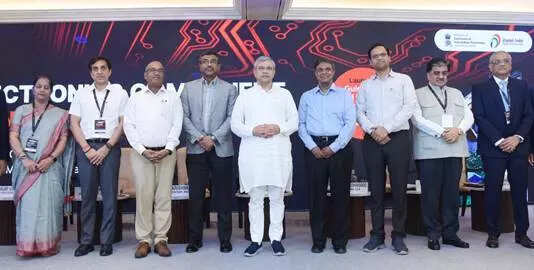
India Launches Electronics Component Manufacturing Scheme (ECMS) to Boost Self-Reliance
Overview of the ECMS
- Objective: Strengthen India’s electronics supply chain by promoting domestic manufacturing of passive components (e.g., resistors, capacitors) and sub-assemblies (e.g., PCBs, camera modules) to reduce import dependency.
- Funding: Approved outlay of ₹22,919 crore for six years (2025–2031), aiming to attract ₹59,350 crore investments and generate 91,600 direct jobs.
- Key Focus: Shift from assembling finished goods (e.g., smartphones) to manufacturing high-value components, targeting 20% domestic value addition by 2030 (up from current 10–15%).
Key Features of the Scheme
- Incentive Structures:
- Turnover-linked incentives: For sub-assemblies like display modules and camera modules.
- Capex-linked incentives: For capital equipment manufacturing (e.g., machinery for PCB production).
- Hybrid incentives: For advanced components like High-Density Interconnect (HDI) PCBs.
- Employment-linked payouts: Mandatory job creation targets for beneficiaries.
- Target Segments
- Passive components: Resistors, capacitors, inductors, sensors.
- Bare components: Multi-layer PCBs, Li-ion cells (for digital devices), enclosures for mobiles/IT hardware.
- Capital goods: Precision tools and machinery for electronics manufacturing.
- Portal Launch:
- Online portal www.ecms.meity.gov.in operational from May 1, 2025, for streamlined applications.
Significance for India’s Electronics Sector
- Online portal www.ecms.meity.gov.in operational from May 1, 2025, for streamlined applications.
- Economic Growth: Electronics production grew five-fold (₹1.9 lakh crore in 2014–15 to ₹9.52 lakh crore in 2023–24) and exports surged six-fold (₹0.38 lakh crore to ₹2.41 lakh crore) in a decade.
- Global Competitiveness: Aims to raise India’s share in global electronics manufacturing from 3% to 8% by 2031.
- Employment: Sector employs 25 lakh people, with a focus on skilling youth and women.
Challenges & Industry Response
- Import Dependency: Current $248 billion deficit in passive components to be addressed through local production.
- Quality Standards: Mandatory adherence to Six Sigma benchmarks for manufacturers 3.
- Industry Support:
- Elcina: Calls the scheme a “game-changer” for ecosystem depth.
- ICEA: Highlights potential to integrate with global value chains (GVCs) and boost MSME participation.
UDAN Scheme Soars: Nearly 1.5 Crore Fly Affordable Regional Routes
India's flagship Regional Connectivity Scheme (RCS), popularly known as UDAN (Ude Desh ka Aam Nagrik), has achieved a significant milestone. According to recent reports, nearly one crore and forty-nine lakh (1.49 crore or 14.9 million) passengers have availed the benefits of affordable air travel under this scheme since its inception.

Core Objective: Making Flying Accessible
- Launched on October 21, 2016, by the Ministry of Civil Aviation, UDAN aims to fulfill the common person's dream of flying.
- The vision, often articulated by Prime Minister Narendra Modi, is to enable even a person wearing slippers ('hawai chappal') to travel by air ('hawai jahaj').
- Its primary goal is to enhance regional air connectivity by connecting unserved (no flights) and underserved (limited flights) airports, particularly in Tier-II and Tier-III cities, remote, hilly, and island regions.
- The scheme aims to make air travel affordable and boost economic development, including tourism, trade, and access to healthcare in these areas.
How UDAN Works: A Collaborative Model
- Market-Driven: Airlines assess demand and bid for specific regional routes.
- Viability Gap Funding (VGF): To make routes financially viable for airlines despite capped fares, the government provides financial support (VGF) to bridge the gap between operational costs and expected revenue.
- The Regional Connectivity Fund (RCF) was created for this purpose, partly funded by a levy on flights operating on major routes.
- State governments also contribute a share (20% for most states, 10% for North-Eastern states and Union Territories).
- Affordable Fares: Airfares on UDAN flights are capped, for instance, at approximately ₹2,500 for a one-hour journey (around 500 km) on a fixed-wing aircraft or a 30-minute helicopter ride. Airlines must offer a certain percentage of seats at these subsidized rates.
- Concessions: To reduce airline operating costs, the scheme involves concessions from:
- Central Government: Reduced excise duty, concessional GST (initially).
- State Governments: Reduced VAT on Aviation Turbine Fuel (ATF), providing land, security, and utilities at subsidized rates.
- Airport Operators (including AAI): Waiver or discounts on Landing Charges, Parking Charges, Terminal Navigation Landing Charges (TNLC), and Route Navigation Facility Charges (RNFC).
Key Achievements and Impact:
- Passenger Growth: Nearly 1.49 crore passengers benefited as of late April 2025.
- Network Expansion:
- 625 UDAN routes have been operationalized across the country.
- 90 airports (including 88 airports, 2 water aerodromes, and 15 heliports as per latest PIB figures, though numbers vary slightly across reports) have been connected.
- India's total operational airport count has more than doubled from 74 in 2014 to 159 in 2024.
- Financial Support: Over ₹4,023 crore disbursed as VGF.
- Phased Implementation: The scheme has evolved through multiple rounds (UDAN 1.0 to UDAN 5.5), progressively adding focus areas like:
- Connecting helipads (UDAN 2.0).
- Tourism routes and seaplanes (UDAN 3.0).
- Focus on North-East, Hilly States, and Islands (UDAN 4.0).
- Focus on different aircraft categories, removing distance restrictions (while capping VGF stage length), promoting helicopters and small aircraft for last-mile connectivity (UDAN 5.0 series - 5.0, 5.1, 5.2, 5.3, 5.4, 5.5).
- Economic Boost: Stimulated local economies, supported tourism (Krishi UDAN also supports transport of agricultural produce), and created jobs.
Major Leap in Hypersonic Tech: DRDO Tests Scramjet Engine for Over 1000 Seconds
India's pursuit of advanced hypersonic technology received a significant boost with the Defence Research and Development Organisation (DRDO) successfully conducting a long-duration test of a Scramjet engine combustor. This achievement marks a critical milestone in developing indigenous capabilities for next-generation high-speed weapon systems.

Key Highlights of the Test:
- What: Successful ground testing of an Active Cooled Scramjet Subscale Combustor.
- Duration: Sustained operation for over 1,000 seconds (more than 16 minutes). This is a substantial increase from a 120-second test conducted in January 2025.
- Where: The test occurred at the newly established, state-of-the-art Scramjet Connect Test Facility located at the Defence Research and Development Laboratory (DRDL) in Hyderabad.
- When: April 25, 2025.
- Purpose: The test aimed to validate the design of the long-duration scramjet combustor and prove the capabilities of the new test facility.
Understanding the Technology:
- Hypersonic Speed: Refers to speeds significantly greater than the speed of sound, typically defined as Mach 5 (five times the speed of sound, roughly over 6,100 km/h) and above.
- Scramjet Engine:
- Stands for Supersonic Combustion Ramjet.
- It's a type of air-breathing engine, meaning it uses oxygen from the atmosphere for combustion, unlike rocket engines that carry their own oxidizer. This allows for lighter and potentially longer-range vehicles.
- It uses the vehicle's high forward speed to compress incoming air (ram effect), eliminating the need for heavy rotating compressors found in traditional jet engines.
- The defining feature is that combustion takes place while the air inside the engine is still flowing at supersonic speeds. In contrast, a conventional ramjet slows the air down to subsonic speeds before combustion.
- Scramjets are essential for achieving sustained powered flight at hypersonic velocities.
Significance for India:
- Crucial Step for Hypersonic Missiles: This successful long-duration test provides a strong foundation for India's Hypersonic Cruise Missile Development Programme. Hypersonic missiles offer significant strategic advantages due to their extreme speed and maneuverability, making them very difficult to detect and intercept.
- Boost to HSTDV Programme: The test contributes directly to the Hypersonic Technology Demonstrator Vehicle (HSTDV) programme. DRDO successfully flight-tested the HSTDV in September 2020, achieving Mach 6 for over 20 seconds using a scramjet engine. This latest ground test demonstrates progress towards longer-duration hypersonic flight.
- Technological Maturity: Validating the scramjet combustor design for over 1,000 seconds signifies a high level of technological maturity and paves the way for full-scale, flight-worthy engine testing.
- Self-Reliance (Atmanirbhar Bharat): This achievement underscores India's growing self-reliance in critical and complex defence technologies, placing it among a select group of nations with proven scramjet capabilities.
- Collaborative Success: The success resulted from integrated efforts by various DRDO laboratories, industry partners, and academic institutions.
Defence Research and Development Organisation (DRDO):
- The premier agency under India's Ministry of Defence, responsible for research and development of technology for military use.
- Established in 1958.
- Operates a network of over 50 laboratories across various disciplines.
- Mission: To achieve self-reliance in critical defence technologies and systems.
- Motto: "Balasya Mulam Vigyanam" (Sanskrit for "Strength's Origin is in Science").
India Lifts 171 Million from Extreme Poverty in a Decade: World Bank Report
India has made remarkable progress in combating poverty over the past decade, lifting 171 million people out of extreme poverty between 2011-12 and 2022-23, according to the World Bank's latest "Poverty & Equity Brief" (Spring 2025). This achievement highlights significant strides in inclusive development.

Key Findings from the World Bank Report:
- Extreme Poverty Reduction: The report defines extreme poverty as living on less than USD 2.15 per day (based on 2017 Purchasing Power Parity - PPP).
- The proportion of Indians living in extreme poverty plummeted from 16.2% in 2011-12 to 2.3% in 2022-23.
- Rural & Urban Progress: The decline was significant across both rural and urban areas:
- Rural extreme poverty dropped from 18.4% to 2.8%.
- Urban extreme poverty fell from 10.7% to 1.1%.
- The rural-urban poverty gap narrowed substantially from 7.7 percentage points to 1.7 percentage points.
- Lower-Middle Income Poverty Line: Using the poverty line for lower-middle-income countries (USD 3.65 per day), poverty fell from 61.8% to 28.1% during the same period, lifting a staggering 378 million people above this line.
- Regional Contributions: India's five most populous states (Uttar Pradesh, Maharashtra, Bihar, West Bengal, Madhya Pradesh) accounted for 65% of the extreme poor in 2011-12 and contributed to two-thirds of the total decline. However, they still housed 54% of the extremely poor population in 2022-23.
Beyond Monetary Poverty:
- India has also shown significant improvement in reducing Multidimensional Poverty, which considers deprivations in health, education, and standard of living.
- NITI Aayog's National Multidimensional Poverty Index (MPI) indicated a sharp decline from 29.17% in 2013-14 to 11.28% in 2022-23, meaning 24.82 crore (248.2 million) people escaped multidimensional poverty in nine years.
- The World Bank's own Multidimensional Poverty Measure stood at 15.5% in 2022-23.
Factors Contributing to Poverty Reduction:
While the World Bank brief doesn't delve deep into causes, several factors are widely considered contributors to India's success:
- Sustained Economic Growth: Overall economic expansion has been a key driver.
- Structural Transformation: A gradual shift of the workforce away from agriculture towards sectors like construction and services.
- Government Welfare Programmes: Targeted interventions focusing on inclusion and last-mile delivery. Examples include:
- Enhanced Social Safety Nets.
- Direct Benefit Transfers (DBT) facilitated by the Jan Dhan-Aadhaar-Mobile (JAM) Trinity.
- Schemes improving access to essentials: National Food Security Act (NFSA), PM Garib Kalyan Anna Yojana (food security), Ujjwala Yojana (cooking fuel), Saubhagya (electricity), Swachh Bharat Mission (sanitation), Jal Jeevan Mission (drinking water), PM Awas Yojana (housing).
- Health initiatives like Ayushman Bharat (PM-JAY).
- Rural employment guarantee through MGNREGA.
- Improved Infrastructure & Connectivity.
- Financial Inclusion initiatives like Pradhan Mantri Jan Dhan Yojana (PMJDY).
Significance & SDG Link:
- This massive reduction in extreme poverty is a major developmental achievement for India.
- It signifies substantial progress towards achieving Sustainable Development Goal (SDG) 1: No Poverty, particularly Target 1.2, which aims to halve poverty in all its dimensions by 2030. NITI Aayog's SDG India Index (2023-24) reflects this, with the score for Goal 1 improving significantly.
World Bank:
- An international financial institution providing loans, grants, and technical assistance to developing countries.
- Established in 1944 (at the Bretton Woods Conference).
- Key Goals: To end extreme poverty by 2030 (reducing the share of people living on less than $2.15/day to 3%) and promote shared prosperity (boosting income growth for the bottom 40%).
- It plays a vital role in monitoring global poverty trends using standardized poverty lines.
Poverty Measurement in India:
- NITI Aayog's National MPI: The nodal agency, NITI Aayog, releases India's official National Multidimensional Poverty Index. It uses the Alkire-Foster methodology and measures deprivations across Health, Education, and Standard of Living using 12 indicators (including nutrition, child mortality, maternal health, schooling years, attendance, cooking fuel, sanitation, drinking water, electricity, housing, assets, bank accounts).
- Consumption Expenditure Surveys: Traditionally, poverty has also been measured based on consumption expenditure data collected by the National Sample Survey Office (NSSO).
April 2025
Archive
October 2026
- 27 October 2026
- 26 October 2026
- 24 October 2026
- 23 October 2026
- 22 October 2026
- 21 October 2026
- 20 October 2026
- 19 October 2026
- 17 October 2026
- 16 October 2026
- 15 October 2026
- 14 October 2026
- 13 October 2026
- 12 October 2026
- 10 October 2026
- 09 October 2026
- 08 October 2026
- 07 October 2026
- 06 October 2026
- 05 October 2026
- 03 October 2026
- 02 October 2026
- 01 October 2026
September 2026
- 30 September 2026
- 29 September 2026
- 28 September 2026
- 26 September 2026
- 25 September 2026
- 24 September 2026
- 23 September 2026
- 22 September 2026
- 21 September 2026
- 19 September 2026
- 18 September 2026
- 17 September 2026
- 16 September 2026
- 15 September 2026
- 12 September 2026
- 11 September 2026
- 10 September 2026
- 09 September 2026
- 08 September 2026
- 07 September 2026
- 05 September 2026
- 04 September 2026
- 03 September 2026
- 02 September 2026
- 01 September 2026
August 2026
- 31 August 2026
- 29 August 2026
- 27 August 2026
- 26 August 2026
- 25 August 2026
- 24 August 2026
- 22 August 2026
- 21 August 2026
- 20 August 2026
- 19 August 2026
- 18 August 2026
- 17 August 2026
- 14 August 2026
- 13 August 2026
- 12 August 2026
- 11 August 2026
- 10 August 2026
- 08 August 2026
- 07 August 2026
- 06 August 2026
- 05 August 2026
- 04 August 2026
- 03 August 2026
- 01 August 2026
July 2026
- 31 July 2026
- 30 July 2026
- 29 July 2026
- 28 July 2026
- 27 July 2026
- 25 July 2026
- 23 July 2026
- 22 July 2026
- 21 July 2026
- 20 July 2026
- 18 July 2026
- 17 July 2026
- 15 July 2026
- 14 July 2026
- 13 July 2026
- 11 July 2026
- 10 July 2026
- 09 July 2026
- 08 July 2026
- 07 July 2026
- 06 July 2026
- 04 July 2026
- 03 July 2026
- 02 July 2026
- 01 July 2026
June 2026
May 2026
April 2026
March 2026
- 31 March 2026
- 30 March 2026
- 28 March 2026
- 27 March 2026
- 26 March 2026
- 25 March 2026
- 24 March 2026
- 23 March 2026
- 21 March 2026
- 20 March 2026
- 19 March 2026
- 18 March 2026
- 17 March 2026
- 16 March 2026
- 14 March 2026
- 13 March 2026
- 12 March 2026
- 11 March 2026
- 10 March 2026
- 09 March 2026
- 07 March 2026
- 06 March 2026
- 05 March 2026
- 03 March 2026
- 02 March 2026
February 2026
- 28 February 2026
- 27 February 2026
- 26 February 2026
- 25 February 2026
- 24 February 2026
- 23 February 2026
- 21 February 2026
- 20 February 2026
- 19 February 2026
- 18 February 2026
- 17 February 2026
- 16 February 2026
- 13 February 2026
- 12 February 2026
- 11 February 2026
- 10 February 2026
- 09 February 2026
- 07 February 2026
- 06 February 2026
- 05 February 2026
- 04 February 2026
- 03 February 2026
- 02 February 2026
January 2026
- 31 January 2026
- 30 January 2026
- 29 January 2026
- 28 January 2026
- 27 January 2026
- 26 January 2026
- 24 January 2026
- 23 January 2026
- 22 January 2026
- 21 January 2026
- 20 January 2026
- 19 January 2026
- 16 January 2026
- 15 January 2026
- 14 January 2026
- 13 January 2026
- 12 January 2026
- 10 January 2026
- 09 January 2026
- 08 January 2026
- 07 January 2026
- 06 January 2026
- 05 January 2026
- 03 January 2026
- 02 January 2026
- 01 January 2026
December 2025
- 31 December 2025
- 30 December 2025
- 29 December 2025
- 27 December 2025
- 26 December 2025
- 24 December 2025
- 23 December 2025
- 22 December 2025
- 20 December 2025
- 19 December 2025
- 18 December 2025
- 17 December 2025
- 16 December 2025
- 15 December 2025
- 13 December 2025
- 12 December 2025
- 11 December 2025
- 10 December 2025
- 09 December 2025
- 08 December 2025
- 05 December 2025
- 04 December 2025
- 03 December 2025
- 02 December 2025
November 2025
- 29 November 2025
- 28 November 2025
- 27 November 2025
- 26 November 2025
- 25 November 2025
- 24 November 2025
- 22 November 2025
- 21 November 2025
- 20 November 2025
- 19 November 2025
- 18 November 2025
- 17 November 2025
- 15 November 2025
- 14 November 2025
- 13 November 2025
- 12 November 2025
- 11 November 2025
- 10 November 2025
- 08 November 2025
- 07 November 2025
- 06 November 2025
- 05 November 2025
- 04 November 2025
- 03 November 2025
- 01 November 2025
October 2025
- 31 October 2025
- 30 October 2025
- 29 October 2025
- 28 October 2025
- 27 October 2025
- 25 October 2025
- 24 October 2025
- 23 October 2025
- 22 October 2025
- 21 October 2025
- 20 October 2025
- 18 October 2025
- 17 October 2025
- 16 October 2025
- 15 October 2025
- 14 October 2025
- 13 October 2025
- 11 October 2025
- 10 October 2025
- 09 October 2025
- 08 October 2025
- 07 October 2025
- 06 October 2025
- 04 October 2025
- 03 October 2025
- 02 October 2025
- 01 October 2025
September 2025
- 30 September 2025
- 29 September 2025
- 27 September 2025
- 26 September 2025
- 25 September 2025
- 24 September 2025
- 23 September 2025
- 22 September 2025
- 20 September 2025
- 19 September 2025
- 18 September 2025
- 17 September 2025
- 16 September 2025
- 15 September 2025
- 13 September 2025
- 12 September 2025
- 11 September 2025
- 10 September 2025
- 09 September 2025
- 08 September 2025
- 06 September 2025
- 05 September 2025
- 04 September 2025
- 03 September 2025
- 02 September 2025
- 01 September 2025
August 2025
- 30 August 2025
- 29 August 2025
- 28 August 2025
- 27 August 2025
- 26 August 2025
- 25 August 2025
- 23 August 2025
- 22 August 2025
- 21 August 2025
- 20 August 2025
- 19 August 2025
- 18 August 2025
- 16 August 2025
- 14 August 2025
- 13 August 2025
- 12 August 2025
- 11 August 2025
- 08 August 2025
- 07 August 2025
- 06 August 2025
- 05 August 2025
- 04 August 2025
- 02 August 2025
- 01 August 2025
July 2025
- 31 July 2025
- 30 July 2025
- 29 July 2025
- 28 July 2025
- 26 July 2025
- 25 July 2025
- 24 July 2025
- 23 July 2025
- 22 July 2025
- 21 July 2025
- 19 July 2025
- 18 July 2025
- 17 July 2025
- 16 July 2025
- 15 July 2025
- 12 July 2025
- 11 July 2025
- 10 July 2025
- 09 July 2025
- 07 July 2025
- 05 July 2025
- 04 July 2025
- 03 July 2025
- 02 July 2025
- 01 July 2025
June 2025
- 30 June 2025
- 28 June 2025
- 27 June 2025
- 26 June 2025
- 25 June 2025
- 24 June 2025
- 23 June 2025
- 21 June 2025
- 20 June 2025
- 19 June 2025
- 18 June 2025
- 17 June 2025
- 16 June 2025
- 14 June 2025
- 13 June 2025
- 12 June 2025
- 11 June 2025
- 10 June 2025
- 09 June 2025
- 07 June 2025
- 06 June 2025
- 05 June 2025
- 04 June 2025
- 03 June 2025
- 02 June 2025
May 2025
April 2025
- 30 April 2025
- 29 April 2025
- 28 April 2025
- 26 April 2025
- 25 April 2025
- 24 April 2025
- 23 April 2025
- 22 April 2025
- 21 April 2025
- 19 April 2025
- 18 April 2025
- 17 April 2025
- 16 April 2025
- 15 April 2025
- 14 April 2025
- 12 April 2025
- 11 April 2025
- 10 April 2025
- 09 April 2025
- 08 April 2025
- 07 April 2025
- 05 April 2025
- 04 April 2025
- 03 April 2025
- 02 April 2025
- 01 April 2025
March 2025
- 31 March 2025
- 29 March 2025
- 28 March 2025
- 27 March 2025
- 26 March 2025
- 25 March 2025
- 24 March 2025
- 22 March 2025
- 21 March 2025
- 20 March 2025
- 19 March 2025
- 18 March 2025
- 17 March 2025
- 15 March 2025
- 13 March 2025
- 12 March 2025
- 11 March 2025
- 10 March 2025
- 08 March 2025
- 07 March 2025
- 06 March 2025
- 05 March 2025
- 04 March 2025
- 03 March 2025
- 01 March 2025
February 2025
- 28 February 2025
- 27 February 2025
- 26 February 2025
- 25 February 2025
- 24 February 2025
- 22 February 2025
- 21 February 2025
- 20 February 2025
- 19 February 2025
- 18 February 2025
- 17 February 2025
- 15 February 2025
- 14 February 2025
- 13 February 2025
- 12 February 2025
- 11 February 2025
- 10 February 2025
- 08 February 2025
- 07 February 2025
- 06 February 2025
- 05 February 2025
- 04 February 2025
- 03 February 2025
- 01 February 2025
January 2025
- 31 January 2025
- 30 January 2025
- 29 January 2025
- 28 January 2025
- 27 January 2025
- 25 January 2025
- 24 January 2025
- 23 January 2025
- 22 January 2025
- 21 January 2025
- 20 January 2025
- 18 January 2025
- 17 January 2025
- 16 January 2025
- 15 January 2025
- 14 January 2025
- 13 January 2025
- 11 January 2025
- 10 January 2025
- 09 January 2025
- 08 January 2025
- 07 January 2025
- 06 January 2025
- 04 January 2025
- 03 January 2025
- 02 January 2025
- 01 January 2025