Current Affairs
Stay updated with the latest national and international events.
25 November 2026
Wayanad Becomes India’s First E-Waste-Free District
What's the News?
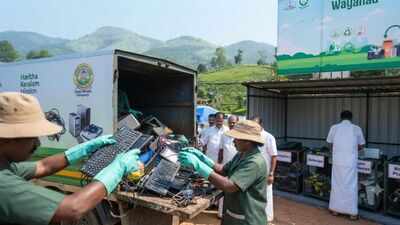
- Wayanad district in Kerala has achieved the distinction of becoming India’s first e-waste-free district following a coordinated campaign for the collection and scientific disposal of electronic waste.
- Kerala Chief Minister V.D. Satheesan is scheduled to formally announce the achievement in Kalpetta.
- The initiative supports Kerala’s Nirmalam (Waste-Free Kerala) Project.
- The district’s next environmental objective is to achieve carbon neutrality and promote climate-resilient development.
Wayanad’s E-Waste Management Initiative
- Duration: Three-month district-wide campaign.
- Coverage: All 23 gram panchayats and three municipalities.
- Total E-Waste Collected: 102.8 tonnes through a four-phase collection drive.
- Collection Sources: Households, government offices, educational institutions, commercial establishments and tourist centres.
- Stakeholders:
- Local Self-Government Institutions (LSGIs)
- Haritha Karma Sena
- Suchitwa Mission
- Clean Kerala Company
- Disposal: Collected electronic waste was handed over for scientific processing and recycling.
- Future Target: Carbon neutrality and plastic-free tourist destinations.
Nirmalam Project
- Launched: 2026, on Gandhi Jayanti.
- Initiative of: Government of Kerala.
- Objective: To make Kerala waste-free through scientific waste management, environmental conservation and community participation.
Additional Info
Electronic Waste (E-Waste):
- Refers to discarded electrical and electronic equipment, such as computers, mobile phones and household appliances.
- Contains hazardous substances such as lead, mercury and cadmium.
- Scientific recycling facilitates resource recovery and promotes a circular economy.
E-Waste (Management) Rules, 2022:
- Notified by: Ministry of Environment, Forest and Climate Change (MoEFCC).
- Effective Since: April 2023.
- Legal Framework: Environment (Protection) Act, 1986.
- Implementing Authority: Central Pollution Control Board (CPCB).
- Provides for Extended Producer Responsibility (EPR), making producers responsible for meeting prescribed recycling targets.
- EPR Recycling Targets:
- 2023–24 and 2024–25: 60%.
- 2025–26 and 2026–27: 70%.
- 2027–28 onwards: 80%.
Sources
Solomon Islands Names Australia Its Primary Security Partner

What's the News?
- Australia and the Solomon Islands signed a new bilateral treaty designating Australia as the island nation's primary security partner and prohibiting the establishment of foreign military or security bases on its territory.
- The agreement was signed by Australian Prime Minister Anthony Albanese and Solomon Islands Prime Minister Matthew Wale in Canberra.
- The treaty seeks to strengthen regional security and limit China's growing strategic influence in the South Pacific.
Australia–Solomon Islands Treaty, 2026
- Security Partnership: Recognises Australia as the primary security partner of the Solomon Islands.
- Military Restrictions: Prohibits foreign military and security bases.
- Regional Cooperation: Future security cooperation will be undertaken with Pacific Islands Forum (PIF) members.
- Critical Infrastructure: Protects ports, airports, energy and telecommunications infrastructure from militarisation and foreign interference.
- Defence and Policing: Strengthens police capabilities, intelligence sharing and border management.
- Development Cooperation: Expands Australian investment in infrastructure, education, renewable energy, employment, skill development and sports.
- Financial Assistance: Australia has committed approximately AUD 740 million over a decade towards development priorities.
- Labour Mobility: Expands employment opportunities under the Pacific Australia Labour Mobility (PALM) Scheme.
Background: Solomon Islands–China Security Pact
- Signed: 2022, under former Prime Minister Manasseh Sogavare.
- Permitted Chinese security cooperation and deployment of police personnel for training.
- Raised concerns regarding China's potential military presence in the South Pacific.
- The agreement is due to expire in 2027; its renewal remains unconfirmed.
- The new Australian treaty does not explicitly name China or prohibit all forms of cooperation with it.
Additional Info
Pacific Islands Forum (PIF):
- Established: 1971.
- Headquarters: Suva, Fiji.
- Members: 18 countries and territories.
- Objective: Regional cooperation in security, trade, climate change and sustainable development.
- Major framework: 2050 Strategy for the Blue Pacific Continent.
Solomon Islands:
- Location: Melanesia, South Pacific Ocean.
- Capital: Honiara.
- Currency: Solomon Islands Dollar (SBD).
- Official Language: English.
- Independence: 1978, from the United Kingdom.
Forum for India–Pacific Islands Cooperation (FIPIC):
- Established: 2014, in Fiji.
- Members: India and 14 Pacific Island countries, including the Solomon Islands.
- Promotes cooperation under India's Act East Policy.
Sources
International Day for the Elimination of Violence Against Women 2026
What's the News?
- The International Day for the Elimination of Violence Against Women is observed annually on 25 November to raise awareness about gender-based violence, safeguard women's rights and strengthen access to justice.
- 2026 Theme: “UNiTE to End Violence Against Women and Girls: Ensure Justice, Protect Survivors, End Impunity.”
- Designated by: United Nations General Assembly (UNGA).
- UN Resolution: 54/134, adopted on 17 December 1999.
- First Official Observance: 2000.
- Associated SDG: SDG 5 (Gender Equality), particularly Target 5.2, which seeks to eliminate violence against women and girls.
Historical Background
- 1960: The Mirabal sisters — Patria, Minerva and María Teresa — were assassinated for opposing Rafael Trujillo's dictatorship in the Dominican Republic on 25 November.
- 1981: Women's rights activists began observing 25 November as a day against gender-based violence.
- 1979: UNGA adopted the Convention on the Elimination of All Forms of Discrimination against Women (CEDAW).
- 1993: UNGA adopted the Declaration on the Elimination of Violence against Women through Resolution 48/104.
- 1999: UNGA officially designated 25 November as the international observance.
16 Days of Activism Against Gender-Based Violence
- Initiated: 1991.
- Observed: 25 November to 10 December (Human Rights Day).
- UNiTE Campaign: Launched in 2008 by the UN Secretary-General to mobilise global action against gender-based violence.
- Symbolic Colour: Orange, representing a future free from violence.
- 2026 Call to Action: “Speak Out. Believe Survivors. Demand Justice.”
Violence Against Women: Global Statistics
As per WHO's 2023 prevalence estimates, published in 2025:
- 840 million women globally, nearly one in three, have experienced physical or sexual intimate partner violence, non-partner sexual violence, or both during their lifetime.
- 12.5 million adolescent girls aged 15–19 experienced physical or sexual intimate partner violence during the preceding 12 months.
India's Framework for Women's Safety
| Legislation/Initiative | Provision |
|---|---|
| Protection of Women from Domestic Violence Act, 2005 | Protection against physical, sexual, emotional and economic abuse. |
| POSH Act, 2013 | Prevention and redressal of workplace sexual harassment. |
| Bharatiya Nyaya Sanhita (BNS), 2023 | Penal provisions for offences against women. |
| Mission Shakti | Umbrella scheme for women's safety and empowerment. |
| One Stop Centres (2015) | Integrated medical, legal, counselling and shelter services. |
| Nirbhaya Fund (2013) | Financial support for women's safety initiatives. |
| Digital Shakti Campaign (2018) | Digital literacy and cybersecurity awareness among women. |
| SHe-Box Portal | Online registration and monitoring of workplace sexual harassment complaints. |
Additional Info
Constitutional Provisions:
- Article 14: Equality before law.
- Article 15(3): Special provisions for women and children.
- Article 21: Protection of life and personal liberty.
- Article 39(d): Equal pay for equal work.
- Article 42: Just and humane working conditions and maternity relief.
- Article 51A(e): Renunciation of practices derogatory to women's dignity.
National Commission for Women (NCW):
- Established: 1992.
- Statutory body under the National Commission for Women Act, 1990.
- Headquarters: New Delhi.
UN Women:
- Established: 2010.
- Headquarters: New York, USA.
- Objective: Gender equality and women's empowerment.
Clarification: Some sources mention 2000 as the designation year. The UN resolution was adopted in 1999, while the first official observance took place in 2000.
November 2026
27 November 202626 November 202625 November 202624 November 202623 November 202621 November 202620 November 202619 November 202618 November 202617 November 202616 November 202614 November 202613 November 202612 November 202611 November 202610 November 202609 November 202606 November 202605 November 202604 November 202603 November 202602 November 2026
Archive
November 2026
- 27 November 2026
- 26 November 2026
- 25 November 2026
- 24 November 2026
- 23 November 2026
- 21 November 2026
- 20 November 2026
- 19 November 2026
- 18 November 2026
- 17 November 2026
- 16 November 2026
- 14 November 2026
- 13 November 2026
- 12 November 2026
- 11 November 2026
- 10 November 2026
- 09 November 2026
- 06 November 2026
- 05 November 2026
- 04 November 2026
- 03 November 2026
- 02 November 2026
October 2026
- 31 October 2026
- 30 October 2026
- 29 October 2026
- 28 October 2026
- 27 October 2026
- 26 October 2026
- 24 October 2026
- 23 October 2026
- 22 October 2026
- 21 October 2026
- 20 October 2026
- 19 October 2026
- 17 October 2026
- 16 October 2026
- 15 October 2026
- 14 October 2026
- 13 October 2026
- 12 October 2026
- 10 October 2026
- 09 October 2026
- 08 October 2026
- 07 October 2026
- 06 October 2026
- 05 October 2026
- 03 October 2026
- 02 October 2026
- 01 October 2026
September 2026
- 30 September 2026
- 29 September 2026
- 28 September 2026
- 26 September 2026
- 25 September 2026
- 24 September 2026
- 23 September 2026
- 22 September 2026
- 21 September 2026
- 19 September 2026
- 18 September 2026
- 17 September 2026
- 16 September 2026
- 15 September 2026
- 12 September 2026
- 11 September 2026
- 10 September 2026
- 09 September 2026
- 08 September 2026
- 07 September 2026
- 05 September 2026
- 04 September 2026
- 03 September 2026
- 02 September 2026
- 01 September 2026
August 2026
- 31 August 2026
- 29 August 2026
- 27 August 2026
- 26 August 2026
- 25 August 2026
- 24 August 2026
- 22 August 2026
- 21 August 2026
- 20 August 2026
- 19 August 2026
- 18 August 2026
- 17 August 2026
- 14 August 2026
- 13 August 2026
- 12 August 2026
- 11 August 2026
- 10 August 2026
- 08 August 2026
- 07 August 2026
- 06 August 2026
- 05 August 2026
- 04 August 2026
- 03 August 2026
- 01 August 2026
July 2026
- 31 July 2026
- 30 July 2026
- 29 July 2026
- 28 July 2026
- 27 July 2026
- 25 July 2026
- 23 July 2026
- 22 July 2026
- 21 July 2026
- 20 July 2026
- 18 July 2026
- 17 July 2026
- 15 July 2026
- 14 July 2026
- 13 July 2026
- 11 July 2026
- 10 July 2026
- 09 July 2026
- 08 July 2026
- 07 July 2026
- 06 July 2026
- 04 July 2026
- 03 July 2026
- 02 July 2026
- 01 July 2026
June 2026
May 2026
April 2026
March 2026
- 31 March 2026
- 30 March 2026
- 28 March 2026
- 27 March 2026
- 26 March 2026
- 25 March 2026
- 24 March 2026
- 23 March 2026
- 21 March 2026
- 20 March 2026
- 19 March 2026
- 18 March 2026
- 17 March 2026
- 16 March 2026
- 14 March 2026
- 13 March 2026
- 12 March 2026
- 11 March 2026
- 10 March 2026
- 09 March 2026
- 07 March 2026
- 06 March 2026
- 05 March 2026
- 03 March 2026
- 02 March 2026
February 2026
- 28 February 2026
- 27 February 2026
- 26 February 2026
- 25 February 2026
- 24 February 2026
- 23 February 2026
- 21 February 2026
- 20 February 2026
- 19 February 2026
- 18 February 2026
- 17 February 2026
- 16 February 2026
- 13 February 2026
- 12 February 2026
- 11 February 2026
- 10 February 2026
- 09 February 2026
- 07 February 2026
- 06 February 2026
- 05 February 2026
- 04 February 2026
- 03 February 2026
- 02 February 2026
January 2026
- 31 January 2026
- 30 January 2026
- 29 January 2026
- 28 January 2026
- 27 January 2026
- 26 January 2026
- 24 January 2026
- 23 January 2026
- 22 January 2026
- 21 January 2026
- 20 January 2026
- 19 January 2026
- 16 January 2026
- 15 January 2026
- 14 January 2026
- 13 January 2026
- 12 January 2026
- 10 January 2026
- 09 January 2026
- 08 January 2026
- 07 January 2026
- 06 January 2026
- 05 January 2026
- 03 January 2026
- 02 January 2026
- 01 January 2026
December 2025
- 31 December 2025
- 30 December 2025
- 29 December 2025
- 27 December 2025
- 26 December 2025
- 24 December 2025
- 23 December 2025
- 22 December 2025
- 20 December 2025
- 19 December 2025
- 18 December 2025
- 17 December 2025
- 16 December 2025
- 15 December 2025
- 13 December 2025
- 12 December 2025
- 11 December 2025
- 10 December 2025
- 09 December 2025
- 08 December 2025
- 05 December 2025
- 04 December 2025
- 03 December 2025
- 02 December 2025
November 2025
- 29 November 2025
- 28 November 2025
- 27 November 2025
- 26 November 2025
- 25 November 2025
- 24 November 2025
- 22 November 2025
- 21 November 2025
- 20 November 2025
- 19 November 2025
- 18 November 2025
- 17 November 2025
- 15 November 2025
- 14 November 2025
- 13 November 2025
- 12 November 2025
- 11 November 2025
- 10 November 2025
- 08 November 2025
- 07 November 2025
- 06 November 2025
- 05 November 2025
- 04 November 2025
- 03 November 2025
- 01 November 2025
October 2025
- 31 October 2025
- 30 October 2025
- 29 October 2025
- 28 October 2025
- 27 October 2025
- 25 October 2025
- 24 October 2025
- 23 October 2025
- 22 October 2025
- 21 October 2025
- 20 October 2025
- 18 October 2025
- 17 October 2025
- 16 October 2025
- 15 October 2025
- 14 October 2025
- 13 October 2025
- 11 October 2025
- 10 October 2025
- 09 October 2025
- 08 October 2025
- 07 October 2025
- 06 October 2025
- 04 October 2025
- 03 October 2025
- 02 October 2025
- 01 October 2025
September 2025
- 30 September 2025
- 29 September 2025
- 27 September 2025
- 26 September 2025
- 25 September 2025
- 24 September 2025
- 23 September 2025
- 22 September 2025
- 20 September 2025
- 19 September 2025
- 18 September 2025
- 17 September 2025
- 16 September 2025
- 15 September 2025
- 13 September 2025
- 12 September 2025
- 11 September 2025
- 10 September 2025
- 09 September 2025
- 08 September 2025
- 06 September 2025
- 05 September 2025
- 04 September 2025
- 03 September 2025
- 02 September 2025
- 01 September 2025
August 2025
- 30 August 2025
- 29 August 2025
- 28 August 2025
- 27 August 2025
- 26 August 2025
- 25 August 2025
- 23 August 2025
- 22 August 2025
- 21 August 2025
- 20 August 2025
- 19 August 2025
- 18 August 2025
- 16 August 2025
- 14 August 2025
- 13 August 2025
- 12 August 2025
- 11 August 2025
- 08 August 2025
- 07 August 2025
- 06 August 2025
- 05 August 2025
- 04 August 2025
- 02 August 2025
- 01 August 2025
July 2025
- 31 July 2025
- 30 July 2025
- 29 July 2025
- 28 July 2025
- 26 July 2025
- 25 July 2025
- 24 July 2025
- 23 July 2025
- 22 July 2025
- 21 July 2025
- 19 July 2025
- 18 July 2025
- 17 July 2025
- 16 July 2025
- 15 July 2025
- 12 July 2025
- 11 July 2025
- 10 July 2025
- 09 July 2025
- 07 July 2025
- 05 July 2025
- 04 July 2025
- 03 July 2025
- 02 July 2025
- 01 July 2025
June 2025
- 30 June 2025
- 28 June 2025
- 27 June 2025
- 26 June 2025
- 25 June 2025
- 24 June 2025
- 23 June 2025
- 21 June 2025
- 20 June 2025
- 19 June 2025
- 18 June 2025
- 17 June 2025
- 16 June 2025
- 14 June 2025
- 13 June 2025
- 12 June 2025
- 11 June 2025
- 10 June 2025
- 09 June 2025
- 07 June 2025
- 06 June 2025
- 05 June 2025
- 04 June 2025
- 03 June 2025
- 02 June 2025
May 2025
April 2025
- 30 April 2025
- 29 April 2025
- 28 April 2025
- 26 April 2025
- 25 April 2025
- 24 April 2025
- 23 April 2025
- 22 April 2025
- 21 April 2025
- 19 April 2025
- 18 April 2025
- 17 April 2025
- 16 April 2025
- 15 April 2025
- 14 April 2025
- 12 April 2025
- 11 April 2025
- 10 April 2025
- 09 April 2025
- 08 April 2025
- 07 April 2025
- 05 April 2025
- 04 April 2025
- 03 April 2025
- 02 April 2025
- 01 April 2025
March 2025
- 31 March 2025
- 29 March 2025
- 28 March 2025
- 27 March 2025
- 26 March 2025
- 25 March 2025
- 24 March 2025
- 22 March 2025
- 21 March 2025
- 20 March 2025
- 19 March 2025
- 18 March 2025
- 17 March 2025
- 15 March 2025
- 13 March 2025
- 12 March 2025
- 11 March 2025
- 10 March 2025
- 08 March 2025
- 07 March 2025
- 06 March 2025
- 05 March 2025
- 04 March 2025
- 03 March 2025
- 01 March 2025
February 2025
- 28 February 2025
- 27 February 2025
- 26 February 2025
- 25 February 2025
- 24 February 2025
- 22 February 2025
- 21 February 2025
- 20 February 2025
- 19 February 2025
- 18 February 2025
- 17 February 2025
- 15 February 2025
- 14 February 2025
- 13 February 2025
- 12 February 2025
- 11 February 2025
- 10 February 2025
- 08 February 2025
- 07 February 2025
- 06 February 2025
- 05 February 2025
- 04 February 2025
- 03 February 2025
- 01 February 2025
January 2025
- 31 January 2025
- 30 January 2025
- 29 January 2025
- 28 January 2025
- 27 January 2025
- 25 January 2025
- 24 January 2025
- 23 January 2025
- 22 January 2025
- 21 January 2025
- 20 January 2025
- 18 January 2025
- 17 January 2025
- 16 January 2025
- 15 January 2025
- 14 January 2025
- 13 January 2025
- 11 January 2025
- 10 January 2025
- 09 January 2025
- 08 January 2025
- 07 January 2025
- 06 January 2025
- 04 January 2025
- 03 January 2025
- 02 January 2025
- 01 January 2025