
Current Affairs
Stay updated with the latest national and international events.
25 June 2025
"Trailblazers to the Stars" – Axiom Mission 4 Sends India, Poland & Hungary Back to Space

What's New?
- On June 25, 2025, Axiom Mission 4 launched aboard a SpaceX Falcon 9 from Kennedy Space Center, carrying former NASA astronaut Peggy Whitson and national astronauts from India (Shubhanshu Shukla), Poland (Sławosz Uznański-Wiśniewski), and Hungary (Tibor Kapu)—marking the first ISS flights for India, Poland, and Hungary in over four decades.
- The crew will stay aboard the ISS for up to 14 days, conducting over 60 scientific experiments and tech demos in areas like biological sciences, earth observation, and human research.
Why It Matters
- Historic return: India hadn't sent an astronaut since 1984 (Rakesh Sharma); Poland since 1978; Hungary since 1980.
- Commercial space breakthrough: Axiom, in partnership with SpaceX and NASA, exemplifies how private missions enable diverse nations to access space.
- Boost for ISRO's Gaganyaan: Shubhanshu Shukla's flight supports India's homegrown crewed mission by gaining experience and carrying India-led in-orbit research.
Crew & National Stakes
- Shubhanshu Shukla becomes the first Indian to visit the ISS; cost of seat ~$65 million.
- Sławosz Uznański-Wiśniewski is Poland's first ISS crew member; his mission ("Ignis") includes 13 Polish microgravity experiments.
- Tibor Kapu pilots Hungary's return to space, while Peggy Whitson commands her fifth orbital mission and sets a U.S. record for cumulative days in space.
Experiments & Outreach
- Nearly 60 experiments from 31 countries, including studies on microalgae, muscle atrophy, cognitive impacts, and material science.
- Includes educational outreach and cultural items from each nation, fostering global scientific collaboration.
Launch Delays & Safety
- Launch was delayed multiple times (June 10, 22) due to safety checks on the ISS's Russian Zvezda module; mission finally took off after leak resolution.
Additional Info
- The mission ships a Crew Dragon capsule (first flight of C213) and docks at the ISS's Harmony module, with launch at 2:31 a.m. ET and docking expected June 26.
- It strengthens the case for future Indian Space Station (Bharatiya Antariksh Station) planned for 2035, by paving the way for experience and research collaborations.
Simplified Summary
- June 25, 2025: Axiom-4 becomes a milestone commercial mission—the first ISS crew missions for India, Poland, and Hungary in over 40 years.
- Crew will perform 60+ cross-disciplinary experiments, enhancing scientific knowledge and international ties.
- The launch supports ISRO's ambitions, national pride, and showcases private-public space synergies.
Exam Focus Points
| Topic | Details |
|---|---|
| What & When | Axiom Mission 4 launched June 25, 2025 |
| Crew | Peggy Whitson (USA), Shubhanshu Shukla (India), Sławosz Uznański (Poland), Tibor Kapu (Hungary) |
| Historic Significance | First ISS trip for India (since '84), Poland (since '78), Hungary (since '80) |
| Experiments | 60+ tasks in bio, Earth science, human health, materials |
| Tech & Mission Design | Private mission via Axiom; uses SpaceX Crew Dragon (C213) — hallmark of commercial space access |
| Delays | Safety-induced postponements due to ISS module issues |
| Strategic Linkages | Supports ISRO's Gaganyaan, knowledge boost for future Indian space station |
| Global Context | Reflects broadening space access, rising private-sector role, and international R&D collaboration |
"Double the Opportunity" – CBSE Class 10 Board Exams Twice a Year from 2026
What's New?
- From 2026, the Central Board of Secondary Education (CBSE) will conduct Class 10 board exams twice annually:
- First attempt (mandatory) in mid-February (results by April)
- Second attempt (optional) in May (results by June) — students can use this to improve scores or reappear in up to 3 subjects (Science, Math, Social Science, Languages).
- Internal assessments and practicals remain once per year (first attempt).
- Implementing NEP 2020 reform (Para 4.37) to reduce "high-stakes" pressure and support competency-based assessment.
Why It Matters
- Multiple chances: Reduces stress by offering a second attempt in the same year and allows retention of the best marks.
- Supports inclusive education: Helps students facing exam anxiety, personal crises, or missed opportunities due to illness/travel/sports.
- Global best practices: Mirrors systems like the SAT in the US, promoting flexibility, formative learning, and self-improvement over rote success.
Exam Schedule & Mechanics
- Phase I: 17 Feb–6 Mar 2026; Phase II: 5 May–20 May 2026.
- The same centres, fee paid once during registration (non-refundable), subject choices fixed at first registration.
- Supplementary replaced: May exams act as retakes; no extra supplementary sessions.
Academic & Administrative Impacts
- Best-score policy ensures fairness and fairness—only the higher mark is retained per subject.
- Students with compartment in Phase I can use Phase II to clear their subjects.
- Practicals/internal assessments occur once—marks count for both efforts.
Additional Info
- A draft scheme launched Feb 2025, with stakeholder feedback sought by March 9, 2025; final policy expected shortly.
- Estimate: 26.6 lakh students in Class 10 exams 2026.
- Aligned with NEP's focus on flexibility, modularity, reduced pressure, and formative evaluation.
Simplified Summary
- Students will now have two board exam opportunities in the same academic year, one mandatory and one optional, with the best score retained.
- The policy is designed to reduce exam stress, offer second chances, and align with the NEP 2020's student-first ethos.
Exam Focus Points
| Topic | Key Highlights |
|---|---|
| What & When | Twice-a-year Class 10 board exams from 2026 (Feb & May) |
| NEP Link | Implements Para 4.37: eliminate high-stakes testing |
| Mechanism | Mandatory first attempt; optional second; best marks retained |
| Subjects | Full syllabus both times; improve up to 3 papers |
| Process | Same centres, one-time fee, fixed entries |
| Internal Assessment | Conducted once annually |
| Benefits | Reduces stress, supports learning, provides flexibility |
| Challenges | Logistical complexity, potential for question-paper leaks |
| Global Comparisons | Similar to SAT, modular board systems |
| Relevance | GS II/III/EDUCATION: exam reforms, policy change, inclusion |
"Peace Pulse: India at 115th on Global Peace Index 2025"

What's New?
- The Global Peace Index (GPI) 2025, published by the Institute for Economics & Peace, shows a 0.36% decline in global peacefulness—the 13th deterioration in 17 years, with 59 active state-based conflicts, the highest since World War II.
- India ranks 115th out of 163 countries, improving slightly from rank 116 in 2024, with a GPI score of 2.229 (a 0.58% improvement).
Why It Matters
- Regional leadership: In the context of South Asia—the world's second least peaceful region—India outperforms neighbours like Bangladesh (123), Pakistan (144), and Afghanistan (158).
- Evolving stability: India showed improvement in nine GPI indicators, while three worsened and nine remained unchanged, indicating selective progress amidst longer-term challenges.
- Indicator domains:
- Societal Safety & Security
- Ongoing Domestic & External Conflict
- Militarisation
Global Peace Trends
- The average peacefulness score has dropped by 5.4% since 2008.
- About 87 countries deteriorated, while 74 improved—indicating a mixed global landscape.
- Concerns include rising militarisation, internationalised conflicts, and the highest number of state-based wars since WWII.
- Economic drag: Violence-related losses totaled $19.97 trillion, nearly 11.6% of global GDP in 2024.
Peace Hierarchies
- Top 10 most peaceful countries: Iceland, Ireland, New Zealand, Austria, Switzerland, Singapore, Portugal, Denmark, Slovenia, Finland.
- Least peaceful: Russia (163), Ukraine (162), Sudan, DR Congo, Yemen, Afghanistan, Syria, South Sudan, Israel, Mali.
Regional Patterns
- South Asia: The region recorded the largest decline in peace, though India's gradual improvement stands out.
- MENA region: Continues to be the least peaceful globally, while Western Europe remains the most peaceful despite minor declines.
Simplified Summary
- The 2025 GPI continues to indicate global instability, with record levels of conflict and militarisation.
- India's slight improvement to 115th rank signals cautious progress compared to a broader trend of deterioration.
- Despite systemic violence globally, India shows resilience, outperforming its neighbours.
Exam Focus Points
| Area | Key Details |
|---|---|
| Index & Publisher | Global Peace Index by Institute for Economics & Peace (IEP), 19th edition |
| Global Trend | 13th decline in peacefulness; 59 active wars; $19.97 tn economic impact |
| India's Rank & Score | 115th (2.229), improved from 116; first-place among South Asian peers |
| Indicator Domains | Safety, conflict, militarisation across 23 metrics |
| Regional Outlook | South Asia worst performing; India shows selective gains |
"EV Boost" – Portal Opens for Electric Car Makers Under New Production Scheme
What's New?
- On 24 June 2025, the Ministry of Heavy Industries (MHI) opened the application portal for the Scheme to Promote Manufacturing of Electric Passenger Cars in India (SPMEPCI), enabling auto-makers to apply until 21 October 2025—portal reopening possible up to March 2026.
- The portal launch was officiated by Heavy Industries Minister H D Kumaraswamy, signalling readiness to attract global electric vehicle (EV) investments.
Why It Matters
- Encourages global EV investments: Offers a concessional 15% import duty (versus 70–100%) on up to 8,000 high-value EVs annually, subject to a ₹4,150 crore domestic investment commitment.
- Strengthens EV manufacturing capacity: Mandates 25% domestic value addition (DVA) in 3 years, increasing to 50% in 5 years, fostering local industry and supply chains.
- Competitive edge for India: Offers relief to OEMs compared to high tariffs, positioning India as an attractive destination ahead of global entrants like Tesla.
Eligibility & Requirements
- Applicant criteria:
- Group global automotive revenue ≥ ₹10,000 crore
- Global fixed-assets investment ≥ ₹3,000 crore.
- Investment obligations:
- Setup of manufacturing facility and commence production of electric 4-wheelers within 3 years.
- Receive duty waiver capped at ₹6,484 crore, backed by bank guarantees.
Scheme Features
- Duration: Benefits extend for 5 years post-approval.
- Scope: Applies to both CBUs and greenfield/brownfield manufacturing projects.
- Export advantage: Helps meet CBAM compliance by building EVs with substantial local content.
Interest & Global Response
- Pre-launch interest: Discussions underway with Tata, Mahindra, Hyundai, Skoda-VW; Tesla currently plans only showrooms.
- Outreach: MHI is engaging global automakers via embassies from the US, Germany, UK, Czech Republic, Vietnam.
- Exclusions: OEMs from China and border-sharing countries are barred; VinFast excluded from benefits unless further fresh investment occurs.
Simplified Summary
India has launched an application portal to onboard global EV manufacturers under SPMEPCI, offering significant tariff incentives tied to large-scale domestic investment and incremental localisation. This could be a pivotal move to ramp up EV output, supply chain resilience, and export competitiveness.
Exam Focus Points
| Theme | Key Details |
|---|---|
| Scheme Name | SPMEPCI – Scheme to Promote EV Manufacturing |
| Launch Date | Portal opened on 24 June 2025, open till 21 Oct 2025, extendable to Mar 2026 |
| Incentives | 15% duty on 8,000 e-4W imports for 5 yrs; ₹4,150 crore investment required |
| Localization Targets | 25% DVA in 3 years, 50% in 5 years |
| Eligibility | ₹10k cr global revenue & ₹3k cr fixed-assets; bank guarantee |
| Coverage | Greenfield/brownfield OEMs; global outreach via embassies |
| Strategic Benefits | Boost local manufacturing, deepen EV supply chain, counter CBAM |
| Global OEM Interest | Tata, Mahindra, Hyundai, Skoda-VW showing interest; Tesla under showroom mode |
| Policy Linkages | Complements FAME-II, PLI; advances India's climate & self-reliance goals |
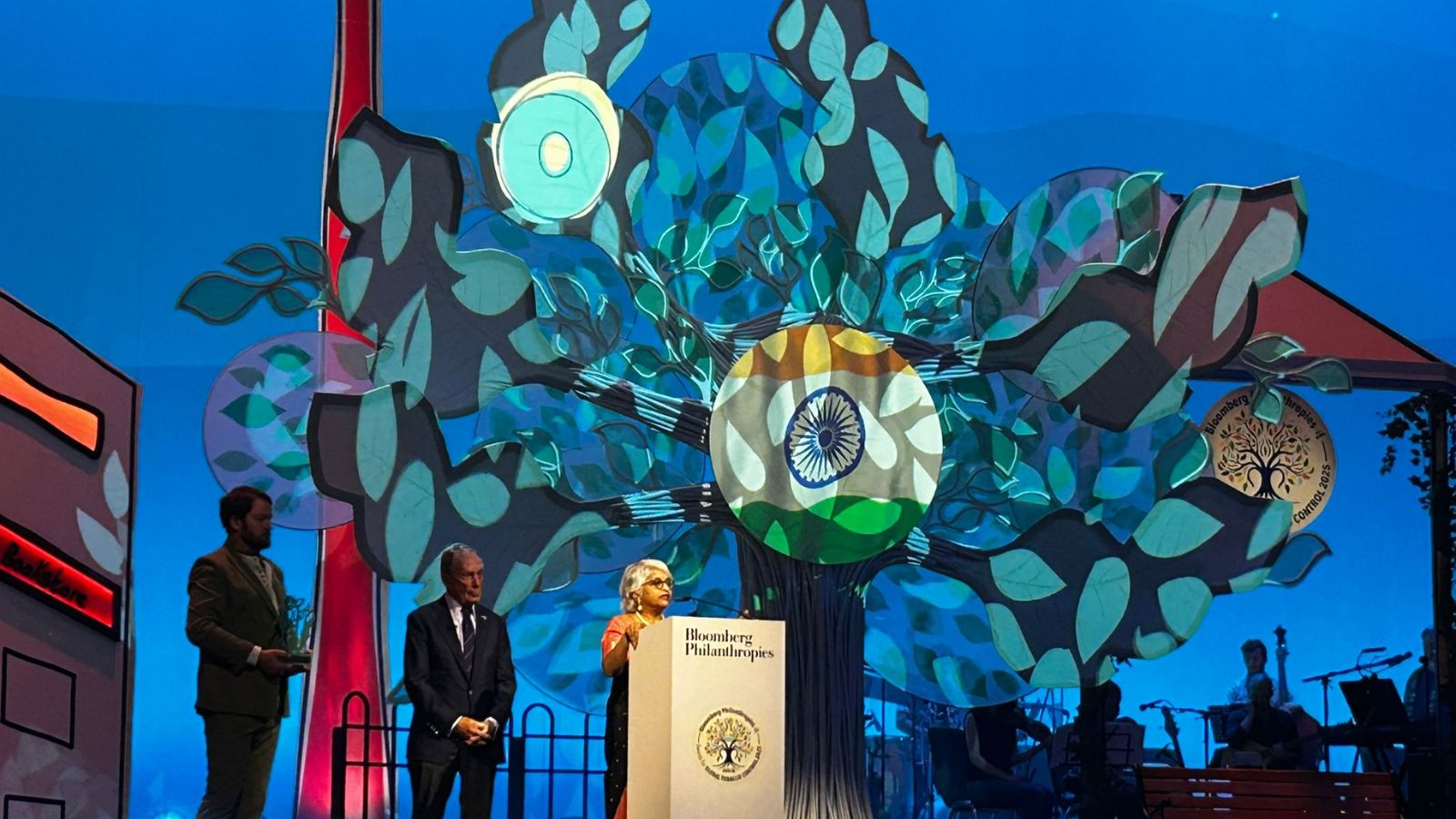
"Quit Today, Save Tomorrow" – India Wins Bloomberg Philanthropies Award for Tobacco Cessation
What's New?
- India's Health Ministry, via the National Tobacco Control Cell (NTCC), received the 'O' category award—"Offer help to quit tobacco use"—at the 2025 Bloomberg Philanthropies Awards for Global Tobacco Control during the World Conference on Tobacco Control (WCTC) held in Dublin on 23 June.
- The honour recognises India's efforts under WHO's MPOWER framework to establish extensive tobacco cessation services nationwide.
Why It Matters
- Public health impact: India recorded 1.35 million cessation counselling sessions in 2023–24 via 675 district-level centres, helping millions fight addiction.
- WHO recognition: India's daily smoking prevalence (~7% in 2023) has declined, while comprehensive smokeless tobacco and e-cigarette controls are in place.
- Global leadership: Among six global awardees—including Mauritius, Mexico, Montenegro, the Philippines, and Ukraine—India stands out as a model for low-middle income country tobacco control.
MPOWER Strategy in Action
- O = Offer help to quit: India's award category, signifying success in integrating quitlines, clinics, screenings, and public awareness measures.
- Integrated with Ayushman Bharat health facilities, ensuring wide access across public healthcare delivery networks.
Quitlines & Support Infrastructure
- National Toll-Free Quitline (1800-11-2356) handles around 42,000 calls/month in 16 languages.
- Major institutions like NIMHANS, VPCI, Tata Memorial Centre, and BBCI host dedicated cessation centres.
Supplementary Measures
- E-cigarette ban under PECA 2019
- Graphic health warnings on packs
- OTT ad regulations aimed at youth protection—as part of NTCP's multi-layered strategy.
Global Initiative & Funding
- Bloomberg Philanthropies has invested nearly $1 billion globally since 2007 in tobacco-control efforts, with 2025's awards marking the 17th edition.
- A $20 million Accelerator Fund was launched alongside the awards to support countries lagging in tobacco control.
Simplified Summary
- At WCTC 2025, India received recognition for its tobacco-cessation efforts under WHO's MPOWER framework—expanding services, phone-based support, and policy enforcement.
- This accolade reinforces India's position as a global exemplar in public health interventions targeting tobacco.
Exam Focus Points
| Topic | Key Details |
|---|---|
| Award | Bloomberg Philanthropies 2025, 'O' category on "Offer help to quit" |
| Institutions | NTCC, NTCP, Ayushman Bharat clinics, district hospitals, NIMHANS, VPCI, BBCI, Tata Memorial |
| Services | 675 cessation centres, 1.35 M counselling sessions, 42k calls/month on toll-free line |
| Policy Tools | PECA 2019, graphic warnings, OTT ad restrictions |
| Global Context | One of six awardees; aligns with MPOWER; backed by $1B Bloomberg funding |
| Implications | Reduces disease burden, enhances healthcare equity, supports SDG 3 targets |
| Relevance for UPSC | GS-II: Health governance, public health systems; GS-III: NCD control, policy interventions |
"Life Links Unlocked" – India Integrates Rare Blood Donor Registry with e-Rakt Kosh

What's New?
- India is set to integrate its Rare Blood Donor Registry with the e-Rakt Kosh portal, unifying access to rare blood types and enhancing emergency availability nationwide.
- e-Rakt Kosh, launched in 2016, now connects blood banks across India digitally; a mobile app followed in 2020. It has already registered over 1.95 lakh donors from 6,136 camps.
Why It Matters
- Critical preparedness: Rare blood types (e.g. Bombay phenotype) are lifesaving in emergencies like thalassemia, complex transfusion, transplant surgery, and obstetric care.
- Faster access: Centralizing records ensures instantaneous search and contact, reducing delay in locating rare units.
- National equity: Integration bridges gaps between states, delivering equitable access to life-saving resources, especially in rural and remote areas.
What is a Rare Blood Donor Registry?
- A database of donors with infrequent blood group phenotypes, maintained typically by specialized centers such as major hospitals, BMT registries, and NGOs.
- Helps in cross-matching for patients needing rare blood — critical in thalassemia, hemoglobinopathies, and immune-compromised conditions.
About e-Rakt Kosh
- A digital platform interlinking government and private blood banks through a central inventory, facilitating donor search, blood-stock visibility, and camp info.
- It supports effective deployment of mobile blood banks to underserved regions, promoting voluntary donations.
Additional Info
- Mobile app (2020) boosts accessibility—hospitals, blood banks, and public can check availability across locations.
- Integration supports NDHM/DPIA goals of digital health, aligning with PM-JAY's mission to strengthen overall health infrastructure.
- Together, this supports goals under SDG 3 (Good Health & Well-being) via enhanced blood security and responsive systems.
Simplified Summary
- India will integrate its Rare Blood Donor Registry into e-Rakt Kosh, creating a unified digital network for all blood groups.
- This fusion enables faster, equitable access to rare blood for patients nationwide, leveraging existing digital infrastructure and blood-centre networks.
Exam Focus Points
| Theme | Key Points |
|---|---|
| What & When? | Integration between Rare Donor Registry and e-Rakt Kosh (portal launched 2016, app in 2020) |
| Purpose | Enhance access to rare blood types; faster patient support |
| Mechanism | Centralized database; real-time stock visibility; mobile blood bank reach |
| Health Significance | Critical for hemoglobinopathies, transplant recipients, OB emergencies |
| Digital Governance | Part of NDHM/DPI infrastructure; supports equitable health outcomes |
| SDG Relevance | SDG 3: Strengthening emergency health and blood supply systems |
June 2025
30 June 202528 June 202527 June 202526 June 202525 June 202524 June 202523 June 202521 June 202520 June 202519 June 202518 June 202517 June 202516 June 202514 June 202513 June 202512 June 202511 June 202510 June 202509 June 202507 June 202506 June 202505 June 202504 June 202503 June 202502 June 2025
Archive
October 2026
- 27 October 2026
- 26 October 2026
- 24 October 2026
- 23 October 2026
- 22 October 2026
- 21 October 2026
- 20 October 2026
- 19 October 2026
- 17 October 2026
- 16 October 2026
- 15 October 2026
- 14 October 2026
- 13 October 2026
- 12 October 2026
- 10 October 2026
- 09 October 2026
- 08 October 2026
- 07 October 2026
- 06 October 2026
- 05 October 2026
- 03 October 2026
- 02 October 2026
- 01 October 2026
September 2026
- 30 September 2026
- 29 September 2026
- 28 September 2026
- 26 September 2026
- 25 September 2026
- 24 September 2026
- 23 September 2026
- 22 September 2026
- 21 September 2026
- 19 September 2026
- 18 September 2026
- 17 September 2026
- 16 September 2026
- 15 September 2026
- 12 September 2026
- 11 September 2026
- 10 September 2026
- 09 September 2026
- 08 September 2026
- 07 September 2026
- 05 September 2026
- 04 September 2026
- 03 September 2026
- 02 September 2026
- 01 September 2026
August 2026
- 31 August 2026
- 29 August 2026
- 27 August 2026
- 26 August 2026
- 25 August 2026
- 24 August 2026
- 22 August 2026
- 21 August 2026
- 20 August 2026
- 19 August 2026
- 18 August 2026
- 17 August 2026
- 14 August 2026
- 13 August 2026
- 12 August 2026
- 11 August 2026
- 10 August 2026
- 08 August 2026
- 07 August 2026
- 06 August 2026
- 05 August 2026
- 04 August 2026
- 03 August 2026
- 01 August 2026
July 2026
- 31 July 2026
- 30 July 2026
- 29 July 2026
- 28 July 2026
- 27 July 2026
- 25 July 2026
- 23 July 2026
- 22 July 2026
- 21 July 2026
- 20 July 2026
- 18 July 2026
- 17 July 2026
- 15 July 2026
- 14 July 2026
- 13 July 2026
- 11 July 2026
- 10 July 2026
- 09 July 2026
- 08 July 2026
- 07 July 2026
- 06 July 2026
- 04 July 2026
- 03 July 2026
- 02 July 2026
- 01 July 2026
June 2026
May 2026
April 2026
March 2026
- 31 March 2026
- 30 March 2026
- 28 March 2026
- 27 March 2026
- 26 March 2026
- 25 March 2026
- 24 March 2026
- 23 March 2026
- 21 March 2026
- 20 March 2026
- 19 March 2026
- 18 March 2026
- 17 March 2026
- 16 March 2026
- 14 March 2026
- 13 March 2026
- 12 March 2026
- 11 March 2026
- 10 March 2026
- 09 March 2026
- 07 March 2026
- 06 March 2026
- 05 March 2026
- 03 March 2026
- 02 March 2026
February 2026
- 28 February 2026
- 27 February 2026
- 26 February 2026
- 25 February 2026
- 24 February 2026
- 23 February 2026
- 21 February 2026
- 20 February 2026
- 19 February 2026
- 18 February 2026
- 17 February 2026
- 16 February 2026
- 13 February 2026
- 12 February 2026
- 11 February 2026
- 10 February 2026
- 09 February 2026
- 07 February 2026
- 06 February 2026
- 05 February 2026
- 04 February 2026
- 03 February 2026
- 02 February 2026
January 2026
- 31 January 2026
- 30 January 2026
- 29 January 2026
- 28 January 2026
- 27 January 2026
- 26 January 2026
- 24 January 2026
- 23 January 2026
- 22 January 2026
- 21 January 2026
- 20 January 2026
- 19 January 2026
- 16 January 2026
- 15 January 2026
- 14 January 2026
- 13 January 2026
- 12 January 2026
- 10 January 2026
- 09 January 2026
- 08 January 2026
- 07 January 2026
- 06 January 2026
- 05 January 2026
- 03 January 2026
- 02 January 2026
- 01 January 2026
December 2025
- 31 December 2025
- 30 December 2025
- 29 December 2025
- 27 December 2025
- 26 December 2025
- 24 December 2025
- 23 December 2025
- 22 December 2025
- 20 December 2025
- 19 December 2025
- 18 December 2025
- 17 December 2025
- 16 December 2025
- 15 December 2025
- 13 December 2025
- 12 December 2025
- 11 December 2025
- 10 December 2025
- 09 December 2025
- 08 December 2025
- 05 December 2025
- 04 December 2025
- 03 December 2025
- 02 December 2025
November 2025
- 29 November 2025
- 28 November 2025
- 27 November 2025
- 26 November 2025
- 25 November 2025
- 24 November 2025
- 22 November 2025
- 21 November 2025
- 20 November 2025
- 19 November 2025
- 18 November 2025
- 17 November 2025
- 15 November 2025
- 14 November 2025
- 13 November 2025
- 12 November 2025
- 11 November 2025
- 10 November 2025
- 08 November 2025
- 07 November 2025
- 06 November 2025
- 05 November 2025
- 04 November 2025
- 03 November 2025
- 01 November 2025
October 2025
- 31 October 2025
- 30 October 2025
- 29 October 2025
- 28 October 2025
- 27 October 2025
- 25 October 2025
- 24 October 2025
- 23 October 2025
- 22 October 2025
- 21 October 2025
- 20 October 2025
- 18 October 2025
- 17 October 2025
- 16 October 2025
- 15 October 2025
- 14 October 2025
- 13 October 2025
- 11 October 2025
- 10 October 2025
- 09 October 2025
- 08 October 2025
- 07 October 2025
- 06 October 2025
- 04 October 2025
- 03 October 2025
- 02 October 2025
- 01 October 2025
September 2025
- 30 September 2025
- 29 September 2025
- 27 September 2025
- 26 September 2025
- 25 September 2025
- 24 September 2025
- 23 September 2025
- 22 September 2025
- 20 September 2025
- 19 September 2025
- 18 September 2025
- 17 September 2025
- 16 September 2025
- 15 September 2025
- 13 September 2025
- 12 September 2025
- 11 September 2025
- 10 September 2025
- 09 September 2025
- 08 September 2025
- 06 September 2025
- 05 September 2025
- 04 September 2025
- 03 September 2025
- 02 September 2025
- 01 September 2025
August 2025
- 30 August 2025
- 29 August 2025
- 28 August 2025
- 27 August 2025
- 26 August 2025
- 25 August 2025
- 23 August 2025
- 22 August 2025
- 21 August 2025
- 20 August 2025
- 19 August 2025
- 18 August 2025
- 16 August 2025
- 14 August 2025
- 13 August 2025
- 12 August 2025
- 11 August 2025
- 08 August 2025
- 07 August 2025
- 06 August 2025
- 05 August 2025
- 04 August 2025
- 02 August 2025
- 01 August 2025
July 2025
- 31 July 2025
- 30 July 2025
- 29 July 2025
- 28 July 2025
- 26 July 2025
- 25 July 2025
- 24 July 2025
- 23 July 2025
- 22 July 2025
- 21 July 2025
- 19 July 2025
- 18 July 2025
- 17 July 2025
- 16 July 2025
- 15 July 2025
- 12 July 2025
- 11 July 2025
- 10 July 2025
- 09 July 2025
- 07 July 2025
- 05 July 2025
- 04 July 2025
- 03 July 2025
- 02 July 2025
- 01 July 2025
June 2025
- 30 June 2025
- 28 June 2025
- 27 June 2025
- 26 June 2025
- 25 June 2025
- 24 June 2025
- 23 June 2025
- 21 June 2025
- 20 June 2025
- 19 June 2025
- 18 June 2025
- 17 June 2025
- 16 June 2025
- 14 June 2025
- 13 June 2025
- 12 June 2025
- 11 June 2025
- 10 June 2025
- 09 June 2025
- 07 June 2025
- 06 June 2025
- 05 June 2025
- 04 June 2025
- 03 June 2025
- 02 June 2025
May 2025
April 2025
- 30 April 2025
- 29 April 2025
- 28 April 2025
- 26 April 2025
- 25 April 2025
- 24 April 2025
- 23 April 2025
- 22 April 2025
- 21 April 2025
- 19 April 2025
- 18 April 2025
- 17 April 2025
- 16 April 2025
- 15 April 2025
- 14 April 2025
- 12 April 2025
- 11 April 2025
- 10 April 2025
- 09 April 2025
- 08 April 2025
- 07 April 2025
- 05 April 2025
- 04 April 2025
- 03 April 2025
- 02 April 2025
- 01 April 2025
March 2025
- 31 March 2025
- 29 March 2025
- 28 March 2025
- 27 March 2025
- 26 March 2025
- 25 March 2025
- 24 March 2025
- 22 March 2025
- 21 March 2025
- 20 March 2025
- 19 March 2025
- 18 March 2025
- 17 March 2025
- 15 March 2025
- 13 March 2025
- 12 March 2025
- 11 March 2025
- 10 March 2025
- 08 March 2025
- 07 March 2025
- 06 March 2025
- 05 March 2025
- 04 March 2025
- 03 March 2025
- 01 March 2025
February 2025
- 28 February 2025
- 27 February 2025
- 26 February 2025
- 25 February 2025
- 24 February 2025
- 22 February 2025
- 21 February 2025
- 20 February 2025
- 19 February 2025
- 18 February 2025
- 17 February 2025
- 15 February 2025
- 14 February 2025
- 13 February 2025
- 12 February 2025
- 11 February 2025
- 10 February 2025
- 08 February 2025
- 07 February 2025
- 06 February 2025
- 05 February 2025
- 04 February 2025
- 03 February 2025
- 01 February 2025
January 2025
- 31 January 2025
- 30 January 2025
- 29 January 2025
- 28 January 2025
- 27 January 2025
- 25 January 2025
- 24 January 2025
- 23 January 2025
- 22 January 2025
- 21 January 2025
- 20 January 2025
- 18 January 2025
- 17 January 2025
- 16 January 2025
- 15 January 2025
- 14 January 2025
- 13 January 2025
- 11 January 2025
- 10 January 2025
- 09 January 2025
- 08 January 2025
- 07 January 2025
- 06 January 2025
- 04 January 2025
- 03 January 2025
- 02 January 2025
- 01 January 2025