
Current Affairs
Stay updated with the latest national and international events.
25 July 2026
Dharmendra Pradhan Resigns Amid Student Protests; Pralhad Joshi Gets Education Ministry Charge
What’s the News?
- Dharmendra Pradhan resigned from the Union Council of Ministers amid sustained student protests over alleged irregularities and a paper leak in NEET-UG 2026.
- The protests, led prominently by the Cockroach Janta Party (CJP), demanded Pradhan’s resignation, accountability for examination irregularities and reforms in the national examination system.
- President Droupadi Murmu accepted Pradhan’s resignation on the advice of Prime Minister Narendra Modi.
- Union Cabinet Minister Pralhad Joshi was assigned the additional charge of the Ministry of Education while retaining his existing portfolios.
- Following the resignation and government assurances, the CJP called off its agitation at Delhi’s Jantar Mantar.
Why Did Dharmendra Pradhan Resign?

- The immediate trigger was the controversy surrounding the alleged NEET-UG 2026 paper leak and examination irregularities.
- Student groups accused the government of failing to ensure examination integrity and demanded political as well as administrative accountability.
- The agitation expanded from Delhi to other cities and included demonstrations, sit-ins, hunger strikes and a proposed march towards Parliament.
- Pradhan stated that he had resigned to protect students’ interests, prevent further disruption and ensure that students did not become entangled in legal and political disputes.
- His resignation became one of the most significant outcomes of the weeks-long youth-led protest movement.
Government Response to the NEET Crisis
The government announced several measures following the alleged examination irregularities:
- Transfer of the investigation to the Central Bureau of Investigation.
- Cancellation of the affected examination and announcement of a re-examination.
- Proposed shift of future NEET examinations to Computer-Based Test mode.
- Restructuring of the National Testing Agency.
- Strengthening examination security and action against officials connected with administrative failures.
Pralhad Joshi’s New Responsibility
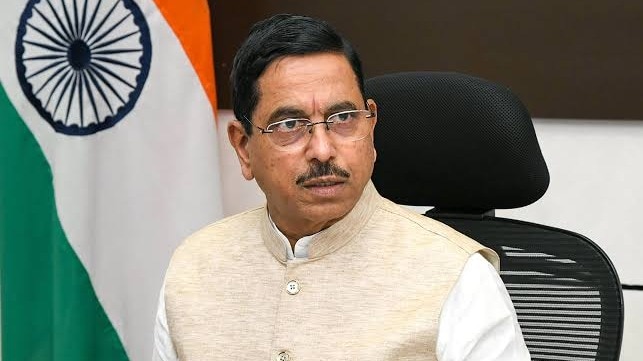
- Pralhad Joshi has been given the Education Ministry as an additional charge, indicating that the arrangement may be interim.
- He continues to hold the portfolios of:
- Consumer Affairs, Food and Public Distribution
- New and Renewable Energy
- Joshi is a five-time Lok Sabha member representing Dharwad, Karnataka.
- His immediate responsibilities include:
- Restoring confidence in national entrance examinations
- Restructuring the NTA
- Implementing examination-security reforms
- Supervising the transition to computer-based testing
- Continuing the implementation of the National Education Policy 2020.
Constitutional Provisions
- Article 74: Provides for a Council of Ministers headed by the Prime Minister to aid and advise the President.
- Article 75(1): Union ministers are appointed by the President on the advice of the Prime Minister.
- Article 75(2): Ministers hold office during the pleasure of the President.
- Article 75(3): The Council of Ministers is collectively responsible to the Lok Sabha.
- Article 77(3): Authorises the President to make rules for allocating Union government business among ministers.
Additional Info
- NEET-UG
- National-level entrance examination for admission to undergraduate medical courses.
- Conducted by the National Testing Agency.
- Covers admissions to courses such as MBBS, BDS and other undergraduate medical programmes.
- Ministry of Education
- Consists of:
- Department of School Education and Literacy
- Department of Higher Education
- Consists of:
- Public Examinations (Prevention of Unfair Means) Act, 2024
- Seeks to prevent paper leaks, organised cheating and other unfair practices in public examinations.
- Covers examinations conducted by specified central authorities, including the NTA, UPSC, SSC, Railway Recruitment Boards and IBPS.
- Provides imprisonment of three to five years and a fine of up to ₹10 lakh for specified offences.
- Organised examination crime can attract imprisonment of five to ten years and a minimum fine of ₹1 crore.
Sources
Indian Army Reviews Indigenous Bhargavastra Counter-Drone System
What’s the News?
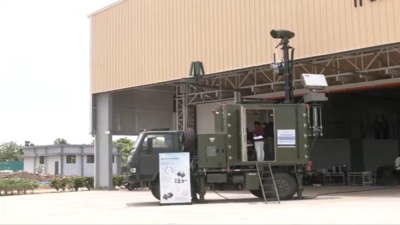
- The Indian Army witnessed a demonstration of Bhargavastra, an indigenous, vehicle-mounted counter-swarm drone system, at the developer’s facility in Nagpur.
- Developed by Solar Defence and Aerospace Limited (SDAL), the system is designed to detect, track and neutralise weaponised drones, loitering munitions and coordinated drone swarms.
- The demonstration was conducted as a status review under the Ministry of Defence’s Make-II programme.
- SDAL stated that Bhargavastra’s internal trials are expected to be completed within two to three months, after which it may progress towards user trials and possible induction.
- The demonstration validated the system’s sensors, command-and-control network and target-assignment process. Live rocket firing was not conducted at the facility due to safety restrictions.
What is Bhargavastra?
Bhargavastra is an indigenous, mobile and multi-layered Counter-Unmanned Aircraft System (C-UAS) developed primarily to address mass drone and loitering-munition attacks.
It combines:
- Surveillance and detection sensors
- A networked command-and-control system
- Electronic countermeasures
- Unguided micro-rockets
- Precision-guided micro-missiles
Unlike conventional anti-aircraft missiles, Bhargavastra uses relatively small and lower-cost interceptors against inexpensive drones, improving the cost-exchange ratio in air-defence operations.
How Does It Work?
Detection Layer
The system uses multiple sensors to identify and track aerial threats:
- Radar: Detects larger UAVs at ranges of up to 10 km.
- Electro-Optical Tracking System: Has a reported range of approximately 6 km.
- EO/IR sensors: Provide visual and infrared tracking during day and night.
- Passive Radio-Frequency detectors: Identify radio-frequency emissions associated with drones and their controllers.
Information from these sensors is combined to create a common operational picture.
Command-and-Control Layer
Bhargavastra uses a C4I system, which stands for:
- Command
- Control
- Communications
- Computers
- Intelligence
The C4I suite generates a real-time air picture, assesses incoming threats and assigns targets to the launcher.
Neutralisation Layer
Bhargavastra follows a dual-layer kinetic engagement mechanism:
- First layer—unguided micro-rockets
- Designed to engage groups or swarms of drones.
- Reported lethal radius: 20 metres.
- Second layer—precision-guided micro-missiles
- Designed for targeted interception of individual drones.
- Current specified interception range: up to 2.5 km.
- SDAL is also developing a longer-range missile variant with a range of approximately 6 km.
Hard-Kill and Soft-Kill Capabilities
- Hard kill: Physically destroys a hostile drone using rockets or missiles.
- Soft kill: Disrupts the drone’s communication, navigation or control signals through electronic means.
Bhargavastra is primarily a hard-kill system. However, its modular architecture permits the addition of:
- Electronic jamming
- Navigation spoofing
- Passive radio-frequency detection
The hard-kill layer remains important against autonomous drones that may continue operating despite communication jamming.
Operational Features
- Mobility: Mounted on vehicles for rapid deployment.
- Multi-target capability: Designed to detect and engage individual drones as well as coordinated swarms.
- High-altitude operation: Engineered for deployment at elevations exceeding 5,000 metres.
- Modular configuration: Sensors and interceptors can be configured according to operational requirements.
- Network integration: Designed to connect with the armed forces’ existing network-centric warfare infrastructure.
- Indigenous development: Its sensors, command system, rockets and micro-missiles are presented as domestically developed components.
Trial Status
- The micro-rockets previously underwent firing trials at the Seaward Firing Range in Gopalpur.
- Four rockets were tested during three trials, including two rockets launched in salvo mode within two seconds.
- The developer has also reported micro-missile trials at Balasore and Pokhran.
- During the latest Army demonstration, a drone swarm was detected and tracked through radar, EO/IR and RF sensors.
- The C4I system generated an air-situation picture and assigned targets to the launcher, although live firing was not undertaken.
- Internal system trials are expected to conclude within two to three months.
Make-II Programme
Bhargavastra was reviewed under the Make-II category of India’s defence-acquisition framework.
- Make-II promotes indigenous design and development by Indian industry.
- Prototype development is generally industry-funded, unlike Make-I projects, which receive government financial support.
- It encourages participation by private companies, start-ups and other Indian defence manufacturers.
- The objective is to reduce import dependence and accelerate the development of equipment required by the armed forces.
Strategic Significance
- Drone swarms can overwhelm conventional air-defence systems by attacking simultaneously from several directions.
- Using expensive surface-to-air missiles against low-cost drones is economically unsustainable.
- Micro-rockets and micro-missiles provide a more proportionate and cost-effective interception option.
- A mobile counter-drone system can protect:
- Military bases
- Ammunition depots
- Air-defence installations
- Border posts
- Command centres
- Critical national infrastructure
- Bhargavastra supports India’s broader objectives under Atmanirbhar Bharat and indigenous defence manufacturing.
SDAL Chairman Satyanarayan Nuwal has stated that technologies developed for Bhargavastra could contribute to a future multi-range air-defence architecture associated with the proposed Sudarshan Chakra programme. This remains the developer’s assessment rather than confirmation of Bhargavastra’s formal inclusion in that programme.
Additional Info
- Weaponised drone
- A UAV equipped with explosives, missiles or another attack payload.
- Loitering munition
- A weapon that remains airborne while searching for a target.
- It attacks by crashing into the selected target.
- It is commonly called a “suicide drone”.
- Drone swarm
- A group of drones operating in a coordinated or autonomous manner.
- Swarms can saturate radar and interception systems through simultaneous attacks.
- EO/IR
- Electro-Optical/Infrared.
- Used for target identification, tracking and day-night surveillance.
- Counter-UAS
- Systems used to detect, identify, track and neutralise hostile or unauthorised unmanned aircraft.
Sources
India Observes 27th Kargil Vijay Diwas, Honouring Operation Vijay Bravehearts
What’s the News?
- India observed the 27th Kargil Vijay Diwas on July 26, 2026, commemorating the country’s victory in the 1999 Kargil War and honouring personnel who fought under Operation Vijay.
- Defence Minister Rajnath Singh led the national tribute at the Kargil War Memorial in Dras, Ladakh, along with senior military officers, veterans, gallantry awardees and families of fallen personnel.
- The commemorations included the Shradhanjali Samaroh, Shaurya Sandhya, Yudh Sansmaran and programmes recognising the families of Kargil War heroes.
- Kargil Vijay Diwas does not have an officially declared annual theme. The 2026 observance focused on memorial outreach, public participation and preserving the legacy of the Kargil heroes.
Kargil Vijay Diwas
- Observed on: July 26 every year
- Commemorates: Successful completion of Operation Vijay and restoration of Indian control over positions occupied during the Kargil intrusion.
- First observed: 2000
- Principal venue: Kargil War Memorial, Dras
- Significance: Honours military courage, sacrifice, territorial integrity and India’s success in high-altitude warfare.
Operation Vijay
Operation Vijay was launched by the Indian Army to evict Pakistani forces and infiltrators who had crossed the Line of Control and occupied commanding mountain positions in the Kargil sector.
- The intrusion was associated with Pakistan’s Operation Badr.
- The occupied heights overlooked the Srinagar–Leh highway, threatening India’s principal logistical link with Ladakh.
- Some positions were located above 5,000 metres, giving the infiltrators significant tactical advantage.
- India adopted a strategy of “contain, evict and deny” while directing its forces not to cross the LoC.
- Indian troops ultimately recaptured all occupied positions after nearly three months of fighting.
Tri-Service Response
- Indian Army — Operation Vijay
- Conducted ground operations to recapture occupied mountain positions.
- Indian Air Force — Operation Safed Sagar
- Provided aerial reconnaissance, battlefield support and precision strikes.
- Operated under restrictions against crossing the LoC.
- Indian Navy
- Undertook maritime mobilisation to increase strategic pressure on Pakistan and secure India’s maritime interests.
The coordinated campaign demonstrated the importance of joint military planning, surveillance, logistics and air-ground integration.
Major Battle Areas
Important engagements were fought at:
- Tololing
- Tiger Hill
- Point 4875
- Batalik
- Mushkoh Valley
- Kaksar
- Dras sector
The recapture of Tololing provided an early breakthrough, while the recovery of Tiger Hill substantially shifted the operational momentum in India’s favour.
Gallantry Honours
The Kargil campaign resulted in the award of:
- 4 Param Vir Chakras
- 9 Maha Vir Chakras
- 55 Vir Chakras
- 83 Sena Medals
- 24 Vayu Sena Medals
Param Vir Chakra Awardees
- Captain Vikram Batra — Posthumous
- Lieutenant Manoj Kumar Pandey — Posthumous
- Grenadier Yogendra Singh Yadav
- Rifleman Sanjay Kumar
The Param Vir Chakra is India’s highest military decoration for conspicuous bravery in the presence of the enemy.
2026 Commemorative Initiatives
- Shaurya Vijay Yatra
- A 13-day motorcycle expedition from the National War Memorial in New Delhi to the Kargil War Memorial.
- Covered approximately 1,900 kilometres.
- Included 28 riders, comprising serving and retired defence personnel and family members.
- Motto: “One Ride, One Nation, One Salute.”
- Tiger Hill Expedition
- Organised by the Indian Army and the Dras civil administration.
- Included 11 trained local trekking guides.
- Sought to preserve military history while promoting military tourism and local livelihoods.
- Point 5140 Commemorative Trek
- Undertaken by 137 soldiers to honour the Regiment of Artillery’s contribution to Operation Vijay.
Kargil Review Committee
- The government constituted the Kargil Review Committee, chaired by strategic affairs expert K. Subrahmanyam, to examine the circumstances leading to the intrusion.
- It highlighted deficiencies in:
- Intelligence coordination
- Border surveillance
- Higher defence management
- Inter-service coordination
- National security decision-making
- Its recommendations were subsequently examined by a Group of Ministers.
- The reform process contributed to greater military jointness and eventually to the establishment of:
- Chief of Defence Staff
- Department of Military Affairs
- Integrated defence structures
- Improved intelligence and border-management mechanisms.
Additional Info
- Line of Control
- Military control line separating Indian- and Pakistan-administered areas of the former princely state of Jammu and Kashmir.
- It emerged from the ceasefire line and was redesignated under the Simla Agreement of 1972.
- Dras
- Located in the Union Territory of Ladakh.
- The Kargil War Memorial is situated near the principal battle areas of Tololing and Tiger Hill.
- Kargil Vijay Diwas vs Vijay Diwas
- Kargil Vijay Diwas: July 26; relates to the 1999 Kargil War.
- Vijay Diwas: December 16; marks India’s victory in the 1971 war and the liberation of Bangladesh.
Sources
Two Lakh Anganwadi Centres Approved for Saksham Upgradation
What’s the News?
- The Ministry of Women and Child Development has approved the upgradation of 2 lakh government-owned Anganwadi Centres into Saksham Anganwadis.
- The upgradation is being implemented under Mission Saksham Anganwadi and Poshan 2.0 during the 15th Finance Commission cycle, at a planned rate of 40,000 centres per year.
- As of March 2026, 1,04,403 Anganwadi Centres had been upgraded—more than the 57,897 centres reported in July 2025.
- The initiative seeks to improve nutrition delivery and Early Childhood Care and Education (ECCE) through better physical infrastructure, digital monitoring and child-friendly learning facilities.
What are Saksham Anganwadis?
Saksham Anganwadis are upgraded Anganwadi Centres with infrastructure and learning facilities superior to those available at conventional centres.
Major facilities include:
- Internet or Wi-Fi connectivity
- LED screens and audio-visual learning aids
- Water purifiers or RO systems
- Poshan Vatikas, or nutrition gardens
- ECCE materials and child-friendly equipment
- Educational wall paintings
- Practice and information boards
- Building as Learning Aid, or BaLA, features
These facilities aim to support the creative, cognitive, emotional, intellectual and social development of children below six years.
Mission Saksham Anganwadi and Poshan 2.0
It is a Centrally Sponsored Scheme administered by the Ministry of Women and Child Development.
It brings together:
- Anganwadi Services
- POSHAN Abhiyaan
- Scheme for Adolescent Girls
- Supplementary nutrition services
- Early Childhood Care and Education
- Anganwadi infrastructure development
Beneficiaries
- Children below six years
- Pregnant women
- Lactating mothers
- Adolescent girls aged 14–18 years in:
- Aspirational Districts
- North-Eastern states
ECCE services primarily cover children aged three to six years, while nutrition and care interventions extend from birth to six years.
Approval vs Upgradation
The two figures should not be confused:
- 2,00,000 centres: Approved for conversion into Saksham Anganwadis.
- 1,04,403 centres: Actually upgraded by March 2026.
Only government-owned centres possessing essential facilities such as electricity, drinking water and suitable buildings are generally selected for upgradation. Financial assistance of ₹1 lakh per centre, with flexibility among prescribed components, is provided according to the applicable Centre–State cost-sharing ratio.
Selected State-wise Approvals
- Madhya Pradesh: 24,662 centres
- Uttar Pradesh: 23,697 centres
- Karnataka: 17,732 centres
- Jharkhand: 16,775 centres
- Odisha: 12,140 centres
- Jammu and Kashmir: 338 centres
Madhya Pradesh has received the highest number of approvals among the states and Union Territories.
Digital Monitoring
Poshan Tracker
The Poshan Tracker is an ICT-based governance platform used for:
- Near real-time monitoring of Anganwadi Centres
- Tracking service delivery by Anganwadi Workers
- Beneficiary registration and verification
- Monitoring nutrition and growth indicators
- Tracking supplementary nutrition and Take-Home Ration distribution
- Identifying children affected by malnutrition
The platform monitors more than 14 lakh Anganwadi Centres and nearly 9 crore beneficiaries under the mission.
Poshan Bhi Padhai Bhi
- It was introduced to strengthen the education component of the Anganwadi system.
- It promotes play-based and activity-based foundational learning in alignment with the National Education Policy 2020.
- Anganwadi Workers are trained in ECCE curriculum, pedagogy and child assessment.
- By 2026, approximately 10.58 lakh Anganwadi Workers had received nutrition and ECCE training.
Implementation Structure
- Central Government
- Policy formulation
- Planning and financing
- Programme guidelines
- Monitoring and review
- States and Union Territories
- Day-to-day implementation
- Selection and upgradation of centres
- Recruitment and filling of staff vacancies
- Delivery of nutrition and ECCE services
The Centre reviews implementation through meetings and video conferences with state governments and Union Territory administrations.
Additional Info
- Anganwadi Services
- Originally introduced as the Integrated Child Development Services programme in 1975.
- Provide:
- Supplementary nutrition
- Pre-school non-formal education
- Immunisation
- Health check-ups
- Nutrition and health education
- Referral services
- Early Childhood Care and Education
- Recognised under the National Education Policy 2020 as an essential part of the foundational stage.
- The foundational stage covers children from three to eight years, including three years of preschool and Classes I–II.
- Poshan Vatika
- A nutrition garden established at or near an Anganwadi Centre.
- Promotes access to locally available fruits, vegetables, medicinal plants and nutrient-rich foods.
- BaLA
- Stands for Building as Learning Aid.
- Uses walls, floors, doors and other building components as interactive educational resources.
Sources
Supreme Court Restricts Online Sharing of Court-Hearing Recordings

What’s the News?
- The Supreme Court issued an interim order restricting the unauthorised use of audio-video recordings of judicial proceedings on social media and other digital platforms.
- Recordings or clips cannot be extracted, altered, posted, reposted, uploaded, circulated or monetised without prior permission from the authorised court official.
- Permission must be obtained from the Secretary General of the Supreme Court or the Registrar General of the jurisdictional High Court, as applicable.
- The Court clarified that the direction does not restrict bona fide and accurate news reporting of judicial proceedings.
- The order was passed by a three-judge Bench comprising Chief Justice of India Surya Kant and Justices Joymalya Bagchi and V. Mohana.
What Does the Order Restrict?
Without prior judicial permission, users and digital platforms cannot:
- Record live-streamed proceedings
- Extract selected portions from recordings
- Edit or modify courtroom clips
- Post, repost or upload such material
- Disseminate recordings through social media
- Monetise or commercially exploit the content
- Create misleading or decontextualised versions of courtroom exchanges
The restriction applies to social media as well as other digital platforms. It regulates the reuse of judicial recordings rather than imposing a complete ban on court live-streaming.
Why Was the Restriction Imposed?
The Court was concerned that selective courtroom clips were being:
- Circulated without the factual or legal context of the hearing
- Combined with misleading captions and sensational commentary
- Used as memes, shorts and entertainment content
- Monetised for engagement and commercial gain
- Used to target judges, lawyers and litigants through trolling
- Manipulated through artificial-intelligence tools
Such practices can distort preliminary oral observations and present them as final judicial conclusions, thereby affecting the dignity of courts and public confidence in the justice-delivery system.
Public Interest Litigation
- The interim direction arose from a Public Interest Litigation filed by journalist Harshita Grover.
- The petition sought safeguards governing the clipping, editing, dissemination and commercial use of recordings of judicial proceedings.
- It argued that live-streaming promotes transparency, but the absence of effective controls over republication has enabled sensationalism and misinformation.
- The petition was filed under Article 32 of the Constitution, which empowers individuals to approach the Supreme Court for enforcement of fundamental rights.
What Is Exempted?
News Reporting
The Court expressly stated that its order would have no bearing on news reporting.
This means journalists may continue to:
- Report courtroom developments
- Summarise submissions and observations
- Analyse judicial proceedings
- Publish fair and accurate accounts of hearings
However, the exemption does not automatically permit the unauthorised reproduction or commercial circulation of official audio-video recordings.
Official Use
The Supreme Court and High Courts may continue to:
- Record proceedings
- Maintain audiovisual archives
- Provide authorised access
- Publish official live streams
- Permit specific uses under their respective rules
Further Directions
The Supreme Court also:
- Sought responses from the Union government and other stakeholders.
- Issued notice to digital intermediaries, including Meta and X.
- Asked High Courts to report whether they had adopted the Supreme Court’s model live-streaming rules.
- Sought information on the impact of continuous live-streaming of courtroom proceedings.
- Directed that the interim order be displayed on the websites of the Supreme Court and High Courts.
Open Justice and Live-Streaming
The open-court principle requires judicial proceedings ordinarily to remain accessible to the public. It promotes:
- Transparency
- Judicial accountability
- Public confidence
- Legal education
- Accurate public understanding of courts
In Swapnil Tripathi v. Supreme Court of India, the Supreme Court supported live-streaming of proceedings, particularly matters of constitutional and national importance, subject to safeguards.
The Court’s guidelines also recognised that:
- Courts retain control over official recordings.
- Unauthorised recording is prohibited.
- Re-editing, redistribution and derivative use require permission.
- Sensitive proceedings may be excluded from live-streaming.
- The presiding judge may suspend streaming when required in the interests of justice.
Interim Order
An interim order is a temporary judicial direction issued while a case remains pending.
Therefore:
- The present restriction is not the Court’s final judgment on the PIL.
- It remains operative until modified, replaced or confirmed by a subsequent order.
- A broader regulatory framework may be considered after responses are received from the government, High Courts and digital platforms.
Additional Info
- Article 124
- Provides for the establishment and constitution of the Supreme Court.
- Article 129
- Declares the Supreme Court a court of record.
- Gives it the power to punish for contempt of itself.
- Article 215
- Declares every High Court a court of record.
- Gives High Courts contempt jurisdiction.
- Article 19(1)(a)
- Guarantees freedom of speech and expression.
- Includes freedom of the press, subject to reasonable restrictions under Article 19(2).
- Public Interest Litigation
- Allows public-spirited persons to approach constitutional courts on matters affecting public interest.
- The Supreme Court may be approached under Article 32 and High Courts under Article 226.
Sources
AAROH Report Highlights Scientific Closure of 42 Coal Mines
What’s the News?
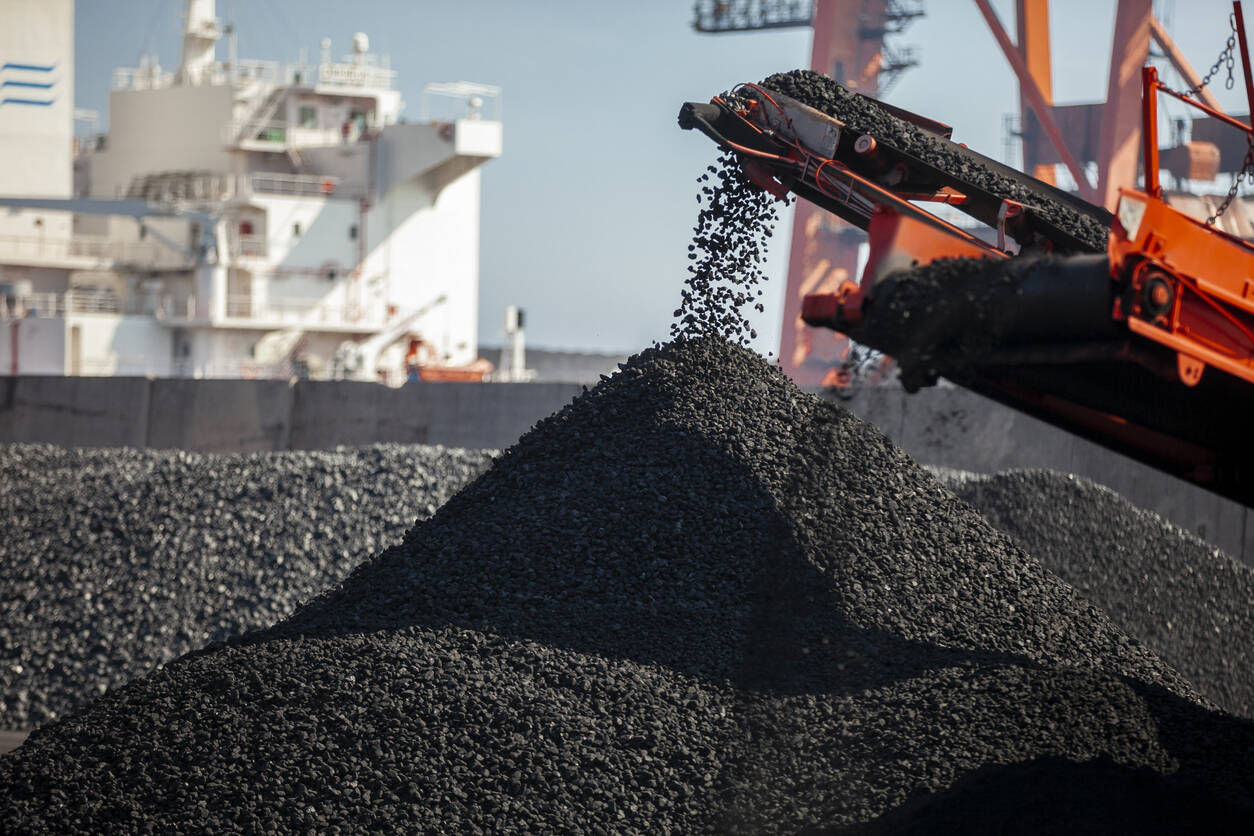
- The Ministry of Coal released AAROH—Annual Report on Mine Closure, India’s first comprehensive documentation of scientific coal-mine closure and repurposing practices.
- Prepared by the Coal Controller Organisation, the report covers 42 scientifically closed coal mines, including 33 closed during the preceding year.
- It documents ecological restoration, land reclamation, post-mining land use and community-oriented development at the selected mines.
- The government aims to scientifically close 147 additional coal mines within the next two to three years.
What is AAROH?
AAROH is intended to function as a national knowledge repository for future mine-closure projects.
Each mine profile contains:
- Major closure and reclamation interventions
- Post-mining land-use outcomes
- Before-and-after visual documentation
- QR code-linked documentary videos
- Community-development and livelihood interventions
The report seeks to shift mine closure from a regulatory formality to a planned process integrating environmental restoration, economic reuse and community welfare.
Scientific Mine Closure
Scientific mine closure is the planned decommissioning of a mine after mining becomes permanently uneconomic or its reserves are exhausted.
It generally includes:
- Securing shafts, pits and unstable slopes
- Backfilling and landform stabilisation
- Management of mine discharge and contaminated water
- Topsoil restoration and afforestation
- Removal or safe disposal of mining infrastructure
- Environmental monitoring
- Rehabilitation of affected communities
- Repurposing land for productive and sustainable uses
Reclaimed mine land may be used for renewable-energy projects, agriculture, water conservation, eco-tourism, community infrastructure and livelihood generation.
Mine-Closure Framework
The report highlights several initiatives of the Ministry of Coal:
- RECLAIM Framework
- Supports structured reclamation and community engagement.
- L.I.V.E.S. Framework
- Promotes stakeholder participation and sustainable mine closure and repurposing.
- SUVIKALP
- An interactive decision-support tool for assessing suitable post-mining land-use options.
- SUVIKALP Samvaad
- Facilitates stakeholder consultation, knowledge exchange and dialogue.
- A.R.T.H.A. Framework
- Forms part of the broader ecosystem for sustainable and community-oriented mine closure.
- Mine Closure Guidelines, 2025
- Place environmental sustainability, community needs and future land use at the centre of closure planning.
- Mine Closure Advisory Committees
- District Collector-led bodies supporting local coordination and stakeholder participation.
Closure Funding
- The government has created a dedicated corpus exceeding $5 billion, approximately ₹40,000 crore, for scientific and progressive mine closure.
- For the first time, 25% of the approved mine-closure cost has been earmarked for community development.
- This provision is expected to generate an investment potential of nearly ₹10,000 crore over the next decade for mining-affected communities.
India–Germany Cooperation
The Ministry of Coal signed an implementation agreement with Deutsche Gesellschaft für Internationale Zusammenarbeit, or GIZ, for technical cooperation on mines scheduled for closure.
- Project volume: €10 million
- Duration: Four years
- Funding: Commissioned by Germany’s Federal Ministry for Economic Cooperation and Development and co-financed by the European Union
- Cooperation period: Up to 2030
- Focus areas:
- Scientific mine closure
- Mine repurposing
- Institutional capacity-building
- Knowledge exchange
- Adoption of international best practices
The partnership is linked to the broader concept of a just transition, under which workers and mining-dependent communities are supported during economic and environmental restructuring.
Coal NEER Initiative
Coal NEER plants established by subsidiaries of Coal India Limited convert treated mine-discharge water into safe drinking water.
Participating subsidiaries include:
- Bharat Coking Coal Limited
- Central Coalfields Limited
- Mahanadi Coalfields Limited
- South Eastern Coalfields Limited
The plants use technologies such as:
- Reverse osmosis
- Ultraviolet treatment
- Capacitive deionisation
Coal public-sector undertakings supply nearly 300 lakh kilolitres of treated mine water annually, benefiting around three lakh people. The initiative also creates livelihood opportunities for local Self-Help Groups.
Additional Info
- Progressive mine closure
- Reclamation activities undertaken continuously while mining operations are still in progress.
- Final mine closure
- Closure activities undertaken after mining permanently ends.
- Mine repurposing
- Productive reuse of closed mine land and associated infrastructure for alternative economic, environmental or social purposes.
- Circular economy
- An economic model that minimises waste by reusing, restoring and recycling resources.
- Repurposing mine land and treating mine water reflect its “waste-to-wealth” principle.
Sources
Severe Monsoon Floods Hit Assam, Arunachal Pradesh and Gujarat
What’s the News?
- Intense southwest monsoon rainfall triggered riverine floods, flash floods, landslides and urban waterlogging across Assam, Arunachal Pradesh and Gujarat.
- Assam’s flood situation marginally improved, but nearly 6.55 lakh people remained affected across six districts, while the cumulative death toll from the year’s floods rose to 66.
- In an earlier severe phase, floods affected 872 villages, inundated 24,210.35 hectares of cropland and affected over 5.64 lakh people across 16 Assam districts.
- South Gujarat witnessed widespread flooding in Valsad, Navsari and Surat, while Ahmedabad and parts of Dadra and Nagar Haveli also required major rescue operations. The Army, NDRF, SDRF and local agencies were deployed.
Assam–Arunachal Flood Crisis

- Assam experienced successive flood waves caused by heavy rainfall within the state and in the upstream catchments of Arunachal Pradesh and Nagaland.
- The Brahmaputra and tributaries such as the Dikhow, Disang and Dhansiri crossed or approached severe flood levels in parts of Upper Assam.
- An initial spell affected 22,124 people across six Assam districts, submerged 96 villages and damaged around 1,690 hectares of agricultural land.
- Riverbank erosion destabilised a pier of a railway bridge in Dhemaji, forcing suspension of services on the affected route.
- Arunachal Pradesh also recorded rainfall-triggered flash floods and landslides that damaged settlements, roads and infrastructure.
Why is Assam Highly Flood-Prone?
Natural Factors
- Brahmaputra river system
- The Brahmaputra is a braided river with multiple shifting channels.
- It carries a large sediment load from the young and erosion-prone Himalayas.
- Sediment deposition raises riverbeds and reduces channel capacity.
- Orographic rainfall
- Moist southwesterly winds from the Bay of Bengal are forced upward by the Eastern Himalayas.
- The rising air cools rapidly, producing intense rainfall in the Himalayan and sub-Himalayan catchments.
- Short, steep tributaries
- Rivers descending from Arunachal Pradesh, Nagaland and Bhutan can carry large volumes of runoff into the Assam plains within a short period.
- Nearly 40% of Assam’s geographical area has been identified as flood-prone by the National Flood Commission.
Human-Induced Factors
- Encroachment and construction on natural floodplains
- Degradation of wetlands that previously stored excess water
- Riverbank erosion and inadequately maintained embankments
- Siltation of drainage channels
- Unplanned urbanisation and insufficient storm-water drainage
- Deforestation and land-use changes in upstream catchments
Climate change can increase the frequency and intensity of extreme rainfall, although attributing an individual flood solely to climate change requires a dedicated scientific attribution study.
Why Did Gujarat Receive Exceptional Rainfall?

The India Meteorological Department identified three major weather systems:
- A low-pressure area over southeast Rajasthan
- A monsoon trough positioned south of its normal location
- An offshore trough extending from the Gujarat coast towards Karnataka
These systems strengthened moisture convergence from the Arabian Sea. IMD recorded:
- Exceptionally heavy rainfall of at least 30 cm at isolated locations in the Gujarat region.
- Extremely heavy rainfall of at least 21 cm in Saurashtra and Kutch.
- Rapid flooding in low-lying areas of Valsad, Vapi, Navsari, Surat and adjoining districts.
Rescue and Relief Operations
Assam
- Relief operations involved the:
- Indian Army
- National Disaster Response Force
- State Disaster Response Force
- Fire and Emergency Services
- Assam State Disaster Management Authority
- Relief camps provided food, drinking water, healthcare and temporary shelter.
- A central inter-ministerial team was sent to assess damage in severely affected areas.
Gujarat
- The Army initiated Humanitarian Assistance and Disaster Relief operations in coordination with civil authorities, NDRF and SDRF.
- Army deployment included:
- Two columns in Navsari
- One column in the Valsad–Vapi region
- Three columns in Ahmedabad
- One column in Silvassa
- Valsad additionally received three NDRF teams, five SDRF teams and additional rescue boats.
IMD Rainfall Classification
- Heavy rainfall: 64.5–115.5 mm in 24 hours
- Very heavy rainfall: 115.6–204.4 mm
- Extremely heavy rainfall: At least 204.5 mm
- Exceptionally heavy rainfall: Rainfall close to the highest amount recorded at or near a station for that month or season, subject to the prescribed minimum threshold.
Warning Colours
- Green: No warning
- Yellow: Watch and remain updated
- Orange: Be prepared
- Red: Take action
A red-coloured warning indicates the level of action required; it is not merely a description of rainfall intensity.
Additional Info
- Riverine flood
- Occurs when a river exceeds its carrying capacity and inundates adjoining floodplains.
- Usually develops over a relatively longer period.
- Flash flood
- Develops rapidly following intense rainfall, sudden runoff or failure of a natural or artificial barrier.
- Common in steep Himalayan and foothill catchments.
- Urban flood
- Results when intense rainfall exceeds a city’s drainage capacity.
- Aggravated by concretisation, blocked drains and loss of wetlands.
- Cloudburst
- A highly concentrated, extremely intense rainfall event over a small area.
- Every flash flood is not necessarily caused by a cloudburst; regional meteorological officials stated that no formally recorded cloudburst preceded parts of the Assam–Arunachal flooding.
Sources
July 2026
Archive
October 2026
- 28 October 2026
- 27 October 2026
- 26 October 2026
- 24 October 2026
- 23 October 2026
- 22 October 2026
- 21 October 2026
- 20 October 2026
- 19 October 2026
- 17 October 2026
- 16 October 2026
- 15 October 2026
- 14 October 2026
- 13 October 2026
- 12 October 2026
- 10 October 2026
- 09 October 2026
- 08 October 2026
- 07 October 2026
- 06 October 2026
- 05 October 2026
- 03 October 2026
- 02 October 2026
- 01 October 2026
September 2026
- 30 September 2026
- 29 September 2026
- 28 September 2026
- 26 September 2026
- 25 September 2026
- 24 September 2026
- 23 September 2026
- 22 September 2026
- 21 September 2026
- 19 September 2026
- 18 September 2026
- 17 September 2026
- 16 September 2026
- 15 September 2026
- 12 September 2026
- 11 September 2026
- 10 September 2026
- 09 September 2026
- 08 September 2026
- 07 September 2026
- 05 September 2026
- 04 September 2026
- 03 September 2026
- 02 September 2026
- 01 September 2026
August 2026
- 31 August 2026
- 29 August 2026
- 27 August 2026
- 26 August 2026
- 25 August 2026
- 24 August 2026
- 22 August 2026
- 21 August 2026
- 20 August 2026
- 19 August 2026
- 18 August 2026
- 17 August 2026
- 14 August 2026
- 13 August 2026
- 12 August 2026
- 11 August 2026
- 10 August 2026
- 08 August 2026
- 07 August 2026
- 06 August 2026
- 05 August 2026
- 04 August 2026
- 03 August 2026
- 01 August 2026
July 2026
- 31 July 2026
- 30 July 2026
- 29 July 2026
- 28 July 2026
- 27 July 2026
- 25 July 2026
- 23 July 2026
- 22 July 2026
- 21 July 2026
- 20 July 2026
- 18 July 2026
- 17 July 2026
- 15 July 2026
- 14 July 2026
- 13 July 2026
- 11 July 2026
- 10 July 2026
- 09 July 2026
- 08 July 2026
- 07 July 2026
- 06 July 2026
- 04 July 2026
- 03 July 2026
- 02 July 2026
- 01 July 2026
June 2026
May 2026
April 2026
March 2026
- 31 March 2026
- 30 March 2026
- 28 March 2026
- 27 March 2026
- 26 March 2026
- 25 March 2026
- 24 March 2026
- 23 March 2026
- 21 March 2026
- 20 March 2026
- 19 March 2026
- 18 March 2026
- 17 March 2026
- 16 March 2026
- 14 March 2026
- 13 March 2026
- 12 March 2026
- 11 March 2026
- 10 March 2026
- 09 March 2026
- 07 March 2026
- 06 March 2026
- 05 March 2026
- 03 March 2026
- 02 March 2026
February 2026
- 28 February 2026
- 27 February 2026
- 26 February 2026
- 25 February 2026
- 24 February 2026
- 23 February 2026
- 21 February 2026
- 20 February 2026
- 19 February 2026
- 18 February 2026
- 17 February 2026
- 16 February 2026
- 13 February 2026
- 12 February 2026
- 11 February 2026
- 10 February 2026
- 09 February 2026
- 07 February 2026
- 06 February 2026
- 05 February 2026
- 04 February 2026
- 03 February 2026
- 02 February 2026
January 2026
- 31 January 2026
- 30 January 2026
- 29 January 2026
- 28 January 2026
- 27 January 2026
- 26 January 2026
- 24 January 2026
- 23 January 2026
- 22 January 2026
- 21 January 2026
- 20 January 2026
- 19 January 2026
- 16 January 2026
- 15 January 2026
- 14 January 2026
- 13 January 2026
- 12 January 2026
- 10 January 2026
- 09 January 2026
- 08 January 2026
- 07 January 2026
- 06 January 2026
- 05 January 2026
- 03 January 2026
- 02 January 2026
- 01 January 2026
December 2025
- 31 December 2025
- 30 December 2025
- 29 December 2025
- 27 December 2025
- 26 December 2025
- 24 December 2025
- 23 December 2025
- 22 December 2025
- 20 December 2025
- 19 December 2025
- 18 December 2025
- 17 December 2025
- 16 December 2025
- 15 December 2025
- 13 December 2025
- 12 December 2025
- 11 December 2025
- 10 December 2025
- 09 December 2025
- 08 December 2025
- 05 December 2025
- 04 December 2025
- 03 December 2025
- 02 December 2025
November 2025
- 29 November 2025
- 28 November 2025
- 27 November 2025
- 26 November 2025
- 25 November 2025
- 24 November 2025
- 22 November 2025
- 21 November 2025
- 20 November 2025
- 19 November 2025
- 18 November 2025
- 17 November 2025
- 15 November 2025
- 14 November 2025
- 13 November 2025
- 12 November 2025
- 11 November 2025
- 10 November 2025
- 08 November 2025
- 07 November 2025
- 06 November 2025
- 05 November 2025
- 04 November 2025
- 03 November 2025
- 01 November 2025
October 2025
- 31 October 2025
- 30 October 2025
- 29 October 2025
- 28 October 2025
- 27 October 2025
- 25 October 2025
- 24 October 2025
- 23 October 2025
- 22 October 2025
- 21 October 2025
- 20 October 2025
- 18 October 2025
- 17 October 2025
- 16 October 2025
- 15 October 2025
- 14 October 2025
- 13 October 2025
- 11 October 2025
- 10 October 2025
- 09 October 2025
- 08 October 2025
- 07 October 2025
- 06 October 2025
- 04 October 2025
- 03 October 2025
- 02 October 2025
- 01 October 2025
September 2025
- 30 September 2025
- 29 September 2025
- 27 September 2025
- 26 September 2025
- 25 September 2025
- 24 September 2025
- 23 September 2025
- 22 September 2025
- 20 September 2025
- 19 September 2025
- 18 September 2025
- 17 September 2025
- 16 September 2025
- 15 September 2025
- 13 September 2025
- 12 September 2025
- 11 September 2025
- 10 September 2025
- 09 September 2025
- 08 September 2025
- 06 September 2025
- 05 September 2025
- 04 September 2025
- 03 September 2025
- 02 September 2025
- 01 September 2025
August 2025
- 30 August 2025
- 29 August 2025
- 28 August 2025
- 27 August 2025
- 26 August 2025
- 25 August 2025
- 23 August 2025
- 22 August 2025
- 21 August 2025
- 20 August 2025
- 19 August 2025
- 18 August 2025
- 16 August 2025
- 14 August 2025
- 13 August 2025
- 12 August 2025
- 11 August 2025
- 08 August 2025
- 07 August 2025
- 06 August 2025
- 05 August 2025
- 04 August 2025
- 02 August 2025
- 01 August 2025
July 2025
- 31 July 2025
- 30 July 2025
- 29 July 2025
- 28 July 2025
- 26 July 2025
- 25 July 2025
- 24 July 2025
- 23 July 2025
- 22 July 2025
- 21 July 2025
- 19 July 2025
- 18 July 2025
- 17 July 2025
- 16 July 2025
- 15 July 2025
- 12 July 2025
- 11 July 2025
- 10 July 2025
- 09 July 2025
- 07 July 2025
- 05 July 2025
- 04 July 2025
- 03 July 2025
- 02 July 2025
- 01 July 2025
June 2025
- 30 June 2025
- 28 June 2025
- 27 June 2025
- 26 June 2025
- 25 June 2025
- 24 June 2025
- 23 June 2025
- 21 June 2025
- 20 June 2025
- 19 June 2025
- 18 June 2025
- 17 June 2025
- 16 June 2025
- 14 June 2025
- 13 June 2025
- 12 June 2025
- 11 June 2025
- 10 June 2025
- 09 June 2025
- 07 June 2025
- 06 June 2025
- 05 June 2025
- 04 June 2025
- 03 June 2025
- 02 June 2025
May 2025
April 2025
- 30 April 2025
- 29 April 2025
- 28 April 2025
- 26 April 2025
- 25 April 2025
- 24 April 2025
- 23 April 2025
- 22 April 2025
- 21 April 2025
- 19 April 2025
- 18 April 2025
- 17 April 2025
- 16 April 2025
- 15 April 2025
- 14 April 2025
- 12 April 2025
- 11 April 2025
- 10 April 2025
- 09 April 2025
- 08 April 2025
- 07 April 2025
- 05 April 2025
- 04 April 2025
- 03 April 2025
- 02 April 2025
- 01 April 2025
March 2025
- 31 March 2025
- 29 March 2025
- 28 March 2025
- 27 March 2025
- 26 March 2025
- 25 March 2025
- 24 March 2025
- 22 March 2025
- 21 March 2025
- 20 March 2025
- 19 March 2025
- 18 March 2025
- 17 March 2025
- 15 March 2025
- 13 March 2025
- 12 March 2025
- 11 March 2025
- 10 March 2025
- 08 March 2025
- 07 March 2025
- 06 March 2025
- 05 March 2025
- 04 March 2025
- 03 March 2025
- 01 March 2025
February 2025
- 28 February 2025
- 27 February 2025
- 26 February 2025
- 25 February 2025
- 24 February 2025
- 22 February 2025
- 21 February 2025
- 20 February 2025
- 19 February 2025
- 18 February 2025
- 17 February 2025
- 15 February 2025
- 14 February 2025
- 13 February 2025
- 12 February 2025
- 11 February 2025
- 10 February 2025
- 08 February 2025
- 07 February 2025
- 06 February 2025
- 05 February 2025
- 04 February 2025
- 03 February 2025
- 01 February 2025
January 2025
- 31 January 2025
- 30 January 2025
- 29 January 2025
- 28 January 2025
- 27 January 2025
- 25 January 2025
- 24 January 2025
- 23 January 2025
- 22 January 2025
- 21 January 2025
- 20 January 2025
- 18 January 2025
- 17 January 2025
- 16 January 2025
- 15 January 2025
- 14 January 2025
- 13 January 2025
- 11 January 2025
- 10 January 2025
- 09 January 2025
- 08 January 2025
- 07 January 2025
- 06 January 2025
- 04 January 2025
- 03 January 2025
- 02 January 2025
- 01 January 2025