
Current Affairs
Stay updated with the latest national and international events.
25 February 2026
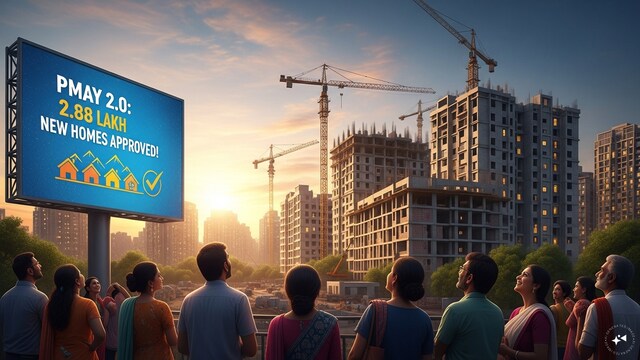
Centre Approves 2.88 Lakh Houses Under PMAY-U 2.0
What’s the News?
- The Ministry of Housing and Urban Affairs (MoHUA) has sanctioned the construction of 2.88 lakh additional houses during the 6th meeting of the Central Sanctioning and Monitoring Committee (CSMC).
- The approval covers projects across 9 States/UTs, including Goa, Himachal Pradesh, Maharashtra, Punjab, Tamil Nadu, Telangana, Uttar Pradesh, Uttarakhand, and West Bengal.
- The Union Government has committed a central assistance of ₹5,185 crore for these specific projects.
- This latest sanction brings the cumulative number of houses approved under PMAY-U 2.0 to 10.33 lakh across 23 States/UTs.
Implementation of PMAY-U 2.0
- Objective: To address the housing requirement of 1 crore urban poor and middle-class families by providing all-weather pucca houses.
- Financial Outlay: The mission involves a total investment of ₹10 lakh crore, supported by a central subsidy of ₹2.3 lakh crore.
- Target Beneficiaries: Focuses on Economically Weaker Sections (EWS), Low Income Groups (LIG), and Middle Income Groups (MIG).
- Implementation Verticals:
- Beneficiary Led Construction (BLC): Financial aid to individual families to construct new houses on their own land.
- Affordable Housing in Partnership (AHP): Housing projects developed in collaboration with private sectors or public agencies.
- Affordable Rental Housing Complexes (ARHC): Provision of rental housing for urban migrants and the poor.
- Interest Subsidy Scheme (ISS): Provides interest subvention on home loans for eligible urban households.
Social Inclusion Metrics
- Women Empowerment: Over 1.60 lakh houses allotted to women (including widows, separated/unmarried women)
- Overall, 96% houses under PMAY-U 2.0 are in the name of female head or joint ownership (BLC & ISS verticals)
- Transgender Community: 8 dwelling units sanctioned
- Senior Citizens: 22,581 houses
- SC Beneficiaries: 35,525 houses (22% of total sanctions)
- ST Beneficiaries: 9,773 houses (5% of total sanctions)
- OBC Beneficiaries: 82,190 houses
Cumulative Progress (PMAY-Urban: 2015-2022 & 2.0)
- Total Houses Sanctioned: 122.50 lakh
- Houses Grounded: 115.31 lakh
- Houses Completed: 97.20 lakh
- Central Assistance Released: ₹1.77 lakh crore
- Total Investment: ₹8.45 lakh crore
Additional Information
- Historical Context:
- PMAY-U 1.0 was launched in 2015 with a target to complete by 2022.
- PMAY-U 2.0 is the revised and extended version to address remaining urban housing gaps.
- Related Initiatives:
- AMRUT Mission (Atal Mission for Rejuvenation and Urban Transformation)
- Smart Cities Mission
- Swachh Bharat Mission-Urban
- All operate under MoHUA for integrated urban development.
- Constitutional Provisions:
- Article 243W: Empowers Urban Local Bodies for planning and development including housing.
- Directive Principles (Article 47): State's duty to raise living standards including housing.
Sources
RBI Establishes Secure Greenfield Data Centre to Mitigate Strategic Risks

What’s the News?
- The Reserve Bank of India (RBI) is setting up a state-of-the-art Greenfield Data Centre to enhance the resilience of the country’s financial digital infrastructure.
- The facility is specifically designed to protect critical financial data from both natural disasters and potential man-made or geopolitical threats.
- The project aims to provide a secure and scalable environment for the central bank's growing computing and data storage needs.
Strategic Location & Security Features
- Seismic Resilience: The centre is situated in a low-seismic activity zone to ensure operations remain unaffected by major earthquakes.
- Geopolitical Safety: The site is located deep within the Indian mainland, keeping it far from international borders to minimize risks from cross-border strikes or external physical threats.
- Disaster Recovery: It will function as a major hub alongside existing facilities in Mumbai and Delhi, creating a robust redundant network for the nation's payment systems.
- Data Sovereignty: The move reinforces Data Localisation norms, ensuring that sensitive financial information is stored and processed exclusively within India.
Greenfield Data Centre Objectives
- Operational Continuity: Designed to ensure that essential services like RTGS (Real Time Gross Settlement) and NEFT (National Electronic Funds Transfer) remain operational even during catastrophic failures at other nodes.
- Future-Ready Infrastructure: The facility is built to handle the massive surge in digital transactions, which have seen a significant CAGR (Compound Annual Growth Rate) over the last few years.
- Energy Efficiency: As a "Greenfield" project (built from scratch), it incorporates modern, energy-efficient cooling systems and high-density server architecture to reduce the environmental footprint.
Additional Info
Global and Domestic Trends
- International Model: Similar to US Federal Reserve's East Rutherford Operations Center, which houses key payment and settlement infrastructure with layered protections
- Domestic Adoption: Other institutions building own data centres:
- Securities and Exchange Board of India (SEBI)
- State Bank of India (SBI)
Data Centre Tiers Explained
- Tier I: Basic capacity with single path for power and cooling
- Tier II: Redundant capacity components
- Tier III: Concurrently maintainable, no shutdowns required for maintenance
- Tier IV: Fault-tolerant, independent systems, highest availability (99.995% uptime guarantee)
Sources
Union Cabinet Approves Renaming Kerala as 'Keralam'

What's the News?
The Union Cabinet approved the proposal to rename the state of Kerala to 'Keralam'. The decision aligns with the state's name in Malayalam, the official language. The proposal will now require parliamentary approval through a constitutional amendment bill, as renaming a state requires an amendment to Schedule 1 of the Constitution of India. The state government had previously passed a unanimous resolution in the Kerala Assembly in 2023 requesting the name change.
Linguistic and Historical Roots
- Etymology: The name 'Keralam' derives from two Malayalam words:
- 'Kera' (coconut tree)
- 'Alam' (region/land)
- Meaning: "Land of Coconut Trees" – reflecting the state's abundant coconut cultivation
- Historical Usage: The name 'Keralam' has been used in Malayalam literature and historical texts for centuries, while 'Kerala' is the anglicized version used during and after British colonial rule
- Cultural Significance: The change represents linguistic decolonization and restoration of indigenous identity
Constitutional and Legal Procedure
| Step | Requirement | Status |
|---|---|---|
| State Assembly Resolution | Unanimous resolution requesting name change | ✅ Completed (2023) |
| Union Cabinet Approval | Central government approval | ✅ Completed |
| Parliamentary Amendment | Constitutional amendment bill passed by both houses | ⏳ Pending |
| Presidential Assent | President's signature on amendment | ⏳ Pending |
- Constitutional Basis: Article 3 of the Constitution empowers Parliament to alter state names
- Schedule 1: Contains the names of all states and UTs; requires amendment for any name change
- Precedents:
- Madras → Tamil Nadu (1969)
- Mysore → Karnataka (1973)
- Bombay → Maharashtra (1960)
- Orissa → Odisha (2011)
Constitutional Provisions for State Reorganization
- Article 3: Parliament may by law:
- Form a new state by separation of territory
- Increase or diminish the area of any state
- Alter the boundaries of any state
- Alter the name of any state
- Process: Bill must be referred to the Legislature of the state concerned for expressing views (not binding on Parliament)
Linguistic Reorganization of States
- States Reorganization Act, 1956: Redrew state boundaries based on linguistic lines
- First Linguistic State: Andhra Pradesh (formed 1953)
- Current Linguistic States: 28 states largely organized on linguistic basis
Sources
India and GCC Launch Free Trade Agreement (FTA) Negotiations
What’s the News?
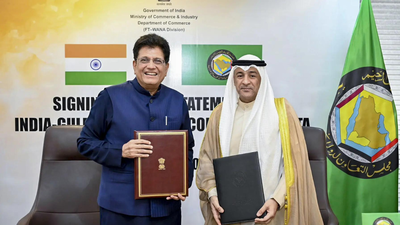
- India and the Gulf Cooperation Council (GCC) have signed a joint statement to formally resume negotiations for a Free Trade Agreement (FTA).
- The agreement was formalized during a meeting between India's Union Minister of Commerce and Industry and the GCC Secretary-General.
- This move aims to significantly boost bilateral trade and investment, building on the momentum of existing individual trade pacts like the India-UAE CEPA.
The India-GCC FTA Framework
- Objective: To eliminate or reduce customs duties on a broad range of goods and simplify procedures for trade in services and investments.
- Key Sectors: Negotiations will focus on sectors including chemicals, petrochemicals, energy, agriculture, textiles, and gems and jewellery.
- Strategic Energy Partnership: The GCC is a primary source of India's energy imports; the FTA aims to create a more stable and cost-effective energy supply chain.
- Investment Flow: The pact is expected to attract sovereign wealth funds from the Gulf into India's National Investment and Infrastructure Fund (NIIF) and other infrastructure projects.
Current Trade Dynamics & Significance
- Trade Volume: The GCC is India's largest regional trading partner, with bilateral trade exceeding $160 billion in the last fiscal year.
- Import Dependency: India imports roughly 35% of its oil and 70% of its gas requirements from the GCC member states.
- Remittances: The region is home to over 8.5 million Indian expatriates who contribute significantly to India's foreign exchange reserves through remittances.
- Member Nations: The GCC consists of six countries: Saudi Arabia, UAE, Qatar, Kuwait, Oman, and Bahrain.
Additional Info
Existing Bilateral FTAs with GCC Members
- India-UAE CEPA: Signed 2022, operational 2022 (first comprehensive FTA with a GCC nation)
- India-Saudi Arabia: Strategic Partnership Council established, FTA under discussion
- India-Oman: Existing FTA (2006) under review for upgrade
India's FTA Strategy
- Comprehensive Economic Partnership Agreements (CEPAs): Preferring broader agreements over traditional FTAs
- Key Partners: UAE, Australia, UK (under negotiation), EU (under negotiation), EFTA
- Focus Areas: Services mobility, digital trade, labor rights, sustainable development
Challenges in India-GCC FTA
- Trade Deficit: India's concern over oil import dependency
- Labor Mobility: Negotiations on professional visas and worker protections
- Rules of Origin: Preventing Chinese goods from routing through GCC
- Services Access: GCC restrictions on foreign professionals
- Geopolitical Tensions: Iran-GCC rivalries affecting Indian interests
Related Initiatives
- IMEC: India-Middle East-Europe Economic Corridor (announced G20 2023)
- I2U2: Quadrilateral focusing on infrastructure, energy, food security, and technology
- Arabian Sea Connectivity: Port development (Haifa, Chabahar, Duqm) linking India to GCC
Sources
India and France Amend Double Taxation Avoidance Convention (DTAC)
What’s the News?
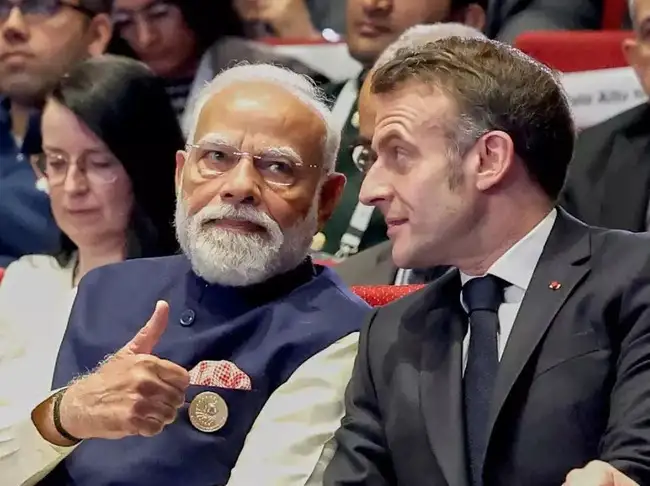
- India and France have signed an amending protocol to update the existing Double Taxation Avoidance Convention (DTAC).
- The update aims to align the bilateral tax treaty with the Minimum Standards of the OECD/G20 Base Erosion and Profit Shifting (BEPS) project.
- A major highlight of this amendment is the formal removal of the Most Favoured Nation (MFN) clause from the treaty, providing greater tax certainty for cross-border transactions.
Key Amendments in the Protocol
- Removal of MFN Clause: The protocol deletes the MFN clause specifically concerning dividends, interest, royalties, and fees for technical services. This ensures that tax rates are governed strictly by the India-France treaty and are not automatically lowered based on India’s agreements with other countries.
- Anti-Abuse Provisions: It introduces the Principal Purpose Test (PPT), which allows tax authorities to deny treaty benefits if the primary objective of a transaction or arrangement was to obtain tax advantages.
- Preamble Update: The new preamble explicitly states that the convention is intended to eliminate double taxation without creating opportunities for non-taxation or reduced taxation through tax evasion or avoidance, including treaty shopping.
- Global Standards: These changes bring the India-France tax relationship in line with the Multilateral Convention to Implement Tax Treaty Related Measures (MLI).
Why Remove the MFN Clause?
- India's Position: The MFN clause created interpretational disputes and litigation (e.g., Netherlands, Switzerland cases)
- Supreme Court Rulings: Indian courts ruled that MFN benefits apply automatically only if the third country was an OECD member when the treaty was signed
- Revenue Protection: Removal prevents automatic reduction of withholding tax rates (currently 10% on dividends, interest, royalties) without renegotiation
- Policy Shift: India moving toward country-specific negotiations rather than automatic parity
BEPS Compliance Framework
- BEPS Action 6: Preventing treaty abuse through PPT and LOB
- BEPS Action 14: Making dispute resolution mechanisms more effective
- BEPS Action 15: Developing a Multilateral Instrument (MLI) to modify existing treaties
- India's MLI Position: Signed 2017, covers 93 treaties; France is a covered tax agreement
India-France Economic Ties
| Indicator | Value |
|---|---|
| Bilateral Trade | ~\$13 billion (2024) |
| French FDI in India | \$10+ billion (2000-2024) |
| Indian Investments in France | €1+ billion |
| Key Sectors | Defense, aerospace, nuclear energy, infrastructure, IT |
| Strategic Partnership | 25+ years (established 1998) |
Additional Info
DTAC Basics
- Purpose: Prevent double taxation of same income in two countries; promote cross-border trade and investment
- Methods:
- Exemption Method: Income taxed only in residence country
- Credit Method: Tax paid in source country credited against residence country liability
- India's Network: 90+ DTACs with various countries
Recent DTAC Amendments by India
- Mauritius: 2016 – Introduced source-based taxation on capital gains; 2021 – Further amendments
- Singapore: 2016 – Similar to Mauritius protocol
- Cyprus: 2016 – Removed from blacklist after DTAC amendment
- Netherlands: 2023 – MFN clause interpretation disputes ongoing
- Switzerland: 2023 – Supreme Court ruling on MFN applicability
BEPS Project Overview
- Launched: 2013 by OECD/G20
- Objective: Prevent tax avoidance by multinational enterprises exploiting gaps in tax rules
- 15 Actions: Covering digital economy, hybrid mismatches, treaty abuse, transfer pricing, etc.
- India's Implementation:
- Equalization Levy (2016, 2020) on digital services
- Significant Economic Presence (SEP) concept introduced
- Vivad se Vishwas scheme for dispute resolution
Principal Purpose Test (PPT)
- Standard Clause: "Notwithstanding any other provision of this Convention, a benefit under this Convention shall not be granted in respect of an item of income if it is reasonable to conclude, having regard to all relevant facts and circumstances, that obtaining that benefit was one of the principal purposes of any arrangement or transaction"
- Objective: Prevents artificial structuring solely to obtain treaty benefits
Sources
World Bank's Women, Business and the Law 2026 Report

What's the News?
The World Bank released its Women, Business and the Law (WBL) 2026 report, revealing that while legal frameworks for women's economic participation have improved globally, implementation gaps persist. The report assesses 190 economies across 8 indicators measuring laws affecting women's economic opportunities. India scored 74.4 out of 100, ranking below the South Asian average and OECD high-income average.
Global Findings
- Legal Reforms: 18 economies enacted 30 reforms in the past year to improve women's economic inclusion
- Implementation Gap: Laws on paper are only half enforced globally
- Best Performers: Belgium, Canada, Denmark, France, Germany, Greece, Ireland, Latvia, Luxembourg, Netherlands, Portugal, Spain, Sweden (all scored 100)
- Worst Performers: Afghanistan, Sudan, Yemen, West Bank and Gaza (scored 0)
- Regional Leader: OECD high-income economies average 95.6 points
India's Performance
| Indicator | India's Score | Maximum Score | Gap |
|---|---|---|---|
| Mobility | 100 | 100 | ✅ None |
| Workplace | 50 | 100 | ❌ 50 points |
| Pay | 50 | 100 | ❌ 50 points |
| Marriage | 80 | 100 | ❌ 20 points |
| Parenthood | 40 | 100 | ❌ 60 points |
| Entrepreneurship | 100 | 100 | ✅ None |
| Assets | 80 | 100 | ❌ 20 points |
| Pension | 100 | 100 | ✅ None |
| Overall | 74.4 | 100 | Below regional average |
Key Weaknesses for India
- Workplace Laws:
- No laws prohibiting discrimination in employment based on gender
- No right to equal remuneration for work of equal value (only "same work" covered)
- No paid leave for 16+ weeks for maternity (currently 26 weeks but with coverage gaps)
- Pay Transparency:
- No requirement for pay audits or gender pay gap reporting by private sector employers
- Parenthood:
- No paternity leave provisions
- No paid parental leave (only maternity leave exists)
- No childcare support mandates for employers
- Marriage & Assets:
- Unequal inheritance rights in certain personal laws
- Marital rape not criminalized
South Asia Comparison
| Country | Score | Rank |
|---|---|---|
| India | 74.4 | Below average |
| Sri Lanka | 80.0 | Regional leader |
| Nepal | 77.5 | Above India |
| Bangladesh | 74.4 | Equal to India |
| Pakistan | 58.8 | Below India |
| Afghanistan | 0.0 | Lowest globally |
| Regional Average | 64.4 | India above average |
Additional Info
WBL 2026 Methodology
- 8 Indicators: Mobility, Workplace, Pay, Marriage, Parenthood, Entrepreneurship, Assets, Pension
- Data Collection: Based on laws and regulations (not practice or outcomes)
- Scoring: 0, 50, or 100 points per indicator based on legal provisions
- New Additions: Safety and Childcare indicators to be introduced in WBL 2027
India's Legal Framework
- Constitutional Provisions:
- Article 14: Right to equality
- Article 15(3): Special provisions for women and children
- Article 39(d): Equal pay for equal work
- Article 42: Humane conditions of work and maternity relief
- Key Legislation:
- Maternity Benefit Act, 1961 (amended 2017): 26 weeks paid leave
- Equal Remuneration Act, 1976: Equal pay for "same work"
- Sexual Harassment of Women at Workplace Act, 2013
- Hindu Succession (Amendment) Act, 2005: Equal coparcenary rights
Global Reform Trends
- Paternity Leave: 40+ economies introduced paid paternity leave
- Pay Transparency: 20+ economies mandated gender pay gap reporting
- Domestic Violence: 10+ economies strengthened protections
- Entrepreneurship: Removal of gender-based restrictions on business registration
World Bank Recommendations
- Strengthen Implementation: Laws must be backed by enforcement mechanisms
- Close Gaps: Address legal barriers in marriage, parenthood, and workplace
- Data Collection: Improve gender-disaggregated data for policy-making
- Private Sector Engagement: Encourage voluntary commitments beyond legal compliance
Sources
79th British Academy Film Awards (BAFTA 2026)

What’s the News?
- The 79th BAFTA Film Awards were held on February 22, 2026, at the Royal Festival Hall in London, hosted by Alan Cumming.
- The ceremony saw a mix of historic milestones for Indian cinema and dominant sweeps by major Hollywood productions.
- One Battle After Another, a politically charged thriller directed by Paul Thomas Anderson, emerged as the night's biggest winner, securing six awards including Best Film.
Historic Moment for India
- Boong Wins Big: The Manipuri-language film Boong, backed by Farhan Akhtar’s Excel Entertainment and directed by Lakshmipriya Devi, made history by winning Best Children’s and Family Film. It notably beat global giants like Disney’s Zootopia 2.
Major Winners and Highlights
| Category | Winner | Film |
|---|---|---|
| Best Film | Paul Thomas Anderson (Dir.) | One Battle After Another |
| Outstanding British Film | Chloé Zhao (Dir.) | Hamnet |
| Leading Actor | Robert Aramayo | I Swear |
| Leading Actress | Jessie Buckley | Hamnet |
| Best Director | Paul Thomas Anderson | One Battle After Another |
| Best Supporting Actor | Sean Penn | One Battle After Another |
| Best Supporting Actress | Wunmi Mosaku | Sinners |
| EE Rising Star Award | Robert Aramayo | (Public Vote) |
Additional Information
- BAFTA Overview:
- Full Form: British Academy of Film and Television Arts
- Established: 1947 as independent arts charity.
- Annual Ceremony: Held every year in London, United Kingdom
- Prestige: Considered second most prestigious film awards after Oscars.
- Indian Cinema at International Awards:
- RRR (2023): Won Oscar for Best Original Song ('Naatu Naatu')
- Gandhi (1982): Won 8 Oscars including Best Picture
- Salaam Bombay (1988): Won Cannes Camera d'Or
- Lagaan (2001): Oscar nominee for Best Foreign Language Film
Sources
February 2026
Archive
October 2026
- 27 October 2026
- 26 October 2026
- 24 October 2026
- 23 October 2026
- 22 October 2026
- 21 October 2026
- 20 October 2026
- 19 October 2026
- 17 October 2026
- 16 October 2026
- 15 October 2026
- 14 October 2026
- 13 October 2026
- 12 October 2026
- 10 October 2026
- 09 October 2026
- 08 October 2026
- 07 October 2026
- 06 October 2026
- 05 October 2026
- 03 October 2026
- 02 October 2026
- 01 October 2026
September 2026
- 30 September 2026
- 29 September 2026
- 28 September 2026
- 26 September 2026
- 25 September 2026
- 24 September 2026
- 23 September 2026
- 22 September 2026
- 21 September 2026
- 19 September 2026
- 18 September 2026
- 17 September 2026
- 16 September 2026
- 15 September 2026
- 12 September 2026
- 11 September 2026
- 10 September 2026
- 09 September 2026
- 08 September 2026
- 07 September 2026
- 05 September 2026
- 04 September 2026
- 03 September 2026
- 02 September 2026
- 01 September 2026
August 2026
- 31 August 2026
- 29 August 2026
- 27 August 2026
- 26 August 2026
- 25 August 2026
- 24 August 2026
- 22 August 2026
- 21 August 2026
- 20 August 2026
- 19 August 2026
- 18 August 2026
- 17 August 2026
- 14 August 2026
- 13 August 2026
- 12 August 2026
- 11 August 2026
- 10 August 2026
- 08 August 2026
- 07 August 2026
- 06 August 2026
- 05 August 2026
- 04 August 2026
- 03 August 2026
- 01 August 2026
July 2026
- 31 July 2026
- 30 July 2026
- 29 July 2026
- 28 July 2026
- 27 July 2026
- 25 July 2026
- 23 July 2026
- 22 July 2026
- 21 July 2026
- 20 July 2026
- 18 July 2026
- 17 July 2026
- 15 July 2026
- 14 July 2026
- 13 July 2026
- 11 July 2026
- 10 July 2026
- 09 July 2026
- 08 July 2026
- 07 July 2026
- 06 July 2026
- 04 July 2026
- 03 July 2026
- 02 July 2026
- 01 July 2026
June 2026
May 2026
April 2026
March 2026
- 31 March 2026
- 30 March 2026
- 28 March 2026
- 27 March 2026
- 26 March 2026
- 25 March 2026
- 24 March 2026
- 23 March 2026
- 21 March 2026
- 20 March 2026
- 19 March 2026
- 18 March 2026
- 17 March 2026
- 16 March 2026
- 14 March 2026
- 13 March 2026
- 12 March 2026
- 11 March 2026
- 10 March 2026
- 09 March 2026
- 07 March 2026
- 06 March 2026
- 05 March 2026
- 03 March 2026
- 02 March 2026
February 2026
- 28 February 2026
- 27 February 2026
- 26 February 2026
- 25 February 2026
- 24 February 2026
- 23 February 2026
- 21 February 2026
- 20 February 2026
- 19 February 2026
- 18 February 2026
- 17 February 2026
- 16 February 2026
- 13 February 2026
- 12 February 2026
- 11 February 2026
- 10 February 2026
- 09 February 2026
- 07 February 2026
- 06 February 2026
- 05 February 2026
- 04 February 2026
- 03 February 2026
- 02 February 2026
January 2026
- 31 January 2026
- 30 January 2026
- 29 January 2026
- 28 January 2026
- 27 January 2026
- 26 January 2026
- 24 January 2026
- 23 January 2026
- 22 January 2026
- 21 January 2026
- 20 January 2026
- 19 January 2026
- 16 January 2026
- 15 January 2026
- 14 January 2026
- 13 January 2026
- 12 January 2026
- 10 January 2026
- 09 January 2026
- 08 January 2026
- 07 January 2026
- 06 January 2026
- 05 January 2026
- 03 January 2026
- 02 January 2026
- 01 January 2026
December 2025
- 31 December 2025
- 30 December 2025
- 29 December 2025
- 27 December 2025
- 26 December 2025
- 24 December 2025
- 23 December 2025
- 22 December 2025
- 20 December 2025
- 19 December 2025
- 18 December 2025
- 17 December 2025
- 16 December 2025
- 15 December 2025
- 13 December 2025
- 12 December 2025
- 11 December 2025
- 10 December 2025
- 09 December 2025
- 08 December 2025
- 05 December 2025
- 04 December 2025
- 03 December 2025
- 02 December 2025
November 2025
- 29 November 2025
- 28 November 2025
- 27 November 2025
- 26 November 2025
- 25 November 2025
- 24 November 2025
- 22 November 2025
- 21 November 2025
- 20 November 2025
- 19 November 2025
- 18 November 2025
- 17 November 2025
- 15 November 2025
- 14 November 2025
- 13 November 2025
- 12 November 2025
- 11 November 2025
- 10 November 2025
- 08 November 2025
- 07 November 2025
- 06 November 2025
- 05 November 2025
- 04 November 2025
- 03 November 2025
- 01 November 2025
October 2025
- 31 October 2025
- 30 October 2025
- 29 October 2025
- 28 October 2025
- 27 October 2025
- 25 October 2025
- 24 October 2025
- 23 October 2025
- 22 October 2025
- 21 October 2025
- 20 October 2025
- 18 October 2025
- 17 October 2025
- 16 October 2025
- 15 October 2025
- 14 October 2025
- 13 October 2025
- 11 October 2025
- 10 October 2025
- 09 October 2025
- 08 October 2025
- 07 October 2025
- 06 October 2025
- 04 October 2025
- 03 October 2025
- 02 October 2025
- 01 October 2025
September 2025
- 30 September 2025
- 29 September 2025
- 27 September 2025
- 26 September 2025
- 25 September 2025
- 24 September 2025
- 23 September 2025
- 22 September 2025
- 20 September 2025
- 19 September 2025
- 18 September 2025
- 17 September 2025
- 16 September 2025
- 15 September 2025
- 13 September 2025
- 12 September 2025
- 11 September 2025
- 10 September 2025
- 09 September 2025
- 08 September 2025
- 06 September 2025
- 05 September 2025
- 04 September 2025
- 03 September 2025
- 02 September 2025
- 01 September 2025
August 2025
- 30 August 2025
- 29 August 2025
- 28 August 2025
- 27 August 2025
- 26 August 2025
- 25 August 2025
- 23 August 2025
- 22 August 2025
- 21 August 2025
- 20 August 2025
- 19 August 2025
- 18 August 2025
- 16 August 2025
- 14 August 2025
- 13 August 2025
- 12 August 2025
- 11 August 2025
- 08 August 2025
- 07 August 2025
- 06 August 2025
- 05 August 2025
- 04 August 2025
- 02 August 2025
- 01 August 2025
July 2025
- 31 July 2025
- 30 July 2025
- 29 July 2025
- 28 July 2025
- 26 July 2025
- 25 July 2025
- 24 July 2025
- 23 July 2025
- 22 July 2025
- 21 July 2025
- 19 July 2025
- 18 July 2025
- 17 July 2025
- 16 July 2025
- 15 July 2025
- 12 July 2025
- 11 July 2025
- 10 July 2025
- 09 July 2025
- 07 July 2025
- 05 July 2025
- 04 July 2025
- 03 July 2025
- 02 July 2025
- 01 July 2025
June 2025
- 30 June 2025
- 28 June 2025
- 27 June 2025
- 26 June 2025
- 25 June 2025
- 24 June 2025
- 23 June 2025
- 21 June 2025
- 20 June 2025
- 19 June 2025
- 18 June 2025
- 17 June 2025
- 16 June 2025
- 14 June 2025
- 13 June 2025
- 12 June 2025
- 11 June 2025
- 10 June 2025
- 09 June 2025
- 07 June 2025
- 06 June 2025
- 05 June 2025
- 04 June 2025
- 03 June 2025
- 02 June 2025
May 2025
April 2025
- 30 April 2025
- 29 April 2025
- 28 April 2025
- 26 April 2025
- 25 April 2025
- 24 April 2025
- 23 April 2025
- 22 April 2025
- 21 April 2025
- 19 April 2025
- 18 April 2025
- 17 April 2025
- 16 April 2025
- 15 April 2025
- 14 April 2025
- 12 April 2025
- 11 April 2025
- 10 April 2025
- 09 April 2025
- 08 April 2025
- 07 April 2025
- 05 April 2025
- 04 April 2025
- 03 April 2025
- 02 April 2025
- 01 April 2025
March 2025
- 31 March 2025
- 29 March 2025
- 28 March 2025
- 27 March 2025
- 26 March 2025
- 25 March 2025
- 24 March 2025
- 22 March 2025
- 21 March 2025
- 20 March 2025
- 19 March 2025
- 18 March 2025
- 17 March 2025
- 15 March 2025
- 13 March 2025
- 12 March 2025
- 11 March 2025
- 10 March 2025
- 08 March 2025
- 07 March 2025
- 06 March 2025
- 05 March 2025
- 04 March 2025
- 03 March 2025
- 01 March 2025
February 2025
- 28 February 2025
- 27 February 2025
- 26 February 2025
- 25 February 2025
- 24 February 2025
- 22 February 2025
- 21 February 2025
- 20 February 2025
- 19 February 2025
- 18 February 2025
- 17 February 2025
- 15 February 2025
- 14 February 2025
- 13 February 2025
- 12 February 2025
- 11 February 2025
- 10 February 2025
- 08 February 2025
- 07 February 2025
- 06 February 2025
- 05 February 2025
- 04 February 2025
- 03 February 2025
- 01 February 2025
January 2025
- 31 January 2025
- 30 January 2025
- 29 January 2025
- 28 January 2025
- 27 January 2025
- 25 January 2025
- 24 January 2025
- 23 January 2025
- 22 January 2025
- 21 January 2025
- 20 January 2025
- 18 January 2025
- 17 January 2025
- 16 January 2025
- 15 January 2025
- 14 January 2025
- 13 January 2025
- 11 January 2025
- 10 January 2025
- 09 January 2025
- 08 January 2025
- 07 January 2025
- 06 January 2025
- 04 January 2025
- 03 January 2025
- 02 January 2025
- 01 January 2025