
Current Affairs
Stay updated with the latest national and international events.
24 September 2026
Supreme Court Refers CEC–EC Appointment Law Challenge to Constitution Bench
What’s the News?
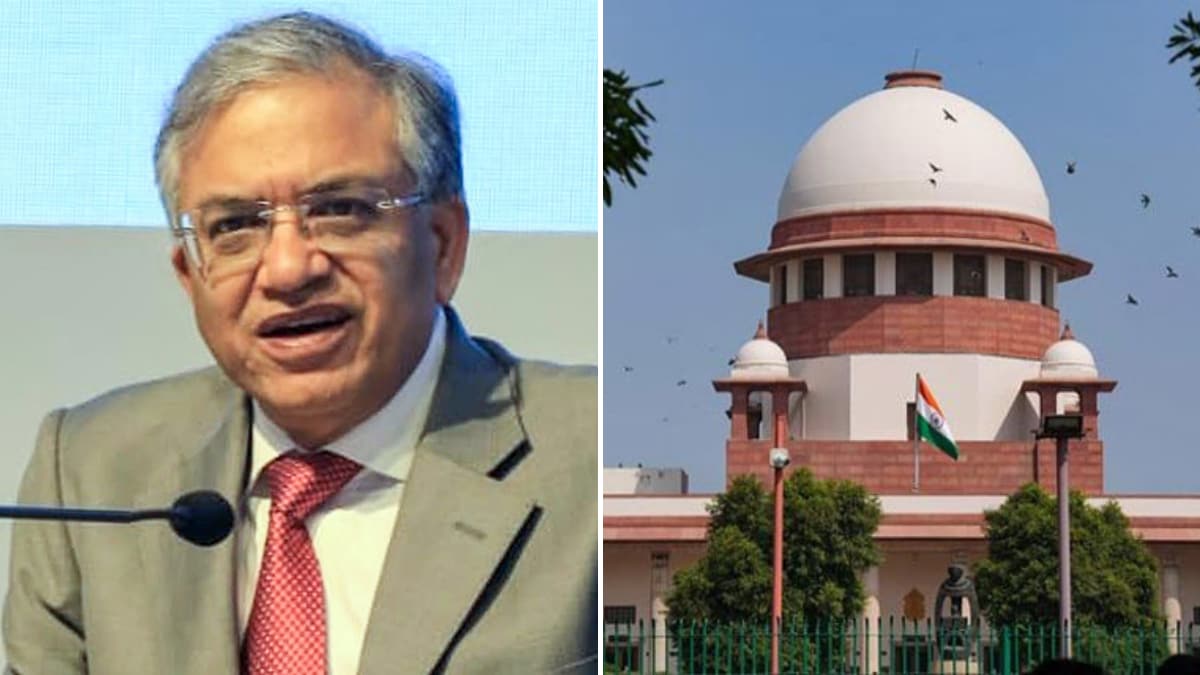
The Supreme Court has referred petitions challenging the Chief Election Commissioner and Other Election Commissioners (Appointment, Conditions of Service and Term of Office) Act, 2023 to a five-judge Constitution Bench.
A two-judge Bench of Justices Dipankar Datta and Satish Chandra Sharma differed on whether a larger Bench was necessary. However, both agreed to place the matter before the Chief Justice of India for constitution of a Constitution Bench rather than first sending the disagreement to a three-judge Bench. The 2023 Act continues to remain in force; the Supreme Court has neither upheld nor struck down the disputed appointment mechanism.
What Does the 2023 Act Provide?
The Act was enacted under Parliament’s law-making power contemplated by Article 324(2) of the Constitution. It provides that the President appoints the CEC and Election Commissioners on the recommendation of a three-member Selection Committee comprising:
- Prime Minister — Chairperson
- Leader of Opposition in the Lok Sabha — Member
- Union Cabinet Minister nominated by the Prime Minister — Member
If no Leader of Opposition is formally recognised, the leader of the single largest opposition party in the Lok Sabha is treated as the Leader of Opposition for this purpose.
A Search Committee, headed by the Union Minister of Law and Justice and including two Secretary-rank members, prepares a panel of five candidates. However, the Selection Committee may also consider a person outside the Search Committee’s panel.
Candidates must be serving or former officers equivalent to the rank of Secretary to the Government of India, possess integrity, and have knowledge and experience in election management. Their tenure is six years or until the age of 65 years, whichever is earlier, with no reappointment.
Why Has the Law Been Challenged?
The dispute principally concerns Sections 6, 7 and 8(2) of the Act.
Petitioners argue that replacing the Chief Justice of India with a Union Cabinet Minister gives the executive two positions in the three-member Selection Committee, potentially affecting the institutional independence of the Election Commission. They have linked the issue to the constitutional requirement of free and fair elections and the independence of the electoral body.
Justice Datta considered that a two-judge Bench could examine the challenge on the basis of existing constitutional principles. He also made preliminary observations about the executive-heavy composition of the committee, while expressly clarifying that these did not constitute a final ruling on the Act’s validity.
Justice Sharma held that the case raises a fresh substantial question of constitutional interpretation, warranting consideration by at least five judges under Article 145(3).
Anoop Baranwal Judgment
In Anoop Baranwal v. Union of India (2023), a five-judge Constitution Bench addressed the absence of a parliamentary law governing appointments of the CEC and ECs.
It prescribed an interim Selection Committee consisting of the:
Prime Minister + Leader of Opposition in Lok Sabha + Chief Justice of India
This arrangement was expressly intended to operate until Parliament enacted a law. Parliament subsequently enacted the 2023 Act and replaced the CJI with a Union Cabinet Minister nominated by the Prime Minister.
The new Constitution Bench will therefore examine the interaction between Parliament’s authority under Article 324(2) and constitutional requirements concerning the independence of the Election Commission.
Constitution Bench
Article 145(3) requires a minimum of five Supreme Court judges to decide a case involving a substantial question of law concerning interpretation of the Constitution or to hear a Presidential Reference under Article 143.
The two-judge Bench also requested the Chief Justice of India to consider establishing a permanent five-judge Bench for constitutional questions, noting delays in adjudication of constitutional references.
Additional Info
- Election Commission of India
- A permanent constitutional body established under Article 324.
- It exercises superintendence, direction and control over elections to Parliament, State Legislatures, and the offices of President and Vice-President of India.
- It presently consists of the Chief Election Commissioner and two Election Commissioners.
- Article 324
- Article 324(1): Vests the superintendence, direction and control of elections in the Election Commission.
- Article 324(2): Appointment of the CEC and ECs is made by the President, subject to any law enacted by Parliament.
- Article 324(5): The CEC receives constitutional protection in removal comparable to a Supreme Court judge; an Election Commissioner cannot be removed except on the recommendation of the CEC.
Sources
FSSAI Acts Against E-Commerce Platforms Over Food Safety Violations

What’s the News?
The Food Safety and Standards Authority of India (FSSAI) has initiated penal action against major e-commerce platforms — Amazon, Swiggy Instamart, BigBasket, Flipkart India and Zepto — for alleged violations of food safety regulations.
The violations include misbranding, misleading food claims, non-compliant product information, and sale or display of prohibited/poisonous food articles. The action is part of increased regulatory scrutiny of food products sold through online marketplaces and quick-commerce platforms.
Products and Platforms Flagged
- Happilo Premium Date Bites – Zesty Orange
- Penal action was initiated against all five platforms over allegedly misleading or non-compliant claims associated with the product.
- Milky Mist dairy products
- Swiggy Instamart and BigBasket faced action over misleading claims and non-compliant product information involving:
- Milky Mist Fresh Low Fat Cream
- Milky Mist Farm Fresh Curd
- Milky Mist Greek Yoghurt
- Swiggy Instamart and BigBasket faced action over misleading claims and non-compliant product information involving:
- Datura (Dhatura) fruits and seeds
- Amazon Seller Services, Swiggy Instamart and BigBasket were found non-compliant in relation to their sale, display or offer for sale as food products.
- Datura contains toxic substances and is treated under food-safety standards as a poisonous/toxic or harmful seed.
Rules for Online Food Claims
Food claims and advertisements are governed primarily by the Food Safety and Standards (Advertising and Claims) Regulations, 2018.
Under these regulations:
- Claims must be truthful, unambiguous, meaningful and not misleading.
- Online promotional claims must satisfy the same regulatory requirements applicable to food labels and advertisements.
- E-commerce platforms must ensure that claims displayed online are consistent with information provided on the physical product label.
The Food Safety and Standards (Labelling and Display) Regulations, 2020 also require e-commerce food business operators to obtain prescribed product information from food businesses and display it on their platforms, wherever applicable.
Penalties under the FSS Act
The Food Safety and Standards Act, 2006 provides specific penalties for food-related violations:
- Section 52 – Misbranded food
- Penalty may extend to ₹3 lakh.
- Corrective action or destruction of the concerned food article may also be directed.
- Section 53 – Misleading advertisement
- Covers advertisements that falsely describe food or mislead consumers about its nature, substance or quality.
- Penalty may extend to ₹10 lakh.
E-Commerce Food Safety Requirements
FSSAI has separately directed e-commerce Food Business Operators (FBOs) to strengthen compliance. Important requirements include:
- Food products listed online must comply with applicable labelling and display regulations.
- Online claims should not go beyond or contradict claims appearing on the physical package.
- Sellers listed on platforms must possess a valid FSSAI licence or registration.
- At the time of delivery, food should generally have at least 30% of its shelf life or 45 days remaining before expiry, whichever requirement applies.
- Delivery personnel should be trained in food safety, hygiene and prevention of cross-contamination.
Additional Info
- Food Safety and Standards Authority of India (FSSAI)
- A statutory authority established under the Food Safety and Standards Act, 2006.
- Functions under the administrative control of the Ministry of Health and Family Welfare.
- Headquarters: New Delhi.
- Responsible for laying down science-based food standards and regulating the manufacture, storage, distribution, sale and import of food to ensure safe and wholesome food.
- Food Business Operator (FBO)
- Includes persons or entities carrying out activities related to the manufacture, processing, packaging, storage, transportation, distribution, import or sale of food.
- E-commerce food businesses therefore fall within India's food-safety regulatory framework.
- Regulations linked to online food sales
- Food Safety and Standards (Advertising and Claims) Regulations, 2018
- Food Safety and Standards (Labelling and Display) Regulations, 2020
- Food Safety and Standards Act, 2006
Sources
World Maritime Day 2026: From Policy to Practice
What’s the News?
World Maritime Day 2026 was observed on 24 September, the last Thursday of September, under the theme “From Policy to Practice: Powering Maritime Excellence.”
The observance is led by the International Maritime Organization (IMO) and highlights the importance of safe, secure, efficient and environmentally sustainable international shipping. The 2026 theme particularly focuses on translating global maritime rules into national legislation, effective enforcement and day-to-day maritime operations.
Theme 2026–27
Theme: From Policy to Practice: Powering Maritime Excellence
For the first time, IMO has adopted the World Maritime Day theme for a two-year period — 2026 and 2027.
The theme has three broad components:
- From Policy to Practice: Converting internationally agreed maritime rules into national laws, enforcement mechanisms and operational practices.
- Powering: Strengthening implementation through technical assistance, capacity building, training and knowledge sharing.
- Maritime Excellence: Promoting shipping that is consistently safe, secure, efficient and environmentally sound.
Major areas of focus include maritime safety, new technologies, decarbonisation, digitalisation, cybersecurity, maritime security and prevention of marine pollution.
World Maritime Day
- It is a United Nations international observance coordinated by IMO.
- Observed annually on the last Thursday of September.
- It was conceived in 1978 to promote awareness of IMO's work and major maritime issues.
- Shipping transports over 80% of world merchandise trade by volume, making maritime transport central to global supply chains and international commerce.
- The 2026 World Maritime Day Parallel Event is scheduled in Busan, Republic of Korea, on 26–27 October 2026.
International Maritime Organization
The International Maritime Organization (IMO) is the UN specialised agency responsible for the global regulatory framework governing international shipping.
- Headquarters: London, United Kingdom
- Members: 176 Member States and 3 Associate Members
- Secretary-General: Arsenio Dominguez
- IMO Convention adopted: 1948
- Convention entered into force: 1958
- IMO first met: 1959
Its principal areas of work include:
- Maritime safety and security
- Prevention of pollution from ships
- Efficiency of navigation
- Seafarer training and certification
- Facilitation of international maritime traffic
- Maritime decarbonisation and sustainable shipping
Major IMO Conventions
- SOLAS Convention: Safety of Life at Sea; principal international treaty dealing with merchant-ship safety.
- MARPOL Convention: Prevention of pollution from ships.
- STCW Convention: International standards for the training, certification and watchkeeping of seafarers.
Additional Info
- India and IMO
- India is a member of IMO.
- India has been elected to the 40-member IMO Council for the 2026–27 biennium.
- It is in Category (b), comprising 10 States with the largest interests in international seaborne trade.
- SDG Linkages
- SDG 9: Industry, Innovation and Infrastructure
- SDG 13: Climate Action
- SDG 14: Life Below Water
- SDG 17: Partnerships for the Goals
Deen Dayal Upadhyaya Grameen Kaushalya Yojana 2.0
What’s the News?
The Deen Dayal Upadhyaya Grameen Kaushalya Yojana (DDU-GKY) 2.0 is being expanded across India under revised guidelines aimed at making rural skilling more industry-led, employment-oriented and digitally monitored.
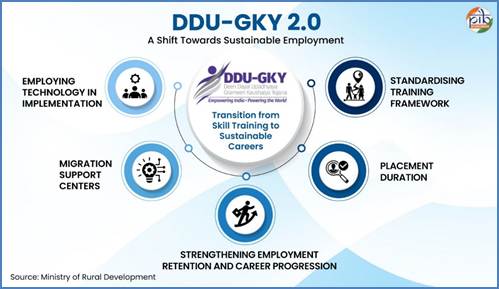
DDU-GKY 2.0 places greater emphasis on sustained employment, longer placement support, post-placement tracking, migration assistance, and upskilling/reskilling of rural youth.
The programme currently operates across 31 States and Union Territories, with over 749 approved projects, 760 active training centres and 455 Project Implementing Agencies (PIAs).
DDU-GKY
DDU-GKY is a placement-linked skill development programme of the Ministry of Rural Development (MoRD).
- Launched in 2014 under the National Rural Livelihoods Mission, now DAY-NRLM.
- Target group: Rural youth from poor and vulnerable households.
- Age group: 15–35 years.
- Objective: Provide market-oriented skills and connect rural youth with sustainable employment.
- Training spans 36 economic sectors and over 800 job roles.
Mandatory social inclusion norms include:
- SC/ST: 50%
- Women: 33%
- Persons with Disabilities: 5%
What is New in DDU-GKY 2.0?
The upgraded guidelines were notified in 2025.
Training
- Minimum training duration retained at 576 hours.
- A three-month course includes:
- 396 hours — domain-specific training
- 180 hours — non-domain training
- English Communication: 60 hours
- Employability & Life Skills: 60 hours
- Digital Literacy: 30 hours
- Entrepreneurship: 30 hours
Priority sectors include green jobs, healthcare, agriculture, aerospace & aviation, renewable energy, logistics, hospitality, retail and the care economy.
Employment Support
- Minimum placement duration increased from 3 months to 6 months.
- Covers wage employment, self-employment and gig employment.
- Candidates are tracked for 12 months after placement.
- Post-placement financial assistance: ₹7,620, paid at ₹1,270 per month for six months.
- ₹5,000 retention support for candidates remaining employed for 365 days, allowing a maximum employment break of 60 days.
- Upskilling and reskilling opportunities are available after 12 months of placement.
Migration Support Centres
State Rural Livelihoods Missions (SRLMs) can establish Migration Support Centres in locations with a high concentration of placed candidates.
They provide:
- Accommodation assistance
- Counselling
- Placement support
- Employer coordination
- Employment-related information
- Alumni networking and support for migrant workers
Annual financial support for each centre has been increased from ₹10 lakh to up to ₹30 lakh under DDU-GKY 2.0.
Digital Implementation
DDU-GKY 2.0 uses an end-to-end digital platform covering:
- Registration and onboarding of PIAs
- Project evaluation
- Candidate and training-centre management
- Assessment and certification
- Financial management
- Placement and employment tracking
- Face-authentication-based attendance
- Real-time monitoring dashboards
- Grievance redressal and certificate verification
- Integration with the Skill India Digital Hub
Special Initiatives
- Roshni
- Focuses on Left-Wing Extremism-affected districts.
- Provides residential skill training.
- Requires at least 40% participation by women.
- Its coverage has also been extended to Aspirational Districts.
- Himayat
- Special skilling initiative for Jammu & Kashmir and Ladakh.
- Covers eligible rural and urban youth, including BPL and APL categories.
- Supports wage, self and gig employment.
- 100% centrally funded.
- North-Eastern States
- 10% of DDU-GKY allocation is earmarked for the North-East.
- Hard-to-Reach Areas
- PIAs can receive an additional 10% of the base training cost per candidate as Special Area Allowance.
Progress
Since the programme's inception:
- 18.47 lakh+ candidates trained
- 12.43 lakh+ candidates placed
- 9.71 lakh+ women trained
- 6.34 lakh+ women placed
- 800+ job roles covered
The Union Budget 2026–27 allocated ₹750 crore to DDU-GKY.
For the next major rollout, 34,920 rural youth are scheduled to enter training through 1,164 batches across 14 States/UTs, while the sanctioned training target for these States/UTs is 3,57,112 candidates.
Additional Info
- DAY-NRLM
- Full form: Deendayal Antyodaya Yojana–National Rural Livelihoods Mission.
- Implemented by the Ministry of Rural Development.
- Seeks poverty reduction through sustainable livelihoods, institution-building and financial inclusion of rural households.
- DDU-GKY functions as its major placement-linked rural skilling component.
- RSETI
- Rural Self Employment Training Institutes complement DDU-GKY by promoting self-employment and entrepreneurship.
- 647 RSETIs operate across 634 districts.
- They have trained about 63.47 lakh candidates, with 45.60 lakh settled in livelihoods.
Sources
RBI Manages Forex Inflows and Surplus Liquidity Through Swap Facility and VRRR

What’s the News?
The Reserve Bank of India (RBI) is using a combination of special foreign-exchange swap facilities, Variable Rate Reverse Repo (VRRR) auctions and Open Market Operations (OMOs) to manage unusually high surplus liquidity in the banking system.
RBI’s special forex swap facility attracted about $143.6 billion in foreign-currency inflows, largely through Foreign Currency Non-Resident (Bank) [FCNR(B)] deposits. These inflows injected large amounts of rupee liquidity into banks, pushing the banking-system surplus above ₹10 lakh crore at its peak. RBI has subsequently been absorbing the excess liquidity.
In a recent overnight VRRR operation, RBI absorbed ₹71,971 crore against a notified amount of ₹75,000 crore at a 5.24% cut-off rate. Banking-system surplus liquidity subsequently stood at around ₹4.92 lakh crore.
Forex Swap Facility
RBI introduced a special US Dollar–Rupee Forex Swap Facility to encourage foreign-currency inflows and strengthen external-sector liquidity.
Under the mechanism:
- Banks mobilise eligible foreign currency.
- They provide dollars to RBI and receive rupees in exchange.
- The transaction is reversed at maturity according to the agreed swap arrangement.
- It gives banks access to rupees while shifting the exchange-rate hedging requirement associated with eligible funds to the swap mechanism.
For FCNR(B) deposits, eligible deposits have a maturity of 3–5 years, while the RBI swap is conducted in US dollars.
Inflows
Total inflows under the special facilities reached about $143.596 billion, comprising:
- FCNR(B) deposits: $132.98 billion
- Overseas Foreign Currency Borrowings (OFCBs): $5.32 billion
- External Commercial Borrowings (ECBs): about $5.30 billion
The FCNR(B) component accounted for more than 90% of the total mobilisation.
FCNR(B) Deposits
Foreign Currency Non-Resident (Bank) Account [FCNR(B)] allows Non-Resident Indians to maintain term deposits with Indian banks in permitted foreign currencies.
Features:
- Deposits are maintained in foreign currency, reducing exchange-rate risk for depositors.
- Accounts are term deposits, not savings or current accounts.
- Both principal and interest are generally repatriable.
- The special RBI swap facility covered fresh eligible FCNR(B) deposits with 3–5 year maturity.
The large mobilisation of FCNR(B) deposits boosted India's foreign-currency availability but simultaneously created substantial domestic rupee liquidity, requiring RBI to sterilise part of the inflow.
Variable Rate Reverse Repo
A Variable Rate Reverse Repo (VRRR) is a liquidity-absorption instrument used by RBI under its Liquidity Adjustment Facility (LAF).
In a VRRR:
- Banks with surplus funds place money with RBI for a specified period.
- RBI pays interest on these funds.
- The interest rate is determined through competitive bidding, rather than being fixed beforehand.
- The funds are temporarily withdrawn from the banking system and return when the operation matures.
Recent VRRR
- Notified amount: ₹75,000 crore
- Bids received: ₹71,971 crore
- Amount accepted: ₹71,971 crore
- Tenor: 1 day
- Cut-off rate: 5.24%
- Weighted average rate: 5.24%
The objective is to prevent excess liquidity from pushing overnight market rates substantially below RBI's policy rate.
Why Did Surplus Liquidity Rise?
The major factors were:
- Large FCNR(B) deposit inflows
- Conversion of foreign currency into rupees through RBI's forex swaps
- Inflows from ECBs and overseas borrowings
- Government expenditure, including salary and pension payments
Because RBI supplies rupees while receiving foreign currency under the swap mechanism, large forex inflows can simultaneously strengthen foreign-exchange liquidity and expand domestic banking-system liquidity.
Liquidity Management Tools
RBI can use several instruments when liquidity becomes excessive:
- VRRR: Temporarily parks banks' surplus funds with RBI.
- Standing Deposit Facility (SDF): Allows banks to place overnight funds with RBI without providing collateral.
- OMO Sale: RBI sells government securities, receiving rupees and thereby withdrawing durable liquidity.
- Forex Sell-Buy Swap: RBI can sell dollars for rupees initially, absorbing rupee liquidity.
- Cash Reserve Ratio (CRR): A higher CRR requires banks to maintain a larger proportion of deposits with RBI.
RBI has also used government-security sales through OMOs alongside VRRR auctions during the current surplus-liquidity episode.
Monetary Policy Corridor
The policy rates relevant to liquidity management are:
- Policy Repo Rate: 5.25%
- Standing Deposit Facility (SDF): 5.00%
- Marginal Standing Facility (MSF): 5.50%
- Bank Rate: 5.50%
The repo rate forms the centre, SDF the floor and MSF the upper bound of the operating corridor. Excess liquidity can pull overnight market rates toward the SDF floor; liquidity-absorption operations such as VRRR help keep market rates closer to the policy repo rate.
Additional Info
- Liquidity Adjustment Facility (LAF)
- Framework through which RBI manages short-term banking-system liquidity.
- Includes variable-rate repo and reverse-repo operations and other fine-tuning operations.
- Open Market Operations (OMOs)
- RBI buys government securities → liquidity increases.
- RBI sells government securities → liquidity decreases.
- Sterilisation
- Refers to RBI operations designed to offset the domestic liquidity impact of foreign-exchange interventions.
- In the present case, forex inflows injected rupees, while VRRR and OMO sales have been used to absorb part of that excess liquidity.
- Earlier FCNR(B) Swap
- RBI had used a similar mechanism during the 2013 rupee-pressure episode, when foreign-currency deposit and related measures helped attract substantial overseas funds.
Sources
September 2026
Archive
October 2026
- 28 October 2026
- 27 October 2026
- 26 October 2026
- 24 October 2026
- 23 October 2026
- 22 October 2026
- 21 October 2026
- 20 October 2026
- 19 October 2026
- 17 October 2026
- 16 October 2026
- 15 October 2026
- 14 October 2026
- 13 October 2026
- 12 October 2026
- 10 October 2026
- 09 October 2026
- 08 October 2026
- 07 October 2026
- 06 October 2026
- 05 October 2026
- 03 October 2026
- 02 October 2026
- 01 October 2026
September 2026
- 30 September 2026
- 29 September 2026
- 28 September 2026
- 26 September 2026
- 25 September 2026
- 24 September 2026
- 23 September 2026
- 22 September 2026
- 21 September 2026
- 19 September 2026
- 18 September 2026
- 17 September 2026
- 16 September 2026
- 15 September 2026
- 12 September 2026
- 11 September 2026
- 10 September 2026
- 09 September 2026
- 08 September 2026
- 07 September 2026
- 05 September 2026
- 04 September 2026
- 03 September 2026
- 02 September 2026
- 01 September 2026
August 2026
- 31 August 2026
- 29 August 2026
- 27 August 2026
- 26 August 2026
- 25 August 2026
- 24 August 2026
- 22 August 2026
- 21 August 2026
- 20 August 2026
- 19 August 2026
- 18 August 2026
- 17 August 2026
- 14 August 2026
- 13 August 2026
- 12 August 2026
- 11 August 2026
- 10 August 2026
- 08 August 2026
- 07 August 2026
- 06 August 2026
- 05 August 2026
- 04 August 2026
- 03 August 2026
- 01 August 2026
July 2026
- 31 July 2026
- 30 July 2026
- 29 July 2026
- 28 July 2026
- 27 July 2026
- 25 July 2026
- 23 July 2026
- 22 July 2026
- 21 July 2026
- 20 July 2026
- 18 July 2026
- 17 July 2026
- 15 July 2026
- 14 July 2026
- 13 July 2026
- 11 July 2026
- 10 July 2026
- 09 July 2026
- 08 July 2026
- 07 July 2026
- 06 July 2026
- 04 July 2026
- 03 July 2026
- 02 July 2026
- 01 July 2026
June 2026
May 2026
April 2026
March 2026
- 31 March 2026
- 30 March 2026
- 28 March 2026
- 27 March 2026
- 26 March 2026
- 25 March 2026
- 24 March 2026
- 23 March 2026
- 21 March 2026
- 20 March 2026
- 19 March 2026
- 18 March 2026
- 17 March 2026
- 16 March 2026
- 14 March 2026
- 13 March 2026
- 12 March 2026
- 11 March 2026
- 10 March 2026
- 09 March 2026
- 07 March 2026
- 06 March 2026
- 05 March 2026
- 03 March 2026
- 02 March 2026
February 2026
- 28 February 2026
- 27 February 2026
- 26 February 2026
- 25 February 2026
- 24 February 2026
- 23 February 2026
- 21 February 2026
- 20 February 2026
- 19 February 2026
- 18 February 2026
- 17 February 2026
- 16 February 2026
- 13 February 2026
- 12 February 2026
- 11 February 2026
- 10 February 2026
- 09 February 2026
- 07 February 2026
- 06 February 2026
- 05 February 2026
- 04 February 2026
- 03 February 2026
- 02 February 2026
January 2026
- 31 January 2026
- 30 January 2026
- 29 January 2026
- 28 January 2026
- 27 January 2026
- 26 January 2026
- 24 January 2026
- 23 January 2026
- 22 January 2026
- 21 January 2026
- 20 January 2026
- 19 January 2026
- 16 January 2026
- 15 January 2026
- 14 January 2026
- 13 January 2026
- 12 January 2026
- 10 January 2026
- 09 January 2026
- 08 January 2026
- 07 January 2026
- 06 January 2026
- 05 January 2026
- 03 January 2026
- 02 January 2026
- 01 January 2026
December 2025
- 31 December 2025
- 30 December 2025
- 29 December 2025
- 27 December 2025
- 26 December 2025
- 24 December 2025
- 23 December 2025
- 22 December 2025
- 20 December 2025
- 19 December 2025
- 18 December 2025
- 17 December 2025
- 16 December 2025
- 15 December 2025
- 13 December 2025
- 12 December 2025
- 11 December 2025
- 10 December 2025
- 09 December 2025
- 08 December 2025
- 05 December 2025
- 04 December 2025
- 03 December 2025
- 02 December 2025
November 2025
- 29 November 2025
- 28 November 2025
- 27 November 2025
- 26 November 2025
- 25 November 2025
- 24 November 2025
- 22 November 2025
- 21 November 2025
- 20 November 2025
- 19 November 2025
- 18 November 2025
- 17 November 2025
- 15 November 2025
- 14 November 2025
- 13 November 2025
- 12 November 2025
- 11 November 2025
- 10 November 2025
- 08 November 2025
- 07 November 2025
- 06 November 2025
- 05 November 2025
- 04 November 2025
- 03 November 2025
- 01 November 2025
October 2025
- 31 October 2025
- 30 October 2025
- 29 October 2025
- 28 October 2025
- 27 October 2025
- 25 October 2025
- 24 October 2025
- 23 October 2025
- 22 October 2025
- 21 October 2025
- 20 October 2025
- 18 October 2025
- 17 October 2025
- 16 October 2025
- 15 October 2025
- 14 October 2025
- 13 October 2025
- 11 October 2025
- 10 October 2025
- 09 October 2025
- 08 October 2025
- 07 October 2025
- 06 October 2025
- 04 October 2025
- 03 October 2025
- 02 October 2025
- 01 October 2025
September 2025
- 30 September 2025
- 29 September 2025
- 27 September 2025
- 26 September 2025
- 25 September 2025
- 24 September 2025
- 23 September 2025
- 22 September 2025
- 20 September 2025
- 19 September 2025
- 18 September 2025
- 17 September 2025
- 16 September 2025
- 15 September 2025
- 13 September 2025
- 12 September 2025
- 11 September 2025
- 10 September 2025
- 09 September 2025
- 08 September 2025
- 06 September 2025
- 05 September 2025
- 04 September 2025
- 03 September 2025
- 02 September 2025
- 01 September 2025
August 2025
- 30 August 2025
- 29 August 2025
- 28 August 2025
- 27 August 2025
- 26 August 2025
- 25 August 2025
- 23 August 2025
- 22 August 2025
- 21 August 2025
- 20 August 2025
- 19 August 2025
- 18 August 2025
- 16 August 2025
- 14 August 2025
- 13 August 2025
- 12 August 2025
- 11 August 2025
- 08 August 2025
- 07 August 2025
- 06 August 2025
- 05 August 2025
- 04 August 2025
- 02 August 2025
- 01 August 2025
July 2025
- 31 July 2025
- 30 July 2025
- 29 July 2025
- 28 July 2025
- 26 July 2025
- 25 July 2025
- 24 July 2025
- 23 July 2025
- 22 July 2025
- 21 July 2025
- 19 July 2025
- 18 July 2025
- 17 July 2025
- 16 July 2025
- 15 July 2025
- 12 July 2025
- 11 July 2025
- 10 July 2025
- 09 July 2025
- 07 July 2025
- 05 July 2025
- 04 July 2025
- 03 July 2025
- 02 July 2025
- 01 July 2025
June 2025
- 30 June 2025
- 28 June 2025
- 27 June 2025
- 26 June 2025
- 25 June 2025
- 24 June 2025
- 23 June 2025
- 21 June 2025
- 20 June 2025
- 19 June 2025
- 18 June 2025
- 17 June 2025
- 16 June 2025
- 14 June 2025
- 13 June 2025
- 12 June 2025
- 11 June 2025
- 10 June 2025
- 09 June 2025
- 07 June 2025
- 06 June 2025
- 05 June 2025
- 04 June 2025
- 03 June 2025
- 02 June 2025
May 2025
April 2025
- 30 April 2025
- 29 April 2025
- 28 April 2025
- 26 April 2025
- 25 April 2025
- 24 April 2025
- 23 April 2025
- 22 April 2025
- 21 April 2025
- 19 April 2025
- 18 April 2025
- 17 April 2025
- 16 April 2025
- 15 April 2025
- 14 April 2025
- 12 April 2025
- 11 April 2025
- 10 April 2025
- 09 April 2025
- 08 April 2025
- 07 April 2025
- 05 April 2025
- 04 April 2025
- 03 April 2025
- 02 April 2025
- 01 April 2025
March 2025
- 31 March 2025
- 29 March 2025
- 28 March 2025
- 27 March 2025
- 26 March 2025
- 25 March 2025
- 24 March 2025
- 22 March 2025
- 21 March 2025
- 20 March 2025
- 19 March 2025
- 18 March 2025
- 17 March 2025
- 15 March 2025
- 13 March 2025
- 12 March 2025
- 11 March 2025
- 10 March 2025
- 08 March 2025
- 07 March 2025
- 06 March 2025
- 05 March 2025
- 04 March 2025
- 03 March 2025
- 01 March 2025
February 2025
- 28 February 2025
- 27 February 2025
- 26 February 2025
- 25 February 2025
- 24 February 2025
- 22 February 2025
- 21 February 2025
- 20 February 2025
- 19 February 2025
- 18 February 2025
- 17 February 2025
- 15 February 2025
- 14 February 2025
- 13 February 2025
- 12 February 2025
- 11 February 2025
- 10 February 2025
- 08 February 2025
- 07 February 2025
- 06 February 2025
- 05 February 2025
- 04 February 2025
- 03 February 2025
- 01 February 2025
January 2025
- 31 January 2025
- 30 January 2025
- 29 January 2025
- 28 January 2025
- 27 January 2025
- 25 January 2025
- 24 January 2025
- 23 January 2025
- 22 January 2025
- 21 January 2025
- 20 January 2025
- 18 January 2025
- 17 January 2025
- 16 January 2025
- 15 January 2025
- 14 January 2025
- 13 January 2025
- 11 January 2025
- 10 January 2025
- 09 January 2025
- 08 January 2025
- 07 January 2025
- 06 January 2025
- 04 January 2025
- 03 January 2025
- 02 January 2025
- 01 January 2025