
Current Affairs
Stay updated with the latest national and international events.
24 June 2026
NAFED & NCCF to Procure Pulses and Oilseeds Directly from Farmers

What's the News?
Union Home and Cooperation Minister Amit Shah has directed the National Agricultural Cooperative Marketing Federation (NAFED) and the National Cooperative Consumers' Federation (NCCF) to procure pulses and oilseeds directly from farmers, eliminating intermediaries. The initiative aims to ensure farmers receive the full benefit of the Minimum Support Price (MSP) through direct procurement and timely digital payments, while strengthening India's self-reliance in pulses and edible oils.
Direct Procurement Initiative
- NAFED and NCCF have been asked to procure every grain of pulses and oilseeds directly from farmers.
- The government has set a two-year target to establish a nationwide direct procurement system.
- Farmers' payments are to be credited directly into their bank accounts within 48 hours, ensuring transparency and reducing dependence on middlemen.
- The initiative seeks to:
- Ensure MSP benefits reach actual cultivators.
- Increase farmers' income.
- Encourage greater cultivation of pulses and oilseeds.
- Reduce import dependence and improve food security.
NAFED's New Digital Initiatives
Four major initiatives were launched to modernize procurement and cooperative operations:
1. NAFEX.in
- Digital auction platform for pulses and oilseeds.
- Enables transparent and efficient online auctions.
- Replaces dependence on private auction platforms.
2. DRISHTI
- Digital inventory management and monitoring system.
- Provides real-time stock tracking and analytics.
3. SAKSHAM ERP
- Enterprise Resource Planning (ERP) platform.
- Integrates procurement, finance, logistics and operations for better governance.
4. NAFED Kalyan Fund
- Scholarship scheme for children of farmer families.
- Funded through 1% of NAFED's annual profits to support higher education and career development.
About NAFED
- Apex cooperative marketing organization under the Ministry of Cooperation.
- Established: 1958.
- Headquarters: New Delhi.
- Promotes cooperative marketing of agricultural produce.
- Acts as a central procurement agency for pulses, oilseeds and copra under the Price Support Scheme (PSS).
About NCCF
- National-level cooperative federation engaged in procurement and distribution of essential commodities.
- Functions under the cooperative sector to stabilize prices and support farmers and consumers.
- Plays a major role in procurement of pulses, onions, and other essential agricultural commodities.
Additional Info
- Minimum Support Price (MSP)
- Announced by the Government of India for selected crops.
- Intended to guarantee remunerative prices to farmers.
- Recommended by the Commission for Agricultural Costs and Prices (CACP).
- PM-AASHA (Pradhan Mantri Annadata Aay Sanrakshan Abhiyan)
- Umbrella scheme launched in 2018.
- Aims to ensure remunerative prices to farmers.
- Includes:
- Price Support Scheme (PSS) – Physical procurement of pulses, oilseeds and copra.
- Price Deficiency Payment Scheme (PDPS).
- Private Procurement & Stockist Scheme (PPSS).
- Ministry Involved
- Ministry of Cooperation.
Sources
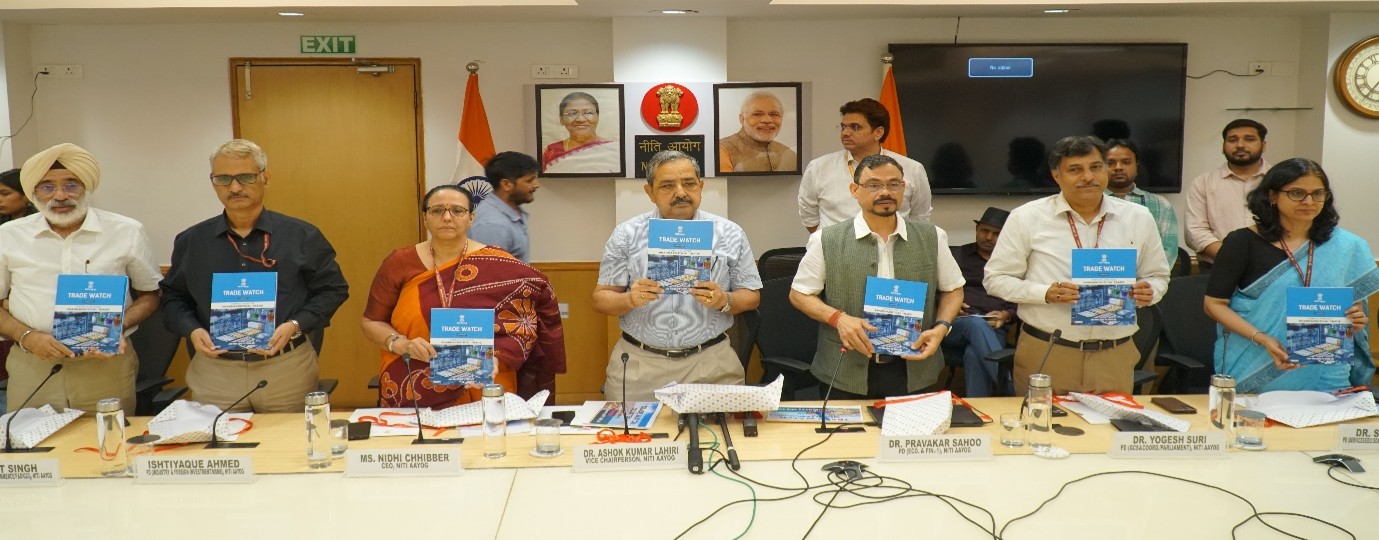
NITI Aayog Releases Eighth Edition of Trade Watch Quarterly
What's the News?
NITI Aayog has released the eighth edition of the Trade Watch Quarterly for Q4 FY 2025–26 (January–March 2026). The report reviews India's merchandise and services trade performance, analyses global trade trends, and includes a thematic study on India's pharmaceutical industry, highlighting its growing role in global healthcare and export competitiveness.
India's Trade Performance
- India's total merchandise and services trade reached US$ 1.84 trillion in FY 2025–26, registering 5.4% year-on-year growth.
- Exports grew by 4.2%, while imports increased by 6.5%.
- Merchandise exports moderated during Q4, whereas services exports remained the key driver of overall trade growth.
- India retained its position as the world's 8th-largest services exporter in 2025.
- The report notes that geopolitical disruptions, including the West Asia crisis, have acted as temporary supply shocks, reinforcing the need for trade diversification.
Pharmaceutical Sector Highlights
- The special thematic chapter focuses on India's pharmaceutical industry.
- India exported pharmaceuticals and Active Pharmaceutical Ingredients (APIs) worth US$ 35.8 billion during FY 2025–26.
- India remains:
- The largest global supplier of generic medicines.
- A leading vaccine producer.
- An important exporter of APIs and formulations.
- The report highlights opportunities arising from:
- Patent expiries in advanced economies.
- Rising global healthcare demand.
- Expansion of biosimilars and specialty medicines.
- It also identifies challenges such as:
- Dependence on imported APIs.
- Regulatory compliance.
- Need for higher investment in R&D and innovation.
Recommendations
- Strengthen domestic API manufacturing.
- Increase investment in pharmaceutical R&D and innovation.
- Diversify export destinations to reduce concentration risks.
- Enhance quality standards and regulatory compliance.
- Improve resilience of global supply chains through domestic capacity building.
Additional Info
- Trade Watch Quarterly
- Published by NITI Aayog.
- Provides quarterly analysis of:
- Merchandise trade.
- Services trade.
- Global trade developments.
- Sector-specific export opportunities.
- Helps policymakers identify emerging trade trends and formulate export strategies.
- Active Pharmaceutical Ingredient (API)
- The biologically active component responsible for the therapeutic effect of a medicine.
- India is a major global manufacturer, though it continues to import a significant share of key bulk drug ingredients.
- Production Linked Incentive (PLI) Scheme for Pharmaceuticals
- Launched to promote domestic manufacturing.
- Focuses on:
- High-value pharmaceutical products.
- Bulk drugs (APIs).
- Medical devices.
- Objective:
- Reduce import dependence.
- Improve global competitiveness.
- Strengthen India's pharmaceutical supply chain.
- NITI Aayog
- Established: 1 January 2015.
- Replaced the Planning Commission.
- Apex public policy think tank of the Government of India.
- Promotes Cooperative and Competitive Federalism.
Sources
India Ranked 13th in QS World Future Skills Index 2027
What's the News?
India has secured the 13th position globally in the QS World Future Skills Index 2027, emerging as the highest-ranked lower-middle-income economy and the only South Asian country in the top 15. The report highlights India's strong preparedness for an AI-driven economy and future labour market but points to persistent gaps in digital, green and advanced technical skills that could affect long-term competitiveness.
QS World Future Skills Index 2027
- Published by QS Quacquarelli Symonds (QS).
- Assesses how prepared countries are for the changing demands of the global workforce.
- Evaluates nations across four pillars:
- Skills Fit
- Academic Readiness
- Future of Work
- Economic Transformation
- Covers readiness for technologies such as Artificial Intelligence (AI), automation and the green economy.
India's Performance
- Overall Rank: 13th globally.
- Highest-ranked lower-middle-income economy.
- Only South Asian nation in the global top 15.
- Future of Work Rank: 5th globally with a score of 96.0, reflecting strong labour market readiness for emerging technologies.
- India has attracted around US$90 billion in AI-related investments, strengthening its position as an AI-ready economy.
Strengths
- Rapid economic growth supporting future workforce demand.
- Large and youthful talent pool.
- Expanding AI ecosystem and digital infrastructure.
- Strong startup ecosystem and innovation capacity.
- Increasing government focus on digital skills and emerging technologies.
Challenges Identified
- Mismatch between education outcomes and industry requirements.
- Shortage of skilled professionals in:
- Artificial Intelligence
- Advanced digital technologies
- Green technologies
- Uneven quality of higher education institutions.
- Need for greater investment in research, innovation and faculty development.
- Regional disparities in access to quality skill development.
Additional Info
- QS Quacquarelli Symonds (QS)
- London-based global higher education analytics organization.
- Founded in 1990.
- Publishes:
- QS World University Rankings
- QS World Future Skills Index
- QS Best Student Cities Rankings.
Sources
India and Israel Sign MoU on Public Sector Auditing
What's the News?
India and Israel have signed a Memorandum of Understanding (MoU) to strengthen cooperation in public sector auditing. The agreement was signed between the Comptroller and Auditor General (CAG) of India and the Supreme Audit Institution (SAI) of Israel. It aims to enhance collaboration through the exchange of audit methodologies, technical expertise, professional knowledge, training, and best practices, while promoting transparency, accountability and good governance.
Features of the MoU
- Establishes a framework for long-term institutional cooperation between the audit bodies of India and Israel.
- Covers:
- Exchange of professional knowledge and audit methodologies.
- Capacity building and technical expertise.
- Training programmes for audit professionals.
- Sharing of international best practices in public sector auditing.
- Both sides discussed organizing bilateral seminars alternately in India and Israel to facilitate knowledge exchange and innovation in auditing.
Focus on Technology in Auditing
During the visit, Matanyahu Englman, State Comptroller and Ombudsman of Israel, delivered a lecture under the Dr. B. R. Ambedkar Lecture Series on:
"Artificial Intelligence in Public Sector Auditing: Advanced Applications, Performance Auditing and Innovative Tools in Modern State Auditing."
The lecture highlighted the growing role of:
- Artificial Intelligence (AI)
- Data analytics
- Digital audit tools
- Technology-enabled performance auditing
in improving the efficiency and effectiveness of public audits.
Additional Info
Comptroller and Auditor General (CAG) of India
- Constitutional authority established under Article 148 of the Constitution.
- Appointed by the President of India.
- Audits:
- Union Government accounts.
- State Government accounts.
- Government companies and autonomous bodies (as prescribed).
- Submits audit reports to:
- President (Union).
- Governors (States).
- Known as the Guardian of the Public Purse.
Constitutional Provisions
- Article 148 – Comptroller and Auditor General of India.
- Article 149 – Duties and powers of the CAG.
- Article 150 – Form of Union and State accounts.
- Article 151 – Audit reports to the President/Governor for laying before Parliament/State Legislature.
Supreme Audit Institution (SAI)
- The highest national public auditing authority responsible for auditing government revenues and expenditures.
- Functions independently to ensure accountability and sound public financial management.
EUROSAI
- European Organisation of Supreme Audit Institutions.
- Regional organization of SAIs in Europe operating under the framework of INTOSAI.
- Promotes cooperation, knowledge sharing and capacity building among member audit institutions.
INTOSAI
- International Organization of Supreme Audit Institutions.
- Global association of Supreme Audit Institutions.
- Established in 1953.
- Develops international standards and best practices for public sector auditing.
Sources
India Rejects Pakistan's Remarks on Jammu & Kashmir at United Nations
What's the News?
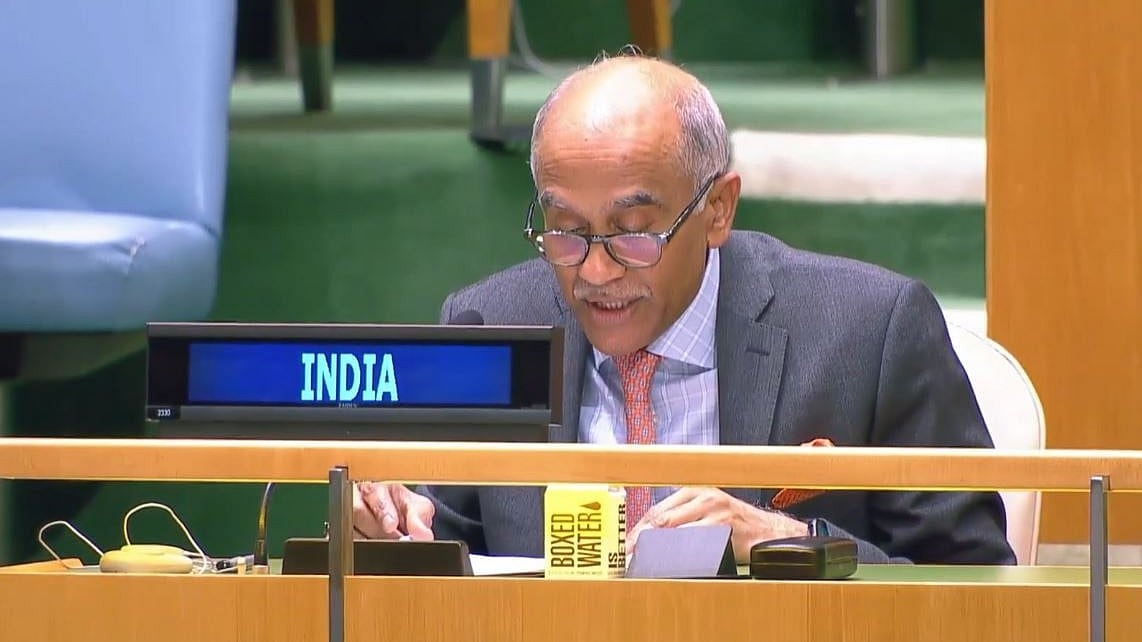
India strongly rejected Pakistan's remarks on Jammu & Kashmir during a United Nations meeting in New York, reiterating that the Union Territory of Jammu & Kashmir is an integral and internal part of India. India's Permanent Representative to the UN, Ambassador Parvathaneni Harish, accused Pakistan of politicising the forum and misusing its role as co-chair instead of maintaining neutrality.
India's Response
- India termed Pakistan's comments as "unwarranted" and politically motivated.
- Ambassador Parvathaneni Harish stated that:
- Jammu & Kashmir was, is and will remain an internal matter of India.
- Pakistan attempted to divert the forum from its intended agenda.
- A co-chair of a UN meeting is expected to remain balanced and impartial.
- India reiterated its consistent position that issues relating to Jammu & Kashmir are to be addressed bilaterally between India and Pakistan.
UN Meeting
- The exchange took place during a UN meeting on:
- "Bridging the Implementation Gap: Security Council Resolutions and Maintenance of International Peace and Security."
- Pakistan raised the Kashmir issue during its intervention.
- India exercised its Right of Reply to reject Pakistan's statements.
India's Position on Jammu & Kashmir
- Jammu & Kashmir is an integral part of India.
- India opposes attempts to internationalise the issue through multilateral forums.
- India maintains that all outstanding issues with Pakistan should be resolved bilaterally in accordance with the Simla Agreement (1972) and the Lahore Declaration (1999).
Additional Info
Simla Agreement (1972)
- Signed between:
- India: Prime Minister Indira Gandhi.
- Pakistan: President Zulfikar Ali Bhutto.
- Key provisions:
- Resolve disputes through bilateral negotiations.
- Respect the Line of Control (LoC).
- Refrain from the threat or use of force.
Lahore Declaration (1999)
- Signed by:
- Prime Minister Atal Bihari Vajpayee (India).
- Prime Minister Nawaz Sharif (Pakistan).
- Objectives:
- Promote peace and security.
- Strengthen confidence-building measures.
- Resolve bilateral issues through dialogue.
Right of Reply
- A procedural mechanism in the United Nations allowing a member state to respond to statements made by another delegation when it believes its interests or position have been misrepresented.
India's Permanent Mission to the UN
- Represents India at the United Nations Headquarters in New York.
- Participates in deliberations of the:
- UN General Assembly.
- UN Security Council.
- Other UN bodies and committees.
Sources
International Day of Women in Diplomacy 2026
What's the News?
The International Day of Women in Diplomacy is observed annually on 24 June to recognize the contributions of women in diplomacy and international relations and to promote their full, equal and meaningful participation in decision-making at all levels. The observance highlights the importance of gender equality in diplomacy, peacebuilding and global governance.
History
- The United Nations General Assembly (UNGA) proclaimed 24 June as the International Day of Women in Diplomacy through Resolution A/RES/76/269.
- The resolution was adopted by consensus in 2022.
- Member States, UN organizations, academic institutions and civil society are encouraged to observe the day through awareness campaigns, educational activities and events promoting women in diplomacy.
Additional Info
Women in Diplomacy
- Women remain underrepresented in senior diplomatic positions globally.
- Increasing women's participation aligns with:
- Sustainable Development Goal (SDG) 5 – Gender Equality.
- SDG 16 – Peace, Justice and Strong Institutions.
- The UN emphasizes that inclusive diplomacy leads to more effective and representative global governance.
United Nations General Assembly (UNGA)
- One of the six principal organs of the United Nations.
- Comprises all 193 UN Member States.
- Each Member State has one vote.
- Responsible for discussing and making recommendations on international issues, adopting the UN budget and electing members to various UN bodies.
UN Resolution A/RES/76/269
- Adopted during the 76th Session of the UN General Assembly.
- Officially established 24 June as the International Day of Women in Diplomacy.
- Invites governments and organizations worldwide to organize educational and awareness activities promoting women's role in diplomacy.
European Union Joins Pax Silica AI Supply Chain Initiative
What's the News?
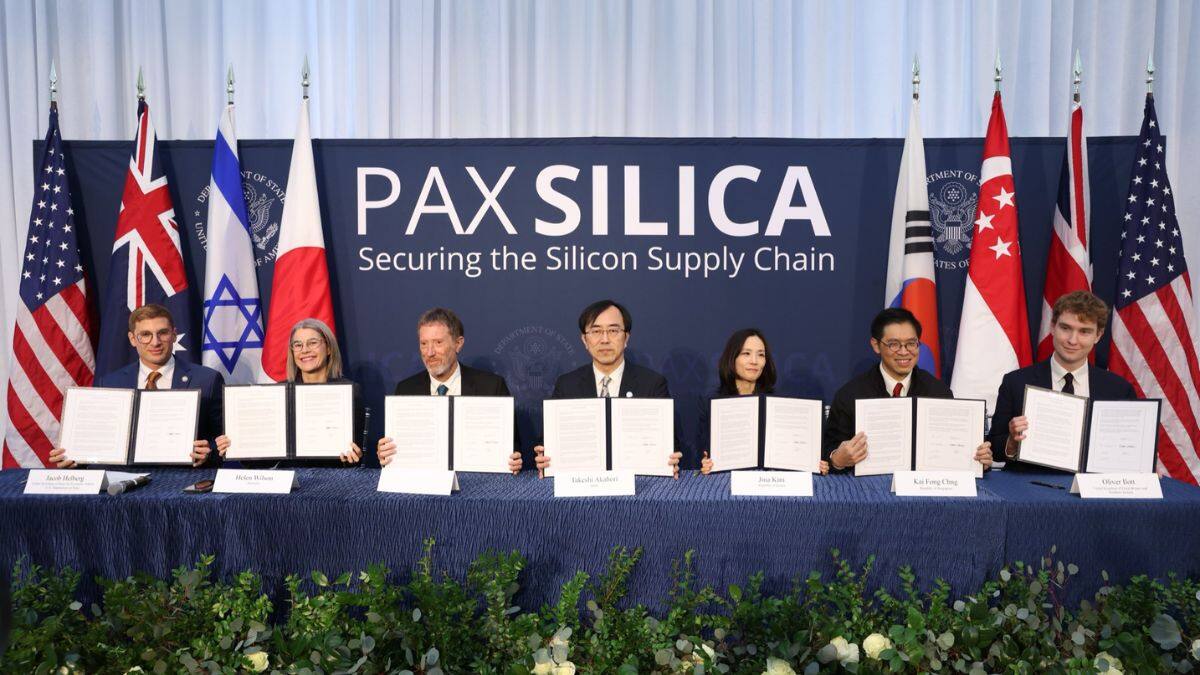
The European Union (EU) has joined the US-led Pax Silica Initiative, a strategic coalition aimed at building secure and resilient AI supply chains by reducing dependence on China in critical sectors such as semiconductors, critical minerals, energy, advanced manufacturing and digital infrastructure. The initiative also saw the participation of Germany, the Netherlands and Greece, strengthening transatlantic cooperation on AI and semiconductor ecosystems.
What is Pax Silica?
- Pax Silica is a US-led international initiative launched in December 2025.
- It seeks to create trusted and resilient AI supply chains among partner countries.
- The initiative promotes cooperation in:
- Semiconductors (AI chips)
- Critical minerals and rare earths
- AI infrastructure and computing
- Advanced manufacturing
- Energy and logistics
- Secure digital infrastructure
- It is based on a non-binding political declaration among participating countries.
Why Has the EU Joined?
The EU's participation aims to:
- Reduce strategic dependence on China for AI-related technologies.
- Strengthen semiconductor and critical mineral supply chains.
- Enhance coordination on export controls and technology security.
- Promote investment and innovation in trusted AI ecosystems.
- Improve resilience against supply chain disruptions arising from geopolitical tensions.
Features of the Initiative
- Encourages co-investment in AI and semiconductor industries.
- Supports diversification of supply chains among trusted partners.
- Facilitates cooperation on:
- Technology standards.
- Supply chain mapping.
- Infrastructure development.
- Investment security.
- Focuses on "Innovation Sovereignty", promoting collaborative innovation instead of isolated national technology ecosystems.
Additional Info
India and Pax Silica
- India formally joined Pax Silica in February 2026.
- India's participation aims to:
- Attract semiconductor investments.
- Strengthen AI infrastructure.
- Secure access to critical minerals.
- Expand global technology partnerships.
Critical Minerals
Critical minerals are essential for manufacturing:
- Semiconductors.
- Electric vehicle batteries.
- Renewable energy technologies.
- Defence equipment.
- Artificial Intelligence hardware.
Examples include:
- Lithium
- Cobalt
- Nickel
- Graphite
- Rare Earth Elements (REEs)
Semiconductor Supply Chain
Major stages include:
- Raw material extraction.
- Chip design.
- Wafer fabrication.
- Packaging and testing.
- Assembly into electronic devices.
Why China Matters?
China has a dominant position in several segments of the global supply chain, particularly:
- Rare earth processing.
- Critical mineral refining.
- Electronics manufacturing.
This has prompted many countries to diversify sourcing and strengthen cooperation with trusted partners.
Sources
June 2026
Archive
October 2026
- 27 October 2026
- 26 October 2026
- 24 October 2026
- 23 October 2026
- 22 October 2026
- 21 October 2026
- 20 October 2026
- 19 October 2026
- 17 October 2026
- 16 October 2026
- 15 October 2026
- 14 October 2026
- 13 October 2026
- 12 October 2026
- 10 October 2026
- 09 October 2026
- 08 October 2026
- 07 October 2026
- 06 October 2026
- 05 October 2026
- 03 October 2026
- 02 October 2026
- 01 October 2026
September 2026
- 30 September 2026
- 29 September 2026
- 28 September 2026
- 26 September 2026
- 25 September 2026
- 24 September 2026
- 23 September 2026
- 22 September 2026
- 21 September 2026
- 19 September 2026
- 18 September 2026
- 17 September 2026
- 16 September 2026
- 15 September 2026
- 12 September 2026
- 11 September 2026
- 10 September 2026
- 09 September 2026
- 08 September 2026
- 07 September 2026
- 05 September 2026
- 04 September 2026
- 03 September 2026
- 02 September 2026
- 01 September 2026
August 2026
- 31 August 2026
- 29 August 2026
- 27 August 2026
- 26 August 2026
- 25 August 2026
- 24 August 2026
- 22 August 2026
- 21 August 2026
- 20 August 2026
- 19 August 2026
- 18 August 2026
- 17 August 2026
- 14 August 2026
- 13 August 2026
- 12 August 2026
- 11 August 2026
- 10 August 2026
- 08 August 2026
- 07 August 2026
- 06 August 2026
- 05 August 2026
- 04 August 2026
- 03 August 2026
- 01 August 2026
July 2026
- 31 July 2026
- 30 July 2026
- 29 July 2026
- 28 July 2026
- 27 July 2026
- 25 July 2026
- 23 July 2026
- 22 July 2026
- 21 July 2026
- 20 July 2026
- 18 July 2026
- 17 July 2026
- 15 July 2026
- 14 July 2026
- 13 July 2026
- 11 July 2026
- 10 July 2026
- 09 July 2026
- 08 July 2026
- 07 July 2026
- 06 July 2026
- 04 July 2026
- 03 July 2026
- 02 July 2026
- 01 July 2026
June 2026
May 2026
April 2026
March 2026
- 31 March 2026
- 30 March 2026
- 28 March 2026
- 27 March 2026
- 26 March 2026
- 25 March 2026
- 24 March 2026
- 23 March 2026
- 21 March 2026
- 20 March 2026
- 19 March 2026
- 18 March 2026
- 17 March 2026
- 16 March 2026
- 14 March 2026
- 13 March 2026
- 12 March 2026
- 11 March 2026
- 10 March 2026
- 09 March 2026
- 07 March 2026
- 06 March 2026
- 05 March 2026
- 03 March 2026
- 02 March 2026
February 2026
- 28 February 2026
- 27 February 2026
- 26 February 2026
- 25 February 2026
- 24 February 2026
- 23 February 2026
- 21 February 2026
- 20 February 2026
- 19 February 2026
- 18 February 2026
- 17 February 2026
- 16 February 2026
- 13 February 2026
- 12 February 2026
- 11 February 2026
- 10 February 2026
- 09 February 2026
- 07 February 2026
- 06 February 2026
- 05 February 2026
- 04 February 2026
- 03 February 2026
- 02 February 2026
January 2026
- 31 January 2026
- 30 January 2026
- 29 January 2026
- 28 January 2026
- 27 January 2026
- 26 January 2026
- 24 January 2026
- 23 January 2026
- 22 January 2026
- 21 January 2026
- 20 January 2026
- 19 January 2026
- 16 January 2026
- 15 January 2026
- 14 January 2026
- 13 January 2026
- 12 January 2026
- 10 January 2026
- 09 January 2026
- 08 January 2026
- 07 January 2026
- 06 January 2026
- 05 January 2026
- 03 January 2026
- 02 January 2026
- 01 January 2026
December 2025
- 31 December 2025
- 30 December 2025
- 29 December 2025
- 27 December 2025
- 26 December 2025
- 24 December 2025
- 23 December 2025
- 22 December 2025
- 20 December 2025
- 19 December 2025
- 18 December 2025
- 17 December 2025
- 16 December 2025
- 15 December 2025
- 13 December 2025
- 12 December 2025
- 11 December 2025
- 10 December 2025
- 09 December 2025
- 08 December 2025
- 05 December 2025
- 04 December 2025
- 03 December 2025
- 02 December 2025
November 2025
- 29 November 2025
- 28 November 2025
- 27 November 2025
- 26 November 2025
- 25 November 2025
- 24 November 2025
- 22 November 2025
- 21 November 2025
- 20 November 2025
- 19 November 2025
- 18 November 2025
- 17 November 2025
- 15 November 2025
- 14 November 2025
- 13 November 2025
- 12 November 2025
- 11 November 2025
- 10 November 2025
- 08 November 2025
- 07 November 2025
- 06 November 2025
- 05 November 2025
- 04 November 2025
- 03 November 2025
- 01 November 2025
October 2025
- 31 October 2025
- 30 October 2025
- 29 October 2025
- 28 October 2025
- 27 October 2025
- 25 October 2025
- 24 October 2025
- 23 October 2025
- 22 October 2025
- 21 October 2025
- 20 October 2025
- 18 October 2025
- 17 October 2025
- 16 October 2025
- 15 October 2025
- 14 October 2025
- 13 October 2025
- 11 October 2025
- 10 October 2025
- 09 October 2025
- 08 October 2025
- 07 October 2025
- 06 October 2025
- 04 October 2025
- 03 October 2025
- 02 October 2025
- 01 October 2025
September 2025
- 30 September 2025
- 29 September 2025
- 27 September 2025
- 26 September 2025
- 25 September 2025
- 24 September 2025
- 23 September 2025
- 22 September 2025
- 20 September 2025
- 19 September 2025
- 18 September 2025
- 17 September 2025
- 16 September 2025
- 15 September 2025
- 13 September 2025
- 12 September 2025
- 11 September 2025
- 10 September 2025
- 09 September 2025
- 08 September 2025
- 06 September 2025
- 05 September 2025
- 04 September 2025
- 03 September 2025
- 02 September 2025
- 01 September 2025
August 2025
- 30 August 2025
- 29 August 2025
- 28 August 2025
- 27 August 2025
- 26 August 2025
- 25 August 2025
- 23 August 2025
- 22 August 2025
- 21 August 2025
- 20 August 2025
- 19 August 2025
- 18 August 2025
- 16 August 2025
- 14 August 2025
- 13 August 2025
- 12 August 2025
- 11 August 2025
- 08 August 2025
- 07 August 2025
- 06 August 2025
- 05 August 2025
- 04 August 2025
- 02 August 2025
- 01 August 2025
July 2025
- 31 July 2025
- 30 July 2025
- 29 July 2025
- 28 July 2025
- 26 July 2025
- 25 July 2025
- 24 July 2025
- 23 July 2025
- 22 July 2025
- 21 July 2025
- 19 July 2025
- 18 July 2025
- 17 July 2025
- 16 July 2025
- 15 July 2025
- 12 July 2025
- 11 July 2025
- 10 July 2025
- 09 July 2025
- 07 July 2025
- 05 July 2025
- 04 July 2025
- 03 July 2025
- 02 July 2025
- 01 July 2025
June 2025
- 30 June 2025
- 28 June 2025
- 27 June 2025
- 26 June 2025
- 25 June 2025
- 24 June 2025
- 23 June 2025
- 21 June 2025
- 20 June 2025
- 19 June 2025
- 18 June 2025
- 17 June 2025
- 16 June 2025
- 14 June 2025
- 13 June 2025
- 12 June 2025
- 11 June 2025
- 10 June 2025
- 09 June 2025
- 07 June 2025
- 06 June 2025
- 05 June 2025
- 04 June 2025
- 03 June 2025
- 02 June 2025
May 2025
April 2025
- 30 April 2025
- 29 April 2025
- 28 April 2025
- 26 April 2025
- 25 April 2025
- 24 April 2025
- 23 April 2025
- 22 April 2025
- 21 April 2025
- 19 April 2025
- 18 April 2025
- 17 April 2025
- 16 April 2025
- 15 April 2025
- 14 April 2025
- 12 April 2025
- 11 April 2025
- 10 April 2025
- 09 April 2025
- 08 April 2025
- 07 April 2025
- 05 April 2025
- 04 April 2025
- 03 April 2025
- 02 April 2025
- 01 April 2025
March 2025
- 31 March 2025
- 29 March 2025
- 28 March 2025
- 27 March 2025
- 26 March 2025
- 25 March 2025
- 24 March 2025
- 22 March 2025
- 21 March 2025
- 20 March 2025
- 19 March 2025
- 18 March 2025
- 17 March 2025
- 15 March 2025
- 13 March 2025
- 12 March 2025
- 11 March 2025
- 10 March 2025
- 08 March 2025
- 07 March 2025
- 06 March 2025
- 05 March 2025
- 04 March 2025
- 03 March 2025
- 01 March 2025
February 2025
- 28 February 2025
- 27 February 2025
- 26 February 2025
- 25 February 2025
- 24 February 2025
- 22 February 2025
- 21 February 2025
- 20 February 2025
- 19 February 2025
- 18 February 2025
- 17 February 2025
- 15 February 2025
- 14 February 2025
- 13 February 2025
- 12 February 2025
- 11 February 2025
- 10 February 2025
- 08 February 2025
- 07 February 2025
- 06 February 2025
- 05 February 2025
- 04 February 2025
- 03 February 2025
- 01 February 2025
January 2025
- 31 January 2025
- 30 January 2025
- 29 January 2025
- 28 January 2025
- 27 January 2025
- 25 January 2025
- 24 January 2025
- 23 January 2025
- 22 January 2025
- 21 January 2025
- 20 January 2025
- 18 January 2025
- 17 January 2025
- 16 January 2025
- 15 January 2025
- 14 January 2025
- 13 January 2025
- 11 January 2025
- 10 January 2025
- 09 January 2025
- 08 January 2025
- 07 January 2025
- 06 January 2025
- 04 January 2025
- 03 January 2025
- 02 January 2025
- 01 January 2025