
Current Affairs
Stay updated with the latest national and international events.
23 April 2026
India–Sri Lanka DIVEX 2026 Strengthens Maritime Cooperation

What’s the News?
- INS Nireekshak, an Indian Navy diving support vessel, arrived in Colombo, Sri Lanka, to participate in the fourth edition of the bilateral diving exercise IN‑SLN DIVEX 2026.
- The exercise is being hosted by the Sri Lanka Navy and will involve specialised underwater operations and training drills over seven days.
- India will hand over two BHISM cubes (portable medical units) under the Aarogya Maitri initiative, and provide 50,000 rounds of 9 mm ammunition to the Sri Lankan Navy to enhance operational readiness.
- The engagement reinforces India’s role as a preferred security partner and first responder in the Indian Ocean Region (IOR).
IN‑SLN DIVEX 2026
- Type: Specialised bilateral naval exercise focused on diving and underwater operations.
- Participants: Elite diving units of the Indian Navy and the Sri Lanka Navy.
- Objective:
- Enhance interoperability during underwater salvage, search and rescue missions.
- Strengthen coordination in the Indian Ocean Region (IOR).
- Facilitate exchange of best practices between the two maritime forces.
- Host: Sri Lanka (Colombo).
- Duration: Seven days of intensive underwater drills and professional interactions.
Key Features
- Specialised Drills: Underwater training exercises simulating real‑world contingencies, including clearing of shipping lanes.
- High‑Level Dialogue: Commander Sailesh Tyagi, Commanding Officer of INS Nireekshak, held strategic discussions with Rear Admiral SJ Kumara, Flag Officer Commanding Western Naval Area (Sri Lanka Navy).
- Camaraderie Building: Social interactions, sports fixtures, and joint yoga sessions to foster personal bonds between personnel.
MAHASAGAR Vision & SAGAR Policy
- MAHASAGAR (Mutual and Holistic Advancement for Security and Growth Across Regions) is India’s maritime cooperation framework aimed at promoting collective growth and regional security.
- The exercise is a practical application of India’s SAGAR (Security and Growth for All in the Region) policy, which positions India as a net security provider and first responder in the neighbourhood.
- Both frameworks underscore India’s commitment to a free, open and inclusive Indo‑Pacific, with a focus on the Global South.
BHISM Cubes & Humanitarian Outreach
- BHISM (Bharat Health Initiative for Sahyog Hita & Maitri) cubes are compact, portable medical units.
- *Capabilities:
- Can handle up to 200 emergency cases.
- Equipped with essential medicines and basic surgical facilities.
- Handed over under the Aarogya Maitri initiative, India’s flagship programme for providing medical aid to partner countries during emergencies.
- Significance: Demonstrates India’s soft‑power approach and commitment to humanitarian assistance in the IOR.
Security Assistance
- 50,000 rounds of 9 mm ammunition to be provided to the Sri Lanka Navy.
- Aim: Bolster the operational readiness of Sri Lanka’s naval forces, further cementing defence cooperation between the two nations.
INS Nireekshak: Role & Capabilities
- Type: Diving Support & Submarine Rescue Vessel (DSRV support)
- Key Features:
- Equipped with deep-sea diving systems & recompression chambers
- Supports submarine rescue operations
- Enables saturation diving missions
- Significance:
- Critical for search & rescue, underwater inspection, and diver training
- Demonstrates India’s advanced maritime capabilities
Sources
9th India International Water Week (IIWW)

What’s the News?
- The Ministry of Jal Shakti has announced that the 9th India International Water Week (IIWW-2026) will be held from September 22 to 26 at Bharat Mandapam, New Delhi, under the central theme “Climate Resilient Water Management.”
- This is the first edition to be branded as the “International” Water Week, signaling a deliberate effort to broaden global participation and establish the event as a premier international water forum.
- A parallel Second International WASH Conference will also be held from September 22 to 24, focusing on water quality, sanitation, and hygiene.
9th India International Water Week (IIWW-2026)
- Origins & Frequency:
- Conceptualized as a flagship event in 2012 by the Ministry of Jal Shakti.
- Held on a biennial basis; eight editions have been organised so far (2012 to 2024).
- The 9th edition in 2026 becomes the first under the expanded “International” mandate.
- Venue: Bharat Mandapam, Pragati Maidan, New Delhi.
- Theme: “Climate Resilient Water Management” — chosen in the context of increasing extreme weather events, erratic rainfall, and growing water stress across India and the world.
- Objective:
- Provide a global platform for knowledge-sharing, innovation, and partnerships in water governance.
- Promote sustainable and adaptive water management practices aligned with India’s long-term water security goals.
- Scale:
Parallel Event: 2nd International WASH Conference
- Held concurrently from September 22 to 24 at the same venue.
- Focus on water quality, sanitation, and hygiene (WASH) — key pillars of the government’s integrated water management strategy
- Participation from experts, researchers, State governments, Central ministries, and NGOs.
Government Water Initiatives
- Jal Jeevan Mission (JJM) / JJM 2.0:
- Scheme extended till December 2028 with an enhanced total outlay of ₹8.69 lakh crore (Central share: ₹3.59 lakh crore).
- Aims to provide tap water connections to all 19.36 crore rural households by 2028.
- As of now, ~15.80 crore households (81.61%) have tap water connections.
- JJM 2.0 shifts focus from infrastructure creation to service delivery, sustainability, and community ownership through initiatives like “Sujalam Bharat” (digital framework), “Jal Arpan” (community handover), and “Jal Utsav” (annual maintenance event).
- WHO estimates JJM has saved 5.5 crore hours daily in women’s drudgery and prevented 400,000 diarrheal deaths.
- Mission Amrit Sarovar:
- Launched in April 2022 with the target of constructing/rejuvenating 75 water bodies per district.
- Over 68,000 Amrit Sarovars completed nationwide, surpassing the initial goal of 50,000.
- Jal Shakti Abhiyan: Catch the Rain:
- A nationwide campaign emphasizing rainwater harvesting and water conservation with community participation.
- The 2025 edition was launched on World Water Day with the continued tagline “Catch the rain, where it falls, when it falls”.
- River Health & Yamuna Cleaning:
- Union Minister C.R. Patil highlighted ongoing Centre-State collaboration for comprehensive river rejuvenation plans, including the Yamuna.
India’s Water Stress
- Per Capita Water Availability:
- Declined from ~5,000 cubic metres in 1961 to 1,486 cubic metres in 2021 — a ~70% drop.
- Projected to fall further to ~1,300 cubic metres by 2047
- Water Stress Threshold: Below 1,700 cubic metres per capita; Water Scarcity Threshold: Below 1,000 cubic metres.
- Demand vs. Supply:
- India supports ~17% of the world’s population but has only 4% of global freshwater resources.
- NITI Aayog’s Composite Water Management Index (CWMI) reports that nearly 600 million Indians face high to extreme water stress.
- National water demand is expected to outstrip harvestable availability by 2047.
- Groundwater Dependency:
- Groundwater contributes 62% to irrigation, 85% to rural water supply, and 45% to urban water supply.
National Water Mission (NWM)
- One of the eight missions under the National Action Plan on Climate Change (NAPCC).
- Objectives:
- Increase water use efficiency by 20%.
- Promote basin-level integrated water resource management.
- Assess the impact of climate change on water resources.
- Encourage water conservation as a people’s movement.
- The mission provides the overarching policy framework for many of the themes being discussed at IIWW-2026.
Sources
India Selected for FIFA Women’s Development Programme
What’s the News?
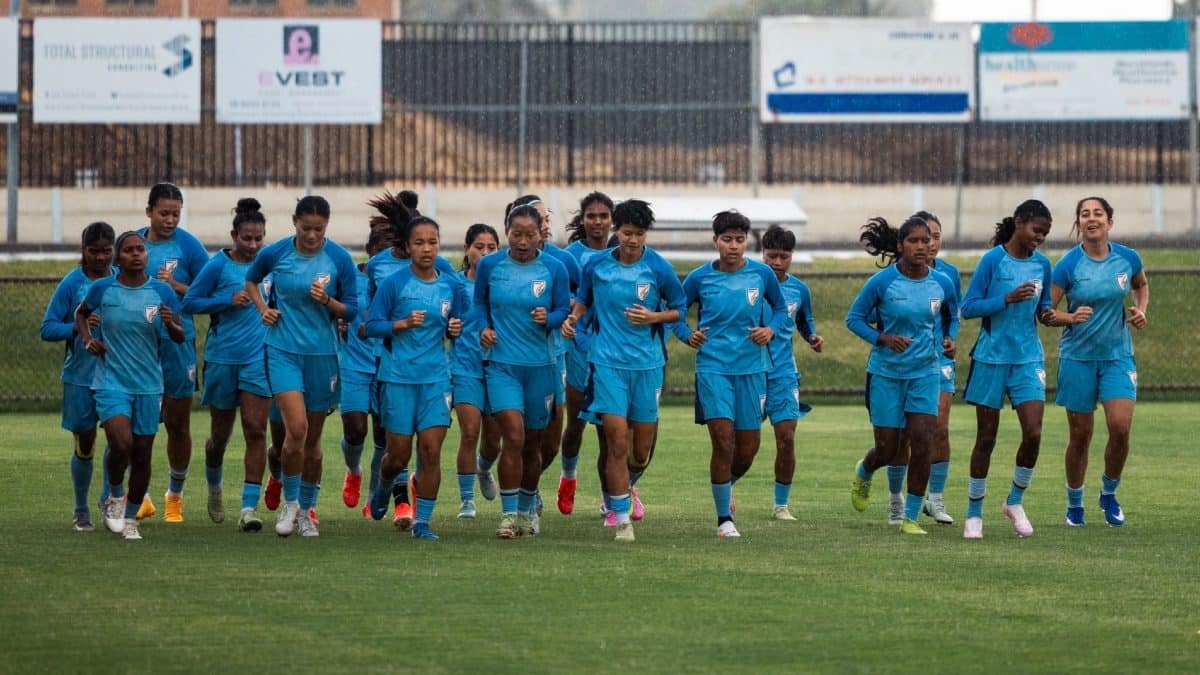
- The Fédération Internationale de Football Association (FIFA) has selected India as one of the 12 countries globally to participate in its Women’s Development Programme.
- This selection follows an application by the All India Football Federation (AIFF), marking a significant step toward professionalizing and expanding the footprint of women’s football in India.
- The program is designed to provide member associations with technical expertise, financial assistance, and specialized mentorship to enhance the female football ecosystem.
Women’s Development Programme?
- Scope: India is part of a select group of nations chosen for the 2024-2026 cycle of this global initiative.
- Focus Areas: The program provides support across eight key pillars:
- Women's Football Strategy: Crafting long-term roadmaps.
- League Development: Strengthening domestic competitions like the Indian Women's League (IWL).
- Capacity Building: Training for coaches, referees, and female administrators.
- Grassroots & Youth: Increasing participation at the school and academy levels.
- Implementation: FIFA experts will work directly with the AIFF to implement tailor-made projects based on India's specific regional needs.
Impact on Indian Football?
- Technical Growth: Access to FIFA’s specialized knowledge will help in bridging the gap between Indian domestic standards and international benchmarks.
- Commercial Viability: By improving the quality of the league and national teams, the program aims to attract more sponsors and broadcast partners to women's sports.
- Pathway for Athletes: Enhanced youth structures will provide a clearer "pipeline" for young girls to transition from amateur play to the Senior National Team (the Blue Tigresses).
Additional Info
- Current Status of Women’s Football in India:
- Indian Women’s League (IWL): The top-tier professional league, established in 2016.
- FIFA Ranking: The Indian Women's Team consistently ranks significantly higher than the Men's team in global standings (historically within the top 60-70).
- Major Recent Events:
- India hosted the FIFA U-17 Women’s World Cup in 2022, which served as a catalyst for infrastructure development.
- Vision 2047: AIFF’s strategic roadmap which aims to make India a powerhouse in Asian football, with a specific focus on the women's game.
- Global Context: The FIFA Women’s Development Programme is part of FIFA’s objective to have 60 million women and girls playing football worldwide by 2026.
Sources
Finland Builds the World’s First Permanent Nuclear Waste Repository
What’s the News?
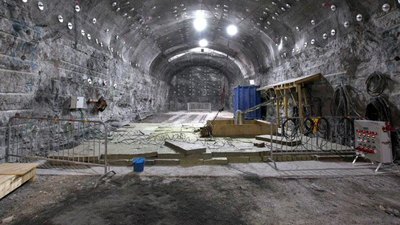
- Finland is set to operationalise the Onkalo facility, the world's first permanent underground repository designed for the final disposal of high-level radioactive spent nuclear fuel.
- The facility is located on Olkiluoto Island, home to three of Finland's five nuclear reactors, and is built 400–450 metres below the surface in bedrock that is approximately 1.9 billion years old.
- The construction, managed by the company Posiva Oy, has taken over two decades (since 2004) with an investment exceeding €1.5 billion (~₹13,500 crore), and the repository is designed to store around 6,500 tonnes of waste until it is permanently sealed in the 2120s.
The Onkalo Deep Geological Repository: Design & Safety
- Purpose: Unlike temporary storage methods like cooling pools or dry casks, Onkalo is a deep geological repository (DGR), internationally recognised as the most viable permanent solution for isolating high-level radioactive waste from the biosphere.
- Multi-Barrier Safety System: The facility relies on a robust, layered safety approach based on the principle of passive safety, meaning it will remain secure without future human maintenance or monitoring.
- Boron Steel Canister: Spent fuel rods are sealed inside a cast-iron insert within a sturdy canister.
- Copper Capsule: This canister is then encased in a corrosion-resistant copper capsule, designed to withstand the deep underground environment for millennia.
- Bentonite Clay Buffer: The capsules are surrounded by bentonite clay, which swells upon contact with groundwater, creating a watertight seal that protects against water flow and minor rock movements.
- Ancient Bedrock: The entire system is embedded within the 1.9-billion-year-old stable granite bedrock, which acts as the final natural barrier against surface-level risks like earthquakes, human intrusion, or future ice ages.
- Operational Timeline: The facility is expected to receive and entomb waste canisters for approximately 100 years before final closure.
Global Significance of Onkalo
- Addressing a Critical Challenge: The project tackles a major obstacle for the nuclear energy sector: convincing public and political opinion that a safe, permanent solution for radioactive waste exists.
- A Blueprint for Other Nations: As countries globally return to nuclear power to meet climate goals and rising electricity demands, Onkalo offers a real-world, working model for downstream accountability. It is subject to the IAEA's safeguards for verifying spent nuclear fuel in a geological repository, setting a precedent for international oversight of such facilities.
Relevance for India
- India's Nuclear Waste Management Strategy:
- India manages its nuclear waste under the provisions of the Atomic Energy Act, 1962, and the Atomic Energy (Safe Disposal of Radioactive Wastes) Rules, 1987, which are aligned with International Atomic Energy Agency (IAEA) guidelines.
- The country follows a closed fuel cycle philosophy, reprocessing spent fuel to extract fissile material for future reactors, which both recycles resources and reduces the waste burden.
- India has mastery over the entire nuclear fuel cycle, from exploration and mining to waste management, a key consideration for the Technology Development and Deployment aspect in India's Three-Stage Nuclear Power Programme.
- For high-level radioactive waste, India's current strategy involves vitrification (converting it into a stable glass form) and interim storage, with research into technologies for partitioning and transmutation of long-lived radioactive elements.
- India's Energy Context:
- India has an ambitious target of achieving 100 GW of nuclear power capacity by 2047, and the government has assured that the resulting nuclear waste can be managed using existing practices and systems.
Additional Information
- Nuclear Waste Statistics:
- Globally, about 400,000 tonnes of spent nuclear fuel have been produced since the 1950s, with Onkalo's capacity being a fraction of this total.
- Spent nuclear fuel remains dangerously radioactive for 100,000 years, necessitating long-term planning horizons.
- India's Institutional Framework:
- The Bhabha Atomic Research Centre (BARC) and the Indira Gandhi Centre for Atomic Research (IGCAR) are at the forefront of research and development in waste management technologies in India, including vitrification and advanced reprocessing.
- The Atomic Energy Regulatory Board (AERB) ensures compliance with safety standards at all nuclear facilities, including waste management sites.
- India's SHANTI Bill (2025) aims to attract private investment in the nuclear sector, which will bring the question of waste management financing and responsibility to the forefront, potentially requiring clear policy frameworks.
Sources
NASA’s Nancy Grace Roman Space Telescope Set for September Launch

What’s the News?
- NASA has completed the final assembly of its next-generation Nancy Grace Roman Space Telescope at the Goddard Space Flight Center. The observatory is now preparing for launch in September 2026 aboard a SpaceX Falcon Heavy rocket.
- The mission, described as a “flagship-class” observatory, is notably months ahead of schedule and under budget.
- Once operational, it will create a new, dynamic atlas of the universe, capturing images so large that no existing screen can display a single Roman image at full resolution.
Mission Highlights
- Unprecedented Survey Speed:
- The telescope will map the cosmos 1,000 times faster than the Hubble Space Telescope.
- Its panoramic view covers 100 times more sky in a single image compared to Hubble.
- It can process in a single year what would take Hubble 2,000 years to achieve.
- A “New Atlas of the Universe”:
- Over its five-year primary mission, Roman is expected to discover tens of thousands of new planets and chart billions of galaxies and tens of billions of stars.
- It will be stationed at Lagrange Point 2 (L2), a gravitationally stable point nearly 1 million miles (1.6 million kilometers) from Earth.
- Technical Specifications:
- Primary Mirror: 2.4 meters (7.9 feet) in diameter, identical in size to Hubble’s but equipped with a much wider field of view.
- Wide Field Instrument (WFI): A 300-megapixel visible-to-near-infrared imaging camera and slitless spectrometer.
- Coronagraph: An experimental instrument to block bright starlight, enabling direct imaging of large exoplanets.
Core Scientific Objectives
- Probing Dark Energy and Dark Matter:
- The mission aims to address the “crisis in cosmology” by studying the large-scale distribution of galaxies and the history of cosmic expansion.
- It will build detailed 3D maps of the universe to refine models explaining why the universe’s expansion is accelerating (attributed to Dark Energy) and why galaxies hold together (attributed to Dark Matter).
- Exoplanet Census and Time-Domain Astronomy:
- Roman will pioneer time-domain astronomy by repeatedly scanning wide swathes of the sky to catch transient events like supernovae and fast radio bursts.
- Its coronagraph is expected to detect planets up to 100 million times dimmer than their host stars, refining technologies for future life-hunting missions.
Additional Information
- Naming and Legacy: The telescope is named after Dr. Nancy Grace Roman, NASA’s first Chief of Astronomy and the first woman in an executive position at the agency. She is celebrated as the “Mother of Hubble” for her pivotal role in making that iconic telescope a reality.
- Historical Context and Budget:
- The $4.3-billion observatory was kick-started in 2012 after the U.S. National Reconnaissance Office donated two surplus wide-field telescopes and optics to NASA.
- The project survived a proposed budget cut from the White House in 2025 after the U.S. Congress voted to keep its funding.
- Comparison with Other Observatories:
- Hubble Space Telescope: Primarily observes in visible and ultraviolet light with a narrow field of view.
- James Webb Space Telescope (JWST): Specializes in deep-field infrared observations.
- Roman Space Telescope: Complements both by providing wide-field surveys in visible and near-infrared light, acting as a strategic bridge between the all-sky survey capabilities of small telescopes and the deep-field precision of JWST.
Sources
April 2026
Archive
October 2026
- 28 October 2026
- 27 October 2026
- 26 October 2026
- 24 October 2026
- 23 October 2026
- 22 October 2026
- 21 October 2026
- 20 October 2026
- 19 October 2026
- 17 October 2026
- 16 October 2026
- 15 October 2026
- 14 October 2026
- 13 October 2026
- 12 October 2026
- 10 October 2026
- 09 October 2026
- 08 October 2026
- 07 October 2026
- 06 October 2026
- 05 October 2026
- 03 October 2026
- 02 October 2026
- 01 October 2026
September 2026
- 30 September 2026
- 29 September 2026
- 28 September 2026
- 26 September 2026
- 25 September 2026
- 24 September 2026
- 23 September 2026
- 22 September 2026
- 21 September 2026
- 19 September 2026
- 18 September 2026
- 17 September 2026
- 16 September 2026
- 15 September 2026
- 12 September 2026
- 11 September 2026
- 10 September 2026
- 09 September 2026
- 08 September 2026
- 07 September 2026
- 05 September 2026
- 04 September 2026
- 03 September 2026
- 02 September 2026
- 01 September 2026
August 2026
- 31 August 2026
- 29 August 2026
- 27 August 2026
- 26 August 2026
- 25 August 2026
- 24 August 2026
- 22 August 2026
- 21 August 2026
- 20 August 2026
- 19 August 2026
- 18 August 2026
- 17 August 2026
- 14 August 2026
- 13 August 2026
- 12 August 2026
- 11 August 2026
- 10 August 2026
- 08 August 2026
- 07 August 2026
- 06 August 2026
- 05 August 2026
- 04 August 2026
- 03 August 2026
- 01 August 2026
July 2026
- 31 July 2026
- 30 July 2026
- 29 July 2026
- 28 July 2026
- 27 July 2026
- 25 July 2026
- 23 July 2026
- 22 July 2026
- 21 July 2026
- 20 July 2026
- 18 July 2026
- 17 July 2026
- 15 July 2026
- 14 July 2026
- 13 July 2026
- 11 July 2026
- 10 July 2026
- 09 July 2026
- 08 July 2026
- 07 July 2026
- 06 July 2026
- 04 July 2026
- 03 July 2026
- 02 July 2026
- 01 July 2026
June 2026
May 2026
April 2026
March 2026
- 31 March 2026
- 30 March 2026
- 28 March 2026
- 27 March 2026
- 26 March 2026
- 25 March 2026
- 24 March 2026
- 23 March 2026
- 21 March 2026
- 20 March 2026
- 19 March 2026
- 18 March 2026
- 17 March 2026
- 16 March 2026
- 14 March 2026
- 13 March 2026
- 12 March 2026
- 11 March 2026
- 10 March 2026
- 09 March 2026
- 07 March 2026
- 06 March 2026
- 05 March 2026
- 03 March 2026
- 02 March 2026
February 2026
- 28 February 2026
- 27 February 2026
- 26 February 2026
- 25 February 2026
- 24 February 2026
- 23 February 2026
- 21 February 2026
- 20 February 2026
- 19 February 2026
- 18 February 2026
- 17 February 2026
- 16 February 2026
- 13 February 2026
- 12 February 2026
- 11 February 2026
- 10 February 2026
- 09 February 2026
- 07 February 2026
- 06 February 2026
- 05 February 2026
- 04 February 2026
- 03 February 2026
- 02 February 2026
January 2026
- 31 January 2026
- 30 January 2026
- 29 January 2026
- 28 January 2026
- 27 January 2026
- 26 January 2026
- 24 January 2026
- 23 January 2026
- 22 January 2026
- 21 January 2026
- 20 January 2026
- 19 January 2026
- 16 January 2026
- 15 January 2026
- 14 January 2026
- 13 January 2026
- 12 January 2026
- 10 January 2026
- 09 January 2026
- 08 January 2026
- 07 January 2026
- 06 January 2026
- 05 January 2026
- 03 January 2026
- 02 January 2026
- 01 January 2026
December 2025
- 31 December 2025
- 30 December 2025
- 29 December 2025
- 27 December 2025
- 26 December 2025
- 24 December 2025
- 23 December 2025
- 22 December 2025
- 20 December 2025
- 19 December 2025
- 18 December 2025
- 17 December 2025
- 16 December 2025
- 15 December 2025
- 13 December 2025
- 12 December 2025
- 11 December 2025
- 10 December 2025
- 09 December 2025
- 08 December 2025
- 05 December 2025
- 04 December 2025
- 03 December 2025
- 02 December 2025
November 2025
- 29 November 2025
- 28 November 2025
- 27 November 2025
- 26 November 2025
- 25 November 2025
- 24 November 2025
- 22 November 2025
- 21 November 2025
- 20 November 2025
- 19 November 2025
- 18 November 2025
- 17 November 2025
- 15 November 2025
- 14 November 2025
- 13 November 2025
- 12 November 2025
- 11 November 2025
- 10 November 2025
- 08 November 2025
- 07 November 2025
- 06 November 2025
- 05 November 2025
- 04 November 2025
- 03 November 2025
- 01 November 2025
October 2025
- 31 October 2025
- 30 October 2025
- 29 October 2025
- 28 October 2025
- 27 October 2025
- 25 October 2025
- 24 October 2025
- 23 October 2025
- 22 October 2025
- 21 October 2025
- 20 October 2025
- 18 October 2025
- 17 October 2025
- 16 October 2025
- 15 October 2025
- 14 October 2025
- 13 October 2025
- 11 October 2025
- 10 October 2025
- 09 October 2025
- 08 October 2025
- 07 October 2025
- 06 October 2025
- 04 October 2025
- 03 October 2025
- 02 October 2025
- 01 October 2025
September 2025
- 30 September 2025
- 29 September 2025
- 27 September 2025
- 26 September 2025
- 25 September 2025
- 24 September 2025
- 23 September 2025
- 22 September 2025
- 20 September 2025
- 19 September 2025
- 18 September 2025
- 17 September 2025
- 16 September 2025
- 15 September 2025
- 13 September 2025
- 12 September 2025
- 11 September 2025
- 10 September 2025
- 09 September 2025
- 08 September 2025
- 06 September 2025
- 05 September 2025
- 04 September 2025
- 03 September 2025
- 02 September 2025
- 01 September 2025
August 2025
- 30 August 2025
- 29 August 2025
- 28 August 2025
- 27 August 2025
- 26 August 2025
- 25 August 2025
- 23 August 2025
- 22 August 2025
- 21 August 2025
- 20 August 2025
- 19 August 2025
- 18 August 2025
- 16 August 2025
- 14 August 2025
- 13 August 2025
- 12 August 2025
- 11 August 2025
- 08 August 2025
- 07 August 2025
- 06 August 2025
- 05 August 2025
- 04 August 2025
- 02 August 2025
- 01 August 2025
July 2025
- 31 July 2025
- 30 July 2025
- 29 July 2025
- 28 July 2025
- 26 July 2025
- 25 July 2025
- 24 July 2025
- 23 July 2025
- 22 July 2025
- 21 July 2025
- 19 July 2025
- 18 July 2025
- 17 July 2025
- 16 July 2025
- 15 July 2025
- 12 July 2025
- 11 July 2025
- 10 July 2025
- 09 July 2025
- 07 July 2025
- 05 July 2025
- 04 July 2025
- 03 July 2025
- 02 July 2025
- 01 July 2025
June 2025
- 30 June 2025
- 28 June 2025
- 27 June 2025
- 26 June 2025
- 25 June 2025
- 24 June 2025
- 23 June 2025
- 21 June 2025
- 20 June 2025
- 19 June 2025
- 18 June 2025
- 17 June 2025
- 16 June 2025
- 14 June 2025
- 13 June 2025
- 12 June 2025
- 11 June 2025
- 10 June 2025
- 09 June 2025
- 07 June 2025
- 06 June 2025
- 05 June 2025
- 04 June 2025
- 03 June 2025
- 02 June 2025
May 2025
April 2025
- 30 April 2025
- 29 April 2025
- 28 April 2025
- 26 April 2025
- 25 April 2025
- 24 April 2025
- 23 April 2025
- 22 April 2025
- 21 April 2025
- 19 April 2025
- 18 April 2025
- 17 April 2025
- 16 April 2025
- 15 April 2025
- 14 April 2025
- 12 April 2025
- 11 April 2025
- 10 April 2025
- 09 April 2025
- 08 April 2025
- 07 April 2025
- 05 April 2025
- 04 April 2025
- 03 April 2025
- 02 April 2025
- 01 April 2025
March 2025
- 31 March 2025
- 29 March 2025
- 28 March 2025
- 27 March 2025
- 26 March 2025
- 25 March 2025
- 24 March 2025
- 22 March 2025
- 21 March 2025
- 20 March 2025
- 19 March 2025
- 18 March 2025
- 17 March 2025
- 15 March 2025
- 13 March 2025
- 12 March 2025
- 11 March 2025
- 10 March 2025
- 08 March 2025
- 07 March 2025
- 06 March 2025
- 05 March 2025
- 04 March 2025
- 03 March 2025
- 01 March 2025
February 2025
- 28 February 2025
- 27 February 2025
- 26 February 2025
- 25 February 2025
- 24 February 2025
- 22 February 2025
- 21 February 2025
- 20 February 2025
- 19 February 2025
- 18 February 2025
- 17 February 2025
- 15 February 2025
- 14 February 2025
- 13 February 2025
- 12 February 2025
- 11 February 2025
- 10 February 2025
- 08 February 2025
- 07 February 2025
- 06 February 2025
- 05 February 2025
- 04 February 2025
- 03 February 2025
- 01 February 2025
January 2025
- 31 January 2025
- 30 January 2025
- 29 January 2025
- 28 January 2025
- 27 January 2025
- 25 January 2025
- 24 January 2025
- 23 January 2025
- 22 January 2025
- 21 January 2025
- 20 January 2025
- 18 January 2025
- 17 January 2025
- 16 January 2025
- 15 January 2025
- 14 January 2025
- 13 January 2025
- 11 January 2025
- 10 January 2025
- 09 January 2025
- 08 January 2025
- 07 January 2025
- 06 January 2025
- 04 January 2025
- 03 January 2025
- 02 January 2025
- 01 January 2025