
Current Affairs
Stay updated with the latest national and international events.
22 September 2026
ISRO–ESA Extend and Broaden Space Cooperation Until 2032
What’s the News?
- The Indian Space Research Organisation (ISRO) and the European Space Agency (ESA) have extended their long-standing Cooperative Agreement until January 2032.
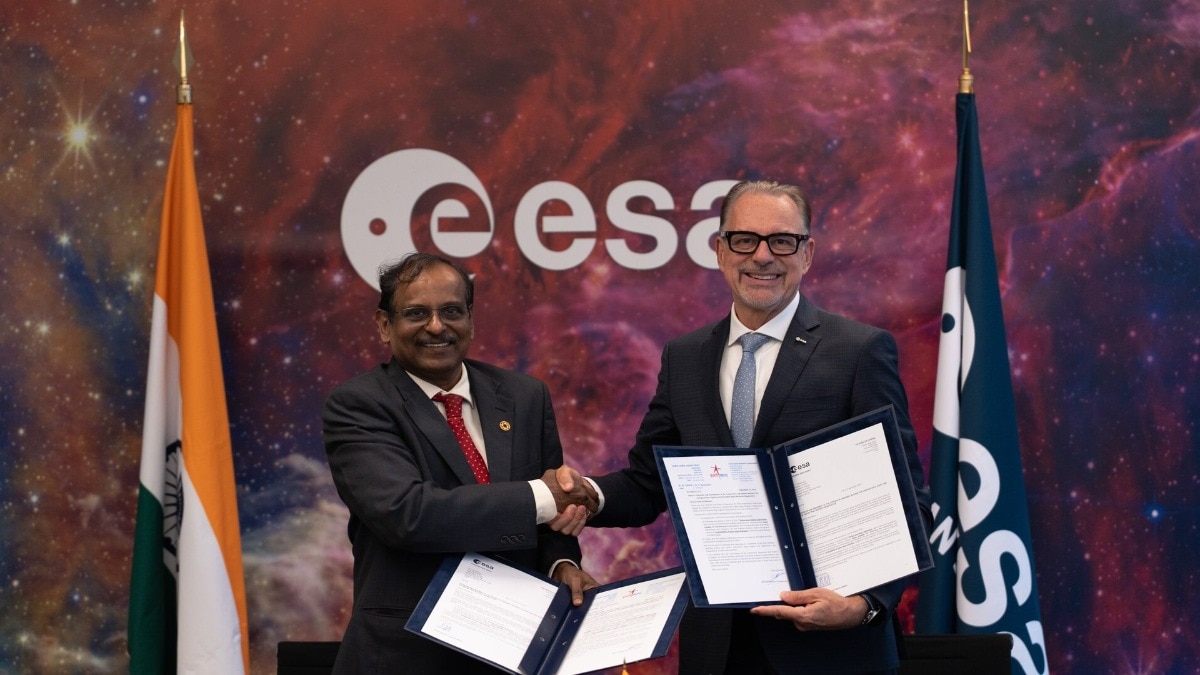
- The agreement was renewed through an exchange of letters signed by ISRO Chairman V. Narayanan and ESA Director General Josef Aschbacher on the sidelines of the International Space Summit in Paris.
- The renewed framework expands cooperation into space weather, human and robotic exploration, and sustainability of outer-space activities, while continuing collaboration in Earth observation, satellite navigation, space science and mission operations.
ISRO–ESA Cooperative Agreement
- The formal Cooperative Agreement came into force in January 2002 and provides the institutional framework for collaboration between ISRO and ESA.
- The two agencies have cooperated for more than two decades in:
- Earth observation
- Satellite navigation
- Space science
- Mission operations and tracking support
- The latest renewal extends the agreement for another five years, up to 2032.
Expanded Areas of Cooperation
The renewed agreement adds or strengthens cooperation in:
- Space Weather: Study of conditions caused mainly by solar activity that can affect satellites, communication networks, navigation systems and terrestrial power grids.
- Human Exploration: Cooperation linked to crewed space missions, astronaut-related capabilities and future exploration programmes.
- Robotic Exploration: Use of uncrewed spacecraft, probes and robotic systems for lunar, planetary and deep-space exploration.
- Space Sustainability: Promoting the safe and sustainable use of outer space amid increasing numbers of satellites and missions.
Recent ISRO–ESA Cooperation
- Human Space Exploration: The agencies signed a Joint Statement of Intent on human exploration in 2025.
- Earth Observation: A separate agreement in 2026 provided for joint calibration, validation and scientific studies, including sharing of technology, data and infrastructure.
- Recent cooperation has also involved missions such as Aditya-L1, ESA’s Proba-3 and the upcoming Chandrayaan-5 programme.
- ESA and ISRO also provide support in areas such as spacecraft tracking, scientific collaboration and expert mission reviews.
Additional Info
- ISRO
- Established: 1969
- Functions under the Department of Space, Government of India.
- Responsible for India’s space research, satellite, launch-vehicle and planetary exploration programmes.
- European Space Agency (ESA)
- Established: 1975
- An intergovernmental organisation coordinating European space research, technology and exploration programmes.
- India–Europe Space Cooperation
- Cooperation between ISRO and ESA traces back to 1978, initially focusing on Earth observation and remote sensing.
- Early cooperation covered areas such as data sharing, ground stations, spacecraft tracking and scientific validation.
- The 2002 agreement subsequently created a broader formal framework for joint space activities.
Sources
TRAI Expands Voice-and-SMS-Only Prepaid Plans
What’s the News?
- The Telecom Regulatory Authority of India (TRAI) has notified the Telecom Consumer Protection (Thirteenth Amendment) Regulations, 2026.
- The amendment requires telecom service providers (TSPs) to offer a wider range of voice-and-SMS-only Special Tariff Vouchers (STVs) for consumers who do not require mobile data.
- It particularly addresses the shortage of affordable short-duration non-data plans, which affected low-income and basic-connectivity users.
What are the New STV Rules?
- For every bundled Voice + SMS + Data STV having a validity of 30 days or less, telecom operators must provide a corresponding Voice + SMS-only STV.
- Operators must provide at least one Voice + SMS-only STV that:
- Is renewable on the same date every month.
- Renews on the last day of the month if the corresponding date does not exist in that month.
- They must also provide at least one longer-validity Voice + SMS-only STV, corresponding to a longer-validity bundled STV.
- Prices of the mandated non-data STVs must have an appropriate and largely proportional reduction compared with bundled plans containing data.
Why was the Amendment Needed?
- The Telecom Consumer Protection (Twelfth Amendment) Regulations, 2024 had already required every TSP to provide at least one Voice + SMS-only STV.
- TRAI subsequently found that:
- Only a limited number of such plans were being offered.
- Available plans were largely concentrated in longer validity periods.
- Consumers needing only basic connectivity had limited access to lower-cost, shorter-duration plans.
- The Thirteenth Amendment therefore shifts from merely requiring one standalone plan to requiring multiple options linked to the validity periods of bundled plans.
Consumer Impact
- Greater choice: Consumers can select voice-and-SMS plans without being compelled to purchase data.
- Affordability: Proportional tariff reduction is intended to reflect the exclusion of mobile-data services.
- Predictable recharge cycle: Same-date monthly renewal reduces dependence on shorter cycles such as traditional 28-day plans.
- Financial inclusion: The changes are particularly relevant for low-income consumers and users primarily dependent on voice and SMS services.
Consultation Process
- TRAI issued a draft amendment before finalising the regulations.
- It received 1,132 stakeholder responses and also conducted an Open House Discussion (OHD).
- The final regulations incorporated stakeholder feedback along with TRAI's regulatory analysis.
Additional Info
- Telecom Regulatory Authority of India (TRAI)
- Established under the Telecom Regulatory Authority of India Act, 1997.
- It is a statutory regulatory body for India's telecom sector.
- Major functions include regulation of telecom tariffs, interconnection and quality of service, along with protection of consumer interests.
- Special Tariff Voucher (STV)
- A prepaid tariff product designed for specified services such as voice, SMS or data for a defined validity period.
- Unlike a general bundled recharge, an STV can target specific telecom services and consumer requirements.
- Key Change: 2024 vs 2026
- Twelfth Amendment, 2024: At least one Voice + SMS-only STV was required.
- Thirteenth Amendment, 2026: Requires multiple Voice + SMS-only options, including corresponding short-duration plans, a calendar-month renewal option and at least one longer-validity option.
Sources
Government Dissolves Digital Communications Commission After 37 Years

What’s the News?
- The Government of India has dissolved the Digital Communications Commission (DCC), the apex inter-departmental decision-making body of the Department of Telecommunications (DoT).
- The DCC had functioned for around 37 years, dealing with major telecom policy, administrative and financially significant matters.
- It was originally established as the Telecom Commission in 1989 and renamed the Digital Communications Commission in 2018.
- The dissolution restructures the internal decision-making mechanism of the DoT, with matters now moving more directly through the departmental, ministerial and Cabinet approval framework where required.
What was the Digital Communications Commission?
- The Telecom Commission was constituted in 1989 to deal with various aspects of India's telecommunications sector.
- It was redesignated as the Digital Communications Commission (DCC) in 2018 as India's telecom policy framework expanded towards broader digital communications.
- It functioned as the apex decision-making body within the DoT for important telecom matters.
Major Functions
- Considered telecommunication and digital communication policies.
- Examined proposals having significant financial implications.
- Considered issues relating to spectrum pricing and allocation.
- Examined recommendations made by the Telecom Regulatory Authority of India (TRAI).
- Helped resolve inter-departmental issues before major proposals were placed before the Union Cabinet.
Why was the DCC Dissolved?
- The institutional structure had developed overlaps between DCC members and departmental advisers within the DoT.
- Several key member posts were vacant, affecting the effectiveness of the existing structure.
- Some financial approval functions had already shifted to the Ministry of Finance, reducing the need for a separate institutional layer for such matters.
- The restructuring is therefore aimed at reducing duplication and simplifying the telecom decision-making process.
Decision-Making After DCC
- Policy and administrative matters previously handled through the DCC will move more directly through the Telecom Secretary.
- Matters requiring higher approval will continue to be placed before the Minister of Communications and the Union Cabinet, as applicable.
- The dissolution affects the internal decision-making structure of the DoT; it does not dissolve or replace TRAI, which remains India's statutory telecom regulator.
Last Major Decision: Satcom Spectrum
- The DCC's final major deliberations concerned the allocation of spectrum for satellite communication (satcom) services.
- It approved most of TRAI's recommendations relating to satcom spectrum.
- The proposal subsequently required Cabinet approval.
- Starlink, Eutelsat OneWeb and Jio Satellite Communications have received permission to provide satcom services in India, but commercial rollout requires spectrum allocation and the required security clearance.
Additional Info
- Department of Telecommunications (DoT)
- Functions under the Ministry of Communications.
- Responsible for telecom policy, licensing, spectrum management and administration of the telecommunications sector.
- Telecom Regulatory Authority of India (TRAI)
- Established under the TRAI Act, 1997.
- It is a statutory regulatory body.
- Advises on matters such as spectrum, licensing and competition, while also regulating tariffs and quality of telecom services.
- DCC, in contrast, was an internal government decision-making body under DoT.
- National Digital Communications Policy (NDCP), 2018
- Replaced the earlier National Telecom Policy, 2012.
- Reflected the transition from conventional telecommunications towards a broader ecosystem covering digital communications, broadband infrastructure and emerging technologies.
- The Telecom Commission was renamed the Digital Communications Commission in the same policy period.
Sources
India–Mongolia Exercise Nomadic Elephant 2026 Begins in Pithoragarh
What’s the News?
- The 18th edition of Exercise Nomadic Elephant, the bilateral military exercise between India and Mongolia, has commenced at the Foreign Training Node, Pithoragarh, Uttarakhand.
- The Indian Army and Mongolian Armed Forces are represented by 45 personnel each.
- The platoon-level exercise focuses on enhancing joint capabilities for counter-insurgency operations in semi-urban and mountainous terrain under a United Nations mandate.
Exercise Nomadic Elephant
- It is an annual bilateral military exercise between the Indian Army and Mongolian Armed Forces.
- It is conducted at the platoon level and hosted alternately by India and Mongolia.
- The 2026 exercise is the 18th edition.
- The 17th edition was conducted at Ulaanbaatar, Mongolia, in 2025.
- Its broad objectives are:
- Improving interoperability between the two armies.
- Exchanging operational best practices.
- Refining joint tactical drills and procedures.
- Strengthening defence cooperation and mutual understanding.
Training Focus
The exercise covers both conventional tactical skills and emerging technology-based military capabilities:
- Cordon and Search Operations: Securing an area and systematically searching it for threats.
- Room Intervention Drills: Tactical operations in built-up and enclosed environments.
- Special Heliborne Operations: Use of helicopters for rapid insertion and movement of troops.
- Cyber Security Training: Building capabilities against cyber-related operational threats.
- Drone Operations: Employment of unmanned aerial systems for tactical purposes.
- Counter-Drone Systems: Detection and response to hostile unmanned aerial systems.
- Training scenarios are designed around semi-urban and mountainous terrain, reflecting the operational environments relevant to both armies.
UN-Mandated Operations
- A major theme of Nomadic Elephant is conducting counter-insurgency operations under a United Nations mandate.
- This involves developing common procedures and interoperability for situations where troops may operate in multinational or UN-authorised security environments.
- The exercise therefore combines field-level tactical training with coordination and joint operational planning.
Additional Info
- Participants: Indian Army and Mongolian Armed Forces.
- Exercise Type: Bilateral, annual and platoon-level.
- Host Pattern: Conducted alternately in India and Mongolia.
- 2026 Venue: Foreign Training Node, Pithoragarh, Uttarakhand.
- Personnel: 45 from each country.
- Core Theme: Counter-insurgency operations in semi-urban and mountainous terrain under a UN mandate.
- Previous Edition: Ulaanbaatar, Mongolia (2025).
Sources
ONGC Discovers Natural Gas in Mahanadi Offshore Basin
What’s the News?
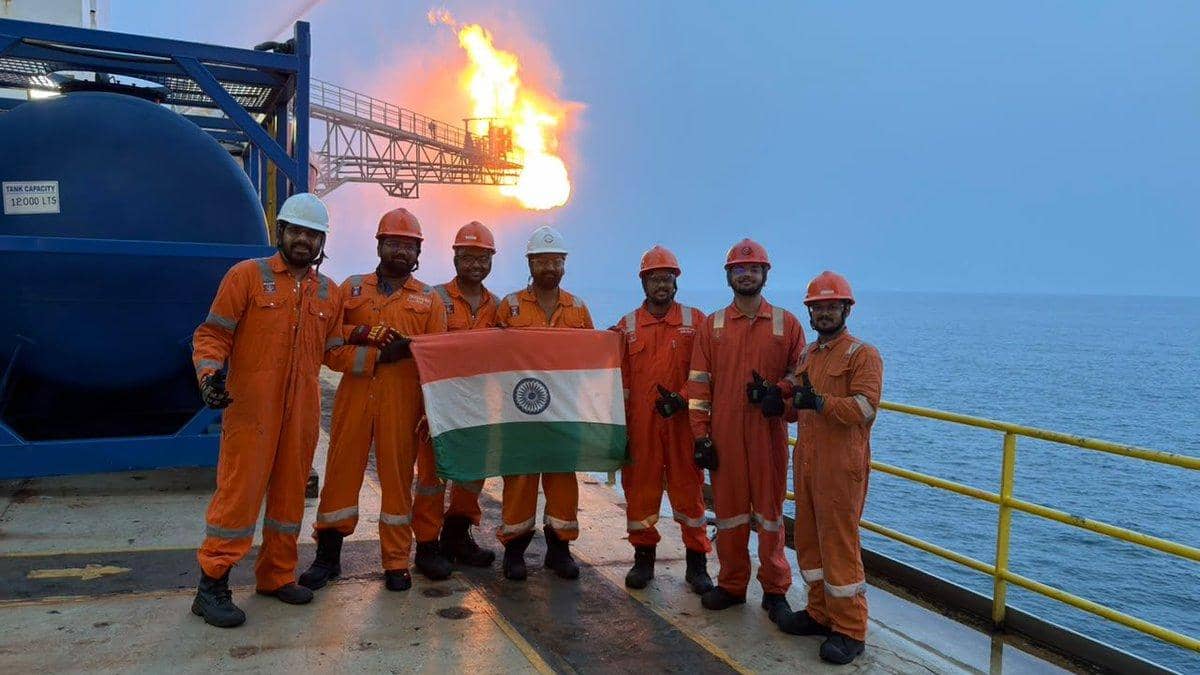
- Oil and Natural Gas Corporation (ONGC) has discovered natural gas in a deepwater exploratory well in the Mahanadi Offshore Basin, around 43 km off Konark, Odisha.
- The discovery was made at the MDW-28 (MN-DW18-1-H-D) well, the first well drilled by ONGC in the basin under its current Samudra Manthan deepwater exploration campaign.
- The well was drilled to a target depth of 1,623 metres, with gas encountered in the 1,441–1,452 metre interval.
- Initial testing showed encouraging gas flow and reservoir pressure. However, further appraisal is required to determine the size of the resource and its commercial viability.
Mahanadi Offshore Gas Discovery
- The Mahanadi Offshore Basin lies along the Odisha coast in the Bay of Bengal and forms part of India's eastern offshore hydrocarbon frontier.
- ONGC has previously reported discoveries such as Utkal and Konark in the basin.
- The new well is located relatively close to the coast and about 23 nautical miles from the Konark discovery.
- Its proximity to other discoveries may allow development through shared production and evacuation infrastructure, if commercially viable.
Samudra Manthan
- Samudra Manthan – National Offshore Exploration Scheme is a Central Sector Scheme aimed at accelerating oil and natural-gas exploration in India's offshore and deepwater areas.
- It has an approved outlay of ₹84,084 crore up to FY 2030–31.
- Major components include:
- ₹28,534 crore for modern offshore seismic-data acquisition and processing.
- ₹43,200 crore for drilling 60 deepwater exploration wells.
- Government support of up to 50% of eligible drilling cost or ₹675 crore per well, whichever is lower.
- ₹10,000 crore for common offshore infrastructure.
- ₹2,000 crore for oil and gas manufacturing and services zones.
Why is the Discovery Significant?
- India's eastern and western offshore basins, extending to water depths of up to 3,000 metres, are estimated to contain more than 5,600 MMTOE (Million Metric Tonnes of Oil Equivalent) of hydrocarbon potential.
- Subject to successful exploration, Samudra Manthan targets an increase in:
- Hydrocarbon resource base from about 1.6 billion TOE to 2.2 billion TOE.
- Annual domestic oil and gas production from around 62 MMTOE to 80 MMTOE.
- Expansion of domestic production can help India reduce hydrocarbon import dependence and improve energy security.
Commercial Development
- A gas discovery does not automatically mean commercial production.
- ONGC will undertake:
- Reservoir appraisal.
- Resource estimation.
- Flow and pressure assessment.
- Technical and economic evaluation.
- The Petroleum and Natural Gas Rules, 2025 allow the use of shared facilities, which could enable nearby discoveries to be jointly developed and reduce the cost and time required to bring deepwater resources into production.
Additional Info
- ONGC
- A Maharatna Central Public Sector Enterprise under the Ministry of Petroleum and Natural Gas.
- Primarily engaged in exploration and production of crude oil and natural gas.
- Mahanadi Basin
- A sedimentary basin located along India's eastern continental margin.
- Extends across onshore and offshore areas associated with the Mahanadi river system and Bay of Bengal.
- Considered one of India's emerging deepwater hydrocarbon exploration regions.
- Deepwater Exploration
- Involves exploration and drilling in offshore areas with substantial water depths.
- Requires specialised drilling vessels, subsea technology and high-resolution seismic data.
- It is generally more technologically complex and capital-intensive than conventional onshore or shallow-water exploration.
Sources
11th Ayurveda Day 2026: “Ayurveda for a Healthier Tomorrow”
What’s the News?
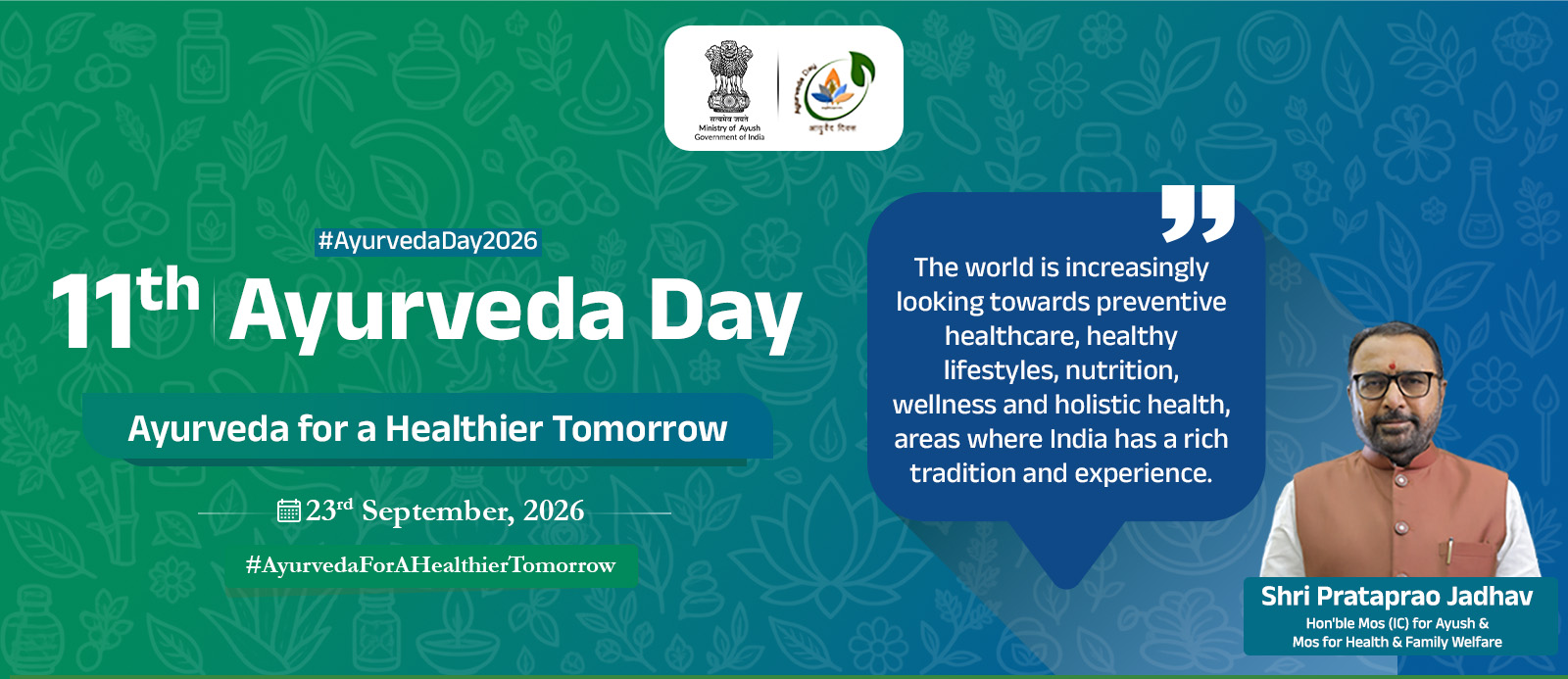
- India is observing the 11th Ayurveda Day on 23 September 2026 with the theme “Ayurveda for a Healthier Tomorrow” (स्वस्थ भविष्य के लिए आयुर्वेद).
- The national celebration is being organised under the Ministry of Ayush, with the main programme in Nagpur, Maharashtra.
- The observance focuses on evidence-based Ayurveda, research and innovation, preventive healthcare, community wellbeing and integration with modern healthcare systems.
Ayurveda Day
- Ayurveda Day was first observed in 2016.
- Earlier, it was celebrated on Dhanvantari Jayanti/Dhanteras, resulting in a changing date every year.
- From 2025, the Government designated 23 September as the fixed annual date for Ayurveda Day through a Gazette notification.
- The fixed date provides the observance with a universal calendar identity and facilitates wider international participation.
- More than 150 countries participated in the 2024 observance.
Theme: “Ayurveda for a Healthier Tomorrow”
The 2026 theme emphasises the use of Ayurveda for:
- Preventive and holistic healthcare
- Evidence-based research and innovation
- Addressing non-communicable diseases (NCDs)
- Strengthening community health and wellbeing
- Linking traditional medical knowledge with contemporary healthcare
- Advancing the broader vision of “One Health, One Future”.
India’s Growing Ayush Ecosystem
- 12,260 Ayushman Arogya Mandirs (Ayush) were functional against a target of 12,500.
- Ayush services are available alongside conventional healthcare at 13,249 public health facilities, including:
- 6,302 Primary Health Centres
- 3,191 Community Health Centres
- 475 District Hospitals
- 3,281 other health facilities
- The government supports 25,322 Ayush doctors and 5,666 Ayush paramedics.
- More than ₹6,406.99 crore was released to States/UTs under the National Ayush Mission (NAM) between 2014-15 and 2025-26.
Ayurveda Education and Research
- India has:
- 593 Ayurveda colleges
- 45,245 undergraduate seats
- 5,673 postgraduate seats
- AYURGYAN Scheme, launched in 2021-22, supports education, research and innovation in traditional medicine.
- The SPARK — Studentship Programme for Ayurveda Research Ken promotes research aptitude among undergraduate Ayurveda students.
- CCRAS has partnered with Anuvadini AI to translate Ayurveda research and educational materials into 13 Indian regional languages.
Healthcare Integration
- Ayush OPD services have been integrated into the government's eSanjeevani telemedicine platform.
- In 2024, IRDAI directed insurers to facilitate coverage of different systems of medicine, including Ayurveda, subject to their underwriting policies.
- The All India Institute of Ayurveda (AIIA), New Delhi entered into common empanelment with the General Insurance Council, covering all 32 general insurers for cashless treatment.
- Ayurveda, Siddha and Unani diagnostic terminology has also been incorporated into the WHO International Classification of Diseases-11 (ICD-11) framework for standardised recording.
Global Outreach
India's international Ayush cooperation includes:
- 27 country-to-country MoUs
- 16 MoUs for Ayush Academic Chairs
- 57 institute-to-institute MoUs
- 46 Ayush Information Cells in 43 countries
- 104 scholarships for foreign nationals
- India also hosts the WHO Global Traditional Medicine Centre (GCTM) at Jamnagar, Gujarat.
Additional Info
- Ministry of Ayush
- Established as a separate ministry in 2014.
- AYUSH represents Ayurveda, Yoga & Naturopathy, Unani, Siddha and Homoeopathy.
- National Ayush Mission (NAM)
- A Centrally Sponsored Scheme.
- Focuses on strengthening Ayush healthcare services, educational institutions, quality control of medicines and cultivation of medicinal plants.
- Ayurveda
- The term combines “Ayu” (life) and “Veda” (knowledge/science).
- Its roots are traced to the Rigveda, while major classical texts include the Charaka Samhita and Sushruta Samhita.
- Union Budget 2026-27
- Allocated ₹4,408 crore to the Ministry of Ayush.
- Announced three new All India Institutes of Ayurveda along with measures to upgrade Ayush pharmacies and drug-testing laboratories.
Sources
World Rhino Day 2026: “Keep the Five Alive”

What’s the News?
- World Rhino Day was observed on 22 September 2026 with the theme “Keep the Five Alive”.
- The observance raises awareness about the five surviving rhinoceros species and threats such as poaching, illegal wildlife trade, habitat loss and fragmentation.
- In India, the occasion highlighted the recovery of the Greater One-Horned Rhinoceros, the need for India–Bhutan transboundary conservation, and the initiation of Project Rhino for strengthening species conservation.
World Rhino Day
- World Rhino Day was first announced by WWF-South Africa in 2010.
- It has been observed internationally on 22 September since 2011.
- The 2026 theme, “Keep the Five Alive”, refers to protecting all five surviving rhino species.
Five Living Rhino Species
- Greater One-Horned Rhino – India and Nepal
- Javan Rhino – Indonesia
- Sumatran Rhino – Indonesia
- Black Rhino – Africa
- White Rhino – Africa
Fewer than 27,000 rhinos of all species remain globally.
Greater One-Horned Rhino in India
- Scientific name: Rhinoceros unicornis
- IUCN Red List status: Vulnerable
- Its major Indian populations occur in Assam, West Bengal and Uttar Pradesh.
- Assam recorded about 3,260 rhinos in 2026 and contains nearly 80% of the world's Greater One-Horned Rhino population.
- Important habitats include:
- Kaziranga National Park
- Orang National Park
- Manas National Park
- Pobitora Wildlife Sanctuary
- Jaldapara National Park
- Gorumara National Park
- Dudhwa National Park
India–Bhutan Joint Conservation
- Manas National Park and Tiger Reserve in Assam has witnessed a major recovery of the Greater One-Horned Rhino following a reintroduction programme initiated in 2006.
- Its population recovered from zero to an estimated 48 rhinos in the 2022 census.
- Some rhinos from Manas increasingly move across the international border into Bhutan, creating a need for coordinated transboundary management.
- Conservation measures require cooperation in:
- Wildlife monitoring
- Anti-poaching measures
- Habitat management
- Movement corridors
- Cross-border information sharing
- The UNESCO World Heritage Committee has also encouraged India and Bhutan to continue transboundary cooperation for conservation of the wider Manas landscape.
Project Rhino
- The Government has initiated Project Rhino to strengthen conservation of the Greater One-Horned Rhinoceros.
- It will provide financial and technical assistance to rhino range States for:
- Protection and anti-poaching measures
- Habitat management
- Genetic improvement
- Understanding population dynamics
- The initiative builds on India's experience in restoring rhino populations in areas such as Manas and Dudhwa.
Additional Info
- Indian Rhino Vision 2020 (IRV 2020)
- Conservation programme involving the Assam Forest Department, Bodoland Territorial Council, WWF-India and International Rhino Foundation.
- Used translocation to establish additional viable rhino populations, particularly in Manas.
- The programme played an important role in rebuilding the Manas rhino population after it had been wiped out by poaching and conflict.
- Manas National Park
- Located in Assam along the Bhutan border.
- It is a UNESCO World Heritage Site, National Park, Tiger Reserve and Biosphere Reserve.
- It forms a contiguous transboundary ecosystem with protected forests in Bhutan, making bilateral conservation particularly important.
- Major Threats to Rhinos
- Poaching for rhino horn
- Illegal wildlife trade
- Habitat loss and fragmentation
- Invasive species and grassland degradation
- Small and isolated populations
- Human–wildlife conflict
Sources
September 2026
30 September 202629 September 202628 September 202626 September 202625 September 202624 September 202623 September 202622 September 202621 September 202619 September 202618 September 202617 September 202616 September 202615 September 202612 September 202611 September 202610 September 202609 September 202608 September 202607 September 202605 September 202604 September 202603 September 202602 September 202601 September 2026
Archive
October 2026
- 27 October 2026
- 26 October 2026
- 24 October 2026
- 23 October 2026
- 22 October 2026
- 21 October 2026
- 20 October 2026
- 19 October 2026
- 17 October 2026
- 16 October 2026
- 15 October 2026
- 14 October 2026
- 13 October 2026
- 12 October 2026
- 10 October 2026
- 09 October 2026
- 08 October 2026
- 07 October 2026
- 06 October 2026
- 05 October 2026
- 03 October 2026
- 02 October 2026
- 01 October 2026
September 2026
- 30 September 2026
- 29 September 2026
- 28 September 2026
- 26 September 2026
- 25 September 2026
- 24 September 2026
- 23 September 2026
- 22 September 2026
- 21 September 2026
- 19 September 2026
- 18 September 2026
- 17 September 2026
- 16 September 2026
- 15 September 2026
- 12 September 2026
- 11 September 2026
- 10 September 2026
- 09 September 2026
- 08 September 2026
- 07 September 2026
- 05 September 2026
- 04 September 2026
- 03 September 2026
- 02 September 2026
- 01 September 2026
August 2026
- 31 August 2026
- 29 August 2026
- 27 August 2026
- 26 August 2026
- 25 August 2026
- 24 August 2026
- 22 August 2026
- 21 August 2026
- 20 August 2026
- 19 August 2026
- 18 August 2026
- 17 August 2026
- 14 August 2026
- 13 August 2026
- 12 August 2026
- 11 August 2026
- 10 August 2026
- 08 August 2026
- 07 August 2026
- 06 August 2026
- 05 August 2026
- 04 August 2026
- 03 August 2026
- 01 August 2026
July 2026
- 31 July 2026
- 30 July 2026
- 29 July 2026
- 28 July 2026
- 27 July 2026
- 25 July 2026
- 23 July 2026
- 22 July 2026
- 21 July 2026
- 20 July 2026
- 18 July 2026
- 17 July 2026
- 15 July 2026
- 14 July 2026
- 13 July 2026
- 11 July 2026
- 10 July 2026
- 09 July 2026
- 08 July 2026
- 07 July 2026
- 06 July 2026
- 04 July 2026
- 03 July 2026
- 02 July 2026
- 01 July 2026
June 2026
May 2026
April 2026
March 2026
- 31 March 2026
- 30 March 2026
- 28 March 2026
- 27 March 2026
- 26 March 2026
- 25 March 2026
- 24 March 2026
- 23 March 2026
- 21 March 2026
- 20 March 2026
- 19 March 2026
- 18 March 2026
- 17 March 2026
- 16 March 2026
- 14 March 2026
- 13 March 2026
- 12 March 2026
- 11 March 2026
- 10 March 2026
- 09 March 2026
- 07 March 2026
- 06 March 2026
- 05 March 2026
- 03 March 2026
- 02 March 2026
February 2026
- 28 February 2026
- 27 February 2026
- 26 February 2026
- 25 February 2026
- 24 February 2026
- 23 February 2026
- 21 February 2026
- 20 February 2026
- 19 February 2026
- 18 February 2026
- 17 February 2026
- 16 February 2026
- 13 February 2026
- 12 February 2026
- 11 February 2026
- 10 February 2026
- 09 February 2026
- 07 February 2026
- 06 February 2026
- 05 February 2026
- 04 February 2026
- 03 February 2026
- 02 February 2026
January 2026
- 31 January 2026
- 30 January 2026
- 29 January 2026
- 28 January 2026
- 27 January 2026
- 26 January 2026
- 24 January 2026
- 23 January 2026
- 22 January 2026
- 21 January 2026
- 20 January 2026
- 19 January 2026
- 16 January 2026
- 15 January 2026
- 14 January 2026
- 13 January 2026
- 12 January 2026
- 10 January 2026
- 09 January 2026
- 08 January 2026
- 07 January 2026
- 06 January 2026
- 05 January 2026
- 03 January 2026
- 02 January 2026
- 01 January 2026
December 2025
- 31 December 2025
- 30 December 2025
- 29 December 2025
- 27 December 2025
- 26 December 2025
- 24 December 2025
- 23 December 2025
- 22 December 2025
- 20 December 2025
- 19 December 2025
- 18 December 2025
- 17 December 2025
- 16 December 2025
- 15 December 2025
- 13 December 2025
- 12 December 2025
- 11 December 2025
- 10 December 2025
- 09 December 2025
- 08 December 2025
- 05 December 2025
- 04 December 2025
- 03 December 2025
- 02 December 2025
November 2025
- 29 November 2025
- 28 November 2025
- 27 November 2025
- 26 November 2025
- 25 November 2025
- 24 November 2025
- 22 November 2025
- 21 November 2025
- 20 November 2025
- 19 November 2025
- 18 November 2025
- 17 November 2025
- 15 November 2025
- 14 November 2025
- 13 November 2025
- 12 November 2025
- 11 November 2025
- 10 November 2025
- 08 November 2025
- 07 November 2025
- 06 November 2025
- 05 November 2025
- 04 November 2025
- 03 November 2025
- 01 November 2025
October 2025
- 31 October 2025
- 30 October 2025
- 29 October 2025
- 28 October 2025
- 27 October 2025
- 25 October 2025
- 24 October 2025
- 23 October 2025
- 22 October 2025
- 21 October 2025
- 20 October 2025
- 18 October 2025
- 17 October 2025
- 16 October 2025
- 15 October 2025
- 14 October 2025
- 13 October 2025
- 11 October 2025
- 10 October 2025
- 09 October 2025
- 08 October 2025
- 07 October 2025
- 06 October 2025
- 04 October 2025
- 03 October 2025
- 02 October 2025
- 01 October 2025
September 2025
- 30 September 2025
- 29 September 2025
- 27 September 2025
- 26 September 2025
- 25 September 2025
- 24 September 2025
- 23 September 2025
- 22 September 2025
- 20 September 2025
- 19 September 2025
- 18 September 2025
- 17 September 2025
- 16 September 2025
- 15 September 2025
- 13 September 2025
- 12 September 2025
- 11 September 2025
- 10 September 2025
- 09 September 2025
- 08 September 2025
- 06 September 2025
- 05 September 2025
- 04 September 2025
- 03 September 2025
- 02 September 2025
- 01 September 2025
August 2025
- 30 August 2025
- 29 August 2025
- 28 August 2025
- 27 August 2025
- 26 August 2025
- 25 August 2025
- 23 August 2025
- 22 August 2025
- 21 August 2025
- 20 August 2025
- 19 August 2025
- 18 August 2025
- 16 August 2025
- 14 August 2025
- 13 August 2025
- 12 August 2025
- 11 August 2025
- 08 August 2025
- 07 August 2025
- 06 August 2025
- 05 August 2025
- 04 August 2025
- 02 August 2025
- 01 August 2025
July 2025
- 31 July 2025
- 30 July 2025
- 29 July 2025
- 28 July 2025
- 26 July 2025
- 25 July 2025
- 24 July 2025
- 23 July 2025
- 22 July 2025
- 21 July 2025
- 19 July 2025
- 18 July 2025
- 17 July 2025
- 16 July 2025
- 15 July 2025
- 12 July 2025
- 11 July 2025
- 10 July 2025
- 09 July 2025
- 07 July 2025
- 05 July 2025
- 04 July 2025
- 03 July 2025
- 02 July 2025
- 01 July 2025
June 2025
- 30 June 2025
- 28 June 2025
- 27 June 2025
- 26 June 2025
- 25 June 2025
- 24 June 2025
- 23 June 2025
- 21 June 2025
- 20 June 2025
- 19 June 2025
- 18 June 2025
- 17 June 2025
- 16 June 2025
- 14 June 2025
- 13 June 2025
- 12 June 2025
- 11 June 2025
- 10 June 2025
- 09 June 2025
- 07 June 2025
- 06 June 2025
- 05 June 2025
- 04 June 2025
- 03 June 2025
- 02 June 2025
May 2025
April 2025
- 30 April 2025
- 29 April 2025
- 28 April 2025
- 26 April 2025
- 25 April 2025
- 24 April 2025
- 23 April 2025
- 22 April 2025
- 21 April 2025
- 19 April 2025
- 18 April 2025
- 17 April 2025
- 16 April 2025
- 15 April 2025
- 14 April 2025
- 12 April 2025
- 11 April 2025
- 10 April 2025
- 09 April 2025
- 08 April 2025
- 07 April 2025
- 05 April 2025
- 04 April 2025
- 03 April 2025
- 02 April 2025
- 01 April 2025
March 2025
- 31 March 2025
- 29 March 2025
- 28 March 2025
- 27 March 2025
- 26 March 2025
- 25 March 2025
- 24 March 2025
- 22 March 2025
- 21 March 2025
- 20 March 2025
- 19 March 2025
- 18 March 2025
- 17 March 2025
- 15 March 2025
- 13 March 2025
- 12 March 2025
- 11 March 2025
- 10 March 2025
- 08 March 2025
- 07 March 2025
- 06 March 2025
- 05 March 2025
- 04 March 2025
- 03 March 2025
- 01 March 2025
February 2025
- 28 February 2025
- 27 February 2025
- 26 February 2025
- 25 February 2025
- 24 February 2025
- 22 February 2025
- 21 February 2025
- 20 February 2025
- 19 February 2025
- 18 February 2025
- 17 February 2025
- 15 February 2025
- 14 February 2025
- 13 February 2025
- 12 February 2025
- 11 February 2025
- 10 February 2025
- 08 February 2025
- 07 February 2025
- 06 February 2025
- 05 February 2025
- 04 February 2025
- 03 February 2025
- 01 February 2025
January 2025
- 31 January 2025
- 30 January 2025
- 29 January 2025
- 28 January 2025
- 27 January 2025
- 25 January 2025
- 24 January 2025
- 23 January 2025
- 22 January 2025
- 21 January 2025
- 20 January 2025
- 18 January 2025
- 17 January 2025
- 16 January 2025
- 15 January 2025
- 14 January 2025
- 13 January 2025
- 11 January 2025
- 10 January 2025
- 09 January 2025
- 08 January 2025
- 07 January 2025
- 06 January 2025
- 04 January 2025
- 03 January 2025
- 02 January 2025
- 01 January 2025