
Current Affairs
Stay updated with the latest national and international events.
22 September 2025
World Rhino Day
What’s the News?
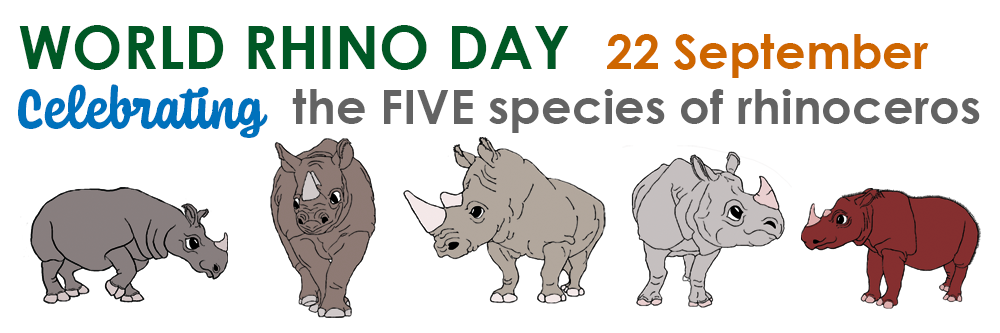
- World Rhino Day is observed annually on September 22 to raise awareness about the critical threats facing all five rhinoceros species and to celebrate conservation efforts.
- The day highlights the urgent need to protect rhinos from poaching, illegal wildlife trade, and habitat loss.
- India, home to the largest population of the Greater One-Horned Rhino (or Indian Rhino), plays a significant role in this global conservation movement, with notable success stories in parks like Kaziranga National Park.
The Five Rhino Species and India's Conservation Efforts
- The five rhino species are: Black Rhino, White Rhino, Greater One-Horned Rhino, Javan Rhino, and Sumatran Rhino.
- According to the IUCN Red List, the Javan, Sumatran, and Black rhinos are classified as Critically Endangered, while the Greater One-Horned Rhino is listed as Vulnerable, a significant conservation success.
- Kaziranga National Park in Assam is a global stronghold for the Greater One-Horned Rhino, hosting nearly two-thirds of the world's population.
- Global Status of Rhino Species
- Black Rhino: Population increasing but still threatened.
- White Rhino: Population declined from 16,772 (2022) to 15,752 (2024).
- Greater One-Horned Rhino: Approximately 4,075 individuals.
- Javan Rhino: Approximately 50 individuals.
- Sumatran Rhino: Between 34-47 individuals.
Additional Info
- Project Rhino (India):
- This is an umbrella term for various conservation programs in India, with key focus on the Greater One-Horned Rhino.
- It is closely associated with the Indian Rhino Vision 2020 (IRV 2020).
- Indian Rhino Vision 2020 (IRV 2020):
- Launch: Initiated in 2005 by the Assam Forest Department, in partnership with the International Rhino Foundation (IRF), WWF-India, and others.
- Objective: To achieve a population of at least 3,000 wild rhinos in seven of Assam’s protected areas by 2020.
- Strategy: The vision focused on a strategic "wild-to-wild translocation" to create new, healthy, and genetically diverse rhino populations. This involved moving rhinos from overcrowded areas like Kaziranga National Park and Pobitora Wildlife Sanctuary to other suitable habitats, notably Manas National Park.
- Achievement: The program was successfully concluded, with a total rhino population of over 3,600 individuals recorded by early 2022, exceeding the initial target and helping to restore Manas National Park's status as a UNESCO World Heritage Site.
- Conservation Status (India):
- Greater One-Horned Rhino: Listed in Schedule I of the Wildlife Protection Act, 1972.
- CITES: The species is listed in Appendix I of the Convention on International Trade in Endangered Species of Wild Fauna and Flora (CITES), which prohibits international trade in its specimens.
- Kaziranga National Park:
- A UNESCO World Heritage Site located in Assam.
- It has the world’s highest density of Greater One-Horned Rhinos.
- The park is also home to the "Big Five" of Kaziranga, which includes the Greater One-Horned Rhino, Royal Bengal Tiger, Asian Elephant, Wild Water Buffalo, and Swamp Deer.
Sources
India and ADB Partner for Urban Infrastructure in Assam
What’s the News?
- The Government of India and Asian Development Bank (ADB) have signed a US$ 125 million loan agreement to improve urban livability and climate resilience in Assam.
- The project will cover six district headquarters (Barpeta, Bongaigaon, Dhubri, Goalpara, Golaghat, Nalbari) plus Guwahati, and will benefit about 360,000 residents.
Project Details & Significance
The project adopts a multi-pronged approach to transform urban infrastructure and governance in a climate-vulnerable region.
- Key Infrastructure Components: The project focuses on two critical areas—water supply and flood management.
- Water Supply: Construction of six water treatment plants with a combined capacity of 72 million litres per day and laying of 800 km of distribution pipelines to provide continuous metered water supply.
- Flood Management: In Guwahati's Bahini Basin, the project will build flood diversion channels, upgrade drainage systems, and create a nature-based retention pond to reduce flooding and improve groundwater recharge.
- Governance & Inclusion Focus: Beyond physical infrastructure, the project emphasizes strengthening institutions and promoting social equity.
- Digital Governance: Introduction of a GIS-based property tax database, digital water billing systems, and a volumetric water tariff structure to improve financial sustainability.
- Social Inclusion: Specific activities include training for women's self-help groups in water operations, internships for college-age women, and school outreach programs on water, sanitation, and hygiene (WASH).
Additional Info
- Asian Development Bank (ADB):
- A regional development bank established on December 19, 1966.
- It promotes social and economic development in Asia.
- Headquartered in Manila, Philippines.
- ADB is owned by 69 members, with 50 from the region.
- India is a founding member and a major shareholder, holding the fourth-largest share.
- ADB's key strategic priorities (Strategy 2030) include addressing climate change, building livable cities, and promoting sustainable infrastructure.
- India's Urban Development Initiatives:
- Smart Cities Mission: A flagship program to develop 100 cities with core infrastructure and improve quality of life using technology.
- Atal Mission for Rejuvenation and Urban Transformation (AMRUT): Launched to ensure that every household has access to a tap with a assured supply of water and a sewerage connection.
- Swachh Bharat Mission-Urban (SBM-U): A national campaign for a clean and open defecation-free India.
- Pradhan Mantri Awas Yojana-Urban (PMAY-U): A mission to provide housing for all urban poor.
Sources
Switzerland’s Gries Glacier Melting Rapidly

What’s the News?
- The Gries Glacier in the canton of Valais, Switzerland, is retreating very fast. Its ice depth dropped by six meters over one year.
- Since 2000 it has shortened by 800 metres. Compared with its length in 1880, it is now 3.2 km shorter.
- At lower elevations the glacier might disappear within five years; at higher altitudes (≈ 3,000 metres) parts could remain for 40-50 years.
Why It Matters?
- Drivers of melt
- Dry years in 2022-23 and a very warm summer in 2025.
- Snowfall in April 2025 offered brief relief but was insufficient to offset summer heat.
- Consequences
- Glacial collapse risk, with past example: the Blatten glacier collapse destroyed a village.
- Loss of glacier means less water storage, changes in river flows, increased risk of floods during melt periods and water scarcity otherwise.
- Global pattern
- Many Swiss glaciers (≈ 100) have disappeared between 2016-2022.
- The World Meteorological Organization confirms nearly all glaciated regions are losing ice.
Additional Info
- International Year for the Preservation of Glaciers: The United Nations has declared 2025 as the International Year for the Preservation of Glaciers to raise global awareness about the vital role of glaciers and the threats they face. The World Day for Glaciers is also observed annually on March 21.
- Glacier Monitoring Switzerland (GLAMOS):
- This is the official Swiss glaciology service.
- It systematically monitors changes in glaciers, providing crucial data on mass balance, length change, and ice volume.
- Its data contributes to global climate studies and policy decisions.
Sources
PMUY Expands by 2.5 Million Free LPG Connections

What’s the News?
- The Government of India has approved an addition of 2.5 million LPG connections under Pradhan Mantri Ujjwala Yojana (PMUY) for FY 2025-26.
- This move pushes the total number of free LPG connections via PMUY to 105.8 million households.
Details & Implications under PMUY
- Cost & Subsidy
- Total budgetary outlay: ₹676 crore.
- ₹512.5 crore allocated for 25 lakh deposit-free LPG connections. Each connection costs ₹2,050.
- ₹160 crore for a targeted subsidy of ₹300 per 14.2-kg cylinder refill, valid for up to nine refills per household per year. Pro-rata for 5-kg cylinders.
- Components of Free Connection include:
- Cylinder, pressure regulator, safety hose, gas consumer card (DGCC), installation charges.
- Stove and first refill also provided free.
- Eligibility & Application
- Women from poor households with no existing LPG connection.
- Application via simplified KYC and Deprivation Declaration, either online or through public sector LPG distributors.
- Symbolic Timing
- Announced during Navratri, positioned as a “gift” to women, underscoring themes of women’s empowerment.
Additional Info
- Ujjwala 1.0 vs. Ujjwala 2.0:
- PMUY 1.0: Launched in 2016 with a target of 8 crore connections to be provided to women from BPL households, which was achieved by 2019.
- PMUY 2.0: Launched in August 2021, this phase aims to cover additional poor households. It includes a special provision for migrant families, who can apply for a connection without a ration card or address proof, based on a self-declaration.
- Eligibility:
- An adult woman (18+ years) from a poor household.
- The household should not have an existing LPG connection.
- Beneficiaries from specific categories like SECC 2011 list, SC/ST households, and beneficiaries of schemes like Pradhan Mantri Awas Yojana (PMAY) and Antyodaya Anna Yojana (AAY) are eligible.
- Impact:
- The scheme has been recognized by international bodies like the World Health Organization (WHO) and the International Energy Agency (IEA) for its positive impact on public health and the environment.
- It has been instrumental in increasing LPG coverage in India from approximately 62% in 2016 to over 99% currently.
- LPG consumption by PMUY households has also shown an upward trend, with the average per capita consumption improving to about 4.47 refills during FY 2024-25.
Sources
'GST Bachat Utsav' and Next-Generation GST Reforms
What’s the News?
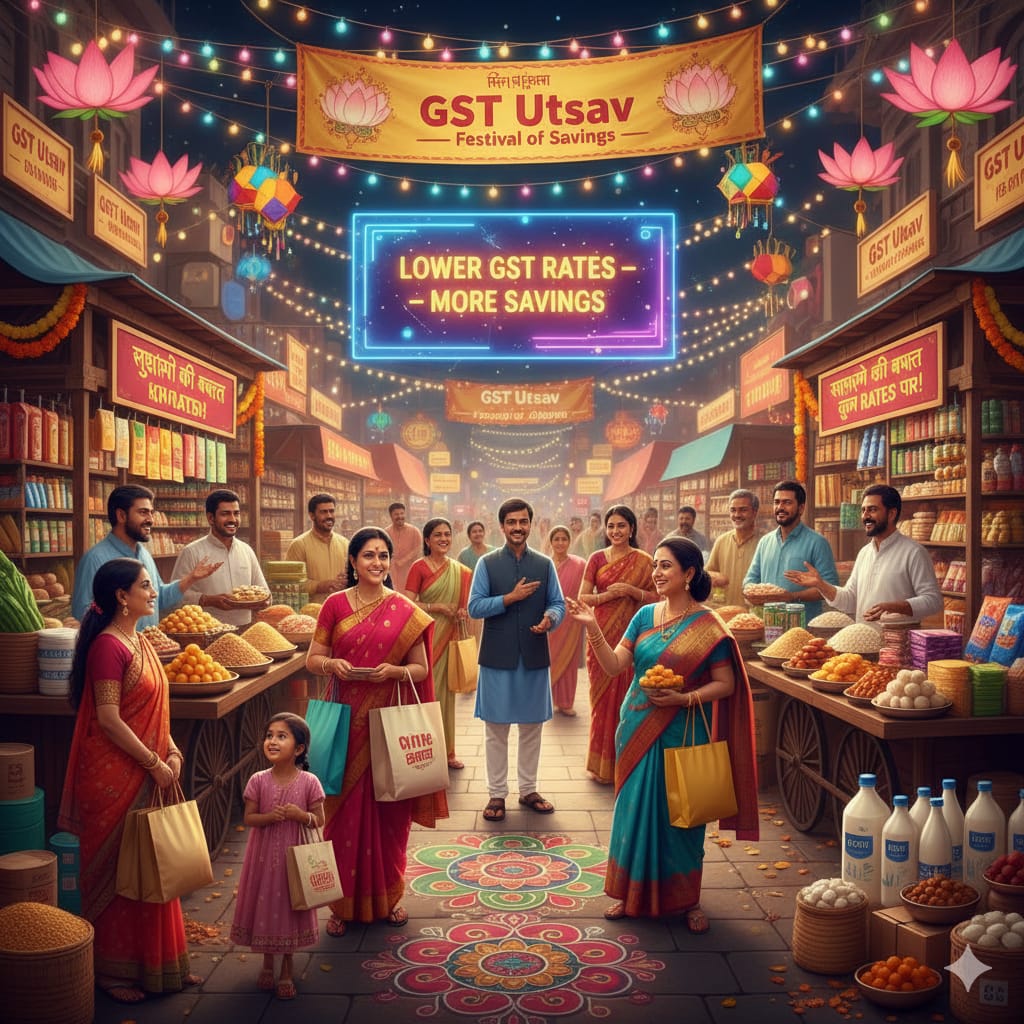
- The Government of India has initiated a nationwide 'GST Bachat Utsav' (GST Savings Festival) to mark the implementation of next-generation GST reforms.
- The reforms, which came into effect from September 22, aim to simplify the tax structure by moving from a four-slab system to a two-slab system of 5% and 18%.
- This major tax overhaul is expected to result in savings of over ₹2.5 lakh crore for citizens, particularly benefiting the poor and middle class.
The Next-Generation GST Reforms
The new GST reforms represent a significant step towards a simplified and more transparent tax regime.
- Simplified Tax Structure:
- The previous four-rate structure (5%, 12%, 18%, and 28%) has been rationalized into a two-rate system: 5% for essential goods and 18% for most other goods and services.
- A special 40% rate with an additional compensation cess will continue to apply to a limited number of luxury and "sin" goods like tobacco and pan masala.
- Key Beneficiaries:
- Daily Essentials: A wide range of products, including soaps, shampoos, packaged foods, and household items, have been moved to the lower 5% slab.
- Healthcare: Over 30 life-saving drugs and diagnostic kits are now fully exempt from GST, while other essential medicines attract a 5% tax. Life insurance premiums have also been made GST-free.
- Automobiles and Consumer Durables: GST on small cars, two-wheelers, commercial vehicles, and consumer durables like ACs and large TVs has been reduced to 18%, making them more affordable.
- Farmers: The GST on farm machinery, irrigation equipment, and bio-pesticides has been significantly reduced, which will lower input costs for the agricultural sector.
- Service Sector: Services such as hotel stays, gym memberships, and salon services now fall under the 5% slab.
Additional Info
- Goods and Services Tax (GST):
- Introduced on July 1, 2017, as a comprehensive indirect tax to replace multiple central and state taxes, based on the principle of "One Nation, One Tax."
- It is a destination-based consumption tax, meaning the tax is levied at the point of consumption rather than the point of production.
- Constitutional Backing:
- The implementation of GST was enabled by the 101st Constitutional Amendment Act, 2016.
- This amendment created a new Article 246A, which gives both the Parliament and state legislatures the power to make laws with respect to GST.
- GST Council:
- Established under Article 279A of the Constitution.
- It is a joint forum of the Centre and States, chaired by the Union Finance Minister.
- The Council is the key decision-making body that recommends rates, exemptions, and other rules related to GST.
Sources
World Alzheimer’s Day / Month 2025
What’s the News?
- World Alzheimer’s Day is observed on 21 September as part of World Alzheimer’s Month in September.
- The global theme for 2025 is “Ask About Dementia. Ask About Alzheimer’s”.
Additional Info
- Historical Context
- ADI founded in 1984; first Alzheimer’s Day in 1994 to mark its 10th anniversary.
- Alzheimer’s disease is named after Alois Alzheimer, a German psychiatrist who first described the condition.
- Related Policies / Health Systems
- Dementia is recognised as a public health priority by WHO and member countries.
- India faces challenges in dementia care: limited awareness, scarce diagnostic facilities, burden on caregivers.
- Scientific / Medical Points
- Alzheimer’s is a progressive neurodegenerative disease; not a normal part of aging.
- No cure exists yet; management involves symptomatic treatment, lifestyle interventions, support systems.
Sources
International Day of Peace 2025

What’s the News?
- The International Day of Peace is observed annually on September 21.
- The theme for 2025 is “Actions for Peace: Our Ambition for the #GlobalGoals”.
- Established by the United Nations, the day is dedicated to strengthening the ideals of peace by observing 24 hours of non-violence and cease-fire across the globe.
Theme: "Actions for Peace: Our Ambition for the # GlobalGoals"
- This year’s theme highlights the critical relationship between peace and the Sustainable Development Goals (SDGs).
- It underscores that achieving the SDGs is fundamental to creating peaceful and just societies. Conversely, conflict and instability hinder progress toward these goals.
- The theme serves as a call to action for individuals, communities, and governments to contribute to the 2030 Agenda for Sustainable Development, recognizing it as a roadmap for fostering lasting peace.
- It emphasizes that peace is not merely the absence of war but the presence of equitable development, justice, and human rights for all.
Additional Info
- History of the Day:
- The United Nations General Assembly (UNGA) established the International Day of Peace in 1981 through Resolution 36/67
- In 2001, the UNGA passed Resolution 55/282, which unanimously designated September 21 as the fixed date for the observance and declared it a day of global cease-fire and non-violence.
- Sustainable Development Goals (SDGs):
- A collection of 17 interlinked global goals designed to be a "blueprint to achieve a better and more sustainable future for all."
- They were adopted by all UN Member States in 2015 as part of the 2030 Agenda.
- SDG 16: Peace, Justice and Strong Institutions is directly linked to the day's objective. It aims to:
- Significantly reduce all forms of violence.
- Promote the rule of law at national and international levels.
- Ensure equal access to justice for all.
- The UN Peace Bell:
- Located at the UN Headquarters in New York City.
- It was gifted by the United Nations Association of Japan in 1954.
- The bell was cast from coins and medals donated by people, including children, from over 60 countries.
- A tradition on the International Day of Peace involves the UN Secretary-General ringing the bell to send a message of peace to the world.
Sources
India Launches LDB 2.0 to Enhance Digital Logistics
What’s the News?
- On the 8th anniversary of the Logistics Data Bank (LDB) project, the Union Minister of Commerce & Industry, Shri Piyush Goyal, launched LDB 2.0.
- This upgraded platform aims to significantly enhance the visibility and efficiency of India’s container logistics and supply chain.
- The initiative is a key step towards creating a digitally empowered, transparent, and export-competitive economy by providing a unified tracking interface for all export-import (EXIM) containers.
LDB 2.0: An Overview
LDB 2.0 is an advanced version of the LDB project, designed to overcome the limitations of the previous system and offer more sophisticated features for the logistics industry.
- Objective: To provide a single-window, real-time tracking solution for all container traffic in India, improving transparency and predictability.
- Key Features:
- Unified Tracking: Integrates data from various stakeholders like ports, terminals, Container Freight Stations (CFS), and Inland Container Depots (ICDs).
- Predictive Analytics: Utilizes advanced analytics to forecast container transit times, identify potential delays, and help in better planning.
- Enhanced User Interface: Features a more intuitive and user-friendly dashboard for stakeholders.
- Mobile Application: A new mobile app has been launched for on-the-go tracking and notifications.
Additional Info
- Logistics Data Bank (LDB) Project:
- Originally launched in 2016 as a major trade facilitation initiative.
- It uses Radio Frequency Identification (RFID) technology to track containers across India's port and logistics network.
- Implemented by NICDC Logistics Data Services (NLDS), a joint venture between the National Industrial Corridor Development Corporation (NICDC) and Japanese IT major NEC Corporation.
- The project now handles nearly 100% of India's container volume.
- Alignment with National Policies:
- PM GatiShakti National Master Plan: LDB 2.0 directly supports the GatiShakti mission by providing critical data for integrated infrastructure planning. It helps in identifying logistics bottlenecks and improving multimodal connectivity, which are core objectives of the plan.
- National Logistics Policy (NLP): The platform is a crucial tool for achieving the goals of the NLP, which aims to:
- Reduce logistics costs in India from the current 13-14% of GDP to a global benchmark of 8% by 2030.
- Improve India's ranking in the Logistics Performance Index (LPI).
Sources
Industrial Park Rating System (IPRS) 3.0 Launched
What’s the News?
- The Government of India launched IPRS 3.0 to benchmark industrial parks across the country, under the Make in India initiative.
- The system is developed by DPIIT with support from the Asian Development Bank (ADB).
About IPRS 3.0
The IPRS 3.0 is a comprehensive assessment tool that builds upon its previous versions with a renewed focus on sustainability and tenant feedback.
- Objective: To benchmark industrial parks against global standards, foster competition among them, and guide policy-making to improve industrial infrastructure.
- Assessment Pillars: The rating framework is based on four core pillars:
- Internal Infrastructure & Utilities: Quality of power, water, roads, and other internal facilities.
- External Infrastructure & Connectivity: Proximity to highways, ports, airports, and other logistical links.
- Business Support Services: Availability of common facilities, skill development centers, and other support systems.
- Environment & Safety Management: Measures for environmental sustainability, safety protocols, and waste management.
- New Features in IPRS 3.0:
- Tenant Feedback: For the first time, feedback from industries operating within the parks will be a key component of the rating.
- Sustainability Focus: Increased emphasis on decarbonization, renewable energy usage, and sustainable practices.
- EV Sector Readiness: Includes specific parameters to assess the readiness of parks for electric vehicle and component manufacturing.
- Integration with PM GatiShakti: Leverages the PM GatiShakti National Master Plan for a more holistic assessment of connectivity and infrastructure.
Additional Info
- History of IPRS:
- IPRS 1.0: Launched as a pilot in 2018 to test the framework.
- IPRS 2.0: Released in 2021, it expanded the coverage and refined the assessment methodology, mapping over 440 industrial parks.
Sources
UK, Canada, and Australia Formally Recognise State of Palestine
What’s the News?
- The United Kingdom, Canada, and Australia have formally announced their recognition of the State of Palestine, marking a significant diplomatic development.
- This coordinated decision comes ahead of a key session at the United Nations General Assembly (UNGA) focused on reviving the peace process.
- The move aligns these nations with a growing number of Western countries, including Spain, Ireland, and Norway, who have recently taken similar steps to support a two-state solution.
A Shift in Western Policy
This recognition represents a major policy shift for these key allies of the United States, who historically argued that statehood should be the outcome of a negotiated peace settlement with Israel.
-
Significance:
- It aims to grant the Palestinian Authority greater international standing and legitimacy.
- It increases diplomatic momentum for a two-state solution, which has been stalled for years.
- The move is seen as a response to growing international frustration with the ongoing conflict and the expansion of Israeli settlements in the West Bank.
Additional Info
-
Two-State Solution:
- A widely endorsed framework to resolve the Israeli-Palestinian conflict.
- It proposes the establishment of an independent State of Palestine alongside the State of Israel.
- The borders are generally envisioned to be based on the 1967 lines (pre-Six-Day War), with Jerusalem potentially serving as a shared capital.
-
Palestine's Status at the UN:
- In 2012, the UNGA passed Resolution 67/19, which upgraded Palestine's status to a "non-member observer state."
- This status allows Palestine to participate in UN debates and join international bodies but does not grant it full voting rights.
- Full UN membership requires a recommendation from the UN Security Council, which has been blocked in the past.
-
The Oslo Accords:
- A series of landmark agreements signed in the 1990s between Israel and the Palestine Liberation Organization (PLO).
- They established the Palestinian Authority (PA), giving it limited self-governance over parts of the West Bank and Gaza Strip.
- The Accords were intended as an interim step towards a final peace treaty, but the process has long been dormant.
Sources
States’ Public Debt Trebles to ₹59.6 Lakh Crore in a Decade: CAG Report

What’s the News?
- A decadal analysis by the Comptroller and Auditor General (CAG) of India has revealed that the combined public debt of 28 states more than trebled in ten years, from ₹17.57 lakh crore in fiscal year (FY) 2013-14 to ₹59.60 lakh crore in FY 2022-23.
- The report, the first of its kind to provide a consolidated decadal analysis of state finances, highlights concerns over fiscal discipline and debt sustainability.
- It notes that the debt-to-GSDP ratio (Gross State Domestic Product) for states has increased from 16.66% to 22.96% in the same period.
State Finances Overview
The report highlights several key trends and concerns regarding the fiscal health of Indian states.
- Debt-to-GSDP Ratio:
- Eight states had a public debt-to-GSDP ratio of more than 30%.
- Six states maintained this ratio at less than 20%.
- The remaining 14 states were in the 20%-30% range.
- Highest Debt-to-GSDP: Punjab (40.35%), Nagaland (37.15%), West Bengal (33.70%).
- Lowest Debt-to-GSDP: Odisha (8.45%), Maharashtra (14.64%), Gujarat (16.37%).
- Committed Expenditure:
- The total committed expenditure on salaries, pensions, and interest payments for all states rose by 2.49 times to ₹15.63 lakh crore in FY 2022-23.
- This constitutes a large and inflexible portion of their revenue expenditure.
- Divergence from the 'Golden Rule':
- The report notes that 11 states used borrowings to finance current expenditures (salaries, subsidies, pensions) instead of capital creation, violating the 'golden rule of borrowing'.
- This practice is most pronounced in states like Punjab and Andhra Pradesh, where capital expenditure as a share of net borrowings was as low as 26% and 17%, respectively.
Additional Info
- Comptroller and Auditor General (CAG) of India:
- Established under Article 148 of the Constitution of India.
- Serves as the supreme audit institution of the country, auditing all receipts and expenditures of the Union and State governments.
- Submits its audit reports to the President (for Union) or Governor (for States), which are then laid before Parliament or the State Legislature.
- Fiscal Responsibility and Budget Management (FRBM) Act:
- Enacted in 2003 by the Central government to ensure fiscal discipline.
- The 15th Finance Commission recommended that states' debt-to-GSDP ratio be brought down to 20% by FY 2022-23.
- The CAG report highlights that many states have not adhered to these targets.
- Consolidated Sinking Fund (CSF):
- A reserve fund established by states, with the Reserve Bank of India (RBI) acting as the administrator.
- States make annual contributions from their revenue to this fund to service and repay their debts, thereby reducing fiscal stress.
- The 12th Finance Commission recommended all states to maintain a CSF.
- Around 23 states currently have a CSF.
Sources
September 2025
Archive
October 2026
- 28 October 2026
- 27 October 2026
- 26 October 2026
- 24 October 2026
- 23 October 2026
- 22 October 2026
- 21 October 2026
- 20 October 2026
- 19 October 2026
- 17 October 2026
- 16 October 2026
- 15 October 2026
- 14 October 2026
- 13 October 2026
- 12 October 2026
- 10 October 2026
- 09 October 2026
- 08 October 2026
- 07 October 2026
- 06 October 2026
- 05 October 2026
- 03 October 2026
- 02 October 2026
- 01 October 2026
September 2026
- 30 September 2026
- 29 September 2026
- 28 September 2026
- 26 September 2026
- 25 September 2026
- 24 September 2026
- 23 September 2026
- 22 September 2026
- 21 September 2026
- 19 September 2026
- 18 September 2026
- 17 September 2026
- 16 September 2026
- 15 September 2026
- 12 September 2026
- 11 September 2026
- 10 September 2026
- 09 September 2026
- 08 September 2026
- 07 September 2026
- 05 September 2026
- 04 September 2026
- 03 September 2026
- 02 September 2026
- 01 September 2026
August 2026
- 31 August 2026
- 29 August 2026
- 27 August 2026
- 26 August 2026
- 25 August 2026
- 24 August 2026
- 22 August 2026
- 21 August 2026
- 20 August 2026
- 19 August 2026
- 18 August 2026
- 17 August 2026
- 14 August 2026
- 13 August 2026
- 12 August 2026
- 11 August 2026
- 10 August 2026
- 08 August 2026
- 07 August 2026
- 06 August 2026
- 05 August 2026
- 04 August 2026
- 03 August 2026
- 01 August 2026
July 2026
- 31 July 2026
- 30 July 2026
- 29 July 2026
- 28 July 2026
- 27 July 2026
- 25 July 2026
- 23 July 2026
- 22 July 2026
- 21 July 2026
- 20 July 2026
- 18 July 2026
- 17 July 2026
- 15 July 2026
- 14 July 2026
- 13 July 2026
- 11 July 2026
- 10 July 2026
- 09 July 2026
- 08 July 2026
- 07 July 2026
- 06 July 2026
- 04 July 2026
- 03 July 2026
- 02 July 2026
- 01 July 2026
June 2026
May 2026
April 2026
March 2026
- 31 March 2026
- 30 March 2026
- 28 March 2026
- 27 March 2026
- 26 March 2026
- 25 March 2026
- 24 March 2026
- 23 March 2026
- 21 March 2026
- 20 March 2026
- 19 March 2026
- 18 March 2026
- 17 March 2026
- 16 March 2026
- 14 March 2026
- 13 March 2026
- 12 March 2026
- 11 March 2026
- 10 March 2026
- 09 March 2026
- 07 March 2026
- 06 March 2026
- 05 March 2026
- 03 March 2026
- 02 March 2026
February 2026
- 28 February 2026
- 27 February 2026
- 26 February 2026
- 25 February 2026
- 24 February 2026
- 23 February 2026
- 21 February 2026
- 20 February 2026
- 19 February 2026
- 18 February 2026
- 17 February 2026
- 16 February 2026
- 13 February 2026
- 12 February 2026
- 11 February 2026
- 10 February 2026
- 09 February 2026
- 07 February 2026
- 06 February 2026
- 05 February 2026
- 04 February 2026
- 03 February 2026
- 02 February 2026
January 2026
- 31 January 2026
- 30 January 2026
- 29 January 2026
- 28 January 2026
- 27 January 2026
- 26 January 2026
- 24 January 2026
- 23 January 2026
- 22 January 2026
- 21 January 2026
- 20 January 2026
- 19 January 2026
- 16 January 2026
- 15 January 2026
- 14 January 2026
- 13 January 2026
- 12 January 2026
- 10 January 2026
- 09 January 2026
- 08 January 2026
- 07 January 2026
- 06 January 2026
- 05 January 2026
- 03 January 2026
- 02 January 2026
- 01 January 2026
December 2025
- 31 December 2025
- 30 December 2025
- 29 December 2025
- 27 December 2025
- 26 December 2025
- 24 December 2025
- 23 December 2025
- 22 December 2025
- 20 December 2025
- 19 December 2025
- 18 December 2025
- 17 December 2025
- 16 December 2025
- 15 December 2025
- 13 December 2025
- 12 December 2025
- 11 December 2025
- 10 December 2025
- 09 December 2025
- 08 December 2025
- 05 December 2025
- 04 December 2025
- 03 December 2025
- 02 December 2025
November 2025
- 29 November 2025
- 28 November 2025
- 27 November 2025
- 26 November 2025
- 25 November 2025
- 24 November 2025
- 22 November 2025
- 21 November 2025
- 20 November 2025
- 19 November 2025
- 18 November 2025
- 17 November 2025
- 15 November 2025
- 14 November 2025
- 13 November 2025
- 12 November 2025
- 11 November 2025
- 10 November 2025
- 08 November 2025
- 07 November 2025
- 06 November 2025
- 05 November 2025
- 04 November 2025
- 03 November 2025
- 01 November 2025
October 2025
- 31 October 2025
- 30 October 2025
- 29 October 2025
- 28 October 2025
- 27 October 2025
- 25 October 2025
- 24 October 2025
- 23 October 2025
- 22 October 2025
- 21 October 2025
- 20 October 2025
- 18 October 2025
- 17 October 2025
- 16 October 2025
- 15 October 2025
- 14 October 2025
- 13 October 2025
- 11 October 2025
- 10 October 2025
- 09 October 2025
- 08 October 2025
- 07 October 2025
- 06 October 2025
- 04 October 2025
- 03 October 2025
- 02 October 2025
- 01 October 2025
September 2025
- 30 September 2025
- 29 September 2025
- 27 September 2025
- 26 September 2025
- 25 September 2025
- 24 September 2025
- 23 September 2025
- 22 September 2025
- 20 September 2025
- 19 September 2025
- 18 September 2025
- 17 September 2025
- 16 September 2025
- 15 September 2025
- 13 September 2025
- 12 September 2025
- 11 September 2025
- 10 September 2025
- 09 September 2025
- 08 September 2025
- 06 September 2025
- 05 September 2025
- 04 September 2025
- 03 September 2025
- 02 September 2025
- 01 September 2025
August 2025
- 30 August 2025
- 29 August 2025
- 28 August 2025
- 27 August 2025
- 26 August 2025
- 25 August 2025
- 23 August 2025
- 22 August 2025
- 21 August 2025
- 20 August 2025
- 19 August 2025
- 18 August 2025
- 16 August 2025
- 14 August 2025
- 13 August 2025
- 12 August 2025
- 11 August 2025
- 08 August 2025
- 07 August 2025
- 06 August 2025
- 05 August 2025
- 04 August 2025
- 02 August 2025
- 01 August 2025
July 2025
- 31 July 2025
- 30 July 2025
- 29 July 2025
- 28 July 2025
- 26 July 2025
- 25 July 2025
- 24 July 2025
- 23 July 2025
- 22 July 2025
- 21 July 2025
- 19 July 2025
- 18 July 2025
- 17 July 2025
- 16 July 2025
- 15 July 2025
- 12 July 2025
- 11 July 2025
- 10 July 2025
- 09 July 2025
- 07 July 2025
- 05 July 2025
- 04 July 2025
- 03 July 2025
- 02 July 2025
- 01 July 2025
June 2025
- 30 June 2025
- 28 June 2025
- 27 June 2025
- 26 June 2025
- 25 June 2025
- 24 June 2025
- 23 June 2025
- 21 June 2025
- 20 June 2025
- 19 June 2025
- 18 June 2025
- 17 June 2025
- 16 June 2025
- 14 June 2025
- 13 June 2025
- 12 June 2025
- 11 June 2025
- 10 June 2025
- 09 June 2025
- 07 June 2025
- 06 June 2025
- 05 June 2025
- 04 June 2025
- 03 June 2025
- 02 June 2025
May 2025
April 2025
- 30 April 2025
- 29 April 2025
- 28 April 2025
- 26 April 2025
- 25 April 2025
- 24 April 2025
- 23 April 2025
- 22 April 2025
- 21 April 2025
- 19 April 2025
- 18 April 2025
- 17 April 2025
- 16 April 2025
- 15 April 2025
- 14 April 2025
- 12 April 2025
- 11 April 2025
- 10 April 2025
- 09 April 2025
- 08 April 2025
- 07 April 2025
- 05 April 2025
- 04 April 2025
- 03 April 2025
- 02 April 2025
- 01 April 2025
March 2025
- 31 March 2025
- 29 March 2025
- 28 March 2025
- 27 March 2025
- 26 March 2025
- 25 March 2025
- 24 March 2025
- 22 March 2025
- 21 March 2025
- 20 March 2025
- 19 March 2025
- 18 March 2025
- 17 March 2025
- 15 March 2025
- 13 March 2025
- 12 March 2025
- 11 March 2025
- 10 March 2025
- 08 March 2025
- 07 March 2025
- 06 March 2025
- 05 March 2025
- 04 March 2025
- 03 March 2025
- 01 March 2025
February 2025
- 28 February 2025
- 27 February 2025
- 26 February 2025
- 25 February 2025
- 24 February 2025
- 22 February 2025
- 21 February 2025
- 20 February 2025
- 19 February 2025
- 18 February 2025
- 17 February 2025
- 15 February 2025
- 14 February 2025
- 13 February 2025
- 12 February 2025
- 11 February 2025
- 10 February 2025
- 08 February 2025
- 07 February 2025
- 06 February 2025
- 05 February 2025
- 04 February 2025
- 03 February 2025
- 01 February 2025
January 2025
- 31 January 2025
- 30 January 2025
- 29 January 2025
- 28 January 2025
- 27 January 2025
- 25 January 2025
- 24 January 2025
- 23 January 2025
- 22 January 2025
- 21 January 2025
- 20 January 2025
- 18 January 2025
- 17 January 2025
- 16 January 2025
- 15 January 2025
- 14 January 2025
- 13 January 2025
- 11 January 2025
- 10 January 2025
- 09 January 2025
- 08 January 2025
- 07 January 2025
- 06 January 2025
- 04 January 2025
- 03 January 2025
- 02 January 2025
- 01 January 2025