
Current Affairs
Stay updated with the latest national and international events.
22 January 2026
Operation Trashi-I: Counter-Terror Mission in Kishtwar

What’s the News?
- The Indian Army, in collaboration with the Jammu and Kashmir Police and CRPF, launched Operation Trashi-I to neutralize terrorists hiding in the high-altitude forests of Kishtwar district.
- The operation was initiated following specific intelligence regarding the presence of foreign terrorists, believed to be affiliated with the Pakistan-based group Jaish-e-Mohammad (JeM).
- During the mission, a fierce encounter broke out in the Chatroo forest region, resulting in injuries to eight soldiers.
- Havildar Gajendra Singh, a paratrooper from the 2 PARA Special Forces, tragically succumbed to his injuries, marking the first security force fatality in a counter-terrorism operation in the Union Territory in 2026.
Operation Trashi-I
- Objective:
- Neutralize terrorists using dense forest cover as hideouts
- Dismantle terrorist infrastructure and logistics
- Disrupt infiltration routes linking Jammu to the Kashmir Valley
- Participating Agencies:
- Indian Army (White Knight Corps)
- Jammu & Kashmir Police (including Special Operations Group)
- Central Reserve Police Force (CRPF)
- Tactical Elements:
- Use of drones, sniffer dogs, and human intelligence
- Tight cordon-and-search operations in rugged terrain with steep slopes and limited visibility
The "Kargil-Style" Terror Bunker
- Strategic Discovery: Security forces unearthed a well-fortified, Kargil-style bunker at an altitude of approximately 12,000 feet in the upper reaches of Kishtwar.
- Sustenance Supplies: The hideout was stocked with extensive logistics intended for a prolonged winter stay, including:
- 50 packets of Maggi and 20 kg of fine-quality rice.
- Cooking gas cylinders, stoves, dry wood, and various spices.
- Fortification: The bunker featured stone-lined walls and multiple entry points, mimicking military-grade fortifications to survive harsh weather and evade detection.
- Operational Impact: The discovery confirms the deep infiltration and long-term planning of terror groups like JeM in the Jammu division.
Sources
NITI Aayog: Roadmap for Green Transition of MSMEs
What’s the News?
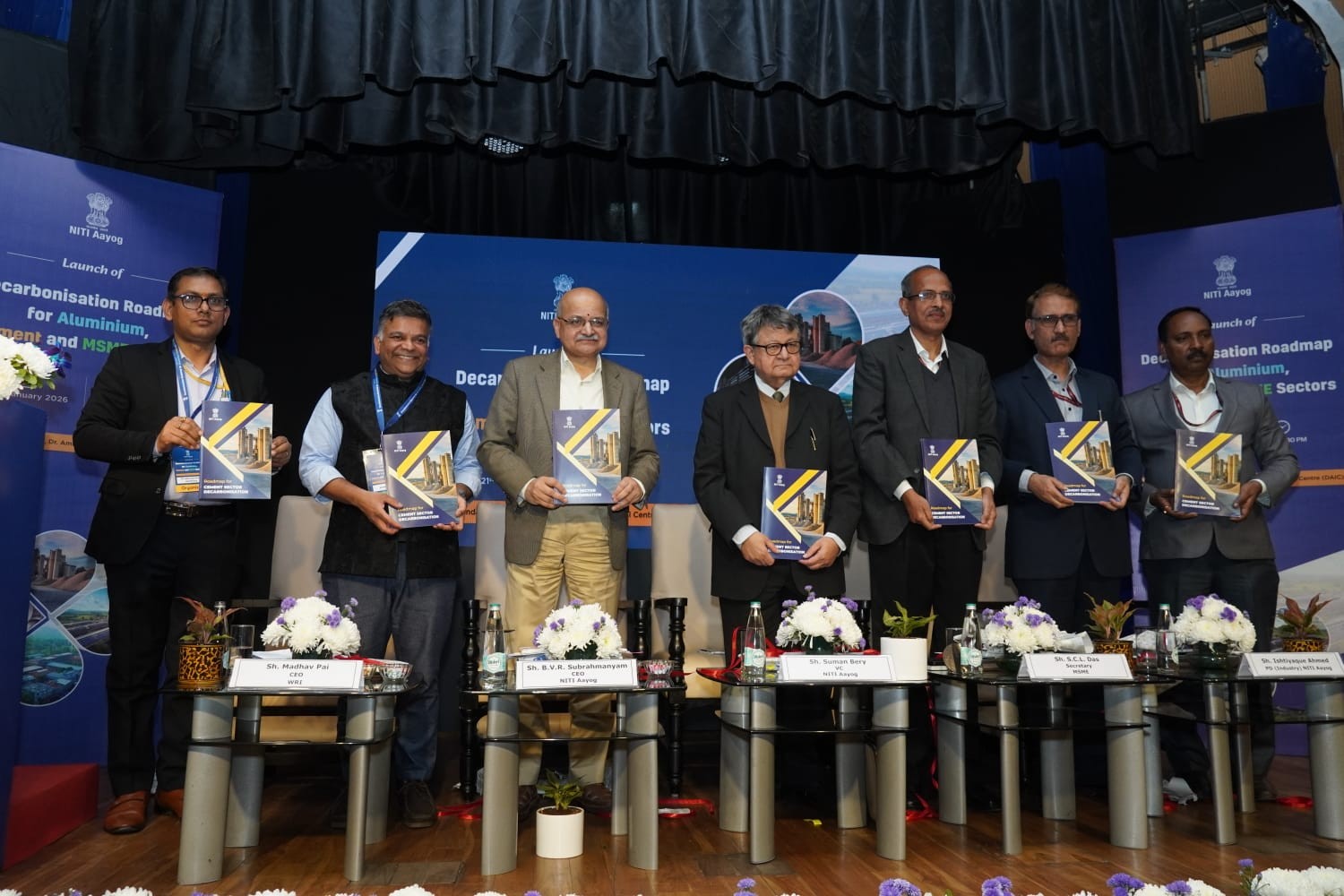
- NITI Aayog released a comprehensive report titled “Roadmap for Green Transition of MSMEs,” outlining a strategic framework for industrial decarbonisation.
- The roadmap serves as a 10-year action plan to guide India's 69 million Micro, Small, and Medium Enterprises (MSMEs) toward sustainable, low-carbon growth.
- This initiative is designed to align the MSME sector with India’s Viksit Bharat 2047 vision and the national commitment to achieve net-zero emissions by 2070.
- The report was developed in consultation with various ministries, industry stakeholders, and knowledge partners like WRI India.
Economic & Environmental Impact of MSMEs
- Economic Backbone: MSMEs contribute nearly 30% to India’s GDP and account for approximately 45.7% of total exports.
- Employment Engine: The sector provides livelihoods to over 250 million people, making it the second-largest employer after agriculture.
- Emissions Profile: In 2022, MSMEs emitted approximately 135 million tonnes of CO2e, largely due to a heavy reliance on fossil fuels for energy.
- Energy Consumption: The sector accounts for more than 25% of the total energy consumed by India's industrial sector.
- Sub-sector Intensity: Five key sub-sectors—Textiles, Paper, Steel Rerolling, Foundry, and Forging—account for more than 60% of total MSME emissions.
Three Decarbonisation Levers
- Energy Efficiency (EE):
- Objective: Target a reduction in specific energy consumption by at least 20% from current baselines.
- Mechanism: Scaling up the Energy Service Company (ESCO) model and a “Pay-As-You-Save” (PAYS) payment structure to eliminate upfront costs for small units.
- Funding: ₹6,000 crore is needed over five years to support technology upgrades.
- Green Electricity (GE):
- Objective: Transition from "brown" (fossil-based) grid power to renewable sources.
- Mechanism: Adoption of Behind-the-Meter (BTM) solar installations, RESCO models, and Green Open Access rules.
- Specific Scheme: Recommends a PM Surya Ghar-like initiative for individual MSMEs, with an initial allocation of ₹7,000 crore for Phase I.
- Alternative Fuels (AF):
- Objective: Shift thermal energy requirements away from coal, pet coke, and furnace oil.
- Mechanism: Utilizing Natural Gas, Biomass, and Compressed Biogas through expanded City Gas Distribution (CGD) networks.
Institutional Mechanism & Implementation
- National Project Management Agency (NPMA): A dedicated agency to be established under the Ministry of MSME to drive on-ground implementation and demand aggregation.
- Cluster-Based Framework: Implementation will focus on industrial clusters to address systemic barriers at scale; the first phase targets 10 high-impact clusters including Surat, Bhiwandi, and Vapi.
- Climate Sister Impact Fund (CSIF): A proposed hybrid debt/equity fund (SEBI Category I/II AIF) to provide concessional capital for emerging high-potential low-carbon technologies.
- MRV Framework: A digital Monitoring, Reporting, and Verification tool to track emissions reductions and achievements, which is critical for risk mitigation and subsidy disbursement.
Additional Info
- Global Regulatory Pressure:
- Carbon Border Adjustment Mechanism (CBAM): The EU's carbon tax (effective 2026) will impose costs on carbon-intensive exports, making green transition a necessity for MSMEs to remain globally competitive.
- Business Responsibility and Sustainability Reporting (BRSR): SEBI mandates the top 1,000 listed Indian firms to report value chain (Scope 3) emissions, forcing MSME suppliers to disclose and reduce their carbon footprint.
- Policy Links:
- ZED Certification: Promoting Zero Defect Zero Effect manufacturing to minimize environmental impact.
- ADEETIE Scheme: Assistance for the deployment of energy-efficient technologies.
- GIFT & SPICE: Providing concessional finance for green transformation and circular economy initiatives respectively.
Sources
National Legislative Index (NLI) to Benchmark Indian Legislatures

What’s the News?
- Lok Sabha Speaker Om Birla announced the creation of a National Legislative Index (NLI) to evaluate and rank the performance of parliamentary and state legislative bodies.
- The initiative was formalized through a resolution adopted at the 86th All India Presiding Officers’ Conference (AIPOC) held in Lucknow.
- The index is designed to foster "healthy competition" among legislatures by benchmarking them against objective parameters related to productivity, transparency, and accountability.
- A dedicated committee will be constituted to define the specific standards and standards for evaluation within a week.
Objectives and Key Parameters
- Performance Benchmarking:
- The NLI will serve as a common yardstick to measure legislative productivity, innovation, and the quality of dialogue across all states.
- It aims to convert complex legislative processes into measurable public data, allowing for external scrutiny and comparison.
- Key Indicators:
- Sittings & Duration: Evaluation of the total number of sitting days and the length of sessions.
- Committee Scrutiny: Tracking the percentage of Bills referred to committees and the time taken for their passage.
- Accountability Tools: Monitoring hours devoted to Question Hour and floor discussions to ensure executive oversight.
- Digitization: Assessing efforts in technological integration, knowledge preservation, and the adoption of paperless proceedings.
AIPOC Resolutions for Legislative Reform
- Minimum Sittings: The conference resolved to build a consensus among political parties to ensure state legislatures hold a minimum of 30 sittings per year.
- One Nation, One Legislative Platform: A target was set to bring the proceedings of all Vidhan Sabhas onto a single integrated digital platform by 2026.
- Capacity Building: Emphasis was placed on strengthening research and analytical support for legislators and training them in the efficient use of digital tools like Artificial Intelligence (AI).
- Viksit Bharat 2047: All legislatures are called to conduct business in a manner that contributes to the national goal of becoming a developed nation by 2047.
Additional Info
- All India Presiding Officers' Conference (AIPOC):
- Established in 1921, it is the apex body for discussing parliamentary procedures and strengthening democratic ethos in India.
- The 86th edition saw participation from 36 Presiding Officers across 24 States and Union Territories.
- Decline in Scrutiny Data:
- Only 10% of Bills were referred to committees in the 17th Lok Sabha, a sharp decline from 71% in the 15th and 60% in the 14th Lok Sabha terms.
- During the 17th Lok Sabha, Question Hour functioned for only 19% of scheduled time in the Lower House and 9% in the Rajya Sabha.
- Digital Infrastructure:
- NeVA (National e-Vidhan Application): A mission-mode project aimed at digitizing all Indian legislatures to improve transparency and accessibility.
- Constitutional Basis:
- Articles 118 and 208: Grant Parliament and State Legislatures the power to frame rules for their own procedures and conduct of business.
Sources
Section 17A of the Prevention of Corruption Act: Supreme Court Split Verdict

What’s the News?
- The Supreme Court of India delivered a split verdict concerning the interpretation and application of Section 17A of the Prevention of Corruption (PC) Act, 1988.
- The two-judge bench disagreed on whether the mandatory requirement for prior government approval to investigate a public servant applies to offenses committed before the 2018 amendment.
- Due to this difference in opinion, the matter has been referred to the Chief Justice of India (CJI) for the constitution of a larger bench to provide a definitive ruling.
Understanding Section 17A
- Introduction: This section was inserted into the PC Act through an amendment in July 2018.
- The Mandate: It stipulates that no police officer shall conduct any inquiry or investigation into any offense allegedly committed by a public servant—where the offense is relatable to any recommendation made or decision taken—without the prior approval of the competent authority.
- Objective: The provision aims to protect honest officials from "policy paralysis" and malicious prosecution by ensuring they are not harassed for legitimate administrative decisions.
- Timeline for Approval: The competent authority is required to convey its decision on the request for approval within three months, which can be extended by one month for specific reasons.
- Exceptions: No prior approval is required for cases involving the arrest of a person on the spot (trap cases) for accepting or attempting to accept any undue advantage.
The Split Verdict & Legal Debate
- Justice Aniruddha Bose’s View:
- Held that the protection under Section 17A cannot be applied retrospectively.
- Stated that if an alleged offense occurred before the 2018 amendment, the requirement for prior sanction does not apply, even if the investigation begins after the amendment.
- Justice Bela M. Trivedi’s View:
- Argued that Section 17A is a substantive provision intended to prevent the abuse of the legal process.
- Emphasized that the benefit of the amendment cannot be extended to those who committed offenses prior to its enactment, as it would grant unintended immunity for past corrupt acts.
- Core Controversy: The debate centers on whether Section 17A is a procedural safeguard (which could apply to current investigations of past acts) or a substantive right (which only applies to acts committed after the law was passed).
Additional Info
- Constitutional Context:
- Article 14 (Right to Equality): In the past, the SC in Subramanian Swamy v. Director, CBI (2014) struck down Section 6A of the DSPE Act (similar to Section 17A), ruling that discriminating between different levels of public servants for prior sanction was unconstitutional.
- Separation of Powers: Section 17A is often viewed through the lens of balancing executive independence with judicial and investigative accountability.
- Related Legal Provisions:
- Section 19 (PC Act): Deals with the requirement of sanction for prosecution (post-investigation), whereas Section 17A applies at the initial inquiry/investigation stage.
- Section 197 (CrPC/BNSS): Provides similar immunity to judges and public servants for acts done in the discharge of official duties, requiring government sanction before a court can take cognizance of an offense.
- Vinit Narain Case (1997): A landmark judgment where the SC emphasized that the CBI must be free from executive control to ensure fair investigations into corruption at high levels.
Sources
Spain Joins Indo-Pacific Oceans Initiative (IPOI) and Elevates Ties with India

What’s the News?
- Spain has officially joined the Indo-Pacific Oceans Initiative (IPOI), becoming the 10th country to participate in this Indian-led framework.
- The announcement was made during the state visit of Spanish Prime Minister Pedro Sánchez to India, marking the first visit by a Spanish PM in nearly two decades.
- Both nations have formally elevated their bilateral relationship to a Strategic Partnership, agreeing to deepen cooperation in defense, maritime security, and sustainable development.
Indo-Pacific Oceans Initiative (IPOI): Framework & Objectives
- Launched by: India at the 2019 East Asia Summit in Bangkok
- Guiding Principle: SAGAR (Security and Growth for All in the Region)
- Nature: Non-treaty, voluntary, and inclusive—not a military alliance
- Core Aim: Promote a free, open, rules-based, and inclusive Indo-Pacific through practical cooperation
Seven Thematic Pillars
- Maritime Security
- Maritime Ecology
- Sustainable Utilisation of Maritime Resources
- Capacity Building & Resource Sharing
- Disaster Risk Reduction & Management
- Science, Technology & Academic Cooperation
- Trade, Connectivity & Maritime Transport
Countries may voluntarily lead or contribute to any pillar based on expertise and interest.
Spain's Role in IPOI?
- Pillar Leadership: Spain has committed to leading the ‘Maritime Resources’ pillar, focusing on the sustainable management and protection of marine biodiversity.
- Strategic Alignment: Spain’s entry aligns with the EU’s Strategy for Cooperation in the Indo-Pacific, promoting a rules-based international order and freedom of navigation.
- Collaborative Focus: By leading this pillar, Spain will work with India to combat Illegal, Unreported, and Unregulated (IUU) fishing and promote the Blue Economy.
Sources
Strongest Solar Radiation Storm in Decades Hits Earth

What’s the News?
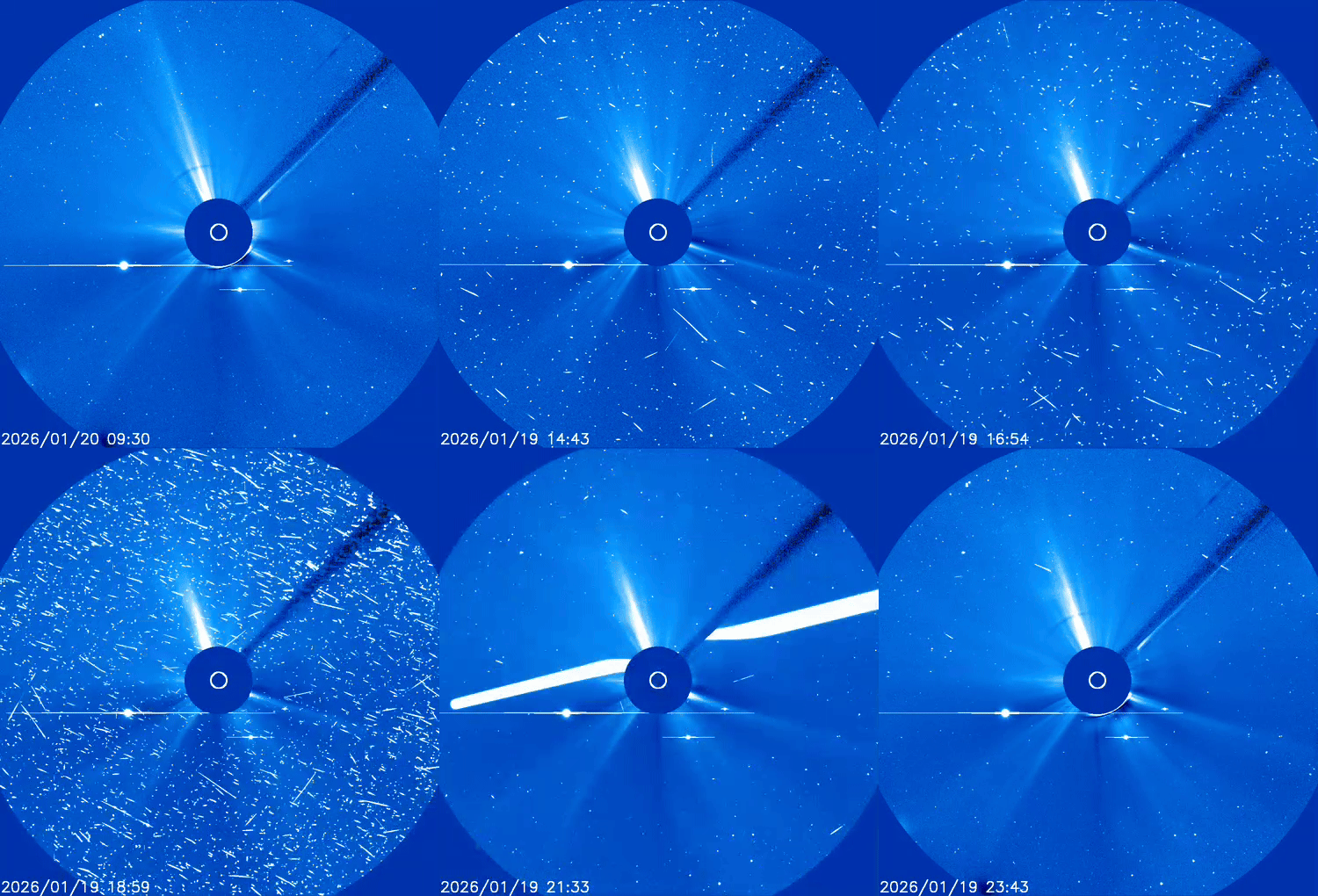
- Earth was recently impacted by the strongest solar radiation storm recorded in over 20 years, triggered by an intense solar flare and a Coronal Mass Ejection (CME) from the Sun.
- The event reached a level S4 (Severe) classification on the NOAA Space Weather Scales, resulting in widespread high-frequency radio blackouts and stunning auroras visible at much lower latitudes than usual.
- Space weather agencies monitored the event closely due to its potential to disrupt satellite operations, transpolar aviation, and the safety of astronauts currently in orbit.
Characteristics of the Solar Event
- Classification: S4 on the NOAA Solar Radiation Storm Scale (S1–S5), based on proton flux ≥10 MeV measured by GOES satellites.
- Origin: Eruption from an active sunspot region, producing the first major X-class flare of 2026.
- Travel Time: High-energy protons reached Earth in minutes to hours, traveling ~150 million km at near-light speed.
- Associated Phenomenon: A G4-level (Severe) geomagnetic storm also occurred, amplifying auroral activity.
Observed Impacts
- Auroras:
- Spectacular displays seen across Germany, Austria, and northern Europe
- Limited visibility in the U.S. due to unfavorable magnetic field orientation of the CME.
- Technology & Infrastructure:
- Aviation: GPS disruptions reported on polar routes; airlines alerted by NOAA’s Space Weather Prediction Center (SWPC).
- Satellites: Temporary data dropouts and sensor interference due to proton bombardment.
- Human Spaceflight: Astronauts on the International Space Station (ISS) moved to shielded modules as a precaution.
- Ground-Level Safety:
- No risk to public health—Earth’s atmosphere and magnetic field fully absorbed radiation
- Not classified as a “ground-level event” (no detectable particles at surface).
Additional Info
- Space Weather Monitoring:
- Aditya-L1: India's first dedicated solar mission, positioned at the Lagrange Point 1 (L1), provides crucial early warnings and data on solar flares and CMEs.
- Solar Flares vs. CMEs: While solar flares are intense bursts of light/radiation (reaching Earth in ~8 minutes), CMEs are massive clouds of plasma and magnetic fields (reaching Earth in 1–3 days).
- Scientific Significance:
- Geomagnetic Storms: Often follow radiation storms, causing the Auroras (Northern/Southern Lights) as solar particles interact with Earth’s magnetic field.
- Carrington Event (1859): The most powerful recorded solar storm in history; a modern equivalent would cause trillion-dollar damages to global power grids and digital infrastructure.
- Related Terms:
- Van Allen Radiation Belts: Two layers of energetic charged particles held in place by Earth's magnetic field that expand during such storms.
- Ionosphere: The layer of Earth's atmosphere that becomes highly charged during solar events, impacting long-distance radio communication.
Sources
January 2026
31 January 202630 January 202629 January 202628 January 202627 January 202626 January 202624 January 202623 January 202622 January 202621 January 202620 January 202619 January 202616 January 202615 January 202614 January 202613 January 202612 January 202610 January 202609 January 202608 January 202607 January 202606 January 202605 January 202603 January 202602 January 202601 January 2026
Archive
October 2026
- 28 October 2026
- 27 October 2026
- 26 October 2026
- 24 October 2026
- 23 October 2026
- 22 October 2026
- 21 October 2026
- 20 October 2026
- 19 October 2026
- 17 October 2026
- 16 October 2026
- 15 October 2026
- 14 October 2026
- 13 October 2026
- 12 October 2026
- 10 October 2026
- 09 October 2026
- 08 October 2026
- 07 October 2026
- 06 October 2026
- 05 October 2026
- 03 October 2026
- 02 October 2026
- 01 October 2026
September 2026
- 30 September 2026
- 29 September 2026
- 28 September 2026
- 26 September 2026
- 25 September 2026
- 24 September 2026
- 23 September 2026
- 22 September 2026
- 21 September 2026
- 19 September 2026
- 18 September 2026
- 17 September 2026
- 16 September 2026
- 15 September 2026
- 12 September 2026
- 11 September 2026
- 10 September 2026
- 09 September 2026
- 08 September 2026
- 07 September 2026
- 05 September 2026
- 04 September 2026
- 03 September 2026
- 02 September 2026
- 01 September 2026
August 2026
- 31 August 2026
- 29 August 2026
- 27 August 2026
- 26 August 2026
- 25 August 2026
- 24 August 2026
- 22 August 2026
- 21 August 2026
- 20 August 2026
- 19 August 2026
- 18 August 2026
- 17 August 2026
- 14 August 2026
- 13 August 2026
- 12 August 2026
- 11 August 2026
- 10 August 2026
- 08 August 2026
- 07 August 2026
- 06 August 2026
- 05 August 2026
- 04 August 2026
- 03 August 2026
- 01 August 2026
July 2026
- 31 July 2026
- 30 July 2026
- 29 July 2026
- 28 July 2026
- 27 July 2026
- 25 July 2026
- 23 July 2026
- 22 July 2026
- 21 July 2026
- 20 July 2026
- 18 July 2026
- 17 July 2026
- 15 July 2026
- 14 July 2026
- 13 July 2026
- 11 July 2026
- 10 July 2026
- 09 July 2026
- 08 July 2026
- 07 July 2026
- 06 July 2026
- 04 July 2026
- 03 July 2026
- 02 July 2026
- 01 July 2026
June 2026
May 2026
April 2026
March 2026
- 31 March 2026
- 30 March 2026
- 28 March 2026
- 27 March 2026
- 26 March 2026
- 25 March 2026
- 24 March 2026
- 23 March 2026
- 21 March 2026
- 20 March 2026
- 19 March 2026
- 18 March 2026
- 17 March 2026
- 16 March 2026
- 14 March 2026
- 13 March 2026
- 12 March 2026
- 11 March 2026
- 10 March 2026
- 09 March 2026
- 07 March 2026
- 06 March 2026
- 05 March 2026
- 03 March 2026
- 02 March 2026
February 2026
- 28 February 2026
- 27 February 2026
- 26 February 2026
- 25 February 2026
- 24 February 2026
- 23 February 2026
- 21 February 2026
- 20 February 2026
- 19 February 2026
- 18 February 2026
- 17 February 2026
- 16 February 2026
- 13 February 2026
- 12 February 2026
- 11 February 2026
- 10 February 2026
- 09 February 2026
- 07 February 2026
- 06 February 2026
- 05 February 2026
- 04 February 2026
- 03 February 2026
- 02 February 2026
January 2026
- 31 January 2026
- 30 January 2026
- 29 January 2026
- 28 January 2026
- 27 January 2026
- 26 January 2026
- 24 January 2026
- 23 January 2026
- 22 January 2026
- 21 January 2026
- 20 January 2026
- 19 January 2026
- 16 January 2026
- 15 January 2026
- 14 January 2026
- 13 January 2026
- 12 January 2026
- 10 January 2026
- 09 January 2026
- 08 January 2026
- 07 January 2026
- 06 January 2026
- 05 January 2026
- 03 January 2026
- 02 January 2026
- 01 January 2026
December 2025
- 31 December 2025
- 30 December 2025
- 29 December 2025
- 27 December 2025
- 26 December 2025
- 24 December 2025
- 23 December 2025
- 22 December 2025
- 20 December 2025
- 19 December 2025
- 18 December 2025
- 17 December 2025
- 16 December 2025
- 15 December 2025
- 13 December 2025
- 12 December 2025
- 11 December 2025
- 10 December 2025
- 09 December 2025
- 08 December 2025
- 05 December 2025
- 04 December 2025
- 03 December 2025
- 02 December 2025
November 2025
- 29 November 2025
- 28 November 2025
- 27 November 2025
- 26 November 2025
- 25 November 2025
- 24 November 2025
- 22 November 2025
- 21 November 2025
- 20 November 2025
- 19 November 2025
- 18 November 2025
- 17 November 2025
- 15 November 2025
- 14 November 2025
- 13 November 2025
- 12 November 2025
- 11 November 2025
- 10 November 2025
- 08 November 2025
- 07 November 2025
- 06 November 2025
- 05 November 2025
- 04 November 2025
- 03 November 2025
- 01 November 2025
October 2025
- 31 October 2025
- 30 October 2025
- 29 October 2025
- 28 October 2025
- 27 October 2025
- 25 October 2025
- 24 October 2025
- 23 October 2025
- 22 October 2025
- 21 October 2025
- 20 October 2025
- 18 October 2025
- 17 October 2025
- 16 October 2025
- 15 October 2025
- 14 October 2025
- 13 October 2025
- 11 October 2025
- 10 October 2025
- 09 October 2025
- 08 October 2025
- 07 October 2025
- 06 October 2025
- 04 October 2025
- 03 October 2025
- 02 October 2025
- 01 October 2025
September 2025
- 30 September 2025
- 29 September 2025
- 27 September 2025
- 26 September 2025
- 25 September 2025
- 24 September 2025
- 23 September 2025
- 22 September 2025
- 20 September 2025
- 19 September 2025
- 18 September 2025
- 17 September 2025
- 16 September 2025
- 15 September 2025
- 13 September 2025
- 12 September 2025
- 11 September 2025
- 10 September 2025
- 09 September 2025
- 08 September 2025
- 06 September 2025
- 05 September 2025
- 04 September 2025
- 03 September 2025
- 02 September 2025
- 01 September 2025
August 2025
- 30 August 2025
- 29 August 2025
- 28 August 2025
- 27 August 2025
- 26 August 2025
- 25 August 2025
- 23 August 2025
- 22 August 2025
- 21 August 2025
- 20 August 2025
- 19 August 2025
- 18 August 2025
- 16 August 2025
- 14 August 2025
- 13 August 2025
- 12 August 2025
- 11 August 2025
- 08 August 2025
- 07 August 2025
- 06 August 2025
- 05 August 2025
- 04 August 2025
- 02 August 2025
- 01 August 2025
July 2025
- 31 July 2025
- 30 July 2025
- 29 July 2025
- 28 July 2025
- 26 July 2025
- 25 July 2025
- 24 July 2025
- 23 July 2025
- 22 July 2025
- 21 July 2025
- 19 July 2025
- 18 July 2025
- 17 July 2025
- 16 July 2025
- 15 July 2025
- 12 July 2025
- 11 July 2025
- 10 July 2025
- 09 July 2025
- 07 July 2025
- 05 July 2025
- 04 July 2025
- 03 July 2025
- 02 July 2025
- 01 July 2025
June 2025
- 30 June 2025
- 28 June 2025
- 27 June 2025
- 26 June 2025
- 25 June 2025
- 24 June 2025
- 23 June 2025
- 21 June 2025
- 20 June 2025
- 19 June 2025
- 18 June 2025
- 17 June 2025
- 16 June 2025
- 14 June 2025
- 13 June 2025
- 12 June 2025
- 11 June 2025
- 10 June 2025
- 09 June 2025
- 07 June 2025
- 06 June 2025
- 05 June 2025
- 04 June 2025
- 03 June 2025
- 02 June 2025
May 2025
April 2025
- 30 April 2025
- 29 April 2025
- 28 April 2025
- 26 April 2025
- 25 April 2025
- 24 April 2025
- 23 April 2025
- 22 April 2025
- 21 April 2025
- 19 April 2025
- 18 April 2025
- 17 April 2025
- 16 April 2025
- 15 April 2025
- 14 April 2025
- 12 April 2025
- 11 April 2025
- 10 April 2025
- 09 April 2025
- 08 April 2025
- 07 April 2025
- 05 April 2025
- 04 April 2025
- 03 April 2025
- 02 April 2025
- 01 April 2025
March 2025
- 31 March 2025
- 29 March 2025
- 28 March 2025
- 27 March 2025
- 26 March 2025
- 25 March 2025
- 24 March 2025
- 22 March 2025
- 21 March 2025
- 20 March 2025
- 19 March 2025
- 18 March 2025
- 17 March 2025
- 15 March 2025
- 13 March 2025
- 12 March 2025
- 11 March 2025
- 10 March 2025
- 08 March 2025
- 07 March 2025
- 06 March 2025
- 05 March 2025
- 04 March 2025
- 03 March 2025
- 01 March 2025
February 2025
- 28 February 2025
- 27 February 2025
- 26 February 2025
- 25 February 2025
- 24 February 2025
- 22 February 2025
- 21 February 2025
- 20 February 2025
- 19 February 2025
- 18 February 2025
- 17 February 2025
- 15 February 2025
- 14 February 2025
- 13 February 2025
- 12 February 2025
- 11 February 2025
- 10 February 2025
- 08 February 2025
- 07 February 2025
- 06 February 2025
- 05 February 2025
- 04 February 2025
- 03 February 2025
- 01 February 2025
January 2025
- 31 January 2025
- 30 January 2025
- 29 January 2025
- 28 January 2025
- 27 January 2025
- 25 January 2025
- 24 January 2025
- 23 January 2025
- 22 January 2025
- 21 January 2025
- 20 January 2025
- 18 January 2025
- 17 January 2025
- 16 January 2025
- 15 January 2025
- 14 January 2025
- 13 January 2025
- 11 January 2025
- 10 January 2025
- 09 January 2025
- 08 January 2025
- 07 January 2025
- 06 January 2025
- 04 January 2025
- 03 January 2025
- 02 January 2025
- 01 January 2025