
Current Affairs
Stay updated with the latest national and international events.
22 August 2026
India Notifies ₹62,500 Crore Mobile Phone Manufacturing Scheme

What’s the News?
- The Ministry of Electronics and Information Technology (MeitY) has notified the Mobile Phone Manufacturing Scheme (MPMS) with an outlay of ₹62,500 crore.
- The five-year scheme aims to expand mobile-phone production, increase Domestic Value Addition (DVA), strengthen local supply chains and improve India’s global competitiveness.
- It also provides dedicated support for Indian mobile-phone brands, including incentives for indigenous design, R&D and intellectual property creation.
Mobile Phone Manufacturing Scheme (MPMS)
- Nodal Ministry: Ministry of Electronics and Information Technology (MeitY)
- Outlay: ₹62,500 crore
- Tenure: FY 2026-27 to FY 2030-31
- Incentive: 2.25%–5% of eligible sales of mobile phones manufactured in India.
- Additional domestic-sourcing incentive: Up to 1.5%.
- Indian design & R&D: Eligible Indian brands can receive an additional 3% incentive.
Two Target Segments
Target Segment 1: Mobile Phone Manufacturing
- Covers mobile-phone manufacturers, including Electronics Manufacturing Services (EMS) companies registered in India.
- Minimum turnover requirement: ₹10,000 crore in FY 2025-26.
- Existing brands must achieve incremental sales above their FY 2025-26 sales:
- ₹5,000 crore in FY 2026-27
- Rising progressively to ₹25,000 crore in FY 2030-31.
- New brands become eligible after achieving annual Indian sales of ₹10,000 crore.
Target Segment 2: Indian Mobile Phone Brands
- Minimum turnover requirement: ₹1,000 crore in FY 2025-26.
- An Indian brand must:
- Be registered/incorporated in India.
- Hold its IP and trademark in India.
- Have management control with Indian citizens.
- Have more than 51% Indian shareholding.
- Maintain in-house R&D and design capabilities in India.
- Eligible Indian brands receive 5% incentive on eligible sales, besides domestic-sourcing incentives and an additional 3% for Indian design and R&D.
- No minimum annual threshold-sales requirement applies to eligible Indian brands.
Domestic Sourcing Incentive
Manufacturers can receive an additional incentive of up to 1.5% by localising specified components/sub-assemblies in at least 25% of total mobile-phone units sold during a financial year.
- Enclosures: 0.5%
- Display modules: 0.3%
- Camera modules: 0.3%
- Batteries, including cells: 0.2%
- USB cables/connectors: 0.2%
Additional Info
- Predecessor: Production Linked Incentive Scheme for Large Scale Electronics Manufacturing (PLI-LSEM), whose tenure ended in FY 2025-26.
- Mobile-phone production under the earlier programme reached about ₹11.61 lakh crore, against a target of ₹8.12 lakh crore.
- Investment exceeded ₹20,500 crore, against a target of ₹7,000 crore.
- India’s mobile manufacturing position:
- India is the world’s second-largest mobile-phone manufacturer by volume.
- Around 99.2% of mobile phones used in India are manufactured domestically.
- Electronics manufacturing has expanded about 7 times, while electronics exports have increased about 11 times since FY 2014-15.
- Smartphones have emerged as India’s single-largest exported product category, overtaking traditional products such as diesel fuel and cut diamonds.
Sources
Paradip Port Gets ₹427.80 Crore Infrastructure Boost and 18.5-Metre Deep Draft
What’s the News?
- Union Minister for Ports, Shipping and Waterways Sarbananda Sonowal inaugurated major infrastructure projects worth ₹427.80 crore at Paradip Port Authority (PPA), Odisha.
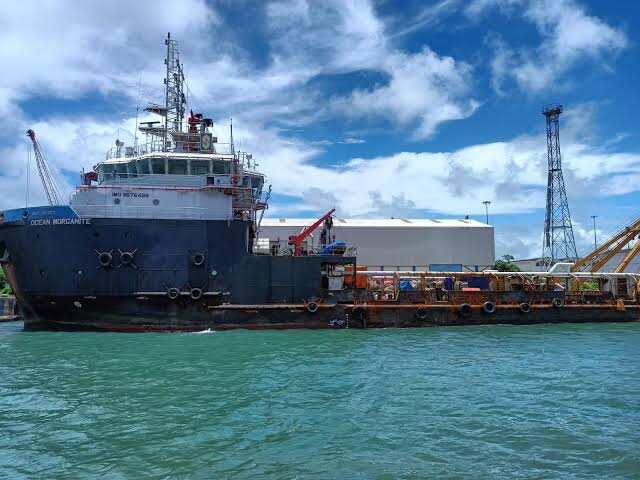
- The key development is a ₹352 crore capital-dredging project, enabling an 18.5-metre deep draft and allowing fully laden Capesize vessels to enter the inner harbour.
- PPA also signed concession agreements for three berth-mechanisation projects worth ₹1,580.36 crore, adding 23 MTPA of mechanised cargo-handling capacity.
- The port also marked the plantation of its one-millionth tree.
Major Infrastructure Projects
-
Capital Dredging — ₹352 crore
- Deepens the navigational draft to 18.5 metres.
- Enables handling of fully laden Capesize vessels.
- Expected to improve economies of scale and reduce vessel turnaround and logistics costs.
-
Atharbanki Second New Bridge — ₹24.89 crore
- 500-metre, three-lane bridge across Atharbanki Creek.
- Includes footpaths and a dedicated pipeline corridor.
- Designed to ease congestion on a route carrying nearly 3,000 trucks per day.
-
Advanced Vessel Traffic Management and Information System — ₹15.50 crore
- Developed with the National Technology Centre for Ports, Waterways and Coasts (NTCPWC), IIT Madras.
- Integrates AI, AIS, solid-state radar, CCTV, oil-spill monitoring and 3D visualisation.
- Monitors vessel movement up to 20 nautical miles.
-
PNG Supply — ₹20 crore
- Developed with Bharat Petroleum Corporation Ltd.
- First phase covers 546 residential quarters.
- Paradip is set to become the first major port to provide piped natural gas to its residential township.
-
Other works include a ₹12.18 crore administrative-building façade upgrade and a ₹2.10 crore sports hostel.
₹1,580.36 Crore Mechanisation Projects
PPA signed three concession agreements as part of its objective of increasing berth mechanisation from about 80% to 100% by 2030.
- South Quay Berth
- Capacity: 5 MTPA
- Investment: ₹498.69 crore
- Mode: Build-Operate-Transfer (BOT)
- Multipurpose Berth
- Capacity: 8 MTPA
- Investment: ₹630.67 crore
- Mode: BOT
- Captive CQ-III Berth
- Capacity: 10 MTPA
- Investment: ₹451 crore
Total additional mechanised capacity: 23 MTPA.
The projects are expected to enable faster and cleaner cargo handling while reducing vessel turnaround time and logistics costs.
Deep-Draft & Capesize Vessels
- Draft/Draught: Vertical distance between the waterline and the lowest point of a ship's hull; deeper drafts allow larger, more heavily loaded ships.
- Capesize vessels: Large bulk carriers generally used for commodities such as coal and iron ore.
- Paradip's 18.5-metre draft allows fully laden Capesize vessels to access its inner harbour, reducing the requirement for partial loading or cargo transfer and improving freight economics.
Paradip Port
- Location: Paradip, Jagatsinghpur district, Odisha, on the Bay of Bengal, near the Mahanadi river system.
- It is the only Major Port in Odisha.
- Administrative Ministry: Ministry of Ports, Shipping and Waterways.
- Authority: Paradip Port Authority.
- Functions as an autonomous statutory body under the Major Port Authorities Act, 2021.
- Foundation stone was laid in 1962.
- Became India's 8th Major Port in 1966 and the first Major Port on India's east coast commissioned after Independence.
- Cargo handled in FY 2025-26: 156.45 MMT, its highest-ever annual throughput; it ranked second among India's Major Ports by cargo volume.
Additional Info
- Major Port Authorities Act, 2021
- Provides for regulation, operation and planning of India's Major Ports.
- Vests their administration, control and management in the Boards of Major Port Authorities.
- Intended to provide greater operational and financial autonomy to Major Ports.
- Constitutional Context
- Union List, Entry 27: Ports declared by or under Parliamentary law to be Major Ports, including their delimitation and port authorities.
- State List, Entry 31: Ports other than those declared as Major Ports.
- Maritime India Vision 2030 (MIV 2030)
- Government roadmap for modernising port infrastructure, improving logistics efficiency and strengthening India's maritime sector.
- Focus areas include higher port capacity, lower turnaround time, coastal shipping and better multimodal connectivity.
- Green Initiative
- Paradip Port has completed plantation of its one-millionth tree.
- Recent plantation drives have added nearly one lakh trees annually, supporting green-cover expansion and biodiversity around the port.
Sources
NBSS&LUP Develops India’s First Digital Soil Texture Map
What’s the News?
- The ICAR–National Bureau of Soil Survey and Land Use Planning (NBSS&LUP) has developed India’s first digital soil texture map.
- The map provides hectare-level soil-texture information across the country, enabling highly localised assessment of agricultural land.
- It integrates field observations, remote sensing, satellite imagery and Artificial Intelligence (AI) for digital soil mapping.
- The database can help farmers identify suitable crops and assist governments in crop planning, land-use planning and location-specific agricultural policy.
Soil Texture Map
- Soil texture refers to the relative proportions of:
- Sand
- Silt
- Clay
- Their relative proportions determine different textural classes, such as sandy, clayey and loamy soils.
- Soil texture is an important physical property because it influences:
- Water infiltration and drainage
- Water-holding capacity
- Soil aeration
- Root penetration
- Nutrient retention
- Irrigation requirements
- Crop suitability
- Texture ≠ Structure
- Soil texture: Proportion of sand, silt and clay.
- Soil structure: Arrangement of soil particles into aggregates.
How Was the Map Developed?
NBSS&LUP combined multiple sources and technologies:
- Field studies: Ground-level soil observations and samples.
- Remote sensing: Collection of information about land and soil characteristics from a distance.
- Satellite imagery: Provides spatial and spectral information over large areas.
- Artificial Intelligence: Helps analyse large datasets and predict soil characteristics across areas where direct observations are limited.
This approach is known broadly as Digital Soil Mapping, which combines field data with geospatial information and predictive modelling.
Why is Hectare-Level Mapping Important?
- Indian farm holdings are generally small, while soil properties can vary considerably even across short distances.
- Hectare-level information can therefore support:
- Plot-specific crop selection
- Village-level agricultural planning
- Better irrigation planning
- Identification of suitable areas for particular crops
- Targeted allocation of agricultural resources
- Region-specific land-use policies
- ICAR Director General Dr M. L. Jat described the soil database and information system created by NBSS&LUP as an important foundation for crop improvement, agricultural development and decision-support systems.
NBSS&LUP
- Full Name: National Bureau of Soil Survey and Land Use Planning
- Headquarters: Nagpur, Maharashtra
- Functions under the Indian Council of Agricultural Research (ICAR).
- Falls under ICAR's Natural Resource Management division.
- Major functions include:
- Soil survey and classification
- Soil-resource mapping
- Land-resource assessment
- Land-use planning
- Soil and water conservation planning
- Development of soil-information databases
- It attained its present bureau status in 1976 and completed 50 years in 2026.
Other Major Soil-Mapping Initiatives
Digital Soil Depth Map
- Before the soil texture map, NBSS&LUP developed India’s first digital soil depth map.
- It has a spatial resolution of 90 metres.
- It was prepared using data from 25,683 soil profiles and machine-learning models.
- Soil depth is important for determining:
- Rooting depth
- Available soil-water storage
- Crop suitability
- Land-resource planning.
National Soil Spectral Library
- NBSS&LUP has also developed the National Soil Spectral Library (NSSL).
- Contains geotagged hyperspectral information from more than 36,000 Indian soil samples.
- Uses spectroscopy and AI for faster prediction of important soil properties.
- ICAR reports accuracy of over 80% for prediction of key soil characteristics.
Next: Soil Water-Retention Maps
- NBSS&LUP is developing high-resolution maps of soil water-retention and absorption capacity.
- Initial emphasis is on Maharashtra and southern states, where variations in soil texture and soil depth strongly influence water availability.
- Such information can support:
- Irrigation scheduling
- Drought management
- Crop selection
- Efficient water use
- Climate-resilient agriculture.
Additional Info
- Indian Council of Agricultural Research (ICAR)
- Apex organisation for coordinating agricultural research and education in India.
- Functions under the Department of Agricultural Research and Education (DARE).
- Ministry: Ministry of Agriculture & Farmers Welfare.
- NBSS&LUP is one of ICAR's National Bureaux.
- NBSS&LUP's Earlier Mapping Work
- Soil-resource map of India: 1:1 million scale.
- State soil-resource maps: 1:250,000 scale.
- Soil-resource maps for several districts: 1:50,000 scale.
- It has also delineated 20 Agro-Ecological Regions and 60 Agro-Ecological Sub-Regions of India.
Sources
PNGRB Authorises 1,800-km LPG Pipeline Network Worth ₹7,000 Crore
What’s the News?
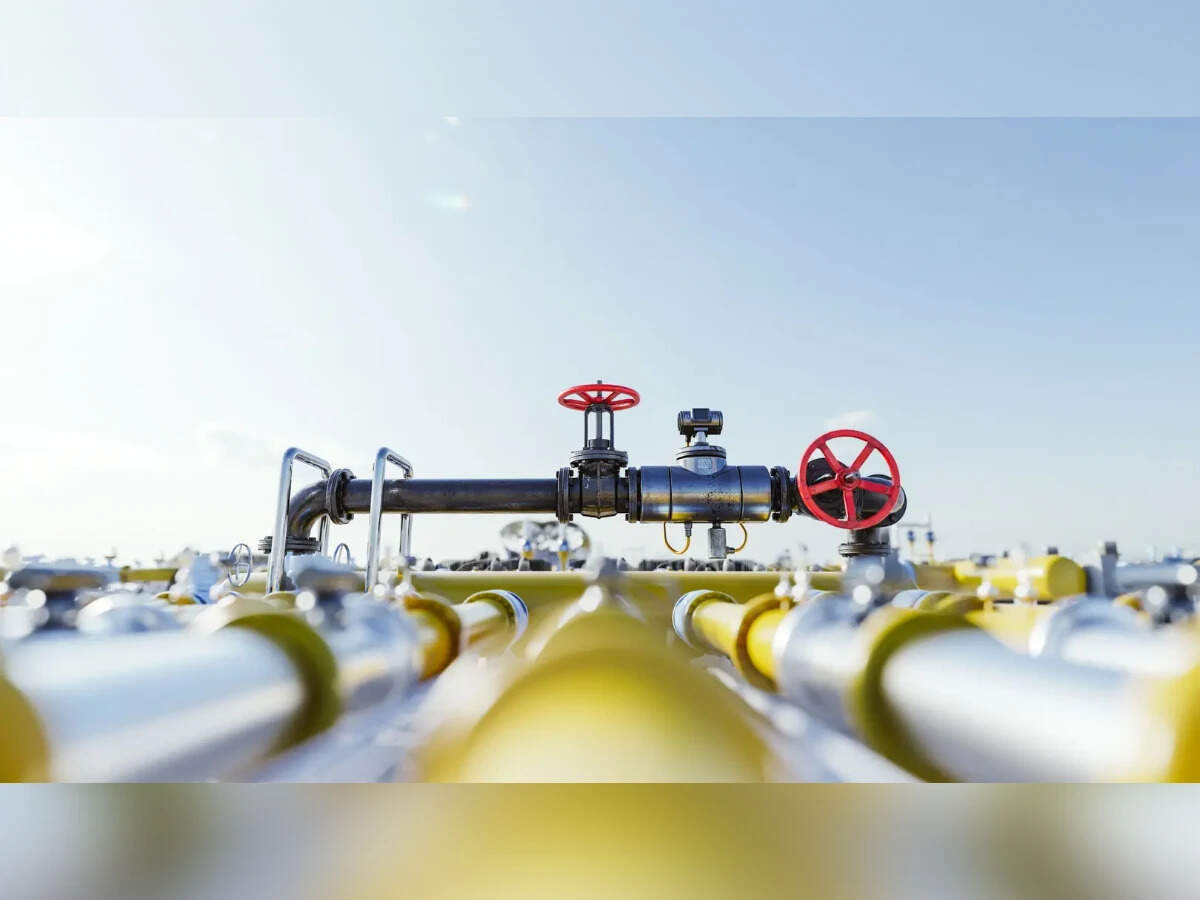
- The Petroleum and Natural Gas Regulatory Board (PNGRB) has authorised development of nearly 1,800 km of new LPG pipelines involving an estimated investment of ₹7,000 crore.
- The three pipelines will be developed by GAIL (India) Ltd. across Telangana, Maharashtra, Uttar Pradesh, Uttarakhand, Karnataka and Goa.
- On completion, India's PNGRB-authorised common-carrier LPG pipeline network will increase from about 7,700 km to 9,500 km, an expansion of nearly 23.5%.
- The projects aim to improve LPG supply security, reduce dependence on road tankers and lower logistics costs, road-safety risks and emissions.
Three LPG Pipeline Corridors
| Pipeline | Length | States Covered |
|---|---|---|
| Cherlapally–Nagpur | 556 km | Telangana–Maharashtra |
| Jhansi–Sitarganj | 611 km | Uttar Pradesh–Uttarakhand |
| Shikrapur–Goa & Hubli | 633 km | Maharashtra–Goa–Karnataka |
| Total | ~1,800 km | 6 States |
All three projects have been authorised for development by GAIL (India) Ltd.
Common-Carrier Pipeline
- A common carrier pipeline is infrastructure in which capacity beyond an entity's own requirement is made available to other eligible users under regulated conditions.
- It promotes:
- Third-party access
- Better utilisation of pipeline infrastructure
- Competition among market participants
- Reduced duplication of infrastructure
- PNGRB regulates access and transportation tariffs for common-carrier pipelines.
PNGRB
- Full Form: Petroleum and Natural Gas Regulatory Board
- Statutory Basis: Petroleum and Natural Gas Regulatory Board Act, 2006
- It is India's regulator for specified downstream petroleum and natural-gas activities.
- Major functions include:
- Authorising petroleum-product and natural-gas pipelines.
- Regulating common and contract carriers.
- Regulating City Gas Distribution networks.
- Protecting consumer interests and promoting competition.
- Prescribing technical and safety standards.
- The Act covers refining, processing, storage, transportation, distribution, marketing and sale of petroleum, petroleum products and natural gas, but excludes production of crude oil and natural gas.
Additional Info
- GAIL (India) Ltd.
- A Maharatna Central Public Sector Enterprise (CPSE).
- Major businesses include natural-gas transmission and marketing, petrochemicals, LPG and other liquid hydrocarbons, and LPG transmission.
- Kandla–Gorakhpur LPG Pipeline
- Length: 2,757 km.
- It is India's longest LPG pipeline.
- Its earlier authorisation forms an important part of India's expanding LPG pipeline infrastructure.
Sources
Centre Restricts Chlorpheniramine–Phenylephrine FDCs for Children Under Four

What’s the News?
- The Union Ministry of Health and Family Welfare has restricted the manufacture, sale and distribution of all Fixed-Dose Combination (FDC) formulations containing both Chlorpheniramine Maleate and Phenylephrine Hydrochloride for use in children below 4 years.
- Manufacturers must carry the warning: “Fixed Dose Combination shall not be used in children below four years of age” on the label, package insert and promotional literature.
- The government cited potential risks to young children and the availability of safer alternatives.
- The decision followed recommendations of an Expert Committee and the Drugs Technical Advisory Board (DTAB).
What Has Changed?
- An earlier notification, S.O. 1717(E), imposed the warning on the specific FDC of Chlorpheniramine Maleate + Phenylephrine Hydrochloride.
- The latest notification, S.O. 4595(E), widens the restriction to all FDC formulations containing these two ingredients, including combinations containing additional drugs.
- Thus, it is an age-specific restriction, not a blanket prohibition on all cough-and-cold medicines or on these medicines for every age group.
What are the Two Drugs?
Chlorpheniramine Maleate
- A first-generation antihistamine/H1-receptor antagonist.
- Used to relieve symptoms associated with allergies and upper-respiratory conditions.
Phenylephrine Hydrochloride
- A nasal decongestant.
- Used for temporary relief of nasal and sinus congestion associated with colds or allergies.
Fixed-Dose Combination (FDC)
- An FDC contains two or more active pharmaceutical ingredients (APIs) in a single combination for a particular therapeutic indication.
- Potential advantages include simpler treatment regimens and improved patient compliance.
- However, an FDC must have adequate justification regarding safety, efficacy and rationality; combining individually approved drugs does not automatically make the combination appropriate.
Section 26A of Drugs and Cosmetics Act, 1940
- The restriction has been issued under Section 26A of the Drugs and Cosmetics Act, 1940.
- It empowers the Central Government, in the public interest, to regulate, restrict or prohibit the manufacture, sale or distribution of a drug or cosmetic where:
- its use is likely to pose risks to humans or animals;
- it lacks the therapeutic value claimed; or
- its ingredients or quantities lack therapeutic justification.
- The present notification becomes operative through publication in the Official Gazette.
DTAB & CDSCO
Drugs Technical Advisory Board (DTAB)
- Constituted under Section 5 of the Drugs and Cosmetics Act, 1940.
- It is the highest statutory technical advisory body on matters relating to drugs and cosmetics under the Act.
- DTAB examined the proposal before recommending the age-specific restriction.
Central Drugs Standard Control Organisation (CDSCO)
- India's National Regulatory Authority for drugs.
- Functions under the Directorate General of Health Services (DGHS), Ministry of Health & Family Welfare.
- Key responsibilities include:
- Approval of new drugs.
- Regulation of clinical trials.
- Setting drug standards.
- Quality control of imported drugs.
- Coordination with State Drug Control Organisations.
Additional Info
- Regulatory nature: The government has not prohibited manufacture or sale of these FDCs altogether; manufacture, sale and distribution are permitted subject to the mandatory warning and the prohibition on use in children below four years.
- The Centre had also recently prohibited 16 other FDCs considered to have inadequate therapeutic justification, reflecting wider scrutiny of irrational or unsafe drug combinations.
Sources
National Teachers’ Awards 2026 Announced for 48 School Teachers

What’s the News?
- 48 school teachers have been selected for the National Teachers’ Awards 2026.
- President Droupadi Murmu will confer the awards at Vigyan Bhawan, New Delhi, on 5 September — National Teachers’ Day.
- The awardees comprise 26 men and 22 women and represent 27 States, 7 Union Territories and 6 Central Government organisations.
- They were selected through a three-stage process at the District, State/Organisation and National levels.
National Teachers’ Awards
- Instituted: 1958
- Nodal Ministry: Ministry of Education
- Implementing Department for school teachers: Department of School Education & Literacy (DoSE&L)
- Purpose: To recognise teachers whose work has:
- Improved the quality of school education.
- Enriched students’ learning experiences.
- Demonstrated commitment, innovation and effective teaching practices.
- The awards are traditionally presented by the President of India on National Teachers’ Day.
Award Components
Each National Teachers’ Award carries:
- Cash prize: ₹50,000
- Silver medal
- Certificate of merit
2026 Awardees
| Particular | 2026 |
|---|---|
| Total school teachers | 48 |
| Male | 26 |
| Female | 22 |
| States represented | 27 |
| Union Territories represented | 7 |
| Central Government organisations | 6 |
- Uttar Pradesh has the highest representation among States with 3 awardees.
- Bihar, Madhya Pradesh, Maharashtra, Rajasthan and West Bengal have 2 awardees each.
- Awardees come from diverse school systems, including:
- Government schools
- PM SHRI Schools
- Kendriya Vidyalayas (KVs)
- Jawahar Navodaya Vidyalayas (JNVs)
- Eklavya Model Residential Schools (EMRS)
- Sainik Schools
- CBSE and CISCE school systems.
Selection Process
The National Teachers’ Awards follow a transparent online selection mechanism:
- Self-nomination by eligible teachers through the Ministry of Education portal.
- District/Regional Selection Committee shortlists applicants.
- State/Organisation Selection Committee forwards selected nominations.
- An Independent National Jury evaluates shortlisted candidates.
- Final names are approved by the Union Education Minister.
Evaluation Criteria
- Objective Criteria: 10 marks
- Performance Criteria: 90 marks
Performance assessment covers areas such as:
- Innovative teaching practices
- Improvement in learning outcomes
- Experiential learning
- Development/use of teaching-learning material
- Co-curricular activities
- Wider contribution to students and the school community.
Eligibility
Teachers and Heads of recognised primary, middle, high and higher-secondary schools are eligible, including those from:
- State/UT government and aided schools
- Local-body schools
- Kendriya Vidyalayas
- Jawahar Navodaya Vidyalayas
- Sainik Schools
- Atomic Energy Education Society schools
- CBSE-affiliated schools
- CISCE-affiliated schools.
Key conditions include:
- Generally, only regular teachers and Heads of Schools are eligible.
- Contractual teachers and Shiksha Mitras are not eligible.
- Teachers indulging in private tuition are not eligible.
- The award operates primarily through self-nomination.
National Teachers’ Day
- Observed: 5 September every year
- Marks the birth anniversary of Dr Sarvepalli Radhakrishnan, born on 5 September 1888.
- Radhakrishnan was:
- First Vice-President of India
- Second President of India
- Philosopher, scholar and teacher.
- National Teachers’ Day recognises the contribution of teachers to education and nation-building.
Additional Info
- Expansion of National Teachers’ Awards
- From 2023, the award framework was expanded beyond school teachers to also recognise:
- Teachers of Higher Education Institutions/Polytechnics.
- Skill trainers under the Ministry of Skill Development & Entrepreneurship.
- From 2023, the award framework was expanded beyond school teachers to also recognise:
- School Award Administration
- Conducted by the Department of School Education & Literacy under the Ministry of Education.
- Selection is conducted through an online, multi-level evaluation process.
Sources
BRICS Tourism Ministers Adopt Jaipur Declaration
What’s the News?
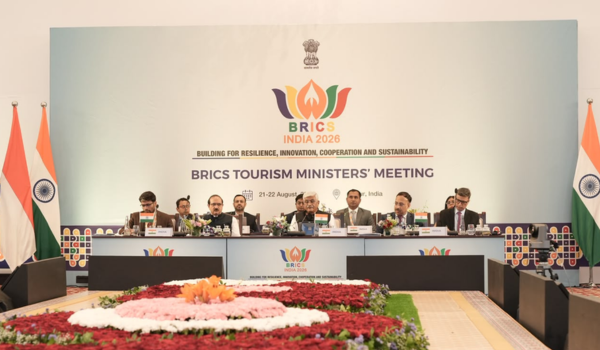
- The BRICS Tourism Ministers’ Meeting, held under India’s BRICS Chairship 2026, concluded in Jaipur, Rajasthan, with the unanimous adoption of the Jaipur Declaration.
- The declaration, formally the BRICS Tourism Ministers’ Communiqué 2026, provides a framework for practical tourism cooperation among BRICS countries.
- The meeting was chaired by Gajendra Singh Shekhawat, Union Minister for Culture and Tourism.
- It marked the culmination of the BRICS Tourism Track 2026, conducted under the theme “Building for Resilience, Innovation, Cooperation and Sustainability.”
Jaipur Declaration
The declaration identifies four priority areas for tourism cooperation:
- Artificial Intelligence and Tourism
- Sustainability and Responsible Tourism
- Tourism Skilling and Capacity Building
- Tourism Exchanges and Seamless Travel Facilitation
Artificial Intelligence & Tourism
- Promotes responsible, safe and human-centred AI and digital technologies.
- Cooperation will focus on:
- Tourism planning
- Destination management
- Visitor services
- Multilingual communication
- Travel facilitation
- It aims to use technology while maintaining human-centric and responsible tourism practices.
Sustainable & Responsible Tourism
- Focuses on tourism that protects:
- Local communities
- Environment
- Natural resources
- Cultural heritage
- Addresses concerns associated with over-tourism at major destinations.
- Encourages community-centred tourism so that economic benefits reach local populations.
- India is strengthening its Destination Management Organisation (DMO) model, drawing on experience from Ekta Nagar, Gujarat.
Skilling & Capacity Building
- BRICS countries will strengthen cooperation in training:
- Tourism professionals
- Youth
- Guides and hospitality workers
- Other tourism-sector stakeholders
- Training will focus on evolving technology, traveller expectations and new tourism services.
- The objective is to create a skilled workforce capable of supporting a competitive and sustainable tourism industry.
Seamless Travel Facilitation
- Seeks to make travel among BRICS countries easier and more convenient.
- Cooperation may involve:
- Improved connectivity
- Digital travel services
- Simplified travel processes
- Greater tourism exchanges
- Visa policies remain the sovereign responsibility of individual member countries; the declaration does not create a common BRICS visa.
- India's e-Visa system was highlighted as an example of technology-based travel facilitation.
Other Areas of Cooperation
The Jaipur Declaration also seeks greater BRICS collaboration in:
- Tourism investment
- Development of diversified tourism products
- Exchange of tourism data and best practices
- Cultural cooperation
- Exchange of artists and cultural groups
- Preservation of shared cultural heritage
- Strengthening people-to-people contacts.
BRICS Tourism Working Group
- The ministerial declaration was preceded by the 2nd BRICS 2026 Tourism Working Group (TWG) Meeting in Jaipur.
- The TWG was chaired by Bhuvnesh Kumar, Secretary, Ministry of Tourism.
- The 1st Tourism Working Group Meeting had been held virtually.
- The Working Group developed the four thematic priorities that formed the basis of the Jaipur Declaration.
India & BRICS Tourism
- India emphasised tourism as a contributor to Viksit Bharat @2047.
- Tourism can spread economic activity beyond major cities to towns, villages and remote regions.
- It supports livelihoods across sectors such as:
- Hotels and homestays
- Taxi services
- Tourist guides
- Artisans and weavers
- Farmers
- Local entrepreneurs
- India's domestic tourist visits have more than tripled over the past decade.
- India also held bilateral tourism discussions with Brazil, Iran, South Africa and the UAE on the sidelines of the meeting.
Additional Info
- BRICS
- Originally formed by Brazil, Russia, India and China (BRIC).
- South Africa joined in 2011, leading to the name BRICS.
- Current full membership comprises 11 countries:
- Brazil
- Russia
- India
- China
- South Africa
- Egypt
- Ethiopia
- Iran
- United Arab Emirates
- Saudi Arabia
- Indonesia.
- Indonesia became the newest full member after its entry was formally announced in 2025.
- BRICS is an informal intergovernmental grouping; it has no constitutive treaty, permanent secretariat or own budget.
- Cooperation broadly rests on three pillars:
- Political and security cooperation
- Economic and financial cooperation
- Cultural and people-to-people cooperation.
- India’s Chairship
- India holds the BRICS Chairship in 2026.
- The Jaipur meeting formed part of India's sectoral agenda for deepening cooperation among BRICS economies.
Sources
August 2026
Archive
October 2026
- 28 October 2026
- 27 October 2026
- 26 October 2026
- 24 October 2026
- 23 October 2026
- 22 October 2026
- 21 October 2026
- 20 October 2026
- 19 October 2026
- 17 October 2026
- 16 October 2026
- 15 October 2026
- 14 October 2026
- 13 October 2026
- 12 October 2026
- 10 October 2026
- 09 October 2026
- 08 October 2026
- 07 October 2026
- 06 October 2026
- 05 October 2026
- 03 October 2026
- 02 October 2026
- 01 October 2026
September 2026
- 30 September 2026
- 29 September 2026
- 28 September 2026
- 26 September 2026
- 25 September 2026
- 24 September 2026
- 23 September 2026
- 22 September 2026
- 21 September 2026
- 19 September 2026
- 18 September 2026
- 17 September 2026
- 16 September 2026
- 15 September 2026
- 12 September 2026
- 11 September 2026
- 10 September 2026
- 09 September 2026
- 08 September 2026
- 07 September 2026
- 05 September 2026
- 04 September 2026
- 03 September 2026
- 02 September 2026
- 01 September 2026
August 2026
- 31 August 2026
- 29 August 2026
- 27 August 2026
- 26 August 2026
- 25 August 2026
- 24 August 2026
- 22 August 2026
- 21 August 2026
- 20 August 2026
- 19 August 2026
- 18 August 2026
- 17 August 2026
- 14 August 2026
- 13 August 2026
- 12 August 2026
- 11 August 2026
- 10 August 2026
- 08 August 2026
- 07 August 2026
- 06 August 2026
- 05 August 2026
- 04 August 2026
- 03 August 2026
- 01 August 2026
July 2026
- 31 July 2026
- 30 July 2026
- 29 July 2026
- 28 July 2026
- 27 July 2026
- 25 July 2026
- 23 July 2026
- 22 July 2026
- 21 July 2026
- 20 July 2026
- 18 July 2026
- 17 July 2026
- 15 July 2026
- 14 July 2026
- 13 July 2026
- 11 July 2026
- 10 July 2026
- 09 July 2026
- 08 July 2026
- 07 July 2026
- 06 July 2026
- 04 July 2026
- 03 July 2026
- 02 July 2026
- 01 July 2026
June 2026
May 2026
April 2026
March 2026
- 31 March 2026
- 30 March 2026
- 28 March 2026
- 27 March 2026
- 26 March 2026
- 25 March 2026
- 24 March 2026
- 23 March 2026
- 21 March 2026
- 20 March 2026
- 19 March 2026
- 18 March 2026
- 17 March 2026
- 16 March 2026
- 14 March 2026
- 13 March 2026
- 12 March 2026
- 11 March 2026
- 10 March 2026
- 09 March 2026
- 07 March 2026
- 06 March 2026
- 05 March 2026
- 03 March 2026
- 02 March 2026
February 2026
- 28 February 2026
- 27 February 2026
- 26 February 2026
- 25 February 2026
- 24 February 2026
- 23 February 2026
- 21 February 2026
- 20 February 2026
- 19 February 2026
- 18 February 2026
- 17 February 2026
- 16 February 2026
- 13 February 2026
- 12 February 2026
- 11 February 2026
- 10 February 2026
- 09 February 2026
- 07 February 2026
- 06 February 2026
- 05 February 2026
- 04 February 2026
- 03 February 2026
- 02 February 2026
January 2026
- 31 January 2026
- 30 January 2026
- 29 January 2026
- 28 January 2026
- 27 January 2026
- 26 January 2026
- 24 January 2026
- 23 January 2026
- 22 January 2026
- 21 January 2026
- 20 January 2026
- 19 January 2026
- 16 January 2026
- 15 January 2026
- 14 January 2026
- 13 January 2026
- 12 January 2026
- 10 January 2026
- 09 January 2026
- 08 January 2026
- 07 January 2026
- 06 January 2026
- 05 January 2026
- 03 January 2026
- 02 January 2026
- 01 January 2026
December 2025
- 31 December 2025
- 30 December 2025
- 29 December 2025
- 27 December 2025
- 26 December 2025
- 24 December 2025
- 23 December 2025
- 22 December 2025
- 20 December 2025
- 19 December 2025
- 18 December 2025
- 17 December 2025
- 16 December 2025
- 15 December 2025
- 13 December 2025
- 12 December 2025
- 11 December 2025
- 10 December 2025
- 09 December 2025
- 08 December 2025
- 05 December 2025
- 04 December 2025
- 03 December 2025
- 02 December 2025
November 2025
- 29 November 2025
- 28 November 2025
- 27 November 2025
- 26 November 2025
- 25 November 2025
- 24 November 2025
- 22 November 2025
- 21 November 2025
- 20 November 2025
- 19 November 2025
- 18 November 2025
- 17 November 2025
- 15 November 2025
- 14 November 2025
- 13 November 2025
- 12 November 2025
- 11 November 2025
- 10 November 2025
- 08 November 2025
- 07 November 2025
- 06 November 2025
- 05 November 2025
- 04 November 2025
- 03 November 2025
- 01 November 2025
October 2025
- 31 October 2025
- 30 October 2025
- 29 October 2025
- 28 October 2025
- 27 October 2025
- 25 October 2025
- 24 October 2025
- 23 October 2025
- 22 October 2025
- 21 October 2025
- 20 October 2025
- 18 October 2025
- 17 October 2025
- 16 October 2025
- 15 October 2025
- 14 October 2025
- 13 October 2025
- 11 October 2025
- 10 October 2025
- 09 October 2025
- 08 October 2025
- 07 October 2025
- 06 October 2025
- 04 October 2025
- 03 October 2025
- 02 October 2025
- 01 October 2025
September 2025
- 30 September 2025
- 29 September 2025
- 27 September 2025
- 26 September 2025
- 25 September 2025
- 24 September 2025
- 23 September 2025
- 22 September 2025
- 20 September 2025
- 19 September 2025
- 18 September 2025
- 17 September 2025
- 16 September 2025
- 15 September 2025
- 13 September 2025
- 12 September 2025
- 11 September 2025
- 10 September 2025
- 09 September 2025
- 08 September 2025
- 06 September 2025
- 05 September 2025
- 04 September 2025
- 03 September 2025
- 02 September 2025
- 01 September 2025
August 2025
- 30 August 2025
- 29 August 2025
- 28 August 2025
- 27 August 2025
- 26 August 2025
- 25 August 2025
- 23 August 2025
- 22 August 2025
- 21 August 2025
- 20 August 2025
- 19 August 2025
- 18 August 2025
- 16 August 2025
- 14 August 2025
- 13 August 2025
- 12 August 2025
- 11 August 2025
- 08 August 2025
- 07 August 2025
- 06 August 2025
- 05 August 2025
- 04 August 2025
- 02 August 2025
- 01 August 2025
July 2025
- 31 July 2025
- 30 July 2025
- 29 July 2025
- 28 July 2025
- 26 July 2025
- 25 July 2025
- 24 July 2025
- 23 July 2025
- 22 July 2025
- 21 July 2025
- 19 July 2025
- 18 July 2025
- 17 July 2025
- 16 July 2025
- 15 July 2025
- 12 July 2025
- 11 July 2025
- 10 July 2025
- 09 July 2025
- 07 July 2025
- 05 July 2025
- 04 July 2025
- 03 July 2025
- 02 July 2025
- 01 July 2025
June 2025
- 30 June 2025
- 28 June 2025
- 27 June 2025
- 26 June 2025
- 25 June 2025
- 24 June 2025
- 23 June 2025
- 21 June 2025
- 20 June 2025
- 19 June 2025
- 18 June 2025
- 17 June 2025
- 16 June 2025
- 14 June 2025
- 13 June 2025
- 12 June 2025
- 11 June 2025
- 10 June 2025
- 09 June 2025
- 07 June 2025
- 06 June 2025
- 05 June 2025
- 04 June 2025
- 03 June 2025
- 02 June 2025
May 2025
April 2025
- 30 April 2025
- 29 April 2025
- 28 April 2025
- 26 April 2025
- 25 April 2025
- 24 April 2025
- 23 April 2025
- 22 April 2025
- 21 April 2025
- 19 April 2025
- 18 April 2025
- 17 April 2025
- 16 April 2025
- 15 April 2025
- 14 April 2025
- 12 April 2025
- 11 April 2025
- 10 April 2025
- 09 April 2025
- 08 April 2025
- 07 April 2025
- 05 April 2025
- 04 April 2025
- 03 April 2025
- 02 April 2025
- 01 April 2025
March 2025
- 31 March 2025
- 29 March 2025
- 28 March 2025
- 27 March 2025
- 26 March 2025
- 25 March 2025
- 24 March 2025
- 22 March 2025
- 21 March 2025
- 20 March 2025
- 19 March 2025
- 18 March 2025
- 17 March 2025
- 15 March 2025
- 13 March 2025
- 12 March 2025
- 11 March 2025
- 10 March 2025
- 08 March 2025
- 07 March 2025
- 06 March 2025
- 05 March 2025
- 04 March 2025
- 03 March 2025
- 01 March 2025
February 2025
- 28 February 2025
- 27 February 2025
- 26 February 2025
- 25 February 2025
- 24 February 2025
- 22 February 2025
- 21 February 2025
- 20 February 2025
- 19 February 2025
- 18 February 2025
- 17 February 2025
- 15 February 2025
- 14 February 2025
- 13 February 2025
- 12 February 2025
- 11 February 2025
- 10 February 2025
- 08 February 2025
- 07 February 2025
- 06 February 2025
- 05 February 2025
- 04 February 2025
- 03 February 2025
- 01 February 2025
January 2025
- 31 January 2025
- 30 January 2025
- 29 January 2025
- 28 January 2025
- 27 January 2025
- 25 January 2025
- 24 January 2025
- 23 January 2025
- 22 January 2025
- 21 January 2025
- 20 January 2025
- 18 January 2025
- 17 January 2025
- 16 January 2025
- 15 January 2025
- 14 January 2025
- 13 January 2025
- 11 January 2025
- 10 January 2025
- 09 January 2025
- 08 January 2025
- 07 January 2025
- 06 January 2025
- 04 January 2025
- 03 January 2025
- 02 January 2025
- 01 January 2025