
Current Affairs
Stay updated with the latest national and international events.
21 March 2025
India Ranks 118th in World Happiness Report 2025
- India has been ranked 118th out of 147 countries in the World Happiness Report 2025, an improvement from its 126th position in the previous year.
- The report was released on March 20, 2025, coinciding with the International Day of Happiness.
- Finland continues to hold the top spot as the happiest country for the eighth consecutive year, followed by Denmark, Iceland, and Sweden.
- Afghanistan remains the unhappiest country, ranked 147th.

Key Factors Considered in the Report:
- The rankings are based on life evaluations and six key indicators:
- GDP per capita: Economic strength of a country.
- Healthy life expectancy: Average lifespan in good health.
- Social support: Availability of help from family or friends.
- Freedom: Perceived freedom to make life choices.
- Generosity: Willingness of people to help others.
- Perception of corruption: Trust in public institutions.
India's Performance:
Strengths:
- Ranked 10th in volunteering and 57th in donations, reflecting strong community bonds.
- Improved life evaluation score to 4.389 (out of 10), up from 4.054.
Weaknesses:
- Low rankings in social support (128th) and GDP per capita (93rd).
- High perception of corruption, ranking 56th.
About the World Happiness Report:
- Published by: The Wellbeing Research Centre at the University of Oxford in collaboration with Gallup and the UN Sustainable Development Solutions Network.
- Objective: To measure global well-being and promote policies focusing on mental health, social trust, and quality of life beyond economic growth.
- First Published: In 2012, inspired by Bhutan's emphasis on Gross National Happiness.
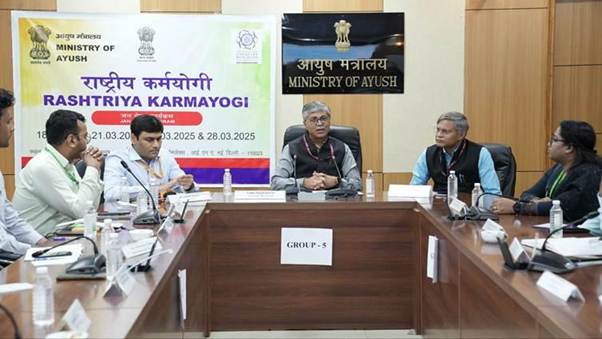
Rashtriya Karmayogi Jan Seva Programme: Building a Citizen-Centric Workforce
- The Ministry of Ayush launched the Rashtriya Karmayogi Jan Seva Programme on March 18, 2025, with the aim of fostering a more accountable, compassionate, and citizen-centric workforce.
- This initiative is part of the Capacity Building Commission, which seeks to transform the mindset of Central Government employees towards public service.
Key Objectives of the Programme:
Promoting Seva Bhav (Spirit of Service):
- Encourages public servants to view their roles as opportunities to bring meaningful change to people's lives.
- Aims to instill a sense of service and accountability among government employees.
Upskilling and Broadening Perspectives:
- Focuses on training employees to recognize their privileges and contribute to the well-being of others.
- Includes interactive sessions on teamwork, problem-solving, and structured discussions.
Enhancing Citizen Services:
- Encourages employees to adopt the right approach to public service for timely service delivery and a more organized work environment.
Training Methodology:
Interactive Approach:
- Replaces traditional lecture-based methods with hands-on activities like teamwork exercises and leadership stories.
- Participants reflect on their roles and engage in dialogue to improve citizen services.
Focus on Self-Discovery:
- Encourages employees to draw inspiration from successful initiatives and apply learnings to their daily work.
Capacity Building Commission:
- Established by: The Government of India under the National Programme for Civil Services Capacity Building (NPCSCB).
- Objective: To enhance the capacity of civil servants and align their skills with the vision of a New India.
- Key Initiatives:
- Development of iGOT Karmayogi Platform for online training.
- Focus on competency-based learning and continuous professional development.
Balancing Development and Environmental Rights: Supreme Court's Landmark Ruling
- The Supreme Court of India has ruled that the right to development through industrialization holds equal priority with the right to a clean environment, both being fundamental rights under the Indian Constitution.
- This judgment was delivered on March 18, 2025, overturning previous orders by the National Green Tribunal (NGT) and the Madras High Court that had halted developmental activities in Auroville, Puducherry.
Key Highlights of the Judgment:
Sustainable Development:
- The court emphasized the need for a “golden balance” between economic growth and environmental conservation.
- It upheld the principle of sustainable development, which aims to meet present needs without compromising the ability of future generations to meet theirs.
Fundamental Rights Involved:
- Right to Clean Environment: Guaranteed under Articles 14 (equality) and 21 (right to life).
- Right to Development: Recognized under Articles 14, 19 (right to engage in any profession, trade, or business), and 21.
Overreach by NGT:
- The court found that the NGT had exceeded its jurisdiction by halting the Auroville Foundation's developmental activities, which were part of an approved Master Plan.
Case Background:
- The dispute arose when residents of Auroville alleged that the construction of roads, including the Crown Road and Outer Ring Road, was damaging the Darkali Forest, a man-made plantation.
- The NGT had directed the Auroville Foundation to halt construction and obtain environmental clearance, but the Supreme Court ruled that these directions were beyond the NGT's authority.
ULIP Surpasses 100 Crore API Transactions: A Milestone in India's Logistics Sector
- The Unified Logistics Interface Platform (ULIP) has achieved a significant milestone by surpassing 100 crore API transactions, marking a transformative step in India's logistics ecosystem.
- This achievement aligns with the vision of Viksit Bharat 2047, aiming to create a world-class, technology-driven logistics sector.
- The announcement was made by Union Minister of Commerce & Industry, Piyush Goyal, who emphasized ULIP's role in enhancing the Ease of Doing Business and positioning India as a global trade and manufacturing powerhouse.

Key Features and Benefits of ULIP:
Automation and Real-Time Tracking:
- Enables real-time cargo tracking and streamlined regulatory compliance.
- Bridges critical data gaps, benefiting businesses across industries.
Democratization of Logistics Data:
- Provides equal opportunities for MSMEs, start-ups, and large enterprises.
- Processes an average of 1 crore API transactions weekly, driving widespread adoption.
Multi-Modal Integration:
- Offers APIs across road, rail, ocean, and air, ensuring just-in-time inventory management and cost savings.
Sustainability Efforts:
- Helps businesses adopt greener transport options, reducing emissions and aligning with India's carbon reduction goals.
Impact on the Manufacturing Sector:
- Companies like Prism Johnson, Asian Paints, and Tata Steel are leveraging ULIP's APIs for:
- Transporter verification.
- Process automation.
- Supply chain optimization.
Additional Information:
About ULIP:
- Launched by: Prime Minister Narendra Modi under the National Logistics Policy (NLP) on September 17, 2022.
- Objective: To create an integrated, efficient, and technology-driven logistics ecosystem.
- Integration: Connects 43 systems from 11 ministries through 129 APIs, with over 1,300 registered companies onboard.
National Logistics Policy (NLP):
- Introduced in: 2022.
- Purpose: To reduce logistics costs, improve efficiency, and enhance India's competitiveness in global trade.
- Key Focus Areas:
- Infrastructure development.
- Technology adoption.
- Process standardization.
Indian Railways Advances Hyperloop Technology with IIT Madras Collaboration
- The Research Designs and Standards Organisation (RDSO), under the Ministry of Railways, has signed a Memorandum of Understanding (MoU) with IIT Madras to advance Hyperloop technology in India.
- The initiative has received ₹20.89 crore funding to establish a Centre of Excellence for Hyperloop Innovation at IIT Madras.
- The announcement was made by Union Minister of Railways, Ashwini Vaishnaw, in the Lok Sabha on March 19, 2025.

Key Objectives of the Collaboration:
Development of Hyperloop Components:
- Creation of a sub-scale model of a Hyperloop pod.
- Establishment of a test track and vacuum tube facility for technology validation.
Promoting Sustainable Transportation:
- Hyperloop is envisioned as a faster, energy-efficient, and sustainable mode of transport.
- It aims to revolutionize India's transportation landscape by reducing travel time and carbon emissions.
India Strengthens Development Partnership with Suriname: Boosting Passion Fruit Industry

- India has dispatched $1 million worth of machinery to Suriname to support the growth of its passion fruit industry.
- This initiative is part of India's development partnership with Suriname, aimed at fostering economic growth and strengthening bilateral ties.
- The machinery was sent under a grant program, reflecting India's commitment to enhancing agricultural productivity and trade in Suriname.
Key Objectives of the Initiative:
- Economic Growth:
- Boosts Suriname's passion fruit industry, a vital sector for the country's economy.
- Promotes sustainable agricultural practices and enhances export potential.
- Strengthening Bilateral Relations:
- Reinforces India's role as a reliable partner in Suriname's development journey.
- Expands cooperation in areas like agriculture, trade, and technology.
BCCI Rewards Team India with ₹58 Crore After ICC Champions Trophy Triumph

- The Board of Control for Cricket in India (BCCI) has announced a ₹58 crore cash reward for Team India following their victory in the ICC Champions Trophy 2025.
- India defeated New Zealand in the final on March 9, 2025, held at the Dubai International Cricket Stadium, to clinch their third Champions Trophy title.
Key Highlights of India's Performance:
Unbeaten Campaign:
- India remained undefeated throughout the tournament, showcasing dominance in all matches.
- Victories included:
- Group Stage: Wins against Bangladesh and Pakistan by six wickets each.
- Semifinal: A four-wicket win over Australia.
- Final: A thrilling four-wicket victory against New Zealand.
Leadership and Strategy:
- Led by Rohit Sharma, the team demonstrated exceptional composure and strategic execution.
- India's top ranking in white-ball cricket was reaffirmed through this triumph.
March 2025
31 March 202529 March 202528 March 202527 March 202526 March 202525 March 202524 March 202522 March 202521 March 202520 March 202519 March 202518 March 202517 March 202515 March 202513 March 202512 March 202511 March 202510 March 202508 March 202507 March 202506 March 202505 March 202504 March 202503 March 202501 March 2025
Archive
October 2026
- 28 October 2026
- 27 October 2026
- 26 October 2026
- 24 October 2026
- 23 October 2026
- 22 October 2026
- 21 October 2026
- 20 October 2026
- 19 October 2026
- 17 October 2026
- 16 October 2026
- 15 October 2026
- 14 October 2026
- 13 October 2026
- 12 October 2026
- 10 October 2026
- 09 October 2026
- 08 October 2026
- 07 October 2026
- 06 October 2026
- 05 October 2026
- 03 October 2026
- 02 October 2026
- 01 October 2026
September 2026
- 30 September 2026
- 29 September 2026
- 28 September 2026
- 26 September 2026
- 25 September 2026
- 24 September 2026
- 23 September 2026
- 22 September 2026
- 21 September 2026
- 19 September 2026
- 18 September 2026
- 17 September 2026
- 16 September 2026
- 15 September 2026
- 12 September 2026
- 11 September 2026
- 10 September 2026
- 09 September 2026
- 08 September 2026
- 07 September 2026
- 05 September 2026
- 04 September 2026
- 03 September 2026
- 02 September 2026
- 01 September 2026
August 2026
- 31 August 2026
- 29 August 2026
- 27 August 2026
- 26 August 2026
- 25 August 2026
- 24 August 2026
- 22 August 2026
- 21 August 2026
- 20 August 2026
- 19 August 2026
- 18 August 2026
- 17 August 2026
- 14 August 2026
- 13 August 2026
- 12 August 2026
- 11 August 2026
- 10 August 2026
- 08 August 2026
- 07 August 2026
- 06 August 2026
- 05 August 2026
- 04 August 2026
- 03 August 2026
- 01 August 2026
July 2026
- 31 July 2026
- 30 July 2026
- 29 July 2026
- 28 July 2026
- 27 July 2026
- 25 July 2026
- 23 July 2026
- 22 July 2026
- 21 July 2026
- 20 July 2026
- 18 July 2026
- 17 July 2026
- 15 July 2026
- 14 July 2026
- 13 July 2026
- 11 July 2026
- 10 July 2026
- 09 July 2026
- 08 July 2026
- 07 July 2026
- 06 July 2026
- 04 July 2026
- 03 July 2026
- 02 July 2026
- 01 July 2026
June 2026
May 2026
April 2026
March 2026
- 31 March 2026
- 30 March 2026
- 28 March 2026
- 27 March 2026
- 26 March 2026
- 25 March 2026
- 24 March 2026
- 23 March 2026
- 21 March 2026
- 20 March 2026
- 19 March 2026
- 18 March 2026
- 17 March 2026
- 16 March 2026
- 14 March 2026
- 13 March 2026
- 12 March 2026
- 11 March 2026
- 10 March 2026
- 09 March 2026
- 07 March 2026
- 06 March 2026
- 05 March 2026
- 03 March 2026
- 02 March 2026
February 2026
- 28 February 2026
- 27 February 2026
- 26 February 2026
- 25 February 2026
- 24 February 2026
- 23 February 2026
- 21 February 2026
- 20 February 2026
- 19 February 2026
- 18 February 2026
- 17 February 2026
- 16 February 2026
- 13 February 2026
- 12 February 2026
- 11 February 2026
- 10 February 2026
- 09 February 2026
- 07 February 2026
- 06 February 2026
- 05 February 2026
- 04 February 2026
- 03 February 2026
- 02 February 2026
January 2026
- 31 January 2026
- 30 January 2026
- 29 January 2026
- 28 January 2026
- 27 January 2026
- 26 January 2026
- 24 January 2026
- 23 January 2026
- 22 January 2026
- 21 January 2026
- 20 January 2026
- 19 January 2026
- 16 January 2026
- 15 January 2026
- 14 January 2026
- 13 January 2026
- 12 January 2026
- 10 January 2026
- 09 January 2026
- 08 January 2026
- 07 January 2026
- 06 January 2026
- 05 January 2026
- 03 January 2026
- 02 January 2026
- 01 January 2026
December 2025
- 31 December 2025
- 30 December 2025
- 29 December 2025
- 27 December 2025
- 26 December 2025
- 24 December 2025
- 23 December 2025
- 22 December 2025
- 20 December 2025
- 19 December 2025
- 18 December 2025
- 17 December 2025
- 16 December 2025
- 15 December 2025
- 13 December 2025
- 12 December 2025
- 11 December 2025
- 10 December 2025
- 09 December 2025
- 08 December 2025
- 05 December 2025
- 04 December 2025
- 03 December 2025
- 02 December 2025
November 2025
- 29 November 2025
- 28 November 2025
- 27 November 2025
- 26 November 2025
- 25 November 2025
- 24 November 2025
- 22 November 2025
- 21 November 2025
- 20 November 2025
- 19 November 2025
- 18 November 2025
- 17 November 2025
- 15 November 2025
- 14 November 2025
- 13 November 2025
- 12 November 2025
- 11 November 2025
- 10 November 2025
- 08 November 2025
- 07 November 2025
- 06 November 2025
- 05 November 2025
- 04 November 2025
- 03 November 2025
- 01 November 2025
October 2025
- 31 October 2025
- 30 October 2025
- 29 October 2025
- 28 October 2025
- 27 October 2025
- 25 October 2025
- 24 October 2025
- 23 October 2025
- 22 October 2025
- 21 October 2025
- 20 October 2025
- 18 October 2025
- 17 October 2025
- 16 October 2025
- 15 October 2025
- 14 October 2025
- 13 October 2025
- 11 October 2025
- 10 October 2025
- 09 October 2025
- 08 October 2025
- 07 October 2025
- 06 October 2025
- 04 October 2025
- 03 October 2025
- 02 October 2025
- 01 October 2025
September 2025
- 30 September 2025
- 29 September 2025
- 27 September 2025
- 26 September 2025
- 25 September 2025
- 24 September 2025
- 23 September 2025
- 22 September 2025
- 20 September 2025
- 19 September 2025
- 18 September 2025
- 17 September 2025
- 16 September 2025
- 15 September 2025
- 13 September 2025
- 12 September 2025
- 11 September 2025
- 10 September 2025
- 09 September 2025
- 08 September 2025
- 06 September 2025
- 05 September 2025
- 04 September 2025
- 03 September 2025
- 02 September 2025
- 01 September 2025
August 2025
- 30 August 2025
- 29 August 2025
- 28 August 2025
- 27 August 2025
- 26 August 2025
- 25 August 2025
- 23 August 2025
- 22 August 2025
- 21 August 2025
- 20 August 2025
- 19 August 2025
- 18 August 2025
- 16 August 2025
- 14 August 2025
- 13 August 2025
- 12 August 2025
- 11 August 2025
- 08 August 2025
- 07 August 2025
- 06 August 2025
- 05 August 2025
- 04 August 2025
- 02 August 2025
- 01 August 2025
July 2025
- 31 July 2025
- 30 July 2025
- 29 July 2025
- 28 July 2025
- 26 July 2025
- 25 July 2025
- 24 July 2025
- 23 July 2025
- 22 July 2025
- 21 July 2025
- 19 July 2025
- 18 July 2025
- 17 July 2025
- 16 July 2025
- 15 July 2025
- 12 July 2025
- 11 July 2025
- 10 July 2025
- 09 July 2025
- 07 July 2025
- 05 July 2025
- 04 July 2025
- 03 July 2025
- 02 July 2025
- 01 July 2025
June 2025
- 30 June 2025
- 28 June 2025
- 27 June 2025
- 26 June 2025
- 25 June 2025
- 24 June 2025
- 23 June 2025
- 21 June 2025
- 20 June 2025
- 19 June 2025
- 18 June 2025
- 17 June 2025
- 16 June 2025
- 14 June 2025
- 13 June 2025
- 12 June 2025
- 11 June 2025
- 10 June 2025
- 09 June 2025
- 07 June 2025
- 06 June 2025
- 05 June 2025
- 04 June 2025
- 03 June 2025
- 02 June 2025
May 2025
April 2025
- 30 April 2025
- 29 April 2025
- 28 April 2025
- 26 April 2025
- 25 April 2025
- 24 April 2025
- 23 April 2025
- 22 April 2025
- 21 April 2025
- 19 April 2025
- 18 April 2025
- 17 April 2025
- 16 April 2025
- 15 April 2025
- 14 April 2025
- 12 April 2025
- 11 April 2025
- 10 April 2025
- 09 April 2025
- 08 April 2025
- 07 April 2025
- 05 April 2025
- 04 April 2025
- 03 April 2025
- 02 April 2025
- 01 April 2025
March 2025
- 31 March 2025
- 29 March 2025
- 28 March 2025
- 27 March 2025
- 26 March 2025
- 25 March 2025
- 24 March 2025
- 22 March 2025
- 21 March 2025
- 20 March 2025
- 19 March 2025
- 18 March 2025
- 17 March 2025
- 15 March 2025
- 13 March 2025
- 12 March 2025
- 11 March 2025
- 10 March 2025
- 08 March 2025
- 07 March 2025
- 06 March 2025
- 05 March 2025
- 04 March 2025
- 03 March 2025
- 01 March 2025
February 2025
- 28 February 2025
- 27 February 2025
- 26 February 2025
- 25 February 2025
- 24 February 2025
- 22 February 2025
- 21 February 2025
- 20 February 2025
- 19 February 2025
- 18 February 2025
- 17 February 2025
- 15 February 2025
- 14 February 2025
- 13 February 2025
- 12 February 2025
- 11 February 2025
- 10 February 2025
- 08 February 2025
- 07 February 2025
- 06 February 2025
- 05 February 2025
- 04 February 2025
- 03 February 2025
- 01 February 2025
January 2025
- 31 January 2025
- 30 January 2025
- 29 January 2025
- 28 January 2025
- 27 January 2025
- 25 January 2025
- 24 January 2025
- 23 January 2025
- 22 January 2025
- 21 January 2025
- 20 January 2025
- 18 January 2025
- 17 January 2025
- 16 January 2025
- 15 January 2025
- 14 January 2025
- 13 January 2025
- 11 January 2025
- 10 January 2025
- 09 January 2025
- 08 January 2025
- 07 January 2025
- 06 January 2025
- 04 January 2025
- 03 January 2025
- 02 January 2025
- 01 January 2025