
Current Affairs
Stay updated with the latest national and international events.
21 August 2025
International Day for Victims of Terrorism Observed

What’s the News?
- The International Day of Remembrance and Tribute to the Victims of Terrorism is observed annually on August 21st.
- The day is dedicated to honoring and supporting the victims and survivors of terrorism across the globe.
- It serves as an occasion to promote and protect the full enjoyment of their human rights and fundamental freedoms.
- The observance aims to amplify the voices of victims and survivors, recognizing their crucial role in preventing terrorism and building stronger, more resilient societies.
International Day of Remembrance and Tribute to the Victims of Terrorism
- Establishment: The United Nations General Assembly (UNGA), through its resolution 72/165, proclaimed August 21st as the International Day of Remembrance and Tribute to the Victims of Terrorism.
- Objective: The primary goal is to provide victims and survivors with long-term, multi-dimensional support, including physical, psychological, social, and financial assistance, to help them recover, rehabilitate, and reintegrate into society.
- Significance: The day acknowledges that victims of terrorism often feel forgotten once the immediate aftermath of an attack fades. It calls for international solidarity to ensure their needs are supported and their rights are upheld, transforming their experiences into a powerful force for positive change.
Additional Info
- United Nations Office of Counter-Terrorism (UNOCT)
- Established by a UNGA resolution to lead and coordinate a unified "all-of-UN" approach to counter-terrorism efforts.
- Its mandate is derived from the UN Global Counter-Terrorism Strategy.
- Key Functions:
- Provide leadership on UN counter-terrorism mandates.
- Enhance coordination and coherence among entities.
- Strengthen the delivery of UN counter-terrorism capacity-building assistance to Member States.
- Improve visibility and resource mobilization for UN's counter-terrorism work.
- UN Global Counter-Terrorism Strategy
- A global instrument to enhance national, regional, and international efforts to counter terrorism.
- Adopted by the General Assembly by consensus.
- The strategy is based on four pillars:
- Addressing the conditions conducive to the spread of terrorism.
- Measures to prevent and combat terrorism.
- Building states' capacity to prevent and combat terrorism and to strengthen the role of the United Nations system.
- Ensuring respect for human rights for all and the rule of law as the fundamental basis of the fight against terrorism.
Sources
ECI Appoints Observers for Vice-Presidential Election
What’s the News?
- The Election Commission of India (ECI) has appointed two senior civil servants as observers for the upcoming Vice-Presidential election.
- These officers, holding ranks equivalent to Additional Secretary or Joint Secretary in the Government of India, will oversee the entire election process.
- Their primary role is to ensure the arrangements for polling and counting of votes are conducted in a free and fair manner.
- The Secretary-General of the Lok Sabha has been designated as the Returning Officer for this election.
Role of Election Observers?
- Mandate: Observers are appointed by the ECI to act as its eyes and ears on the ground, ensuring that the Commission's rules and regulations are strictly followed.
- Responsibilities: They are tasked with overseeing all aspects of the election process at the place of the poll, which for the Vice-Presidential election is the Parliament House.
- Significance: Their presence helps in building confidence among stakeholders and ensures the impartiality and transparency of the electoral process. They report directly to the ECI on the conduct of the election.
Additional Info
- Election of the Vice-President
- Constitutional Provision: Article 66 of the Constitution of India lays down the manner of election of the Vice-President.
- Electoral College: It consists of all members (both elected and nominated) of the Lok Sabha and the Rajya Sabha.
- Election Method: The election is held in accordance with the system of proportional representation by means of a single transferable vote, and the voting is by secret ballot.
- Eligibility Criteria: A candidate must be:
- A citizen of India.
- At least 35 years of age.
- Qualified for election as a member of the Rajya Sabha.
- Election Commission of India (ECI)
- Constitutional Body: The ECI is an autonomous constitutional authority established under Article 324 of the Constitution.
- Function: It is responsible for administering all election processes for the offices of the President and Vice-President, as well as for the Parliament and State Legislatures.
Sources
Parliament Monsoon Session: 15 Bills Cleared; Contentious Reforms Advance
What’s the News?
- Event: The Monsoon Session of Parliament was adjourned sine die after both Houses cleared 15 bills amid repeated disruptions and opposition protests.
- Immediate impact: Passage of major legislative items on taxation, sports governance, online gaming, and ports & shipping. Several high-profile reform bills were referred to committees for further scrutiny.
- Parliamentary dynamics: Sessions were marked by sustained opposition agitation. Parliamentary productivity was low with significant loss of debate hours.

Legislative Takeaways
- Key bills passed by both Houses
- Income-tax (No. 2) Bill, 2025 — reintroduced and cleared after earlier withdrawal and Select Committee review.
- National Sports Governance Bill, 2025 — establishes a unified framework for sports governance, athlete welfare and dispute resolution.
- Promotion and Regulation of Online Gaming Bill, 2025 — creates a regulatory authority for the online gaming sector, covers e-sports, educational and social gaming.
- Ports & Shipping package — five bills including Bills of Lading Bill, Carriage of Goods by Sea Bill, Coastal Shipping Bill, Merchant Shipping Bill and Indian Ports Bill to overhaul maritime commercial law and logistics governance.
- Bills sent for detailed scrutiny
- Insolvency and Bankruptcy Code (Amendment) Bill, 2025 and Jan Vishwas (Amendment) Bill, 2025 referred to Select Committee.
- Constitution (One Hundred and Thirtieth Amendment) Bill, 2025, Government of Union Territories (Amendment) Bill, 2025, and J&K Reorganisation (Amendment) Bill, 2025 referred to Joint Committee; proposed changes include provisions on removal of ministers facing serious criminal charges.
- Other actions
- Parliament approved continuation of President’s Rule in Manipur under constitutional provisions.
Additional Info
- Key Parliamentary Terminology
- Adjournment: A temporary suspension of the sitting of a House. The time for reassembly is specified.
- Adjournment Sine Die:
- Literally means "without assigning a day for a further meeting."
- It signifies the termination of a sitting of Parliament for an indefinite period.
- The power to adjourn the House sine die lies with the presiding officer (Speaker in Lok Sabha, Chairman in Rajya Sabha).
- Prorogation:
- This formally terminates a session of the House, not just a sitting.
- It is done by the President of India on the advice of the Council of Ministers, as per Article 85(2)(a) of the Constitution.
- Prorogation brings a session to an end; any pending bills do not lapse, but pending notices do.
- Sessions of the Indian Parliament
- Constitutional Mandate: Article 85 of the Constitution mandates that the President shall summon each House of Parliament to meet at such time and place as they think fit. However, the interval between the last sitting of one session and the first sitting of the next session cannot exceed six months.
- Parliamentary Conventions: While not constitutionally mandated, the Parliament conventionally holds three sessions in a year:
- Budget Session: Held from January/February to May, this is the longest and most significant session.
- Monsoon Session: Typically held from July to September.
- Winter Session: Held from November to December.
Sources
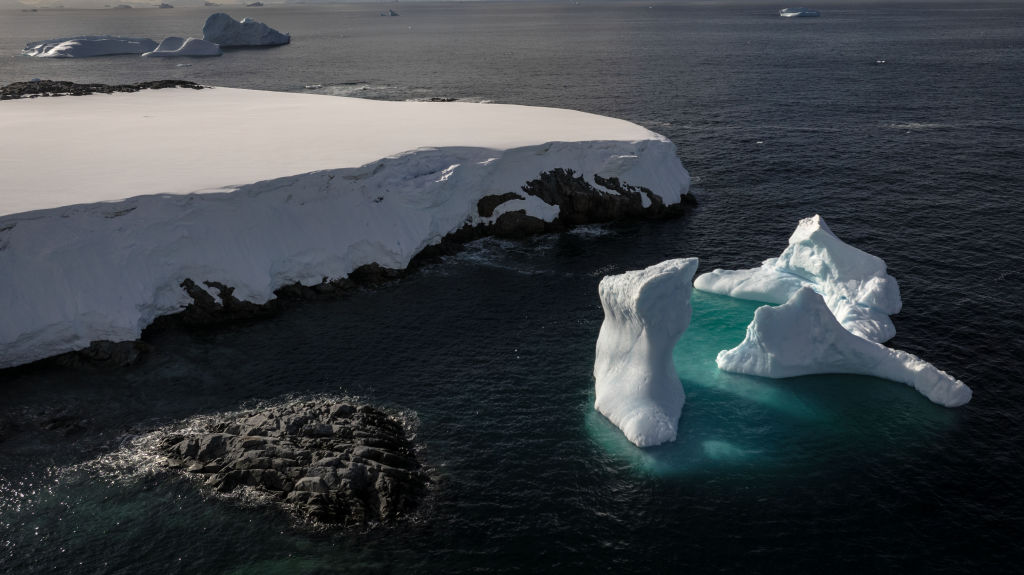
Antarctic Sea-Ice Loss Signals a Possible Climate Tipping Point
What’s the News?
- Study finding: A major scientific study warns that the rapid loss of Antarctic sea ice may constitute a climate tipping point with self-reinforcing feedbacks that can lock in long-term change.
- Immediate impacts: Reduced ice increases ocean warming via ice–albedo feedback, threatens marine food webs (krill, penguins), and risks weakening the Antarctic Overturning Circulation, with knock-on effects for global weather and sea levels.
- Scope: The study synthesises palaeoclimate records and modern observations to show that recent decline is unprecedented in speed and scale.
Tipping Mechanisms and Consequences
- Mechanisms
- Ice–albedo feedback: Less ice means less sunlight reflected. Ocean absorbs more heat. Warming accelerates further ice loss.
- Ocean-driven melt: Warmer subsurface waters can erode ice shelves from below and hasten collapse.
- Consequences
- Sea-level rise risk from accelerated Antarctic melt.
- Disruption of ocean circulation with potential to alter regional weather patterns, including monsoon variability.
- Ecosystem collapse risks for krill and dependent species, with economic implications for fisheries and food security.
- Key metric (contextual)
- Antarctica stores ~90% of the world’s land ice and ~70% of its fresh water, making its stability central to global sea-level outcomes.
Additional Info
- Climate Tipping Points
- A tipping point in the climate system is a critical threshold that, when crossed, leads to large-scale, and often irreversible, changes.
- The system shifts to a new state, even if the initial drivers of the change are reduced.
- Other examples include:
- The dieback of the Amazon rainforest.
- The thawing of Arctic permafrost, releasing vast amounts of methane.
- Widespread coral reef bleaching.
- The Antarctic Continent
- Ice Sheets: Antarctica is covered by two major ice sheets:
- East Antarctic Ice Sheet (EAIS): The larger and more stable of the two.
- West Antarctic Ice Sheet (WAIS): Considered more vulnerable to collapse as a significant portion of its base lies below sea level, making it susceptible to erosion by warm ocean currents.
- The Antarctic Treaty System:
- An international agreement established in 1959 that governs the continent.
- It designates Antarctica as a scientific preserve, establishes freedom of scientific investigation, and bans military activity.
- India is a Consultative Party to the treaty and actively participates in its governance.
- India's Antarctic Programme:
- India maintains two operational research stations in Antarctica: Maitri (commissioned in 1989) and Bharati (commissioned in 2012).
- The first station, Dakshin Gangotri (1983), was buried in ice and is now used as a supply base.
- Ice Sheets: Antarctica is covered by two major ice sheets:
Sources
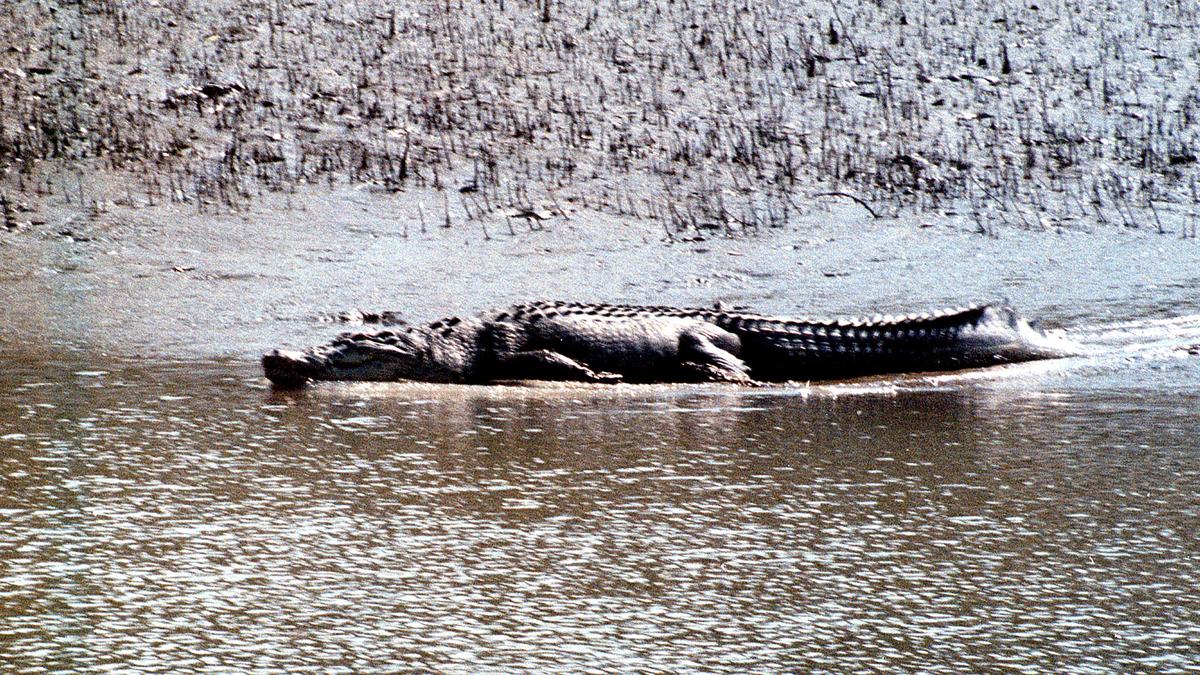
Saltwater Crocodiles Rise in the Sundarbans
What’s the News?
- Event: State forest survey reports an increase in saltwater crocodile (Crocodylus porosus) observations in the Sundarbans Biosphere Reserve.
- Key figures: 213 direct sightings recorded; population estimate updated to 220–242 individuals with 125 adults, 88 juveniles, and 23 hatchlings observed.
- Immediate implications: Indicates population recovery but also rising human–crocodile encounters due to habitat pressure and nesting-site loss.
Population & Habitat Trends
- Survey overview
- Transect effort expanded and produced higher encounter rates (about 1 crocodile per 5.5 km of creek).
- Age-structure improvement shown by increased hatchling counts, signaling recent successful nesting.
- Habitat signals
- Favoured conditions: creek widths, salinity range and temperature thresholds inform distribution and conservation planning.
- Threats: loss of nesting sites from erosion and sea-level/climate impacts is driving more crocodiles toward human-settled islands.
Additional Info
- Saltwater Crocodile (Crocodylus porosus)
- It is the largest living reptile and crocodilian known.
- Conservation Status:
- IUCN Red List: Least Concern.
- CITES: Appendix I (except for the populations of Australia, Indonesia, and Papua New Guinea, which are included in Appendix II).
- Wildlife (Protection) Act, 1972: Schedule I.
- It is found in coastal areas and river mouths across the Indian subcontinent, Southeast Asia, and northern Australia.
- Sundarbans
- A vast mangrove forest in the coastal region of the Bay of Bengal, spanning India and Bangladesh.
- It is a UNESCO World Heritage Site, a Ramsar Site, and a Biosphere Reserve.
- The region is famous for being the only mangrove forest in the world inhabited by tigers.
- Conservation Efforts
- The Bhagabatpur Crocodile Project, initiated in 1976, has been a key conservation and breeding program.
- The project successfully released 577 crocodiles into the wild until its conclusion.
Sources
National policy to promote GIAHS sites in India
What’s the News?
- Announcement: Government has notified a national policy push to promote Globally Important Agricultural Heritage Systems (GIAHS) in India.
- Scope: India currently hosts three GIAHS — Koraput (Odisha), Kuttanad (Kerala) and Saffron Park (Kashmir).
- Immediate measures: Existing central schemes such as Rashtriya Krishi Vikas Yojana (RKVY) and Mission for Integrated Development of Horticulture (MIDH) are being used to support restoration, branding and infrastructure works at these sites.
Policy intent and significance
- Objective: Conserve agro-biodiversity, safeguard farmer knowledge, and integrate heritage systems into sustainable rural livelihoods and local value chains.
- Key elements
- Community stewardship and seed-bank support to preserve landraces and traditional crops.
- Infrastructure and research interventions to improve productivity and climate resilience (examples: padasekharam works and water-hyacinth ecological research in Kuttanad).
- Market development through branding, agri-tourism linkages and value-chain support for heritage products.
- Why it matters for governance
- Strengthens the intersection of conservation policy and rural economic strategy.
- Provides a model for integrating FAO-led heritage frameworks into national agricultural programmes.
Additional Info
- India's GIAHS Sites:
- Koraput, Odisha:
- Recognized for its traditional, subsistence-based paddy cultivation on highland slopes.
- It is a repository of a vast diversity of paddy landraces, farmer-developed crop varieties, and rich genetic resources of medicinal plants.
- The conservation efforts here are deeply rooted in the practices of indigenous communities.
- Kuttanad, Kerala:
- Features a unique below-sea-level farming system.
- This intricate landscape includes wetlands for paddy cultivation and fish farming, garden lands for coconut and other food crops, and inland water bodies for fishing.
- Saffron Heritage of Kashmir:
- Represents a rich agro-pastoral system centered around the traditional cultivation of saffron.
- Characterized by intercropping and organic farming practices that contribute to the maintenance of local biodiversity and soil health.
- Koraput, Odisha:
- Government Support and Policy Integration
- The Government of India is actively supporting these sites through various schemes, including the Rashtriya Krishi Vikas Yojana (RKVY) and the Mission for Integrated Development of Horticulture (MIDH).
- These initiatives aim to provide financial assistance, research support, and infrastructural development to bolster production, improve post-harvest management, and enhance branding and market access for the unique products from these heritage sites.
Sources
AI-Designed Antibiotics Target Drug-Resistant Gonorrhoea and MRSA

What’s the News?
- Event: Researchers led by MIT used generative AI to design novel antibiotic molecules that killed drug-resistant Neisseria gonorrhoeae and MRSA in laboratory and animal tests.
- Key outcomes: Two lead compounds (NG1, DN1) showed strong antibacterial activity and cleared infections in mice models.
- Immediate impact: Demonstrates a fast, cost-efficient route to explore chemical space for antibiotics and revitalises the drug-discovery pipeline while clinical development remains necessary.
AI-Designed Antibiotics — what this means
- Method
- Generative AI screened and generated tens of millions of hypothetical molecules.
- Computational filters shortlisted candidates for synthesis and lab testing.
- Scientific significance
- AI produced molecular structures structurally different from existing antibiotic classes.
- Novel structures reduce immediate cross-resistance risk and expand therapeutic options against AMR.
- Translational status
- Compounds validated in vitro and in mice.
- Next steps: optimisation, preclinical toxicology, and multi-phase clinical trials before human use.
Additional Info
- Scientific context
- Background:
- Traditional antibiotic discovery has slowed; most existing classes originate from mid-20th century.
- AI enables searching chemical regions previously inaccessible to conventional screens.
- Technical details:
- Two generative approaches were combined to create and evaluate candidate molecules.
- Only a small fraction of AI-proposed molecules are synthesizable and safe; iterative wet-lab validation is required.
- Background:
- Policy and public-health context
- Global burden: AMR is an urgent global health threat; bacterial AMR caused over 1.2 million deaths in 2019 and contributes to several million deaths annually.
- India: National Action Plan on AMR (NAP-AMR) provides the policy framework for surveillance, stewardship, and R&D support at national and state levels.
- Governance levers: Regulatory pathways, public funding for translational R&D, and stewardship incentives are critical to convert AI discoveries into accessible treatments.
August 2025
30 August 202529 August 202528 August 202527 August 202526 August 202525 August 202523 August 202522 August 202521 August 202520 August 202519 August 202518 August 202516 August 202514 August 202513 August 202512 August 202511 August 202508 August 202507 August 202506 August 202505 August 202504 August 202502 August 202501 August 2025
Archive
October 2026
- 28 October 2026
- 27 October 2026
- 26 October 2026
- 24 October 2026
- 23 October 2026
- 22 October 2026
- 21 October 2026
- 20 October 2026
- 19 October 2026
- 17 October 2026
- 16 October 2026
- 15 October 2026
- 14 October 2026
- 13 October 2026
- 12 October 2026
- 10 October 2026
- 09 October 2026
- 08 October 2026
- 07 October 2026
- 06 October 2026
- 05 October 2026
- 03 October 2026
- 02 October 2026
- 01 October 2026
September 2026
- 30 September 2026
- 29 September 2026
- 28 September 2026
- 26 September 2026
- 25 September 2026
- 24 September 2026
- 23 September 2026
- 22 September 2026
- 21 September 2026
- 19 September 2026
- 18 September 2026
- 17 September 2026
- 16 September 2026
- 15 September 2026
- 12 September 2026
- 11 September 2026
- 10 September 2026
- 09 September 2026
- 08 September 2026
- 07 September 2026
- 05 September 2026
- 04 September 2026
- 03 September 2026
- 02 September 2026
- 01 September 2026
August 2026
- 31 August 2026
- 29 August 2026
- 27 August 2026
- 26 August 2026
- 25 August 2026
- 24 August 2026
- 22 August 2026
- 21 August 2026
- 20 August 2026
- 19 August 2026
- 18 August 2026
- 17 August 2026
- 14 August 2026
- 13 August 2026
- 12 August 2026
- 11 August 2026
- 10 August 2026
- 08 August 2026
- 07 August 2026
- 06 August 2026
- 05 August 2026
- 04 August 2026
- 03 August 2026
- 01 August 2026
July 2026
- 31 July 2026
- 30 July 2026
- 29 July 2026
- 28 July 2026
- 27 July 2026
- 25 July 2026
- 23 July 2026
- 22 July 2026
- 21 July 2026
- 20 July 2026
- 18 July 2026
- 17 July 2026
- 15 July 2026
- 14 July 2026
- 13 July 2026
- 11 July 2026
- 10 July 2026
- 09 July 2026
- 08 July 2026
- 07 July 2026
- 06 July 2026
- 04 July 2026
- 03 July 2026
- 02 July 2026
- 01 July 2026
June 2026
May 2026
April 2026
March 2026
- 31 March 2026
- 30 March 2026
- 28 March 2026
- 27 March 2026
- 26 March 2026
- 25 March 2026
- 24 March 2026
- 23 March 2026
- 21 March 2026
- 20 March 2026
- 19 March 2026
- 18 March 2026
- 17 March 2026
- 16 March 2026
- 14 March 2026
- 13 March 2026
- 12 March 2026
- 11 March 2026
- 10 March 2026
- 09 March 2026
- 07 March 2026
- 06 March 2026
- 05 March 2026
- 03 March 2026
- 02 March 2026
February 2026
- 28 February 2026
- 27 February 2026
- 26 February 2026
- 25 February 2026
- 24 February 2026
- 23 February 2026
- 21 February 2026
- 20 February 2026
- 19 February 2026
- 18 February 2026
- 17 February 2026
- 16 February 2026
- 13 February 2026
- 12 February 2026
- 11 February 2026
- 10 February 2026
- 09 February 2026
- 07 February 2026
- 06 February 2026
- 05 February 2026
- 04 February 2026
- 03 February 2026
- 02 February 2026
January 2026
- 31 January 2026
- 30 January 2026
- 29 January 2026
- 28 January 2026
- 27 January 2026
- 26 January 2026
- 24 January 2026
- 23 January 2026
- 22 January 2026
- 21 January 2026
- 20 January 2026
- 19 January 2026
- 16 January 2026
- 15 January 2026
- 14 January 2026
- 13 January 2026
- 12 January 2026
- 10 January 2026
- 09 January 2026
- 08 January 2026
- 07 January 2026
- 06 January 2026
- 05 January 2026
- 03 January 2026
- 02 January 2026
- 01 January 2026
December 2025
- 31 December 2025
- 30 December 2025
- 29 December 2025
- 27 December 2025
- 26 December 2025
- 24 December 2025
- 23 December 2025
- 22 December 2025
- 20 December 2025
- 19 December 2025
- 18 December 2025
- 17 December 2025
- 16 December 2025
- 15 December 2025
- 13 December 2025
- 12 December 2025
- 11 December 2025
- 10 December 2025
- 09 December 2025
- 08 December 2025
- 05 December 2025
- 04 December 2025
- 03 December 2025
- 02 December 2025
November 2025
- 29 November 2025
- 28 November 2025
- 27 November 2025
- 26 November 2025
- 25 November 2025
- 24 November 2025
- 22 November 2025
- 21 November 2025
- 20 November 2025
- 19 November 2025
- 18 November 2025
- 17 November 2025
- 15 November 2025
- 14 November 2025
- 13 November 2025
- 12 November 2025
- 11 November 2025
- 10 November 2025
- 08 November 2025
- 07 November 2025
- 06 November 2025
- 05 November 2025
- 04 November 2025
- 03 November 2025
- 01 November 2025
October 2025
- 31 October 2025
- 30 October 2025
- 29 October 2025
- 28 October 2025
- 27 October 2025
- 25 October 2025
- 24 October 2025
- 23 October 2025
- 22 October 2025
- 21 October 2025
- 20 October 2025
- 18 October 2025
- 17 October 2025
- 16 October 2025
- 15 October 2025
- 14 October 2025
- 13 October 2025
- 11 October 2025
- 10 October 2025
- 09 October 2025
- 08 October 2025
- 07 October 2025
- 06 October 2025
- 04 October 2025
- 03 October 2025
- 02 October 2025
- 01 October 2025
September 2025
- 30 September 2025
- 29 September 2025
- 27 September 2025
- 26 September 2025
- 25 September 2025
- 24 September 2025
- 23 September 2025
- 22 September 2025
- 20 September 2025
- 19 September 2025
- 18 September 2025
- 17 September 2025
- 16 September 2025
- 15 September 2025
- 13 September 2025
- 12 September 2025
- 11 September 2025
- 10 September 2025
- 09 September 2025
- 08 September 2025
- 06 September 2025
- 05 September 2025
- 04 September 2025
- 03 September 2025
- 02 September 2025
- 01 September 2025
August 2025
- 30 August 2025
- 29 August 2025
- 28 August 2025
- 27 August 2025
- 26 August 2025
- 25 August 2025
- 23 August 2025
- 22 August 2025
- 21 August 2025
- 20 August 2025
- 19 August 2025
- 18 August 2025
- 16 August 2025
- 14 August 2025
- 13 August 2025
- 12 August 2025
- 11 August 2025
- 08 August 2025
- 07 August 2025
- 06 August 2025
- 05 August 2025
- 04 August 2025
- 02 August 2025
- 01 August 2025
July 2025
- 31 July 2025
- 30 July 2025
- 29 July 2025
- 28 July 2025
- 26 July 2025
- 25 July 2025
- 24 July 2025
- 23 July 2025
- 22 July 2025
- 21 July 2025
- 19 July 2025
- 18 July 2025
- 17 July 2025
- 16 July 2025
- 15 July 2025
- 12 July 2025
- 11 July 2025
- 10 July 2025
- 09 July 2025
- 07 July 2025
- 05 July 2025
- 04 July 2025
- 03 July 2025
- 02 July 2025
- 01 July 2025
June 2025
- 30 June 2025
- 28 June 2025
- 27 June 2025
- 26 June 2025
- 25 June 2025
- 24 June 2025
- 23 June 2025
- 21 June 2025
- 20 June 2025
- 19 June 2025
- 18 June 2025
- 17 June 2025
- 16 June 2025
- 14 June 2025
- 13 June 2025
- 12 June 2025
- 11 June 2025
- 10 June 2025
- 09 June 2025
- 07 June 2025
- 06 June 2025
- 05 June 2025
- 04 June 2025
- 03 June 2025
- 02 June 2025
May 2025
April 2025
- 30 April 2025
- 29 April 2025
- 28 April 2025
- 26 April 2025
- 25 April 2025
- 24 April 2025
- 23 April 2025
- 22 April 2025
- 21 April 2025
- 19 April 2025
- 18 April 2025
- 17 April 2025
- 16 April 2025
- 15 April 2025
- 14 April 2025
- 12 April 2025
- 11 April 2025
- 10 April 2025
- 09 April 2025
- 08 April 2025
- 07 April 2025
- 05 April 2025
- 04 April 2025
- 03 April 2025
- 02 April 2025
- 01 April 2025
March 2025
- 31 March 2025
- 29 March 2025
- 28 March 2025
- 27 March 2025
- 26 March 2025
- 25 March 2025
- 24 March 2025
- 22 March 2025
- 21 March 2025
- 20 March 2025
- 19 March 2025
- 18 March 2025
- 17 March 2025
- 15 March 2025
- 13 March 2025
- 12 March 2025
- 11 March 2025
- 10 March 2025
- 08 March 2025
- 07 March 2025
- 06 March 2025
- 05 March 2025
- 04 March 2025
- 03 March 2025
- 01 March 2025
February 2025
- 28 February 2025
- 27 February 2025
- 26 February 2025
- 25 February 2025
- 24 February 2025
- 22 February 2025
- 21 February 2025
- 20 February 2025
- 19 February 2025
- 18 February 2025
- 17 February 2025
- 15 February 2025
- 14 February 2025
- 13 February 2025
- 12 February 2025
- 11 February 2025
- 10 February 2025
- 08 February 2025
- 07 February 2025
- 06 February 2025
- 05 February 2025
- 04 February 2025
- 03 February 2025
- 01 February 2025
January 2025
- 31 January 2025
- 30 January 2025
- 29 January 2025
- 28 January 2025
- 27 January 2025
- 25 January 2025
- 24 January 2025
- 23 January 2025
- 22 January 2025
- 21 January 2025
- 20 January 2025
- 18 January 2025
- 17 January 2025
- 16 January 2025
- 15 January 2025
- 14 January 2025
- 13 January 2025
- 11 January 2025
- 10 January 2025
- 09 January 2025
- 08 January 2025
- 07 January 2025
- 06 January 2025
- 04 January 2025
- 03 January 2025
- 02 January 2025
- 01 January 2025