
Current Affairs
Stay updated with the latest national and international events.
19 October 2026
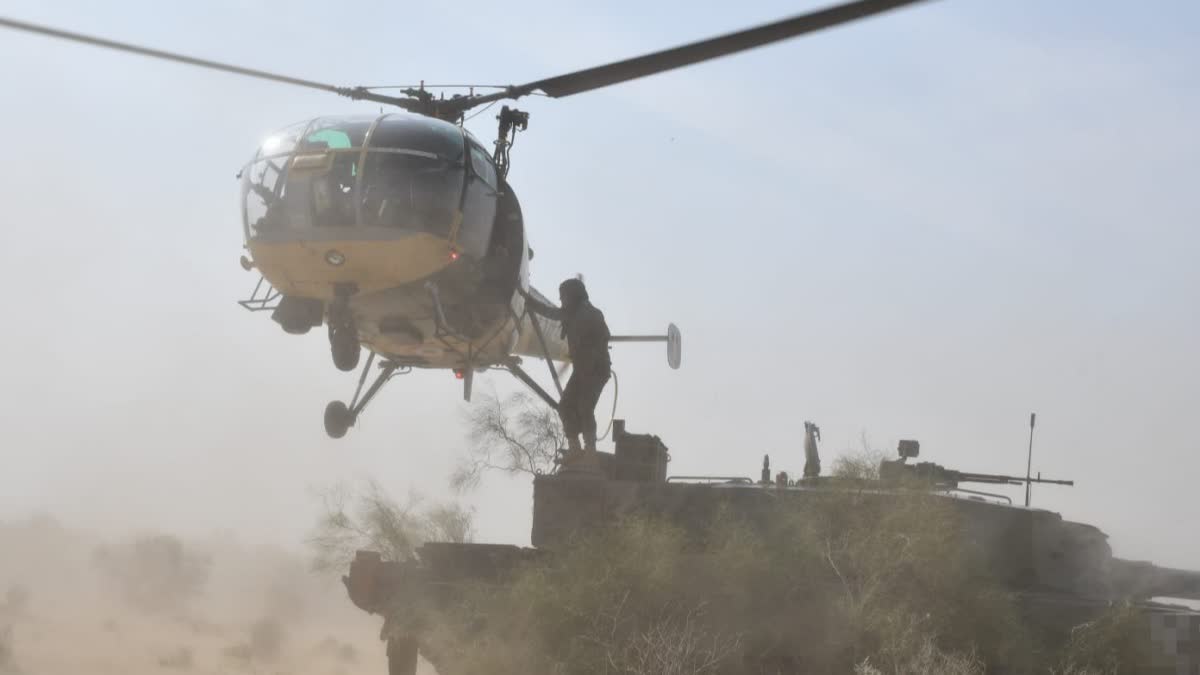
Indian Army Conducts Exercise Akhand Prahar-II in Jaisalmer
What’s the News?
- The Indian Army conducted Exercise Akhand Prahar-II in Jaisalmer, Rajasthan, to strengthen combat readiness through technology-enabled combined-arms operations.
- The exercise was jointly conducted by the Black Mace Brigade and Battle Axe Division in the desert sector.
- Lieutenant General AVS Rathee, General Officer Commanding (GOC) of the Konark Corps, commended the participating formations for their technological capabilities, operational excellence and combat readiness.
Exercise Akhand Prahar-II
- Objective: To enhance operational effectiveness by integrating New Generation Equipment (NGEs) and Force Multipliers (FMs) into conventional military operations.
- Features:
- Tested integrated battle drills in a multi-domain operational environment.
- Focused on coordination among combat elements, precision operations, situational awareness and rapid decision-making.
- Demonstrated the integration of advanced technologies with conventional combat capabilities.
- Assessed battlefield adaptability and preparedness for evolving challenges of modern warfare.
- Significance: Strengthens the Army’s ability to conduct coordinated, technology-driven combat operations in the western desert sector.
Additional Info
- Konark Corps:
- Also known as the XII Corps or Desert Corps of the Indian Army.
- Headquarters: Jodhpur, Rajasthan.
- Functions under the Southern Command, headquartered in Pune, Maharashtra.
- Exercise Akhand Prahar-I:
- Preceded Akhand Prahar-II and demonstrated integrated combat readiness.
- Conducted as part of the tri-services Exercise Trishul, involving coordination with the Indian Air Force.
- Military Concepts:
- Combined-Arms Operations: Coordinated employment of infantry, armour, artillery and other combat capabilities.
- Force Multipliers: Technologies or capabilities that increase the operational effectiveness of existing military forces.
- Multi-Domain Operations: Coordinated military activities across land, air, cyber, space and electromagnetic domains, as applicable.
Sources
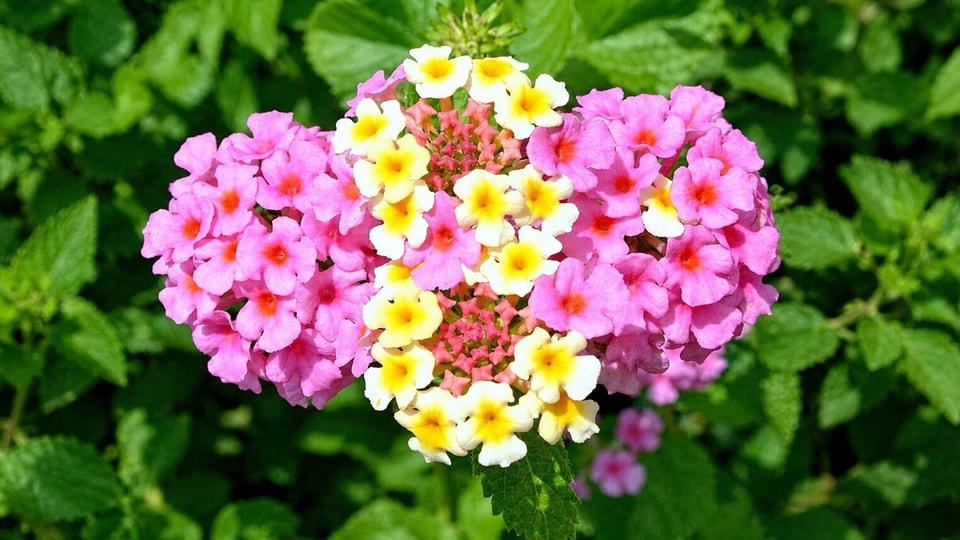
Invasive Lantana Camara Spreads Across Over 13 Million Hectares in India
What’s the News?
- American lantana (Lantana camara), an invasive alien plant species, has spread across more than 13 million hectares in India, threatening native biodiversity and forest ecosystems.
- A major assessment estimated that 44% of India’s forest cover is potentially threatened by lantana invasion.
- Research in Madhya Pradesh’s dry deciduous forests found lower plant species richness in lantana-invaded areas, highlighting its ecological impact.
Lantana Camara?
- Scientific Name: Lantana camara.
- Family: Verbenaceae.
- Native Region: Tropical Central and South America.
- Introduction to India: Brought as an ornamental garden shrub during the early 19th century.
- Characteristics:
- A fast-growing, woody, flowering shrub that forms dense thickets.
- Spreads through seeds dispersed mainly by birds.
- Exhibits allelopathy, releasing chemicals that inhibit the growth and germination of neighbouring plants.
- Thrives in disturbed habitats, particularly forests affected by fires, grazing and deforestation.
- Listed among the world’s 100 worst invasive alien species by the IUCN's Invasive Species Specialist Group.
Extent and Ecological Impact
- Extent of Invasion:
- A large-scale study estimated lantana invasion across approximately 15.48 million hectares of surveyed Indian forests.
- Around 44% of India's forest cover was assessed as potentially threatened by invasion.
- Himachal Pradesh: Around 3,25,282 hectares of forest were affected, according to the India State of Forest Report 2023.
- Uttarakhand: Lantana habitat expanded by 93% despite approximately 25 years of eradication efforts, reaching altitudes of 900–2,000 metres.
- Biodiversity Impact:
- Forms dense thickets that suppress native grasses, shrubs and tree regeneration.
- Reduces food availability for herbivores and alters wildlife habitats.
- A Madhya Pradesh study recorded 98 plant species in invaded plots, compared with 132 species in uninvaded plots.
- Can alter forest carbon storage and increase difficulties in ecological restoration.
Management Measures
- Cut-Root-Stock Method: Removal of the plant's regenerative rootstock to prevent regrowth.
- Ecological Restoration: Replanting native grasses, shrubs and trees in cleared areas.
- Monitoring: Regular surveillance, mapping of invaded habitats and community participation to prevent reinvasion.
Additional Info
- Invasive Alien Species (IAS):
- Non-native species whose introduction or spread threatens biodiversity and ecosystems.
- Examples in India include Lantana camara, Parthenium hysterophorus (Congress grass) and Prosopis juliflora (Vilayati babul).
- National Biodiversity Authority (NBA):
- A statutory body established under the Biological Diversity Act, 2002.
- Constituted an Expert Committee on Invasive Alien Species following directions from the National Green Tribunal to address ecological and socioeconomic risks.
Sources
Three Physicists Win 2026 Europhysics Prize for Altermagnetism

What’s the News?
- The European Physical Society (EPS) awarded the 2026 Europhysics Prize to Jairo Sinova, Libor Šmejkal and Tomas Jungwirth for discovering altermagnetism, a third fundamental class of collinear magnetism.
- The discovery challenges the century-old classification of collinear magnetic materials into ferromagnets and antiferromagnets.
- It opens new possibilities for spintronics, quantum materials and next-generation computing technologies.
Altermagnetism?
- Definition: A distinct form of magnetic ordering that combines properties of ferromagnetism and antiferromagnetism.
- Characteristics:
- Like antiferromagnets, it exhibits zero net magnetisation because opposing magnetic moments cancel.
- Like ferromagnets, it can exhibit spin-polarised electronic bands, enabling spin-dependent electrical transport.
- Its unusual properties arise from the symmetry of magnetic ordering within the crystal structure.
- Discovery:
- The theoretical framework was developed by researchers associated with Johannes Gutenberg University Mainz, Germany, and the Czech Academy of Sciences.
- A comprehensive classification was published in 2022, followed by experimental confirmation in 2024.
- Applications:
- Development of faster, energy-efficient memory and computing devices.
- Advancement of spintronics through rapid magnetic dynamics and spin-polarised currents.
- Research into unconventional superconductivity and quantum materials.
Additional Info
- Europhysics Prize:
- Awarded by the Condensed Matter Division of the European Physical Society (EPS).
- Established in 1975 to recognise outstanding achievements in condensed matter physics.
- The 2026 award ceremony was held in Graz, Austria, during the 32nd General Conference of the EPS Condensed Matter Division.
- Awardees:
- Jairo Sinova: Professor at Johannes Gutenberg University Mainz, Germany.
- Libor Šmejkal: Researcher associated with the Max Planck Institutes and the Czech Academy of Sciences.
- Tomas Jungwirth: Researcher associated with the Czech Academy of Sciences and the University of Nottingham, UK.
- Types of Magnetic Order:
- Ferromagnetism: Magnetic moments align parallel, producing net magnetisation.
- Antiferromagnetism: Opposing magnetic moments cancel, producing zero net magnetisation.
- Altermagnetism: Opposing magnetic moments cancel, but the electronic structure exhibits distinctive spin splitting.
- Spintronics: A technology that utilises both the charge and spin of electrons for information storage and processing.
Sources
Widespread Protests Erupt Across European Countries Over Rising Living Costs

What’s the News?
- Several European countries, including France, Italy, Belgium, Portugal, Albania and Spain, have witnessed large-scale protests over rising living costs, unaffordable housing, unemployment and deteriorating education standards.
- The demonstrations, involving students, trade unions and other groups, have led to violent clashes, arrests and property damage in some cities.
- France has emerged as the main centre of unrest, while protests in other countries reflect distinct domestic grievances rather than a single coordinated movement.
Major Protests Across Europe
France:
- Student demonstrations over teacher shortages, inadequate school infrastructure and education funding expanded into protests against rising fuel prices, inequality and declining public services.
- Over 5.5 lakh people participated, according to government estimates.
- Clashes, arson and looting occurred in cities including Paris, Marseille and Lyon.
Italy:
- Demonstrations in Milan and Bologna highlighted inflation, low wages, employment concerns and public-service issues.
- Some protests escalated into clashes with police and property damage.
Belgium:
- Student-led protests in Brussels and Liège opposed rising university registration fees, education reforms and reduced access to higher education.
- Police deployed tear gas and water cannons during confrontations.
Portugal:
- Protests in Lisbon and Porto focused on unaffordable housing, rising rents and stagnant wages.
- House prices increased by approximately 124% between 2015 and 2024, intensifying housing affordability concerns.
Albania:
- Anti-government demonstrations targeted Prime Minister Edi Rama over alleged corruption, unemployment and poor education standards.
- Protests were also linked to opposition against a controversial luxury coastal development project.
Spain:
- Housing protests intensified following the eviction of an elderly woman in Madrid.
- Demonstrators demanded rent controls, stronger tenant protections and restrictions on evictions.
Government Responses
- France: Announced plans to deploy 3,000 additional substitute teachers and withdrew proposed increases in certain university registration fees.
- Spain: Prime Minister Pedro Sánchez proposed emergency housing legislation, but its rejection in Parliament prompted a call for early elections.
- Italy: Prime Minister Giorgia Meloni condemned violent incidents while recognising the right to peaceful demonstrations.
Additional Info
- Yellow Vest Movement (France):
- Emerged in 2018 against fuel tax increases and subsequently expanded into wider economic and social demands.
- Some Yellow Vest activists have supported the latest demonstrations.
- European Union (EU):
- A political and economic union comprising 27 member states.
- France, Italy, Belgium, Portugal and Spain are EU members.
- Albania is not an EU member; it is an EU candidate country.
Sources
October 2026
28 October 202627 October 202626 October 202624 October 202623 October 202622 October 202621 October 202620 October 202619 October 202617 October 202616 October 202615 October 202614 October 202613 October 202612 October 202610 October 202609 October 202608 October 202607 October 202606 October 202605 October 202603 October 202602 October 202601 October 2026
Archive
October 2026
- 28 October 2026
- 27 October 2026
- 26 October 2026
- 24 October 2026
- 23 October 2026
- 22 October 2026
- 21 October 2026
- 20 October 2026
- 19 October 2026
- 17 October 2026
- 16 October 2026
- 15 October 2026
- 14 October 2026
- 13 October 2026
- 12 October 2026
- 10 October 2026
- 09 October 2026
- 08 October 2026
- 07 October 2026
- 06 October 2026
- 05 October 2026
- 03 October 2026
- 02 October 2026
- 01 October 2026
September 2026
- 30 September 2026
- 29 September 2026
- 28 September 2026
- 26 September 2026
- 25 September 2026
- 24 September 2026
- 23 September 2026
- 22 September 2026
- 21 September 2026
- 19 September 2026
- 18 September 2026
- 17 September 2026
- 16 September 2026
- 15 September 2026
- 12 September 2026
- 11 September 2026
- 10 September 2026
- 09 September 2026
- 08 September 2026
- 07 September 2026
- 05 September 2026
- 04 September 2026
- 03 September 2026
- 02 September 2026
- 01 September 2026
August 2026
- 31 August 2026
- 29 August 2026
- 27 August 2026
- 26 August 2026
- 25 August 2026
- 24 August 2026
- 22 August 2026
- 21 August 2026
- 20 August 2026
- 19 August 2026
- 18 August 2026
- 17 August 2026
- 14 August 2026
- 13 August 2026
- 12 August 2026
- 11 August 2026
- 10 August 2026
- 08 August 2026
- 07 August 2026
- 06 August 2026
- 05 August 2026
- 04 August 2026
- 03 August 2026
- 01 August 2026
July 2026
- 31 July 2026
- 30 July 2026
- 29 July 2026
- 28 July 2026
- 27 July 2026
- 25 July 2026
- 23 July 2026
- 22 July 2026
- 21 July 2026
- 20 July 2026
- 18 July 2026
- 17 July 2026
- 15 July 2026
- 14 July 2026
- 13 July 2026
- 11 July 2026
- 10 July 2026
- 09 July 2026
- 08 July 2026
- 07 July 2026
- 06 July 2026
- 04 July 2026
- 03 July 2026
- 02 July 2026
- 01 July 2026
June 2026
May 2026
April 2026
March 2026
- 31 March 2026
- 30 March 2026
- 28 March 2026
- 27 March 2026
- 26 March 2026
- 25 March 2026
- 24 March 2026
- 23 March 2026
- 21 March 2026
- 20 March 2026
- 19 March 2026
- 18 March 2026
- 17 March 2026
- 16 March 2026
- 14 March 2026
- 13 March 2026
- 12 March 2026
- 11 March 2026
- 10 March 2026
- 09 March 2026
- 07 March 2026
- 06 March 2026
- 05 March 2026
- 03 March 2026
- 02 March 2026
February 2026
- 28 February 2026
- 27 February 2026
- 26 February 2026
- 25 February 2026
- 24 February 2026
- 23 February 2026
- 21 February 2026
- 20 February 2026
- 19 February 2026
- 18 February 2026
- 17 February 2026
- 16 February 2026
- 13 February 2026
- 12 February 2026
- 11 February 2026
- 10 February 2026
- 09 February 2026
- 07 February 2026
- 06 February 2026
- 05 February 2026
- 04 February 2026
- 03 February 2026
- 02 February 2026
January 2026
- 31 January 2026
- 30 January 2026
- 29 January 2026
- 28 January 2026
- 27 January 2026
- 26 January 2026
- 24 January 2026
- 23 January 2026
- 22 January 2026
- 21 January 2026
- 20 January 2026
- 19 January 2026
- 16 January 2026
- 15 January 2026
- 14 January 2026
- 13 January 2026
- 12 January 2026
- 10 January 2026
- 09 January 2026
- 08 January 2026
- 07 January 2026
- 06 January 2026
- 05 January 2026
- 03 January 2026
- 02 January 2026
- 01 January 2026
December 2025
- 31 December 2025
- 30 December 2025
- 29 December 2025
- 27 December 2025
- 26 December 2025
- 24 December 2025
- 23 December 2025
- 22 December 2025
- 20 December 2025
- 19 December 2025
- 18 December 2025
- 17 December 2025
- 16 December 2025
- 15 December 2025
- 13 December 2025
- 12 December 2025
- 11 December 2025
- 10 December 2025
- 09 December 2025
- 08 December 2025
- 05 December 2025
- 04 December 2025
- 03 December 2025
- 02 December 2025
November 2025
- 29 November 2025
- 28 November 2025
- 27 November 2025
- 26 November 2025
- 25 November 2025
- 24 November 2025
- 22 November 2025
- 21 November 2025
- 20 November 2025
- 19 November 2025
- 18 November 2025
- 17 November 2025
- 15 November 2025
- 14 November 2025
- 13 November 2025
- 12 November 2025
- 11 November 2025
- 10 November 2025
- 08 November 2025
- 07 November 2025
- 06 November 2025
- 05 November 2025
- 04 November 2025
- 03 November 2025
- 01 November 2025
October 2025
- 31 October 2025
- 30 October 2025
- 29 October 2025
- 28 October 2025
- 27 October 2025
- 25 October 2025
- 24 October 2025
- 23 October 2025
- 22 October 2025
- 21 October 2025
- 20 October 2025
- 18 October 2025
- 17 October 2025
- 16 October 2025
- 15 October 2025
- 14 October 2025
- 13 October 2025
- 11 October 2025
- 10 October 2025
- 09 October 2025
- 08 October 2025
- 07 October 2025
- 06 October 2025
- 04 October 2025
- 03 October 2025
- 02 October 2025
- 01 October 2025
September 2025
- 30 September 2025
- 29 September 2025
- 27 September 2025
- 26 September 2025
- 25 September 2025
- 24 September 2025
- 23 September 2025
- 22 September 2025
- 20 September 2025
- 19 September 2025
- 18 September 2025
- 17 September 2025
- 16 September 2025
- 15 September 2025
- 13 September 2025
- 12 September 2025
- 11 September 2025
- 10 September 2025
- 09 September 2025
- 08 September 2025
- 06 September 2025
- 05 September 2025
- 04 September 2025
- 03 September 2025
- 02 September 2025
- 01 September 2025
August 2025
- 30 August 2025
- 29 August 2025
- 28 August 2025
- 27 August 2025
- 26 August 2025
- 25 August 2025
- 23 August 2025
- 22 August 2025
- 21 August 2025
- 20 August 2025
- 19 August 2025
- 18 August 2025
- 16 August 2025
- 14 August 2025
- 13 August 2025
- 12 August 2025
- 11 August 2025
- 08 August 2025
- 07 August 2025
- 06 August 2025
- 05 August 2025
- 04 August 2025
- 02 August 2025
- 01 August 2025
July 2025
- 31 July 2025
- 30 July 2025
- 29 July 2025
- 28 July 2025
- 26 July 2025
- 25 July 2025
- 24 July 2025
- 23 July 2025
- 22 July 2025
- 21 July 2025
- 19 July 2025
- 18 July 2025
- 17 July 2025
- 16 July 2025
- 15 July 2025
- 12 July 2025
- 11 July 2025
- 10 July 2025
- 09 July 2025
- 07 July 2025
- 05 July 2025
- 04 July 2025
- 03 July 2025
- 02 July 2025
- 01 July 2025
June 2025
- 30 June 2025
- 28 June 2025
- 27 June 2025
- 26 June 2025
- 25 June 2025
- 24 June 2025
- 23 June 2025
- 21 June 2025
- 20 June 2025
- 19 June 2025
- 18 June 2025
- 17 June 2025
- 16 June 2025
- 14 June 2025
- 13 June 2025
- 12 June 2025
- 11 June 2025
- 10 June 2025
- 09 June 2025
- 07 June 2025
- 06 June 2025
- 05 June 2025
- 04 June 2025
- 03 June 2025
- 02 June 2025
May 2025
April 2025
- 30 April 2025
- 29 April 2025
- 28 April 2025
- 26 April 2025
- 25 April 2025
- 24 April 2025
- 23 April 2025
- 22 April 2025
- 21 April 2025
- 19 April 2025
- 18 April 2025
- 17 April 2025
- 16 April 2025
- 15 April 2025
- 14 April 2025
- 12 April 2025
- 11 April 2025
- 10 April 2025
- 09 April 2025
- 08 April 2025
- 07 April 2025
- 05 April 2025
- 04 April 2025
- 03 April 2025
- 02 April 2025
- 01 April 2025
March 2025
- 31 March 2025
- 29 March 2025
- 28 March 2025
- 27 March 2025
- 26 March 2025
- 25 March 2025
- 24 March 2025
- 22 March 2025
- 21 March 2025
- 20 March 2025
- 19 March 2025
- 18 March 2025
- 17 March 2025
- 15 March 2025
- 13 March 2025
- 12 March 2025
- 11 March 2025
- 10 March 2025
- 08 March 2025
- 07 March 2025
- 06 March 2025
- 05 March 2025
- 04 March 2025
- 03 March 2025
- 01 March 2025
February 2025
- 28 February 2025
- 27 February 2025
- 26 February 2025
- 25 February 2025
- 24 February 2025
- 22 February 2025
- 21 February 2025
- 20 February 2025
- 19 February 2025
- 18 February 2025
- 17 February 2025
- 15 February 2025
- 14 February 2025
- 13 February 2025
- 12 February 2025
- 11 February 2025
- 10 February 2025
- 08 February 2025
- 07 February 2025
- 06 February 2025
- 05 February 2025
- 04 February 2025
- 03 February 2025
- 01 February 2025
January 2025
- 31 January 2025
- 30 January 2025
- 29 January 2025
- 28 January 2025
- 27 January 2025
- 25 January 2025
- 24 January 2025
- 23 January 2025
- 22 January 2025
- 21 January 2025
- 20 January 2025
- 18 January 2025
- 17 January 2025
- 16 January 2025
- 15 January 2025
- 14 January 2025
- 13 January 2025
- 11 January 2025
- 10 January 2025
- 09 January 2025
- 08 January 2025
- 07 January 2025
- 06 January 2025
- 04 January 2025
- 03 January 2025
- 02 January 2025
- 01 January 2025