Current Affairs
Stay updated with the latest national and international events.
18 December 2025
Supreme Court Issues Guidelines to Curb Dowry-Related Violence and Misuse of Law

What’s the News?
- The Supreme Court of India, while deciding State of Uttar Pradesh vs Ajmal Beg & Ors (2025), expressed concern over the continued prevalence of dowry practices under the guise of “gifts”.
- The Court issued comprehensive directions to ensure effective enforcement of dowry prohibition laws while also preventing their misuse, particularly in cases under Section 498A IPC.
Why Dowry Remains a Concern
- Despite legal prohibition, dowry persists as a socio-legal problem, often disguised as:
- Voluntary gifts
- Customary transfers at marriage
- Dowry-related harassment and deaths continue to violate:
- Women’s dignity
- Right to life and equality
Key Directions Issued by the Supreme Court
- Strict Scrutiny of Complaints
- Police must verify allegations before making arrests.
- Mechanical or automatic arrests to be avoided.
- Role of Investigating Officers
- IOs must differentiate between:
- Dowry demand
- Voluntary gifts given without coercion
- IOs must differentiate between:
- Protection Against Misuse
- Courts must be alert to false or exaggerated cases filed to harass the husband or in-laws.
- Evidence-Based Prosecution
- Prosecution should rely on:
- Documentary proof
- Consistent witness testimony
- Clear linkage between demand and cruelty
- Prosecution should rely on:
- Judicial Responsibility
- Trial courts to ensure speedy trials and avoid unnecessary adjournments.
Legal Framework on Dowry
- Dowry Prohibition Act, 1961
- Dowry defined as any property or valuable security demanded in connection with marriage.
- Punishment:
- Imprisonment up to 5 years
- Fine up to ₹15,000 or value of dowry
- Indian Penal Code
- Section 498A: Cruelty by husband or relatives
- Section 304B: Dowry death
- Code of Criminal Procedure
- Arrests must comply with safeguards under Section 41 CrPC.
Constitutional Perspective
- Article 14: Equality before law – protection against arbitrary arrests.
- Article 21: Right to life and dignity – applies to both:
- Victims of dowry harassment
- Persons falsely implicated
Sources
UNESCO Advocates Mother-Tongue Based Multilingual Education in India
What’s the News?
- UNESCO released its flagship annual report, Bhasha Matters: State of the Education Report for India 2025, highlighting the need for mother-tongue based multilingual education (MTB-MLE) as a foundation for inclusive, equitable quality education in India.
Recommendations
UNESCO’s ten evidence-backed proposals focus on systemic reform:
- Policy & Governance:
- Establish a national MTB-MLE mission with inter-ministerial coordination.
- Enact state-level language-in-education policies mandating MTB-MLE frameworks.
- Teacher Capacity & Pedagogy:
- Reform pre- and in-service teacher education to embed multilingual pedagogy.
- Strengthen recruitment and deployment norms for multilingual competence.
- Inclusion & Equity:
- Integrate a gender-responsive MTB-MLE approach across middle, secondary, and alternative schooling.
- Institutionalise community participation and indigenous knowledge systems in curriculum design.
- Infrastructure & Technology:
- Leverage digital public infrastructure (e.g., DIKSHA) for multilingual teacher training and content.
- Invest in inclusive language technologies (e.g., speech-to-text in regional languages) and bridge digital access gaps.
- Financing & Sustainability:
- Ensure sustainable, equitable funding for MTB-MLE implementation and tech development.
Relevant Concepts & Policies
- Mother-Tongue Based Multilingual Education (MTB-MLE): Approach where initial instruction is in the learner’s home language, transitioning to additional languages.
- National Education Policy (NEP) 2020: Recommends medium of instruction in home language at least till Grade 5 and preferably up to Grade.
- Article 350A, Constitution of India: Mandates provision for instruction in the mother tongue at primary stages where practicable.
Additional Info
- Global & Constitutional Context:
- UNESCO has advocated MTB-MLE since 1953, reinforcing it in its Education in a Multilingual World (2003) framework.
- Aligns with Article 29(1) (protection of linguistic minorities) and Article 350-A (instruction in mother tongue at primary stage).
- Supports NEP 2020’s foundational literacy focus and three-language formula flexibility.
- Socio-Educational Rationale:
- Over 19,500 mother tongues reported in Census 2011; only ~122 languages used in schools.
- Children taught in unfamiliar languages face 3–4× higher dropout risk in early grades (NCERT, 2022).
- MTB-MLE boosts reading fluency by 1.3–2.5 grade levels in Grades 1–3 (UNESCO global evidence).
Sources
Nuclear Energy Mission: Accelerating Clean & Scalable Power

What’s the News?
- The Government of India has operationalised a Nuclear Energy Mission aimed at transforming the country’s energy portfolio by making nuclear power a major, sustainable source of electricity.
- Under this mission, at least five indigenously designed and developed Small Modular Reactors (SMRs) are targeted for commissioning by 2033, backed by a ₹20,000 crore budgetary allocation.
- The broader objective is to expand nuclear capacity to around 100 GW by 2047, supporting energy security and long-term environmental goals.
- Parliament has recently passed a landmark atomic energy bill opening the civil nuclear power sector to private participation, a significant policy shift expected to accelerate investment and deployment.
Mission Objectives & Strategic Roadmap
- Capacity Expansion Targets:
- Achieve 22,480 MW installed nuclear capacity by 2031–32 (current: ~7,480 MW).
- Scale up to 100 GW by 2047 as part of India’s net-zero by 2070 commitment.
- SMR-Specific Goals (by 2033):
- Deploy ≥5 indigenous SMRs, each with capacity ≤300 MW.
- Prioritise remote/off-grid locations, industrial clusters, and hydrogen production hubs for SMR siting.
- R&D & Technology Development:
- Fast-track design validation of Indian SMR prototypes (e.g., PWR-based 100–300 MW units and HTR/MSR concepts).
- Establish dedicated SMR Test & Integration Facility under Department of Atomic Energy (DAE).
- Industrial & Institutional Framework:
- NPCIL (Nuclear Power Corporation of India Ltd) to lead deployment.
- Encourage public-private partnerships (PPPs) and collaborations with DRDO, ISRO, IITs, and start-ups under Make in India.
Small Modular Reactors (SMRs)
- SMRs are compact nuclear units with modular components that allow phased deployment, lower upfront costs, and enhanced safety features compared to large reactors.
- SMRs like BSMR-200 leverage India’s existing PHWR expertise (e.g., derived from IPHWR-220 designs).
Nuclear Energy and India
What is Nuclear Energy?
- Nuclear energy is generated through nuclear fission, where heavy atoms like Uranium-235 or Plutonium-239 split to release large amounts of energy.
- It provides base-load electricity with very low greenhouse gas emissions.
India’s Nuclear Energy Programme
- Guided by Homi J. Bhabha, India follows a Three-Stage Nuclear Power Programme to utilise its limited uranium and abundant thorium resources.
Three-Stage Programme
- Stage 1:
- Pressurised Heavy Water Reactors (PHWRs)
- Uses natural uranium; produces plutonium as by-product.
- Stage 2:
- Fast Breeder Reactors (FBRs)
- Uses plutonium; breeds more fuel.
- Stage 3:
- Thorium-based reactors (using Uranium-233)
- Key to India’s long-term energy security.
Current Status
- India operates 22+ nuclear reactors with capacity around 7 GW.
- Targets ~100 GW nuclear capacity by 2047.
- Recent push towards Small Modular Reactors (SMRs) for:
- Industrial use
- Remote areas
- Faster deployment
Institutional & Legal Framework
- Department of Atomic Energy (DAE) – policy and implementation.
- Atomic Energy Commission (AEC) – apex decision-making body.
- NPCIL – reactor construction and operation.
- Atomic Energy Act, 1962 – legal backbone.
- AERB – nuclear safety regulation.
International Dimension
- India–US Civil Nuclear Deal (2008):
- Ended nuclear isolation.
- Allowed access to global nuclear fuel and technology.
- India is a member of:
- IAEA
- NSG (waiver, not member)
Sources
Exercise Desert Cyclone II: India-UAE Joint Military Exercise
What’s the News?
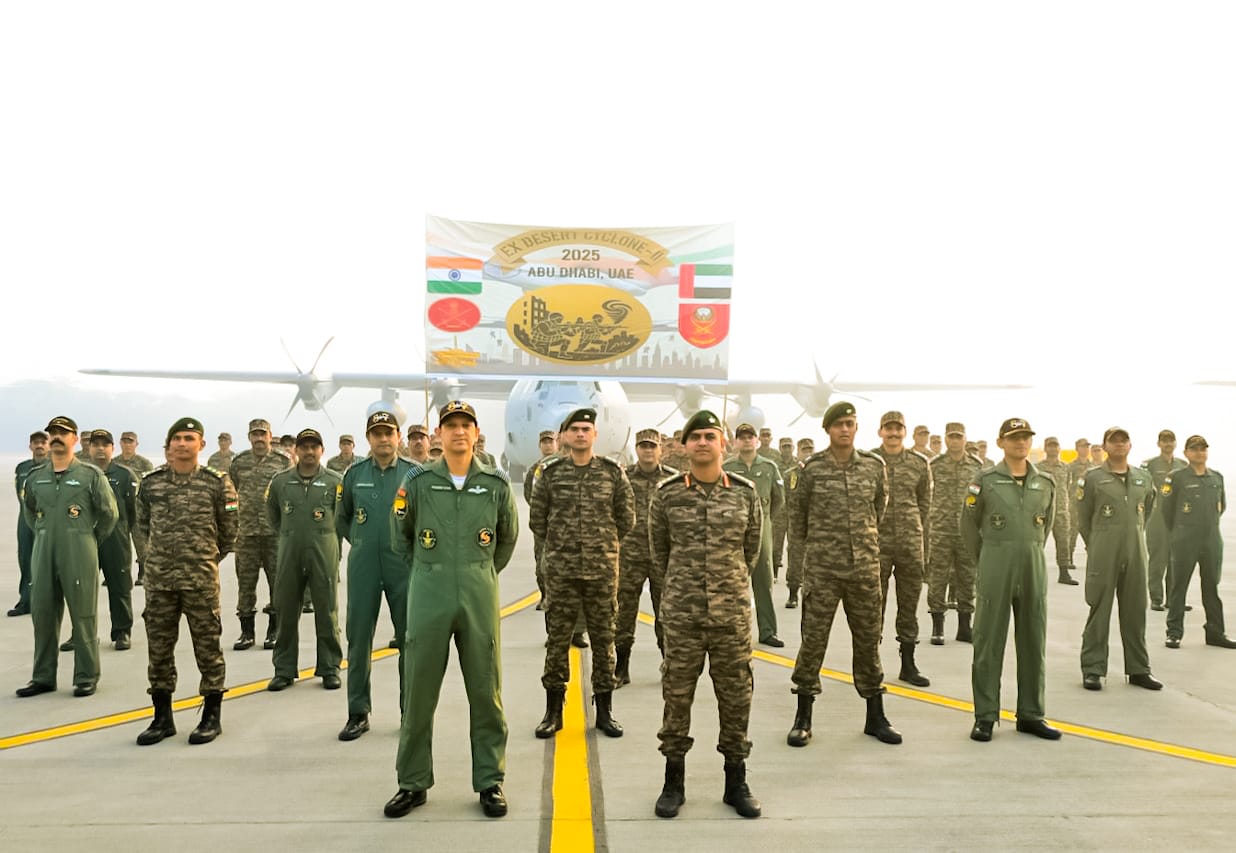
- Exercise Desert Cyclone II, a bilateral military exercise between India and the United Arab Emirates (UAE), is underway focusing on urban warfare training and interoperability between the two armed forces.
- The exercise aims to enhance operational coordination, share best practices, and strengthen strategic defense cooperation in complex urban combat scenarios. (PIB)
Overview of Exercise Desert Cyclone II
- *Participating Countries
- India
- United Arab Emirates (UAE)
- Focus Areas
- Urban warfare skills
- Joint operational planning
- Tactical manoeuvres in built-up areas
- Coordination among combined arms units
- Military Units Involved
- Infantry and mechanised formations
- Combat support elements
- Observers and planners from both armies
- Key Activities
- Simulated urban combat drills
- Live-firing exercises
- Tactical decision-making exercises
- Inter-unit communication drills
India-UAE Relations in 2025
- India and the United Arab Emirates (UAE) share a comprehensive strategic partnership rooted in strong economic ties, defence cooperation, cultural links, and people-to-people interactions.
- In 2025, bilateral relations have deepened across trade, energy, security, culture, and multilateral engagement.
Key Dimensions of the Relationship
1. Strategic & Defence Cooperation
- India and the UAE conduct joint military exercises, such as Exercise Desert Cyclone II, enhancing interoperability and urban warfare capabilities of both armies.
- Defence ties include training exchanges, port calls, and maritime security collaboration in the Indian Ocean Region.
2. Economic & Trade Links
- UAE is among India’s top trading partners and a major source of energy imports.
- Bilateral trade spans hydrocarbons, petrochemicals, gems & jewellery, agriculture, and services.
- Both countries are exploring investment partnerships in infrastructure, technology, and renewable energy.
3. Energy & Investment Cooperation
- UAE supports India’s energy security through crude oil supplies and investments in refining and petrochemicals.
- Joint ventures and sovereign investments target strategic sectors including logistics, technology, and clean energy.
4. People-to-People & Diaspora
- A large Indian diaspora in the UAE contributes to the economy and remittances.
- Cultural exchanges and labour mobility frameworks enhance social linkages.
5. Multilateral & Regional Engagement
- Both countries cooperate in global forums on issues such as climate change, sustainable development, and counterterrorism.
- Shared interests in regional stability, especially in West Asia and the Indian Ocean.
Sources
Major Changes in National Pension System (NPS) Withdrawal Rules

What’s the News?
- The Pension Fund Regulatory and Development Authority (PFRDA) has revised withdrawal and exit rules under the National Pension System (NPS) to provide greater flexibility at retirement and exit.
- These changes affect how subscribers can withdraw their accumulated corpus, including higher lump-sum options in key scenarios and clearer payout routes.
Revised Exit Framework & Withdrawal Slabs
| Retirement Corpus Size | Mandatory Annuity | Max Lump-Sum Allowed | Flexible Options |
|---|---|---|---|
| ≤ ₹8 lakh | 0% (optional 20%) | 100% lump-sum | Can opt for 20% annuity + 80% lump sum if preferred |
| ₹8–12 lakh | Not mandatory | ₹6 lakh lump-sum + balance via Systematic Unit Redemption (SUR) over ≥6 years | No annuity required |
| > ₹12 lakh | Minimum 20% | Up to 80% lump-sum | Balance 20% or more can be annuitised or withdrawn via SUR |
- SUR (Systematic Unit Redemption): Enables staggered withdrawal over time, preserving investment exposure and offering tax efficiency.
- Governed under the PFRDA Act, 2013 and NPS Trust Regulations.
PFRDA
- Pension Fund Regulatory and Development Authority (PFRDA) is the statutory regulator of India’s pension sector.
- It regulates and promotes pension schemes to ensure old-age income security for citizens, especially those in the unorganised sector.
Establishment & Legal Basis
- Set up in 2003 as an interim body.
- Given statutory status through the PFRDA Act, 2013.
- Headquarters: New Delhi.
Objectives
- Regulate pension funds and intermediaries.
- Develop the pension sector in India.
- Protect subscribers’ interests.
- Promote financial inclusion through pension coverage.
Key Schemes Regulated by PFRDA
- National Pension System (NPS)
- Defined contribution, market-linked pension scheme.
- Covers:
- Central & State Government employees
- Private sector employees
- Self-employed individuals
- Atal Pension Yojana (APY)
- Government-backed pension scheme for unorganised sector workers.
- Guarantees fixed pension (₹1,000–₹5,000 per month) after 60 years.
Functions of PFRDA
- Register and regulate:
- Pension Funds (PFs)
- Central Recordkeeping Agencies (CRAs)
- Trustees, custodians, and intermediaries
- Set investment guidelines for pension funds.
- Monitor performance, transparency, and compliance.
- Ensure subscriber grievance redressal.
Governance Structure
- Consists of:
- Chairperson
- Whole-time members
- Part-time members
- Appointments made by the Central Government.
Sources
International Migrants Day 2025: "My Great Story: Cultures and Development"

What’s the News?
- International Migrants Day is observed annually on December 18 to recognize the social and economic contributions of migrants and advocate for their human rights.
- The day serves as a global call to ensure that migration is safe, orderly, and regular, protecting millions of people on the move from exploitation and violence.
- The International Organization for Migration (IOM) and the United Nations (UN) lead the observance to highlight the challenges of internal and international displacement driven by conflict, climate change, and economic necessity.
The 2025 Theme?
- The official theme for 2025 is "My Great Story: Cultures and Development".
- It emphasizes how human mobility acts as a catalyst for economic growth, enriches cultures, and helps communities adapt to global changes.
- The narrative shift aims to move beyond viewing migrants solely as labor units, instead recognizing them as rights-bearing individuals and agents of social change.
Global Migration Trends?
- Scale: There are approximately 304 million international migrants globally, representing 3.7% of the world's population.
- Demographics: Women constitute nearly 48% of the global migrant population, while approximately two-thirds of all international migrants are labor migrants.
- Remittances: Financial transfers to low- and middle-income countries are projected to reach a record USD 685 billion in 2025, providing a critical lifeline for millions of families.
- Displacement: By the end of 2024, the world hosted an estimated 43.7 million refugees and millions of asylum-seekers.
India’s Migration Landscape?
- Top Source: India remains the leading source of international migrants, with 225,000 Indians acquiring citizenship in OECD countries recently—the highest among all nationalities.
- Skill-Driven: Migration from India is increasingly dominated by healthcare and technology professionals; India provides the highest number of foreign-trained doctors and nurses to advanced economies.
- Student Mobility: Indian students represent 14% of all international tertiary-level students in OECD nations, second only to China.
- Challenges: Despite statutory ceilings like the Emigration Act, 1983, many Indian workers pay high recruitment costs due to unregulated sub-agent networks.
Additional Info
- Historical Context:
- 1990: The UN General Assembly (UNGA) adopted the International Convention on the Protection of the Rights of All Migrant Workers and Members of Their Families on December 18.
- 2000: The UNGA officially designated December 18 as International Migrants Day via Resolution 55/93.
- Global Frameworks:
- Global Compact for Migration (GCM): The first intergovernmentally negotiated agreement covering all dimensions of international migration.
- SDG Targets:
- Target 10.7: Facilitate orderly, safe, and responsible migration.
- Target 10.c: Reduce the transaction costs of migrant remittances to less than 3%.
- Institutional Mechanisms:
- International Organization for Migration (IOM): Established in 1951, it is the leading intergovernmental organization in the field of migration.
Sources
Minorities Rights Day 2025: Upholding Constitutional Safeguards and Inclusivity
What’s the News?
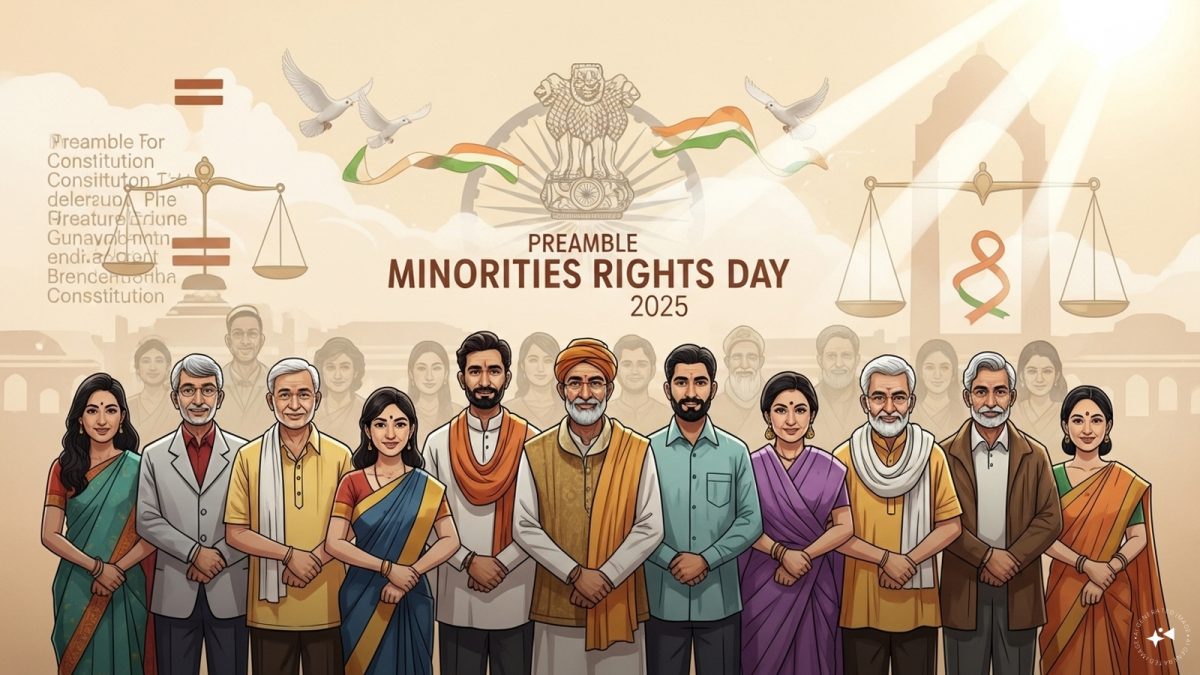
- Minorities Rights Day is observed annually on December 18 in India to safeguard the rights of religious, linguistic, and ethnic minority communities.
- The day commemorates the United Nations adoption of the Declaration on the Rights of Persons Belonging to National or Ethnic, Religious and Linguistic Minorities in 1992.
- The primary objective is to raise awareness about the challenges faced by minorities and to ensure their equal participation in the nation's socio-economic and cultural landscape.
Who are the Notified Minorities?
- Under the National Commission for Minorities Act, 1992, the Government of India has officially recognized six religious minority communities.
- Muslims, Christians, Sikhs, Buddhists, and Parsis (Zoroastrians).
- Jains were added to this list as the sixth community in 2014.
- According to the 2011 Census, these minority communities constitute approximately 19.3% of India's total population.
- While the Union Government notifies religious minorities, Linguistic Minorities are identified on a state-by-state basis.
Constitutional Safeguards?
- The Indian Constitution provides several specific protections to ensure the dignity and development of minority groups:
- Article 29: Grants any section of citizens with a distinct language, script, or culture the right to conserve the same.
- Article 30: Empowers religious and linguistic minorities to establish and administer educational institutions of their choice.
- Article 350B: Mandates the appointment of a Special Officer for Linguistic Minorities by the President to investigate and report on safeguards for linguistic groups.
- Article 25 to 28: Guarantees the Right to Freedom of Religion, allowing individuals to profess, practice, and propagate their faith.
Additional Info
- National Commission for Minorities (NCM):
- A statutory body established to monitor the implementation of safeguards provided in the Constitution and laws.
- It consists of a Chairperson, a Vice-Chairperson, and five members, all nominated by the Central Government from among the minority communities.
- Key Government Initiatives:
- Ministry of Minority Affairs: Created in 2006 as the nodal agency for the overall policy, planning, and coordination of regulatory and development programs for minority communities.
- PM’s New 15-Point Programme: Focuses on enhancing opportunities for education, ensuring an equitable share in economic activities, and improving living conditions.
- Scholarship Schemes: Includes Pre-Matric, Post-Matric, and Merit-cum-Means scholarships specifically for minority students to reduce the dropout rate.
- Global Context:
- The UN Declaration of 1992 emphasizes that the protection of minorities is essential to the political and social stability of states in which they live.
Sources
December 2025
31 December 202530 December 202529 December 202527 December 202526 December 202524 December 202523 December 202522 December 202520 December 202519 December 202518 December 202517 December 202516 December 202515 December 202513 December 202512 December 202511 December 202510 December 202509 December 202508 December 202505 December 202504 December 202503 December 202502 December 2025
Archive
October 2026
- 27 October 2026
- 26 October 2026
- 24 October 2026
- 23 October 2026
- 22 October 2026
- 21 October 2026
- 20 October 2026
- 19 October 2026
- 17 October 2026
- 16 October 2026
- 15 October 2026
- 14 October 2026
- 13 October 2026
- 12 October 2026
- 10 October 2026
- 09 October 2026
- 08 October 2026
- 07 October 2026
- 06 October 2026
- 05 October 2026
- 03 October 2026
- 02 October 2026
- 01 October 2026
September 2026
- 30 September 2026
- 29 September 2026
- 28 September 2026
- 26 September 2026
- 25 September 2026
- 24 September 2026
- 23 September 2026
- 22 September 2026
- 21 September 2026
- 19 September 2026
- 18 September 2026
- 17 September 2026
- 16 September 2026
- 15 September 2026
- 12 September 2026
- 11 September 2026
- 10 September 2026
- 09 September 2026
- 08 September 2026
- 07 September 2026
- 05 September 2026
- 04 September 2026
- 03 September 2026
- 02 September 2026
- 01 September 2026
August 2026
- 31 August 2026
- 29 August 2026
- 27 August 2026
- 26 August 2026
- 25 August 2026
- 24 August 2026
- 22 August 2026
- 21 August 2026
- 20 August 2026
- 19 August 2026
- 18 August 2026
- 17 August 2026
- 14 August 2026
- 13 August 2026
- 12 August 2026
- 11 August 2026
- 10 August 2026
- 08 August 2026
- 07 August 2026
- 06 August 2026
- 05 August 2026
- 04 August 2026
- 03 August 2026
- 01 August 2026
July 2026
- 31 July 2026
- 30 July 2026
- 29 July 2026
- 28 July 2026
- 27 July 2026
- 25 July 2026
- 23 July 2026
- 22 July 2026
- 21 July 2026
- 20 July 2026
- 18 July 2026
- 17 July 2026
- 15 July 2026
- 14 July 2026
- 13 July 2026
- 11 July 2026
- 10 July 2026
- 09 July 2026
- 08 July 2026
- 07 July 2026
- 06 July 2026
- 04 July 2026
- 03 July 2026
- 02 July 2026
- 01 July 2026
June 2026
May 2026
April 2026
March 2026
- 31 March 2026
- 30 March 2026
- 28 March 2026
- 27 March 2026
- 26 March 2026
- 25 March 2026
- 24 March 2026
- 23 March 2026
- 21 March 2026
- 20 March 2026
- 19 March 2026
- 18 March 2026
- 17 March 2026
- 16 March 2026
- 14 March 2026
- 13 March 2026
- 12 March 2026
- 11 March 2026
- 10 March 2026
- 09 March 2026
- 07 March 2026
- 06 March 2026
- 05 March 2026
- 03 March 2026
- 02 March 2026
February 2026
- 28 February 2026
- 27 February 2026
- 26 February 2026
- 25 February 2026
- 24 February 2026
- 23 February 2026
- 21 February 2026
- 20 February 2026
- 19 February 2026
- 18 February 2026
- 17 February 2026
- 16 February 2026
- 13 February 2026
- 12 February 2026
- 11 February 2026
- 10 February 2026
- 09 February 2026
- 07 February 2026
- 06 February 2026
- 05 February 2026
- 04 February 2026
- 03 February 2026
- 02 February 2026
January 2026
- 31 January 2026
- 30 January 2026
- 29 January 2026
- 28 January 2026
- 27 January 2026
- 26 January 2026
- 24 January 2026
- 23 January 2026
- 22 January 2026
- 21 January 2026
- 20 January 2026
- 19 January 2026
- 16 January 2026
- 15 January 2026
- 14 January 2026
- 13 January 2026
- 12 January 2026
- 10 January 2026
- 09 January 2026
- 08 January 2026
- 07 January 2026
- 06 January 2026
- 05 January 2026
- 03 January 2026
- 02 January 2026
- 01 January 2026
December 2025
- 31 December 2025
- 30 December 2025
- 29 December 2025
- 27 December 2025
- 26 December 2025
- 24 December 2025
- 23 December 2025
- 22 December 2025
- 20 December 2025
- 19 December 2025
- 18 December 2025
- 17 December 2025
- 16 December 2025
- 15 December 2025
- 13 December 2025
- 12 December 2025
- 11 December 2025
- 10 December 2025
- 09 December 2025
- 08 December 2025
- 05 December 2025
- 04 December 2025
- 03 December 2025
- 02 December 2025
November 2025
- 29 November 2025
- 28 November 2025
- 27 November 2025
- 26 November 2025
- 25 November 2025
- 24 November 2025
- 22 November 2025
- 21 November 2025
- 20 November 2025
- 19 November 2025
- 18 November 2025
- 17 November 2025
- 15 November 2025
- 14 November 2025
- 13 November 2025
- 12 November 2025
- 11 November 2025
- 10 November 2025
- 08 November 2025
- 07 November 2025
- 06 November 2025
- 05 November 2025
- 04 November 2025
- 03 November 2025
- 01 November 2025
October 2025
- 31 October 2025
- 30 October 2025
- 29 October 2025
- 28 October 2025
- 27 October 2025
- 25 October 2025
- 24 October 2025
- 23 October 2025
- 22 October 2025
- 21 October 2025
- 20 October 2025
- 18 October 2025
- 17 October 2025
- 16 October 2025
- 15 October 2025
- 14 October 2025
- 13 October 2025
- 11 October 2025
- 10 October 2025
- 09 October 2025
- 08 October 2025
- 07 October 2025
- 06 October 2025
- 04 October 2025
- 03 October 2025
- 02 October 2025
- 01 October 2025
September 2025
- 30 September 2025
- 29 September 2025
- 27 September 2025
- 26 September 2025
- 25 September 2025
- 24 September 2025
- 23 September 2025
- 22 September 2025
- 20 September 2025
- 19 September 2025
- 18 September 2025
- 17 September 2025
- 16 September 2025
- 15 September 2025
- 13 September 2025
- 12 September 2025
- 11 September 2025
- 10 September 2025
- 09 September 2025
- 08 September 2025
- 06 September 2025
- 05 September 2025
- 04 September 2025
- 03 September 2025
- 02 September 2025
- 01 September 2025
August 2025
- 30 August 2025
- 29 August 2025
- 28 August 2025
- 27 August 2025
- 26 August 2025
- 25 August 2025
- 23 August 2025
- 22 August 2025
- 21 August 2025
- 20 August 2025
- 19 August 2025
- 18 August 2025
- 16 August 2025
- 14 August 2025
- 13 August 2025
- 12 August 2025
- 11 August 2025
- 08 August 2025
- 07 August 2025
- 06 August 2025
- 05 August 2025
- 04 August 2025
- 02 August 2025
- 01 August 2025
July 2025
- 31 July 2025
- 30 July 2025
- 29 July 2025
- 28 July 2025
- 26 July 2025
- 25 July 2025
- 24 July 2025
- 23 July 2025
- 22 July 2025
- 21 July 2025
- 19 July 2025
- 18 July 2025
- 17 July 2025
- 16 July 2025
- 15 July 2025
- 12 July 2025
- 11 July 2025
- 10 July 2025
- 09 July 2025
- 07 July 2025
- 05 July 2025
- 04 July 2025
- 03 July 2025
- 02 July 2025
- 01 July 2025
June 2025
- 30 June 2025
- 28 June 2025
- 27 June 2025
- 26 June 2025
- 25 June 2025
- 24 June 2025
- 23 June 2025
- 21 June 2025
- 20 June 2025
- 19 June 2025
- 18 June 2025
- 17 June 2025
- 16 June 2025
- 14 June 2025
- 13 June 2025
- 12 June 2025
- 11 June 2025
- 10 June 2025
- 09 June 2025
- 07 June 2025
- 06 June 2025
- 05 June 2025
- 04 June 2025
- 03 June 2025
- 02 June 2025
May 2025
April 2025
- 30 April 2025
- 29 April 2025
- 28 April 2025
- 26 April 2025
- 25 April 2025
- 24 April 2025
- 23 April 2025
- 22 April 2025
- 21 April 2025
- 19 April 2025
- 18 April 2025
- 17 April 2025
- 16 April 2025
- 15 April 2025
- 14 April 2025
- 12 April 2025
- 11 April 2025
- 10 April 2025
- 09 April 2025
- 08 April 2025
- 07 April 2025
- 05 April 2025
- 04 April 2025
- 03 April 2025
- 02 April 2025
- 01 April 2025
March 2025
- 31 March 2025
- 29 March 2025
- 28 March 2025
- 27 March 2025
- 26 March 2025
- 25 March 2025
- 24 March 2025
- 22 March 2025
- 21 March 2025
- 20 March 2025
- 19 March 2025
- 18 March 2025
- 17 March 2025
- 15 March 2025
- 13 March 2025
- 12 March 2025
- 11 March 2025
- 10 March 2025
- 08 March 2025
- 07 March 2025
- 06 March 2025
- 05 March 2025
- 04 March 2025
- 03 March 2025
- 01 March 2025
February 2025
- 28 February 2025
- 27 February 2025
- 26 February 2025
- 25 February 2025
- 24 February 2025
- 22 February 2025
- 21 February 2025
- 20 February 2025
- 19 February 2025
- 18 February 2025
- 17 February 2025
- 15 February 2025
- 14 February 2025
- 13 February 2025
- 12 February 2025
- 11 February 2025
- 10 February 2025
- 08 February 2025
- 07 February 2025
- 06 February 2025
- 05 February 2025
- 04 February 2025
- 03 February 2025
- 01 February 2025
January 2025
- 31 January 2025
- 30 January 2025
- 29 January 2025
- 28 January 2025
- 27 January 2025
- 25 January 2025
- 24 January 2025
- 23 January 2025
- 22 January 2025
- 21 January 2025
- 20 January 2025
- 18 January 2025
- 17 January 2025
- 16 January 2025
- 15 January 2025
- 14 January 2025
- 13 January 2025
- 11 January 2025
- 10 January 2025
- 09 January 2025
- 08 January 2025
- 07 January 2025
- 06 January 2025
- 04 January 2025
- 03 January 2025
- 02 January 2025
- 01 January 2025