
Current Affairs
Stay updated with the latest national and international events.
17 September 2025
India Post and BSNL Partner for Rural Connectivity

What’s the News?
- The Department of Posts (DoP) and Bharat Sanchar Nigam Limited (BSNL) have signed a Memorandum of Understanding (MoU).
- Under the MoU, over 1.65 lakh Post Offices will act as Points of Sale (PoS) for BSNL SIM cards and mobile recharge services.
- The initiative aims to make telecom services more accessible and affordable in remote and rural parts of India.
Partnership Details
- Objective:
- Improve accessibility and affordability of telecom services in underserved regions.
- Bridge the digital divide and support national goals like Digital India, financial inclusion, and socio-economic development.
- Roles:
- BSNL will supply SIM cards and provide training to postal staff.
- India Post will onboard customers and handle transactions securely.
- Coverage:
- Services will be available across 1.65 lakh post offices, ensuring last-mile connectivity.
Additional Info
- Department of Posts (DoP):
- Part of the Ministry of Communications.
- Operates the largest postal network in the world, with over 1.65 lakh post offices, of which a majority are in rural areas.
- In addition to traditional postal services, it provides financial services through the India Post Payments Bank (IPPB) and various other citizen-centric services.
- Bharat Sanchar Nigam Limited (BSNL):
- A state-owned telecommunications company under the Ministry of Communications.
- Provides a wide range of telecom services, including landline, mobile, internet, and enterprise solutions.
- The company is undergoing a revival plan, including a major push for its indigenous 4G mobile network deployment across the country.
- Digital India:
- A flagship programme of the Government of India launched in 2015.
- Aims to transform India into a digitally empowered society and knowledge economy.
- Its three core components are:
- Digital infrastructure as a core utility to every citizen.
- Governance and services on demand.
- Digital empowerment of citizens.
Sources
National Geothermal Energy Policy, 2025
What’s the News?
- The Ministry of New and Renewable Energy (MNRE) has officially notified the National Policy on Geothermal Energy, 2025. It aims to accelerate clean energy transition and strengthen energy security by adding geothermal as a renewable source.
- The policy provides a structured framework for exploration, development, project deployment, and incentives for geothermal energy in India.
Policy Framework & Key Initiatives
- Objectives:
- Integrate geothermal energy into India’s renewable mix to provide baseload power (24/7 supply).
- Enable direct uses: district heating/cooling, greenhouse farming, aquaculture, and ground source heat pumps (GSHPs).
- Repurpose abandoned oil and gas wells for geothermal extraction.
- Incentives:
- Fiscal: Tax holidays, import duty exemptions, accelerated depreciation, and viability gap funding (VGF).
- Financial: Concessional loans, green bonds, and 100% Foreign Direct Investment (FDI) allowed.
- Governance:
- MNRE designated as the nodal agency for regulatory oversight.
- Single-window clearances and state-level nodal agencies to streamline approvals.
Additional Info
- Geothermal Energy:
- It is a form of renewable energy derived from the heat stored in the Earth's core.
- This heat is generated by the radioactive decay of materials within the Earth.
- Geothermal power plants typically use steam or hot water from underground reservoirs to turn turbines and generate electricity.
- A key advantage is its baseload nature, meaning it can provide a consistent and reliable power supply 24/7, unlike intermittent sources like solar and wind.
- Geothermal Provinces in India:
- The Geological Survey of India (GSI) has identified 10 key provinces and over 381 hot springs.
- Puga Valley in Ladakh and Tattapani in Chhattisgarh are two of the most promising sites for pilot projects due to high heat flow.
- Related Government Initiatives:
- India's Net Zero Goal: India has committed to achieving Net Zero carbon emissions by 2070, a target announced at the COP26 summit.
- National Data Repository (NDR): The policy encourages collaboration with the Directorate General of Hydrocarbons (DGH) to use data from the NDR for geothermal exploration, streamlining the process.
- Renewable Energy Research and Technology Development Programme (RE-RTD): The MNRE provides financial support under this program to R&D projects in the renewable energy sector, including geothermal energy.
Sources
ECI Revamps EVM Ballot Paper Design
What’s the News?
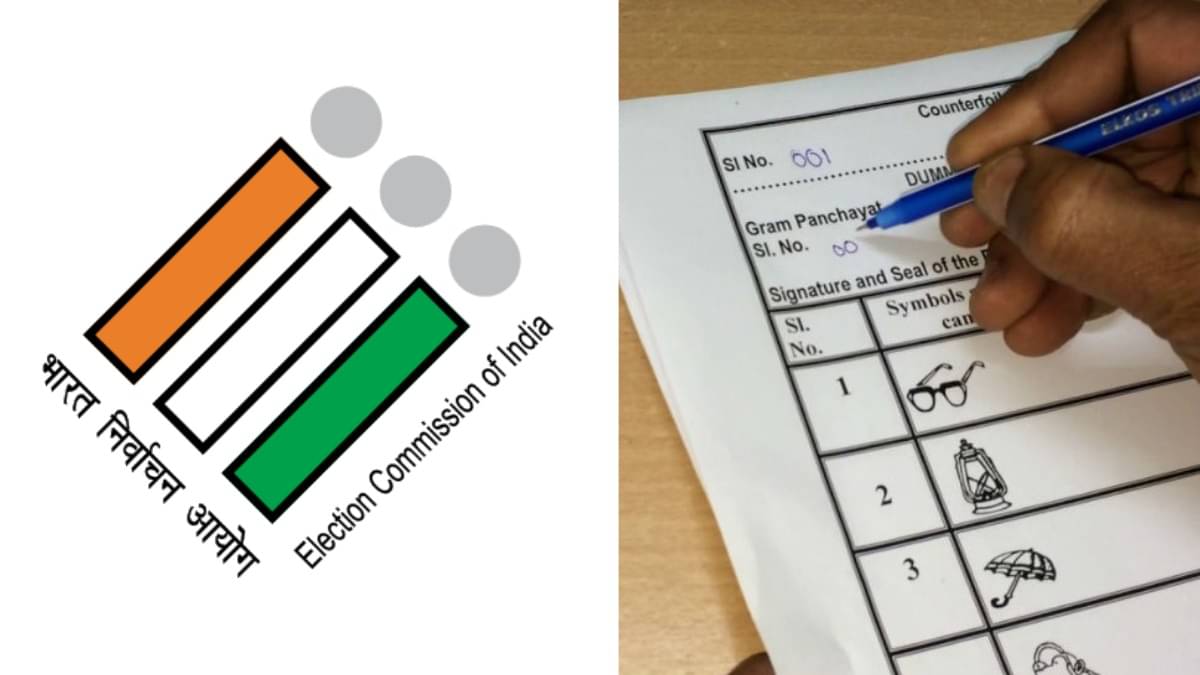
- The Election Commission of India (ECI) has revised guidelines under Rule 49B of the Conduct of Elections Rules, 1961 for designing and printing EVM ballot papers to improve usability and clarity.
- These changes will be implemented starting with the upcoming Bihar Assembly elections.
Redesigned Ballot Paper Features
- Colour Photographs:
- Candidate photos will be printed in colour, with the face occupying three-fourths of the photo space for better visibility.
- Aims to reduce confusion in constituencies with candidates having similar names or phonetic similarities.
- Uniform Font and Size:
- Names of all candidates and NOTA (None of the Above) will be printed in the same font type and a large, uniform size (bold 30-point font) for readability.
- Serial numbers and NOTA option will use international form of Indian numerals for consistency.
- Enhanced Paper Quality:
- Ballot papers will be printed on 70 GSM paper for durability.
- For Assembly elections, pink-coloured paper with specified RGB values will be used for easy recognition by voters and polling staff.
- Structural Layout:
- Names of not more than 15 candidates shall be arranged on one ballot sheet, with NOTA as the last option.
Additional Info
- EVMs in India:
- The first use of EVMs in a general election was in 2004 for all 543 Parliamentary Constituencies.
- EVMs are developed by two state-owned public sector undertakings: Bharat Electronics Limited (BEL) and Electronics Corporation of India Limited (ECIL).
- The latest generation of EVMs is known as M3 EVMs.
- Voter Verifiable Paper Audit Trail (VVPAT):
- Introduced to enhance the transparency and verifiability of the voting process.
- A VVPAT machine, attached to the EVM, prints a paper slip containing the name, serial number, and symbol of the candidate for whom a vote was cast. The slip is visible to the voter for about seven seconds before it drops into a sealed box.
- The Supreme Court has mandated the use of VVPATs in all elections to ensure voter confidence and auditability.
- Constitutional Articles:
- Article 324: Vests the power of superintendence, direction, and control of the preparation of electoral rolls and the conduct of elections in the Election Commission of India.
Sources
RBI Microsite on Indian Banknotes
What’s the News?
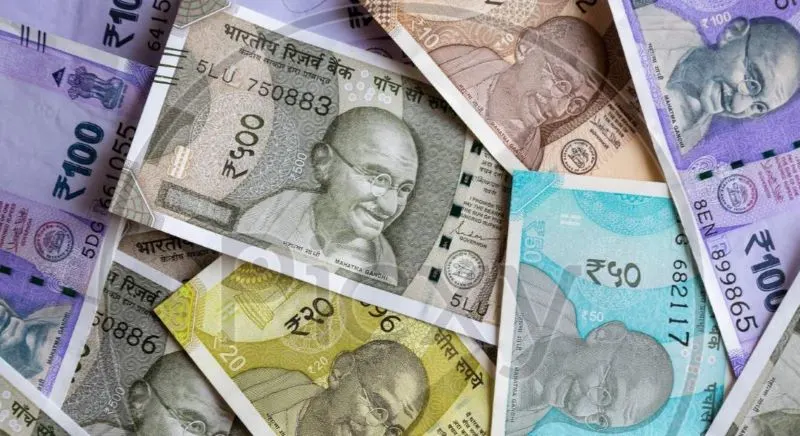
- The Reserve Bank of India (RBI) has launched a microsite dedicated to Indian banknotes. It provides information on design, security features, and exchange rules.
- The site includes a 360-degree view of banknotes, interactive tools, multimedia content, and a section on how to exchange old, damaged or withdrawn notes.
Microsite Features & Objectives
- Interactive Learning:
- 360-degree view for detailed examination of banknote design and security elements.
- Multimedia tools (videos, animations, audio) to explain security features like watermarks, security threads, and color-shifting inks.
- Games and quizzes to engage students and the public in learning about currency authenticity.
- Exchange Guidelines:
- Dedicated section on procedures for exchanging old, damaged, or withdrawn notes at banks and RBI counters.
- Accessibility:
- User-friendly navigation catering to all age groups, including students, educators, and businesses.
Additional Info
- Reserve Bank of India (RBI):
- Established on April 1, 1935, under the Reserve Bank of India Act, 1934.
- It is the central bank of India and is fully owned by the Government of India.
- Core Functions:
- Monetary Authority: Formulates, implements, and monitors the monetary policy.
- Issuer of Currency: Manages the issue and supply of currency in the country. This includes the issuance of new notes and the withdrawal of notes unfit for circulation.
- Banker to Government: Conducts merchant banking functions for both the Central and State Governments.
- Regulator and Supervisor: Regulates and supervises the financial system.
- Indian Banknotes:
- All banknotes in India, except the ₹1 note, are issued by the RBI. The ₹1 note is issued by the Government of India and bears the signature of the Finance Secretary.
- Indian banknotes feature the portrait of Mahatma Gandhi, part of the Mahatma Gandhi (New) Series which includes denominations from ₹10 to ₹2000. Each note in this series has a distinct motif on its reverse side, such as the Konark Sun Temple on the ₹10 note and Mangalyaan on the ₹2000 note.
- Counterfeiting and Legal Framework:
- The printing and possession of counterfeit currency are serious offenses under Section 489A-489E of the Indian Penal Code.
- RBI's Department of Currency Management (DCM) is responsible for administering the functions related to currency management and combating counterfeit currency.
Sources
RBI Tightens Guidelines for Payment Aggregators
What’s the News?
- The Reserve Bank of India (RBI) has issued the Payment Aggregators Directions, 2025.
- The rules apply immediately, especially for non-bank payment aggregators.
- The aim is to improve consumer protection, reduce fraud, tighten governance, ensure data security, and regulate cross-border and offline/online transactions better.
Key Provisions & Impacts
- Classification of Aggregators
- PA-O: Online aggregators.
- PA-P: Physical/offline aggregators.
- PA-CB: Cross-border aggregators.
- Net Worth & Authorisation
- Non-bank aggregators must have ₹15 crore net worth at application time.
- This must rise to ₹25 crore by the end of third financial year after authorisation.
- Banks are exempt from seeking separate authorisation to operate as PAs.
- Governance, Risk & Fraud Prevention
- Mandatory board-approved dispute resolution policy with defined refund timelines.
- Strong data security, fraud detection/prevention systems.
- Merchant background checks, KYC requirements.
- Escrow & Fund Management
- Funds collected by PAs must go into escrow accounts with scheduled commercial banks
- Separation of aggregator’s own funds from merchant funds.
- Cross-Border and Transaction Limits
- PA-CBs (cross-border) have specific rules on transaction flows and fund segregation.
- No PA can impose transaction-amount limits on specific modes; issuing bank will decide based on customer credit/spending.
- Other Operational Norms
- Authentication standards tightened: e.g. ATM PIN cannot be used as authentication factor for card-not-present transactions.
- Continuous maintenance of net worth and compliance obligations.
Sources
ISRO Invites Private Firms for On-Orbit Servicing & Refuelling
What’s the News?
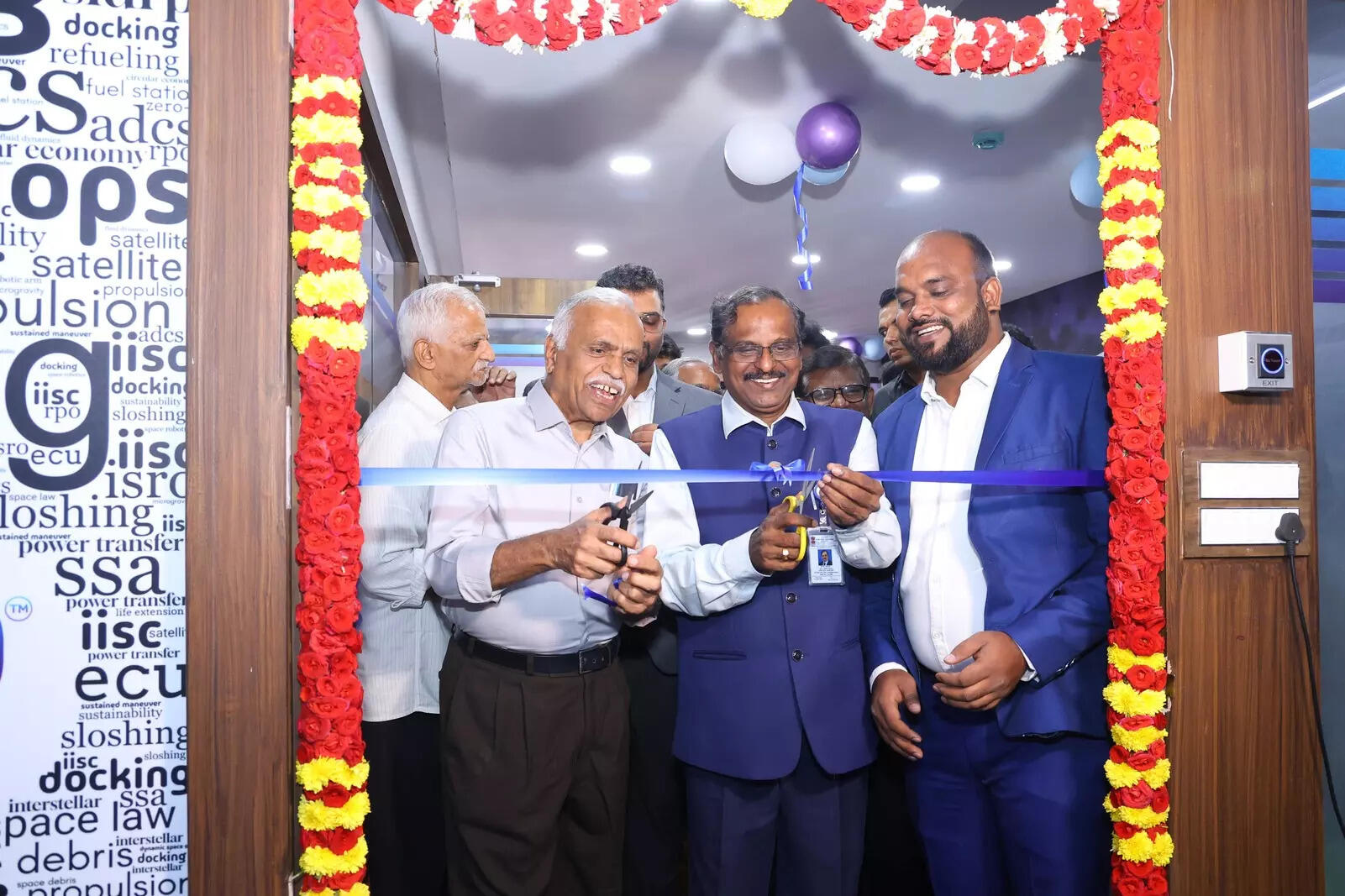
- ISRO has announced that it will invite private companies specialising in on-orbit servicing and refuelling (OOSR) technologies to collaborate on upcoming missions.
- The announcement coincides with the inauguration of a new R&D facility by OrbitAID Aerospace in Bengaluru.
Key Details & Implications
- OrbitAID facility
- Size: ~6,500 sq. ft.
- Investment: Over USD 2 million (~₹18-20 crore)
- Infrastructure: Includes a Class-10,000 cleanroom, a high-end control room, fuel transfer systems, and Rendezvous Proximity Operations & Docking (RPOD) capabilities.
- Technology Edge
- OrbitAID has developed a docking/refuelling interface called SIDRP, currently at Technology Readiness Level 7 (TRL-7).
- The facility will support “life extension services” for satellites via refuelling and servicing, domestically and globally.
- ISRO’s Role
- Open to collaboration with private sector in OOSR-related work for upcoming missions.
- This follows ISRO’s efforts to engage private players more deeply in its space ecosystem.
Sources
Swachhata Hi Seva 2025
What’s the News?
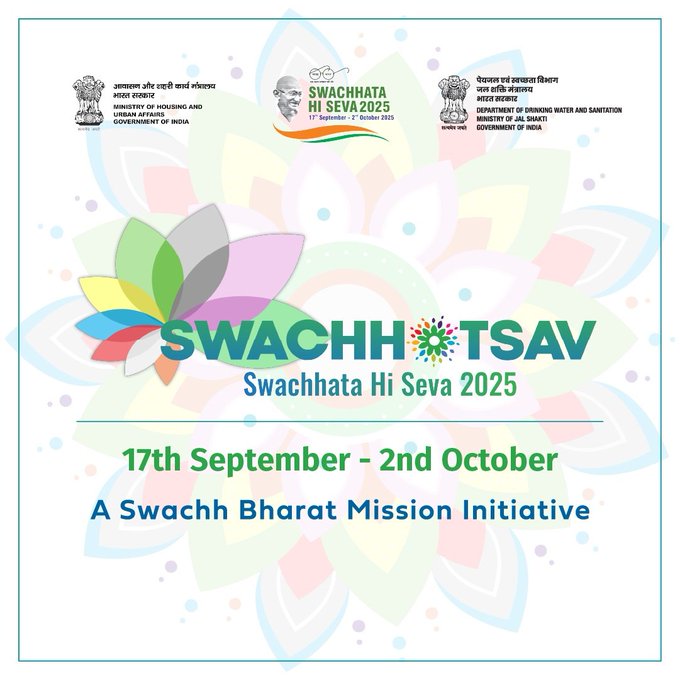
- The 9th edition of Swachhata Hi Seva (SHS) 2025 has begun nationwide, running from 17 September to 2 October, culminating on Gandhi Jayanti.
- It is being conducted jointly by the Ministry of Housing & Urban Affairs (MoHUA) and the Department of Drinking Water and Sanitation (DDWS), Ministry of Jal Shakti.
- The theme this year is “Swachhotsav”, aiming to merge the festive spirit with cleanliness, community participation and waste reduction.
Key Components & Details
- Five Key Pillars
- Transformation of Cleanliness Target Units (CTUs): Identify and clean up dark, dirty, neglected spots.
- Clean Public Spaces: Activities in high-footfall public areas like railway stations, tourist spots, drains etc.
- SafaiMitra Suraksha Shivir: Welfare camps for sanitation workers—health check-ups, PPE, etc.
- Clean Green Festivities: Encouraging zero-waste and eco-friendly celebrations during festivals.
- Advocacy for Swachhata: Community mobilisation, awareness, Gram Sabhas, use of Swachhata App, maintaining gains beyond the campaign.
- Special Event: “Ek Din, Ek Ghanta, Ek Saath”
- A nationwide voluntary cleanup event will be organized on 25 September, coinciding with Pandit Deendayal Upadhyay’s birth anniversary. Citizens, youth groups, NGOs and others will participate.
Additional Info
- SBM Phase I (2014-2019): This phase focused on eliminating open defecation. Through the construction of over 100 million individual household toilets, all villages in India were declared Open Defecation Free (ODF) by October 2, 2019. This massive behavioral change campaign was achieved through a multi-pronged approach involving government departments, non-governmental organizations, and citizens.
- SBM Phase II (2020-2025): The current phase, known as SBM-Grameen Phase II, shifts the focus to Sustaining ODF status and implementing Solid and Liquid Waste Management (SLWM) in rural areas. The goal is to transform villages into ODF Plus villages, which are defined by:
- ODF Sustainability: Ensuring the continued use of toilets.
- Solid Waste Management: Proper segregation, collection, and disposal of solid waste.
- Liquid Waste Management: Safe management of greywater and fecal sludge.
- Visual Cleanliness: Maintaining a high standard of overall cleanliness in public spaces.
Sources
September 2025
30 September 202529 September 202527 September 202526 September 202525 September 202524 September 202523 September 202522 September 202520 September 202519 September 202518 September 202517 September 202516 September 202515 September 202513 September 202512 September 202511 September 202510 September 202509 September 202508 September 202506 September 202505 September 202504 September 202503 September 202502 September 202501 September 2025
Archive
October 2026
- 28 October 2026
- 27 October 2026
- 26 October 2026
- 24 October 2026
- 23 October 2026
- 22 October 2026
- 21 October 2026
- 20 October 2026
- 19 October 2026
- 17 October 2026
- 16 October 2026
- 15 October 2026
- 14 October 2026
- 13 October 2026
- 12 October 2026
- 10 October 2026
- 09 October 2026
- 08 October 2026
- 07 October 2026
- 06 October 2026
- 05 October 2026
- 03 October 2026
- 02 October 2026
- 01 October 2026
September 2026
- 30 September 2026
- 29 September 2026
- 28 September 2026
- 26 September 2026
- 25 September 2026
- 24 September 2026
- 23 September 2026
- 22 September 2026
- 21 September 2026
- 19 September 2026
- 18 September 2026
- 17 September 2026
- 16 September 2026
- 15 September 2026
- 12 September 2026
- 11 September 2026
- 10 September 2026
- 09 September 2026
- 08 September 2026
- 07 September 2026
- 05 September 2026
- 04 September 2026
- 03 September 2026
- 02 September 2026
- 01 September 2026
August 2026
- 31 August 2026
- 29 August 2026
- 27 August 2026
- 26 August 2026
- 25 August 2026
- 24 August 2026
- 22 August 2026
- 21 August 2026
- 20 August 2026
- 19 August 2026
- 18 August 2026
- 17 August 2026
- 14 August 2026
- 13 August 2026
- 12 August 2026
- 11 August 2026
- 10 August 2026
- 08 August 2026
- 07 August 2026
- 06 August 2026
- 05 August 2026
- 04 August 2026
- 03 August 2026
- 01 August 2026
July 2026
- 31 July 2026
- 30 July 2026
- 29 July 2026
- 28 July 2026
- 27 July 2026
- 25 July 2026
- 23 July 2026
- 22 July 2026
- 21 July 2026
- 20 July 2026
- 18 July 2026
- 17 July 2026
- 15 July 2026
- 14 July 2026
- 13 July 2026
- 11 July 2026
- 10 July 2026
- 09 July 2026
- 08 July 2026
- 07 July 2026
- 06 July 2026
- 04 July 2026
- 03 July 2026
- 02 July 2026
- 01 July 2026
June 2026
May 2026
April 2026
March 2026
- 31 March 2026
- 30 March 2026
- 28 March 2026
- 27 March 2026
- 26 March 2026
- 25 March 2026
- 24 March 2026
- 23 March 2026
- 21 March 2026
- 20 March 2026
- 19 March 2026
- 18 March 2026
- 17 March 2026
- 16 March 2026
- 14 March 2026
- 13 March 2026
- 12 March 2026
- 11 March 2026
- 10 March 2026
- 09 March 2026
- 07 March 2026
- 06 March 2026
- 05 March 2026
- 03 March 2026
- 02 March 2026
February 2026
- 28 February 2026
- 27 February 2026
- 26 February 2026
- 25 February 2026
- 24 February 2026
- 23 February 2026
- 21 February 2026
- 20 February 2026
- 19 February 2026
- 18 February 2026
- 17 February 2026
- 16 February 2026
- 13 February 2026
- 12 February 2026
- 11 February 2026
- 10 February 2026
- 09 February 2026
- 07 February 2026
- 06 February 2026
- 05 February 2026
- 04 February 2026
- 03 February 2026
- 02 February 2026
January 2026
- 31 January 2026
- 30 January 2026
- 29 January 2026
- 28 January 2026
- 27 January 2026
- 26 January 2026
- 24 January 2026
- 23 January 2026
- 22 January 2026
- 21 January 2026
- 20 January 2026
- 19 January 2026
- 16 January 2026
- 15 January 2026
- 14 January 2026
- 13 January 2026
- 12 January 2026
- 10 January 2026
- 09 January 2026
- 08 January 2026
- 07 January 2026
- 06 January 2026
- 05 January 2026
- 03 January 2026
- 02 January 2026
- 01 January 2026
December 2025
- 31 December 2025
- 30 December 2025
- 29 December 2025
- 27 December 2025
- 26 December 2025
- 24 December 2025
- 23 December 2025
- 22 December 2025
- 20 December 2025
- 19 December 2025
- 18 December 2025
- 17 December 2025
- 16 December 2025
- 15 December 2025
- 13 December 2025
- 12 December 2025
- 11 December 2025
- 10 December 2025
- 09 December 2025
- 08 December 2025
- 05 December 2025
- 04 December 2025
- 03 December 2025
- 02 December 2025
November 2025
- 29 November 2025
- 28 November 2025
- 27 November 2025
- 26 November 2025
- 25 November 2025
- 24 November 2025
- 22 November 2025
- 21 November 2025
- 20 November 2025
- 19 November 2025
- 18 November 2025
- 17 November 2025
- 15 November 2025
- 14 November 2025
- 13 November 2025
- 12 November 2025
- 11 November 2025
- 10 November 2025
- 08 November 2025
- 07 November 2025
- 06 November 2025
- 05 November 2025
- 04 November 2025
- 03 November 2025
- 01 November 2025
October 2025
- 31 October 2025
- 30 October 2025
- 29 October 2025
- 28 October 2025
- 27 October 2025
- 25 October 2025
- 24 October 2025
- 23 October 2025
- 22 October 2025
- 21 October 2025
- 20 October 2025
- 18 October 2025
- 17 October 2025
- 16 October 2025
- 15 October 2025
- 14 October 2025
- 13 October 2025
- 11 October 2025
- 10 October 2025
- 09 October 2025
- 08 October 2025
- 07 October 2025
- 06 October 2025
- 04 October 2025
- 03 October 2025
- 02 October 2025
- 01 October 2025
September 2025
- 30 September 2025
- 29 September 2025
- 27 September 2025
- 26 September 2025
- 25 September 2025
- 24 September 2025
- 23 September 2025
- 22 September 2025
- 20 September 2025
- 19 September 2025
- 18 September 2025
- 17 September 2025
- 16 September 2025
- 15 September 2025
- 13 September 2025
- 12 September 2025
- 11 September 2025
- 10 September 2025
- 09 September 2025
- 08 September 2025
- 06 September 2025
- 05 September 2025
- 04 September 2025
- 03 September 2025
- 02 September 2025
- 01 September 2025
August 2025
- 30 August 2025
- 29 August 2025
- 28 August 2025
- 27 August 2025
- 26 August 2025
- 25 August 2025
- 23 August 2025
- 22 August 2025
- 21 August 2025
- 20 August 2025
- 19 August 2025
- 18 August 2025
- 16 August 2025
- 14 August 2025
- 13 August 2025
- 12 August 2025
- 11 August 2025
- 08 August 2025
- 07 August 2025
- 06 August 2025
- 05 August 2025
- 04 August 2025
- 02 August 2025
- 01 August 2025
July 2025
- 31 July 2025
- 30 July 2025
- 29 July 2025
- 28 July 2025
- 26 July 2025
- 25 July 2025
- 24 July 2025
- 23 July 2025
- 22 July 2025
- 21 July 2025
- 19 July 2025
- 18 July 2025
- 17 July 2025
- 16 July 2025
- 15 July 2025
- 12 July 2025
- 11 July 2025
- 10 July 2025
- 09 July 2025
- 07 July 2025
- 05 July 2025
- 04 July 2025
- 03 July 2025
- 02 July 2025
- 01 July 2025
June 2025
- 30 June 2025
- 28 June 2025
- 27 June 2025
- 26 June 2025
- 25 June 2025
- 24 June 2025
- 23 June 2025
- 21 June 2025
- 20 June 2025
- 19 June 2025
- 18 June 2025
- 17 June 2025
- 16 June 2025
- 14 June 2025
- 13 June 2025
- 12 June 2025
- 11 June 2025
- 10 June 2025
- 09 June 2025
- 07 June 2025
- 06 June 2025
- 05 June 2025
- 04 June 2025
- 03 June 2025
- 02 June 2025
May 2025
April 2025
- 30 April 2025
- 29 April 2025
- 28 April 2025
- 26 April 2025
- 25 April 2025
- 24 April 2025
- 23 April 2025
- 22 April 2025
- 21 April 2025
- 19 April 2025
- 18 April 2025
- 17 April 2025
- 16 April 2025
- 15 April 2025
- 14 April 2025
- 12 April 2025
- 11 April 2025
- 10 April 2025
- 09 April 2025
- 08 April 2025
- 07 April 2025
- 05 April 2025
- 04 April 2025
- 03 April 2025
- 02 April 2025
- 01 April 2025
March 2025
- 31 March 2025
- 29 March 2025
- 28 March 2025
- 27 March 2025
- 26 March 2025
- 25 March 2025
- 24 March 2025
- 22 March 2025
- 21 March 2025
- 20 March 2025
- 19 March 2025
- 18 March 2025
- 17 March 2025
- 15 March 2025
- 13 March 2025
- 12 March 2025
- 11 March 2025
- 10 March 2025
- 08 March 2025
- 07 March 2025
- 06 March 2025
- 05 March 2025
- 04 March 2025
- 03 March 2025
- 01 March 2025
February 2025
- 28 February 2025
- 27 February 2025
- 26 February 2025
- 25 February 2025
- 24 February 2025
- 22 February 2025
- 21 February 2025
- 20 February 2025
- 19 February 2025
- 18 February 2025
- 17 February 2025
- 15 February 2025
- 14 February 2025
- 13 February 2025
- 12 February 2025
- 11 February 2025
- 10 February 2025
- 08 February 2025
- 07 February 2025
- 06 February 2025
- 05 February 2025
- 04 February 2025
- 03 February 2025
- 01 February 2025
January 2025
- 31 January 2025
- 30 January 2025
- 29 January 2025
- 28 January 2025
- 27 January 2025
- 25 January 2025
- 24 January 2025
- 23 January 2025
- 22 January 2025
- 21 January 2025
- 20 January 2025
- 18 January 2025
- 17 January 2025
- 16 January 2025
- 15 January 2025
- 14 January 2025
- 13 January 2025
- 11 January 2025
- 10 January 2025
- 09 January 2025
- 08 January 2025
- 07 January 2025
- 06 January 2025
- 04 January 2025
- 03 January 2025
- 02 January 2025
- 01 January 2025