
Current Affairs
Stay updated with the latest national and international events.
17 February 2026
India Hosts Inaugural UN Training Programme on Small Arms Control

What's the News
- The Indian Army hosted the inaugural Asia-Pacific United Nations Fellowship Training Programme on Small Arms and Light Weapons (SALW) Control in Jabalpur, Madhya Pradesh.
- The three-week programme is organised under the aegis of the Ministry of External Affairs (MEA) and Ministry of Defence (MoD).
- Delegates from 13 Asia-Pacific nations are participating to strengthen regional cooperation on arms control and disarmament.
- The training aims to enhance technical and policy capacity of government officials to prevent illicit small arms trafficking.
UN Fellowship Programme on SALW Control?
Overview
The fellowship is a standing dedicated training programme established by the UN General Assembly in December 2022 (Resolution A/RES/77/71) to strengthen technical and practical expertise of government officials responsible for implementing global arms control frameworks.
Key Details
- Organiser: United Nations Office for Disarmament Affairs (UNODA) through its Regional Centre for Peace and Disarmament in Asia and the Pacific (UNRCPD).
- Duration: Three-week intensive training (conducted from mid-February to early March).
- Regional Rotation: The fellowship operates in four iterations covering all regions:
- Africa.
- Asia and the Pacific (currently hosted by India).
- Europe and Other States.
- Latin America and the Caribbean.
- Annual Intake: 60 government officials globally (15 per regional iteration).
- Selection: Competitive evaluation process; each Member State can nominate up to three candidates but only one is selected per country.
Training Programme Overview
| Aspect | Details |
|---|---|
| Venue | Military College of Materials Management (MCMM), Jabalpur |
| Duration | 3 weeks (February 16 – March 6, 2026) |
| Participants | 13 Asia-Pacific countries |
| Organisers | Indian Army, MEA, MoD, UNODA |
| Focus Area | SALW control, tracing systems, disarmament cooperation |
Additional Info
- UNODA (United Nations Office for Disarmament Affairs):
- Established in 1998 to promote nuclear disarmament and the regulation of conventional weapons.
- It provides substantive support for norms-setting in the UN General Assembly and other international bodies.
- Defining SALW:
- Small Arms: Weapons designed for individual use, such as revolvers, self-loading pistols, rifles, and sub-machine guns.
- Light Weapons: Weapons designed for use by a crew of two or three, though some may be carried by an individual, such as heavy machine guns, portable anti-aircraft missiles, and mortars of less than 100mm calibre.
- UN Programme of Action (PoA):
- Adopted in 2001, it is the primary international framework for countries to prevent, combat, and eradicate the illicit trade in small arms in all its aspects.
Sources
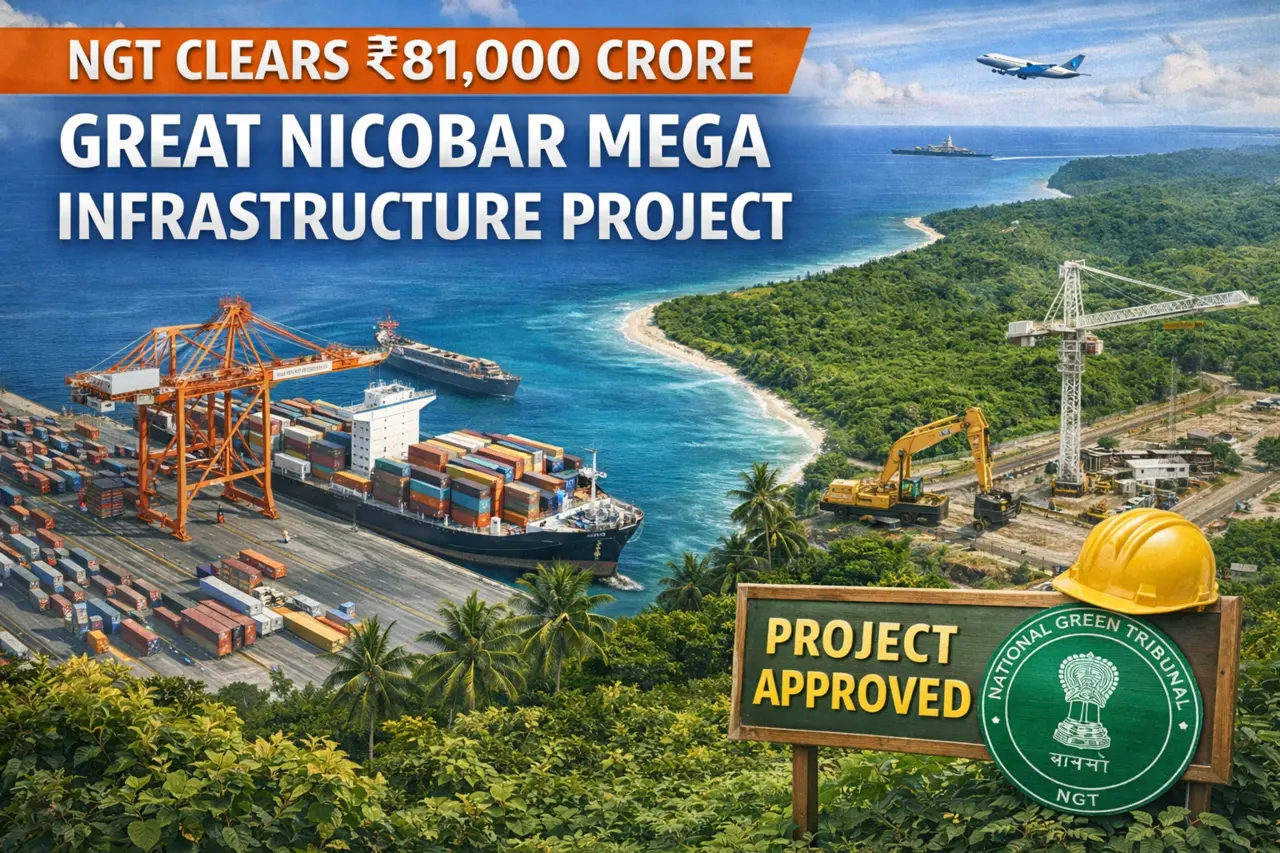
NGT Clears ₹81,000 Crore Great Nicobar Mega Infrastructure Project
What's the News?
- The National Green Tribunal (NGT) has approved the Great Nicobar Island Integrated Development Project with a total outlay of ₹81,000 crore.
- The tribunal stated it found "no good ground" to intervene in the environmental clearance already granted to the project.
- The NGT cited adequate environmental safeguards and the project's strategic importance due to proximity to the Malacca Strait.
- The project will be implemented by Andaman and Nicobar Islands Integrated Development Corporation (ANIIDCO) under the conceptual framework of NITI Aayog.
- All environmental petitions against the project have been dismissed, allowing construction to proceed.
Project Overview & Key Components
| Aspect | Details |
|---|---|
| Total Cost | ₹81,000 crore (revised from ₹72,000 crore) |
| Area Covered | 166 square kilometers on Great Nicobar Island |
| Implementation | ANIIDCO (Andaman and Nicobar Islands Integrated Development Corporation) |
| Planning Body | NITI Aayog |
| Phase 1 Completion | Expected by 2028 |
| Full Completion | Expected by 2050 |
Four Core Components
- International Container Transshipment Terminal: Deep-draft port at Galathea Bay for handling large vessels.
- Greenfield International Airport: Dual-use (civilian and military) airport to enhance connectivity.
- Township Development: Two new townships for residential and commercial purposes .
- Power Plant: 450 MVA capacity gas and solar-based power generation facility.
Strategic Significance of the Project?
Overview
The Great Nicobar Island (GNI) Project is a holistic infrastructure initiative conceived by NITI Aayog to transform India's southernmost island into a major maritime hub and strategic outpost in the Bay of Bengal, countering foreign influence in the Indian Ocean Region.
Key Components
- International Container Transshipment Terminal (ICTT) at Galathea Bay:
- Estimated cost: ₹40,040 crore
- Phase 1 capacity: 4 million TEUs annually (targeted by 2028)
- Full capacity: 16 million TEUs annually
- No foreign operators allowed; Indian private entity to hold majority (>51%) stake with state port trusts as minority partners
- 50-year concession period with viability gap funding
- Greenfield International Airport: Dual-use civil-military facility to enhance connectivity and defence capabilities.
- Integrated Township: Supporting projected population and economic activities.
- 450-MVA Power Plant: Gas and solar-based energy infrastructure.
Strategic Value
- Geopolitical Positioning: Located just 40 km from the Malacca Strait, through which one-third of global trade passes.
- Act East Policy: Counterbalances China's "String of Pearls" strategy and growing presence in the Indian Ocean.
- Economic Impact: Expected to generate approximately 1,28,558 jobs and save significant transhipment costs currently paid to foreign ports.
Environmental Safeguards Imposed by NGT?
The Tribunal imposed binding conditions to mitigate ecological damage:
- Shoreline Protection:
- No erosion or adverse shoreline changes permitted from construction activities.
- Zero loss of sandy beaches critical for turtle and bird nesting sites.
- Coral Reef Conservation:
- Translocation of scattered corals as per Zoological Survey of India (ZSI) protocols.
- Implementation of coral regeneration through proven scientific methods.
- Protection of all coral reefs along the coastal stretch.
- Endangered Species Protection: Specific conditions for:
- Leatherback sea turtles
- Nicobar megapode
- Saltwater crocodiles
- Robber crab
- Nicobar macaque
- Other endemic bird species
- Compliance Mechanism:
- Government bound by all environmental clearance conditions.
- Periodic compliance reviews and monitoring committee oversight.
- Independent monitoring committees for tribal welfare and pollution control.
Areas of Concern?
Ecological Impact
- Forest Diversion: 130 sq km of primary tropical rainforest (15% of GNI's landmass) to be cleared, involving felling of approximately 10 million trees.
- Wildlife Sanctuary Denotification: Galathea Bay Wildlife Sanctuary (designated 1997 for leatherback turtle conservation) was denotified in 2021 for port construction.
- Biodiversity Loss: Project affects unique island ecosystem with endemic species found nowhere else.
Tribal Rights Issues
- Indigenous Communities: Threatens Shompen (Particularly Vulnerable Tribal Group) and Nicobarese communities with displacement from ancestral lands devastated by the 2004 tsunami.
- Consultation Gaps: Allegations of inadequate representation in public hearings and requests for "surrender certificates" for tribal land claims.
- Forest Rights: Mandatory consultation required under Forest Rights Act, 2006 and Jarawa (2004) and Shompen (2015) Policies.
Procedural Concerns
- Data Limitations: Environmental Impact Assessment based on single-season data rather than comprehensive multi-seasonal studies.
- ICRZ Violations: Petitions alleged 700 hectares fall within Island Coastal Regulation Zone (ICRZ) 1A areas where development is prohibited; NGT accepted High-Powered Committee findings that no prohibited areas were involved.
- Conflict of Interest: High-Powered Committee reviewing clearance included officials from ministries that granted the clearance.
Additional Info
Legal and Constitutional Framework
- National Green Tribunal (NGT):
- Established under National Green Tribunal Act, 2010
- Chairperson: Justice Prakash Shrivastava (former Chief Justice of Chhattisgarh High Court).
- Mandate: Expedite disposal of environmental protection and conservation cases.
- Island Coastal Regulation Zone (ICRZ) Notification, 2019:
- Prohibits development in CRZ 1A (ecologically sensitive areas with coral reefs, mangroves, nesting grounds).
- Regulates construction in CRZ 1B and other coastal zones.
- Forest Clearance Process:
- Stage I (In-Principle): Granted 2022.
- Stage II (Final): Pending; requires compensatory afforestation.
- Compensatory Afforestation: Proposed in Haryana and Madhya Pradesh (critics argue this cannot replicate lost island biodiversity).
Related Conservation Frameworks
- Wildlife Protection Act, 1972: Galathea Bay notified as sanctuary in 1997; denotified 2021.
- Biological Diversity Act, 2002: Great Nicobar falls within UNESCO World Network of Biosphere Reserves.
- Scheduled Tribes and Other Traditional Forest Dwellers (Recognition of Forest Rights) Act, 2006: Mandates free, prior, informed consent of tribal communities.
Maritime Context
- United Nations Convention on the Law of the Sea (UNCLOS), 1982: Governs maritime rights and exclusive economic zones.
- Ten Degree Channel: Separates Andaman Islands from Nicobar Islands; critical shipping lane.
Sources
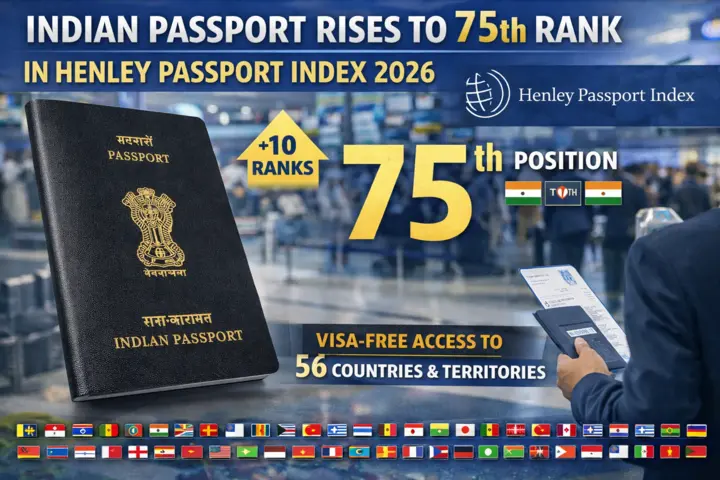
Indian Passport Rises to 75th Rank in Henley Passport Index 2026
What's the News
- India's passport has climbed to 75th position in the Henley Passport Index 2026, jumping 10 ranks from its previous standing.
- Indian passport holders can now access 56 countries and territories without requiring a prior visa.
- The improvement reflects enhanced diplomatic engagements and visa waiver agreements negotiated by the Ministry of External Affairs (MEA).
- This marks one of the significant gains among Asian passports in the latest global ranking.
Henley Passport Index Overview
| Aspect | Details |
|---|---|
| India's Rank (2026) | 75th position |
| Previous Rank | 85th position |
| Rank Improvement | +10 positions |
| Visa-Free Access | 56 countries/territories |
| Index Publisher | Henley & Partners (UK-based) |
| Methodology | Based on IATA data and visa-free scoring |
Features of the Index
- Global Coverage: Ranks 199 passports across 227 travel destinations worldwide.
- Scoring System: Based on number of destinations passport holders can access without a prior visa.
- Data Source: Uses exclusive data from International Air Transport Association (IATA).
- Update Frequency: Rankings are updated quarterly to reflect visa policy changes.
Methodology
- Data Source: Exclusive data from International Air Transport Association (IATA) – the largest, most accurate travel information database.
- Coverage: 199 passports evaluated against 227 travel destinations.
- Scoring System:
- 1 point for each destination where no visa is required, or visa-on-arrival, visitor's permit, or basic eTA is available.
- 0 points for destinations requiring pre-approved visa or full e-visa with prior approval.
- Ranking: Comparative ranking based on total points; countries with identical scores share the same rank.
India's Performance Trajectory
- 2025: Ranked 85th with 57 visa-free destinations.
- January 2026: Dropped to 80th with 55 destinations (after losing Iran and Bolivia).
- February 2026: Improved to 75th with 56 destinations (The Gambia added).
Global Passport Hierarchy?
Top Performers (2026)
- 1st: Singapore – 192 destinations
- 2nd: Japan & South Korea – 187 destinations
- 3rd: Sweden & UAE – 186 destinations
- 4th: France, Germany, Italy, Spain, Switzerland – 185 destinations
- 5th: Austria, Greece, Malta, Portugal – 184 destinations
- 10th: United States – 179 destinations
India's Neighbourhood Comparison
| Country | Rank | Visa-Free Access |
|---|---|---|
| Maldives | 49th | 93 destinations |
| China | 56th | 82 destinations |
| India | 75th | 56 destinations |
| Bhutan | 83rd | 48 destinations |
| Myanmar | 88th | 43 destinations |
| Sri Lanka | 91st | 39 destinations |
| Bangladesh | 93rd | 37 destinations |
| Nepal | 95th | 35 destinations |
| Pakistan | 97th | 32 destinations |
| Afghanistan | 101st | 24 destinations |
Sources
Ol Chiki Script Marks Centenary: President Murmu Inaugurates National Celebrations
What's the News?
- President Droupadi Murmu inaugurated the centenary celebrations of the Ol Chiki script at a national event organised by the Ministry of Culture in New Delhi.
- The celebrations mark 100 years (1925–2025) since the script's invention by Pandit Raghunath Murmu, a scholar from Rairangpur, Mayurbhanj district, Odisha.
- On the occasion, the President released a commemorative coin and postage stamp and felicitated 10 achievers from the Santal community for promoting the script.
Ol Chiki Script and Its Significance?
Origins and Creation
- Inventor: Pandit Raghunath Murmu (1905–1982), born in Dandbose village, Mayurbhanj district, Odisha.
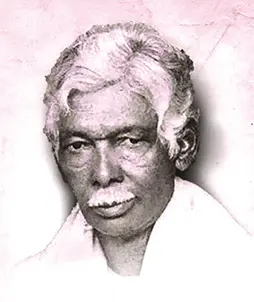
- Year of Invention: 1925 (first publicised in 1939 at Mayurbhanj State exhibition)
- Etymology: Derived from Santali words – 'Ol' (to write/draw an imaginary picture) and 'Chiki' (pictorial representation/symbols).
- Philosophy: Murmu believed "if a community doesn't have any script, the community may lose its own identity one day".
Linguistic Features
- Script Type: True alphabet (not an abugida like most Indic scripts), giving vowels equal representation with consonants.
- Character Set: 30 letters total – 6 vowels and 24 consonants.
- Design Principle: Pictographic-phonetic – letter shapes resemble objects or actions representing their names in Santali.
- Example: The letter 'ol' (/l/ sound) is shaped like a hand holding a pen, as 'ol' means 'writing' in Santali.
- Writing Direction: Left-to-right.
- Scientific Approach: Designed to accurately represent Santali phonemes (including glottalization, nasalization, and checked plosives) that Indic scripts cannot capture.
Historical Context
- Pre-Ol Chiki Era: Santali was written in Roman, Devanagari, Odia, and Bengali scripts in different regions; these could not accurately capture Santali phonetics.
- Development Journey: Murmu developed the script while teaching at Badamtalia Primary School (1933), first book 'Horh Sereng' published in 1936, first play 'Bidu-Chandan' in 1942.
- Recognition: Conferred the title 'Guru Gomke' (the great teacher) by Jaipal Singh Munda at the 1956 All India Sarna Conference.
Constitutional and Educational Status?
- Eighth Schedule Inclusion: Santali language included in the Eighth Schedule of the Constitution through the 92nd Constitutional Amendment Act, 2003 – first tribal language from eastern India to achieve this status.
- State Recognition: Official recognition in Jharkhand, Odisha, West Bengal, and Bihar; introduced as medium of instruction at primary and high school levels in Santal-dominated areas.
- University Education: Courses in Santali literature using Ol Chiki script offered at universities in Jharkhand, West Bengal, and Odisha.
- Unicode Standard: Script included in Unicode, facilitating digital representation and modern communication.
- Optional Holiday: Odisha government declared Guru Purnima (full moon day in May, Murmu's birth anniversary) as an optional holiday in 2016.
Cultural and Literary Impact?
- Community Identity: Ol Chiki serves as a powerful symbol of Santal identity worldwide and an effective means of establishing unity among the Santal community.
- Literary Corpus: Murmu authored over 150 plays, short stories, novels, and poems in Ol Chiki, including:
- Bidu-Chandan (love drama)
- Kherwal Bir (patriotic drama)
- Sido Kanhu (patriotic drama)
- Hital (scripture on evolution)
- Ol Chemed (primary learning syllabus)
- Parsi Poha (essential elements of Ol Chiki)
- Religious Significance: Characters Bidu and Chandan from Murmu's plays are worshipped as 'God of Knowledge' by some Santals; annual prayers offered at the confluence of Jual and Bhangra rivers near Jhargram.
Additional Info
Demographics and Geographical Spread
- Speaker Population: Approximately 7 million people in India.
- Primary States: Jharkhand, Odisha, West Bengal, Bihar, Assam.
- International Presence: Significant Santali-speaking populations in Nepal, Bangladesh, and Bhutan.
- Language Family: Munda branch of Austroasiatic language family (distinct from Indo-Aryan languages).
- Linguistic Features: Agglutinative structure with tonal elements; rich oral literature preserving history, ecology, and social values.
Institutional Recognition
- Sahitya Akademi: Recognises Santali literature; annual awards given for literary contributions.
- Educational Infrastructure: Pandit Raghunath Murmu Medical College and Hospital (Mayurbhanj), Nayagram Pandit Raghunath Murmu Government College (Jhargram), and other institutions named after the inventor.
- Cultural Organisations: Adivasi Socio-Educational and Cultural Association (ASECA) established by Murmu in 1953 to promote tribal education and culture.
Constitutional Framework for Minority Languages
- Article 29: Protection of interests of minorities (right to conserve distinct language, script, or culture).
- Article 30: Right of minorities to establish and administer educational institutions.
- Article 350A: Facilities for instruction in mother-tongue at primary stage.
- Article 351: Directive for development of Hindi while safeguarding other languages.
Related Tribal Scripts in India
- Kui Lipi: For Kondh community (Odisha).
- Sorang Sompeng: For Saura community (Odisha).
- Mundari Bani: For Bhumij community (Odisha).
- Ol Chiki remains the oldest and most widely adopted among indigenous scripts developed in eastern India.
Sources
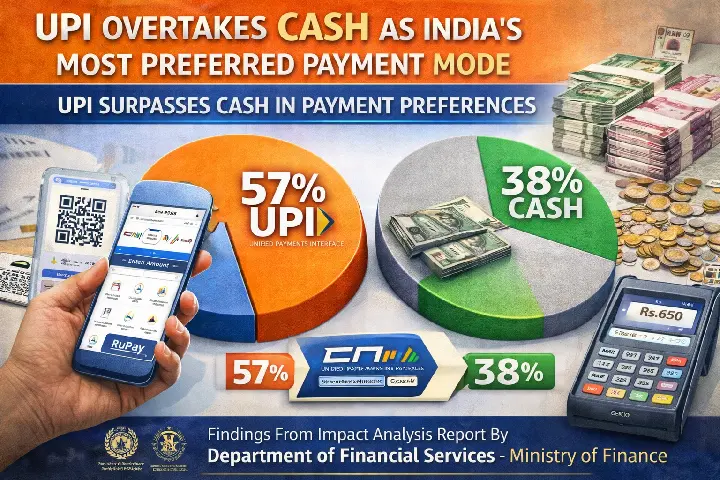
UPI Overtakes Cash as India's Most Preferred Payment Mode
What's the News?
- Unified Payments Interface (UPI) has emerged as the most preferred mode of transaction in India, accounting for 57% of total payment transactions among surveyed users, surpassing cash at 38%.
- The findings are from a socio-economic impact analysis released by the Department of Financial Services (DFS), Ministry of Finance, during the Chintan Shivir held in February 2026.
- The report evaluates the effectiveness of the government's Incentive Scheme for Promotion of RuPay Debit Card and low-value BHIM-UPI (Person-to-Merchant) transactions, implemented from FY 2021–22 through FY 2024–25.
Findings of the Survey?
Methodology
- Sample Size: 10,378 respondents across 15 states.
- Respondent Categories: 6,167 users, 2,199 merchants, and 2,012 service providers.
- Geographical Coverage: Five zones – North, South, East, West, and North-East.
- Locations: Urban and semi-urban areas.
- Fieldwork Period: July 22 to August 25, 2025.
- Method: Face-to-face Computer Assisted Personal Interviews (CAPI).
User Behaviour
- Daily Usage: 65% of UPI users report multiple digital transactions per day.
- Youth Adoption: 66% adoption rate among 18–25 age group, indicating strong shift toward digital-first financial habits.
- Confidence: 90% of users reported increased confidence in digital payments after using UPI and RuPay cards.
- Motivators:
- 52% cited cashback incentives as key motivation.
- 74% identified speed of payment as primary advantage.
- Cash Decline: Marked reduction in cash usage and ATM withdrawals observed.
Merchant Adoption
- Near-Universal Acceptance: 94% of small merchants now accept UPI payments.
- Satisfaction: 72% expressed satisfaction with digital payments.
- Benefits Cited: Faster transactions, improved record-keeping, operational convenience.
- Business Impact: 57% reported increase in sales following digital adoption.
Infrastructure Growth and Scale?
Transaction Growth
- 11-Fold Increase: Digital transactions increased nearly 11 times during the scheme period
- UPI Dominance: UPI's share in total digital transactions surged to ~80%.
- Monthly Records:
- January 2026: 21.70 billion transactions worth ₹28.33 lakh crore.
- December 2025: 21.63 billion transactions worth ₹27.97 lakh crore.
- Average daily transactions: 700 million (January 2026).
Infrastructure Expansion
- UPI QR Codes: Deployment expanded dramatically from 9.3 crore to 65.8 crore.
- Bank Participation: Banks on UPI platform increased from 216 (March 2021) to 661 (March 2025).
- Third-Party Apps: Rebounded from 16 to 38 providers.
- Annual Volume (2025): Approximately 228 billion transactions.
Government Investment
- Total Budgetary Support: ₹8,276 crore
- Year-wise Disbursements:
- FY 2021–22: ₹1,389 crore.
- FY 2022–23: ₹2,210 crore.
- FY 2023–24: ₹3,631 crore.
- FY 2024–25: ₹1,046 crore.
Additional Info
UPI Architecture
- Operator: National Payments Corporation of India (NPCI) – umbrella organisation for retail payments under RBI and IBA guidance.
- Launch: April 2016 (pilot), enabling instant bank-to-bank transfers using mobile numbers or QR codes.
- Components:
- BHIM-UPI: Government-backed app.
- Third-Party Apps: PhonePe, Google Pay, Paytm, and others.
- RuPay: Domestic card network integrated with UPI.
Policy Framework
- Digital India Programme: UPI serves as cornerstone for less-cash economy vision.
- Pradhan Mantri Jan Dhan Yojana (PMJDY): Linked accounts enable direct benefit transfers and digital payments.
- Payment and Settlement Systems Act, 2007: Regulatory framework governing NPCI operations.
Comparative Metrics (H1 2025)
- UPI Share: 84.8% of total retail digital payment volumes.
- Value Share: 9.1% of total retail digital payment value (indicating high-frequency, low-ticket nature).
- Average Ticket Size: Declining trend showing penetration into micro-payments.
February 2026
28 February 202627 February 202626 February 202625 February 202624 February 202623 February 202621 February 202620 February 202619 February 202618 February 202617 February 202616 February 202613 February 202612 February 202611 February 202610 February 202609 February 202607 February 202606 February 202605 February 202604 February 202603 February 202602 February 2026
Archive
October 2026
- 27 October 2026
- 26 October 2026
- 24 October 2026
- 23 October 2026
- 22 October 2026
- 21 October 2026
- 20 October 2026
- 19 October 2026
- 17 October 2026
- 16 October 2026
- 15 October 2026
- 14 October 2026
- 13 October 2026
- 12 October 2026
- 10 October 2026
- 09 October 2026
- 08 October 2026
- 07 October 2026
- 06 October 2026
- 05 October 2026
- 03 October 2026
- 02 October 2026
- 01 October 2026
September 2026
- 30 September 2026
- 29 September 2026
- 28 September 2026
- 26 September 2026
- 25 September 2026
- 24 September 2026
- 23 September 2026
- 22 September 2026
- 21 September 2026
- 19 September 2026
- 18 September 2026
- 17 September 2026
- 16 September 2026
- 15 September 2026
- 12 September 2026
- 11 September 2026
- 10 September 2026
- 09 September 2026
- 08 September 2026
- 07 September 2026
- 05 September 2026
- 04 September 2026
- 03 September 2026
- 02 September 2026
- 01 September 2026
August 2026
- 31 August 2026
- 29 August 2026
- 27 August 2026
- 26 August 2026
- 25 August 2026
- 24 August 2026
- 22 August 2026
- 21 August 2026
- 20 August 2026
- 19 August 2026
- 18 August 2026
- 17 August 2026
- 14 August 2026
- 13 August 2026
- 12 August 2026
- 11 August 2026
- 10 August 2026
- 08 August 2026
- 07 August 2026
- 06 August 2026
- 05 August 2026
- 04 August 2026
- 03 August 2026
- 01 August 2026
July 2026
- 31 July 2026
- 30 July 2026
- 29 July 2026
- 28 July 2026
- 27 July 2026
- 25 July 2026
- 23 July 2026
- 22 July 2026
- 21 July 2026
- 20 July 2026
- 18 July 2026
- 17 July 2026
- 15 July 2026
- 14 July 2026
- 13 July 2026
- 11 July 2026
- 10 July 2026
- 09 July 2026
- 08 July 2026
- 07 July 2026
- 06 July 2026
- 04 July 2026
- 03 July 2026
- 02 July 2026
- 01 July 2026
June 2026
May 2026
April 2026
March 2026
- 31 March 2026
- 30 March 2026
- 28 March 2026
- 27 March 2026
- 26 March 2026
- 25 March 2026
- 24 March 2026
- 23 March 2026
- 21 March 2026
- 20 March 2026
- 19 March 2026
- 18 March 2026
- 17 March 2026
- 16 March 2026
- 14 March 2026
- 13 March 2026
- 12 March 2026
- 11 March 2026
- 10 March 2026
- 09 March 2026
- 07 March 2026
- 06 March 2026
- 05 March 2026
- 03 March 2026
- 02 March 2026
February 2026
- 28 February 2026
- 27 February 2026
- 26 February 2026
- 25 February 2026
- 24 February 2026
- 23 February 2026
- 21 February 2026
- 20 February 2026
- 19 February 2026
- 18 February 2026
- 17 February 2026
- 16 February 2026
- 13 February 2026
- 12 February 2026
- 11 February 2026
- 10 February 2026
- 09 February 2026
- 07 February 2026
- 06 February 2026
- 05 February 2026
- 04 February 2026
- 03 February 2026
- 02 February 2026
January 2026
- 31 January 2026
- 30 January 2026
- 29 January 2026
- 28 January 2026
- 27 January 2026
- 26 January 2026
- 24 January 2026
- 23 January 2026
- 22 January 2026
- 21 January 2026
- 20 January 2026
- 19 January 2026
- 16 January 2026
- 15 January 2026
- 14 January 2026
- 13 January 2026
- 12 January 2026
- 10 January 2026
- 09 January 2026
- 08 January 2026
- 07 January 2026
- 06 January 2026
- 05 January 2026
- 03 January 2026
- 02 January 2026
- 01 January 2026
December 2025
- 31 December 2025
- 30 December 2025
- 29 December 2025
- 27 December 2025
- 26 December 2025
- 24 December 2025
- 23 December 2025
- 22 December 2025
- 20 December 2025
- 19 December 2025
- 18 December 2025
- 17 December 2025
- 16 December 2025
- 15 December 2025
- 13 December 2025
- 12 December 2025
- 11 December 2025
- 10 December 2025
- 09 December 2025
- 08 December 2025
- 05 December 2025
- 04 December 2025
- 03 December 2025
- 02 December 2025
November 2025
- 29 November 2025
- 28 November 2025
- 27 November 2025
- 26 November 2025
- 25 November 2025
- 24 November 2025
- 22 November 2025
- 21 November 2025
- 20 November 2025
- 19 November 2025
- 18 November 2025
- 17 November 2025
- 15 November 2025
- 14 November 2025
- 13 November 2025
- 12 November 2025
- 11 November 2025
- 10 November 2025
- 08 November 2025
- 07 November 2025
- 06 November 2025
- 05 November 2025
- 04 November 2025
- 03 November 2025
- 01 November 2025
October 2025
- 31 October 2025
- 30 October 2025
- 29 October 2025
- 28 October 2025
- 27 October 2025
- 25 October 2025
- 24 October 2025
- 23 October 2025
- 22 October 2025
- 21 October 2025
- 20 October 2025
- 18 October 2025
- 17 October 2025
- 16 October 2025
- 15 October 2025
- 14 October 2025
- 13 October 2025
- 11 October 2025
- 10 October 2025
- 09 October 2025
- 08 October 2025
- 07 October 2025
- 06 October 2025
- 04 October 2025
- 03 October 2025
- 02 October 2025
- 01 October 2025
September 2025
- 30 September 2025
- 29 September 2025
- 27 September 2025
- 26 September 2025
- 25 September 2025
- 24 September 2025
- 23 September 2025
- 22 September 2025
- 20 September 2025
- 19 September 2025
- 18 September 2025
- 17 September 2025
- 16 September 2025
- 15 September 2025
- 13 September 2025
- 12 September 2025
- 11 September 2025
- 10 September 2025
- 09 September 2025
- 08 September 2025
- 06 September 2025
- 05 September 2025
- 04 September 2025
- 03 September 2025
- 02 September 2025
- 01 September 2025
August 2025
- 30 August 2025
- 29 August 2025
- 28 August 2025
- 27 August 2025
- 26 August 2025
- 25 August 2025
- 23 August 2025
- 22 August 2025
- 21 August 2025
- 20 August 2025
- 19 August 2025
- 18 August 2025
- 16 August 2025
- 14 August 2025
- 13 August 2025
- 12 August 2025
- 11 August 2025
- 08 August 2025
- 07 August 2025
- 06 August 2025
- 05 August 2025
- 04 August 2025
- 02 August 2025
- 01 August 2025
July 2025
- 31 July 2025
- 30 July 2025
- 29 July 2025
- 28 July 2025
- 26 July 2025
- 25 July 2025
- 24 July 2025
- 23 July 2025
- 22 July 2025
- 21 July 2025
- 19 July 2025
- 18 July 2025
- 17 July 2025
- 16 July 2025
- 15 July 2025
- 12 July 2025
- 11 July 2025
- 10 July 2025
- 09 July 2025
- 07 July 2025
- 05 July 2025
- 04 July 2025
- 03 July 2025
- 02 July 2025
- 01 July 2025
June 2025
- 30 June 2025
- 28 June 2025
- 27 June 2025
- 26 June 2025
- 25 June 2025
- 24 June 2025
- 23 June 2025
- 21 June 2025
- 20 June 2025
- 19 June 2025
- 18 June 2025
- 17 June 2025
- 16 June 2025
- 14 June 2025
- 13 June 2025
- 12 June 2025
- 11 June 2025
- 10 June 2025
- 09 June 2025
- 07 June 2025
- 06 June 2025
- 05 June 2025
- 04 June 2025
- 03 June 2025
- 02 June 2025
May 2025
April 2025
- 30 April 2025
- 29 April 2025
- 28 April 2025
- 26 April 2025
- 25 April 2025
- 24 April 2025
- 23 April 2025
- 22 April 2025
- 21 April 2025
- 19 April 2025
- 18 April 2025
- 17 April 2025
- 16 April 2025
- 15 April 2025
- 14 April 2025
- 12 April 2025
- 11 April 2025
- 10 April 2025
- 09 April 2025
- 08 April 2025
- 07 April 2025
- 05 April 2025
- 04 April 2025
- 03 April 2025
- 02 April 2025
- 01 April 2025
March 2025
- 31 March 2025
- 29 March 2025
- 28 March 2025
- 27 March 2025
- 26 March 2025
- 25 March 2025
- 24 March 2025
- 22 March 2025
- 21 March 2025
- 20 March 2025
- 19 March 2025
- 18 March 2025
- 17 March 2025
- 15 March 2025
- 13 March 2025
- 12 March 2025
- 11 March 2025
- 10 March 2025
- 08 March 2025
- 07 March 2025
- 06 March 2025
- 05 March 2025
- 04 March 2025
- 03 March 2025
- 01 March 2025
February 2025
- 28 February 2025
- 27 February 2025
- 26 February 2025
- 25 February 2025
- 24 February 2025
- 22 February 2025
- 21 February 2025
- 20 February 2025
- 19 February 2025
- 18 February 2025
- 17 February 2025
- 15 February 2025
- 14 February 2025
- 13 February 2025
- 12 February 2025
- 11 February 2025
- 10 February 2025
- 08 February 2025
- 07 February 2025
- 06 February 2025
- 05 February 2025
- 04 February 2025
- 03 February 2025
- 01 February 2025
January 2025
- 31 January 2025
- 30 January 2025
- 29 January 2025
- 28 January 2025
- 27 January 2025
- 25 January 2025
- 24 January 2025
- 23 January 2025
- 22 January 2025
- 21 January 2025
- 20 January 2025
- 18 January 2025
- 17 January 2025
- 16 January 2025
- 15 January 2025
- 14 January 2025
- 13 January 2025
- 11 January 2025
- 10 January 2025
- 09 January 2025
- 08 January 2025
- 07 January 2025
- 06 January 2025
- 04 January 2025
- 03 January 2025
- 02 January 2025
- 01 January 2025