Current Affairs
Stay updated with the latest national and international events.
16 November 2026
Ladakh Approves 97 New Ponds Under Project Amrit Sarovar

What’s the News?
Ladakh Lieutenant Governor Vinai Kumar Saxena has approved the construction of 97 additional water bodies under Project Amrit Sarovar to strengthen water security, improve agricultural irrigation and enhance climate resilience in the Union Territory.
The expansion aims to make 163 ponds operational by January 2027, benefiting rural communities facing acute water scarcity.
Project Expansion and Coverage
- New approvals: 97 additional ponds across Ladakh.
- Operational ponds: 60 water bodies have already been completed, including 40 inaugurated by Prime Minister Narendra Modi.
- Ongoing works: Six additional ponds in Leh and Kargil are nearing completion.
- Total target: 163 ponds covering 163 of Ladakh's 248 villages.
- Storage capacity: Nearly 550 million litres (55 crore litres).
- Implementation: The Public Health Engineering Department and concerned authorities have been directed to complete the works in mission mode.
Why Is the Project Important?
- Water scarcity: Around 50–60 villages face severe water shortages, contributing to migration from affected settlements.
- Climate challenges: Declining snowfall, receding glaciers, rising temperatures and falling groundwater levels threaten Ladakh's fragile cold-desert ecosystem.
- Agricultural support: The ponds will conserve rainwater and seasonal snowmelt to ensure irrigation availability during the March sowing season.
- Community participation: Local villagers and Nambardars (traditional village representatives) participate in constructing and managing water bodies.
- Land restoration: The initiative supports India's broader commitment to restoring 2.6 crore hectares of degraded land by 2030.
Additional Info
Mission Amrit Sarovar (National Initiative)
- Launched: 2022, under Azadi Ka Amrit Mahotsav.
- Nodal Ministry: Ministry of Rural Development.
- Objective: Construction or rejuvenation of at least 75 water bodies in each rural district, with an initial national target of 50,000 ponds.
- Standard specifications:
- Minimum pond area: 1 acre (0.4 hectare).
- Water-holding capacity: Approximately 10,000 cubic metres (1 crore litres).
- Geographical relaxations apply to hilly and other challenging terrains.
- Implementation: Convergence with MGNREGS, 15th Finance Commission grants, PMKSY components and state schemes.
Sources
Cyclone Akvan Forecast to Hit Andhra Pradesh Coast as Very Severe Cyclonic Storm

What’s the News?
The India Meteorological Department (IMD) has forecast that Cyclone Akvan, developing over the Bay of Bengal, is likely to cross the Andhra Pradesh and Yanam coasts between Nellore and Tuni as a very severe cyclonic storm.
The cyclone is expected to bring heavy to extremely heavy rainfall, strong winds and coastal flooding, prompting disaster preparedness measures in Andhra Pradesh and neighbouring states.
Cyclone Akvan?
- Origin: Developed from a low-pressure system over the southeast Bay of Bengal.
- Naming country: Iran proposed the name Akvan, associated with a supernatural figure in Persian mythology.
- Expected intensity: Very Severe Cyclonic Storm (VSCS).
- Landfall: Between Nellore and Tuni along the Andhra Pradesh–Yanam coast.
- Wind speed: 120–130 kmph, gusting up to 145 kmph.
- Affected regions: Andhra Pradesh, Odisha, Tamil Nadu, Puducherry, Karaikal and parts of West Bengal.
- Rainfall: Isolated extremely heavy rainfall exceeding 20.4 cm in 24 hours is expected in coastal Andhra Pradesh.
- Storm surge: Sea levels may rise 1–2 metres above astronomical tide in vulnerable coastal areas.
Preparedness and Impact
- IMD warning: An orange cyclone alert has been issued for Andhra Pradesh and adjoining south Odisha coasts.
- Fishermen advisory: Fishermen have been advised to avoid venturing into the Bay of Bengal due to dangerous sea conditions.
- Potential damage: Coastal flooding, crop losses, disruption of electricity and communication networks, and damage to infrastructure.
- Recent cyclones: Akvan follows Cyclones Arnab and Murasu, which previously affected Andhra Pradesh.
Additional Info
Tropical Cyclone Naming System
- Authority: World Meteorological Organization (WMO)/ESCAP Panel on Tropical Cyclones.
- Regional centre: Regional Specialised Meteorological Centre (RSMC), New Delhi, operated by IMD.
- Member countries: 13 countries submitted 169 cyclone names under the revised naming list released in 2020.
IMD Classification of Cyclonic Storms
| Category | Wind Speed |
|---|---|
| Cyclonic Storm | 62–88 kmph |
| Severe Cyclonic Storm | 89–117 kmph |
| Very Severe Cyclonic Storm | 118–166 kmph |
| Extremely Severe Cyclonic Storm | 167–221 kmph |
| Super Cyclonic Storm | ≥222 kmph |
Sources
NPCI Introduces UPI Vyapaar Saksham Scheme to Boost Digital Payments

What’s the News?
The National Payments Corporation of India (NPCI) has introduced the UPI Vyapaar Saksham Scheme 2026 to expand digital payment acceptance among small merchants, particularly in underserved regions.
The scheme provides financial incentives to acquiring banks for deploying UPI QR codes and soundboxes, onboarding new merchants and increasing UPI transactions.
UPI Vyapaar Saksham Scheme?
- Implementing organisation: National Payments Corporation of India (NPCI).
- Objective: Promote UPI adoption, merchant onboarding and sustained digital transaction growth.
- Eligible merchants: Businesses with annual turnover up to ₹40 lakh in the preceding financial year.
- Target regions: Tier-III to Tier-VI centres, Northeastern states, Jammu & Kashmir and Ladakh.
- Other beneficiaries: Eligible merchants under PM SVANidhi and PM Vishwakarma, including those in Tier-I and Tier-II centres.
- Duration: Three years from the implementation of the applicable UPI Merchant Discount Rate (MDR).
Three Components of the Scheme
1. New Small Merchant Onboarding (30% of Fund)
- ₹300 incentive per eligible physical QR code.
- ₹750 incentive per eligible soundbox.
- Requires at least 25 eligible transactions in any two months of a quarter and a minimum monthly transaction value of ₹5,000.
2. Transaction Growth Incentive (50% of Fund)
- Incentive of 0.03% of aggregate eligible transaction value.
- Acquiring banks must achieve at least 5% quarter-on-quarter transaction-volume growth.
- An additional 50% incentive on the base rate applies to targeted geographical areas.
3. Incremental Growth Incentive (20% of Fund)
- Incentive of 0.20% on incremental eligible transaction value compared with the previous quarter.
- Applicable to targeted geographical areas, in addition to Component B incentives.
Funding and Expected Outcomes
- Funding mechanism: Issuing banks, acquiring banks, payer payment service providers and UPI application providers contribute 5% of their respective eligible MDR shares.
- Eligible transactions: Successfully settled UPI payments up to ₹2,000, including eligible Person-to-Person Merchant (P2PM) transactions.
Annual targets:
- 60 lakh–1 crore new physical QR code deployments.
- 5–10 lakh new soundbox installations.
- 30–50% transaction-volume growth among existing small merchants.
Additional Info
National Payments Corporation of India (NPCI)
- Established: 2008.
- Initiative of: Reserve Bank of India (RBI) and Indian Banks' Association (IBA).
- Status: Not-for-profit organisation under Section 8 of the Companies Act, 2013 (originally Section 25 of the Companies Act, 1956).
- Major payment systems: UPI, RuPay, IMPS, AePS, NACH and Bharat BillPay.
Merchant Discount Rate (MDR)
- A fee charged to merchants for accepting digital payments.
- Under the UPI framework, MDR applies to specified merchant transactions, while person-to-person payments and eligible small-value merchant payments remain free.
Sources
India Wins Record Ninth Under-19 Asia Cup Title
What’s the News?
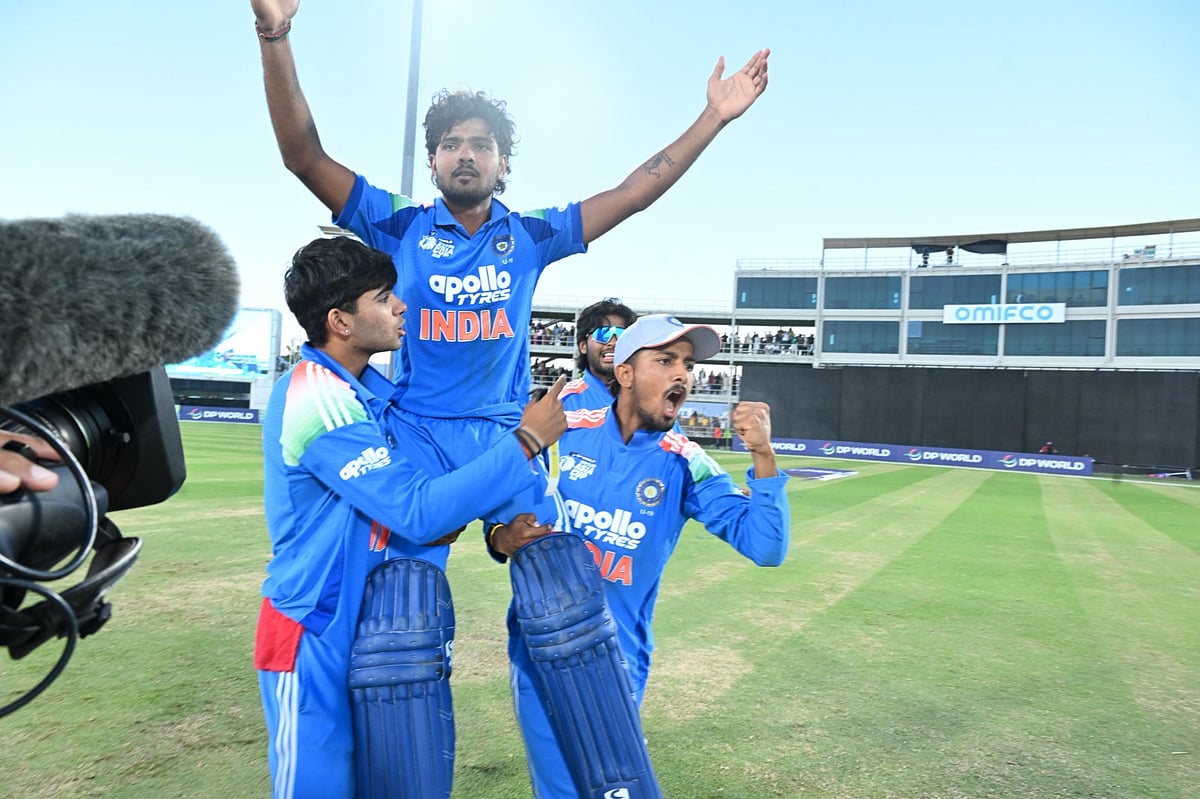
The Indian Under-19 men's cricket team defeated Pakistan by one wicket in a last-ball thriller to win the 2026 ACC Men's Under-19 Asia Cup at the Al Amerat Cricket Ground in Muscat, Oman.
The victory marked India's record-extending ninth Under-19 Asia Cup title and its first championship since 2021.
Under-19 Asia Cup Final?
- Tournament: ACC Men's Under-19 Asia Cup 2026.
- Organiser: Asian Cricket Council (ACC).
- Venue: Al Amerat Cricket Ground, Muscat, Oman.
- Winner: India.
- Runner-up: Pakistan.
- Indian captain: Lakshya Raichandani.
- Match result: India won by one wicket on the final ball.
Match Highlights
- Pakistan: 337/9 in 50 overs.
- Usman Khan scored 107 runs.
- Abdul Qadir contributed 80 runs.
- India: 339/9 in 50 overs.
- Captain Lakshya Raichandani scored 80 runs.
- Aaryavir Sehwag contributed 58 runs.
- Manal Chauhan scored 47 off 32 balls.
- Mohit Ulva remained unbeaten on 49 off 26 balls, hitting the winning boundary on the final delivery.
- Bowling performances:
- Kavya Patel: 4 wickets for 68 runs.
- Chigurupati Venkata: 3 wickets for 40 runs.
Major Awards and Records
- Player of the Match: Mohit Ulva (India).
- Player of the Tournament: Aaryavir Sehwag (India).
- Scored 361 runs in five innings.
- Recorded one century and three half-centuries.
- Batting average: 90.25.
- India's achievement: Ninth Under-19 Asia Cup title, the highest by any team.
- India also avenged its earlier group-stage defeat against Pakistan.
Additional Info
Asian Cricket Council (ACC)
- Established: 1983.
- Headquarters: Dubai, United Arab Emirates.
- Role: Regional cricket governing body responsible for promoting and developing cricket in Asia.
- Major tournaments: Men's Asia Cup, Women's Asia Cup and Under-19 Asia Cup.
- Under-19 Asia Cup: A 50-over cricket tournament contested by eligible national teams of ACC member countries.
Sources
National Press Day 2026 Celebrated to Promote Press Freedom and Responsible Journalism
What’s the News?
India observed National Press Day on 16 November 2026, commemorating the establishment of the Press Council of India (PCI) and highlighting the importance of a free, independent and responsible press in a democracy.
The 2026 celebrations focused on ethical journalism, combating misinformation and maintaining media credibility amid the growing influence of digital platforms and artificial intelligence.
National Press Day 2026?
- Observed: 16 November every year.
- 2026 Theme: “Journalism: Populist or Responsible?”
- First observed: 1966, marking the commencement of operations of the Press Council of India.
- Objective: Promote press freedom, journalistic ethics, accountability and responsible reporting.
- 2026 celebrations: Organised by the PCI at Akashvani Bhawan, New Delhi.
- Key development: Release of the 2026 edition of the Norms of Journalistic Conduct, covering disaster reporting, protests, children's privacy and other ethical issues.
Press Council of India (PCI)?
- Established: 1966 under the Press Council Act, 1965.
- Reconstituted: 1979 under the Press Council Act, 1978.
- Headquarters: New Delhi.
- Nature: Autonomous, statutory and quasi-judicial body.
- Current Chairperson: Justice (Retd.) Ranjana Prakash Desai.
- Composition: 29 members, including a Chairperson and 28 other members.
- Primary functions:
- Safeguard press freedom and maintain journalistic standards.
- Investigate complaints against newspapers, news agencies and journalists.
- Issue warnings, admonitions or censures for violations of journalistic ethics.
- Promote responsible reporting and media accountability.
- Jurisdiction: Primarily newspapers and news agencies, not television channels or digital platforms generally.
Additional Info
Constitutional Provisions
- Article 19(1)(a): Guarantees freedom of speech and expression, which includes freedom of the press.
- Article 19(2): Permits reasonable restrictions on freedom of speech and expression on specified grounds.
Important Supreme Court Judgments
- Romesh Thappar v. State of Madras (1950): Recognised freedom of circulation as part of freedom of expression.
- Sakal Papers v. Union of India (1962): Protected newspapers against unconstitutional restrictions on pages and circulation.
- Bennett Coleman & Co. v. Union of India (1973): Affirmed the protection of newspaper circulation and content under press freedom.
- Indian Express Newspapers v. Union of India (1985): Emphasised the importance of press freedom in a democracy.
Related Observance
- World Press Freedom Day: Observed globally on 3 May.
- Proclaimed by the UN General Assembly in 1993.
- Promotes press freedom, media independence and journalist safety.
Sources
International Day for Tolerance 2026 Observed on 16 November
What’s the News?
The International Day for Tolerance was observed worldwide on 16 November 2026 to promote mutual respect, cultural diversity, human rights and peaceful coexistence.
The observance commemorates the UNESCO Declaration of Principles on Tolerance (1995) and encourages societies to combat discrimination, prejudice, hatred and violence through education and dialogue.
International Day for Tolerance?
- Observed: 16 November annually.
- Declared by: United Nations General Assembly (UNGA).
- UN Resolution: 51/95, adopted on 12 December 1996.
- First observed: 1995 under UNESCO's initiative, followed by formal UN recognition in 1996.
- Background:
- 1995: Designated as the United Nations Year for Tolerance.
- 16 November 1995: UNESCO adopted the Declaration of Principles on Tolerance at its 28th General Conference in Paris.
- Objective: Promote tolerance, equality, intercultural understanding and non-violence.
- Related SDG: SDG 16 – Peace, Justice and Strong Institutions.
UNESCO Declaration of Principles on Tolerance, 1995
Adopted on 16 November 1995, the Declaration defines tolerance as respect, acceptance and appreciation of human diversity while recognising universal human rights.
It consists of six articles:
- Article 1: Meaning and principles of tolerance.
- Article 2: State responsibility in promoting tolerance.
- Article 3: Social dimensions of tolerance.
- Article 4: Education as a tool to prevent intolerance.
- Article 5: Commitment to action against intolerance.
- Article 6: Observance of International Day for Tolerance.
UNESCO-Madanjeet Singh Prize 2026
- Established: 1995 to commemorate the United Nations Year for Tolerance and the 125th birth anniversary of Mahatma Gandhi.
- First awarded: 1996.
- Frequency: Biennially (every two years).
- Prize money: US$100,000.
- Purpose: Recognises individuals, organisations and institutions contributing to tolerance and non-violence.
- 2026 edition: 15th edition, with the award ceremony held at UNESCO Headquarters in Paris, France.
Additional Info
UNESCO (United Nations Educational, Scientific and Cultural Organization)
- Established: 16 November 1945.
- Headquarters: Paris, France.
- Parent organisation: United Nations.
- Objective: Promote international cooperation in education, science, culture and communication to advance peace and sustainable development.
Ten Countries Sign San Francisco Declaration to Secure Global AI Supply Chains
What’s the News?
India, the United States and eight other countries signed the San Francisco Declaration on the Secure Foundations of Enduring Prosperity to strengthen cooperation in securing artificial intelligence (AI) supply chains and critical technologies.
The declaration was signed at the Pax Silica Founders Retreat in San Francisco, convened by Jacob Helberg, US Under Secretary of State for Economic Affairs.
The agreement focuses on protecting semiconductors, critical minerals, energy infrastructure and advanced manufacturing systems from supply-chain disruptions and security threats.
San Francisco Declaration 2026?
- Full name: San Francisco Declaration on the Secure Foundations of Enduring Prosperity.
- Venue: San Francisco, United States.
- Initial signatories: 10 countries.
- Associated initiative: US-led Pax Silica.
- Core principle: Economic security is fundamental to national security.
- Objectives:
- Strengthen secure and diversified AI supply chains.
- Protect sensitive technologies and critical infrastructure.
- Prevent unauthorised access, technology theft and hostile control.
- Promote international cooperation in emerging technologies.
Ten Signatory Countries
- United States
- Australia
- India
- Israel
- Japan
- South Korea
- Qatar
- Singapore
- United Arab Emirates
- United Kingdom
Five Proposed Working Groups
The declaration proposes five working groups to strengthen international technological cooperation:
- Pro-Innovation Policy Frameworks: Promote research, investment and innovation in advanced technologies.
- Super Intelligence (SI) Adoption: Encourage advanced AI applications across strategic sectors.
- Supply-Chain Cooperation: Secure critical minerals, semiconductors, computing infrastructure and manufacturing inputs.
- Safe Harbours and Security Hubs: Develop trusted environments for technology investment and supply-chain operations.
- SI Security and Resilience: Protect AI systems and supporting infrastructure against security threats and disruptions.
Pax Silica Initiative?
- Launched: December 2025.
- Led by: United States.
- Objective: Establish secure, reliable and diversified global supply chains for AI and advanced technologies.
- Focus areas: Semiconductors, critical minerals, energy infrastructure, advanced manufacturing and AI.
- India's participation: India formally joined Pax Silica in February 2026.
- Expansion: The broader initiative had reached 24 signatories by June 2026.
M. John Harrison Wins 2026 Booker Prize, Becomes Oldest Recipient

What’s the News?
British author M. John Harrison, aged 81, has won the 2026 Booker Prize for his dystopian novel The End of Everything, becoming the oldest recipient in the award's history.
He is also the first author from an established science-fiction writing background to receive the prestigious literary award. The £50,000 prize was presented at a ceremony in London.
Booker Prize 2026?
- Winner: M. John Harrison (United Kingdom).
- Winning novel: The End of Everything.
- Prize money: £50,000 (approximately ₹62 lakh).
- Award venue: Old Billingsgate, London, United Kingdom.
- Publisher: Serpent's Tail, an imprint of Profile Books.
- Jury Chairperson: Mary Beard, British classicist and historian.
- Selection: A five-member jury unanimously selected the novel from six shortlisted books, drawn from 163 eligible entries.
- Previous oldest winner: Margaret Atwood, who jointly won the 2019 Booker Prize at age 79 for The Testaments.
The End of Everything?
- Genre: Post-apocalyptic fiction and dystopian satire.
- Length: 198 pages, the shortest novel on the 2026 shortlist.
- Setting: Near-future Kent coast, England, following a mysterious societal collapse.
- Central characters: Phillip Tennent, a beachcomber, and his elderly aunt Marnie.
- Themes: Social breakdown, uncertainty, human survival and the limitations of human understanding.
- Significance: Harrison's 13th novel and his first Booker Prize-nominated work.
M. John Harrison?
- Nationality: British.
- Age: 81 years.
- Literary career: Spanning approximately six decades, primarily in science fiction, fantasy and experimental literature.
- Previous major awards:
- 1989: Boardman Tasker Prize for Mountain Literature for Climbers.
- 2007: Arthur C. Clarke Award for Nova Swing.
- 2020: Goldsmiths Prize for The Sunken Land Begins to Rise Again.
- Served as a Booker Prize judge in 2022.
Additional Info
Booker Prize
- Established: 1969 in the United Kingdom.
- Administered by: Booker Prize Foundation.
- Frequency: Annual.
- Prize money: £50,000 for the winner.
- Eligibility: Fiction originally written in English by authors of any nationality and published in the UK and/or Ireland.
Indian Booker Prize Winners
- Salman Rushdie (1981): Midnight's Children.
- Arundhati Roy (1997): The God of Small Things.
- Kiran Desai (2006): The Inheritance of Loss.
- Aravind Adiga (2008): The White Tiger.
Sources
November 2026
Archive
November 2026
- 27 November 2026
- 26 November 2026
- 25 November 2026
- 24 November 2026
- 23 November 2026
- 21 November 2026
- 20 November 2026
- 19 November 2026
- 18 November 2026
- 17 November 2026
- 16 November 2026
- 14 November 2026
- 13 November 2026
- 12 November 2026
- 11 November 2026
- 10 November 2026
- 09 November 2026
- 06 November 2026
- 05 November 2026
- 04 November 2026
- 03 November 2026
- 02 November 2026
October 2026
- 31 October 2026
- 30 October 2026
- 29 October 2026
- 28 October 2026
- 27 October 2026
- 26 October 2026
- 24 October 2026
- 23 October 2026
- 22 October 2026
- 21 October 2026
- 20 October 2026
- 19 October 2026
- 17 October 2026
- 16 October 2026
- 15 October 2026
- 14 October 2026
- 13 October 2026
- 12 October 2026
- 10 October 2026
- 09 October 2026
- 08 October 2026
- 07 October 2026
- 06 October 2026
- 05 October 2026
- 03 October 2026
- 02 October 2026
- 01 October 2026
September 2026
- 30 September 2026
- 29 September 2026
- 28 September 2026
- 26 September 2026
- 25 September 2026
- 24 September 2026
- 23 September 2026
- 22 September 2026
- 21 September 2026
- 19 September 2026
- 18 September 2026
- 17 September 2026
- 16 September 2026
- 15 September 2026
- 12 September 2026
- 11 September 2026
- 10 September 2026
- 09 September 2026
- 08 September 2026
- 07 September 2026
- 05 September 2026
- 04 September 2026
- 03 September 2026
- 02 September 2026
- 01 September 2026
August 2026
- 31 August 2026
- 29 August 2026
- 27 August 2026
- 26 August 2026
- 25 August 2026
- 24 August 2026
- 22 August 2026
- 21 August 2026
- 20 August 2026
- 19 August 2026
- 18 August 2026
- 17 August 2026
- 14 August 2026
- 13 August 2026
- 12 August 2026
- 11 August 2026
- 10 August 2026
- 08 August 2026
- 07 August 2026
- 06 August 2026
- 05 August 2026
- 04 August 2026
- 03 August 2026
- 01 August 2026
July 2026
- 31 July 2026
- 30 July 2026
- 29 July 2026
- 28 July 2026
- 27 July 2026
- 25 July 2026
- 23 July 2026
- 22 July 2026
- 21 July 2026
- 20 July 2026
- 18 July 2026
- 17 July 2026
- 15 July 2026
- 14 July 2026
- 13 July 2026
- 11 July 2026
- 10 July 2026
- 09 July 2026
- 08 July 2026
- 07 July 2026
- 06 July 2026
- 04 July 2026
- 03 July 2026
- 02 July 2026
- 01 July 2026
June 2026
May 2026
April 2026
March 2026
- 31 March 2026
- 30 March 2026
- 28 March 2026
- 27 March 2026
- 26 March 2026
- 25 March 2026
- 24 March 2026
- 23 March 2026
- 21 March 2026
- 20 March 2026
- 19 March 2026
- 18 March 2026
- 17 March 2026
- 16 March 2026
- 14 March 2026
- 13 March 2026
- 12 March 2026
- 11 March 2026
- 10 March 2026
- 09 March 2026
- 07 March 2026
- 06 March 2026
- 05 March 2026
- 03 March 2026
- 02 March 2026
February 2026
- 28 February 2026
- 27 February 2026
- 26 February 2026
- 25 February 2026
- 24 February 2026
- 23 February 2026
- 21 February 2026
- 20 February 2026
- 19 February 2026
- 18 February 2026
- 17 February 2026
- 16 February 2026
- 13 February 2026
- 12 February 2026
- 11 February 2026
- 10 February 2026
- 09 February 2026
- 07 February 2026
- 06 February 2026
- 05 February 2026
- 04 February 2026
- 03 February 2026
- 02 February 2026
January 2026
- 31 January 2026
- 30 January 2026
- 29 January 2026
- 28 January 2026
- 27 January 2026
- 26 January 2026
- 24 January 2026
- 23 January 2026
- 22 January 2026
- 21 January 2026
- 20 January 2026
- 19 January 2026
- 16 January 2026
- 15 January 2026
- 14 January 2026
- 13 January 2026
- 12 January 2026
- 10 January 2026
- 09 January 2026
- 08 January 2026
- 07 January 2026
- 06 January 2026
- 05 January 2026
- 03 January 2026
- 02 January 2026
- 01 January 2026
December 2025
- 31 December 2025
- 30 December 2025
- 29 December 2025
- 27 December 2025
- 26 December 2025
- 24 December 2025
- 23 December 2025
- 22 December 2025
- 20 December 2025
- 19 December 2025
- 18 December 2025
- 17 December 2025
- 16 December 2025
- 15 December 2025
- 13 December 2025
- 12 December 2025
- 11 December 2025
- 10 December 2025
- 09 December 2025
- 08 December 2025
- 05 December 2025
- 04 December 2025
- 03 December 2025
- 02 December 2025
November 2025
- 29 November 2025
- 28 November 2025
- 27 November 2025
- 26 November 2025
- 25 November 2025
- 24 November 2025
- 22 November 2025
- 21 November 2025
- 20 November 2025
- 19 November 2025
- 18 November 2025
- 17 November 2025
- 15 November 2025
- 14 November 2025
- 13 November 2025
- 12 November 2025
- 11 November 2025
- 10 November 2025
- 08 November 2025
- 07 November 2025
- 06 November 2025
- 05 November 2025
- 04 November 2025
- 03 November 2025
- 01 November 2025
October 2025
- 31 October 2025
- 30 October 2025
- 29 October 2025
- 28 October 2025
- 27 October 2025
- 25 October 2025
- 24 October 2025
- 23 October 2025
- 22 October 2025
- 21 October 2025
- 20 October 2025
- 18 October 2025
- 17 October 2025
- 16 October 2025
- 15 October 2025
- 14 October 2025
- 13 October 2025
- 11 October 2025
- 10 October 2025
- 09 October 2025
- 08 October 2025
- 07 October 2025
- 06 October 2025
- 04 October 2025
- 03 October 2025
- 02 October 2025
- 01 October 2025
September 2025
- 30 September 2025
- 29 September 2025
- 27 September 2025
- 26 September 2025
- 25 September 2025
- 24 September 2025
- 23 September 2025
- 22 September 2025
- 20 September 2025
- 19 September 2025
- 18 September 2025
- 17 September 2025
- 16 September 2025
- 15 September 2025
- 13 September 2025
- 12 September 2025
- 11 September 2025
- 10 September 2025
- 09 September 2025
- 08 September 2025
- 06 September 2025
- 05 September 2025
- 04 September 2025
- 03 September 2025
- 02 September 2025
- 01 September 2025
August 2025
- 30 August 2025
- 29 August 2025
- 28 August 2025
- 27 August 2025
- 26 August 2025
- 25 August 2025
- 23 August 2025
- 22 August 2025
- 21 August 2025
- 20 August 2025
- 19 August 2025
- 18 August 2025
- 16 August 2025
- 14 August 2025
- 13 August 2025
- 12 August 2025
- 11 August 2025
- 08 August 2025
- 07 August 2025
- 06 August 2025
- 05 August 2025
- 04 August 2025
- 02 August 2025
- 01 August 2025
July 2025
- 31 July 2025
- 30 July 2025
- 29 July 2025
- 28 July 2025
- 26 July 2025
- 25 July 2025
- 24 July 2025
- 23 July 2025
- 22 July 2025
- 21 July 2025
- 19 July 2025
- 18 July 2025
- 17 July 2025
- 16 July 2025
- 15 July 2025
- 12 July 2025
- 11 July 2025
- 10 July 2025
- 09 July 2025
- 07 July 2025
- 05 July 2025
- 04 July 2025
- 03 July 2025
- 02 July 2025
- 01 July 2025
June 2025
- 30 June 2025
- 28 June 2025
- 27 June 2025
- 26 June 2025
- 25 June 2025
- 24 June 2025
- 23 June 2025
- 21 June 2025
- 20 June 2025
- 19 June 2025
- 18 June 2025
- 17 June 2025
- 16 June 2025
- 14 June 2025
- 13 June 2025
- 12 June 2025
- 11 June 2025
- 10 June 2025
- 09 June 2025
- 07 June 2025
- 06 June 2025
- 05 June 2025
- 04 June 2025
- 03 June 2025
- 02 June 2025
May 2025
April 2025
- 30 April 2025
- 29 April 2025
- 28 April 2025
- 26 April 2025
- 25 April 2025
- 24 April 2025
- 23 April 2025
- 22 April 2025
- 21 April 2025
- 19 April 2025
- 18 April 2025
- 17 April 2025
- 16 April 2025
- 15 April 2025
- 14 April 2025
- 12 April 2025
- 11 April 2025
- 10 April 2025
- 09 April 2025
- 08 April 2025
- 07 April 2025
- 05 April 2025
- 04 April 2025
- 03 April 2025
- 02 April 2025
- 01 April 2025
March 2025
- 31 March 2025
- 29 March 2025
- 28 March 2025
- 27 March 2025
- 26 March 2025
- 25 March 2025
- 24 March 2025
- 22 March 2025
- 21 March 2025
- 20 March 2025
- 19 March 2025
- 18 March 2025
- 17 March 2025
- 15 March 2025
- 13 March 2025
- 12 March 2025
- 11 March 2025
- 10 March 2025
- 08 March 2025
- 07 March 2025
- 06 March 2025
- 05 March 2025
- 04 March 2025
- 03 March 2025
- 01 March 2025
February 2025
- 28 February 2025
- 27 February 2025
- 26 February 2025
- 25 February 2025
- 24 February 2025
- 22 February 2025
- 21 February 2025
- 20 February 2025
- 19 February 2025
- 18 February 2025
- 17 February 2025
- 15 February 2025
- 14 February 2025
- 13 February 2025
- 12 February 2025
- 11 February 2025
- 10 February 2025
- 08 February 2025
- 07 February 2025
- 06 February 2025
- 05 February 2025
- 04 February 2025
- 03 February 2025
- 01 February 2025
January 2025
- 31 January 2025
- 30 January 2025
- 29 January 2025
- 28 January 2025
- 27 January 2025
- 25 January 2025
- 24 January 2025
- 23 January 2025
- 22 January 2025
- 21 January 2025
- 20 January 2025
- 18 January 2025
- 17 January 2025
- 16 January 2025
- 15 January 2025
- 14 January 2025
- 13 January 2025
- 11 January 2025
- 10 January 2025
- 09 January 2025
- 08 January 2025
- 07 January 2025
- 06 January 2025
- 04 January 2025
- 03 January 2025
- 02 January 2025
- 01 January 2025