
Current Affairs
Stay updated with the latest national and international events.
16 March 2026
NAVIC Atomic Clock Failure: Impact on India's Regional Navigation System

What's the News?
- ISRO reported that the atomic clock onboard the IRNSS-1F satellite has failed, affecting India's NavIC (Navigation with Indian Constellation) system.
- The malfunction reduces the number of operational satellites to three, below the minimum four satellites required to maintain accurate navigation services.
- ISRO plans to launch three replacement satellites by late 2026 to restore full operational capability.
- The satellite will continue to function in-orbit but cannot provide accurate positioning and timing services without a working atomic clock.
NavIC System Overview
- NavIC is India's indigenous regional satellite navigation system, designed as an alternative to the US-owned GPS.
- The system consists of 11 satellites in total, including 7 operational satellites in the original constellation and additional backup satellites.
- NavIC provides two types of services:
- Standard Positioning Service (SPS): For civilian users
- Restricted Service (RS): For strategic and defense applications.
- Coverage extends to India and 1,500 km beyond its borders, serving the regional navigation needs.
Atomic Clock: Core Component
- Atomic clocks are critical for satellite navigation as they provide precise timing signals required for accurate position calculation.
- Each NavIC satellite carries multiple atomic clocks as redundancy; failure of all clocks renders the satellite ineffective for navigation.
- The IRNSS-1F satellite had its last functioning atomic clock fail, marking the end of its navigation utility.
- New indigenous atomic clocks are being developed to reduce dependence on imported components.
Impact and Concerns
- Navigation Accuracy: Reduced satellite count affects positioning accuracy for civilian and commercial applications.
- Defense Implications: Strategic services may face limitations during critical operations.
- Sectoral Impact:
- Transportation: Terrestrial and maritime navigation systems rely on NavIC
- Shipping: Port operations and vessel tracking affected
- Disaster Management: Timing and location services crucial for emergency response.
- Current Status: Only 3 out of 11 satellites are currently fully operational, raising concerns about system reliability.
Historical Context:
- IRNSS-1A was launched in 2013, followed by 8 more satellites in the first generation.
- NVS-01, the first second-generation NavIC satellite, was launched in May 2023 with improved indigenous atomic clocks.
Sources
Sujal Gaon ID: Digital Mapping for Rural Water Supply Schemes
What's the News?
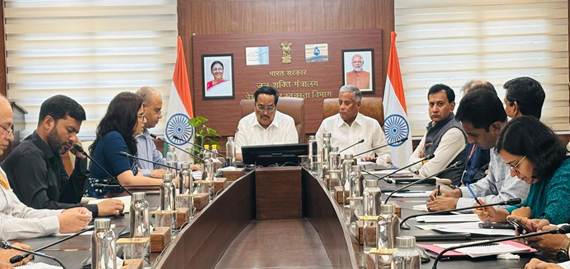
- Union Jal Shakti Minister launched the Sujal Gaon ID initiative for digital mapping of rural water supply schemes across India .
- The program aims to create a unique identification system for every village water supply infrastructure to enable better monitoring and management .
- The initiative integrates with existing Jal Jeevan Mission frameworks to enhance transparency and accountability in water supply delivery .
- Digital mapping will help track implementation progress, identify gaps, and ensure sustainable water access in rural areas .
Sujal Gaon ID: Overview
- Purpose: Create a unique digital identity for each rural water supply scheme to enable end-to-end tracking .
- Coverage: All village-level water infrastructure including pipelines, treatment plants, and storage facilities .
- Key Features:
- Geo-tagging of water assets for precise location mapping
- Real-time monitoring of water supply status
- Integration with existing government databases
- Public accessibility for transparency and grievance redressal .
- Implementing Agency: Department of Drinking Water and Sanitation, Ministry of Jal Shakti .
Strategic Objectives
- Transparency: Enable citizens to access information about their village water supply schemes .
- Accountability: Track performance of implementing agencies and contractors .
- Efficiency: Reduce duplication and ensure optimal resource allocation .
- Sustainability: Monitor water quality and quantity for long-term viability .
- Data-Driven Governance: Support evidence-based policy decisions through comprehensive data analytics .
Additional Info
- Jal Jeevan Mission (JJM) 2.0:
- The mission has been extended until December 2028 to ensure universal tap water coverage.
- The total financial outlay has been increased to ₹8.69 lakh crore, up from the initial ₹3.60 lakh crore.
- Emphasis has shifted toward Operation and Maintenance (O&M) and institutional reforms.
- Sujalam Bharat Framework:
- Developed with the support of BISAG-N (Bhaskaracharya National Institute for Space Applications and Geo-informatics).
- It serves as the "Aadhaar for rural water systems," integrating asset inventories, water quality reports, and community feedback.
- Governance & Community Tools:
- Jal Arpan: A process for the formal handover of completed schemes to Gram Panchayats (GPs) to foster local ownership.
- Jal Seva Aankalan: The primary tool used for assessing service delivery quality at the village level.
- Meri Panchayat App: A digital application for citizen oversight and reporting disruptions.
- Jal Utsav: An annual, community-led event for reviewing maintenance and celebrating water security.
Sources
Megamalai Wildlife Sanctuary: Nine New Species Discovered in Western Ghats
What's the News?
- Zoological Survey of India (ZSI) documented nine new species at the Megamalai Wildlife Sanctuary in the southern Western Ghats.
- The discoveries include a jumping spider, damselflies, mayflies, and other endemic fauna recorded during recent faunal surveys.
- The sanctuary serves as a critical biodiversity hotspot, hosting numerous endemic and threatened species.
- This discovery highlights the ecological significance of the Western Ghats region for conservation research.
Megamalai Wildlife Sanctuary: Overview
- Location: Situated in Theni and Madurai districts of Tamil Nadu, within the Western Ghats mountain range.
- Area: Covers approximately 26,910.81 hectares of protected forest land.
- Ecosystem: Features diverse vegetation types including evergreen forests, shrublands, and grasslands across elevation gradients.
- Status: Declared as a Wildlife Sanctuary to protect the rich biodiversity of the region.
- Connectivity: Forms part of the Srivilliputtur Megamalai Tiger Reserve landscape.
New Species Discoveries
- Faunal Diversity: The ZSI survey identified nine previously undocumented species in the sanctuary.
- Key Discoveries Include:
- Jumping Spider (Stenaelurillus megamalai): Named after the sanctuary
- Damselfly (Thraulus vellimalaiensis): Endemic to the region
- Mayflies (Edmundsula meghamalaiensis): Two species recorded
- Wood Snake: Endemic species found in the sanctuary.
- Significance: These discoveries add to the known biodiversity of the Western Ghats biodiversity hotspot.
- Research Method: Comprehensive faunal survey conducted across different habitat types within the sanctuary.
Sources
Medieval Gajapathi Inscription Discovered in Guntur Temple

What's the News?
- Archaeologists discovered a 15th-century Gajapathi inscription on a stone pillar at the Lakshmi Narasimha Swamy Temple in Guntur district, Andhra Pradesh.
- The inscription is engraved on both sides of a stone pillar located inside the temple's mandapa (hall).
- Written in Telugu language with Sanskrit verses, the inscription dates to the reign of the Gajapathi dynasty of Odisha.
- The discovery reveals historical links between the Gajapathi Empire and the Andhra region during medieval times.
- Historians believe the inscription belongs to the period of Gajapathi King Purushottama Deva.
Gajapathi Inscription: Key Details
- Location: Found at Chintapallipadu village in Vatticherukuru mandal of Guntur district.
- Physical Features:
- Carved on a black granite stone pillar
- Engraved on both sides of the pillar
- Contains Sanskrit verses written in Telugu script.
- Content: The inscription mentions Kumaraguru Mahapatra, a steward officer of the Gajapathi administration.
- Historical Period: Dates to the 15th century during the Gajapathi Empire rule.
- Significance: Provides evidence of Gajapathi territorial expansion into southern Andhra Pradesh.
Gajapathi Empire: Historical Overview
- Origin: Medieval Hindu monarchy originating from the Odisha region.
- Time Period: Reigned from approximately 1434 to 1541 CE.
- Founding: Established by Kapilendra Deva, the founder of the Gajapathi Dynasty.
- Territorial Extent: At its peak, the empire stretched from:
- Ganges River in the north (near West Bengal)
- Kaveri River in the south (including parts of Andhra and Tamil Nadu).
- Notable Rulers:
- Kapilendra Deva: Expanded the empire from the Ganges in the north to the Kaveri in the south.
- Purushottama Deva: Noted for his military successes and the legendary Kanchi-Abhigana tradition.
- Prataparudra Deva: The last great ruler, during whose reign the empire faced challenges from the Vijayanagara Empire under Krishnadevaraya and the Golconda Sultanate.
- The Title: The term Gajapati literally translates to "Lord of the Elephants," signifying the empire's formidable elephant corps.
Sources
US Section 301 Investigation: Forced Labor Probe Against India and 60 Nations
What's the News?
- United States Trade Representative (USTR) launched Section 301 investigations against India and 59 other countries over alleged forced labor practices.
- The probe examines whether nations have failed to prohibit imports of goods produced with forced labor, affecting US commerce.
- India's bilateral trade surplus with the US stands at approximately $58 billion, making it a significant target for investigation.
- If violations are found, the US could impose new tariffs or trade restrictions on Indian exports by mid-2026.
- This investigation runs parallel to another Section 301 probe targeting excess industrial capacity across 16 economies including India.
Section 301 of Trade Act 1974: Overview
- Legal Framework: Section 301 is a US trade enforcement tool established under the Trade Act of 1974.
- Purpose: Designed to address unfair foreign trade practices affecting US commerce and businesses.
- Authority: Empowers the US Trade Representative to investigate and respond to unreasonable foreign trade policies.
- Potential Actions: May result in:
- Tariff impositions on targeted countries
- Import restrictions on specific goods
- Trade agreement modifications
- Other remedial measures.
- Scope: Can be used against any country engaging in practices deemed unreasonable or discriminatory.
Investigation Details
- Countries Covered: 60 economies including major US trading partners.
- Key Targets Include:
- India
- China
- European Union
- Japan
- South Korea
- Mexico
- Canada.
- Focus Areas:
- Forced labor compliance in supply chains
- Import prohibition enforcement on forced labor goods
- Labor standards implementation.
- Timeline: Public comments accepted until April 15, 2026; findings expected by summer 2026.
- Parallel Probe: Separate investigation into excess industrial capacity affecting 16 economies.
Additional Info
- International Labor Standards:
- The investigation aligns with International Labour Organization (ILO) conventions regarding the abolition of forced labor.
- Forced labor is defined as work performed involuntarily and under the threat of any penalty.
- Special 301 vs. Section 301:
- While Section 301 covers general unfair trade practices, Special 301 specifically addresses foreign countries' adequacy and effectiveness of Intellectual Property protection.
Sources
Oscars 2026: Academy Awards Ceremony Highlights

What's the News?
- 98th Academy Awards (Oscars 2026) ceremony was held in Los Angeles, celebrating excellence in global cinema .
- Golden K-Pop Artists performance was interrupted/halted during the ceremony, sparking social media reactions and debates about cultural representation .
- Multiple categories recognized international films and diverse storytelling from various countries .
- The ceremony highlighted growing global influence of non-Hollywood cinema, including contributions from Asian film industries .
Major Winners and Record-Breaking Moments
- Best Picture: One Battle After Another, produced by Adam Somner, Sara Murphy, and Paul Thomas Anderson.
- Best Director: Paul Thomas Anderson (One Battle After Another), marking his first win in this category.
- Best Actor: Michael B. Jordan (Sinners), achieving his first-ever Oscar victory.
- Best Actress: Jessie Buckley (Hamnet), capping off a successful awards season run.
- Best International Feature Film: Sentimental Value (Norway), directed by Joachim Trier.
- Best Animated Feature: KPop Demon Hunters, which also secured Best Original Song for the track "Golden". This is the first time a K-pop song has won an Academy Award.
- Technical Dominance: Frankenstein won several categories, including Best Costume Design, Best Makeup and Hairstyling, and Best Production Design.
Indian Presence and Notable Milestones
- Official Entry: India’s official submission for the Best International Feature Film, Homebound (directed by Neeraj Ghaywan), reached the 15-film shortlist but did not secure a final nomination.
- Historic Tie: Indian-origin filmmaker Alexandre Singh won Best Live-Action Short Film for Two People Exchanging Saliva. The win was a rare tie with the film The Singers, marking only the seventh tie in Oscar history.
- Documentary Recognition: Indian-American filmmaker Geeta Gandbhir received two nominations in a single year for The Perfect Neighbor (Best Documentary Feature) and The Devil Is Busy (Best Documentary Short).
Sources
March 2026
31 March 202630 March 202628 March 202627 March 202626 March 202625 March 202624 March 202623 March 202621 March 202620 March 202619 March 202618 March 202617 March 202616 March 202614 March 202613 March 202612 March 202611 March 202610 March 202609 March 202607 March 202606 March 202605 March 202603 March 202602 March 2026
Archive
October 2026
- 27 October 2026
- 26 October 2026
- 24 October 2026
- 23 October 2026
- 22 October 2026
- 21 October 2026
- 20 October 2026
- 19 October 2026
- 17 October 2026
- 16 October 2026
- 15 October 2026
- 14 October 2026
- 13 October 2026
- 12 October 2026
- 10 October 2026
- 09 October 2026
- 08 October 2026
- 07 October 2026
- 06 October 2026
- 05 October 2026
- 03 October 2026
- 02 October 2026
- 01 October 2026
September 2026
- 30 September 2026
- 29 September 2026
- 28 September 2026
- 26 September 2026
- 25 September 2026
- 24 September 2026
- 23 September 2026
- 22 September 2026
- 21 September 2026
- 19 September 2026
- 18 September 2026
- 17 September 2026
- 16 September 2026
- 15 September 2026
- 12 September 2026
- 11 September 2026
- 10 September 2026
- 09 September 2026
- 08 September 2026
- 07 September 2026
- 05 September 2026
- 04 September 2026
- 03 September 2026
- 02 September 2026
- 01 September 2026
August 2026
- 31 August 2026
- 29 August 2026
- 27 August 2026
- 26 August 2026
- 25 August 2026
- 24 August 2026
- 22 August 2026
- 21 August 2026
- 20 August 2026
- 19 August 2026
- 18 August 2026
- 17 August 2026
- 14 August 2026
- 13 August 2026
- 12 August 2026
- 11 August 2026
- 10 August 2026
- 08 August 2026
- 07 August 2026
- 06 August 2026
- 05 August 2026
- 04 August 2026
- 03 August 2026
- 01 August 2026
July 2026
- 31 July 2026
- 30 July 2026
- 29 July 2026
- 28 July 2026
- 27 July 2026
- 25 July 2026
- 23 July 2026
- 22 July 2026
- 21 July 2026
- 20 July 2026
- 18 July 2026
- 17 July 2026
- 15 July 2026
- 14 July 2026
- 13 July 2026
- 11 July 2026
- 10 July 2026
- 09 July 2026
- 08 July 2026
- 07 July 2026
- 06 July 2026
- 04 July 2026
- 03 July 2026
- 02 July 2026
- 01 July 2026
June 2026
May 2026
April 2026
March 2026
- 31 March 2026
- 30 March 2026
- 28 March 2026
- 27 March 2026
- 26 March 2026
- 25 March 2026
- 24 March 2026
- 23 March 2026
- 21 March 2026
- 20 March 2026
- 19 March 2026
- 18 March 2026
- 17 March 2026
- 16 March 2026
- 14 March 2026
- 13 March 2026
- 12 March 2026
- 11 March 2026
- 10 March 2026
- 09 March 2026
- 07 March 2026
- 06 March 2026
- 05 March 2026
- 03 March 2026
- 02 March 2026
February 2026
- 28 February 2026
- 27 February 2026
- 26 February 2026
- 25 February 2026
- 24 February 2026
- 23 February 2026
- 21 February 2026
- 20 February 2026
- 19 February 2026
- 18 February 2026
- 17 February 2026
- 16 February 2026
- 13 February 2026
- 12 February 2026
- 11 February 2026
- 10 February 2026
- 09 February 2026
- 07 February 2026
- 06 February 2026
- 05 February 2026
- 04 February 2026
- 03 February 2026
- 02 February 2026
January 2026
- 31 January 2026
- 30 January 2026
- 29 January 2026
- 28 January 2026
- 27 January 2026
- 26 January 2026
- 24 January 2026
- 23 January 2026
- 22 January 2026
- 21 January 2026
- 20 January 2026
- 19 January 2026
- 16 January 2026
- 15 January 2026
- 14 January 2026
- 13 January 2026
- 12 January 2026
- 10 January 2026
- 09 January 2026
- 08 January 2026
- 07 January 2026
- 06 January 2026
- 05 January 2026
- 03 January 2026
- 02 January 2026
- 01 January 2026
December 2025
- 31 December 2025
- 30 December 2025
- 29 December 2025
- 27 December 2025
- 26 December 2025
- 24 December 2025
- 23 December 2025
- 22 December 2025
- 20 December 2025
- 19 December 2025
- 18 December 2025
- 17 December 2025
- 16 December 2025
- 15 December 2025
- 13 December 2025
- 12 December 2025
- 11 December 2025
- 10 December 2025
- 09 December 2025
- 08 December 2025
- 05 December 2025
- 04 December 2025
- 03 December 2025
- 02 December 2025
November 2025
- 29 November 2025
- 28 November 2025
- 27 November 2025
- 26 November 2025
- 25 November 2025
- 24 November 2025
- 22 November 2025
- 21 November 2025
- 20 November 2025
- 19 November 2025
- 18 November 2025
- 17 November 2025
- 15 November 2025
- 14 November 2025
- 13 November 2025
- 12 November 2025
- 11 November 2025
- 10 November 2025
- 08 November 2025
- 07 November 2025
- 06 November 2025
- 05 November 2025
- 04 November 2025
- 03 November 2025
- 01 November 2025
October 2025
- 31 October 2025
- 30 October 2025
- 29 October 2025
- 28 October 2025
- 27 October 2025
- 25 October 2025
- 24 October 2025
- 23 October 2025
- 22 October 2025
- 21 October 2025
- 20 October 2025
- 18 October 2025
- 17 October 2025
- 16 October 2025
- 15 October 2025
- 14 October 2025
- 13 October 2025
- 11 October 2025
- 10 October 2025
- 09 October 2025
- 08 October 2025
- 07 October 2025
- 06 October 2025
- 04 October 2025
- 03 October 2025
- 02 October 2025
- 01 October 2025
September 2025
- 30 September 2025
- 29 September 2025
- 27 September 2025
- 26 September 2025
- 25 September 2025
- 24 September 2025
- 23 September 2025
- 22 September 2025
- 20 September 2025
- 19 September 2025
- 18 September 2025
- 17 September 2025
- 16 September 2025
- 15 September 2025
- 13 September 2025
- 12 September 2025
- 11 September 2025
- 10 September 2025
- 09 September 2025
- 08 September 2025
- 06 September 2025
- 05 September 2025
- 04 September 2025
- 03 September 2025
- 02 September 2025
- 01 September 2025
August 2025
- 30 August 2025
- 29 August 2025
- 28 August 2025
- 27 August 2025
- 26 August 2025
- 25 August 2025
- 23 August 2025
- 22 August 2025
- 21 August 2025
- 20 August 2025
- 19 August 2025
- 18 August 2025
- 16 August 2025
- 14 August 2025
- 13 August 2025
- 12 August 2025
- 11 August 2025
- 08 August 2025
- 07 August 2025
- 06 August 2025
- 05 August 2025
- 04 August 2025
- 02 August 2025
- 01 August 2025
July 2025
- 31 July 2025
- 30 July 2025
- 29 July 2025
- 28 July 2025
- 26 July 2025
- 25 July 2025
- 24 July 2025
- 23 July 2025
- 22 July 2025
- 21 July 2025
- 19 July 2025
- 18 July 2025
- 17 July 2025
- 16 July 2025
- 15 July 2025
- 12 July 2025
- 11 July 2025
- 10 July 2025
- 09 July 2025
- 07 July 2025
- 05 July 2025
- 04 July 2025
- 03 July 2025
- 02 July 2025
- 01 July 2025
June 2025
- 30 June 2025
- 28 June 2025
- 27 June 2025
- 26 June 2025
- 25 June 2025
- 24 June 2025
- 23 June 2025
- 21 June 2025
- 20 June 2025
- 19 June 2025
- 18 June 2025
- 17 June 2025
- 16 June 2025
- 14 June 2025
- 13 June 2025
- 12 June 2025
- 11 June 2025
- 10 June 2025
- 09 June 2025
- 07 June 2025
- 06 June 2025
- 05 June 2025
- 04 June 2025
- 03 June 2025
- 02 June 2025
May 2025
April 2025
- 30 April 2025
- 29 April 2025
- 28 April 2025
- 26 April 2025
- 25 April 2025
- 24 April 2025
- 23 April 2025
- 22 April 2025
- 21 April 2025
- 19 April 2025
- 18 April 2025
- 17 April 2025
- 16 April 2025
- 15 April 2025
- 14 April 2025
- 12 April 2025
- 11 April 2025
- 10 April 2025
- 09 April 2025
- 08 April 2025
- 07 April 2025
- 05 April 2025
- 04 April 2025
- 03 April 2025
- 02 April 2025
- 01 April 2025
March 2025
- 31 March 2025
- 29 March 2025
- 28 March 2025
- 27 March 2025
- 26 March 2025
- 25 March 2025
- 24 March 2025
- 22 March 2025
- 21 March 2025
- 20 March 2025
- 19 March 2025
- 18 March 2025
- 17 March 2025
- 15 March 2025
- 13 March 2025
- 12 March 2025
- 11 March 2025
- 10 March 2025
- 08 March 2025
- 07 March 2025
- 06 March 2025
- 05 March 2025
- 04 March 2025
- 03 March 2025
- 01 March 2025
February 2025
- 28 February 2025
- 27 February 2025
- 26 February 2025
- 25 February 2025
- 24 February 2025
- 22 February 2025
- 21 February 2025
- 20 February 2025
- 19 February 2025
- 18 February 2025
- 17 February 2025
- 15 February 2025
- 14 February 2025
- 13 February 2025
- 12 February 2025
- 11 February 2025
- 10 February 2025
- 08 February 2025
- 07 February 2025
- 06 February 2025
- 05 February 2025
- 04 February 2025
- 03 February 2025
- 01 February 2025
January 2025
- 31 January 2025
- 30 January 2025
- 29 January 2025
- 28 January 2025
- 27 January 2025
- 25 January 2025
- 24 January 2025
- 23 January 2025
- 22 January 2025
- 21 January 2025
- 20 January 2025
- 18 January 2025
- 17 January 2025
- 16 January 2025
- 15 January 2025
- 14 January 2025
- 13 January 2025
- 11 January 2025
- 10 January 2025
- 09 January 2025
- 08 January 2025
- 07 January 2025
- 06 January 2025
- 04 January 2025
- 03 January 2025
- 02 January 2025
- 01 January 2025